
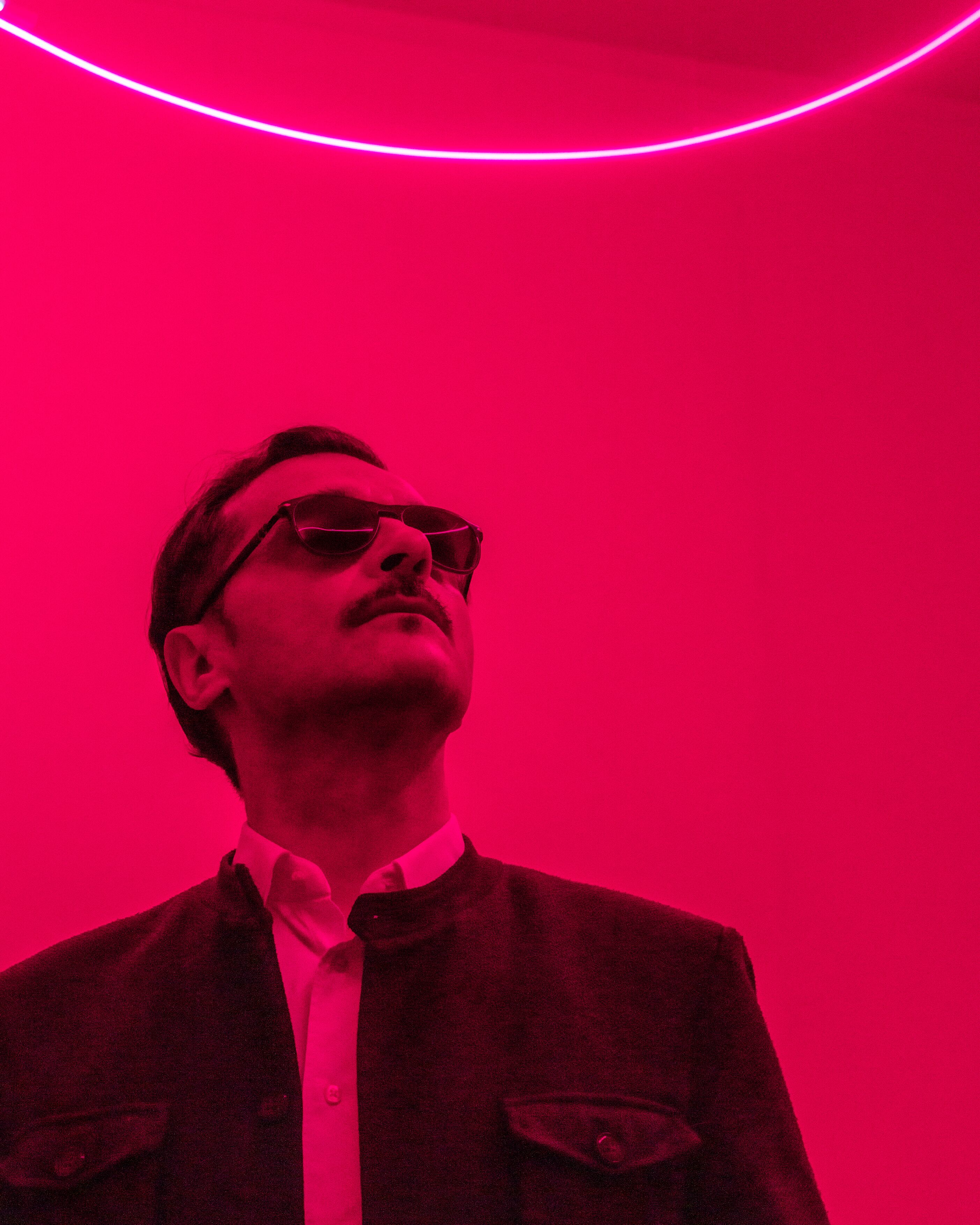
Luca Massimo Barbero. Photo: Fredrik Nilsen Studio
Curator Walkthrough & Book Launch: Luca Massimo Barbero on ‘Lucio Fontana: Spatialism. Pioneering the Contemporary’ and the release of ‘Lucio Fontana’
On the occasion of the exhibition ‘Lucio Fontana: Spatialism. Pioneering the Contemporary’ and the release of the new book ‘Lucio Fontana,' from Hauser & Wirth Publishers, please join us for a walkthrough with Luca Massimo Barbero, the curator of the exhibition and the editor of the book.
Curator Walkthrough & Book Launch
Thursday 17 September
4 – 5 pm
Opening Reception
Thursday 17 September
5 – 7 pm
Copies of ‘Lucio Fontana’ will be available for purchase.
This event is free, however, reservations are recommended.
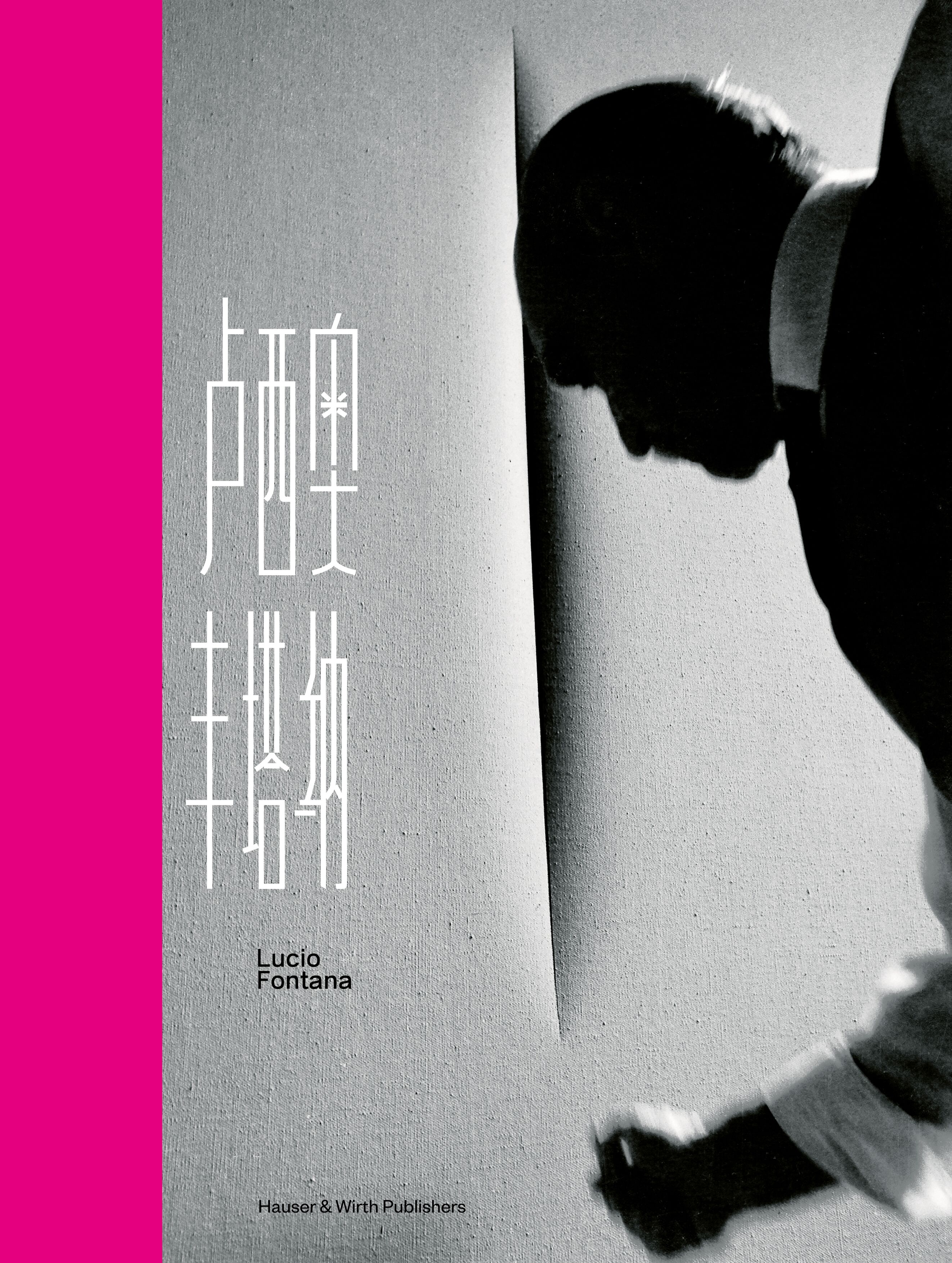
Cover of ‘Lucio Fontana’, 2026, Hauser & Wirth Publishers
About the Exhibition
Beginning 17 September 2026, Hauser & Wirth Hong Kong presents a major exhibition by Argentine-Italian artist Lucio Fontana (1899 – 1968). Titled ‘Lucio Fontana: Spatialism. Pioneering the Contemporary’ and featuring seminal works from 1949 onward, the exhibition focuses on Fontana’s revolutionary Buchi (Holes) and Tagli (Cuts), tracing the evolution of the Spatialism movement he founded and his radical exploration of the canvas as a site of infinite possibility.
About the Publication
‘Lucio Fontana’ is the first widely available introduction to Lucio Fontana’s practice in Simplified Chinese, offering Chinese audiences a long-overdue opportunity to discover the full scope of the artist’s groundbreaking work. Published on the occasion of an exhibition of Fontana’s work at Hauser & Wirth in Hong Kong, this new monograph marks the gallery’s third collaboration with Fondazione Lucio Fontana and curator Luca Massimo Barbero following the exhibitions and accompanying publications ‘Lucio Fontana: Walking the Space; Spatial Environments, 1948-1968’ (2021) and ‘Lucio Fontana: Sculpture’ (2022).
Edited by Barbero, a leading Fontana’s scholar, the book provides a detailed account of the artist’s influential career, richly illustrated with artwork and archival images. Over four chapters, texts by Barbero and Maria Villa, the Vice President of the Foundation, track the evolution of Fontana’s work, beginning with his early days as an artist in Argentina and Europe in the 1920s and 1930s, moving through the birth of Spatialism in the 1940s and the development of his pioneering Ambienti Spaziali (Spatial Environments) in the 1950s, and concluding with the innovative late works created in his final decade, including his iconic slashed canvases. Offering further insight into the artist’s theories, aims and intentions are a selection of Fontana’s writings, including manifestos, interviews, and articles, between 1939 and 1967, which have been translated into Simplified Chinese for the very first time.
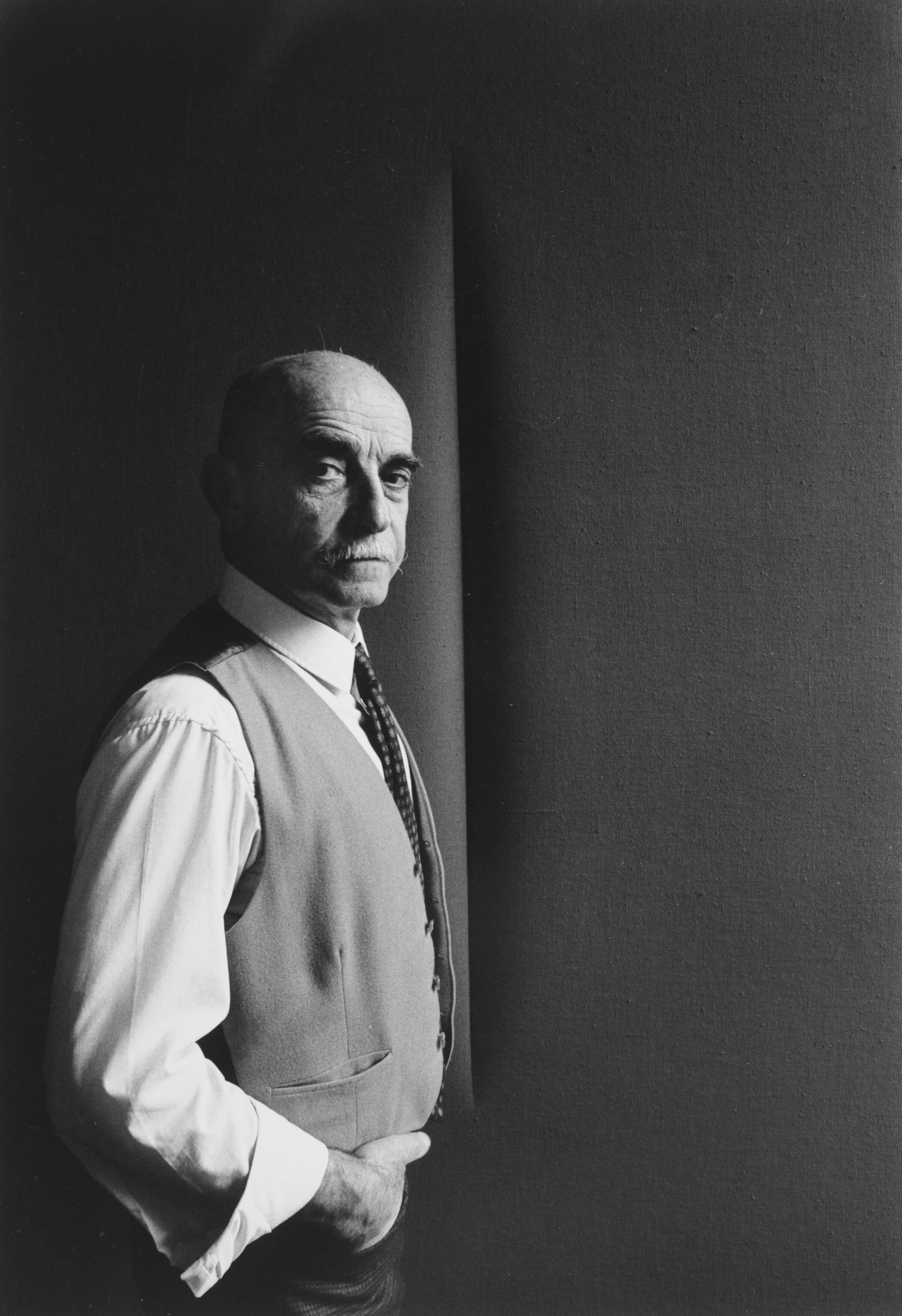
Lucio Fontana, Milano, 1964 © Fondazione Lucio Fontana, Milano, by SIAE 2026. Photo: Ugo Mulas © Ugo Mulas Heirs. All rights reserved
Luca Massimo Barbero. Photo: Fredrik Nilsen Studio
About Lucio Fontana
Lucio Fontana (Rosario de Santa Fé, Argentina, 1899 – Comabbio, Italy, 1968) was one of the most influential artists of the 20th-century international scene. Driven by an endless creative curiosity, he constantly explored new materials and languages to redefine artistic expression.
Fontana was born in Argentina to parents of Italian descent. After studying in Italy, he returned to Argentina in the 1920s where he pursued a career as a sculptor. In the 1930s, Fontana became a key figure in Italian abstract art. During the same period, he began his lifelong and groundbreaking research into ceramics, also through his friendship with Tullio d’Albisola, Futurist poet and ceramist, while working with leading Italian architects such as Figini and Pollini, BBPR, and Luciano Baldessari.
In 1946, he published his Manifiesto Blanco, which called for the integration of art, science, and technology, and laid the foundations for the emergence of the Spatialist movement the following year. Best known for his Concetti Spaziali and Tagli series of slashed canvases, Fontana redefined postwar art by dismantling traditional boundaries between painting and sculpture, violating the integrity of the canvas to open up the new and infinite dimension of the void.
Beyond his renowned Holes and Slashes, as well as his sculptures, Fontana developed numerous series throughout the 1950s and 1960s, including “Stones”, “Baroques”, “Impastos”, “Inks”, “Papers”, “Oils”, “Quanta”, “Natures”, “Metals”, “The End of God”, “Little Theatres”, “Ellipses”, and further Spatial Environments, which he continued to explore until the end of his life.
About Luca Massimo Barbero
Luca Massimo Barbero is an internationally renowned art historian and curator. He currently serves as President of the Institute of Art History at the Giorgio Cini Foundation and Scientific Advisor to the Lucio Fontana Foundation. Alongside these roles, he is the Associate Curator for the Modern and Contemporary Art Collections of Intesa Sanpaolo, having previously served as Associate Curator at the Peggy Guggenheim Collection in Venice.
Widely regarded as one of the foremost authorities on Lucio Fontana, Barbero has curated seminal exhibitions and produced foundational studies on the artist, notably the Catalogue Raisonné of Works on Paper (2013) and the Catalogue of Ceramic Sculptures (2023). Over the course of his career, he has authored numerous publications and organized major exhibitions dedicated to twentieth-century art. His collaborative reach extends to prestigious international institutions, including the Moderna Museet in Stockholm, the Kunsthaus Zürich, the Solomon R. Guggenheim Museum in New York, the Sorol Art Museum in Gangneung (South Korea), OōEli in Hangzhou (China), and Prada Rong Zhai in Shanghai. He has also partnered with Hauser & Wirth in Los Angeles and New York, as well as the Venice Biennale. Recently, the Biennale acquired a portion of his extensive personal archive, initiating a project to establish a dedicated archival fund in his name.


