
Learning Notes: Angel Otero
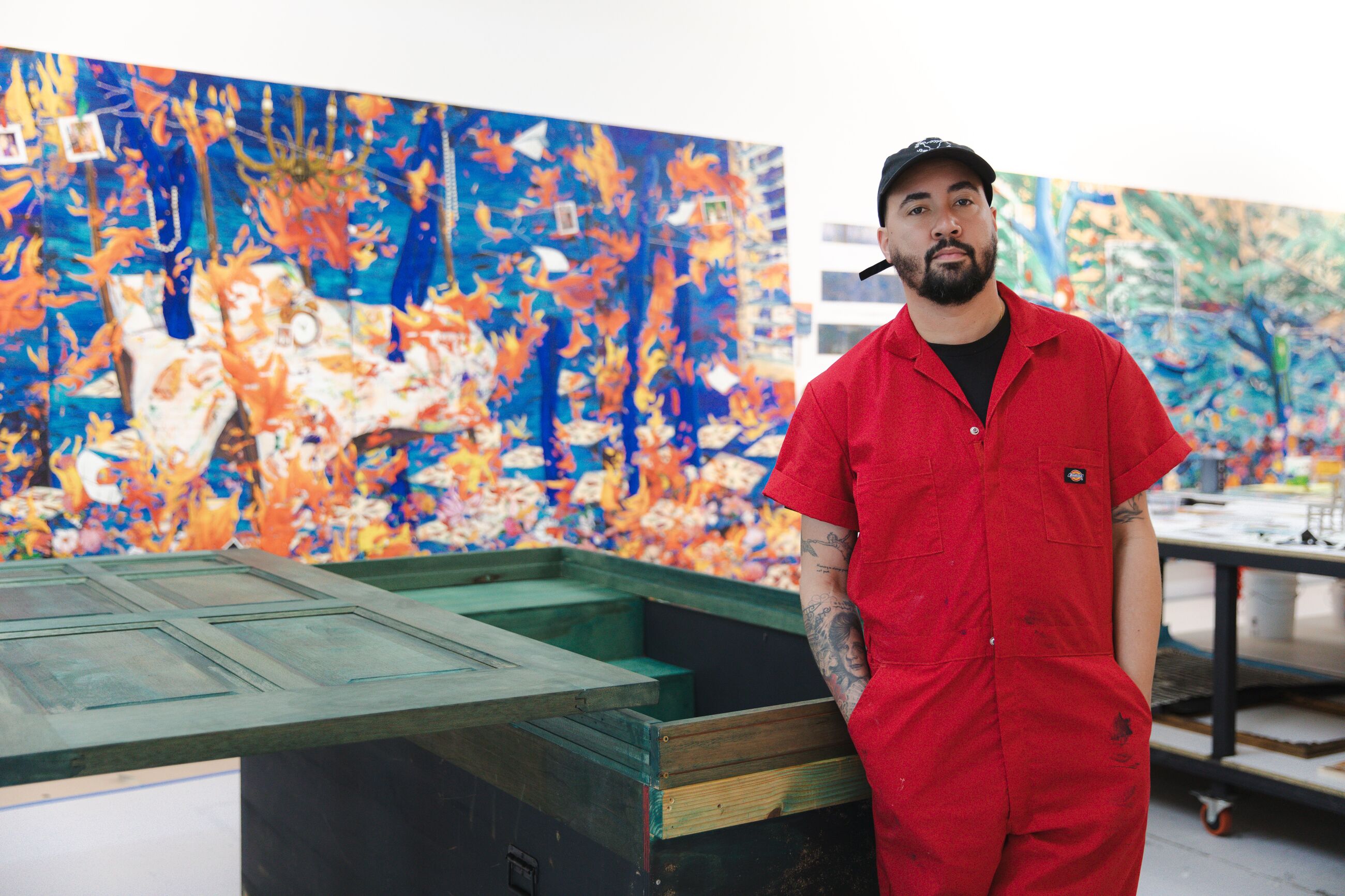
Angel Otero in his Puerto Rico studio, 2026 © Angel Otero. Photo: Javier Romero
Learning Notes: Angel Otero
About Angel Otero
Angel Otero is a contemporary artist born in 1981 in Santurce, Puerto Rico. The artist lives and works between Puerto Rico and New York. His work explores memory, identity and personal history, often drawing on family relationships and lived experience.
Otero studied at the School of the Art Institute of Chicago, where he began to develop the experimental approach to painting that defines his practice today, and challenges the parameters of the material. His works do not simply depict images, they are built through physical processes that reflect how memory itself is formed, altered and reassembled.
Place plays a significant role in Otero’s thinking. Rather than treating location as a backdrop, he describes it as an active presence that shapes perception. Moving between Puerto Rico and New York—and international residencies—he allows each environment to influence his work. Light, architecture, climate and personal associations all contribute to the way his paintings evolve. His studio becomes a space where past and present meet and where memories are reactivated through making.
Family is also central to Otero’s practice. His grandmother, her home and the objects within it appear as recurring references. These elements are not presented as clear narratives, but as fragments that surface and shift within the work. Through this approach, Otero invites viewers to reflect on how personal histories are constructed and how they continue to shape identity over time.
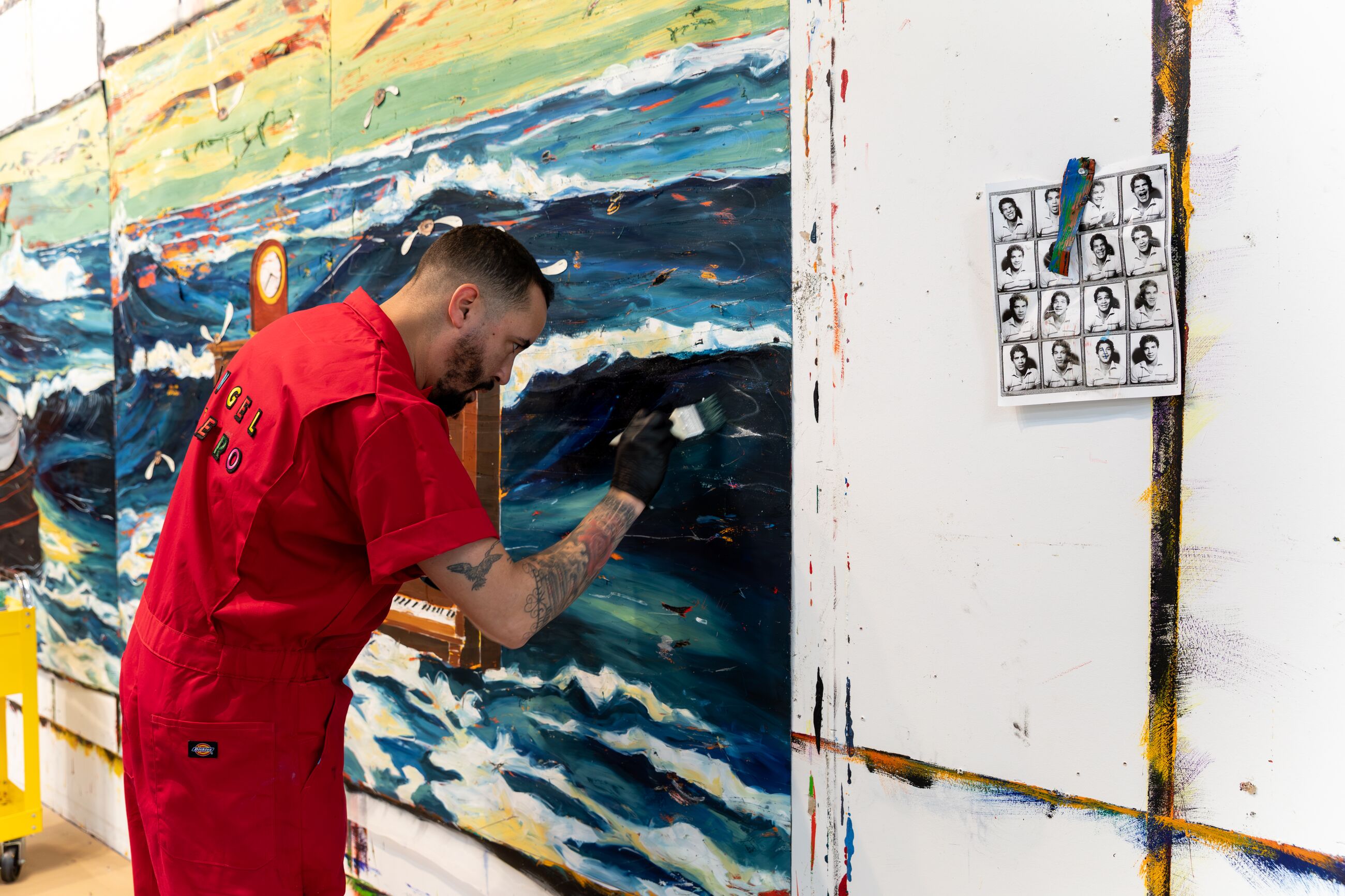
Angel Otero in his Puerto Rico studio, 2026 © Angel Otero. Photo: Javier Romero
Painting
Otero’s work often exists between abstract and figurative methods. At first glance, some paintings may appear abstract, composed of layered colours and textures. On closer inspection, recognisable forms begin to emerge, such as doors, clocks, bedframes or figures. These elements are rarely complete or stable. Instead, they appear partially obscured, fragmented or dissolved within the surface.
A key aspect of Otero’s practice is his innovative use of oil paint. Rather than applying paint directly onto the canvas, he builds up layers of oil paint on sheets of glass. Once partially dry but still flexible, these layers are carefully peeled away to form thin skins of paint. These skins are then transferred onto a canvas and rearranged to create the final composition.
This process involves both control and unpredictability. The act of peeling can stretch, tear or distort the paint, introducing elements of chance. As a result, the finished work contains traces of earlier stages left behind on the glass, including marks, colours and textures that remain visible beneath the surface. Each painting becomes a record of its own making, with layers that hold the history of gestures and decisions over time.
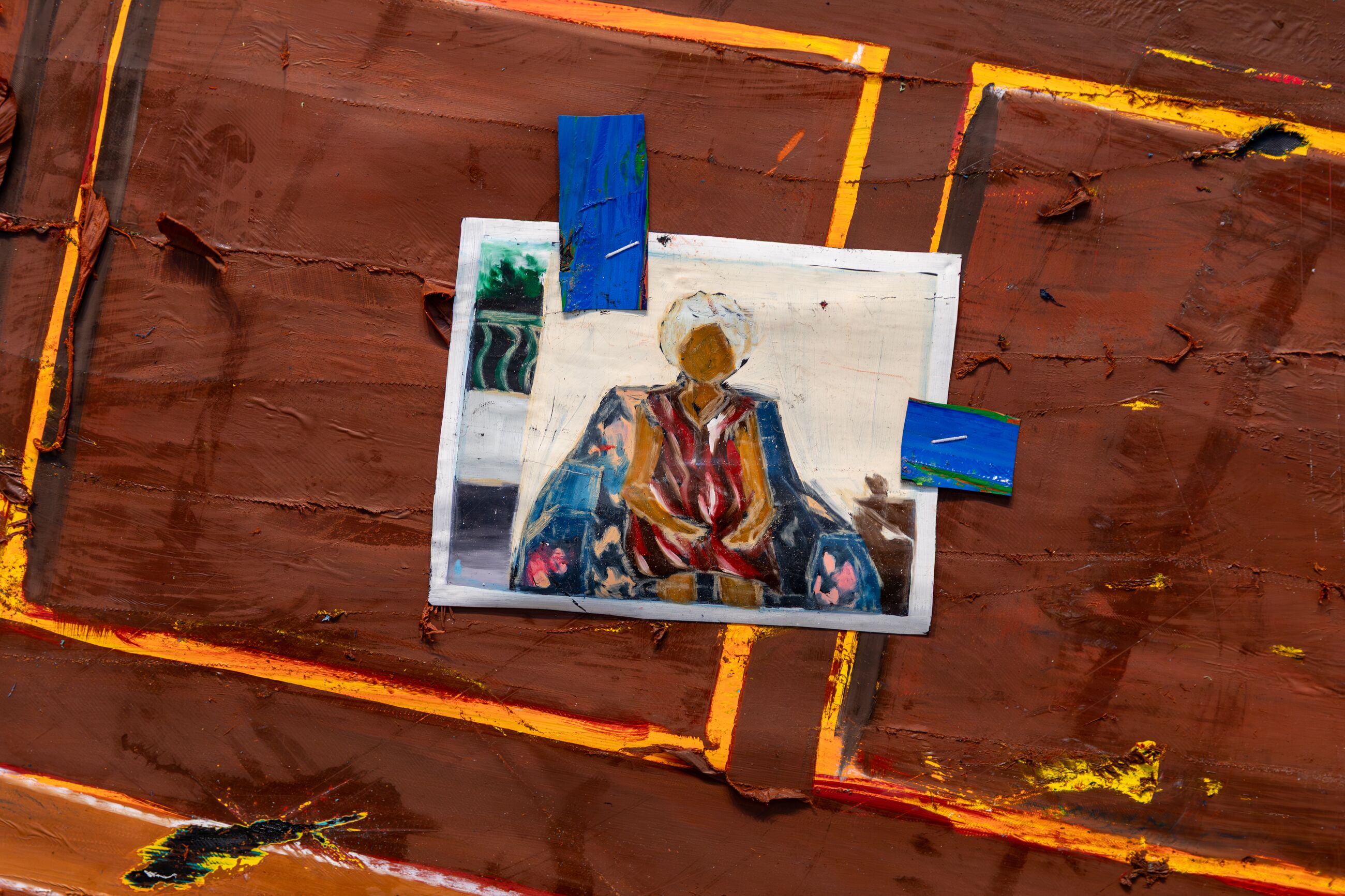
Angel Otero, Prayer Piano (detail), 2026 ©️ Angel Otero. Photo: Javier Romero
Collage
Otero combines his singular technique with collage. Recurring motifs and objects are executed on glass, as well, that then get cut out once scraped and collaged on top of the painting’s surface. As a result, the collapsing of imagery and the combined nature of both abstract and figurative elements reflect the unstable nature of memory.
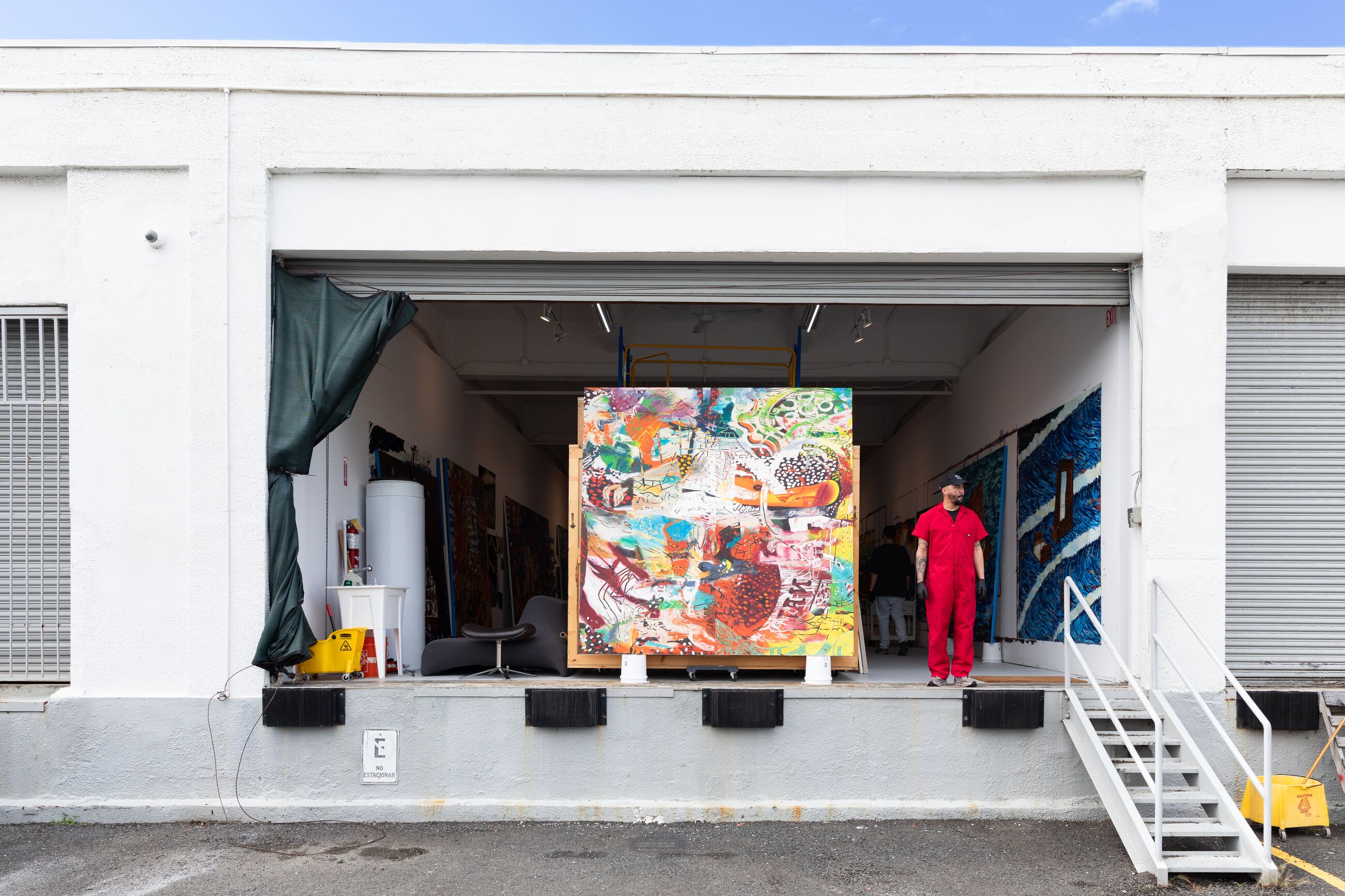
Angel Otero in his Puerto Rico studio, 2026 © Angel Otero. Photo: Javier Romero
Scale
In terms of scale, Otero’s large paintings can immerse the viewer, creating an experience that encourages close looking and physical movement. Smaller works on paper, by contrast, offer more intimate encounters, where subtle details and textures can be examined closely.
Does he work in any other ways?
In recent years, Otero has expanded his practice beyond painting. Sculptural works extend his interest in material and space, while film allows him to explore narrative and memory through moving image and bring the visual language typically rendered in paint to life. Across these different forms, his focus remains on transformation, process and the relationship between material and meaning.
What are the main themes in Angel Otero’s work?
Memory
Memory is one of the most important themes in Otero’s work. Rather than presenting memory as stable or complete, he explores how it is fragmented, layered and constantly changing. His process of building, peeling and reassembling paint mirrors this idea. Just as memories are reshaped over time, his paintings are constructed through acts of revision and transformation.
Place
Place is another key theme. Otero describes place as something that actively influences the work. Each location carries its own atmosphere, history and sensory qualities, allowing different environments to inform his practice. This results in works that bring together multiple places and moments, rather than representing a single location.
Water
Water is a recurring reference in Otero’s work. It refers to the ocean as a site of movement, migration and connection. It also suggests a process of transformation, where salt dissolves into water, becoming both visible and invisible. Emotionally, salt can represent both pain and healing, as something that can sting but also preserve. Through this concept Otero explores how experiences leave lasting traces on individuals and communities.
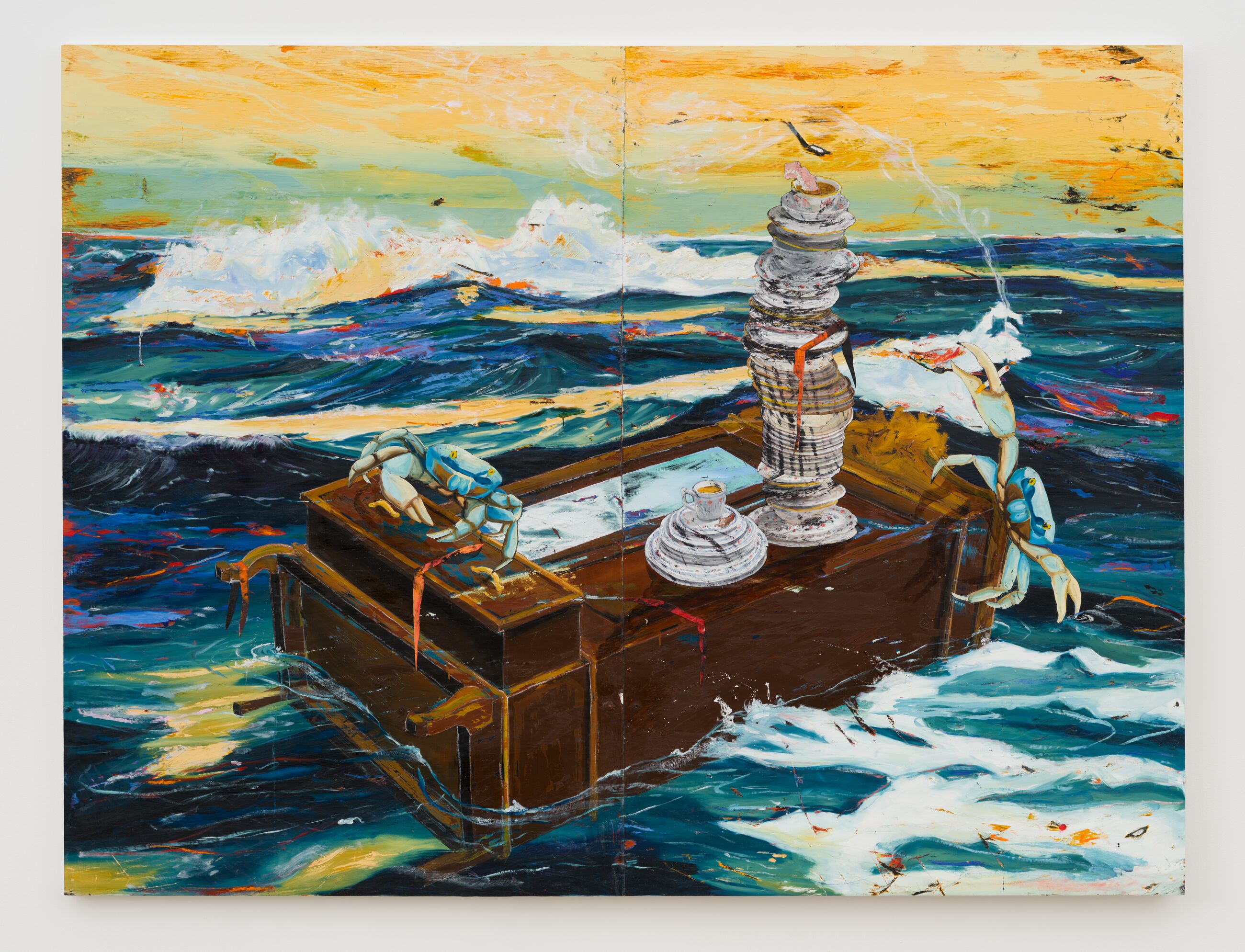
Angel Otero, A Two Man Island, 2026 ©️ Angel Otero. Photo: Ken Adlard
Family
Family and personal history are central to his work. Objects and images connected to his childhood, family, and present day appear repeatedly. These elements act as carriers of meaning, holding emotional significance beyond their physical form. By embedding them within his paintings, Otero reflects on how personal narratives are constructed from fragments of experience and in turn how experiences shape who we are.
Material and Process
Material and process are also fundamental. Otero treats paint as a physical substance that can be manipulated and transformed. His work highlights the tension between control and chance, as well as between construction and collapse. By foregrounding process, he invites viewers to consider not only what they see but how the work has been made.
Storytelling
Otero’s work explores storytelling. Rather than presenting a clear or linear narrative, his paintings bring together multiple fragments that resist resolution. Viewers are encouraged to piece together their own interpretations, engaging actively with the work. In this way, meaning is not fixed but emerges through looking and reflection.
Questions for discussion
Angel Otero’s process involves building up and peeling away layers of paint, allowing chance to shape the final work. How does this approach change the way you think about control and intention in art making?
Many of Otero’s works include fragments of objects and photographs connected to memory.
What role do objects play in your own memories and how might they carry emotional meaning and transformation?
Otero’s paintings often sit between abstraction and figuration, where images are partly visible and partly hidden. How does this affect the way you interpret what you see?
His work reflects movement between different places and cultures. How might changing environments influence the way we understand ourselves and our past?
Otero’s use of scale ranges from large, immersive works to smaller more intimate pieces. How does the size of a work affect your experience of it?
Additional Information


