
Learning Notes: Lee Bul
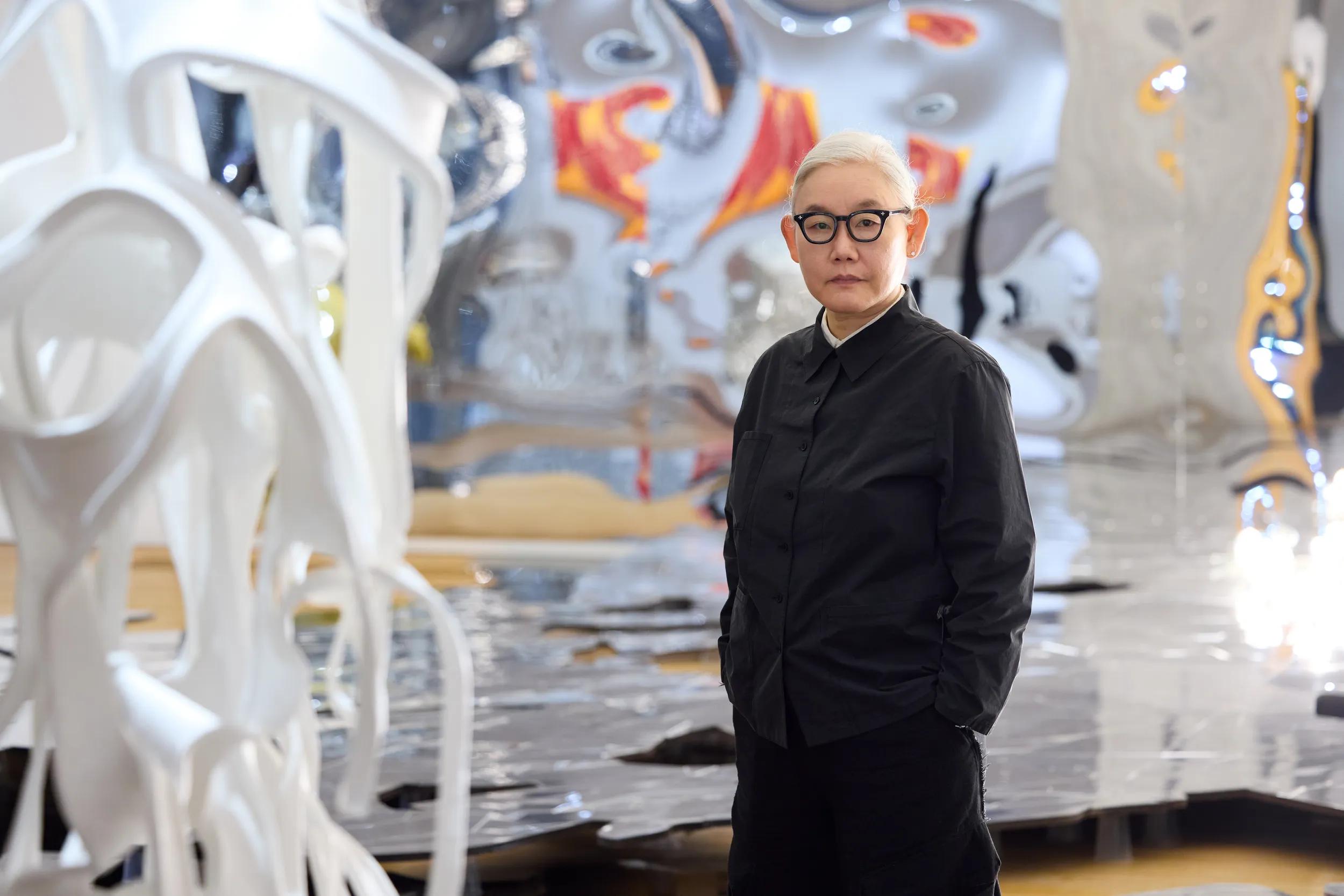
Photo: Dan Leung © M+, Hong Kong.
Learning Notes: Lee Bul
About Lee Bul
Lee Bul is a contemporary artist working across sculpture, installation, performance and painting. She was born in Yeoungju, South Korea in 1964 and currently lives and works in Seoul. She first gained international recognition in the 1990s for work focused on utopian ideals, technological transformation and the fragility of human ambition constantly seeking perfection.
Lee graduated from Seoul’s Hongik University with a BFA in sculpture and often created multi-faceted works that crossed genres and disciplines exploring themes of beauty, corruption and decay. Some of Lee’s now-iconic works from this period were part of the global contemporary art scene of the 1990s.
Since then, Lee has created work exploring themes of utopian modernity and the rise and fall of progressivist projects. Her work also reflects her own experience as the daughter of political dissidents during Korea’s turbulent social and political transformation. Lee has participated in international residencies, including time in New Zealand in 2005 where she embarked on a series of sculptures and works on paper and canvas furthering her interest in ruins of historical projects to build a better civilization.
What does her work look like and how does she make her work?
Performance
In Lee’s early performances that challenged societal norms, she often incorporated imagery to explore posthumanism and gender politics. In one of her early guerrilla performances, ‘Sorry for suffering - You think I’m a puppy on a picnic?’ (1990), Lee wore a hand-sewn ‘soft sculpture’, reminiscent of human flesh, in Seoul and Tokyo. This performance, amongst others, represented a response to political, societal and artistic limitations to transcend them.
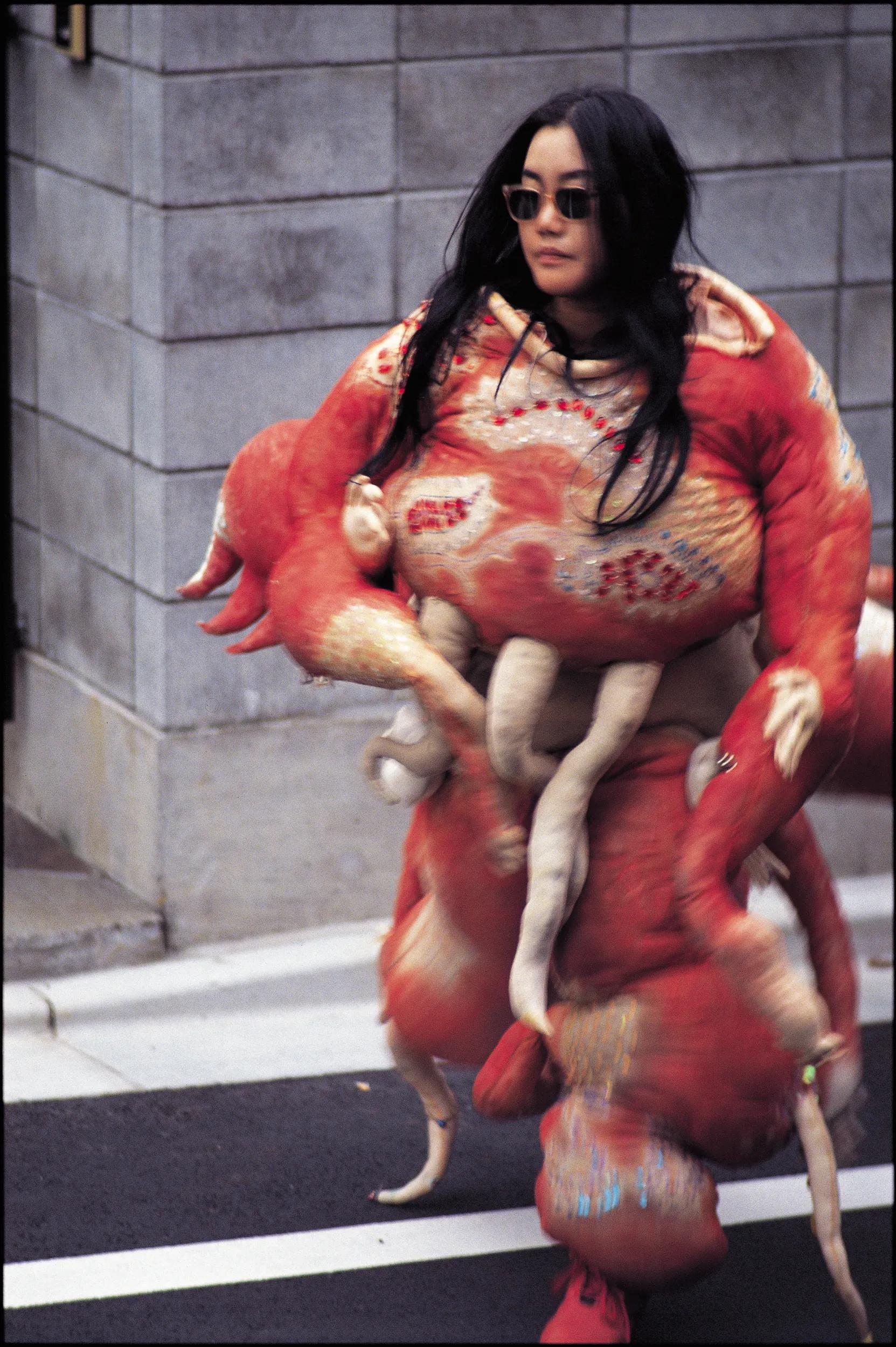
Lee Bul, Sorry for suffering—You think I'm a puppy on a picnic?, 1990, Performance still, 12-day performance, Gimpo Airport, Korea; Narita Airport, Japan; downtown Tokyo; Tokiwaza Theater, Tokyo © Lee Bul
Installation
A large part of Lee’s practice includes installation works, where she continues to reflect on the innerworkings of wider society. ‘Bells from the Deep’ (2014) represents this as she used mirrors and other reflective materials to ‘project fragmented ideas’ — which the artist likened to how human beings see the world. Her use of mirrors also gives the viewer an opportunity to self-reflect (Brilliant Ideas, Bloomberg, 2015).
Sculpture
Through sculptural forms, Lee questions how people build their own conditions in the modern world. For example, ‘Willing To Be Vulnerable—Metalized Balloon’ (2015–2016/2020) is a large-scale sculpture fabricated from lightweight materials such as PET film. Part of a series first conceived for the 20th Biennale of Sydney in 2016, the work transforms one of modernity’s defining symbols of progress into an unsettling meditation on human fragility and impermanence. Existing between monument and ruin, the sculpture reflects both the optimism long associated with technological innovation and the uncertainty beneath humanity’s pursuit of mastery over the natural world.
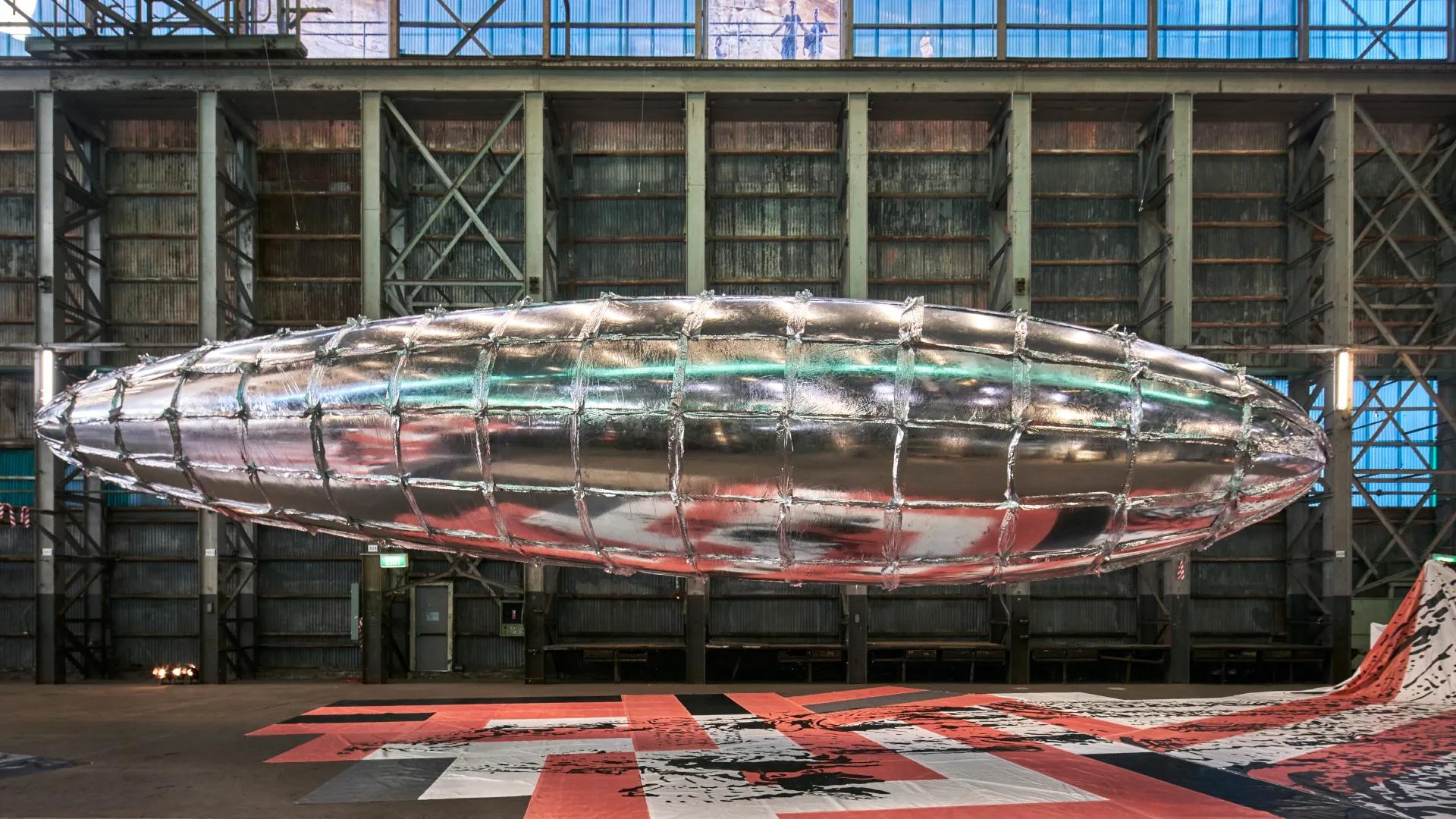
Lee Bul, Willing To Be Vulnerable—Metalized Balloon, 2015-2016/2020, Fabric, PET film, air blower, electrical wiring. Installation view of the 20th Biennale of Sydney, Sydney, Australia, 2016. © Lee Bul. Photo: Algirdas Bakas
Painting
In many of Lee’s paintings, mother-of-pearl is embedded within layers of acrylic paint that are repeatedly applied and sanded to reveal shifting surfaces. These materials represent her longstanding interest in the interplay between the organic and synthetic. Some of Lee’s earlier ‘Perdu’ works draw on the visual language of the artist’s biomorphic sculptures, while more recent works from the series reflect abstract architectural imagery. Lee’s ongoing ‘Untitled (Willing To Be Vulnerable—Velvet)’ series is another example. Here, the artist begins with photographs of her own sculptures and installations, then layers them with source imagery, fragments of material from her studio and intricately cut pieces of mother-of-pearl. Applied to rich silk velvet grounds, these elements create complex landscapes populated by crystalline architectures that seem to belong to imagined future worlds.
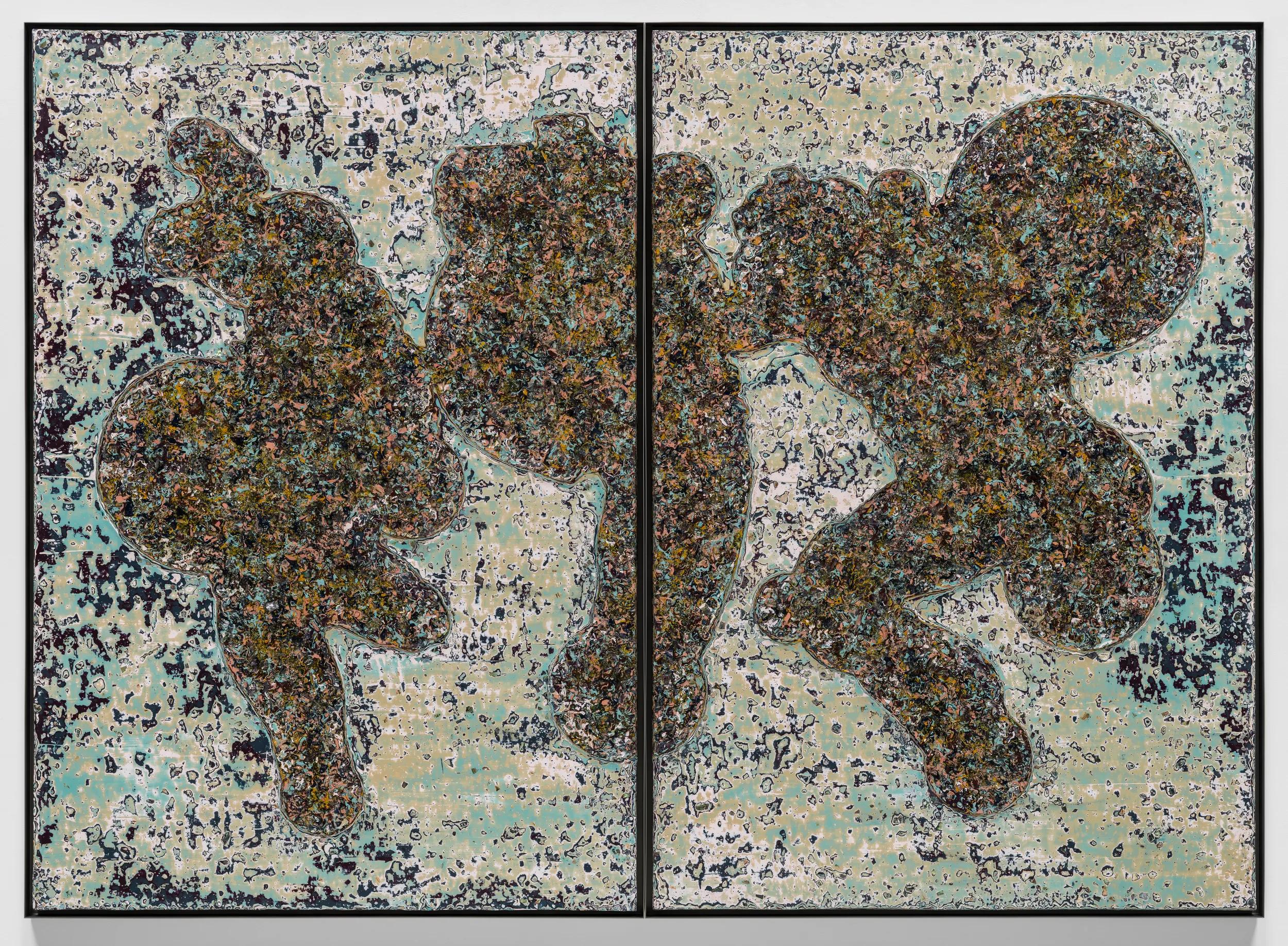
Lee Bul, Perdu—Silhouette I, 2026, Mother-of-pearl, acrylic paint on jute canvas, aluminum base canvas frame, stainless-steel frame, 163.3 x 226 x 4 cm / 64 1/4 x 89 x 1 5/8 in (framed) © Lee Bul. Photo: Jeon Byung-cheol

Lee Bul, Untitled (Willing To Be Vulnerable—Velvet #29), 2026, Mother-of-pearl, acrylic paint, collage on silk velvet, 197 x 147 x 11.5 cm / 77 1/2 x 57 7/8 x 4 1/2 in (framed) © Lee Bul. Photo: Jeon Byung-cheol
What are the main themes in Lee Bul’s work?
Utopian Ideals and Architecture
The artist explores tensions between utopian aspiration and inevitable collapse – Lee states, ‘a good way to see if a vision has persisted or not is through architecture because architectural structures embody all the idealistic vision of the time’ (Brilliant Ideas, Bloomberg, 2015). Fusing bodily, mechanical and architectural forms, Lee has also created hybrid structures that continue her longstanding interrogation of the monuments through which societies project power. These structures exist between organism and architecture, exposing the instability beneath modernity’s grand narratives while imagining new forms.
Technological Transformation
Lee continued to examine the body’s relationship to technology during the early 2000s, creating sculptural hybrids of machine and organic forms. Her ‘Cyborg’ and ‘Anagram’ series explored humans’ fascination and anxieties surrounding the techno-utopian ideal of perfection, while recalling the soft sculptures she created for her early performances. Through her work, Lee continues to examine the intersections of technology, history and speculative futures.
Transcending Constraints
As the artist deconstructed societal barriers through her performance art, Lee also interrogated these restraints through her installation work. Lee’s ‘Majestic Splendor’ (1997), an installation featuring raw, decomposing fish with sequins that was shown at the Museum of Modern Art, New York, deeply interrogates how society views, places value on and upholds beauty standards and perfection.
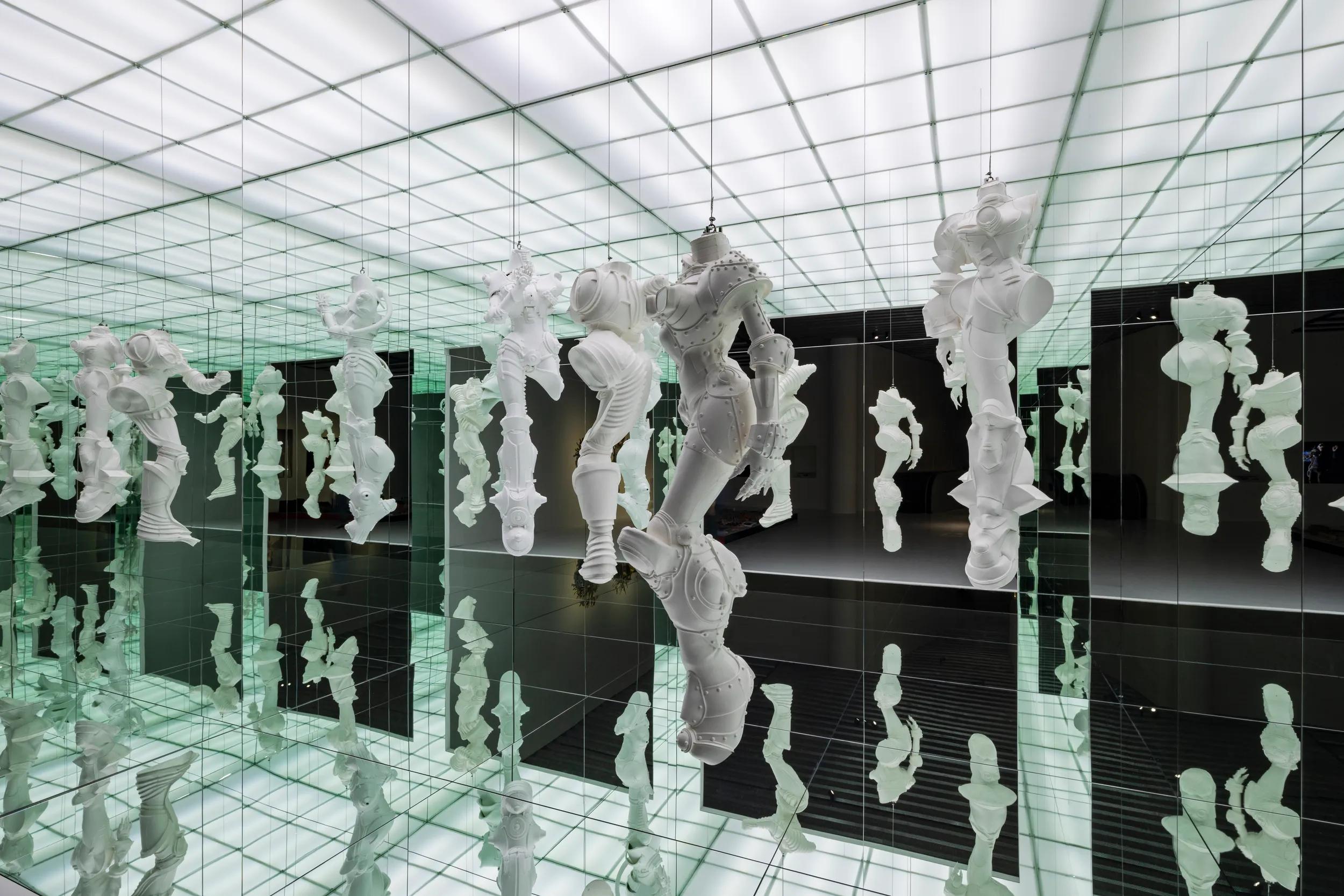
Lee Bul, Cyborg W1, W2, W4; W6, Installation view, ‘Human, 7 questions,’ Leeum Museum of Art, 2021, Cast silicone, polyurethane filling, paint pigment; hand-cut ethylene-vinyl acetate panels on FRP, polyurethane coating © Lee Bul. Courtesy Leeum Museum of Art. Photo: Han Do Hee
Questions for Discussion
•Lee often blurs boundaries between installation, sculpture and performance. How does each medium affect the way you see and experience her visual language?
•Lee is interested in the interplay between organic and synthetic materials – humanity’s drive to transcend nature through technology and systems of control. What connections can you make between Lee’s practice and wider society? After viewing her paintings, what are your thoughts on intersections between human beings, nature and technology, today and in the future?
•Lee often interrogates utopian ideals and explores their eventual collapse within her work. From your perspective, what is the significance of the artist’s questioning of utopian ideals, perfection and costs of technological advancement? How do you think of or interrogate future realities in your own life or creative practice?


