
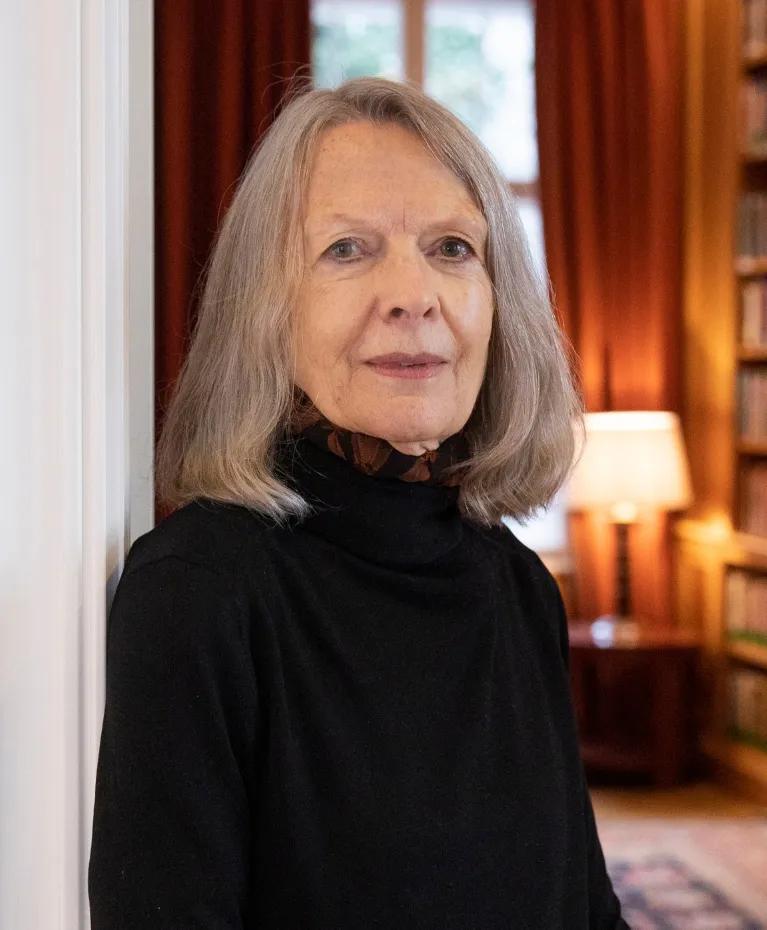
Portrait of Lynne Cooke. Photo: Annette Hornischer.
Curator Walkthrough & Book Launch: Lynne Cooke on ‘Arp. Heads or Tails' and the release of ‘Arp: Paper’
On the occasion of ‘Arp. Heads or Tails,’ the first New York exhibition in nearly fifteen years dedicated to the seminal German-French modernist, and the release of the new book ‘Arp: Paper,' from Hauser & Wirth Publishers, please join us for a walkthrough with curator, art historian and writer, Lynne Cooke.
‘Arp. Heads or Tails,’ organized by Curatorial Senior Director Alexis Lowry, takes Arp’s late Threshold sculptures as a point of departure, situating this pivotal but underexamined body of work within the trajectory of Arp’s long career of aesthetic and philosophical inquiry. The exhibition traces a line from his early cut-outs and reliefs to his mastery of form as a tool for reconfiguring and transforming our perception of space.
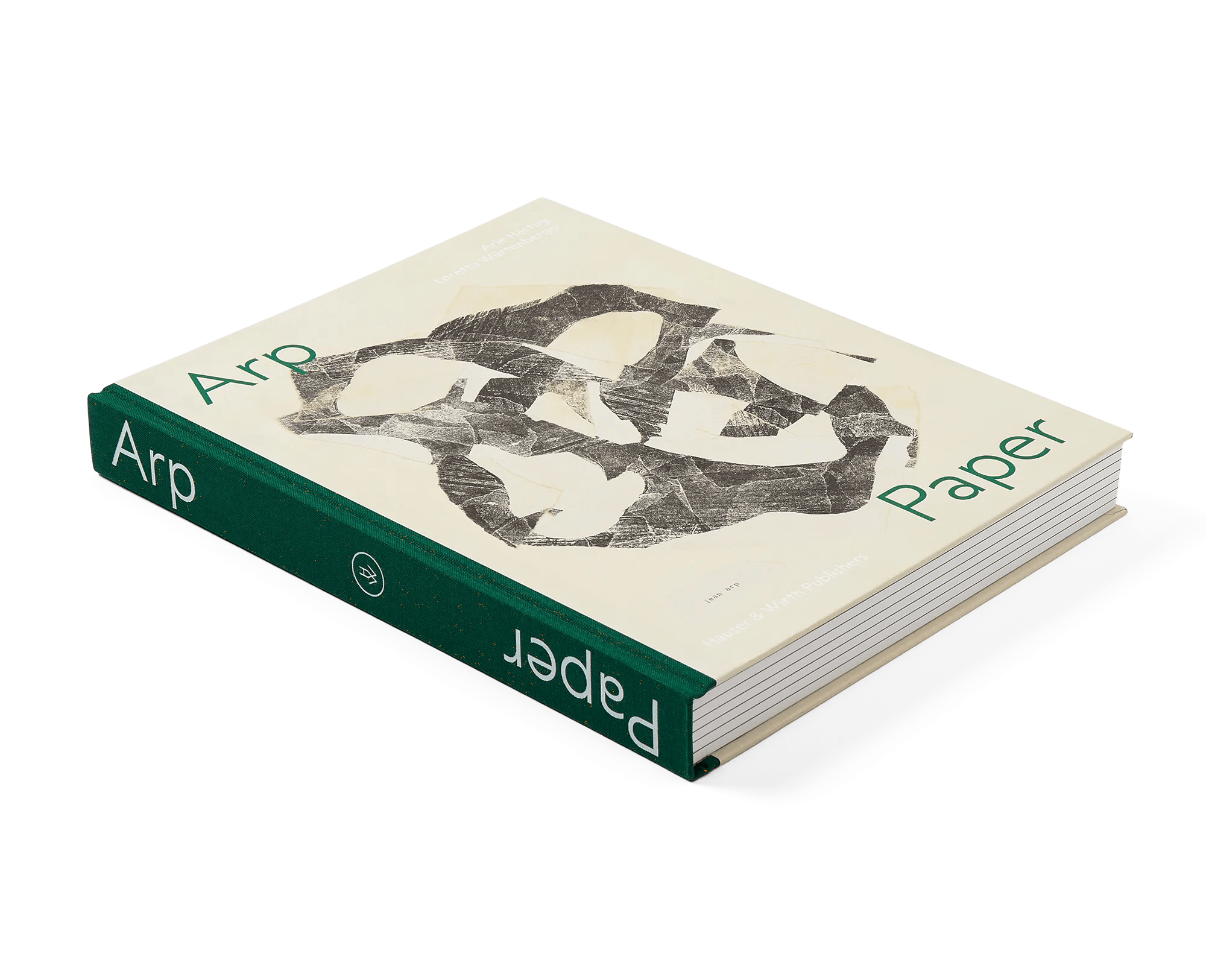
Coinciding with the opening of ‘Arp. Heads or Tails’ and Printed Matter’s New York Art Book Fair, Hauser & Wirth Publishers is excited to release ‘Arp: Paper,’ which—across five thematic chapters— proposes a new way of seeing the artist’s work, revealing how ideas discovered with and on paper reappear throughout his oeuvre. With more than two hundred works—many never previously published or exhibited—this expansive survey puts paper at the very heart of Arp’s practice.
Copies of ‘Arp: Paper’ will be available for purchase.
This event is free, however, reservations are recommended.
About Hans Arp
Hans Arp is a familiar figure of classical Modernism and was a key contributor in the development of Dada and Surrealism in the early twentieth century. Focusing his attention on everyday objects, Arp created his own unique ‘object language’ using a nonsensical vocabulary: plate, fork, knife, clock, tie, moustache, lips, breasts. With a playful hand he juggled the dominant art currents of the early twentieth century, combining seemingly contradictory geometric and organic formal idioms with the artistic ‘-isms’ of his epoch.
Turning his back on the increasingly modernized turn-of-the-century society, Arp created biomorphic works whose organic, amoeboid forms highlighted his fascination with the physiological processes of procreation, growth and death, and counteracted the rectilinear structures of Cubism. Arp studied the mineral, vegetable, and animal worlds for inspiration, documenting the evolution of an imaginary world. Combined with his late bronze sculptures from the 1950s, these works sought to give form to natural forces—clotting, hardening, congealing and fusing—all of which were symbols of eternal cycles in nature for Arp.
About Lynne Cooke
Lynne Cooke is a curator, art historian, and writer living in New York. Her recent exhibitions include 2018 Outliers and American Vanguard Art, 2018; Woven Histories: Textiles and Modern Abstraction, 2023-2025, which toured to LACMA, Los Angeles, National Gallery of Art, Washington DC, National Gallery of Canada, Ottawa, and MoMA, New York; and Ceija Stojka: Making Visible, The Drawing Center, New York, 2026. A 2026 Fellow at the American Academy in Berlin, Cooke has texts forthcoming on the work of Analia Saban and William L Hawkins.

