
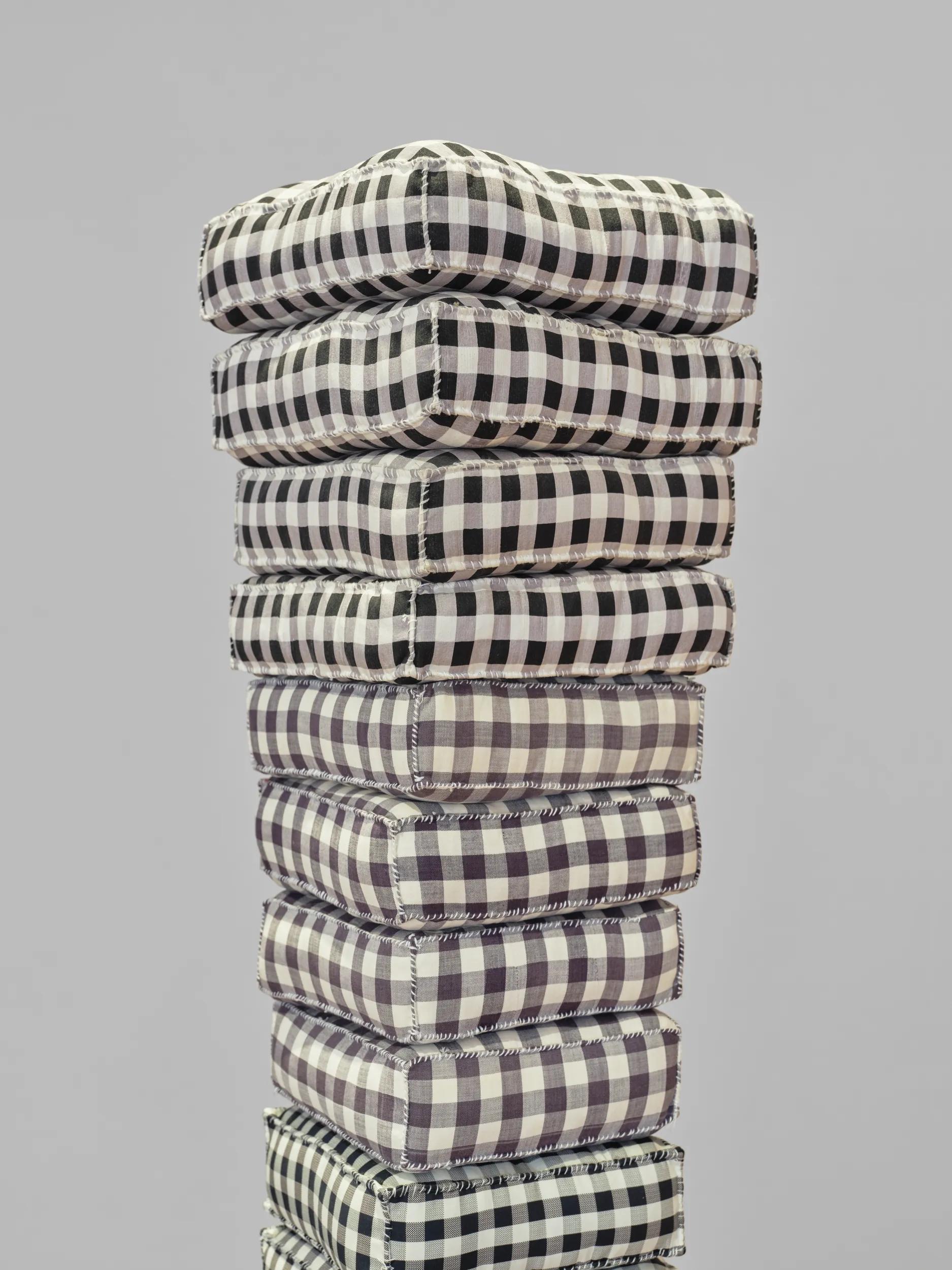
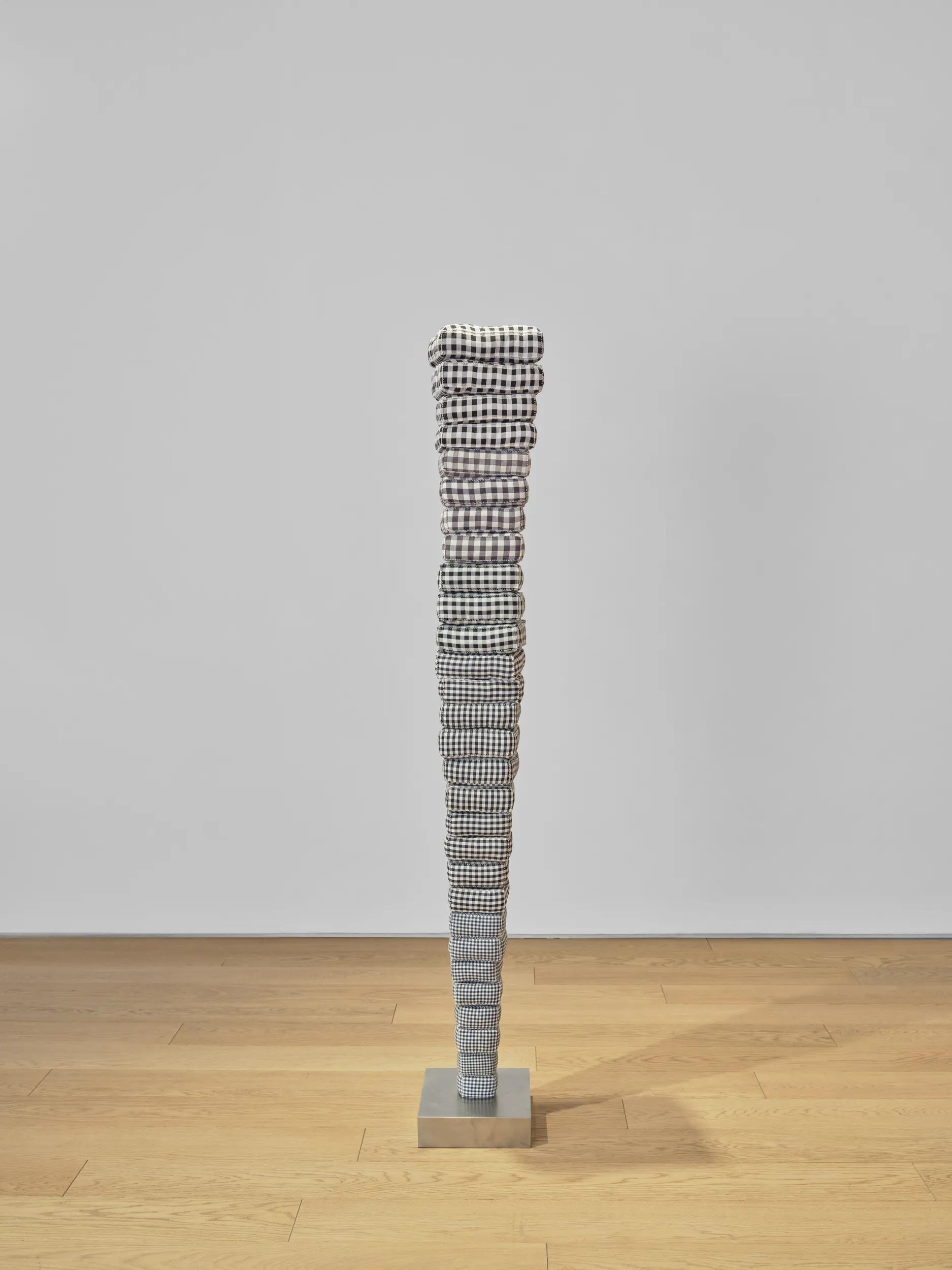
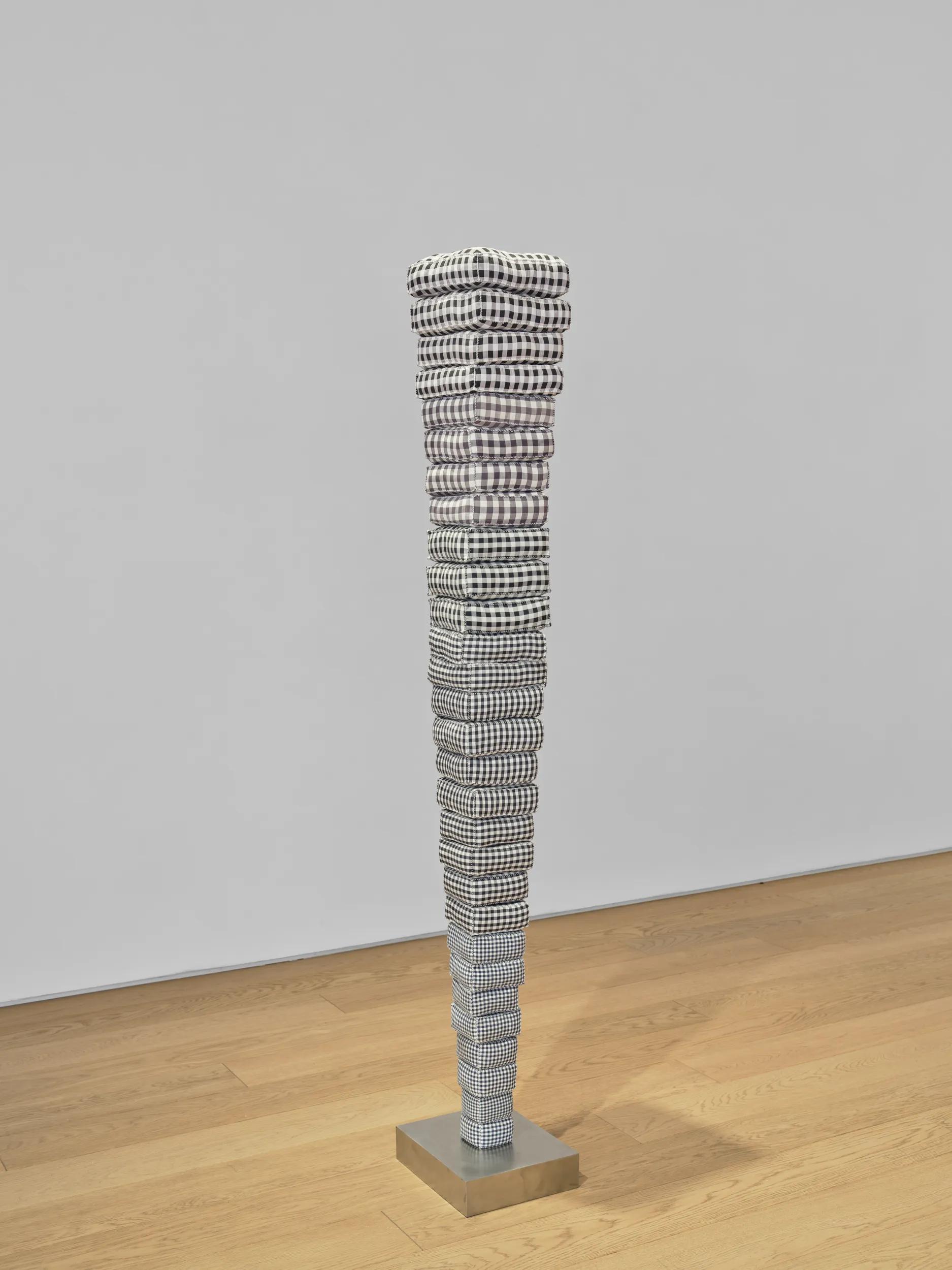
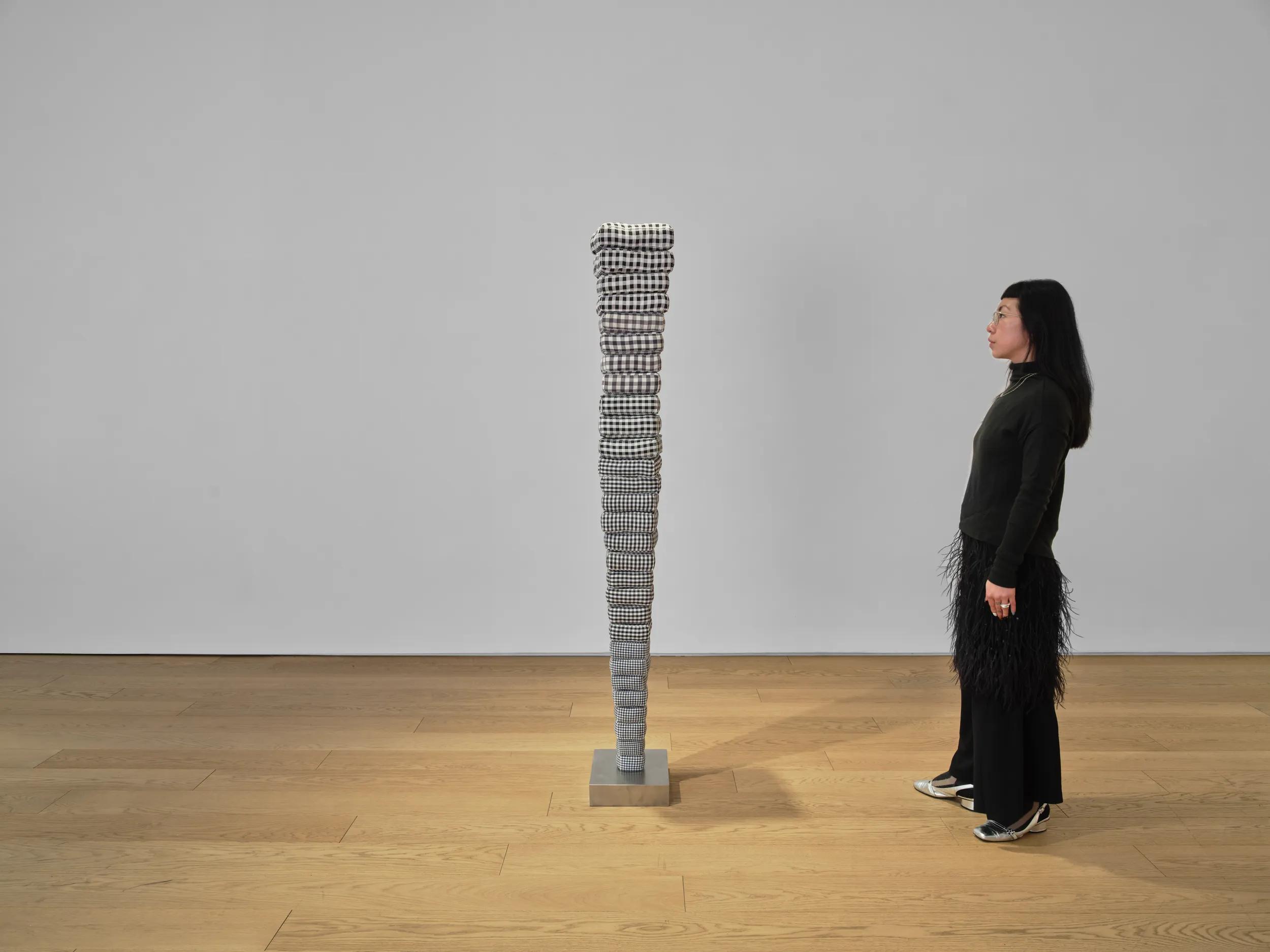
A late work, ‘Untitled’ (2001) by Louise Bourgeois is from a series of remarkable sculptures she initiated at the end of the 1990s using fabrics that came from her own clothes and household items—some pieces she had saved for over fifty years. In their insistent verticality, these tall, slender fabric columns strongly recall her Personages of the late 1940s and 1950s. ‘Untitled’ features a tall stack of square cushions made from a plaid-patterned fabric, which increase in size as they ascend from the base, playing with balance and the tension between fragility and stability.
1 / 4
Louise Bourgeois
Untitled
- 2001
- Fabric and stainless steel
- 182.2 x 30.5 x 25.4 cm / 71 3/4 x 12 x 10 in
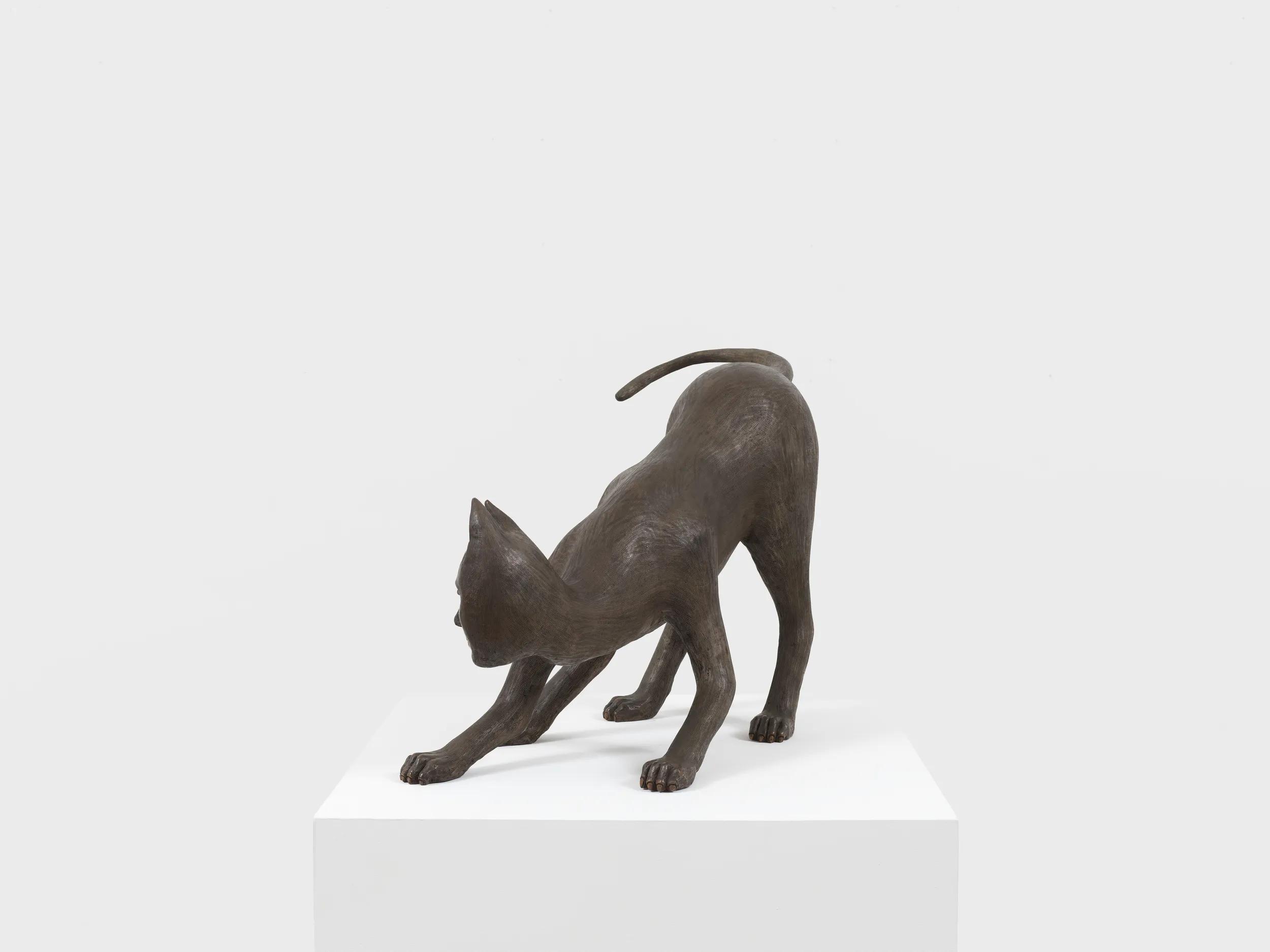
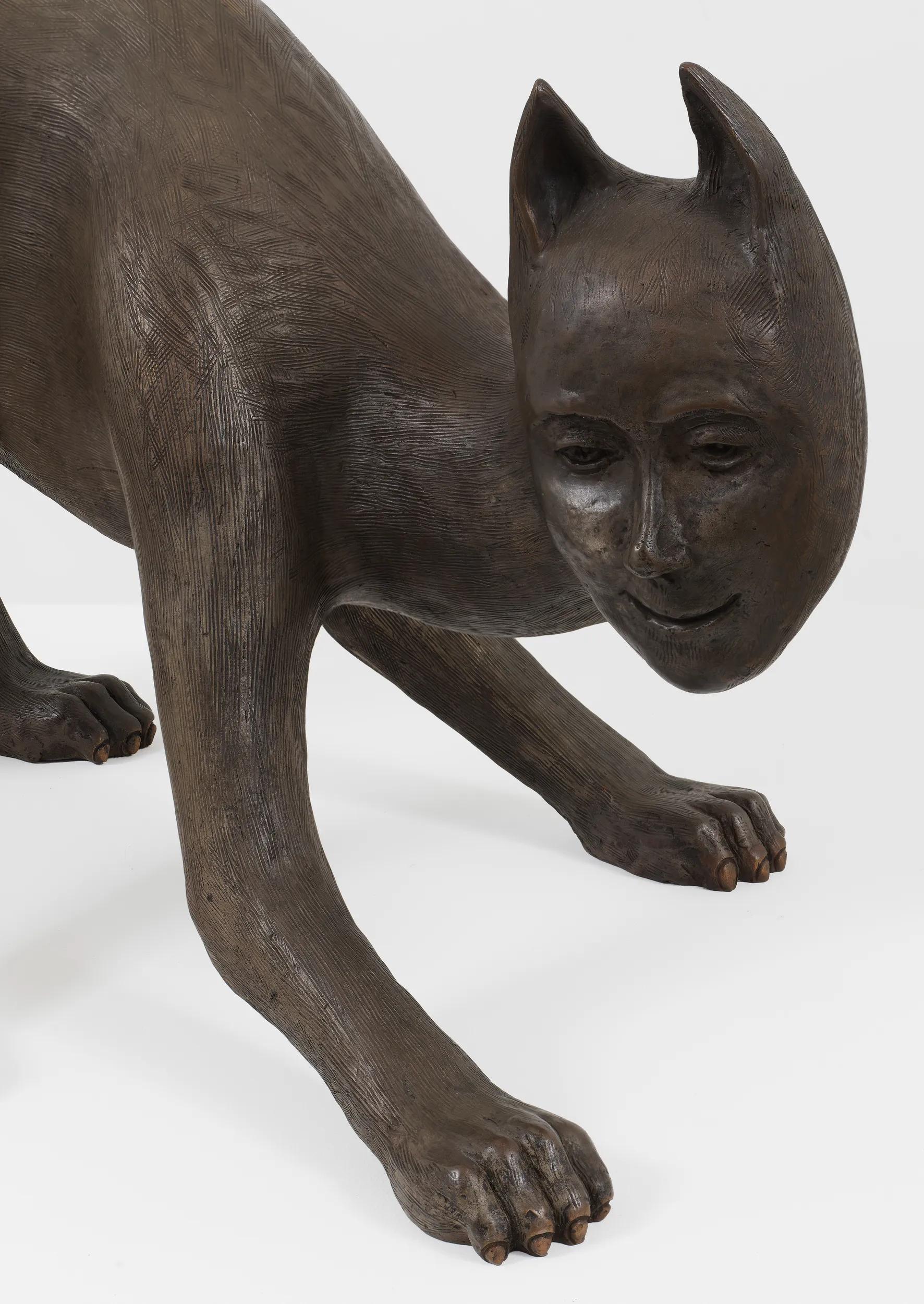
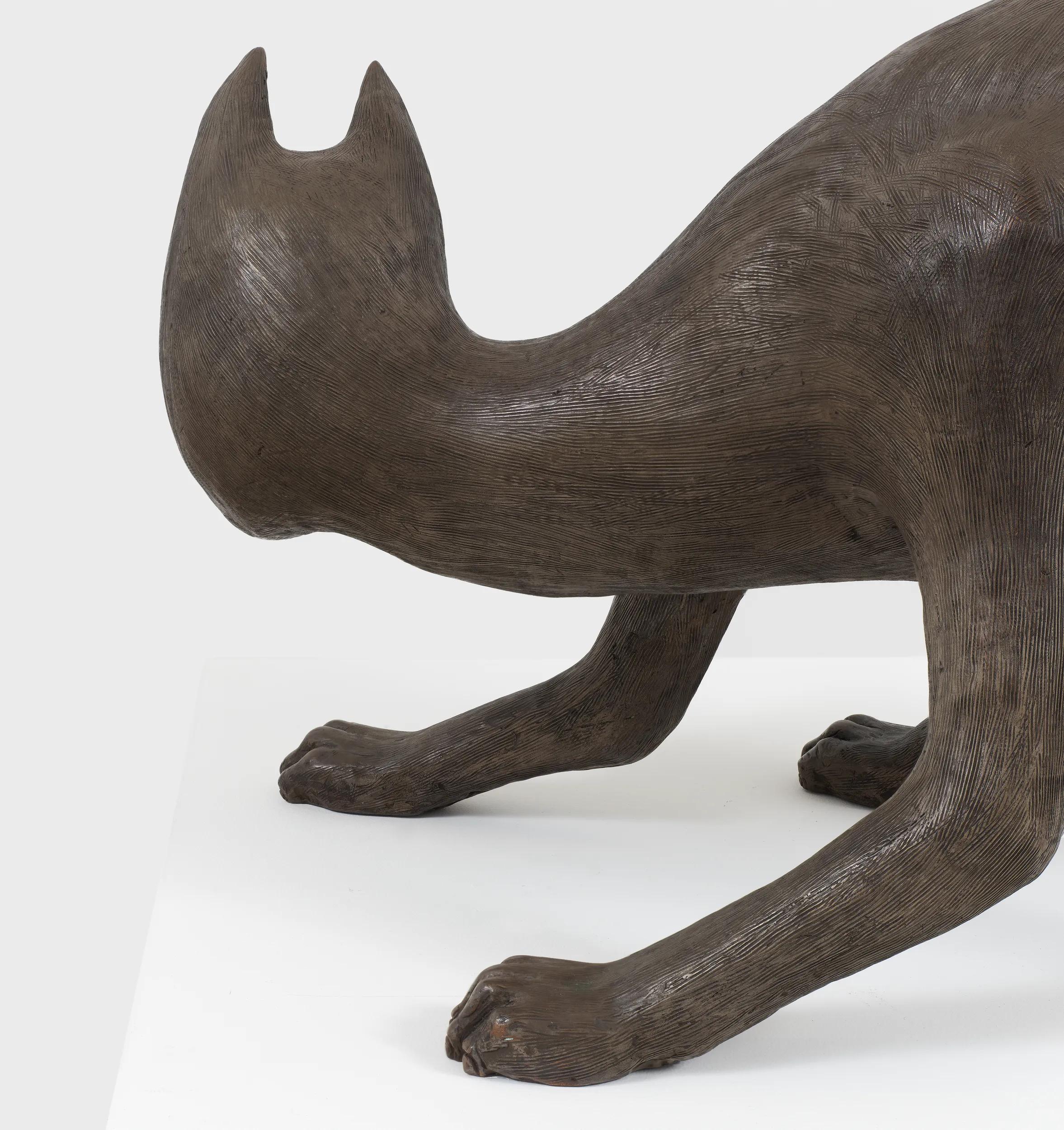
‘Self Portrait’ (2007) explores Bourgeois’s enduring themes of family dynamics and relationships. Here, the artist metamorphoses into a crouching, five-legged cat, modeling the she-cat’s face after her own likeness as a young woman, smiling coyly at the viewer. The feline’s five legs are an allusion to the members of her family. As Bourgeois put it, ‘I grew up in a family of five in France and also raised a family of five of my own in New York. My five-legged animal is personal; it is a self-portrait of my obligations.’
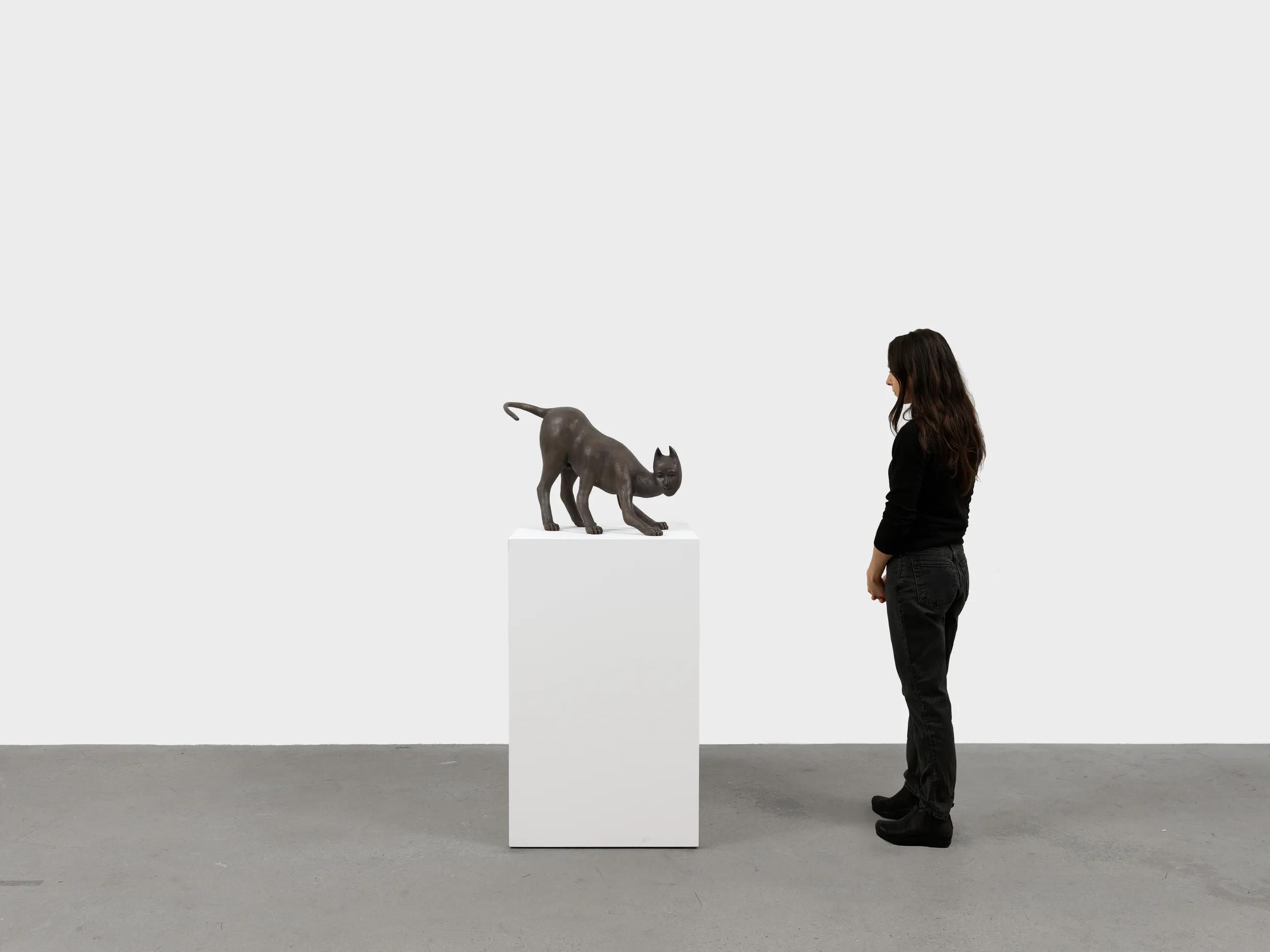
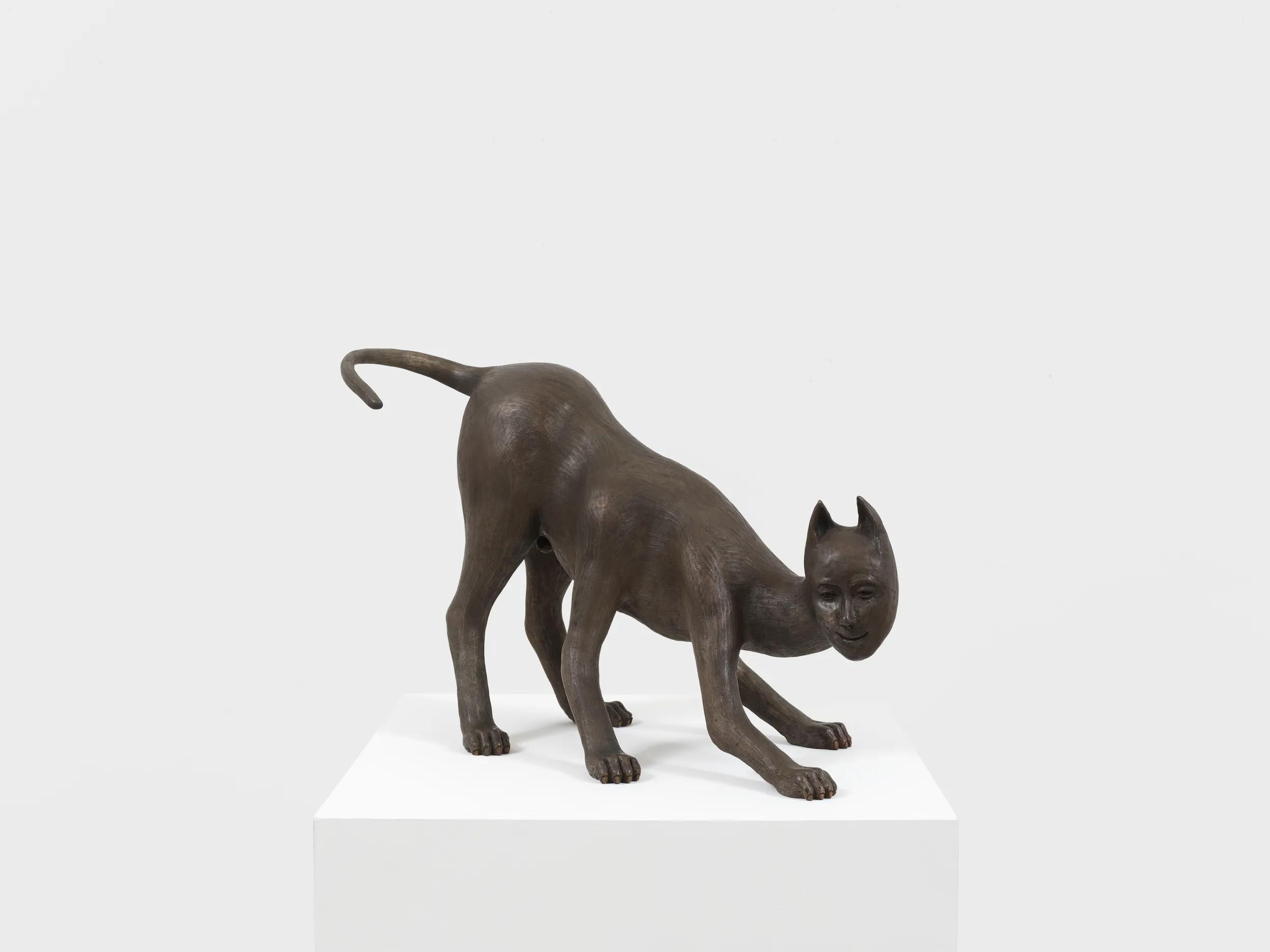
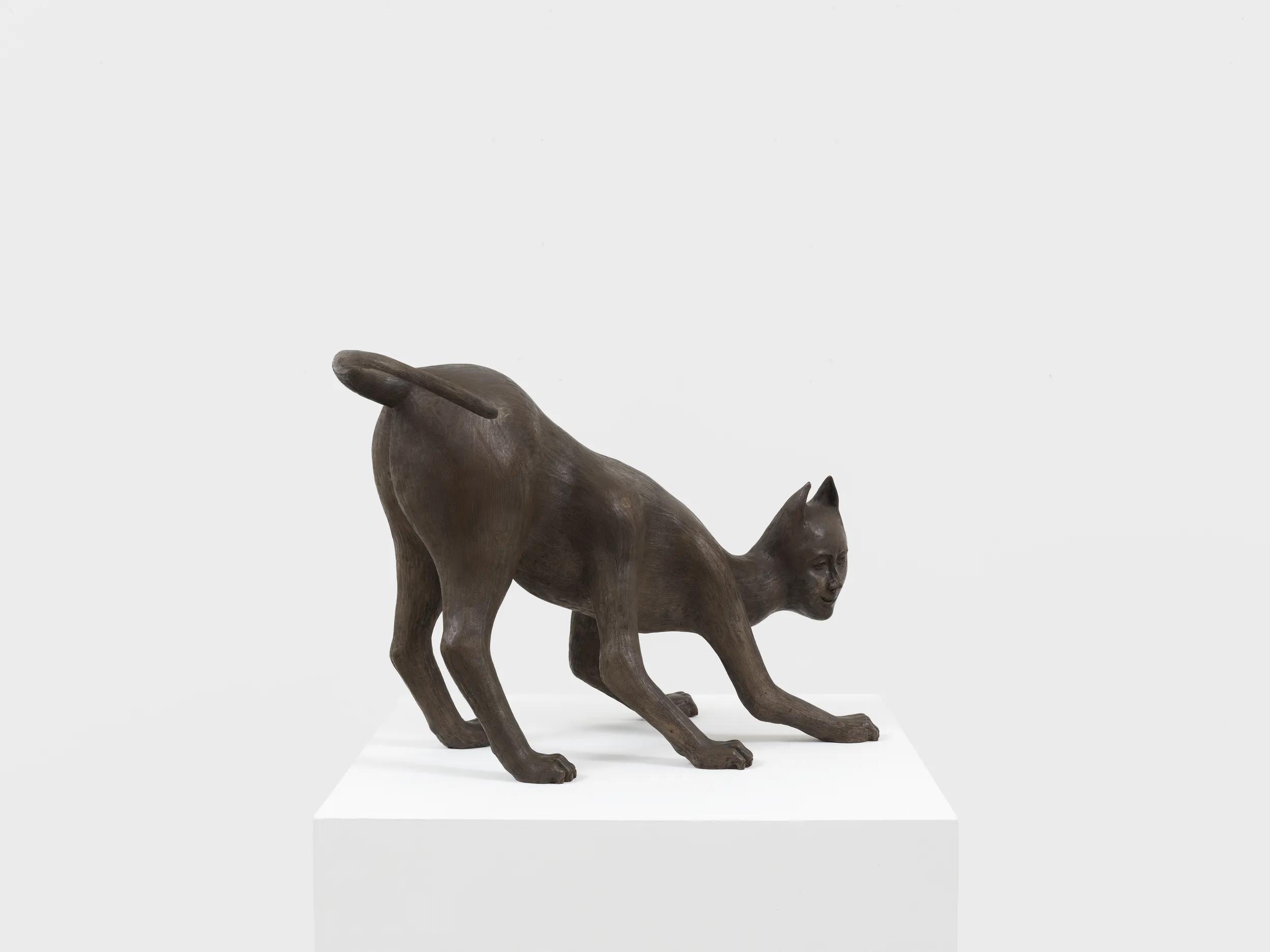
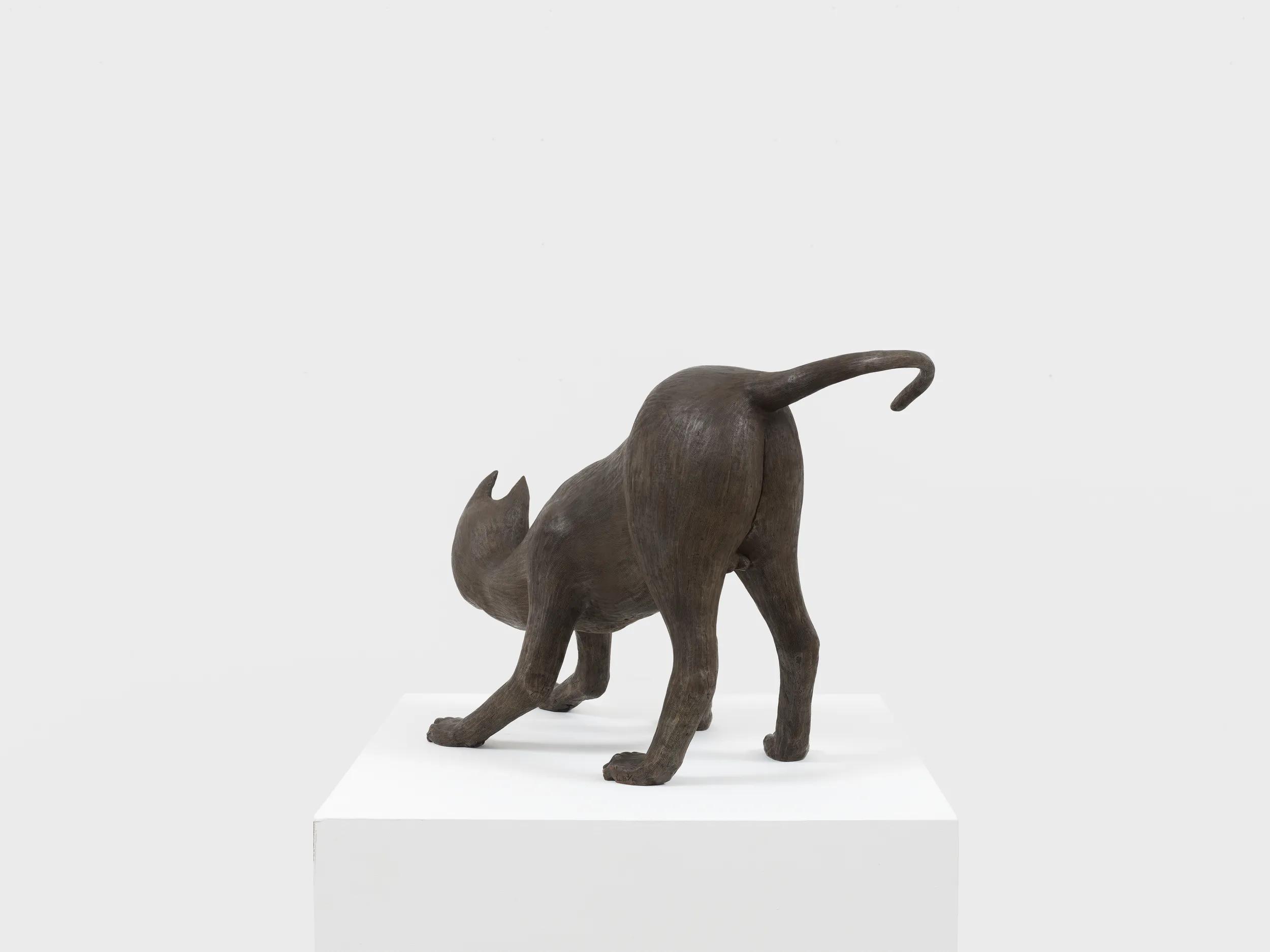
1 / 7
Louise Bourgeois
Self Portrait
- 2007
- Bronze, silver nitrate and polished patina
- 45.7 x 66.7 x 40.6 cm / 18 x 26 1/4 x 16 in
Senior Director, Partner Yuta Nakajima discusses Louise Bourgeois’ ‘Untitled,’ ‘Self-Portrait,’ ‘Chanson (Bleu)’ and ‘Chanson (Rouge).’
1 / 2
Louise Bourgeois
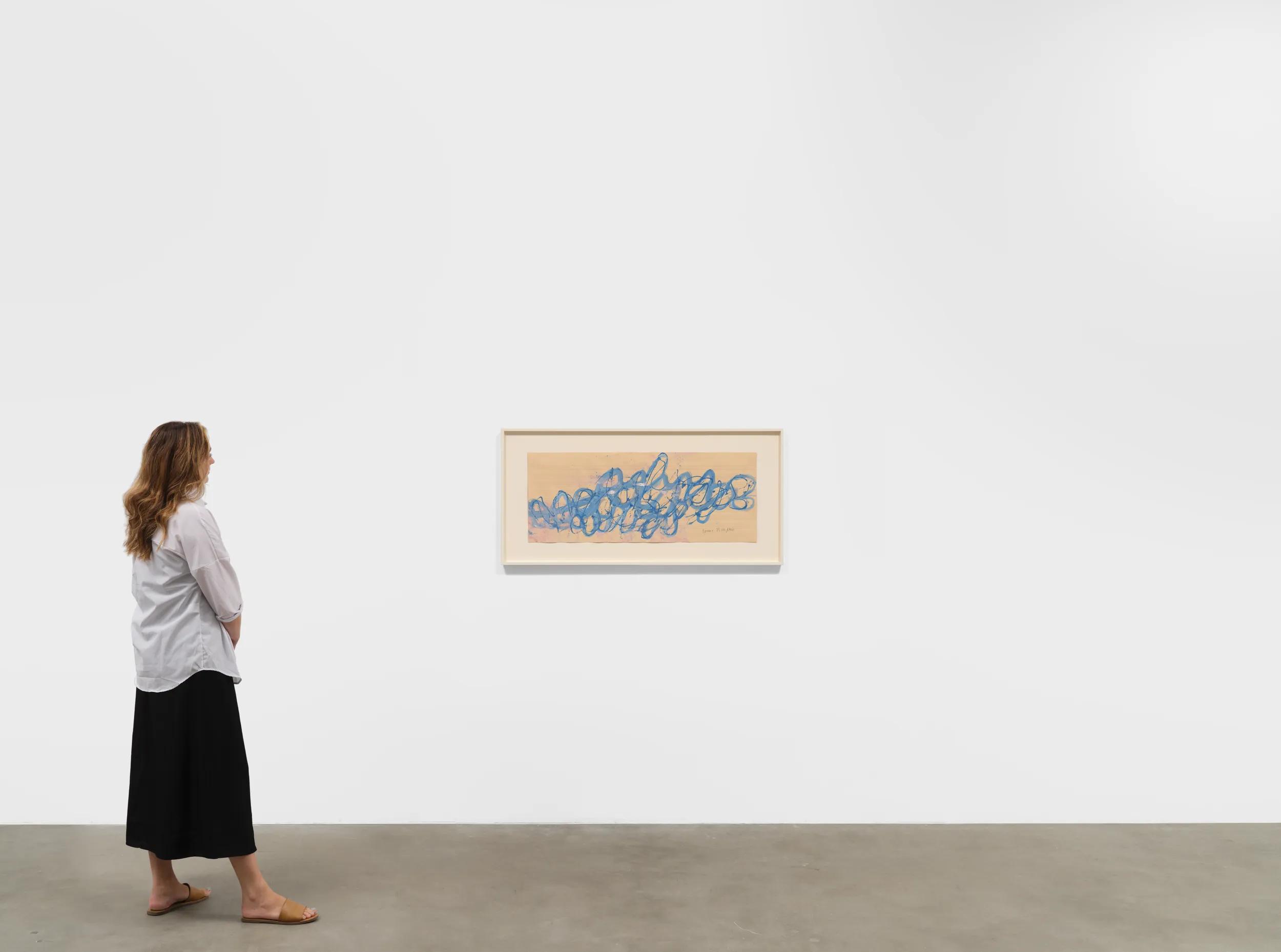
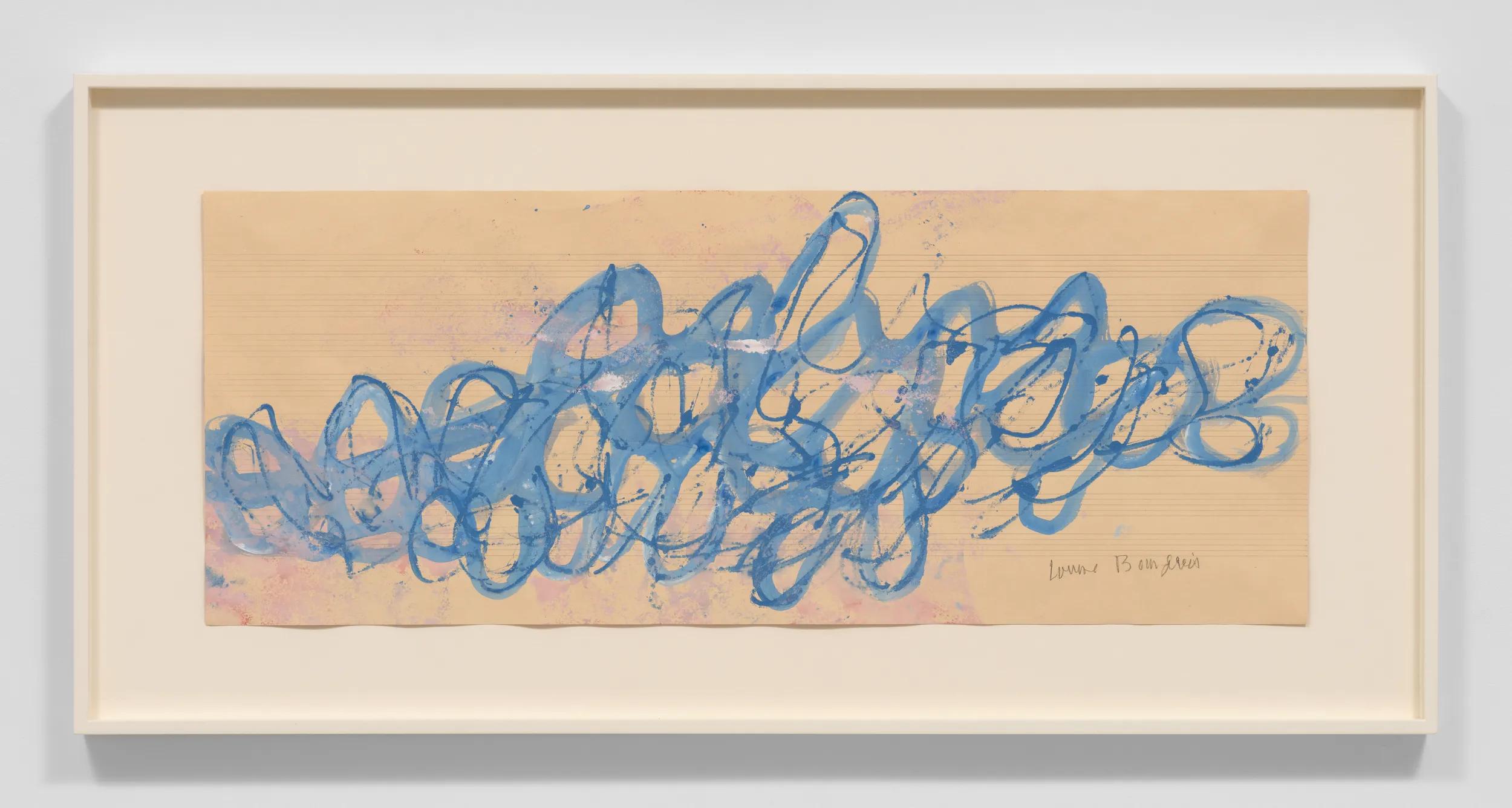
Chanson (Bleu)
- 2007 – 2008
- Watercolor, gouache, and pencil on music paper
- 38.1 x 96.2 cm / 15 x 37 7/8 in 57.8 x 118.7 x 5.7 cm / 22 3/4 x 46 3/4 x 2 1/4 in (framed)
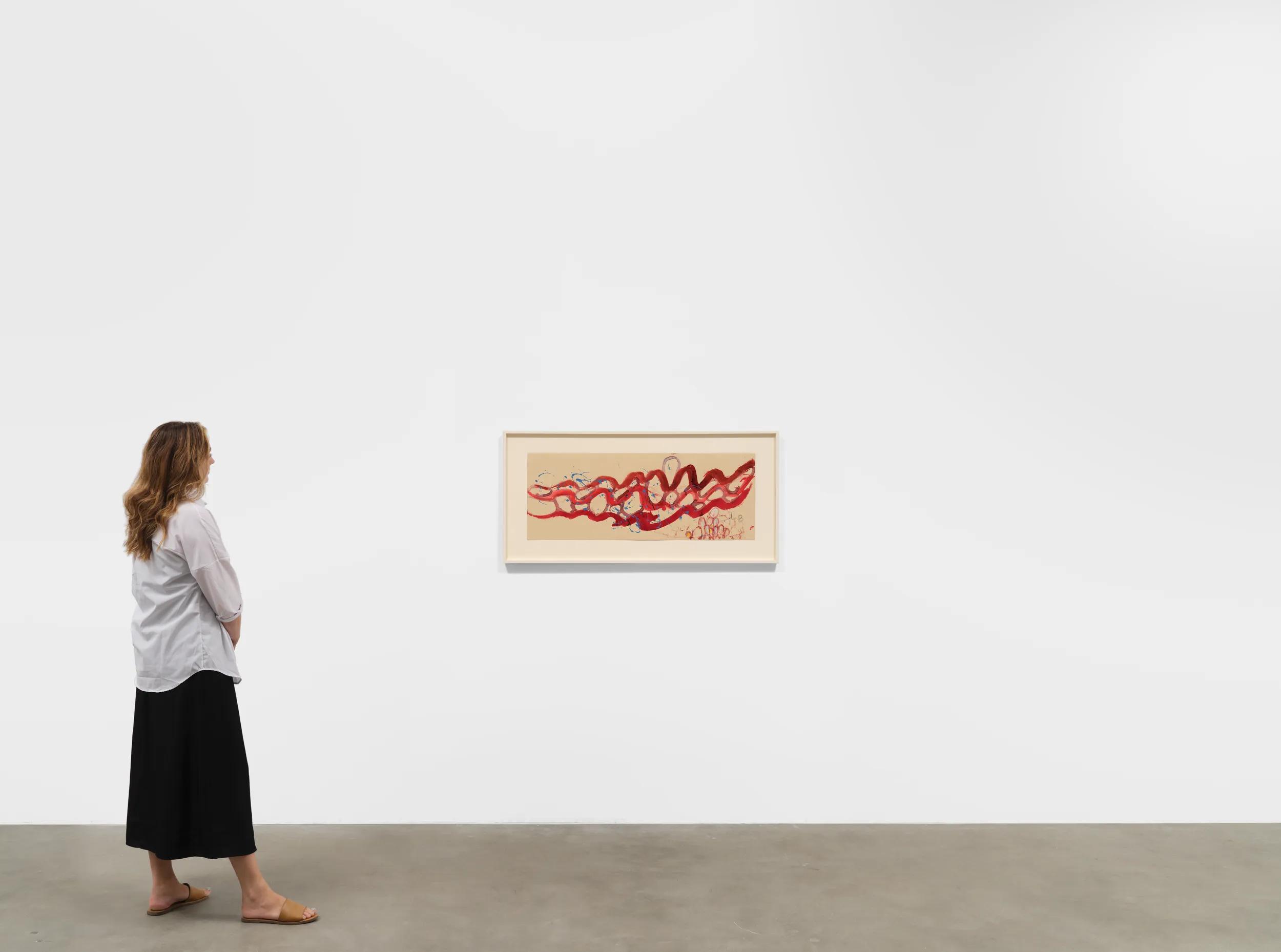
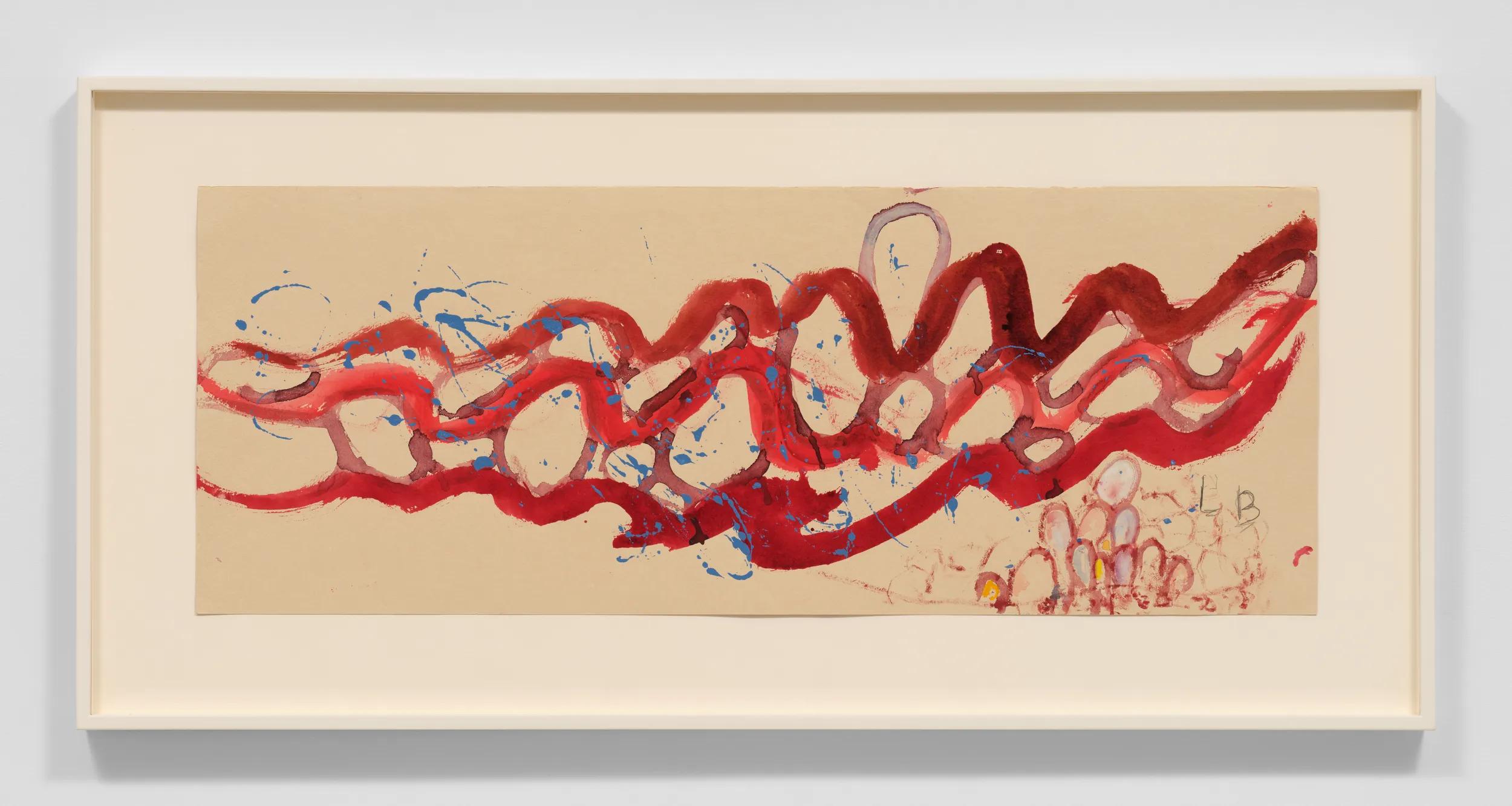
‘Chanson’ is French for ‘song.’ In both ‘Chanson (Rouge)’ and ‘Chanson (Bleu),’ looping lines repeat across the sheet like a refrain. In ‘Chanson (Bleu),’ that line unfolds across music paper, the horizontal staves giving it rhythm and structure—a sense of grounding. In ‘Chanson (Rouge),’ the forms are organic and gestural, conveying emotion through touch and movement. Bourgeois’s use of repetition is not simply formal: it gives structure to memory, interpersonal relationships and complex psychological states.
1 / 2
Louise Bourgeois
Chanson (Rouge)
- 2007 – 2008
- Watercolor, gouache, and pencil on paper
- 38.1 x 99.1 cm / 15 x 39 in 57.8 x 120 x 5.7 cm / 22 3/4 x 47 1/4 x 2 1/4 in (framed)