

Letters
Weather Report
David Smith writes to Helen Frankenthaler and Robert Motherwell, 1963
By Robert Slifkin
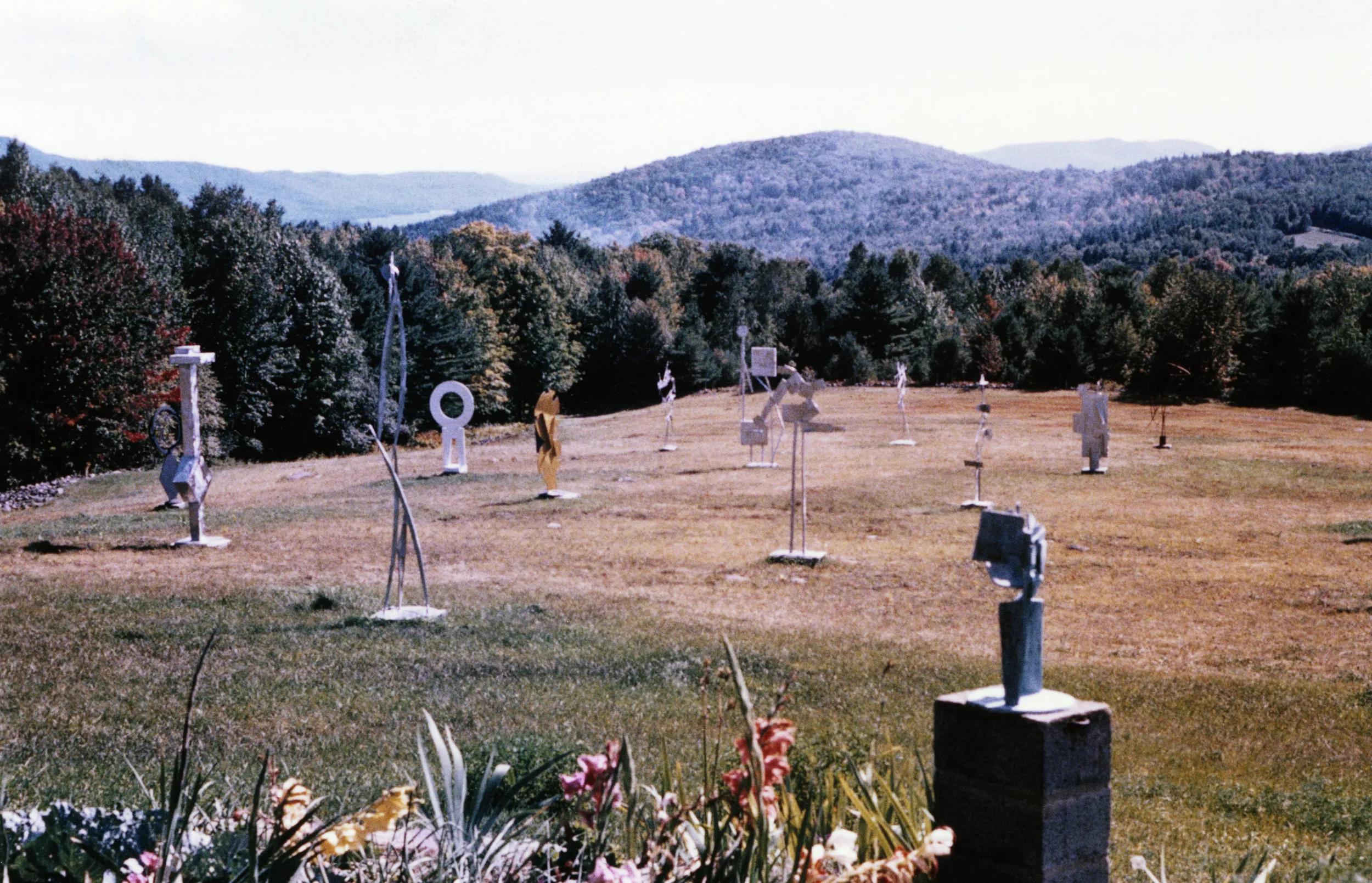
Photograph by David Smith of sculptures installed on his property in Bolton Landing, New York, ca. 1963. Artworks and photograph © 2026 The Estate of David Smith / Artists Rights Society (ARS), NY
In 1940, David Smith and his then-wife Dorothy Dehner relocated to Bolton Landing, New York, a village more than 200 miles north of Brooklyn, where they had been living. Smith would go on to spend the rest of his life there, building a studio and developing the surrounding eighty-six acres as a setting for his large-scale sculptures. While this move gave Smith the time—and, more importantly, the space—he needed to pursue his artistic vision, it also isolated him from the New York art world, where he had established himself as the preeminent sculptor of his generation. Aside from the occasional trip back to the city, Smith mostly kept up with the art world by reading magazines and corresponding with friends.
Within Smith’s circle, few people were as close or significant to him as Helen Frankenthaler and Robert Motherwell. The two married in 1958, though both had known Smith before becoming a couple. Frankenthaler began visiting Smith at Bolton Landing in the early 1950s with the critic Clement Greenberg, whom she was dating at the time. After her first visit, Frankenthaler was so taken with Smith’s work that she purchased the sculpture Portrait of the Eagle’s Keeper (1948–49).
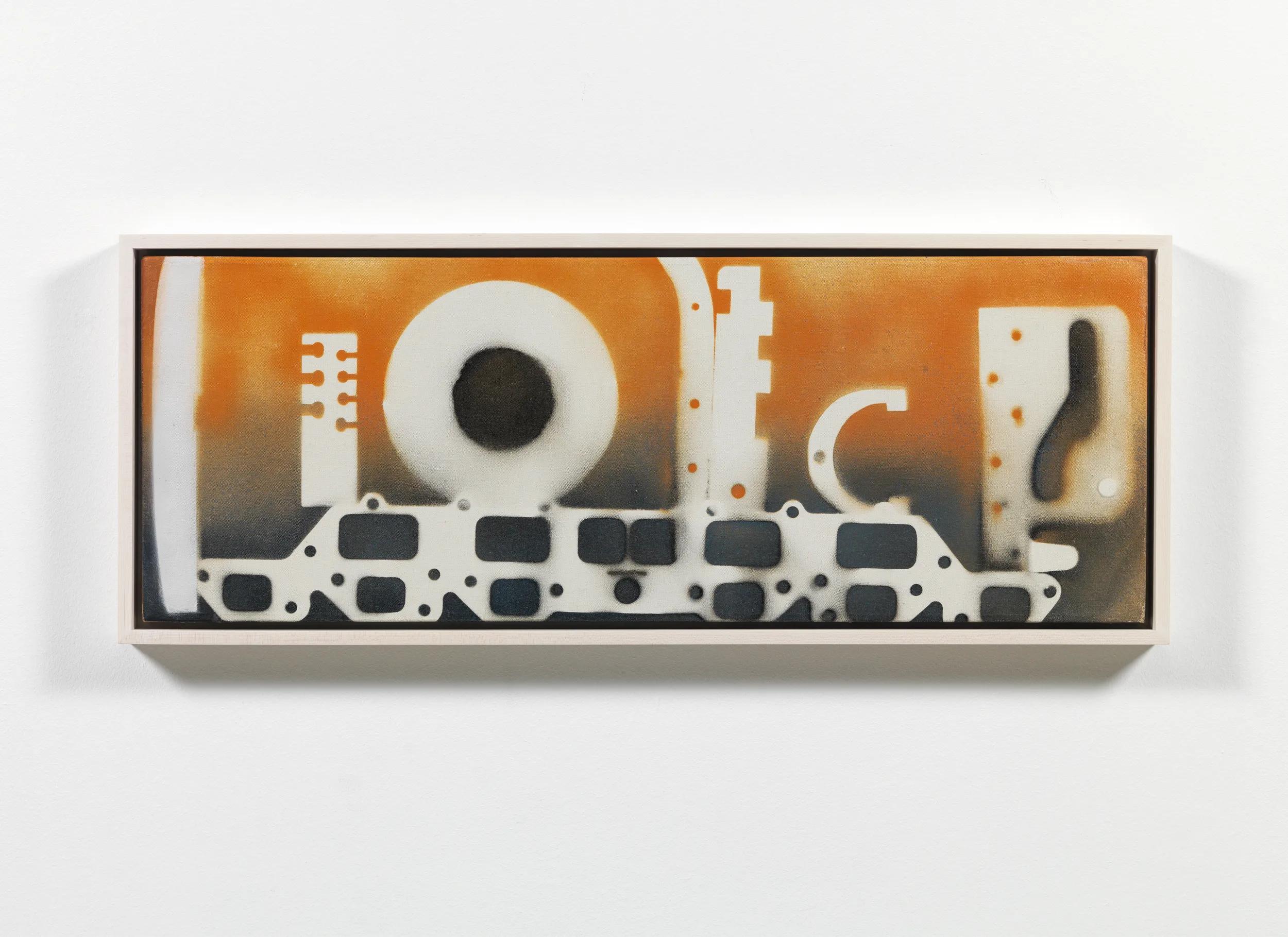
David Smith, Untitled, 1963. Spray enamel on canvas, 12 1/2 × 34 1/4 in. In his letter to Motherwell and Frankenthaler, Smith mentions “40 smaller pictures” awaiting frames. These may have included Spray paintings such as the example reproduced in this article.
On the surface, David, Helen and Bob made an odd “throuple.” Frankenthaler and Motherwell were urbane and refined, residents of an Upper East Side brownstone; Smith, a self-identified laborer, was working upstate at what he once wryly described as his “sculpture farm.” But even if Smith admitted to the painter Herman Cherry that he sometimes felt “a bit out of wavelength” with the couple’s high-flown social life, there is no doubt that the three cherished their friendship and deeply respected each other’s work. Frankenthaler and Motherwell treated Smith like family, giving him a key to their townhouse and inviting him to their beach house in Provincetown, where Smith would bring his two daughters, who were the same age as Motherwell’s children.
One senses this intimacy in a letter Smith wrote in October 1963. He admits feeling “lonesome” and invites Helen and Bob to visit. He also thanks them for a recent gift: a “trio of weather instruments” from Johnny Seesaw’s, a ski lodge and restaurant in Vermont. Saying it was what he “always wanted,” Smith writes that he will likely mount the weather station—a barometer, thermometer and hygrometer—outside the front window of his home.
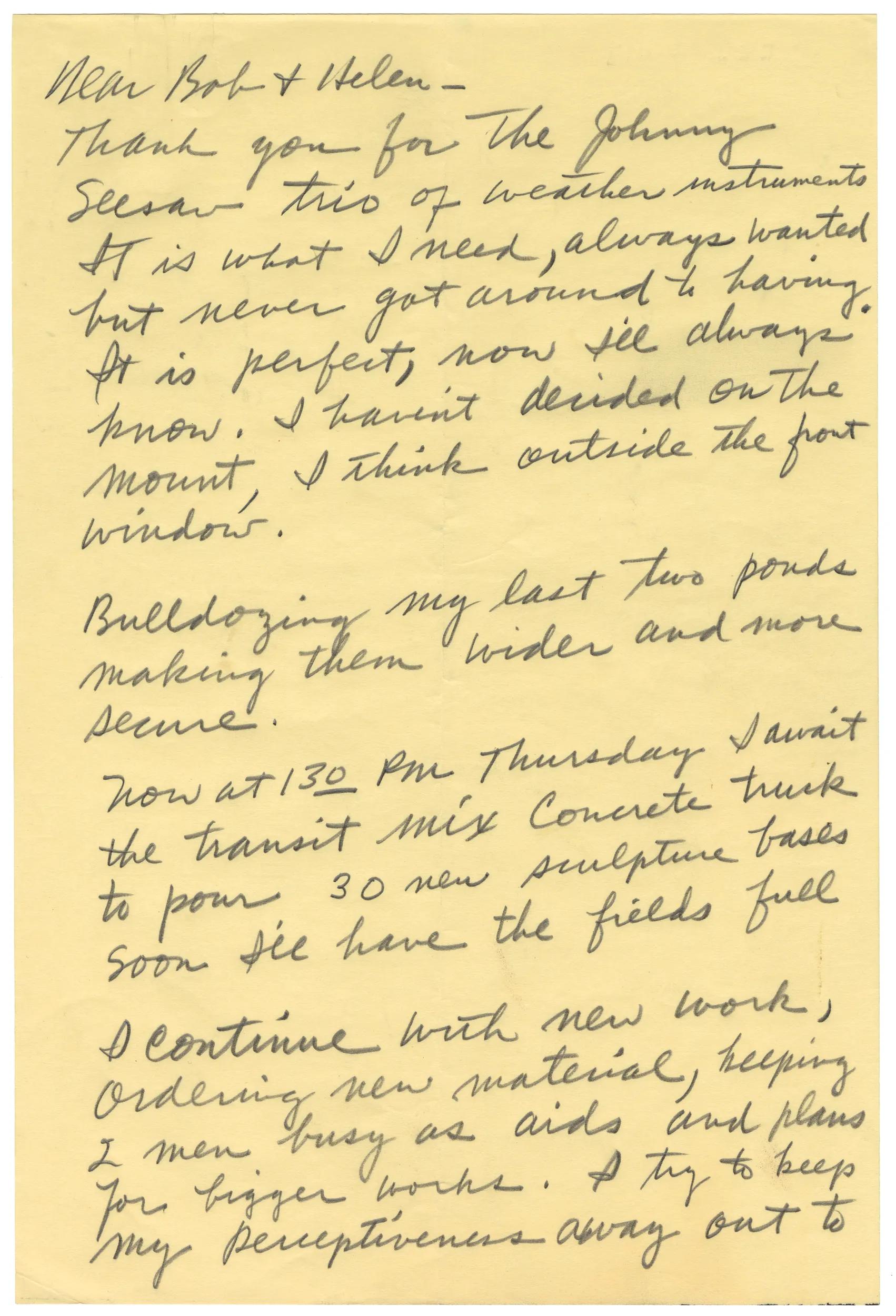
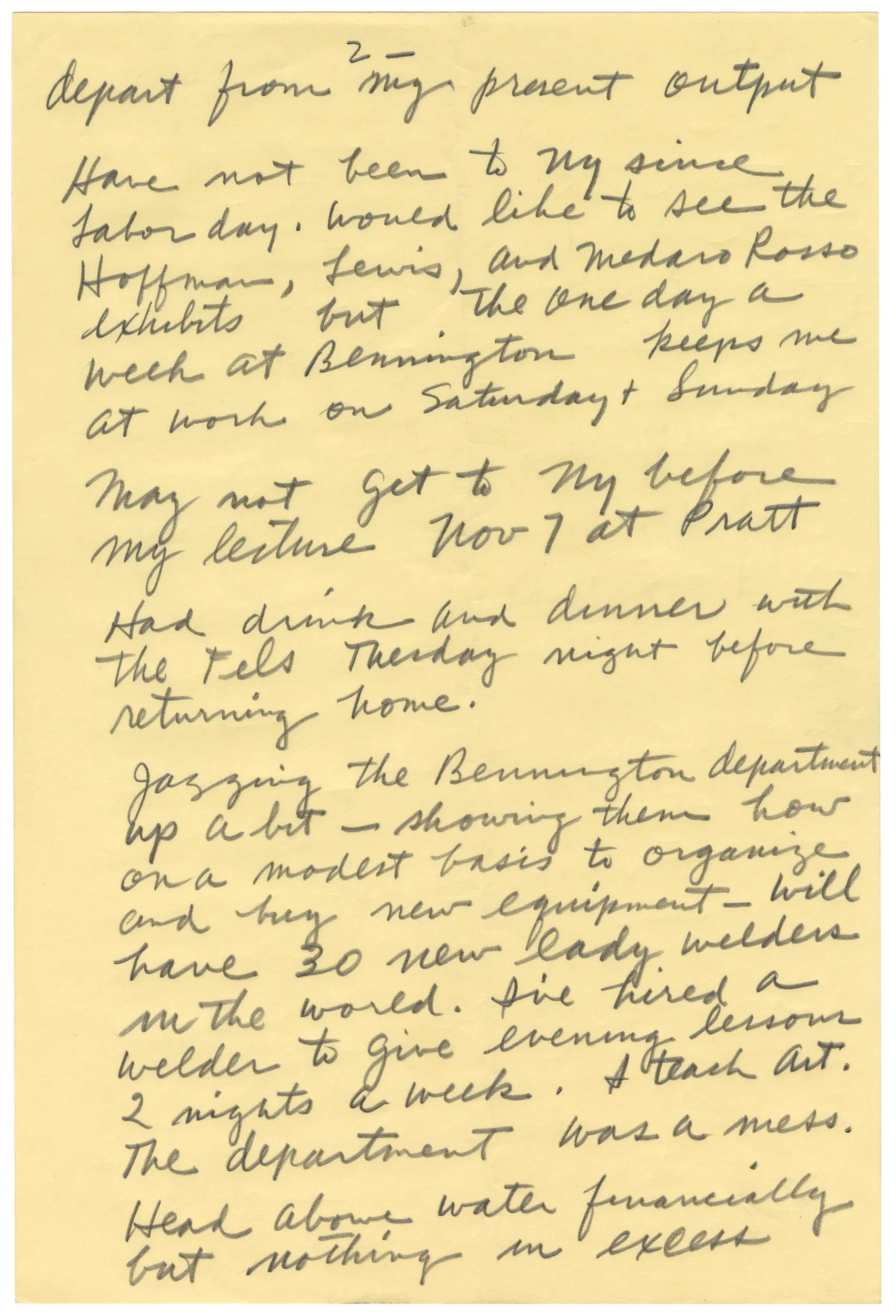
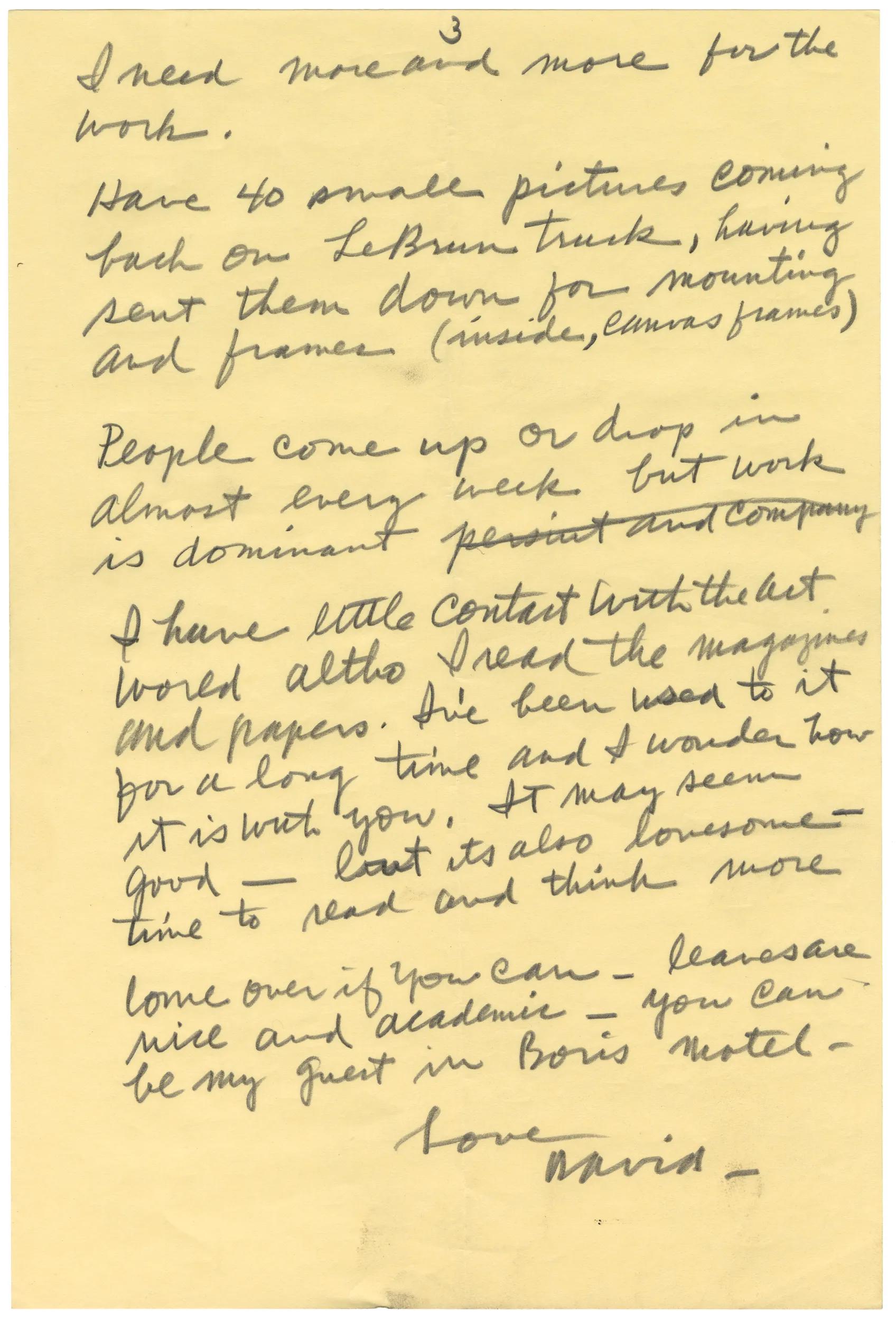
Letter from David Smith to Helen Frankenthaler and Robert Motherwell, October 4, 1963. Courtesy the Helen Frankenthaler Foundation Archives , New York
It’s easy to envision Smith consulting the instruments while looking out over Bolton Landing, especially around the time he wrote this letter. As he notes, he was at work developing the surrounding land: widening two ponds and pouring concrete for the bases of thirty sculptures to be installed in the fields. Alongside this activity, he was creating new works, preparing for a lecture at Pratt Institute and spending one day a week at Bennington College (Frankenthaler’s alma mater), where he was “jazzing the [art] department up a bit” by advising on new equipment and introducing welding lessons.
After moving to Bolton Landing, Smith became increasingly interested in the ways his works, when installed outdoors, interacted with their natural setting, whether seen through the negative spaces of his welded sculptures or reflected on their surfaces as sun, shadow and sometimes snow. In this regard, the weather station was an especially thoughtful gift. Like it, Smith’s works serve as sensitive registers of changing atmospheric conditions, melding his modernist vision of industrially fashioned sculpture with the landscape that helped shape it.
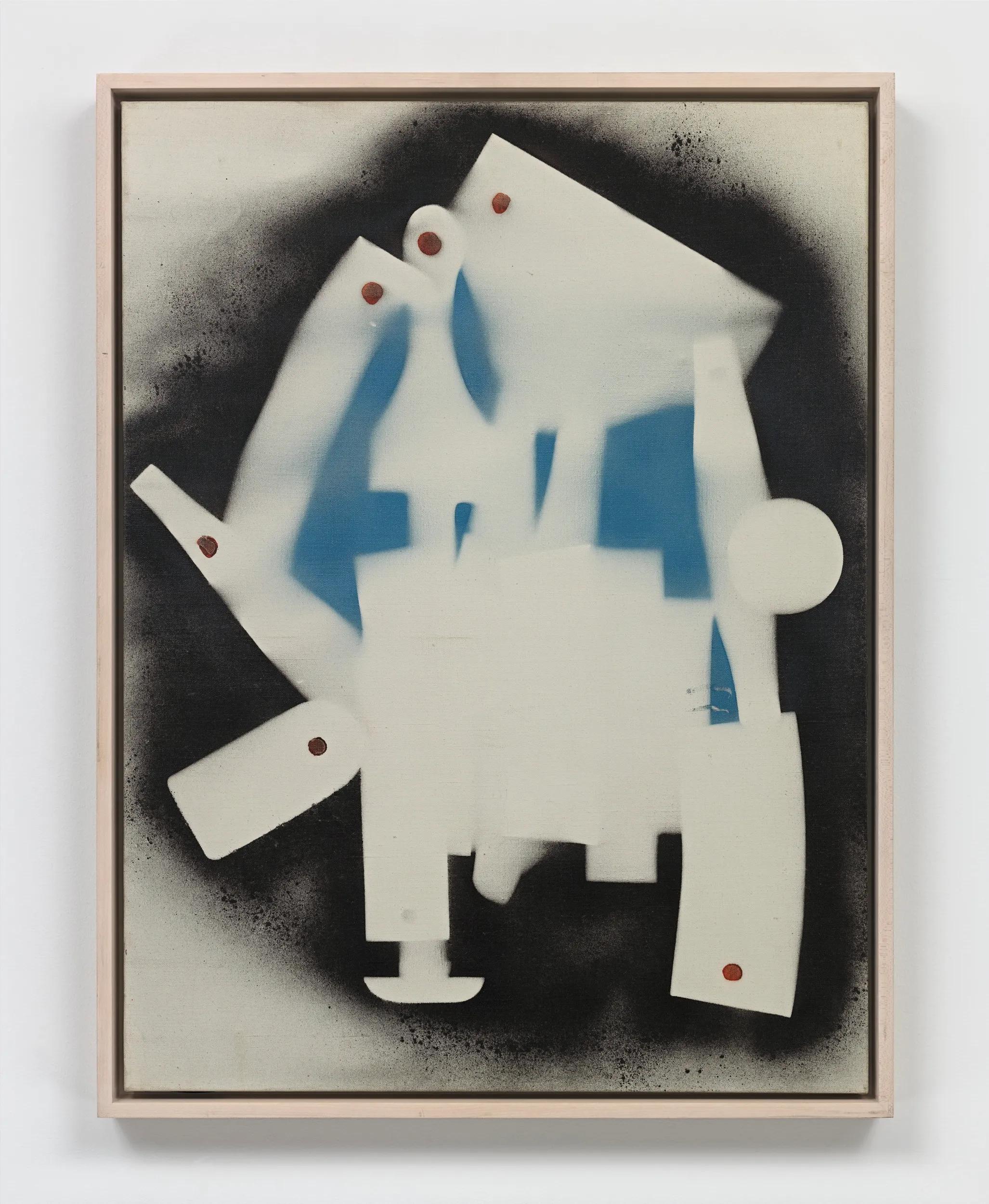
David Smith, Untitled, 1963. Spray enamel on canvas, 32 1/2 × 24 1/2 in.
–
“Night Window: David Smith Spray Paintings, 1958–1964” opens at Hauser & Wirth West Hollywood on September 17 and remains on view through January 16, 2027.
–
Robert Slifkin is the Edith Kitzmiller Professor of Fine Arts at the Institute of Fine Arts, New York University. His publications include The New Monuments and the End of Man: U.S. Sculpture Between War and Peace, 1945–1975, and Out of Time: Philip Guston and the Refiguration of Postwar American Art.