

The Form of Beauty
A look inside “Bvlgari Kaleidos: Colors, Cultures and Crafts,” an exhibition devoted to the Maison’s heritage and longstanding relationship with color
By Rachel Garrahan
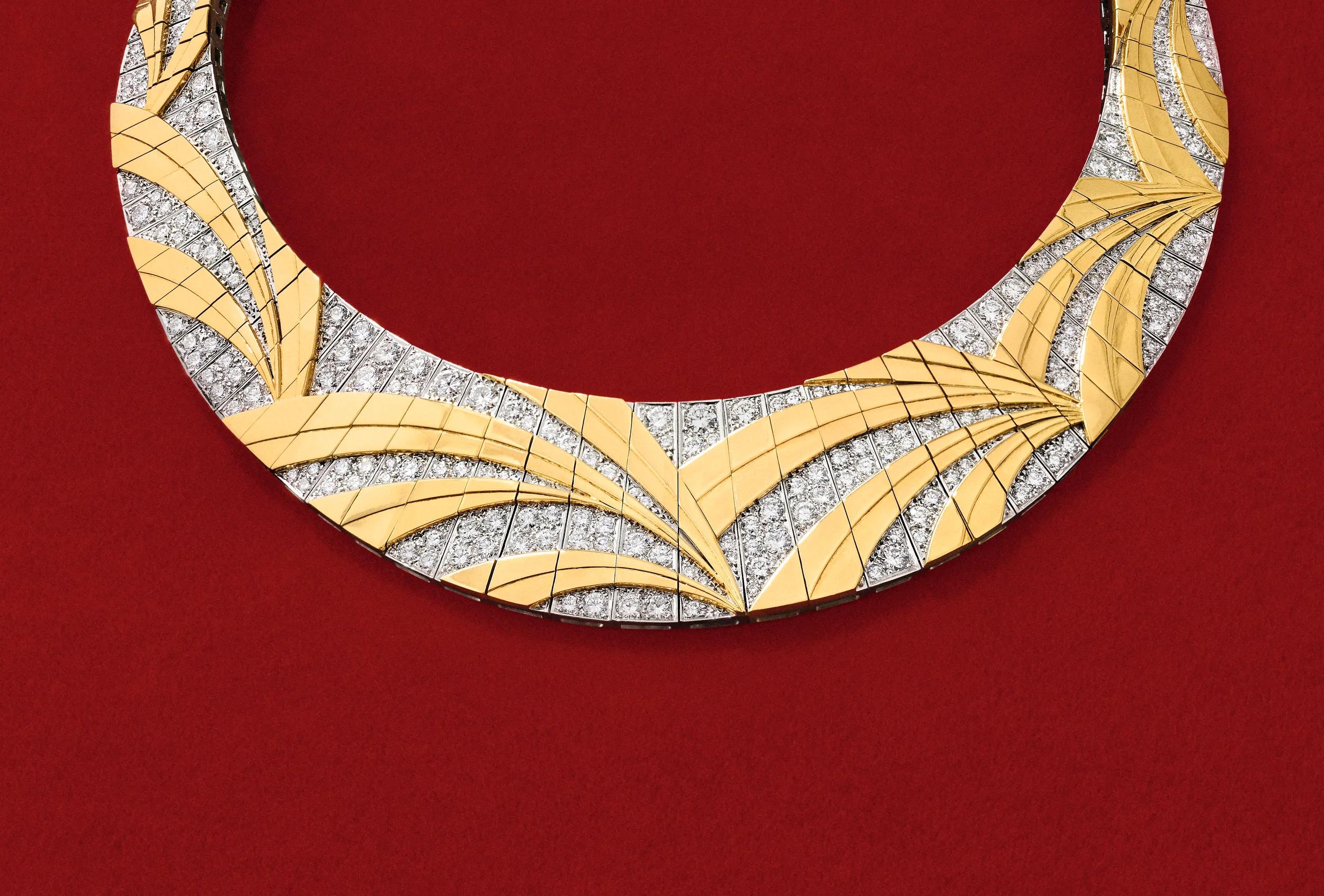
Necklace in gold and platinum with diamonds, 1980. Bvlgari Heritage Collection. Photo: Matthieu Lavanchy. Courtesy Bvlgari
This fall in Shanghai, “Bvlgari Kaleidos: Colors, Cultures and Crafts,” brings together more than 300 works, including High Jewelry creations, selections from the Bvlgari Heritage Collection, loans from private collections and installations by contemporary artists Liang Manqi and Zhang Ding. On the occasion of the exhibition, Ursula presents a special feature created in partnership with Bvlgari. Taking the exhibition’s dialogue between jewelry, art and cultural history as a point of departure, Rachel Garrahan traces the development of Bvlgari’s distinctive visual language from its Roman beginnings to today.
Bvlgari’s “Kaleidos: Colors, Cultures and Crafts” exhibition opens this September in Shanghai as a celebration of more than a century of the Roman jeweler’s mastery of color, an expertise that has made Bvlgari one of the most sought-after luxury houses in the world.
The exhibition takes its name from the Greek words “kalos,” meaning beautiful, and “eidos,” meaning form—an apt fusion for a show built around the idea that color itself can provide a kind of structure, not just surface decoration.
Presented at the Power Station of Art, mainland China’s first public contemporary art museum, the show is organized in three chapters—The Science of Colors, Color Symbolism and The Power of Light—each approaching color from a different angle: as a physical phenomenon, a cultural code and a perceptual experience shaped by light.
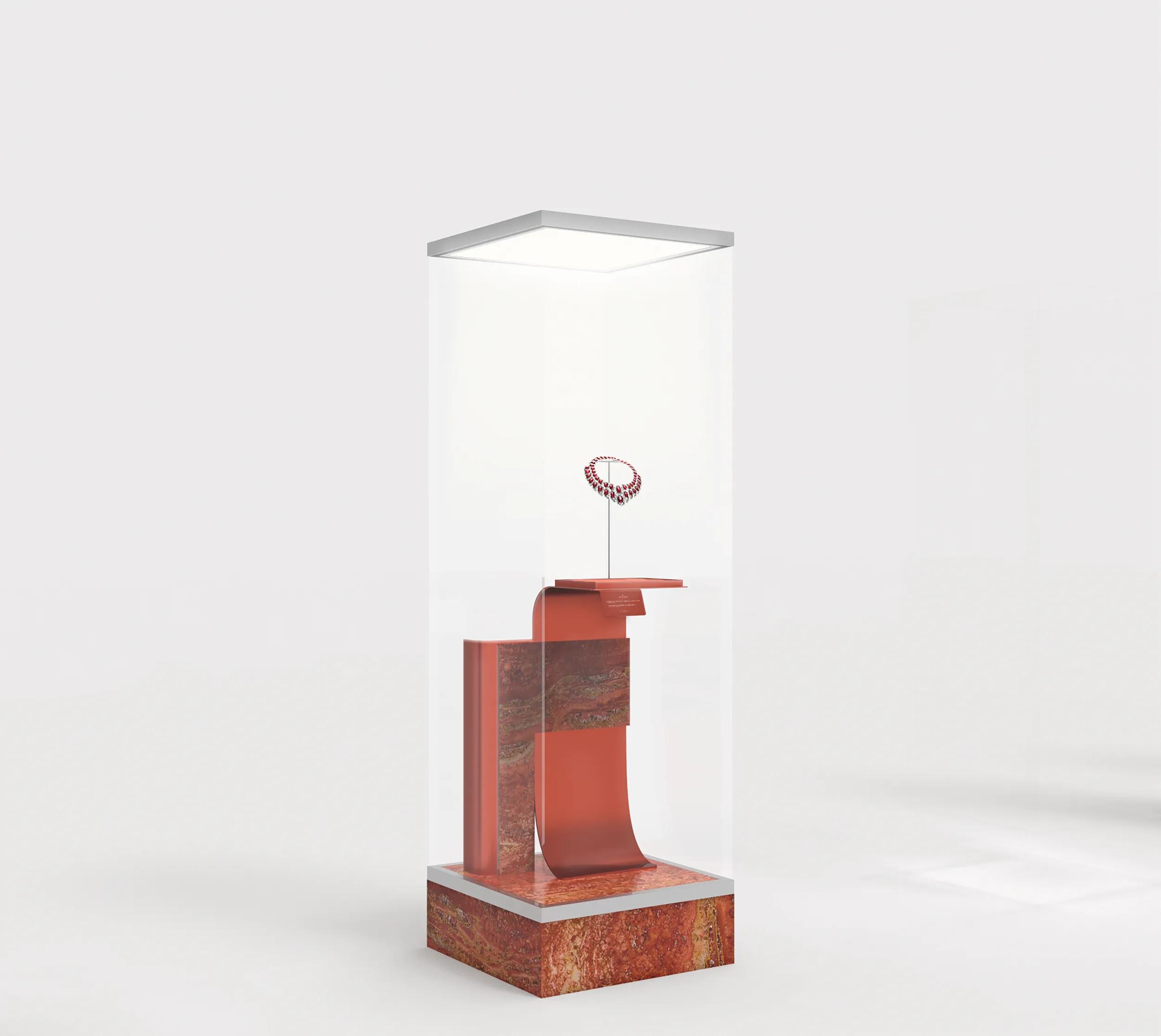
The vitrines, designed by Formafantasma, combine industrial elements with colorful marble tiers in shades of red, green and yellow to echo Roman grandeur. Courtesy Bvlgari and Formafantasma
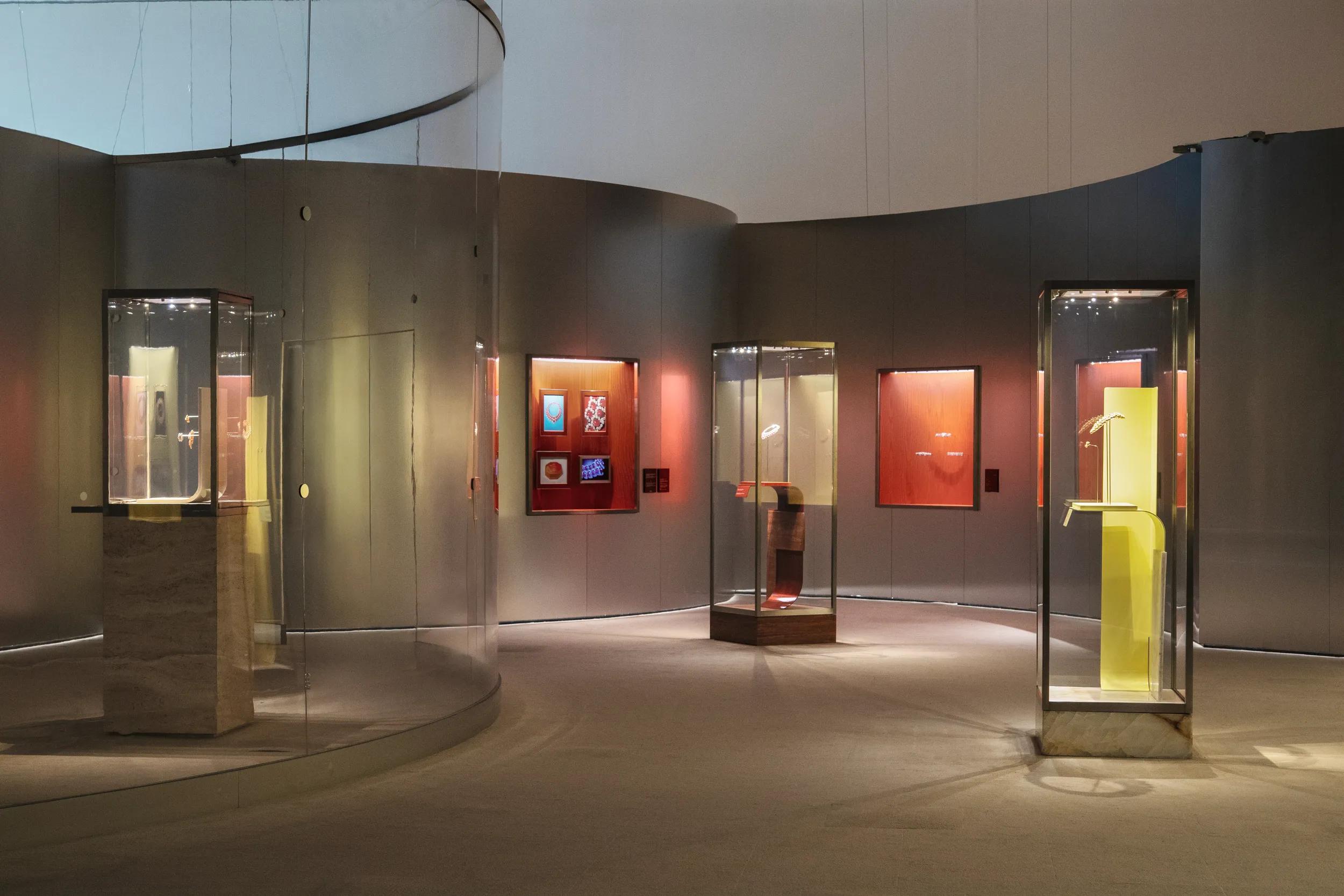
View of “Bvlgari Kaleidos: Color, Cultures and Crafts,” Tokyo, 2025. Photo: Taro Hirano. Courtesy Bvlgari
“Kaleidos” celebrates color’s importance to human life and human emotion, not to mention its unparalleled power to communicate without words across world cultures and artistic mediums. After first being unveiled in Tokyo last year, the exhibition has been newly conceived to chart the story of color in Chinese art, philosophy and culture, and is enriched by the inclusion of artworks by two of Shanghai’s leading contemporary artists, Liang Manqi and Zhang Ding, who move China’s epic color story forward with their own unique expressions.
Their work joins more than 300 masterpieces drawn from the Bvlgari Heritage Collection and private collections in Europe and Asia in a striking exhibition design conceived by two internationally renowned design studios: SANAA, based in Tokyo, and Formafantasma, based in Rotterdam and Milan. “By bringing our chromatic vision into conversation with local perspectives,” says Laura Burdese, Bvlgari’s chief executive officer, “this exhibition reveals color’s unique power to connect, to inspire and to continuously reinvent itself.”
Bvlgari’s history traces back to 1884, when the maison was founded in Rome by Greek silversmith Sotirios Voulgaris. He had moved to Italy as a young man, Italianizing his name to Sotirio Bulgari. His combined heritage from these two southern European countries, suffused with the intense hues and bright sunlight of a Mediterranean summer, meant that color was woven into Bvlgari’s DNA from the very beginning.
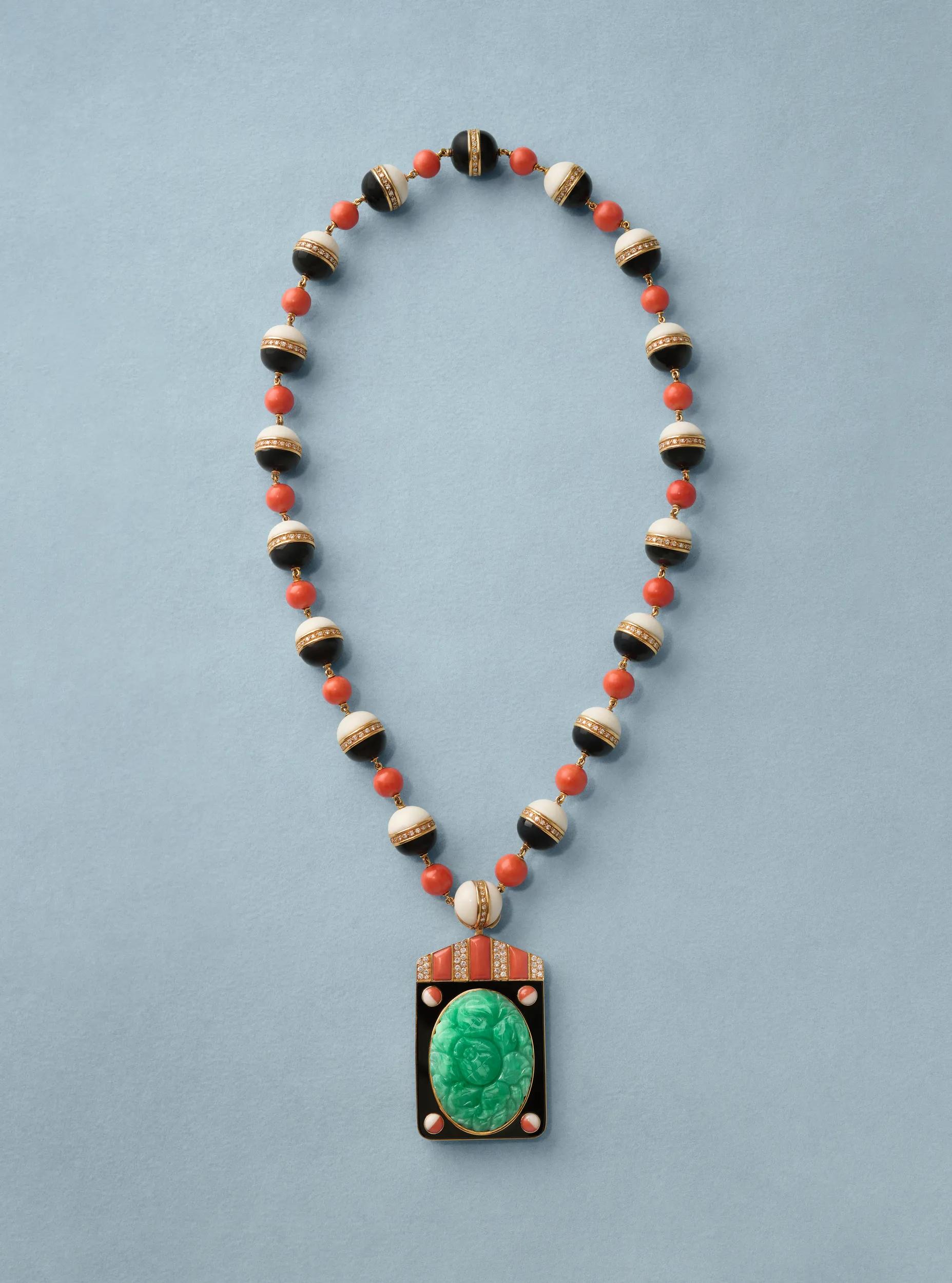
Sautoir in gold with jadeite jade, coral, onyx and diamonds, 1973. Bvlgari Heritage Collection. Photo: Matthieu Lavanchy. Courtesy Bvlgari
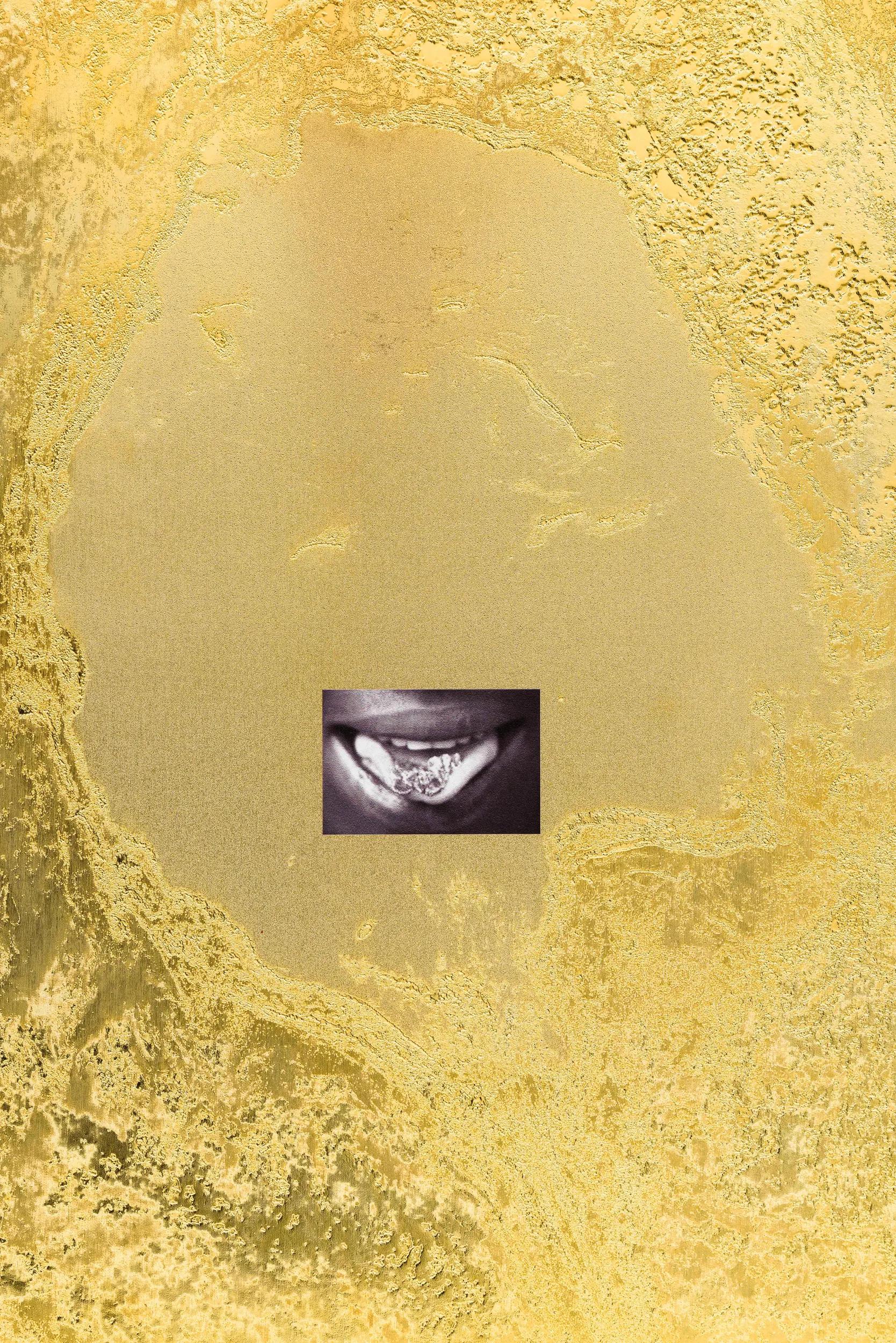
Zhang Ding, Vortex #1, 2018. Stainless steel and brass plated with 24-karat gold, with a relief of a gold-mine topographic map and UV-printed photograph, 45 × 34 × 2.5 cm. Courtesy the artist and ShanghART
It was Sotirio’s two sons, Giorgio and Costantino, who shifted the focus to jewelry from silverware and antiques. In 1905, Bvlgari opened its first boutique at 10 Via dei Condotti in Rome, close to the Italian capital’s famous Spanish Steps, where Bvlgari’s legendary flagship still resides today. Giorgio in particular worked closely with his father, developing his understanding of gemstones and honing Bvlgari’s creativity.
Traveling to Paris in the 1920s, Giorgio witnessed the emergence of the Art Deco movement that was revolutionizing the worlds of art and design with bold silhouettes and daring color combinations. Shortly thereafter, Bvlgari’s enduring love affair with color truly began. Giorgio’s “Trombino,” or “little trumpet,” rings of the 1920s and 1930s boldly showcased exceptional sapphires, rubies and emeralds, the so-called Big Three colored gems. He enhanced their beauty and intensity by mounting them high above the ring shank in attention-grabbing, broad- shouldered settings that glittered with light-refracting diamonds.
The polychromatic Bvlgari style that is instantly recognizable today, however, was born in Rome in the high-living years after the Second World War ended. The jeweler started combining buttery yellow gold with the smooth, sensuous, voluminous curves and glossy richness of colored cabochon-cut gems. Putting chromatic effect above a gem’s intrinsic value, Bvlgari expanded its palette to include stones that were at the time deemed semi-precious, such as turquoise, amethysts and citrines, creating audacious technicolor combinations that attracted film stars such as Ingrid Bergman, Sophia Loren and Elizabeth Taylor and changed High Jewelry design forever.
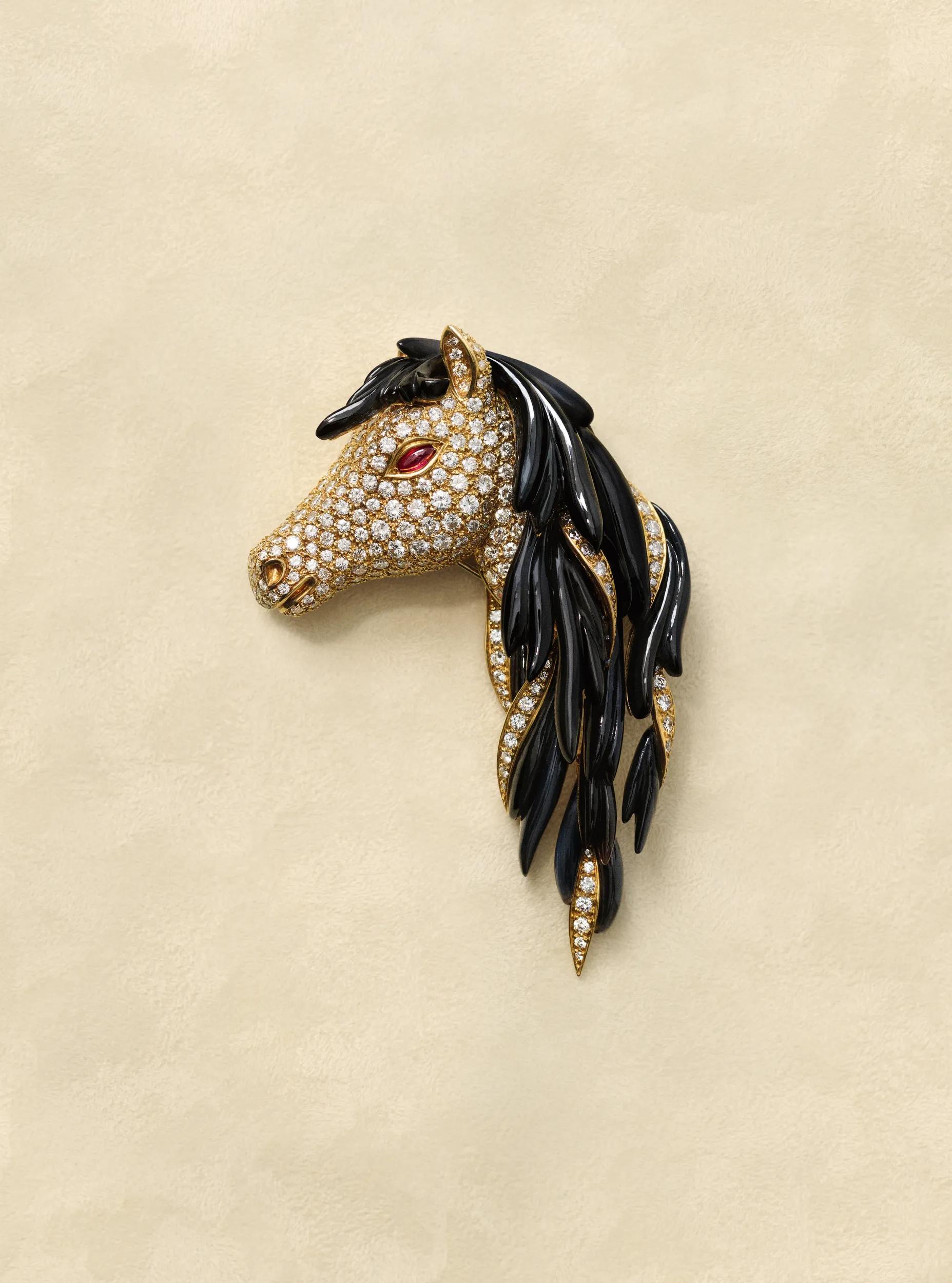
Brooch in gold with onyx, ruby and diamonds, ca. 1977. Bvlgari Heritage Collection. Photo: Matthieu Lavanchy. Courtesy Bvlgari
One piece from this era that demonstrates Bvlgari’s nascent color confidence is a 1957 necklace-and-earrings set that combines rubies with generous orbs of turquoise. As time went on, such unexpected combinations were paired with increasingly bold compositions of shape and texture. An audacious 1991 bib necklace consisting of a rainbow of emeralds, amethysts, citrines, pink tourmalines, sapphires and diamonds charts how, over time, Bvlgari’s unique style crystallized into an opulent combination of volume, stylized motifs and precious and semi-precious stones that were selected for their individual beauty and their combined effect.
A 1973 sautoir, on public view for the first time in Shanghai, is a striking chromatic composition of coral, onyx and diamonds. The apple-green, engraved jade pendant at its center evokes ancient Chinese artistic traditions and reflects the enduring dialogue between East and West. That cross-cultural conversation enters a new chapter in the Shanghai exhibition with commissions by contemporary artists Liang Manqi and Zhang Ding.
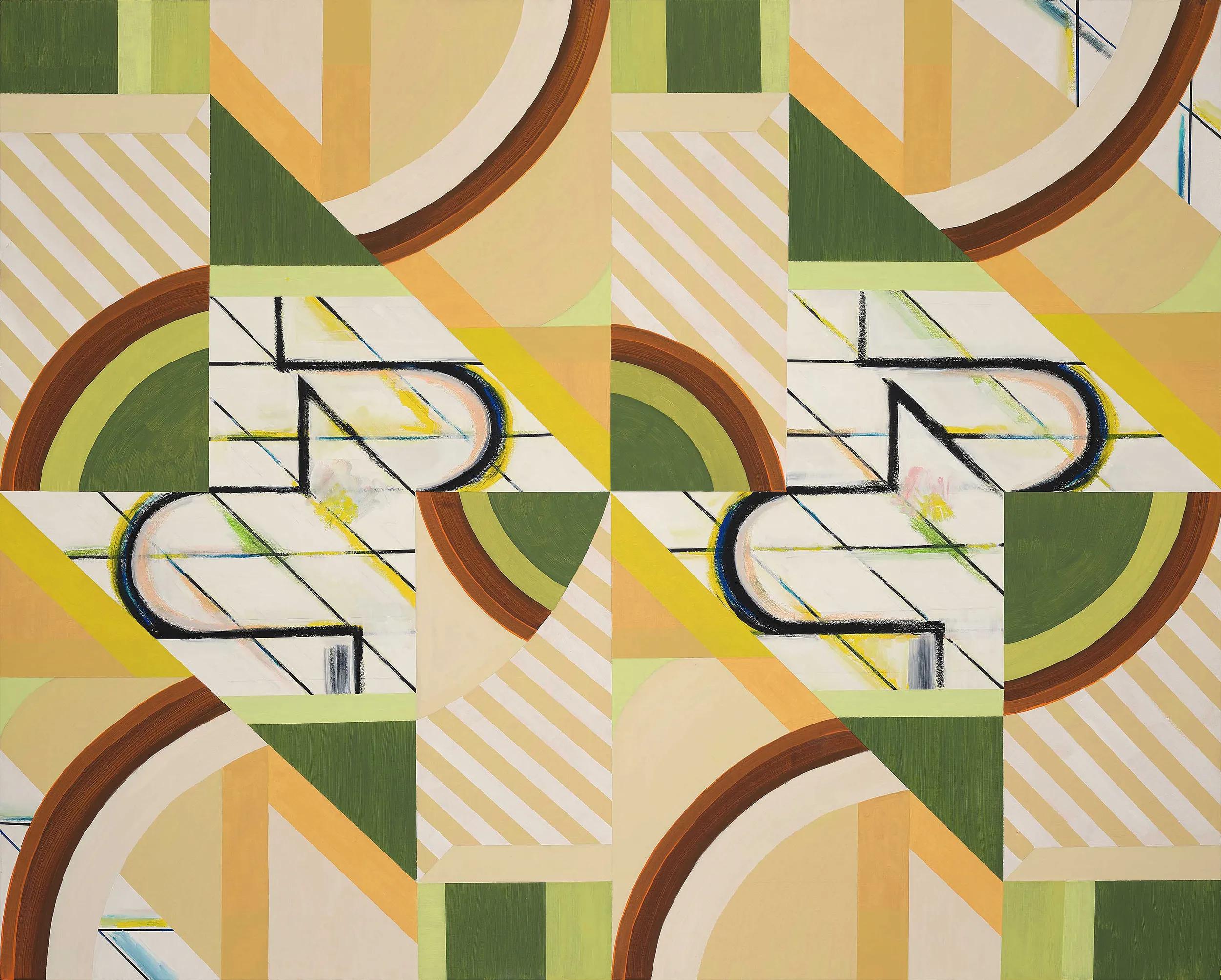
Liang Manqi, The Conception of Parallel Event No. 18, 2023. Composite materials for fi xed oil painting sticks in canvas oil painting, 120 × 150 cm. Courtesy the artist and Arario Gallery
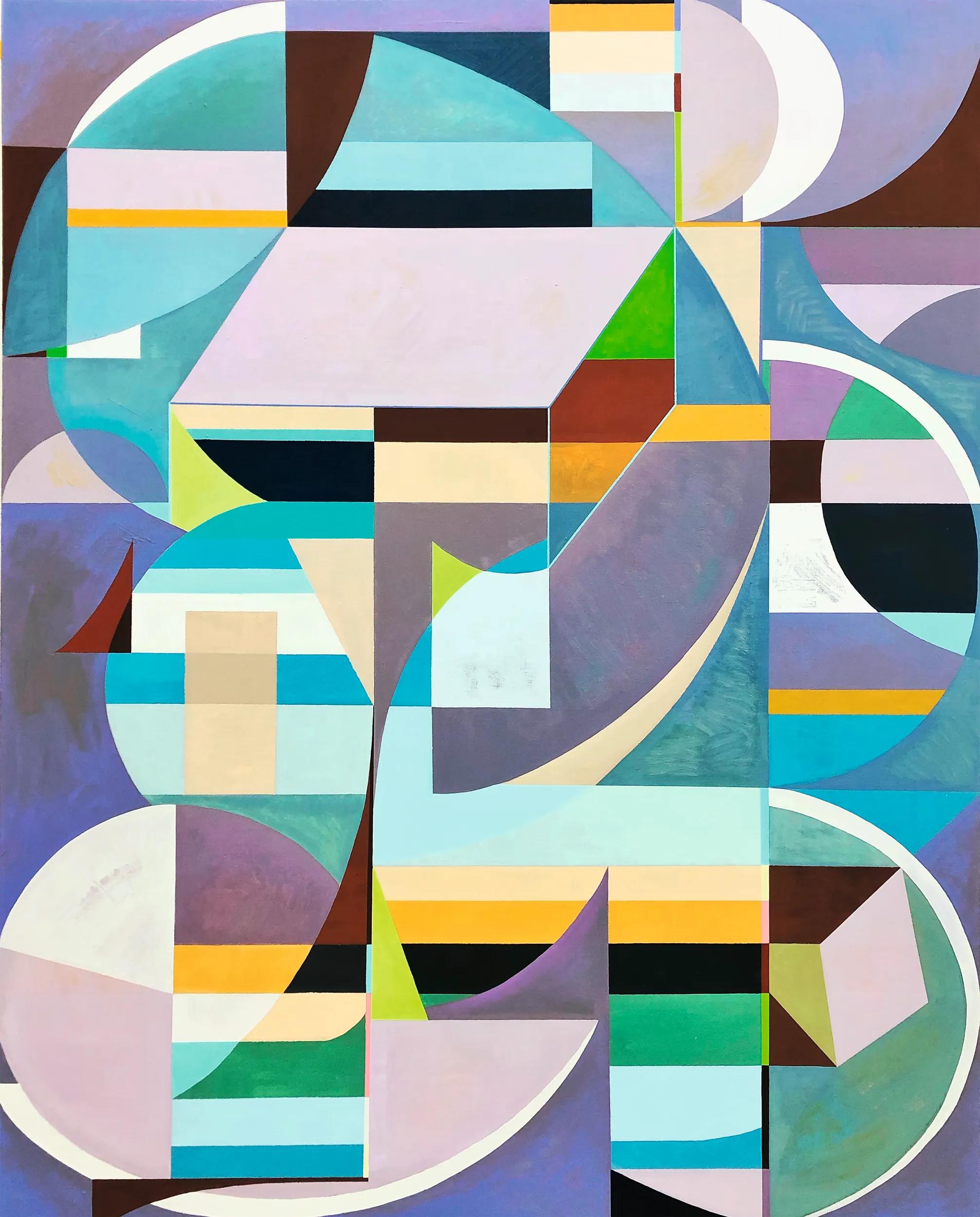
Liang Manqi, Hidden Circle No. 2, 2021. Oil on canvas, 200 × 160 cm. Courtesy the artist and Arario Gallery
Liang Manqi is an abstract painter for whom color is a material and emotional language. She presents Boundless Synesthesia, an immersive work in which color transcends the boundaries of the canvas to unfold across every surface of the gallery. “Color, to me, is a way of perception that goes beyond reason,” she says. “In my practice, it emerges from observing nature and everyday life. The light of a city, the shadows of architecture, even the veins of a single leaf—all of these become the starting point of color.” To her mind, she and Bvlgari share an attitude to color that transcends decoration to communicate a powerful form of creative freedom: “Within the tension between tradition and the contemporary, there is always a sense of daring balance.”
Zhang Ding unveils The Form of Light, an installation that pairs golden illuminated panels with transparent glass heads bearing gemstone-like surfaces. Through these elemental forms, the work refl ects on humanity’s relationship with light, evoking peace, purity and harmony. “All color is a form of light,” he says. “Light is the beginning through which everything manifests.”
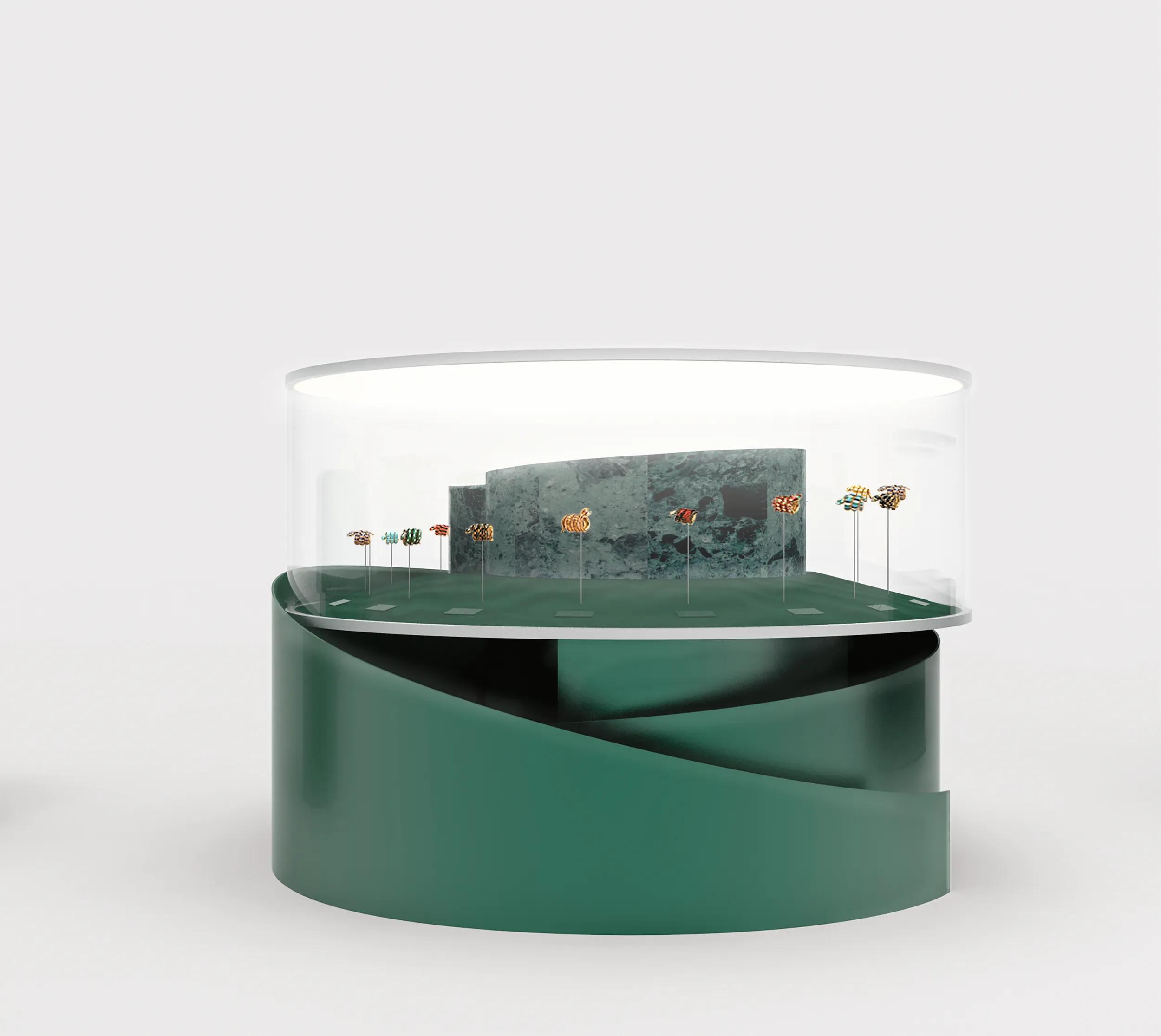
Courtesy Bvlgari and Formafantasma
For Gislain Aucremanne, Bvlgari’s Heritage Curator Director, the opportunity to present “Kaleidos” in Shanghai is particularly meaningful given color’s significance in Chinese tradition. Never limited to a mere aesthetic phenomenon, color has long been understood as a cultural and philosophical language with profound symbolic meaning. One 1960 necklace featuring an exceptional set of rare deep crimson rubies is a dazzling reminder of the significance of red in Chinese culture, where it is considered the most auspicious of all colors, not to mention ruby’s appeal across Eastern and Western traditions. “As curator, I am delighted to see this conversation unfold, revealing how color can transcend cultures while continuing to express distinct histories, values and ways of seeing the world,” he says.
Master of color Henri Matisse wrote in his 1908 essay “Notes of a Painter”: “The use of expressive colors is felt to be one of the basic elements of the modern mentality, an historical necessity, beyond choice.” Through masterworks of Bvlgari jewelry and contemporary art, this exhibition demonstrates how Matisse’s perception of color’s power to transcend human understanding and worldly experience is once again gaining traction, providing an antidote to an increasingly digital world. “With color,” he wrote, “one obtains an energy that seems to stem from witchcraft.”
–
“Bvlgari Kaleidos: Colors, Cultures and Crafts” remains on view through October 31 at the Power Station of Art in Shanghai.
–
Rachel Garrahan is an award-winning editor, writer and curator. In 2025, she co-curated the Victoria and Albert Museum’s Cartier exhibition and co-edited the accompanying publication. Previously at British Vogue, she is now the jewelry and watch director of the media platform EE72. She has contributed to publications including The New York Times and The Financial Times.