

Knife's Edge
Louisa Buck on Cooking Sections, making art at the fault lines of food
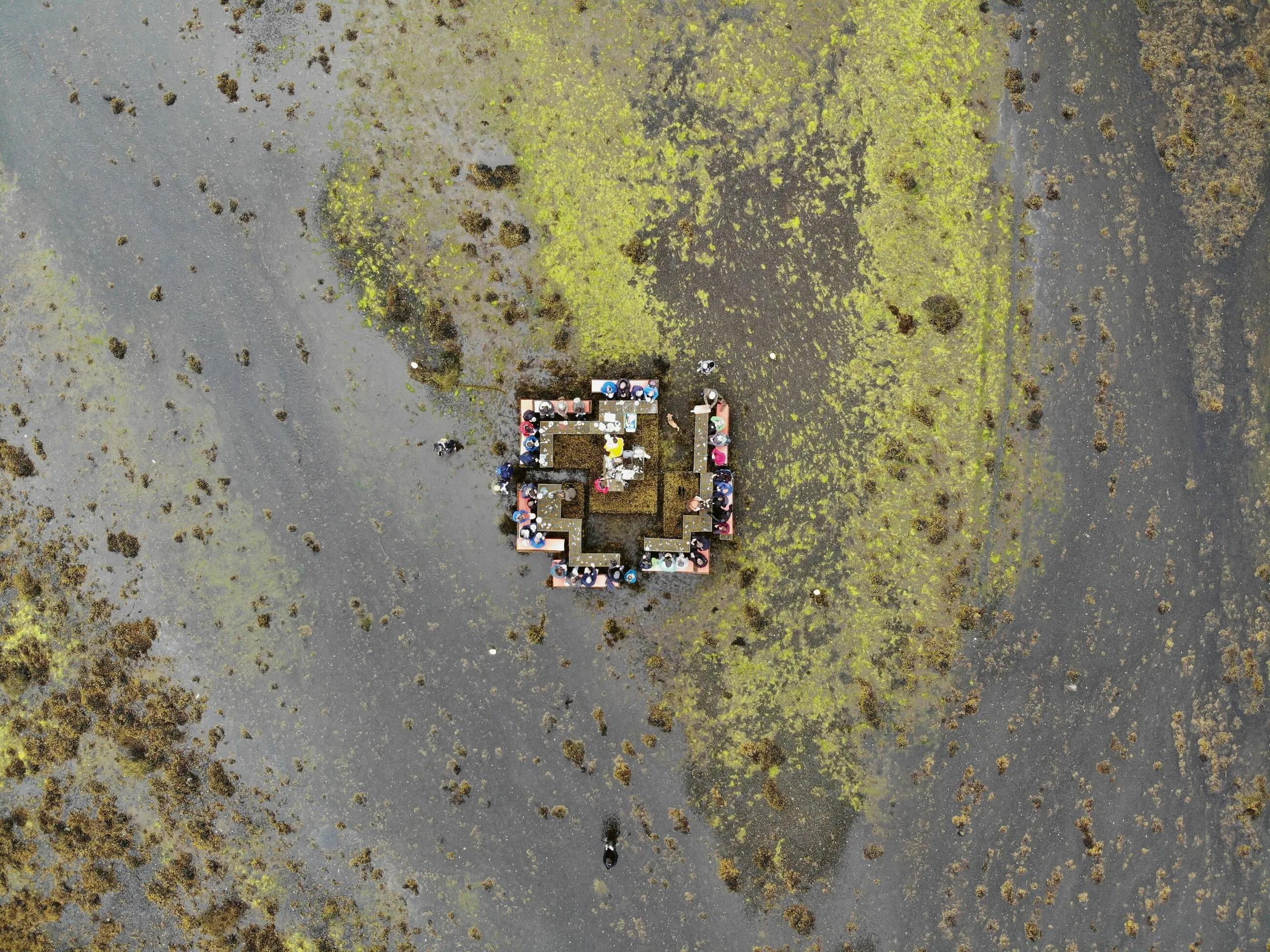
CLIMAVORE: On Tidal Zones, 2017–21. Installation with Multispecies Table shown, Isle of Skye, Scotland. Photo: Nick Middleton. Courtesy Atlas Arts
The artist duo Cooking Sections defy easy categorization. And they like it that way. “Every time someone writes about us, they invent a different hat,” says Daniel Fernández Pascual, who along with Alon Schwabe has for more than a decade now created long-term, site-specific projects that examine how to live—and most particularly how to eat—in the face of climate change. “It’s the way our practice operates,” agrees Schwabe. “Working on questions around ecology and the climate crisis requires addressing them from multiple angles and entry points all at once, and so it helps to wear all these different hats and operate in different ways.”
The two were nominated for the Turner Prize in 2021 and have shown work in numerous museums and galleries—as well as in biennials and other art events—but their work extends well beyond the art world. Through multifarious explorations of consumption and climate breakdown, Cooking Sections have collaborated internationally with teachers, chefs, fisherfolk, farmers, surfers, marine biologists and oyster shuckers, as well as with an accompanying constellation of local government and environmental groups, in locations from the north of Scotland to the south of Italy to the Gulf of Mexico and the Mississippi Delta. “Our practice is research-driven. It’s shaped by the location we work in and grows through the projects we develop. It’s always about adapting to the local context,” says Pascual. Schwabe adds, “I think a lot of people encounter the projects in ways that they didn’t necessarily know they were part of an artwork.”
Evidence of their wide-ranging activities is all around us in the London-based duo’s headquarters, an office-studio-storeroom in Somerset House, a large neoclassical building complex overlooking the Thames on the Strand. I last saw the stylish steel mesh table where we are sitting in Ministry of Sewers, a site-specific installation created by the pair for last year’s Folkestone Triennial, a major public art exhibition in Kent, created in response to the quantities of waste being dumped by water companies along the U.K.’s south coast. We are presided over by a disconcertingly lifelike and now ominously brown-stained plaster bust of Margaret Thatcher. When activated as part of Ministry of Sewers, the former prime minister’s likeness repeatedly drank from an overflowing glass of evidently none-too-pure local tap water. Hanging on the wall is an elegantly designed chart matching a border of heritage seeds to locations throughout Sicily and Puglia, part of an ongoing initiative the pair tell me is called Monoculture Meltdown, developed with Italian peasant farmers to cultivate seeds that are drought-resistant and heat-tolerant.
Schwabe and Pascual met in 2012 when they were studying at the Centre for Research Architecture at Goldsmiths, University of London. Pascual had trained as an architect in Berlin and Shanghai as well as in his native Spain, while Schwabe had a background in theater and performance. Time spent in these disparate cultural hubs undoubtedly contributes to their unique partnership—“We are mongrels!” says Pascual, laughing. The Centre for Research Architecture is also home to the radical interdisciplinary agency Forensic Architecture, and the duo acknowledge that Forensic Architecture’s intersectional melding of design and activism to investigate state violence and human rights abuses has played a key part in shaping their thinking. “We learned a lot from their spatial practice and understanding of how different political systems, economies and forces shape environments and how the architectural discipline is complicit in this,” Pascual says.
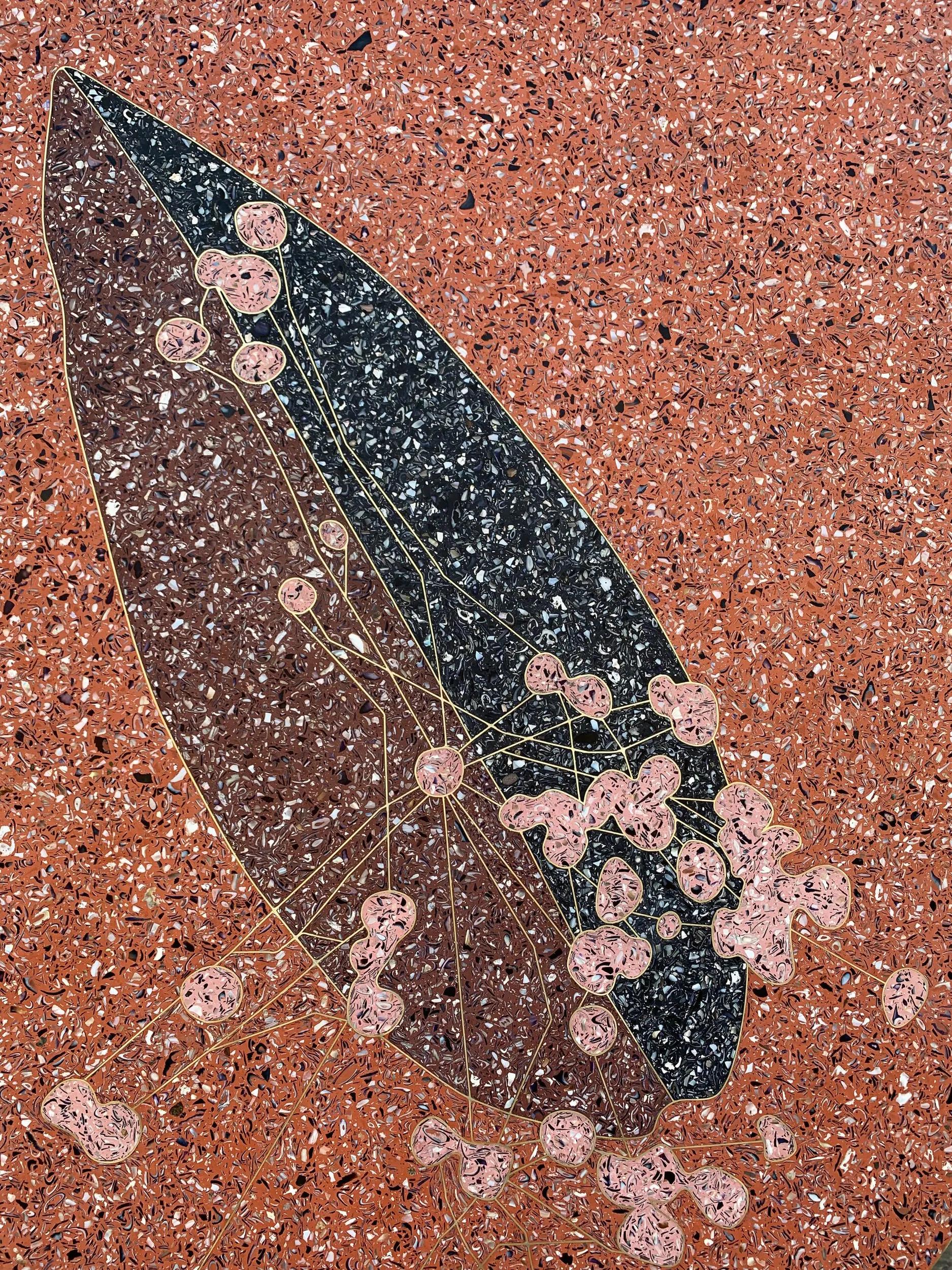
Mussel Beach, 2019. Shell composite. Installation view, Los Angeles. Photo: Cooking Sections
After Cooking Sections’ installation, all four Tate galleries—Modern, Britain, Liverpool and St Ives—decided to ban farmed salmon from their cafés and restaurants.
Cooking Sections still sometimes describe themselves as “spatial practitioners,” but it was during a research trip to Kivalina, an island off the coast of Alaska threatened by rising sea levels, that issues of food moved to the forefront. The pair noted how islanders measured seasons not in time but through the behavior of flora, fauna and fish. “Food became a really interesting lens through which to see these landscapes and their transformation,” says Schwabe, “and we realized that food is deeply connected to the environment and ecology, and also intersectional: Every living organism on this planet is invested in processes of metabolism, ingestion and the acquisition of nutrients.”
Upon the pair’s return from Alaska, Cooking Sections came into being, the name alluding to the ways in which a cross-section of a building or landscape represents a range of social and material interactions, and also a reference to food’s intersections with global systems, from farming and finance to urban planning and policy. “Food is a great tool,” explains Schwabe. “It enables you to understand environments, landscapes and geopolitics.” Pascual added a more critical note: “Food is one of the biggest contributors to emissions in the atmosphere. It’s also one of the driving forces behind deforestation. It’s everywhere.”
Uncomfortable realities about what we eat were made manifest in one of the first works Schwabe and Pascual made together as Cooking Sections, in December 2013. The Empire Remains Christmas Pudding, dished up in a gastronomic performance at London’s Delfina Studios, revisited a 1928 recipe distributed by the Empire Marketing Board for an empire Christmas pudding that listed seventeen ingredients from seventeen different places of origin, including oranges from Palestine, cloves from Zanzibar and rum from British Guiana, in a bid to urge consumers to invest in goods sourced from territories under British colonial rule. It also demonstrated how this most traditional of English desserts relied on the reach of colonization. “The most English of dishes made from the most un-English of ingredients,” as Cooking Sections put it.
For Empire Remains, Pascual and Schwabe sourced the same ingredients, exposing how distant origins are now obscured by labels such as “packed in U.K.” (cloves, currants, sultanas and raisins), “milled in U.K.” (flour) and “Guyanese inspired” (demerara sugar).
“New economies do not promote a sense of place but the erasure of it—and this neoliberal logic of erasing origin is just another form of oppression,” they commented at the time. Cooking Sections next opened an Empire Remains pop-up shop on Baker Street in central London, which in 2016 hosted a program of conversations, dinners, events and screenings focusing on the evolution of global food networks, perceptions of invasive and native species (Japanese knotweed ice cream was featured on one dinner menu) and much more. In an accompanying book, which they described as a manual for anyone who wanted to open an equivalent franchise shop “at home, overseas, anywhere on the planet,” Schwabe and Pascual wrote: “The Empire Remains shop is a method to understand the space in which power structures operate and to explore how to use that knowledge to challenge them.”
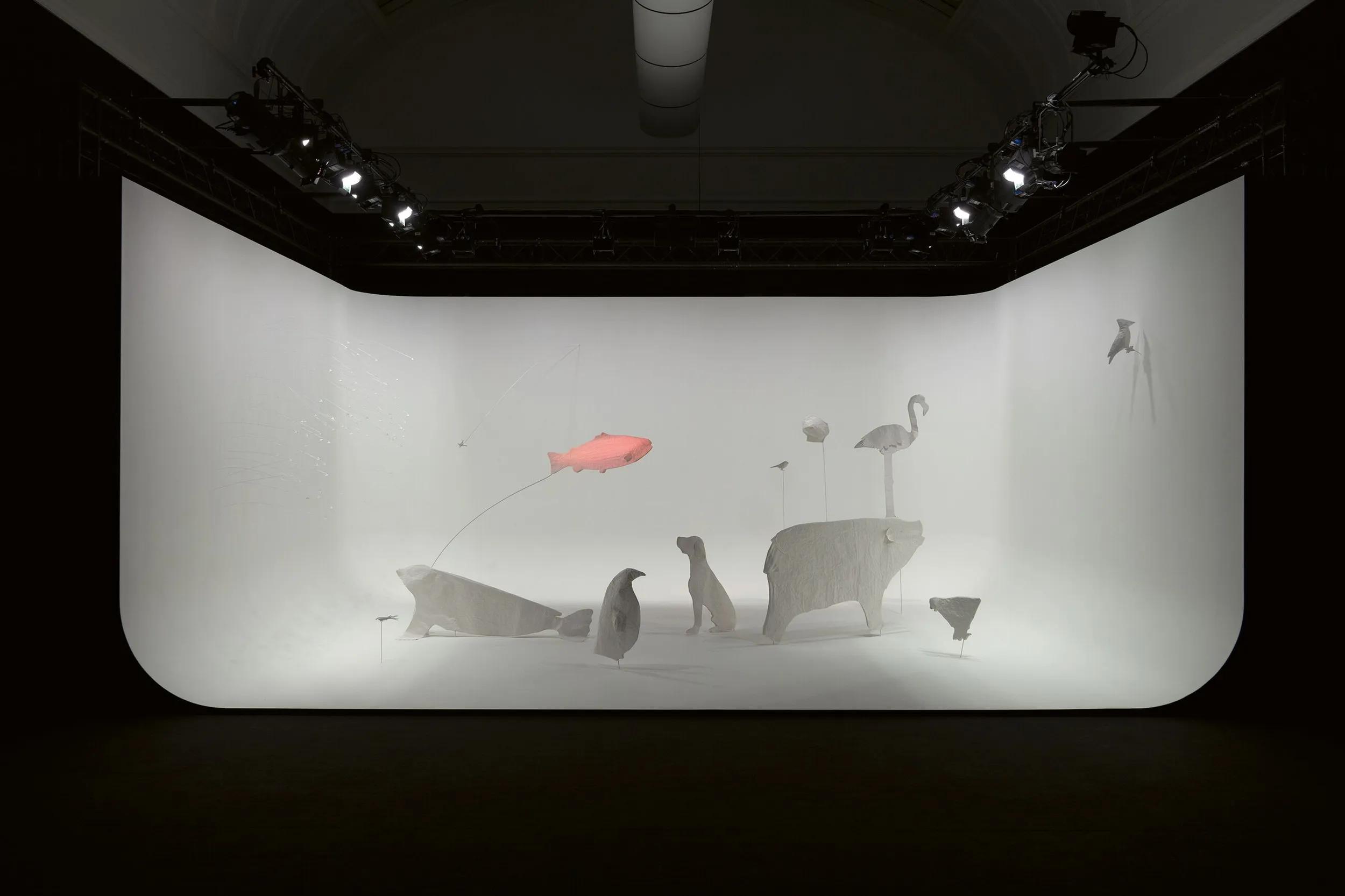
Salmon: A Red Herring, First chapter of the trilogy When [Salmon Salmon [Salmon]]. 2020. Installation view, Tate Britain, London. Photo: Lucy Dawkins / Tate Britain
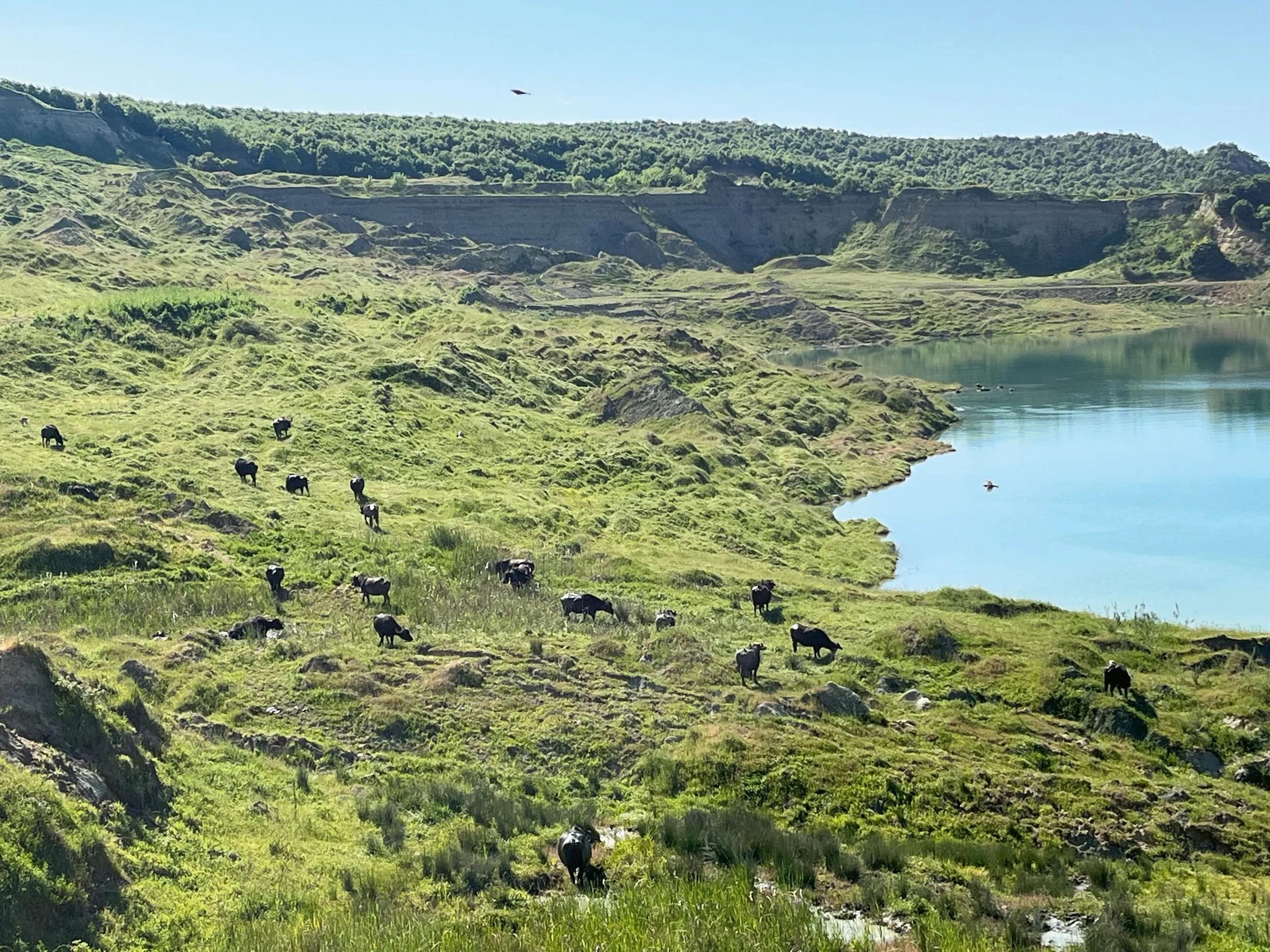
Wetlands north of Istanbul, where Cooking Sections works with local herders for Water Buffalo Commons. Photo: Cooking Sections. Courtesy CLIMAVORE x Jameel at RCA
“We need to engage in processes that last for ten, twenty and thirty years, not just for a three-month show in a gallery,” Alon Schwabe says.
The work that put Cooking Sections firmly on the art-world map—and helped them land their Turner nomination—was the installation Salmon: A Red Herring, first shown at Tate Britain in 2020 and now in the permanent collection of Castello di Rivoli in Italy. Taking the form of a natural history diorama, it used sound, light and sculpture to plunge visitors into the grim realities of how salmon are farmed. Over twenty minutes, static sculptures of animals, including a seal, a salmon, a shrimp and a flamingo were illuminated in shades ranging from pale pink to deep blood red, while a solemn voice-over related how salmon are crammed into pens for up to two years and fed processed food, many ending up blind, deaf, riddled with sea lice and often driven to eat each other. Other depressing details included the wider threat to marine life from the pesticides that leach into the sea from the U.K.’s seventy-six fish farms, not to mention the excrement produced by the confined fish themselves.
The most chilling aspect of the project—to me at least—was the revelation that industrial fish farmers use a special SalmoFanTM color swatch guide to determine the exact shade of pink they want their salmon to be. Unable to feed on their natural diet of pink-hued baby lobster or krill, farmed salmon develop gray flesh, but as nobody wants gray salmon, the fish are fed synthetic dye pellets to adjust their color according to different visual tastes across the global market. Apparently, Japan and East Asia prefer darker reddish tones, whereas the preferred shade at London’s Billingsgate Fish Market rests somewhere between orange and pink.
I wasn’t the only one repulsed by the farmed-salmon revelations. After Cooking Sections’ installation, all four Tate galleries—Modern, Britain, Liverpool and St Ives—decided to ban farmed salmon from their cafés and restaurants. This occurred despite energetic lobbying from the U.K.’s powerful salmon industry, which has some muscle, being worth an estimated £1 billion-plus (more than $1.3 billion) to the economy. “They really went for Tate and sent them dozens of letters and emails, trying to invite them to visit model salmon farms and to get them to put salmon back on the menu,” Schwabe and Pascual remember. “It is to Tate’s absolute credit that they stuck to their decision.” The ban, across Tate’s catering, remains in place today.
In characteristic Cooking Sections style, Salmon: A Red Herring was not an isolated artwork but emerged from a long-term engagement with Scottish coastal waters that had begun in 2017, when the duo were invited by Atlas Arts, a contemporary arts organization on the Isle of Skye, Scotland, to realize an annual commission. A local environmentalist’s account of Skye sparrows turning bright pink after eating the dye-laced pellets intended for farmed salmon prompted Cooking Sections to examine the overall environmental effects of salmon aquaculture on Scotland’s contested coastal waters. “The pink sparrow was an accidental witness to chemical leakage, a feathered red flag,” they wrote. From that inquiry emerged other projects that sought not only to expose salmon aquaculture’s impacts but also to model alternatives.
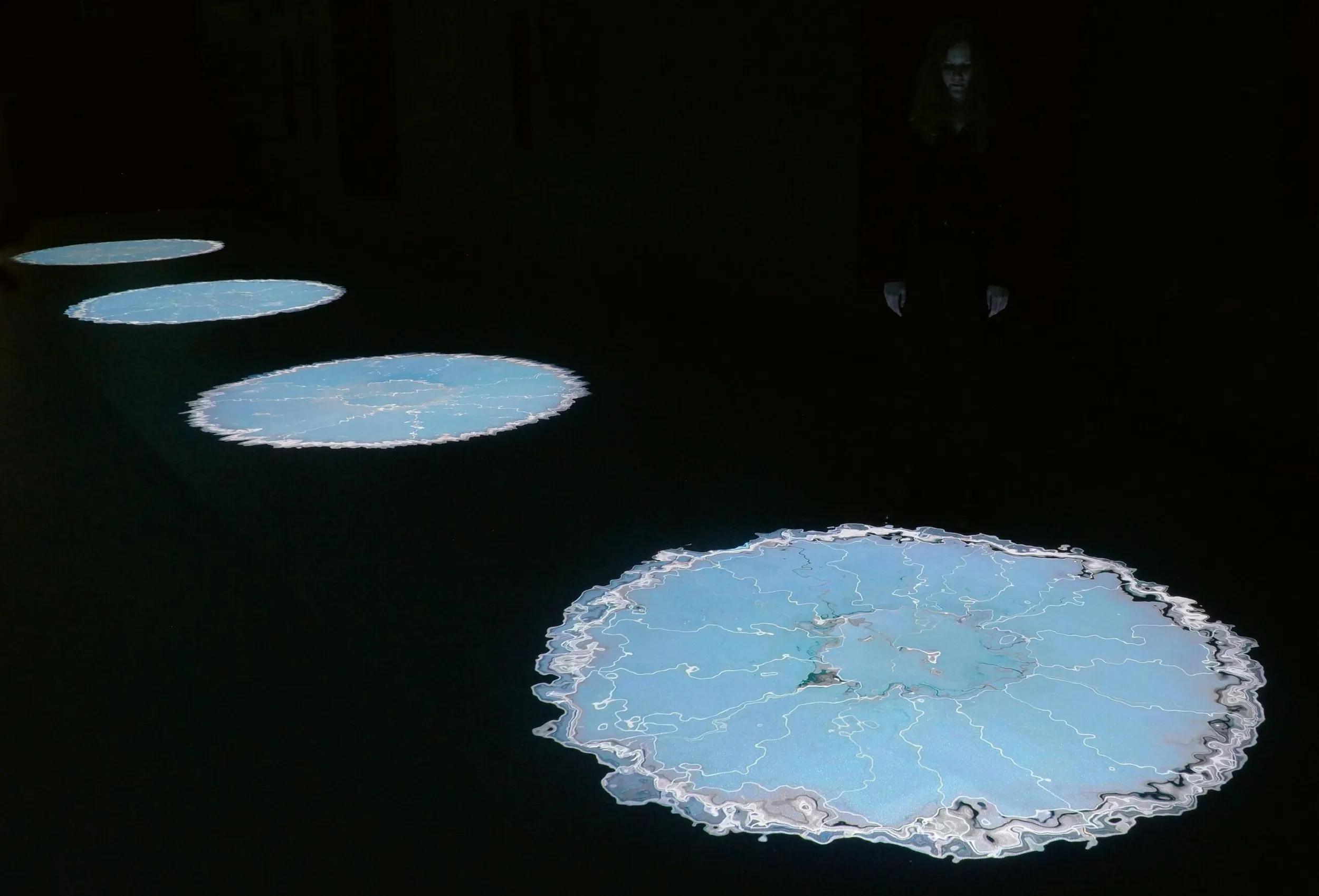
Salmon: Traces of Escapees, 2021. 8-channel video. Second chapter of the trilogy When [Salmon Salmon [Salmon]]. Installation view, Turner Prize exhibition, Herbert Art Gallery, Coventry, U.K. Photo: Cooking Sections
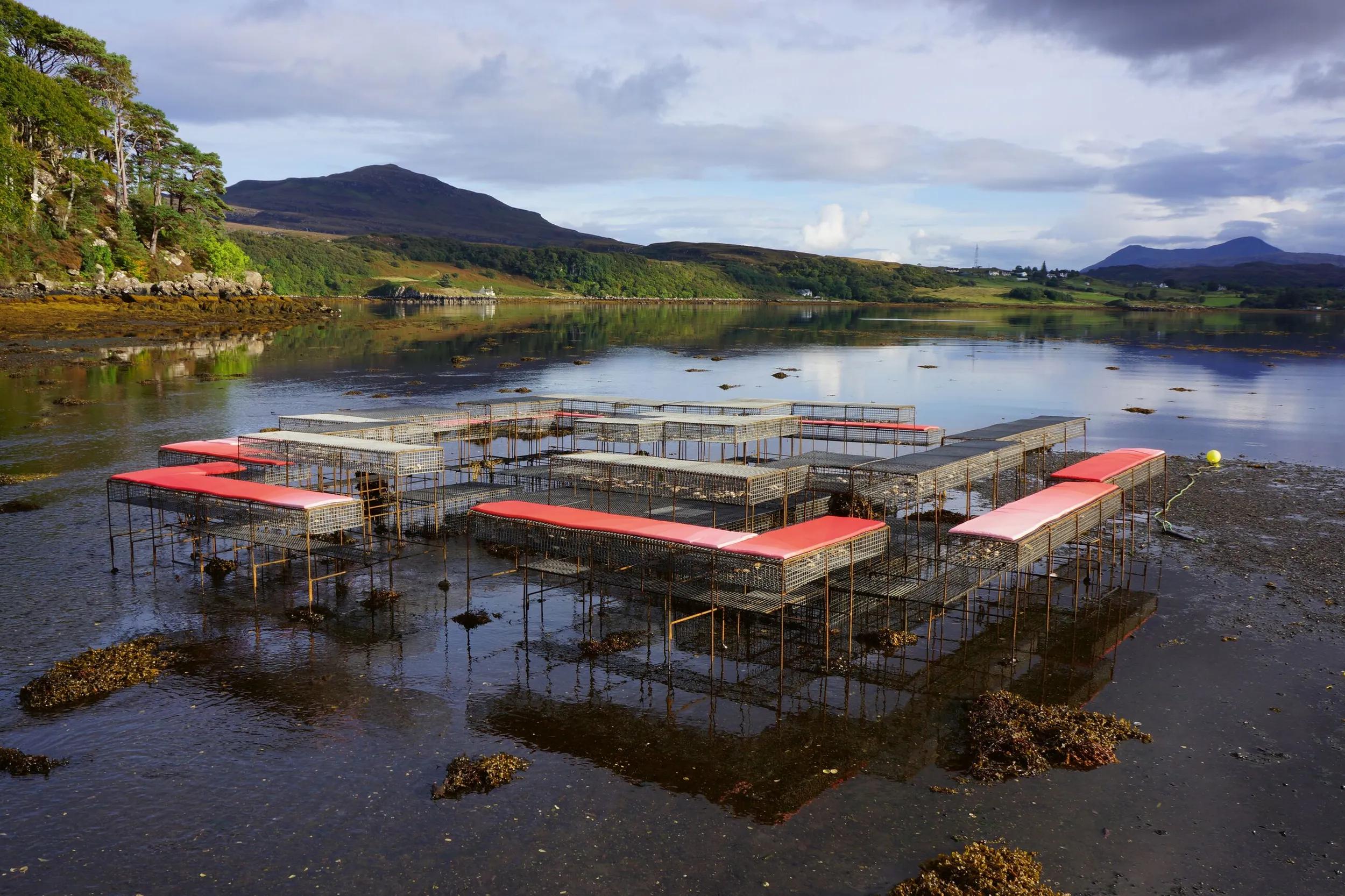
CLIMAVORE: On Tidal Zones, 2017–21. Installation with Multispecies Table shown, Isle of Skye, Scotland. Photo: Cooking Sections
An elegiac, emotionally charged homage to the power of ocean waves may not seem overtly gastronomic in reference. But through the lens of Cooking Sections, everything is interconnected—or, as they put it, “metabolized.”
Arguably their best-known project from this period is Multispecies Table, a cage-like structure installed on the Skye shoreline near the town of Portree. Modeled on the trestles used to cultivate oysters, the structure served different purposes with the changing tides. Underwater at high tide, it provided a habitat for seaweed and bivalves; at low tide, it became a series of communal dining tables where islanders, politicians, students, schoolchildren and scientists gathered to share meals and discuss the future of food on the island. As Pascual and Schwabe recall, “Guests accessed this public forum barefoot or in wellies in order to share dulse soup, tidal crispbread, hand-dived scallops and kelp lasagna, along with frustrations and hopes.” Out of these interactions emerged a collective movement to develop sustainable alternatives to environmentally and socially damaging salmon farming.
The Multispecies Table is now gone—“it was only meant to last two weeks, but it stayed for four years,” say Pascual and Schwabe—but its impact continues to reverberate in a network of self-sustaining efforts that extend throughout the isles of Skye and neighboring Raasay and beyond. Under the umbrella title of CLIMAVORE: On Tidal Zones, Cooking Sections have tested regenerative farming methods on the islands, including the cultivation of mussels, oysters and kelp to help filter and oxygenate the water; they’ve also started apprenticeship programs in local schools and restaurants. Many of the island’s restaurants have now removed farmed salmon from their menus, substituting CLIMAVORE alternatives. This effort, in turn, has led to another strand of work that forges links between the food and construction industries. Pulverized waste shells from consumed CLIMAVORE bivalves are being used to create a new terrazzo-like composite material in place of petrochemical products and highly polluting cement; the material is currently being developed by the CLIMAVORE Station in Skye, led by Shona Cameron and Dani Burrows with material researcher Rosa Whiteley and stonemason Joel Franklyn. Judging by the samples I saw at Cooking Sections’ headquarters, the crushed-shell terrazzo is not only climate-friendly but also looks great.
For Schwabe and Pascual, the work in Skye stands as a formative milestone in the evolution of Cooking Sections. “It really changed the way we practice. Under existing conditions, we came to understand that cultural institutions do not provide a platform to address ecological questions in a deep and transformative way. We need to engage in processes that last for ten, twenty and thirty years, not just for a three-month show in a gallery,” Schwabe says. Crucially, time spent in Skye also resulted in the development and evolution of the multiple iterations of CLIMAVORE, which they now define as “a research platform that takes the methodologies developed by Cooking Sections and embeds them into more long-term collaborations.”
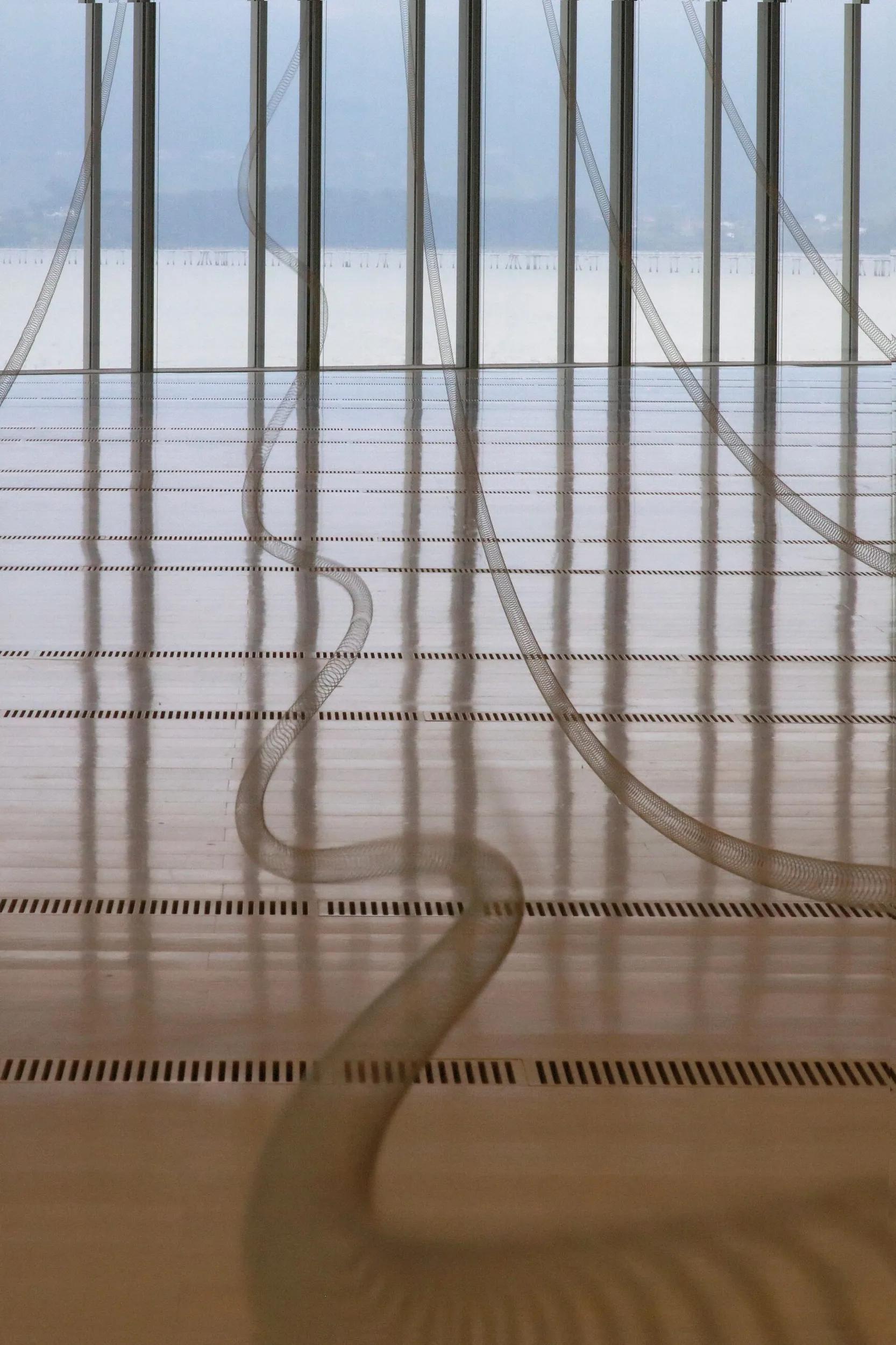
Waves Lost at Sea, 2025. Installation view, Centro Botín, Santander, Spain. Photo: Lourdes Cabrera
Beyond Skye, CLIMAVORE, in collaboration with Jameel at the Royal College of Art, has forged two other recent projects. One has taken shape in Istanbul’s wetlands and the other in the drought-prone landscapes of southern Italy. For Water Buffalo Commons, the duo works with researchers Merve Anil, Kubilay Ercelep and the last remaining herders in Istanbul’s post-industrial marshes. The project’s initiatives include the itinerant annual Manda Festivali, a gathering now in its fifth year, as well as a campaign that creates photographic portraits of herders and collaborations with restaurants and suppliers to reintroduce water buffalo milk products into local food cultures. “The herders can retain the profits from selling the milk,” Pascual explains, “and by eating these yogurts and desserts, people are helping to conserve a very particular landscape.” As the two stress, the Turkish landscape in question is not a pristine wilderness but an ecology shaped by decommissioned mines and gravel pits—“an ecology that has emerged out of ruins,” as Schwabe puts it—requiring new frameworks to regenerate the kinds of landscapes we are likely to inhabit in a more uncertain climate future.
Significantly drier terrain is the subject of Monoculture Meltdown, focused on the harsh, drought-susceptible regions of Puglia and Sicily. There, Cooking Sections and their team, Enrico Milazzo and Gabriella Patera, have been working with forty local farmers and cooperatives to preserve and propagate rare drought-resistant peasant seed varieties cultivated and exchanged for generations. These seeds and the produce they yield are now under threat of extinction, partly because they do not conform to the yield, uniformity or aesthetic standards required by agribusiness and remain unregistered, meaning they cannot be commercially grown or sold.
Now, thanks to an assembly of CLIMAVORE growers, along with environmentalists and policymakers, the Museo delle Civiltà in Rome has stepped into a role highly unusual for a museum: helping to circumvent the stranglehold of corporate hybrids and patents that restrict seed development. A long-term agreement between agro-ecological farmers and the museum establishes a new form of cultural provenance and an annual exchange protocol, whereby each season the seeds are temporarily hosted in the museum’s “living collection” before being returned to the soil and propagated.
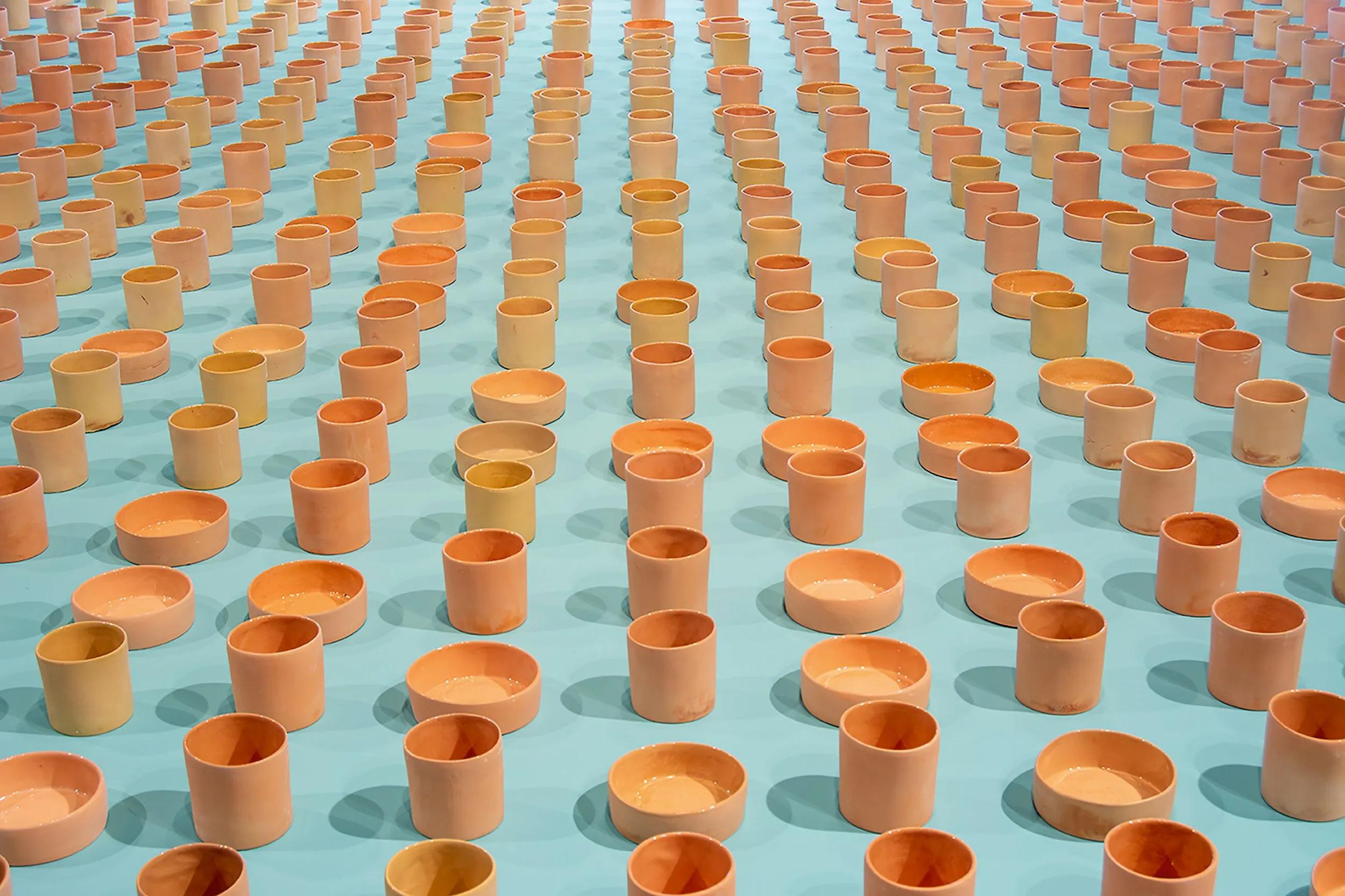
The Lasting Pond, 2021. Installation view, Salt Beyoğlu, Istanbul. Project later expanded as part of Water Buffalo Commons. Photo: Cooking Sections. Courtesy CLIMAVORE x Jameel at RCA
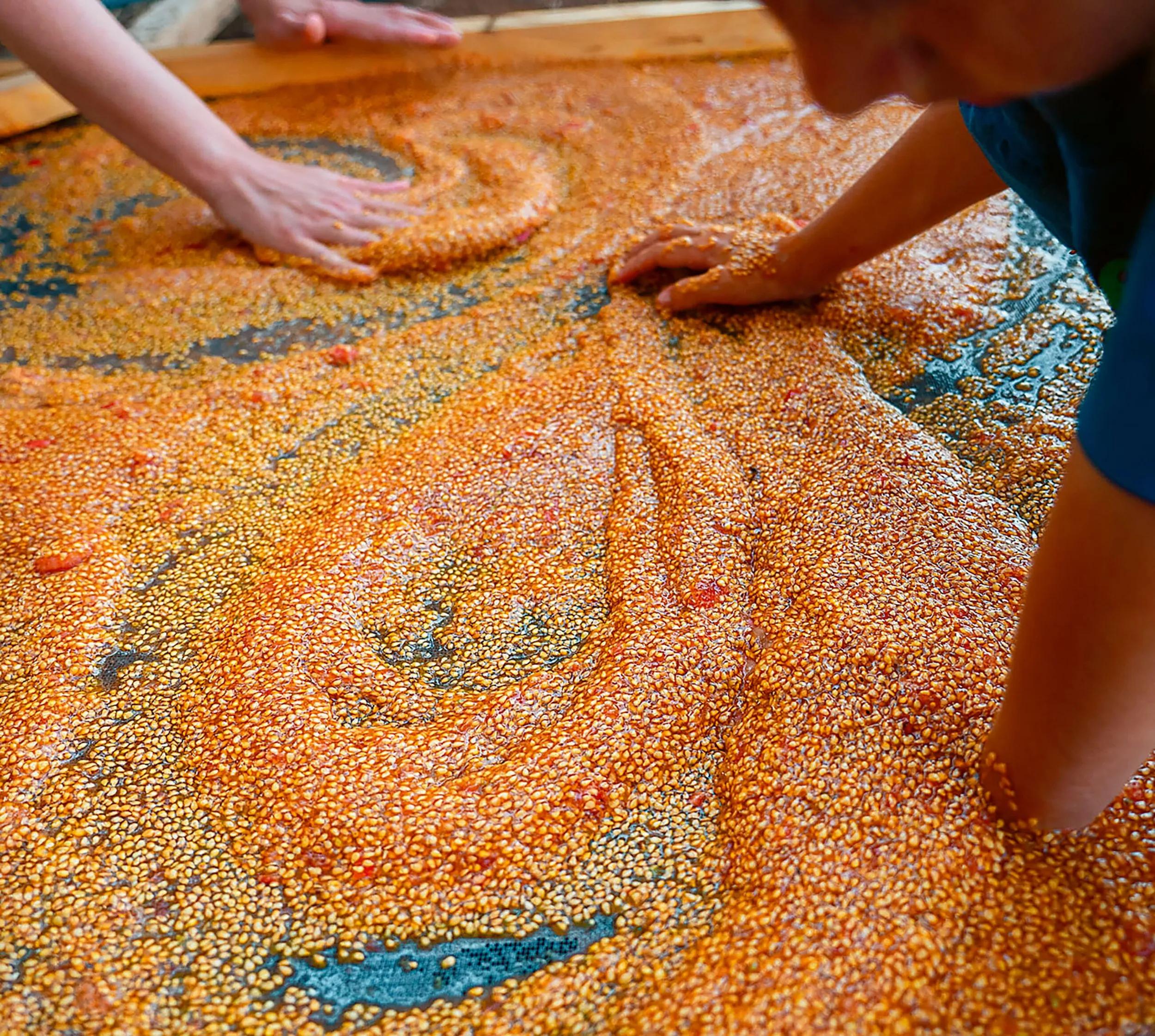
Monoculture Meltdown, 2023–26. Research project focused on drought-resistant seed varieties, Puglia and Sicily. Photo: Eleonora Carrozza. Courtesy CLIMAVORE x Jameel at RCA
“When seeds enter the museum, they temporarily become part of the museum collection,” says Schwabe, who observes with evident glee how “the museum is in turn transformed into a living collection.”
The museum thus certifies the seeds and acts as their nursery of origin before entrusting farmers to cultivate them. To highlight this landmark partnership between nature and culture, Cooking Sections have worked with Mena Fueco, a ceramicist from Puglia, to create an elegant sculptural installation of 125 gourd-shaped ceramic vessels, each containing one of the seed varieties now held by the museum. “When seeds enter the museum, they temporarily become part of the museum collection,” says Schwabe, who observes with evident glee how “the museum is in turn transformed into a living collection, one that doesn’t remain static and stagnant but instead sends its artifacts back to communities to propagate these processes further.”
For Cooking Sections, the force of food, whether directly or obliquely, continues to act as a catalyst in how the world is shaped. Their most recent work, Waves Lost at Sea, brought them back indoors in the galleries of Centro Botín in Santander, Spain. The museum’s building, which not only overlooks but actually hovers above the ocean, informed the installation’s spatial thinking. The work’s starting point was the abrupt disappearance in 2003 of a unique wave in Mundaka, on Spain’s northern Atlantic coast, along with the collapse of the local community’s surf-based economy. The wave vanished due to dredging to improve access to a shipyard, which altered the natural sandbar formation crucial to the wave’s particular shape. In a performative installation, Cooking Sections drew on the stories, rhythms and patterns of eleven significant lost waves, from Mundaka to Ala Moana in Hawai‘i, Rabo de Peixe in the Azores, Cabo Blanco in Peru and El Marsa in Western Sahara, all of which vanished because of human alterations to the ocean floor. Working with a team of local engineers from GeoOcean and Max Cooper-Clark from Cooking Sections’ studio, the artist and musician Duval Timothy translated information about these waves into eleven musical compositions, which were in turn responded to in movement by performers who activated eleven lengthy suspended springs, or “Slinkys,” extending throughout the space.
An elegiac, emotionally charged homage to the power of ocean waves may not seem overtly gastronomic in reference. But through the lens of Cooking Sections, everything is interconnected—or, as they put it, “metabolized.” To track wave disappearances is also to explore the consequences of the world’s overreliance on fragile ocean systems—the deep dredging needed to accommodate ever-larger ships transporting unseasonal groceries; the monster fishing vessels now emptying our oceans and devastating the seabed.
Cooking Sections’ mission, for the sake of our planet’s lands and seas and ultimately for their inhabitants—is to employ the mechanisms of art to help change the minds, hearts and consuming habits of individual viewers. But as Schwabe said in a 2022 interview, the imperative is ultimately far larger. “For us, it’s not so much about the kind of decisions people are making as individuals,” he said. “I think it’s one of the biggest problems of the food industry—that the responsibility and ethics of consumption has been flipped onto the consumer, whereas it should be the responsibility of governments, producers and market distributors.”
–
Louisa Buck is a writer and broadcaster. She has authored several books about contemporary art, including Owning Art: The Contemporary Art Collector’s Handbook (2006) and Commissioning Contemporary Art: A Handbook for Curators, Collectors and Artists (2012). Her articles have appeared in The Guardian, Vogue, Frieze and Artforum. She is a founding member of the Gallery Climate Coalition.