

Conversations
Hello Hamburg
Tobias Kratzer envisions an opera house that speaks to its audience, its city and far beyond
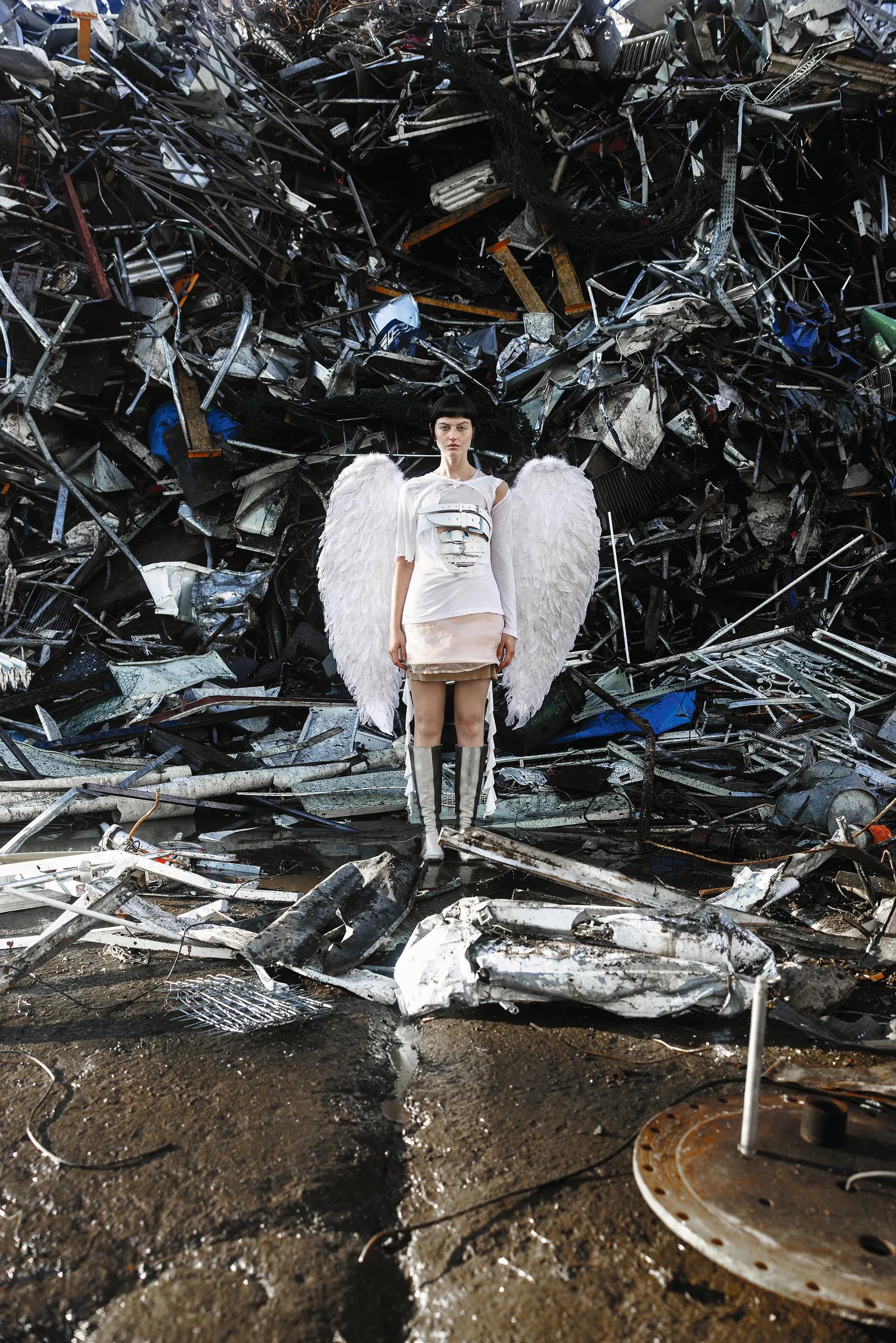
Scene from Robert Schumann’s Das Paradies und die Peri at the Hamburg State Opera, directed by Tobias Kratzer, 2025. The production opened Kratzer’s first season as intendant of the house. Photos: Courtesy Hamburg State Opera
In March 2021, I was invited to a premiere of Gounod’s Faust at the Paris Opera, directed by Tobias Kratzer. The event felt exceptional, not only because Kratzer was at the helm but also because the pandemic meant that barely fifty of us were able to attend that night. I was smitten by the production. Kratzer found a way to stimulate and refresh a pillar of the repertoire, to create an epic full of images and real connections between characters, elements too often lacking in interpretations of Faust. In 2019 in Bayreuth, where new productions can be met with fierce critical headwinds, he won critical acclaim for his work on Wagner’s Tannhäuser.
He assumed the intendancy, or general directorship, of the Hamburg State Opera in 2025. I was eager to meet him to discuss his work at large and his vision for the future of opera and opera houses like the one he leads. Along with a friend, the curator and arts leader Teresa Iarocci Mavica, I sat down with him in Hamburg following the 2026 world premiere of the opera Monster’s Paradise, a political satire. I found a profound humanist, a director with a strong, contemporary vision for the stage and also for the venerable institution he now leads. The conversation suggested a bright, hopeful prospect not only for Hamburg but for the genre. Kratzer will certainly make a difference.
—Olivier Renaud-Clément
Olivier Renaud-Clément: I’d like to start at the beginning. Historically, Hamburg is an important city for music. It is the birthplace of Brahms, and Mahler spent several formative years here. The city also has major institutions such as the Elbphilharmonie, the Laeiszhalle, the Deutsches Schauspielhaus and also the Thalia Theater, which has a more avant-garde reputation.
Tobias Kratzer: Yes, it’s a very rich cultural climate.
ORC: You are a very successful opera director, with a career that could take you from one major house to another. But you have come to Hamburg not only to direct productions at the Hamburg State Opera but also to serve as its intendant and oversee the artistic program. Why take on these two jobs at once, especially when the house had been losing subscribers before you arrived?
TK: That’s a good question, because the job was not on my bucket list. But I have always thought it is better when an artist takes over a house at the peak of a career. An opera house should not be a life vest for directors whose careers are fading. It should be an instrument to use when you are at the height of your artistic powers.
I had worked at almost all the major European opera houses, and I liked the idea of building something that could last longer than a single production—shaping an entire artistic profile for an institution. I also felt a certain responsibility. Among the thirteen biggest opera houses in Germany, not a single one was being led by a practicing artist, whether a singer, a conductor or a director.
Most of all, I thought it would be exciting to have an institution with such a great tradition and such a clear task. In recent years, the house had lost some of its international appeal and experimental character. It was no longer on the map for critics and colleagues, and I thought it was a worthwhile challenge to change that.
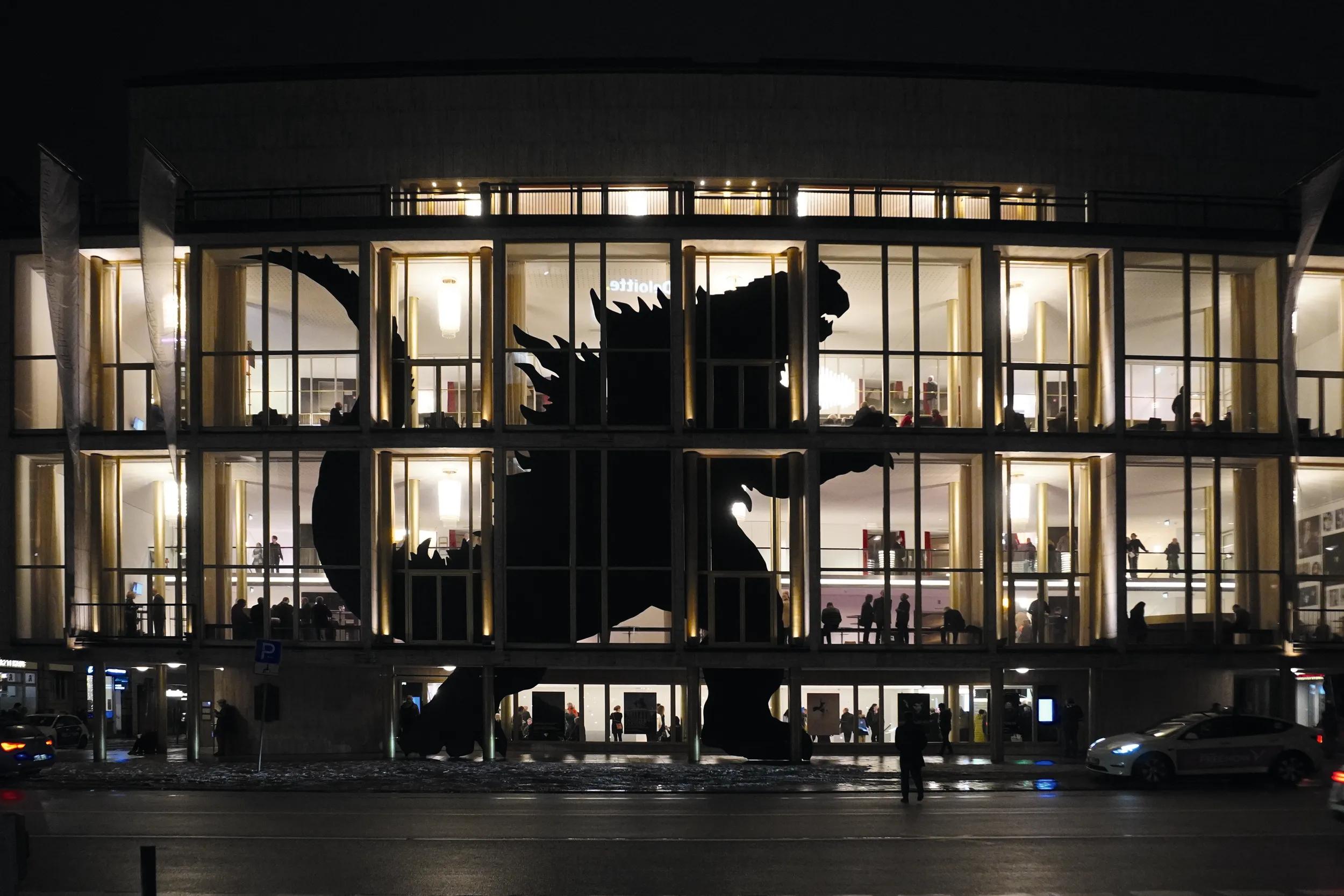
The Hamburg State Opera façade with an installation for Monster’s Paradise, 2026
ORC: How do you define the role of an institution like this today? What kind of relationship should an opera house have with its audience, with its city and with the wider world?
TK: I opened my first statement as intendant with three phrases: “Liebes Publikum,” or “Dear audience,” to greet the audience; “Moin Hamburg” to say hello to the city in a local way; and finally “Hello world.” Those are the three publics an opera house has to address. Maybe the audience is there because they are deeply interested in music or visual art or simply because they want to show off a new suit. These are all valid reasons.
As for Hamburg, not everyone in the city will come to the opera, but they still pay taxes for it. Of course, people also pay taxes for schools even if they do not have children, and for swimming pools even if they do not swim. That is fair enough. But they should know that something is happening in their city that has intellectual and artistic meaning. That is why the posters for the world premiere of Monster’s Paradise and the Godzilla-like figure on our façade matter: Someone might never enter the building, but they can still pass by, see the monster and feel that something alive is happening there.
And then there is the world beyond Hamburg. For me, an opera house can be a little like an observatory. Most people may never go there, and the work inside may not have an immediate effect on their daily lives. But it matters that such a place exists and that it is publicly supported. It matters to know that there are institutions where people are looking toward other galaxies, and in many ways going for the stars.
Teresa Mavica: I live in Naples, home to the Teatro di San Carlo, the oldest continuously operating opera house in the world. After Stéphane Lissner’s tenure there, the new superintendent gave an interview in which he said it was time to stop experimenting and return to tradition. I found that deeply troubling, because I believe that supposed opposition is often used as a political tool. After all, every innovation eventually becomes tradition.
When I came here for Monster’s Paradise and saw your program for the first time, I immediately noticed a different visual language—not only onstage but also in the way the opera house engages with its audience. How do you challenge the idea that innovation is somehow undesirable or that opera must remain confined to a world of bel canto and a sacred past? Have you encountered this kind of resistance or criticism in your own experience?
TK: I once heard someone say, “I program fifty percent tradition and fifty percent innovation,” and I thought, “How can that be?” For me, opera always has to be 100 percent innovation with 100 percent tradition, because you cannot have one without the other.
TM: Did you do anything to prepare the audience in advance for this approach?
TK: Yes and no. Monster’s Paradise is a political satire about the world we are living in now, with commissioned music by Olga Neuwirth and a libretto by Neuwirth and Elfriede Jelinek. We prepared the audience by having monsters appear around the city, by using the façade and by doing interviews and publicity around the show. We wanted them to understand that a brand-new opera could be a major event, but we did not tell them what to think or how to interpret the piece. We tried to draw people in through something visually attractive and entertaining.
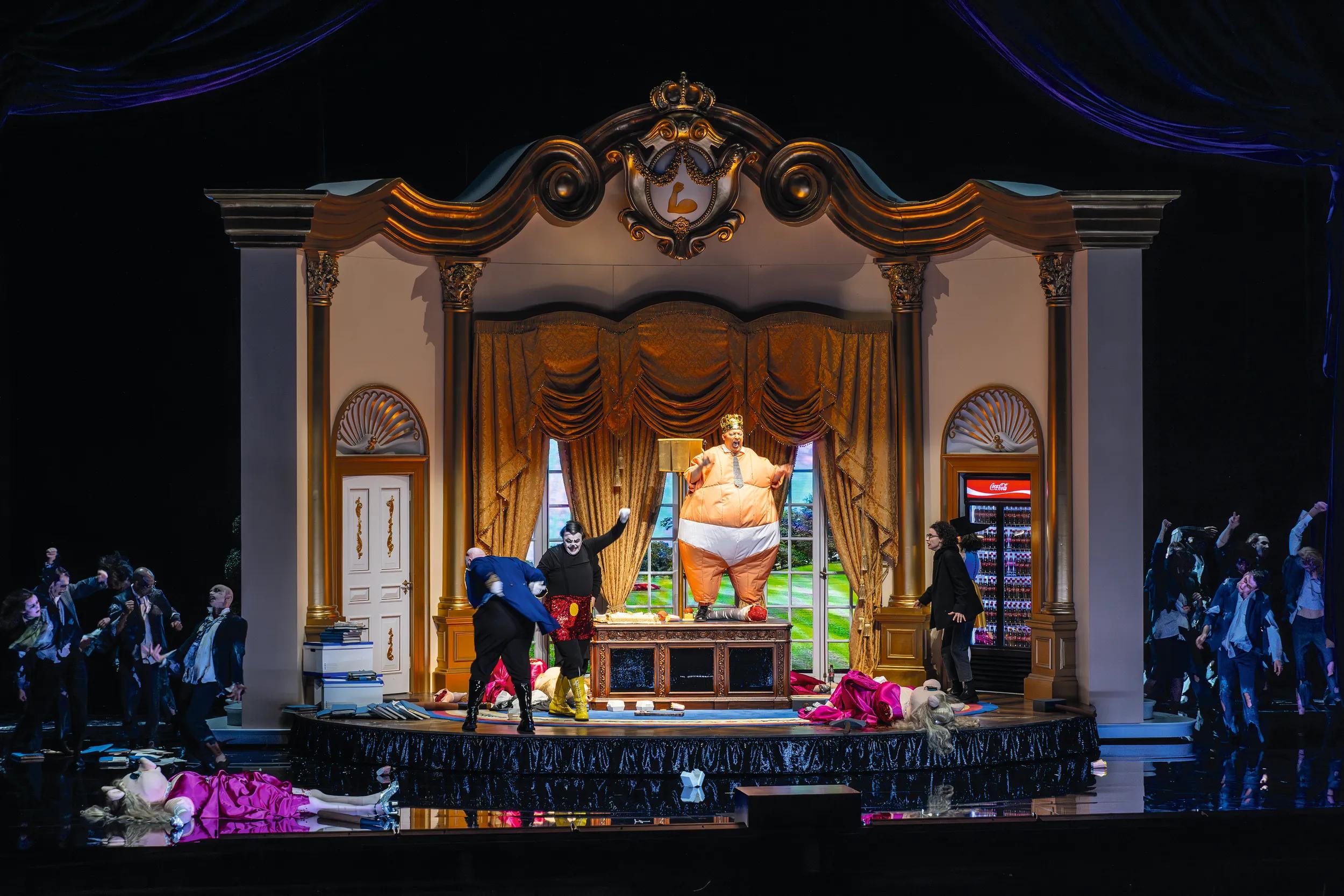
Scene from Olga Neuwirth’s Monster’s Paradise at the Hamburg State Opera, directed by Tobias Kratzer, 2026
TM: Do you ever feel pressure from audiences or public opinion to uphold traditional ideas of what opera should be?
TK: No. The good thing about Hamburg is that the city really supports this work. The house was not selling out, to put it euphemistically, so I was not inheriting something to simply preserve. I am free, and even required, to try different strategies. At the same time, this is still a German repertoire house. We have Carmen; we have the classics. It is a little like keeping old paperbacks of Balzac and Molière on the shelf. It is good to have the classics close at hand—then you can really reach for contemporary literature.
ORC: How do you think about the older productions you inherit in a repertoire house, the ones already on that shelf, so to speak?
TK: Some older productions are like a treasure chest, or a message in a bottle from the past. I don’t want to pretend they are contemporary and new. I want the audience to understand them as historical works with their own context. The closer you look at them, the more interesting they become.
ORC: You are also directing, at the same time, Wagner’s Ring cycle at the Bavarian State Opera, so you are hardly avoiding the canon. But for your new season in Hamburg, there is nothing super well-known or super classical. Almost everything feels less familiar, even potentially scary for the regular opera audience. Why not begin with something more expected, like a new La traviata or Il barbiere di Siviglia?
TK: For me, the first season is a statement.
I consider my intendancy a five-year project, one arc from the first season to the fifth season. In the first year, it was important to show what is possible in music theater and to see what might interest the audience. I never liked the idea of doing a traditional program and then adding one experiment. If you do an experiment, you should do at least two or three, because then it becomes something the audience can really compare and invest their interest in.
Of course, I also love the great classics of opera. People should be able to see Macbeth and La traviata. But I think it is always important to be a little unpredictable. In the first season, we opened with an oratorio almost no one knows, Schumann’s Das Paradies und die Peri. In the second season, we will open with a new production of Verdi’s Macbeth, with a major cast. Strategically and artistically, it was important for me to start with less traditional things and then see what those experiences do alongside the classical repertoire.
TM: I wanted to mention the children’s production I saw here, Die Gänsemagd. It is a contemporary opera based on the Brothers Grimm fairy tale. I was very impressed that a young audience remained so engaged throughout the entire performance.
TK: There were already programs for young audiences here but not on this scale. For me, it was important that children’s productions not be made only by artists who “do things for children.” Children should get high-class artists, and their productions should get the same serious treatment as every production in the house.
TM: Great! You chose the right approach for them.
TK: Absolutely. You have to know which language to apply to which audience. When I talk with children, of course I talk differently than when I talk with adults. But that does not mean taking them less seriously. In a way, it means taking them the most seriously, because you are really trying to speak with them at eye level.
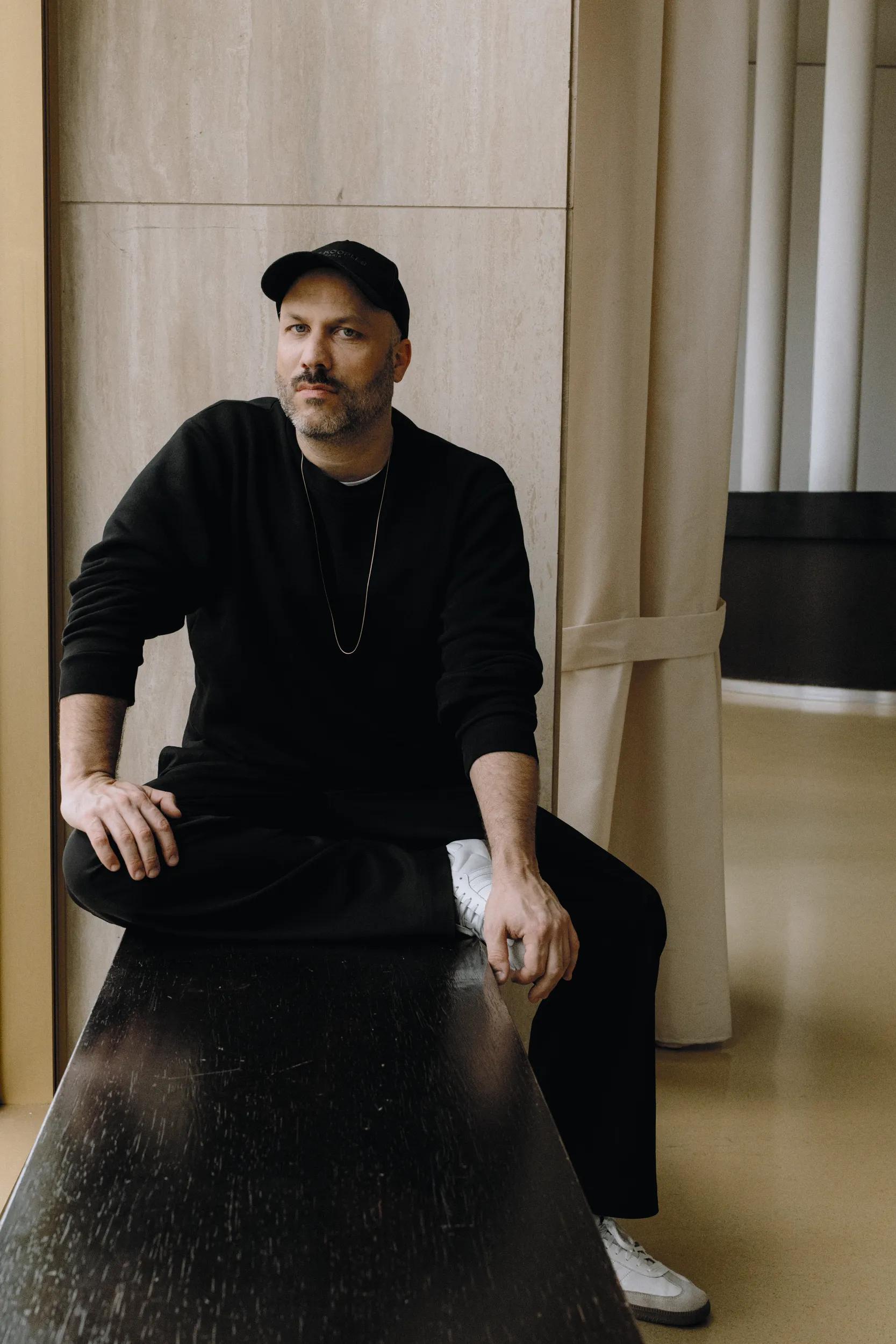
Tobias Kratzer in Hamburg, 2025
TM: Looking at them, I found myself thinking about the way audiences can become absorbed in a great film. What was the last one you saw that stayed in your mind?
TK: I recently rewatched Michael Haneke’s The White Ribbon. Of course, it is incredible. When it came out, it felt like an instant classic, as if it had always been part of cinema history. It is visually stunning, suspenseful and entertaining, and at the same time it has a moral and a historical dimension.
TM: Your productions can draw on cinema, photography and visual art. Do you actively immerse yourself in those worlds—visiting exhibitions, looking at photography—or does inspiration come to you in a different way?
TK: I read a lot, because I am interested in the narrative impact of great novels. I am also very much fueled by visual art. Movies and series interest me as storytelling devices, but the real emotional impact often comes from visual art. A painting can get me into the mood for a scene, while a novel helps me think about storytelling.
I go to a lot of museums and biennials because they affect me emotionally and because they have nothing directly to do with my own art form. That is important. It pays off years later. If you start looking for visual references only when you begin a piece, it can become superficial. The deeper references are the ones that have already had time to work in the back of your mind.
ORC: You were talking about museums, and about objects that remain. What is the legacy of an opera director? What stays?
TK: I would say: nothing permanent. There is no lasting object, and that is also part of the appeal. Hopefully, the work stays in people’s minds for quite a long time. That might be a short-term legacy, but once the people who saw the production have died, in the natural way of things, it might also be gone.
Of course, you can document a production on video, but that is not the artwork. It is documentation. I know that documentation and streaming can be useful. They are good for the house, and they allow people who cannot travel or afford certain tickets to see performances they would otherwise never see. I would never say documentation and streaming should not exist, but they are not where the art form lives for me.
There is a beauty in the fact that each evening is new and that opera is only alive when people are onstage performing it. I am fine with that. Otherwise, I would have chosen an art form where I created something lasting—an object one could insure, put a price tag on and pass on to someone. But that is not the art form I chose.
–
Olivier Renaud-Clément organizes exhibitions and advises artists and estates in the U.S., Europe and Japan. He works frequently with Hauser & Wirth. He has collaborated with Takesada Matsutani and the estates of Fabio Mauri, Lygia Pape, August Sander and Mira Schendel, among others. He is based in Paris and New York.
Tobias Kratzer studied art history and philosophy in Munich and Bern and stage and opera direction at the University of Music and Performing Arts Munich. He has worked at leading opera houses across Europe and has received numerous awards. He is currently the Artistic Director of the Hamburg State Opera.