

Alina Szapocznikow: Autobiography in Fragments
A short film about the life and art of Alina Szapocznikow, narrated by Alison M. Gingeras
To celebrate the centenary of Alina Szapocznikow’s birth, Ursula presents a new short film narrated by Alison M. Gingeras, Curator at Large at the Museum of Modern Art in Warsaw. Through casts, fragments and experimental materials, Szapocznikow’s explosively inventive but brief career—which spanned from the mid-1940s until the early 1970s—redefined the possibilities of sculpture.
The film was produced on the occasion of two complementary centenary exhibitions: ‘Alina Szapocznikow. Autobiography in Fragments’ at Hauser & Wirth Zurich, Bahnhofstrasse, and ‘Alina Szapocznikow: Autobiography in Fragments. A Centenary Retrospective’ across Galerie Loevenbruck’s two spaces in Paris.
“Despite everything, I persist in trying to fix in resin the traces of our body.”—Alina Szapocznikow
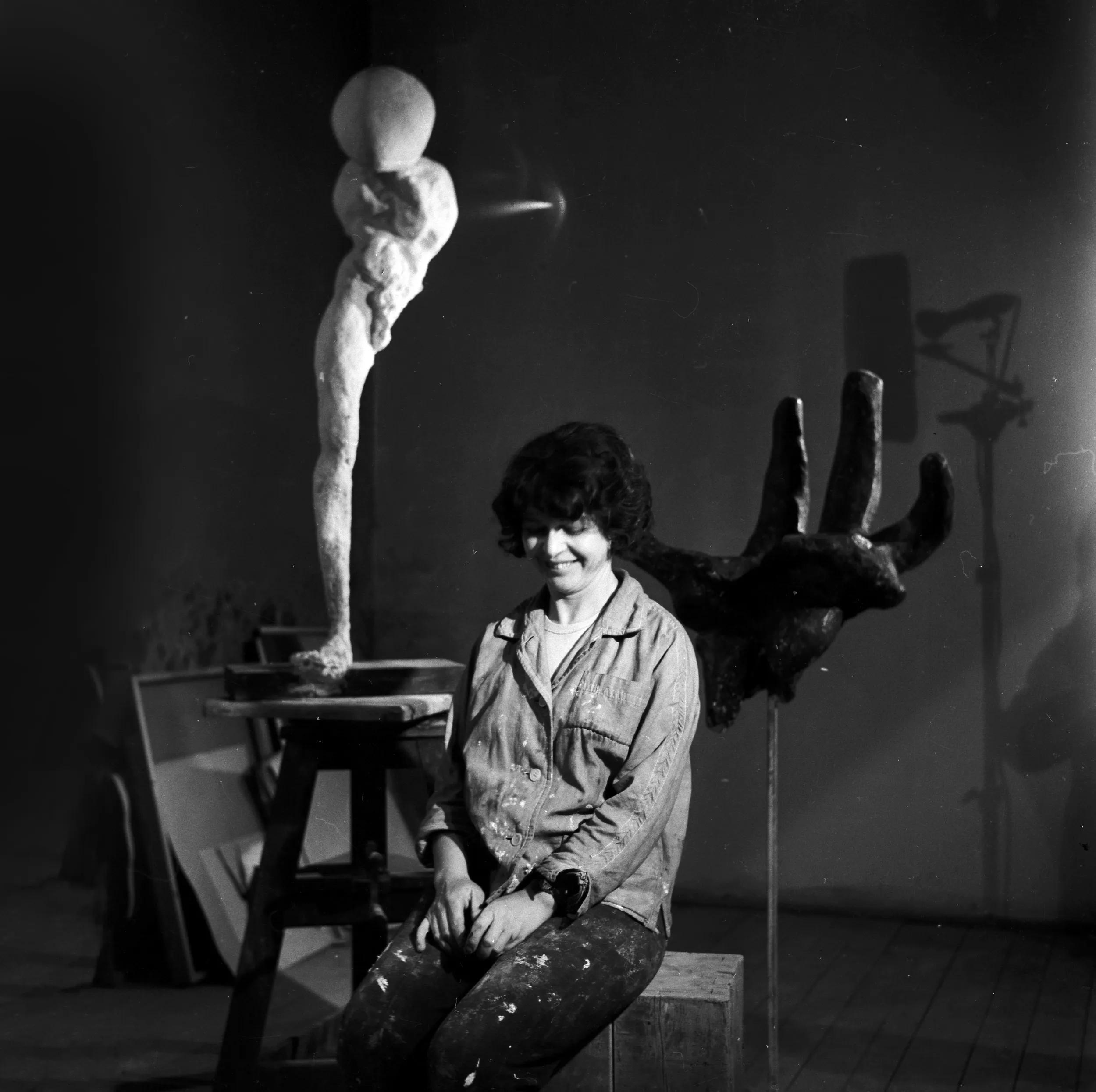
Alina Szapocznikow in her Brzozowa Street studio, Warsaw, Poland, 1965. Alina Szapocznikow Archive, courtesy The Estate of Alina Szapocznikow | Loevenbruck, Paris, © ADAGP, Paris. Photo Marek Holzman, courtesy Museum of Modern Art in Warsaw
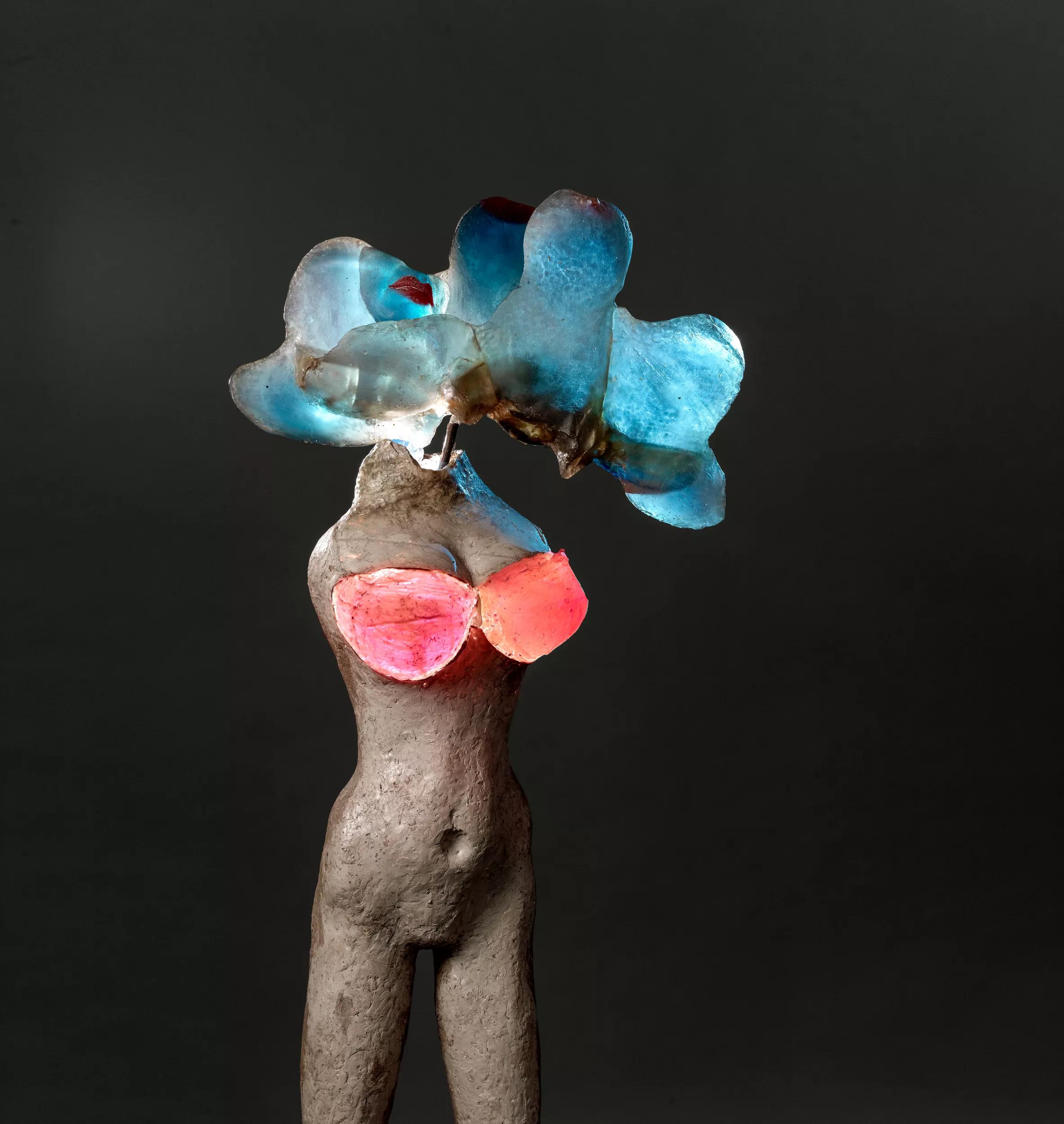
Alina Szapocznikow, Iluminowana (Illuminated Woman) (detail), 1966-1967 © ADAGP, Paris. Courtesy The Estate of Alina Szapocznikow | Galerie Loevenbruck, Paris | Hauser & Wirth. Photo: Fabrice Gousset
One hundred years after her birth, Alina Szapocznikow remains one of the most radical and inventive sculptors of the 20th century. Having survived internment in Nazi concentration camps as a teenager, she moved to Prague and later to Paris to study sculpture at the École des Beaux-Arts. In the early 1950s, illness would necessitate a return to her native Poland, where she forged a distinct sculptural language, one that transformed the human body into a site of both personal history and formal innovation. From her casts of lips, breasts, bellies and faces to her luminous resin lamps and assemblages, she challenged the boundaries between figuration and abstraction while radically embracing new industrial materials. Today, her work continues to speak with remarkable urgency, reminding us that the body remains the ultimate measure of human experience and one of art's most powerful subjects.
"I praise the transitory in secret corners of our bodies and in our footsteps on this earth. Through the hollows which the body leaves, I try to record the elusive moments of life and its paradoxes and absurdity in transparent polystyrene. However, the recorded direct sensation remains intricate and often evades our power to identify it.... Nevertheless, I do not give up my attempts at recording the imprints of our bodies in artificial resin. I am convinced that of all the manifestations of the ephemeral, the human body is the most vulnerable. It is the only source of all joy, all suffering and all truth. It is so, precisely because of its essential desolation, which is as inevitable as it is impossible to accept in the sphere of consciousness."—Alina Szapocznikow, 1972
–
Alison M. Gingeras is an American curator and writer based in New York City and Warsaw. She has held curatorial positions at institutions including the Solomon R. Guggenheim Museum, the Musée National d’Art Moderne–Centre Pompidou and Palazzo Grassi. She is currently Curator at Large at the Museum of Modern Art in Warsaw.