
Essays
A Refusal to Play the Game
On the importance of Želimir Žilnik
by Greg de Cuir Jr
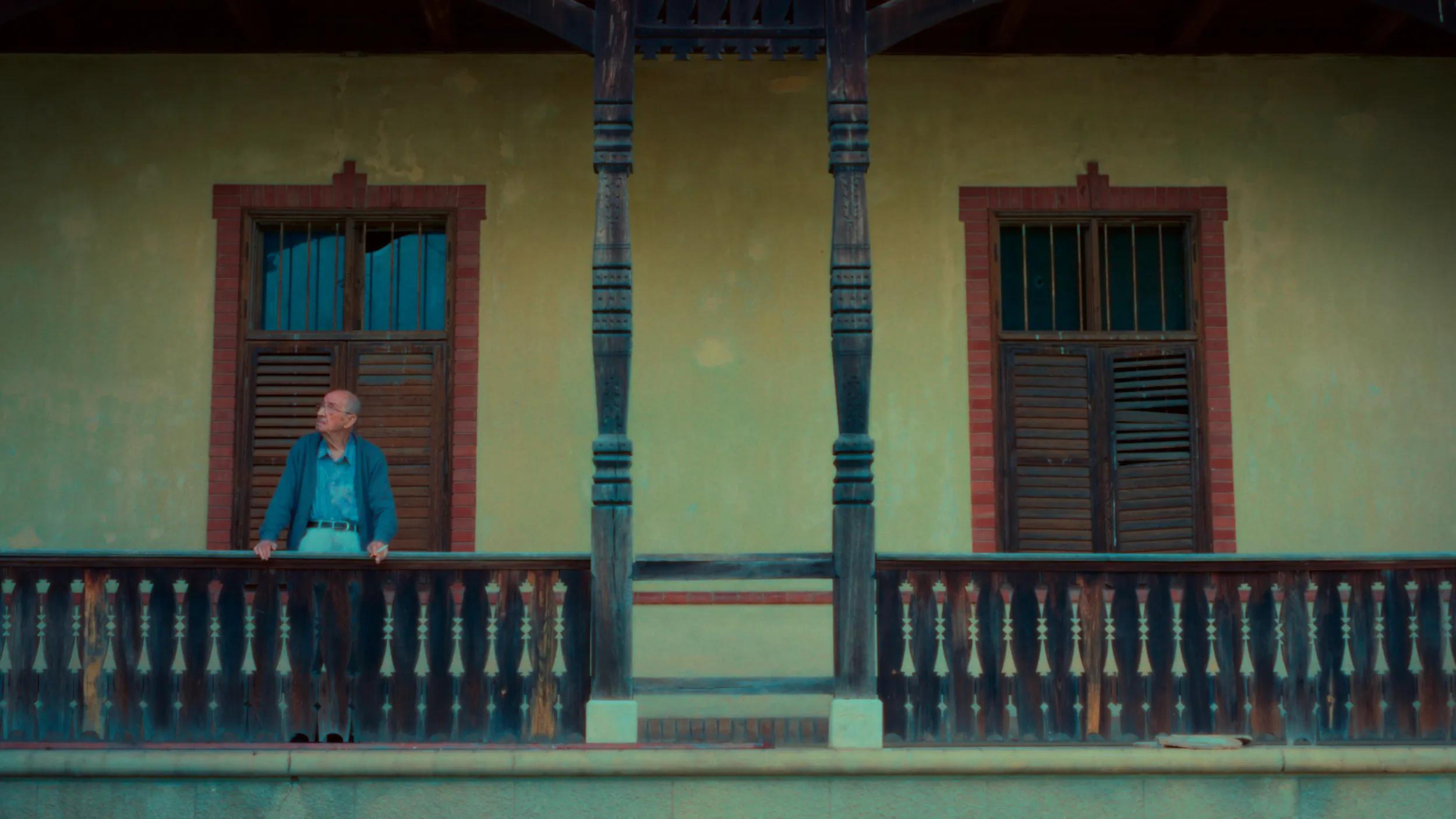
Still from Želimir Žilnik, Eighty Plus, 2025. Courtesy Playground Produkcija
Europe does not have so many good directors to spare that it can afford to let Želimir Žilnik fall through the cracks. The same goes for North America. Each film that Žilnik releases (only three features and a few shorts in the past ten years) deserves to be a veritable event in cinema culture—because of his innovative hybrid methods, because of his seven decades of inimitable activity in the field and because of the progressive social principles that he applies to his filmmaking work in unwavering fashion. Perhaps the culture is shifting—but to what end?
Žilnik may be the ultimate IYKYK director. But there is nothing superficial or trendy about his films. His work is open and inviting, defiant and self-effacing. His is an oppositional cinema, standing against the status quo in European filmmaking and against the dominant power structures in his native Serbia. This has been evident since his early documentary shorts in the 1960s, which dealt with such topics as revolutionary movements, unemployment and homelessness; through his docufiction features of the 2000s, which engaged with subjects like sexuality, migration and the general precariousness of life in post-socialist Europe. Žilnik’s work is a paramount example of what the great Cuban cineaste Julio Garcia Espinosa in 1969 called “imperfect cinema”: anti-imperialist in terms of its refusal to play the exploitative game of show business and its refusal to dress itself up respectfully for liberal consumption. Žilnik’s films even refuse the concept of art itself. Some directors use the camera as a paintbrush, to decorate, while Žilnik uses his as a scalpel to expose the ills of society. He is an iconoclast and arguably the most important remaining representative of the generation of revolutionary film modernists who came of age in the 1960s. And he is one of the few from that era still making vital work today.
His newest film, Eighty Plus (Restitucija, ili, san i java stare garde), released in 2025, is a nuanced portrait of elderly life, familial relations and the fraught legal machinations of the post-socialist restitution of property. It is a rare case of a great director who is actually interested in exploring the inexorable graying of the European continent and what that signifies on both an intimate and an international scale. Imagine a director with a reputation as great as this receiving not a single invitation to debut such a film at a festival in North America. It should be noted that Eighty Plus had a world premiere at the Berlin International Film Festival, one of the most consequential and closely watched stages in cinema. As an enfant terrible at the festival in 1969, Žilnik won the Golden Bear for his debut feature Early Works, which explores the charged aftermath of the Belgrade student demonstrations and the Prague Spring the year prior. Despite Žilnik’s rarefied status, Eighty Plus was not shown in competition in Berlin but rather in the Forum, an autonomous section of the festival organized by the film art institute Arsenal, known as a space for formally adventurous and non-commercial work. In fact, none of Žilnik’s work has returned to the main competition at the Berlinale since his auspicious debut. Consider what that might say about the festival itself and its regard for its former laureates, those who built the very reputation and identity of the Berlinale as a space for challenging and politically engaged work—who made it into one of the most important festivals in the world. We are currently witnessing the slow decline of the festival in the face of fanatical, state-sanctioned attacks on filmmakers who speak out about our war-torn and genocidal world while daring to critique reactionary German cultural policy. At the press conference for the 2026 festival, the head of the competition jury went so far to say that films—and by extension filmmakers—should have nothing to do with politics. The culture is shifting, indeed. Should the Berlinale fall, call it a fatal case of dramatic irony.
Of course, in Berlin, as in the world’s other A-list film festivals, the red carpet reigns supreme. It goes without saying that Žilnik does not recognize this authority. To quote Maya Deren, his work is made for the cost of what Hollywood spends on lipstick. He operates with miniscule crews, and he often handles the camera while functioning as a second cinematographer. He regularly uses nonprofessionals in leading roles as a way to allow people to play versions of themselves and to bring the energy of their subjective truths into objective nonfiction situations. He shoots in real locations chosen for both expediency and for their authentic qualities. He often improvises during production, though that freeform aesthetic emerges from scenarios that he writes. His scripts are always constructed with a great deal of clarity about the position of the underserved and the exploited in both market socialism and neoliberal capitalism. This is his animating concern and the structuring theme of his entire body of work.
Eighty Plus begins in a record store in Vienna, where the lead protagonist, a retired pianist named Stevan, is coming to terms with his past, looking for a rare copy of a vinyl album that his jazz group released many decades earlier. The film ends with the elderly Stevan and his new love interest, a singer he once performed with, stepping into a hot-air balloon and rising into the sky and a bright future, perhaps bound for the better world that the arcs of Žilnik’s films bend toward.
We must believe that a film is more than the sum of its parts or the sum total of its production costs. We must believe that films can spark change in the world. This is Žilnik’s core ideology.
We should ask why the distribution prospects in North America for such a film are vanishing. This might say something about the state of so-called independent film in the United States, as well as something about the pipelines for content delivery. The short view tells us that contemporary audiences are moving online, and online platforms are consolidating their power by determining choices through the algorithmic illusion of plurality. The long view tells us that independent theaters, where unconventional work such as Žilnik’s could traditionally be found, are going the way of silent film. But cinema is always in a crisis. In the 1930s it was the coming of the sound era; in the 1950s it was television; in the 1980s it was home entertainment formats; in the 2000s it was the rise of digital technology; in the 2020s it is the arrival of artificial intelligence. We are likely now at the point on the diagram where technological crisis and ideological crisis converge. This is dangerous ground, but it is also fertile ground for sublime films from brave auteurs willing to engage thoroughly with our fractured world.
How is it that not one festival in North America was willing to take a risk on a new Žilnik production? Festivals are the de facto distribution circuit for independent film around the world, and most of them are set up specifically to exhibit work like Žilnik’s precisely because there are no other competing outlets and because of their readymade cinephilic contexts. Even for the risk-averse in the curatorial class, Žilnik comes with his long and storied track record. After the success of Early Works in Berlin, the film was shown at the Museum of Modern Art in New York as part of a package of films that represented the new wave of Yugoslav cinema.
Twenty-five years later, Žilnik returned to the Berlinale and won the Teddy Award for his subversive masterpiece Marble Ass, a portrait of trans sex workers on the streets of wartime Belgrade and the first film in Eastern Europe to openly deal with LGBT themes. In 2019, the Centre Pompidou organized a major career retrospective that included a film the museum had specially commissioned for its permanent collection. In 2020, Žilnik was the subject of a wide-ranging solo exhibition at Vienna’s Kunsthalle Wien, curated by the brilliant Croatian collective WHW (What, How & for Whom), and in 2023 he was given retrospectives at the Harvard Film Archive and at Anthology Film Archives in New York. Despite this impressive résumé, an entire calendar year passed after the world premiere of Eighty Plus before it received its first screening in North America, at TIFF Cinematheque in Toronto and Anthology Film Archives.
Žilnik’s films are at a special disadvantage in the age of algorithms and memes. It seems that new generations of audiences find it ever more difficult to sit through a feature-length film of two hours. They find it even harder to sit through a film with no recognizable stars, no spectacular set pieces, no images optimized to cinematographic perfection, no simple resolutions or self-congratulatory morals. Žilnik’s work shuns all of that—but it stretches out a hand to those concerned with the humanity of others, to those who recognize that people are not products.
His films offer a roadmap for those who want to use cinema as a tool to measure the efficacy of the various systems (both human and autonomous) that govern our lives. The radical animator and experimental film artist Kelly Gallagher once said that she makes films to find her community. This is the key to the distribution model necessary for independent film to realize its promise.
For such a community to continue to survive, we must believe that a film is more than the sum of its parts or the sum total of its production costs. We must believe that films can spark change in the world. This is the belief that Žilnik’s cinema offers—that a new and better world is not only possible but can be grasped with sustained effort, through community.
At eighty-three years young and with all of his accolades, Žilnik could easily ride off into the sunset like the characters in his new film. But the odds are against that. There is still a world to be won. And Žilnik—the war orphan born in a Nazi concentration camp to antifascist parents; the prodigal law student who confronted the Socialist Yugoslav apparatus and defended his films in court from charges of anti-state propaganda; the engaged artist who bravely spoke truth to power in a time of violent nationalism and war in the former Yugoslavia; the elder statesman of independent cinema who tirelessly centers the marginalized in his frames—is the filmmaker to win it.
–
Greg de Cuir Jr is a writer, translator and curator. His recent projects include organizing a solo presentation of the films of Želimir Žilnik at TIFF Cinematheque in Toronto and an online series of film and video work by artist duos for e-flux. He is co-editor of the book series The Complete Works of Vlada Petric, published by Kinopravda Institute in Belgrade.