

Portfolio
The Earth That Remains
By Firelei Báez
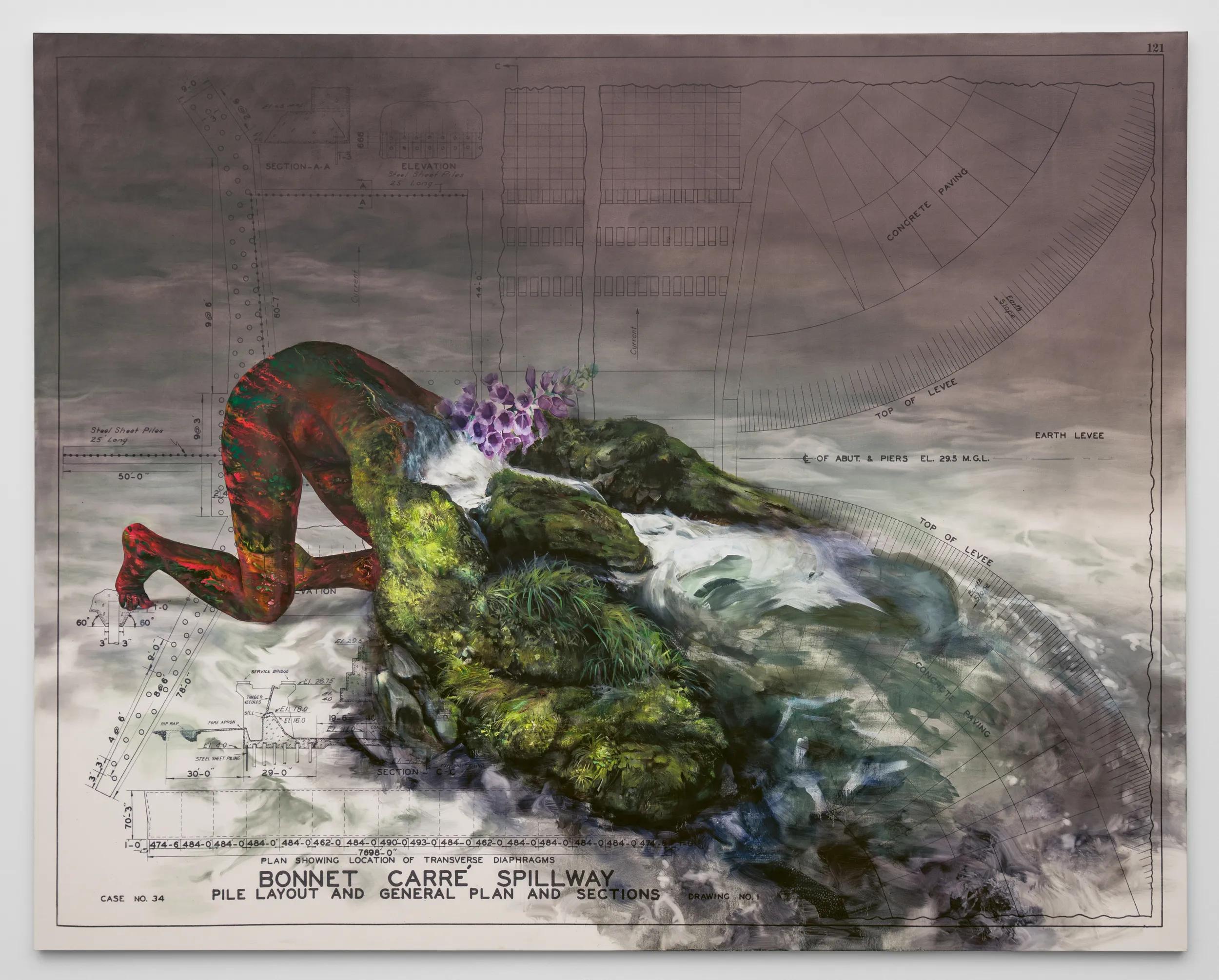
Firelei Báez, The Earth That Remains, 2025. Photo: Robert Chase Heishman
On the occasion of a solo exhibition by Firelei Báez, opening in May at Hauser & Wirth New York’s 22nd Street location, Ursula presents a portfolio of work made over the past two years. Here, we revisit a passage from an essay by Carla Acevedo-Yates, one of the organizers of Báez’s first mid-career museum survey in North America, which began in 2024 and remains on view at the Museum of Contemporary Art Chicago through May 31.
The work of the artist Firelei Báez is often understood through the lens of geography, notably that of the Caribbean region, and through that region’s ongoing histories of colonization and racialization. Of both Dominican and Haitian heritage, Báez was raised in Dajabón, DR, a mountainous municipality near the border with Haiti, before moving to the United States at the age of eight. Initially, on account of her Caribbean background, as well as art history’s penchant for taxonomical systems, it may seem natural to analyze Báez’s work through the lens of race and geography. To do so, however, is to presuppose the Caribbean as a self-contained, stable physical site and historical formation, when it is, in fact, a spatial construction produced by the West for its own consumption and ongoing exploitation. The Caribbean, as the quintessential “prototype for the modern and postmodern world,” does not have any conventional geographic boundaries. It is fugitive. Through the formal reversals and iconographic affiliations of Báez’s work, as well as its layering of distinct but intersecting histories, the artist reimagines the masculinist, imperialist project that has conspired to produce Caribbean space since the middle of the last millennium. Although she makes use of cartographic sources and titles that index Caribbean space, her work exceeds traditional geographic boundaries to create personal and collective spaces of Black and Brown fugitivity.
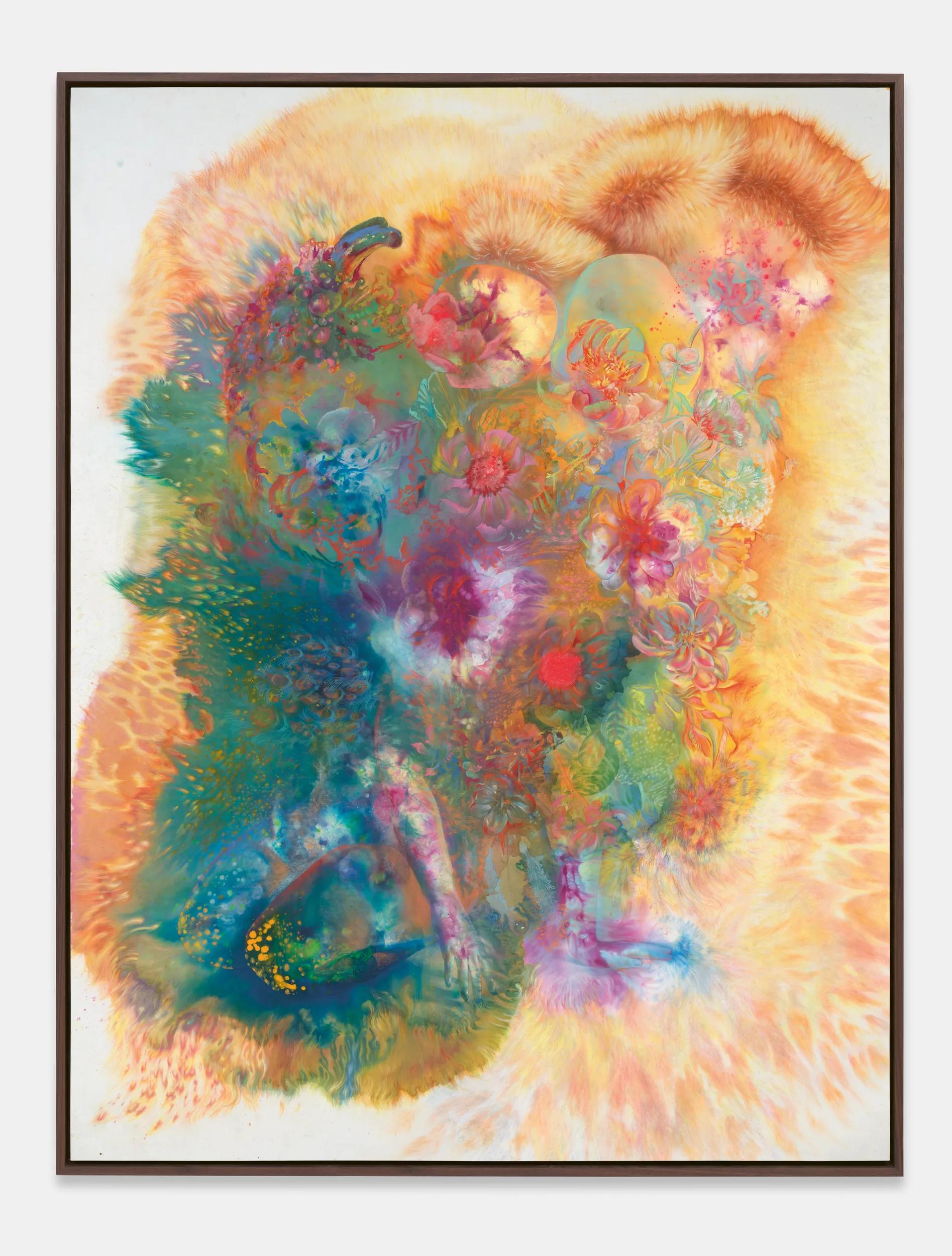
Firelei Báez, Let Love Be Your Guide (detail), 2025. Photographer unknown
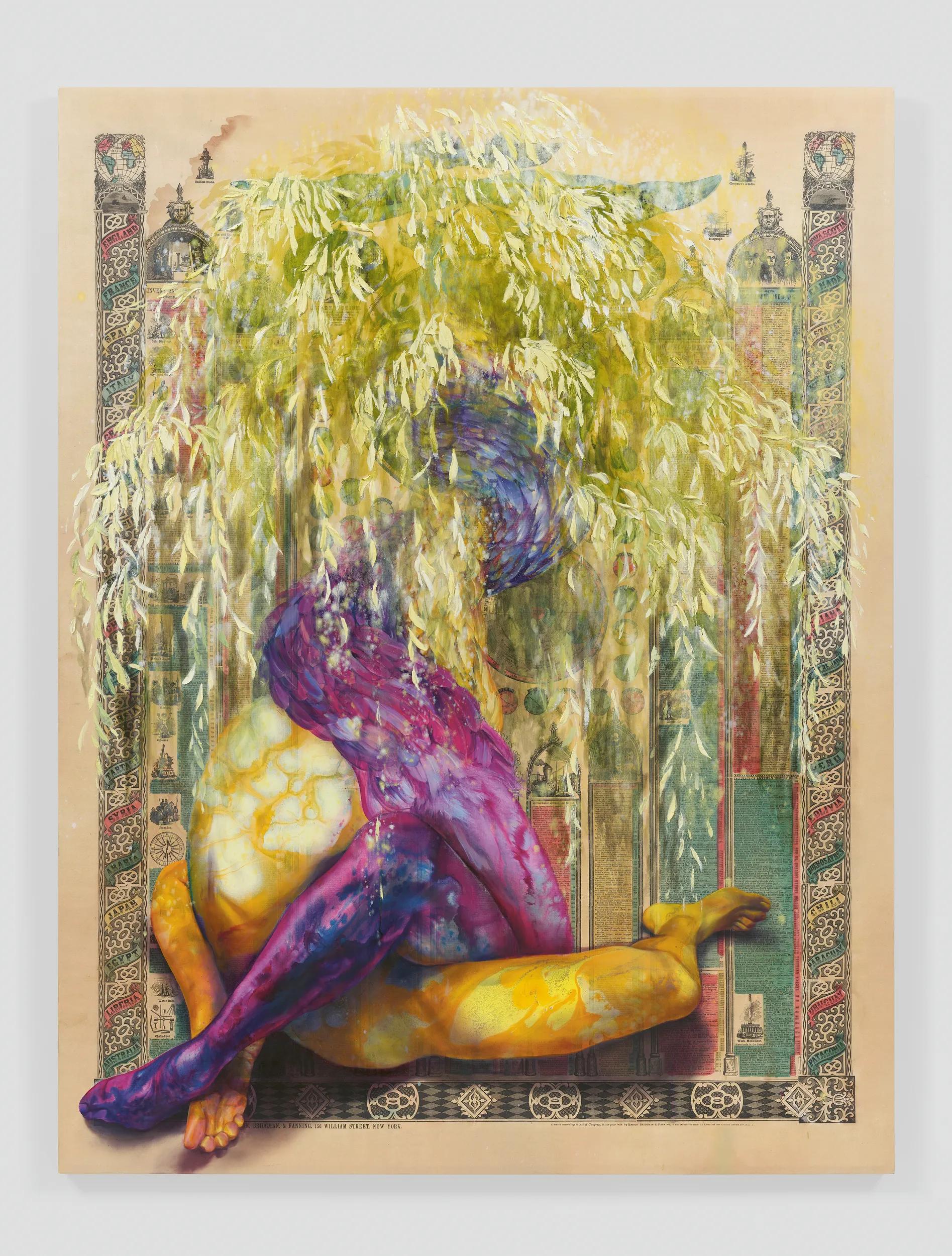
Firelei Báez, Blooming in the Noise of The Whirlwind (World’s Progress), 2025. Photo: Sarah Muehlbauer
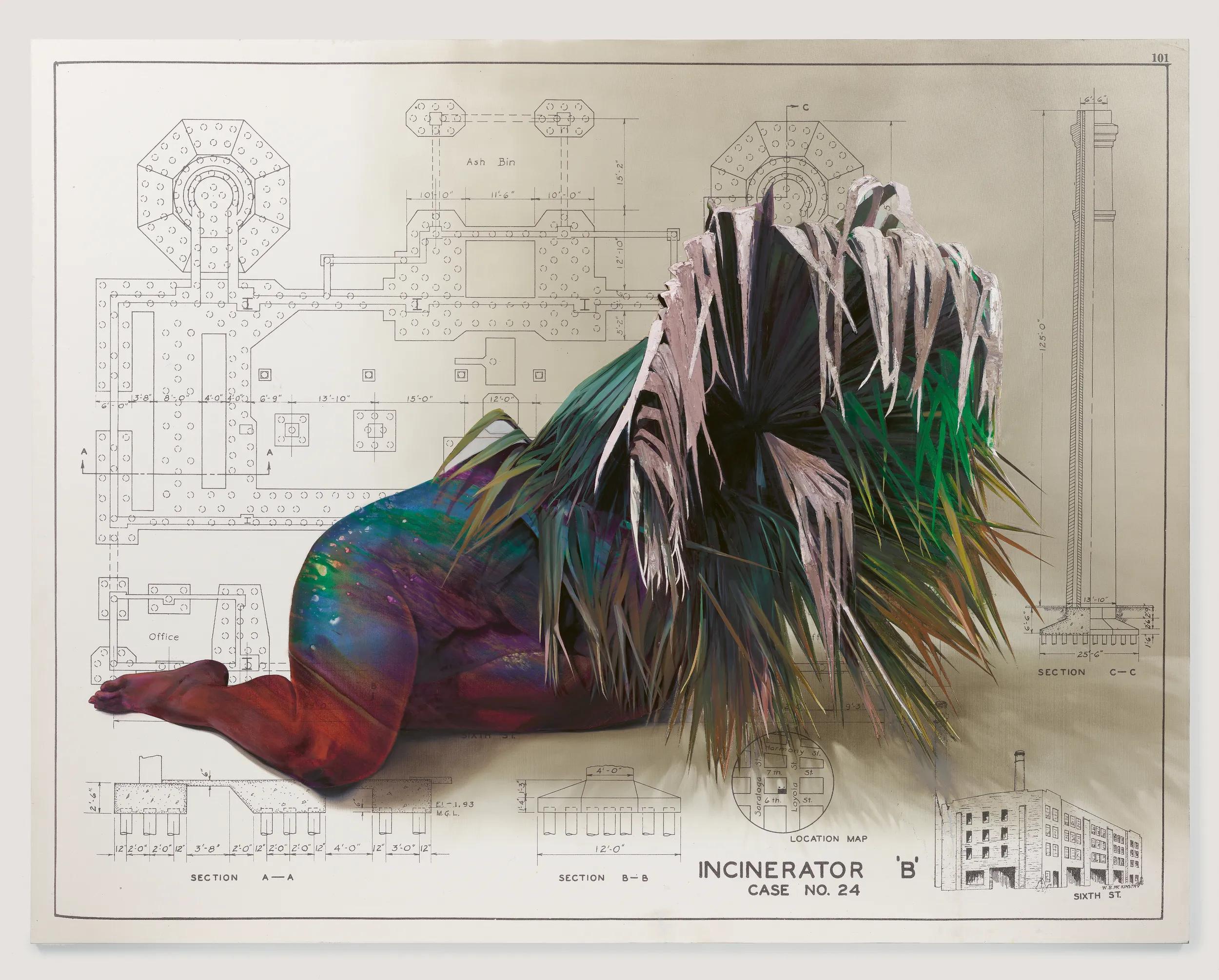
Firelei Báez, Obstacle Incinerator, 2025. Photo: Sarah Muehlbauer
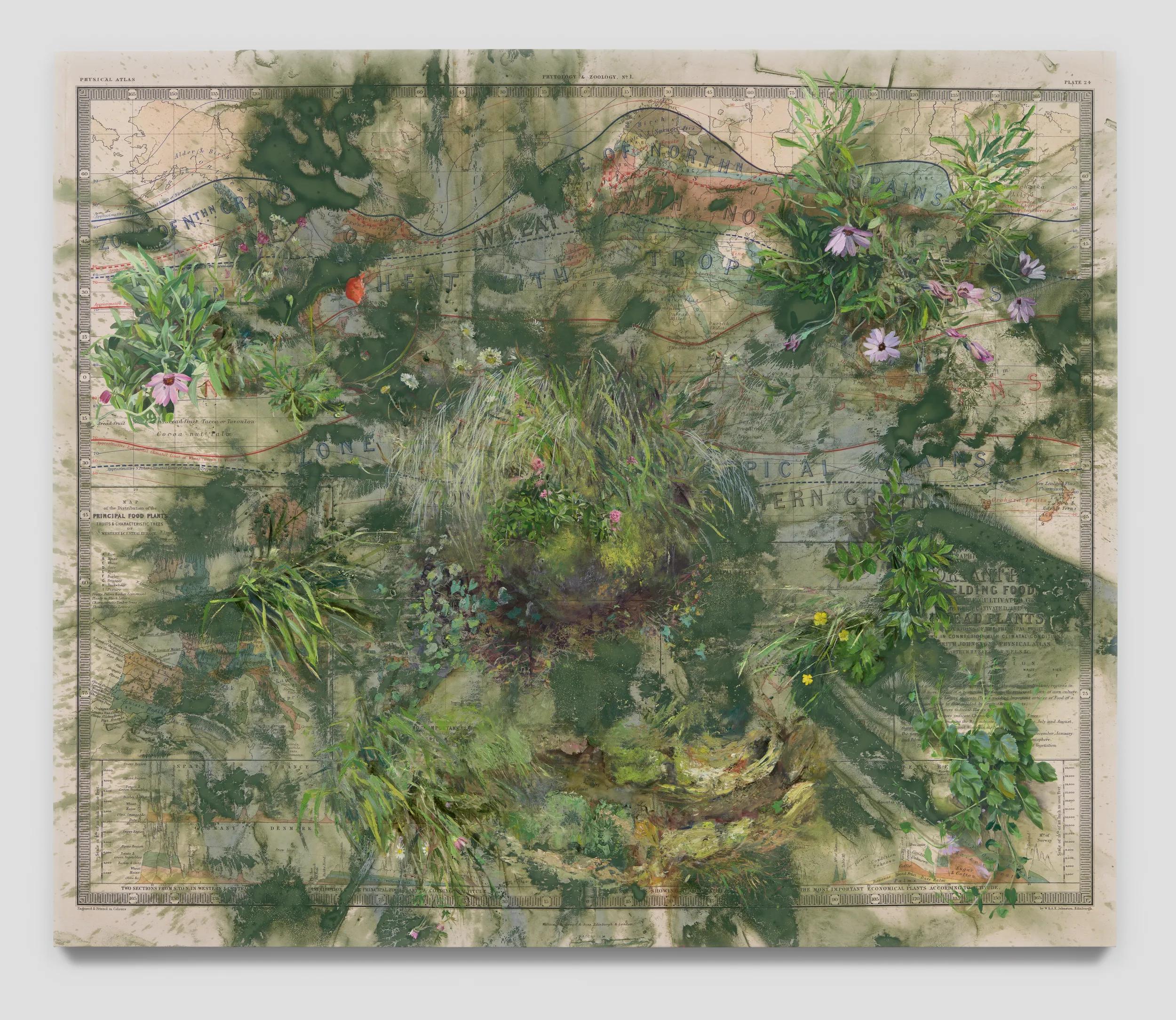
Firelei Báez, Wanderlust of errantry growing keener, 2024. Photo: Keith Lubow
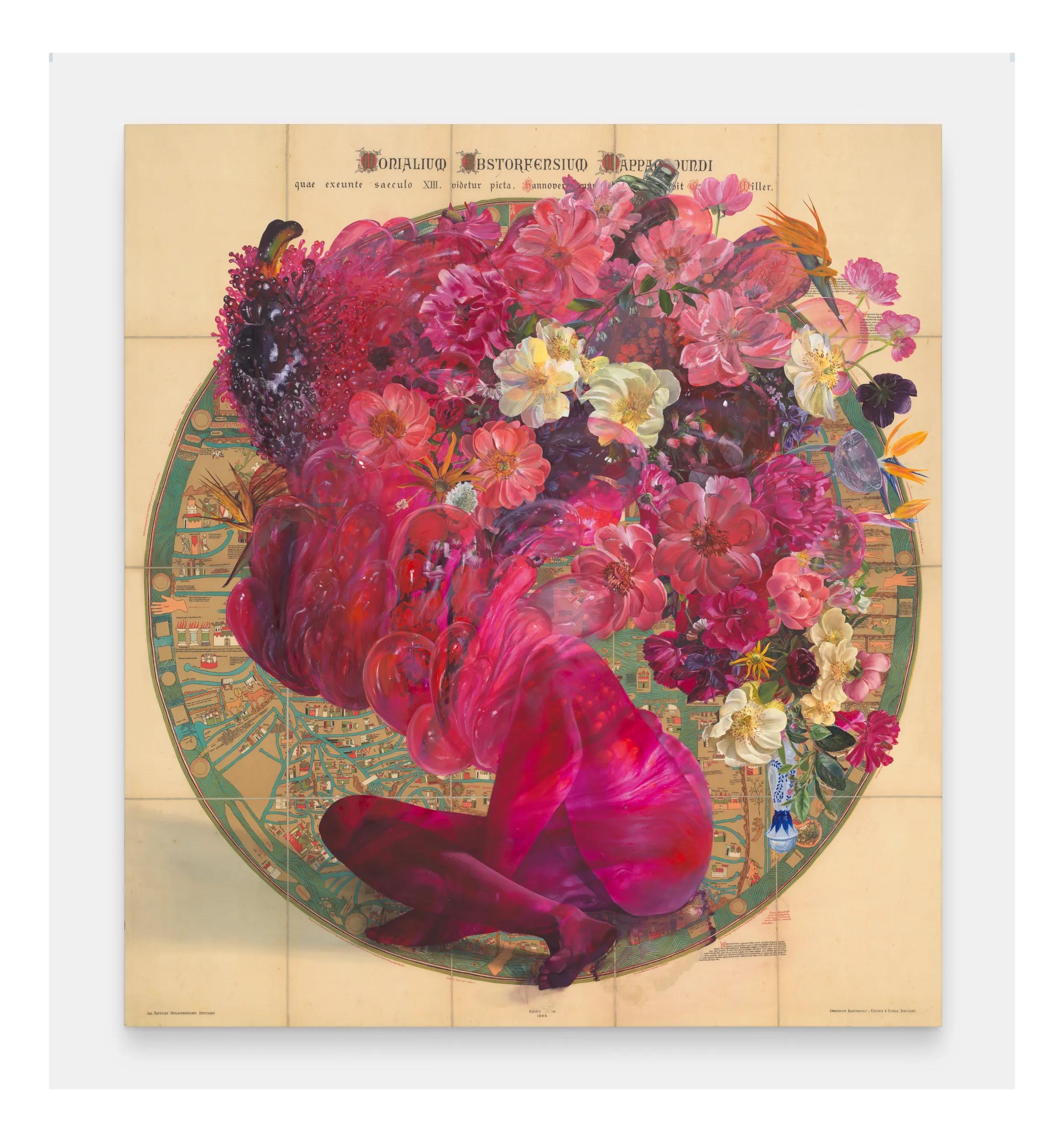
Firelei Báez, Anacaona (destroy the beauty that has injured me), 2024. Photo: Elisabeth Bernstein
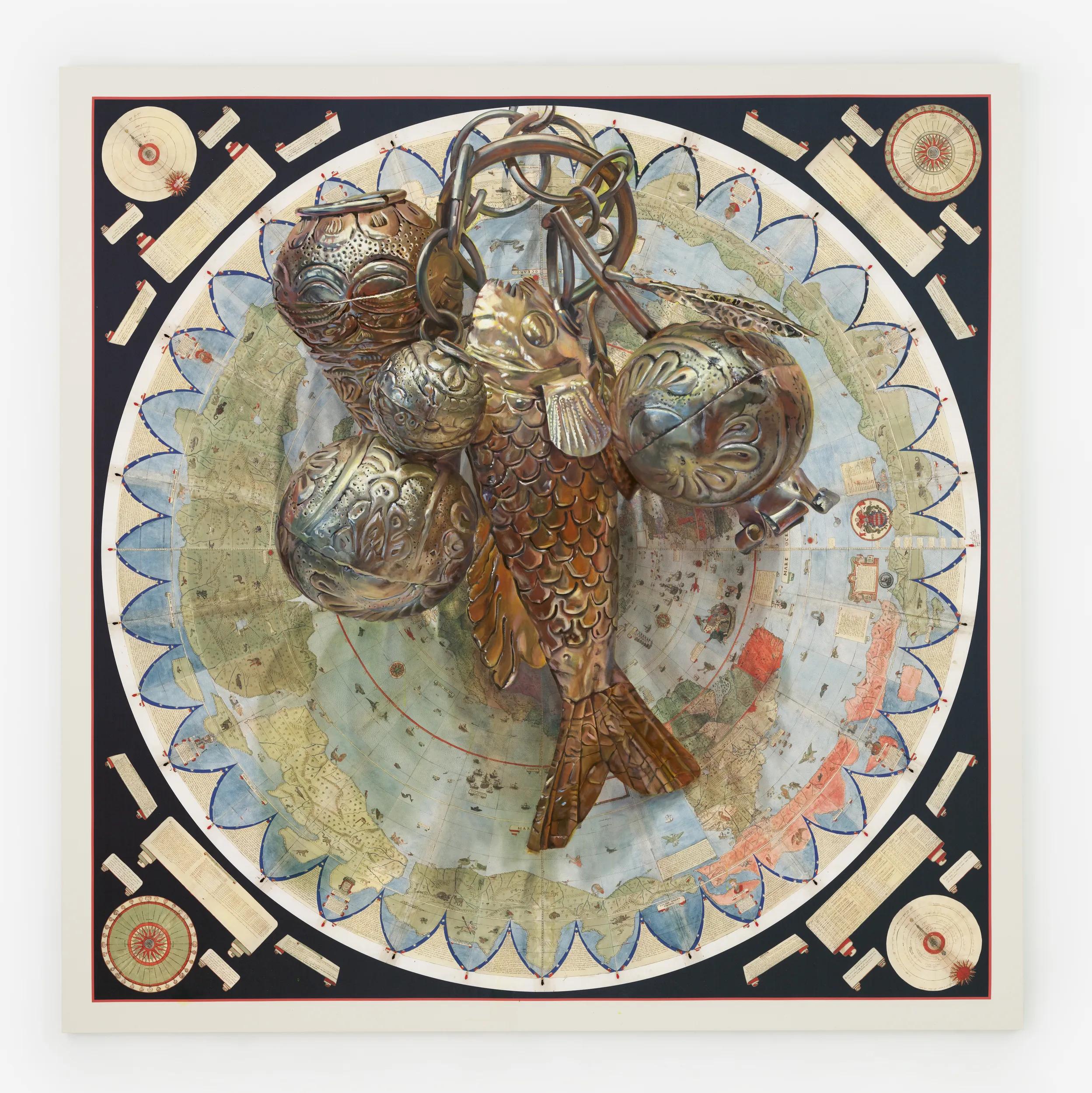
Firelei Báez, Balangandan (Planisphere 1587) (detail), 2025. Photographer unknown
–
Firelei Báez’s work casts diasporic histories into an imaginative realm, exploring new possibilities for the future. In colorful works on paper and canvas, large-scale sculptures and immersive installations, Báez combines representational cues that include hair textures, textile patterns and plant life, as well as folkloric and literary references and wide-ranging emblems of healing and resistance.