
Welcoming rafa esparza to Hauser & Wirth
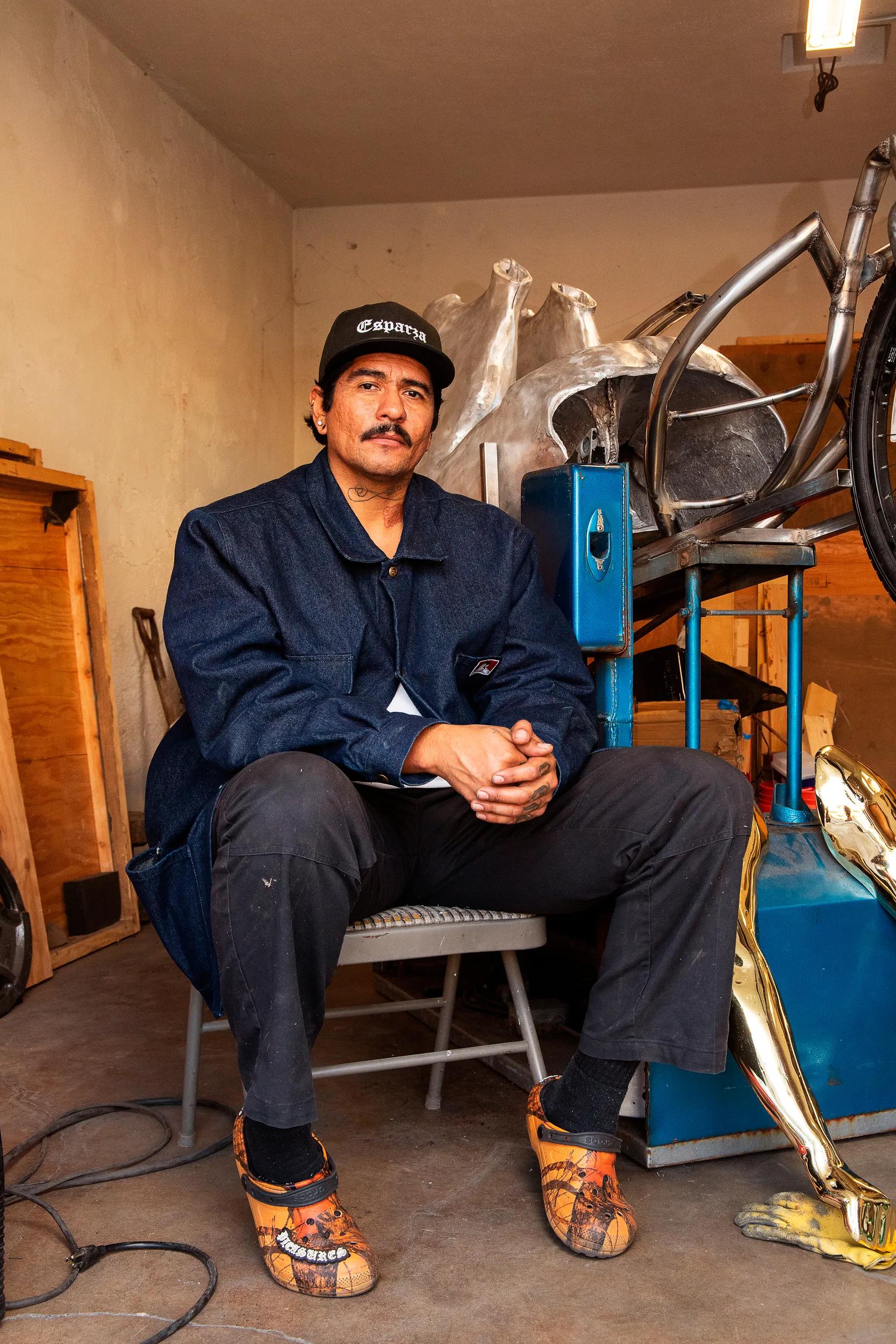
Photo: Star Montana
Welcoming rafa esparza to Hauser & Wirth
We are pleased to announce worldwide representation of Los Angeles-based artist rafa esparza, in close collaboration with Commonwealth and Council.
Since the early 2010s, esparza has drawn on personal narrative, memories and his experience growing up in Los Angeles to weave together emanations of land, migration, desire and belonging in works that are dense and unabashedly sensual. At the center of his practice lies adobe, the traditional earthen building material his father taught him to make. Mixed by hand from loam, straw, water and manure, adobe serves as both the physical matter and conceptual foundation for his sculptures, paintings and installations. Among the oldest building materials in the Americas, it carries multiple histories for esparza, tying him to family knowledge brought from Durango, Mexico, while also bearing traces of Indigenous technologies and ways of life that have endured for generations despite displacement and assimilation.
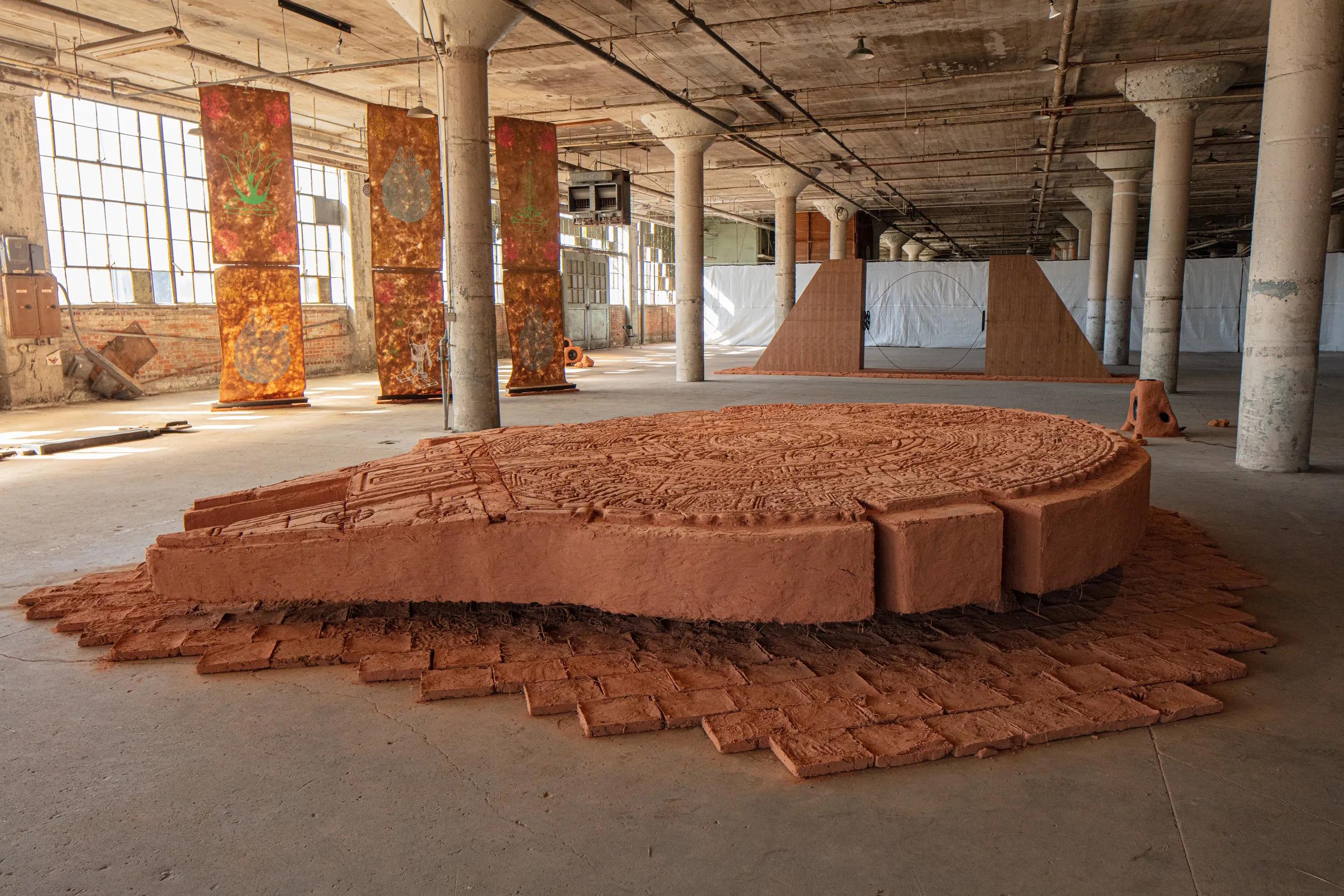
‘Mexica Falcon after Dewey Tafoya’ 2024 in ‘A Proposal for Loops in Linear Time with Zalika Azim and Dewey Tafoya,’ at Prospect.6, 2024 – 2025, Ford Motor Plant, Arabi LA. Courtesy of Hauser & Wirth and Commonwealth and Council. Photo: Jeffrey Johnston.
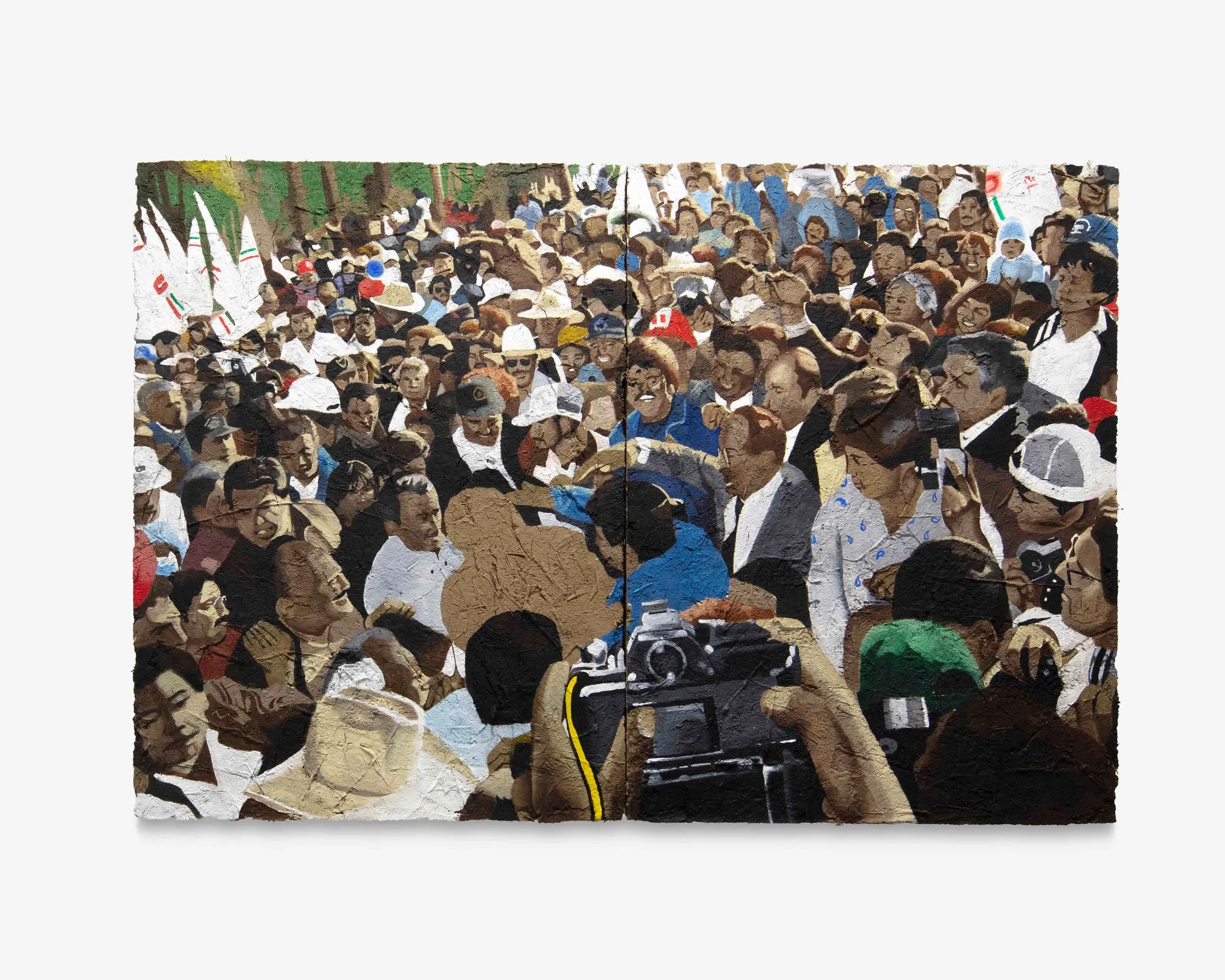
rafa esparza, Colosio en lomas taurinas, despues del guardado, 2024 © rafa esparza. Courtesy of Hauser & Wirth and Commonwealth and Council. Photo: Ramiro Chaves
Collaboration is central to esparza’s practice. Working alongside friends, family members and fellow artists, many of them brown and queer, he has produced adobe bricks by the thousands for use in his objects and installations. The resulting artworks offer up evidence of such collective effort via visible straw, cracks, handprints and surfaces that continue to shift over time. esparza refers to the relationship between earth and identity as ‘brown matter,’ a concept that links the color of adobe to brown skin, binding the material to lived experience. When his adobe structures enter museums and galleries, they carry the imprint of the people and processes that made them, challenging institutions to make new space for forms of knowledge, labor and community that often have existed for centuries beyond their walls.
‘We are thrilled to join Commonwealth and Council in representing rafa esparza, an artist of profound humanity and dedication to community. rafa brings real warmth to a conceptual practice that is enormously rigorous and disciplined, drawing the earth quite literally into works that mark time and the human hand while harkening to centuries of challenging questions about ownership, agency, and belonging. It will be an honor to share his art with increasingly international audiences and new generations.’
Marc Payot, President
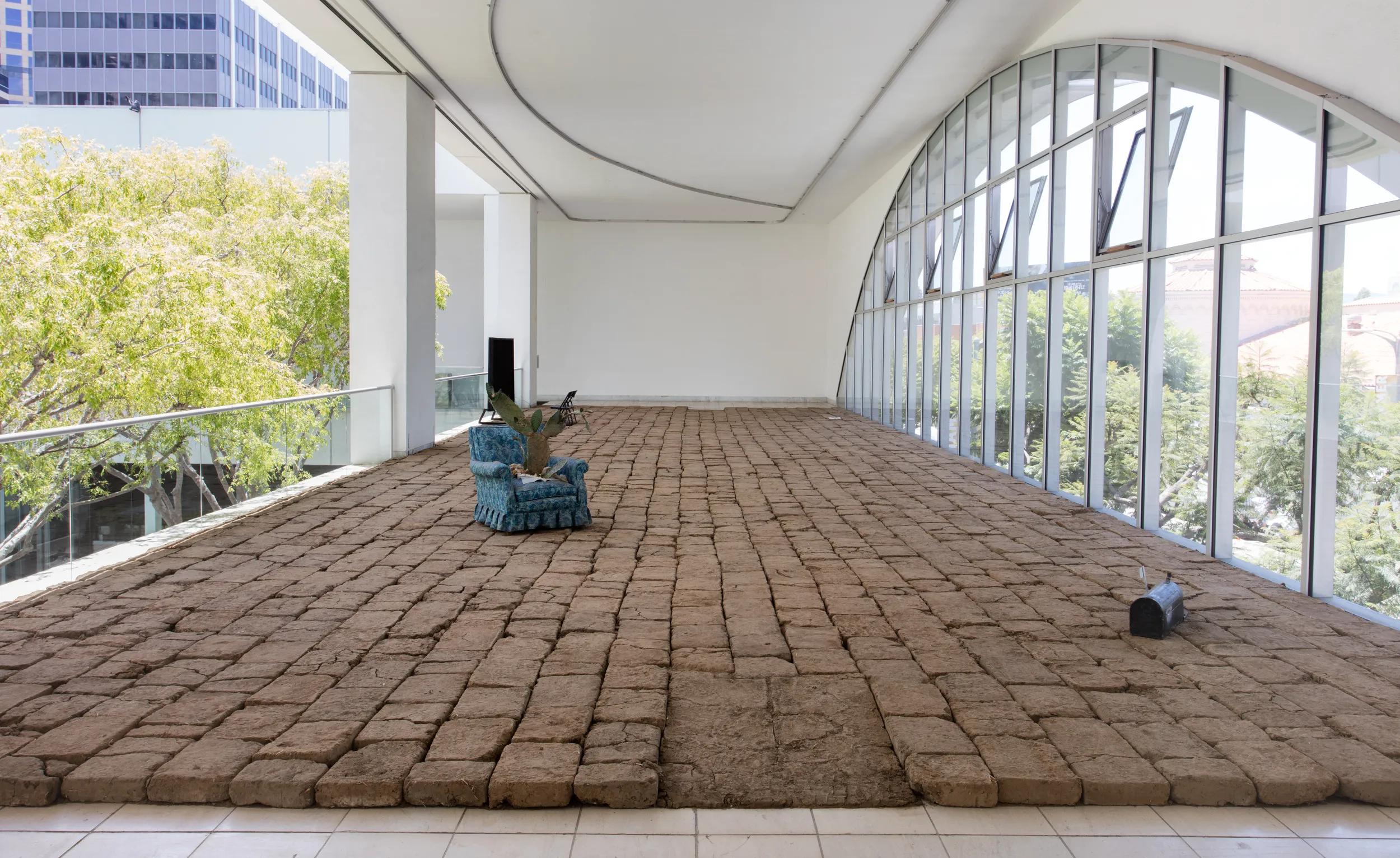
Installation view, 'Made in L.A. 2016: a, the, though, only,' 12 June – 28 August 2016, Hammer Museum, Los Angeles CA. Courtesy of Hauser & Wirth and Commonwealth and Council. Photo: Brian Forrest.
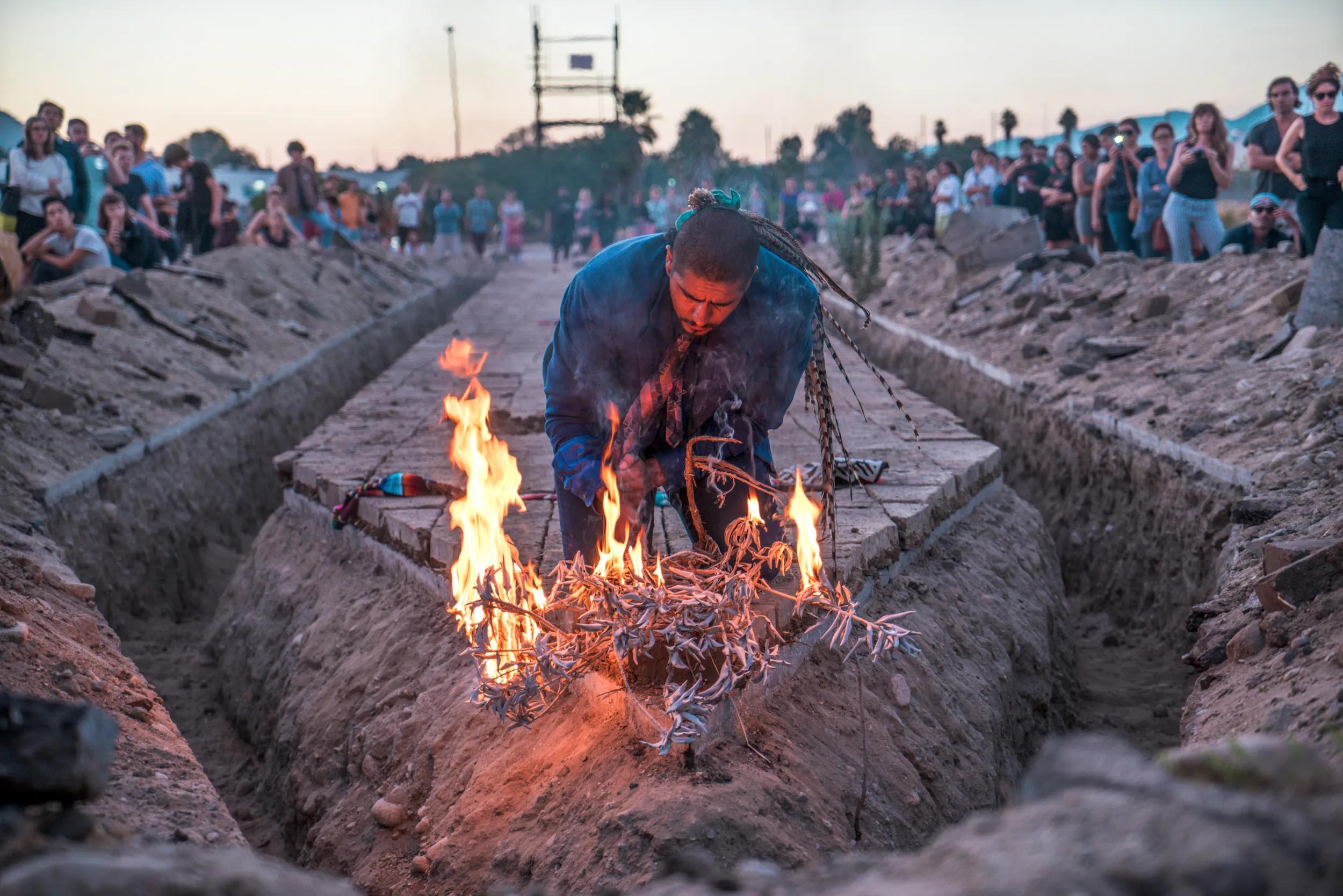
rafa esparza, building: a simulacrum of power, 2014 © rafa esparza. Courtesy of Hauser & Wirth and Commonwealth and Council. Photo: Dylan Schwartz
About the artist
rafa esparza was born in 1981 in Pasadena CA, and lives and works in Los Angeles. A first-generation Mexican American artist working across performance, painting, sculpture and installation, he studied drawing and painting at a community college in East Los Angeles, and earned his BA from the University of California, Los Angeles, in 2011. At UCLA, engagement with Indigenous visual cultures helped shape a practice that brings together ancestral iconography, queer performance and material experimentation.
esparza began his artistic career through performance, gaining recognition in alternative art spaces and queer nightlife communities across Los Angeles. This foundation continues to inform how he engages time, place and shared experience across a range of media. His turn to adobe in 2014 introduced a new dimension to his practice while also renewing his relationship with his father after coming out. Learning to make adobe, which esparza calls a ‘family recipe,’ became both a process of artistic inquiry and a means of repair. Soon after, he launched a series of ambitious adobe-based projects, building architectural environments and staging performances with a growing community of collaborators. These efforts led to major institutional presentations, including ‘Made in L.A. 2016: a, the, though, only’ at the Hammer Museum and the 2017 Whitney Biennial, where esparza and his father built an adobe rotunda from hundreds of handmade bricks produced by a network of artists and cultural workers in Los Angeles. esparza describes these ‘brown architectures’ as spaces for imagining different ways of making and inhabiting art, in which care, mutual support and collective visibility become integral to the work itself.
Between 2018 and 2024, esparza developed a significant body of paintings made directly on earthen panels, which is the subject of his first monograph, ‘rafa esparza: Works on Adobe,’ forthcoming from Zolo Press in February 2027. In these works, the material is as vital as the image: cracks, textures, signs of growth and erosion remain visible participants in each composition. Depicting friends, family members, fellow artists and historical figures, the paintings foreground the relationship between body and earth, asserting that histories of migration, labor, intimacy and resistance are embedded in both.
esparza has been the subject of solo and two-person exhibitions at institutions including LagoAlgo, Mexico City (2026); Anahuacalli, Mexico City (2026); Americas Society, New York (2025); Artists Space, New York (2023); MASS MoCA, North Adams MA (2019); ArtPace, San Antonio TX (2018); and Ballroom Marfa, Texas (2017). Selected group exhibitions have been held at Buffalo AKG Art Museum (2026); Whitney Museum of American Art, New York (2025, 2017); Prospect.6, New Orleans (2024); Blaffer Art Museum, Houston TX (2024); Oakland Museum of California (2024); Museum of Contemporary Art Denver (2023); San Francisco Museum of Modern Art (2023); Los Angeles County Museum of Art (2021); Museum of Contemporary Art Tucson, Arizona (2022); Moody Center for the Arts, Rice University, Houston TX (2020); San Diego Art Institute (2019); and Hammer Museum, Los Angeles (2016). He is a recipient of the Pérez Prize (2022), Latinx Arts Fellowship, Mellon Foundation (2021), Lucas Artist Fellowship (2020), Louis Comfort Tiffany Foundation Award (2017), Art Matters Foundation Grant (2014) and California Community Foundation Fellowship for Visual Artists (2014). esparza has participated in residencies at Artpace San Antonio (2018) and Wanlass Artist in Residence, OXY ARTS, Los Angeles (2016).
esparza’s work is held in the permanent collections of Aïshti Foundation, Beirut; AltaMed Art Collection, Los Angeles; Dallas Museum of Art; El Museo del Barrio, New York; Kadist Art Foundation; Los Angeles County Museum of Art; Mohn Art Collective: Hammer, LACMA, MOCA (MAC3); Minneapolis Institute of Art; Museum of Contemporary Art, Los Angeles; Museum of Fine Arts, Houston; San Francisco Museum of Modern Art; San Jose Museum of Art; Solomon R. Guggenheim Museum, New York; Vincent Price Art Museum, Monterey Park and Whitney Museum of American Art, New York.
Related News



1 / 5