
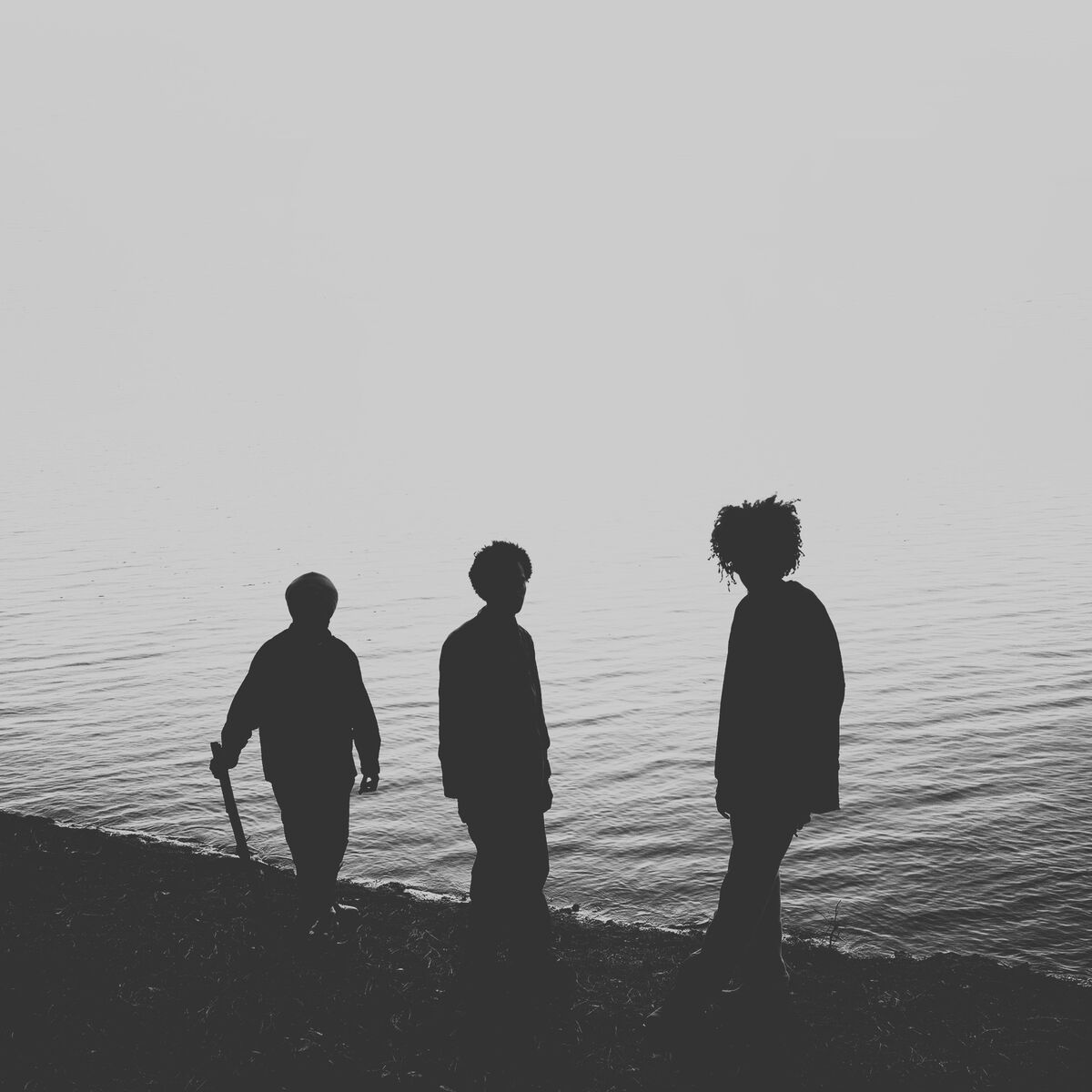
In Performance: Mo0d Jazz Quartet for ‘Jack Whitten. The Numinous’
To celebrate Jack Whitten’s birthday, and on the occasion of ‘The Numinous’—an exhibition of paintings and works on paper from the 1980s, when technical innovation and spiritual inquiry converged with new force in his work—join us for a free-form outdoor jazz performance by Mo0d.
Jazz was a defining influence on Whitten’s life and artistic practice. As a young artist in New York, he frequented jazz clubs and drew inspiration from musicians he admired, including John Coltrane, Miles Davis and Thelonious Monk. The rhythms and spontaneity of jazz informed his approach to painting, shaping a visual language that embraced improvisation, experimentation and the expressive possibilities of abstraction.
Before the performance, join us for a film screening in the Project Loft, featuring ‘Passing Through’ (1977) directed by Larry Clark, and ‘Black Art, Black Artists’ (1971) directed by Elyseo J. Taylor, selected by Black Revivalist. Click here for more information.
Throughout the day, ‘In the Studio: Jack Whitten’ (2017) and ‘Uncovering Jack Whitten’s Mysterious Abstractions’ (2025) will be screened on a loop in the Downtown LA courtyard.
Visitors are also invited to explore a selection of Jack Whitten publications from Hauser & Wirth Publishers, available for purchase at a special price at the Information Desk.
This event is free, however, reservations are recommended. Click here to register.
About Jack Whitten
Born in Bessemer, Alabama in 1939, Jack Whitten is celebrated for his innovative processes of applying paint to the surface of his canvases and transfiguring their material terrains. Although Whitten initially aligned with the New York circle of abstract expressionists active in the 1960s, his work gradually distanced from the movement’s aesthetic philosophy and formal concerns, focusing more intensely on the experimental aspects of process and technique that came to define his practice.
The subtle visual tempos and formal techniques embedded in Whitten’s work speak to the varied contexts of his early life. After a brief period studying medicine at the Tuskegee Institute in Alabama in the late 1950s, Whitten pivoted his attention to art, first attending Southern University in Baton Rouge before moving to New York and enrolling at The Cooper Union for the Advancement of Science and Art in 1960, where he completed the institution’s five-year certificate program.
In the 1970s, Whitten’s experiments with the materiality of paint reached a climax—removing a thick slab of acrylic paint from its support, he realized that the medium could be coaxed into the form of an independent object. Whitten used this mode of experimentation to challenge pre-existing notions of dimensionality in painting, repeatedly layering slices of acrylic ribbon in uneven fields of wet paint to mimic the application of mosaic tesserae to wet masonry. Over the course of a six-decade career, Whitten’s work bridged gestural abstraction and process art, arriving at a nuanced language of painting that expanded the possibilities of the medium.
About the exhibition
Following the late artist’s critically acclaimed 2025 retrospective at The Museum of Modern Art in New York, Hauser & Wirth Downtown Los Angeles will present an exhibition of Jack Whitten’s paintings and works on paper from the 1980s, a decade of decisive experimentation and evolution in his pioneering six-decade career. After a house fire in 1980 forced an extended pause, Whitten resumed artmaking with heightened urgency, his relentless technical ambition now inseparable from a fierce commitment to painting as spiritual transmission. This exhibition charts the breakthroughs of this pivotal period in the artist’s journey via the Soulspace paintings and circular acrylic reliefs that reference celestial navigation; the pixel-like grids on canvas that anticipate his tesserae works; and the Site paintings cast from such urban textures as manhole covers and tire treads, shown alongside frottage works on paper. Together these reveal an artist whose utterly original transfiguration of abstraction—his integration of daring material invention with expressions of Black identity and animist spirituality—remains central to the history of postwar American art.
About Mo0d
Mo0d is a Los Angeles based free jazz collective operating somewhere between sonic experimentation, Dadaist ideals and performance art. In favor of improvisation and controlled chaos, Mo0d treats sound as an art form, moving fluidly between museums, galleries and live music spaces.


