Philip Guston’s ‘Double Portrait’ (1969) stands among the most important examples of the artist’s iconic Hood paintings. First shown in Guston’s seminal Marlborough Gallery exhibition in New York in October 1970, the work emerged at a pivotal moment when the artist abandoned abstraction in favor of a raw, personal figurative language. Initially met with controversy, these hooded figures have since come to be regarded as among the defining images of postwar art. The hooded figures function not only as a reference to the Ku Klux Klan but also as a broader meditation on power, violence and the banality of evil. Characterized by a dense, luminous surface and remarkable painterly assurance, the work has remained in the collection of its original New York owners until the present day.
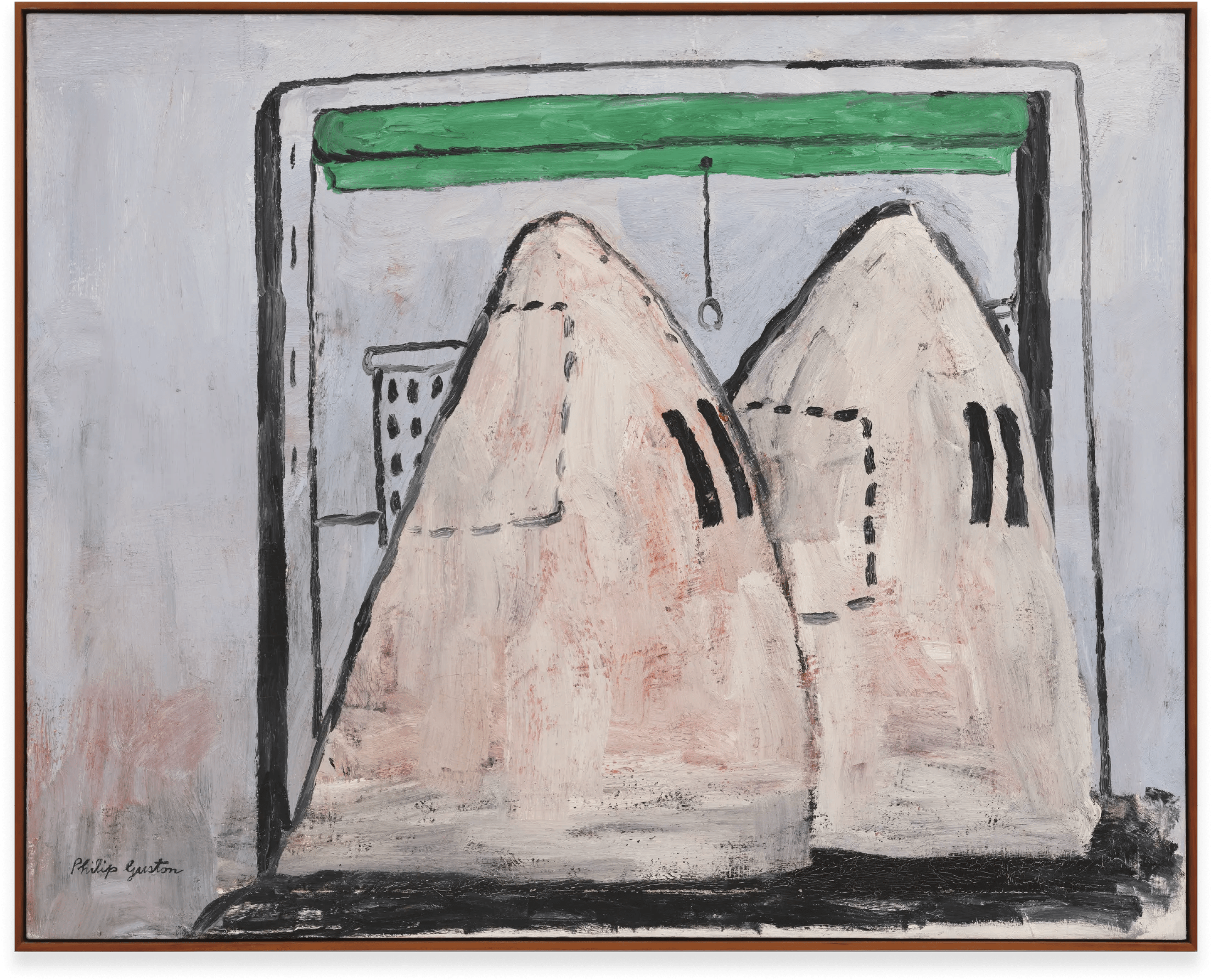
Philip Guston
Double Portrait
- 1969
- Oil on canvas
- 121.9 x 152.4 cm / 48 x 60 in
Gallery President Marc Payot discusses Philip Guston’s ‘Double Portrait’ (1969)
About the Artist
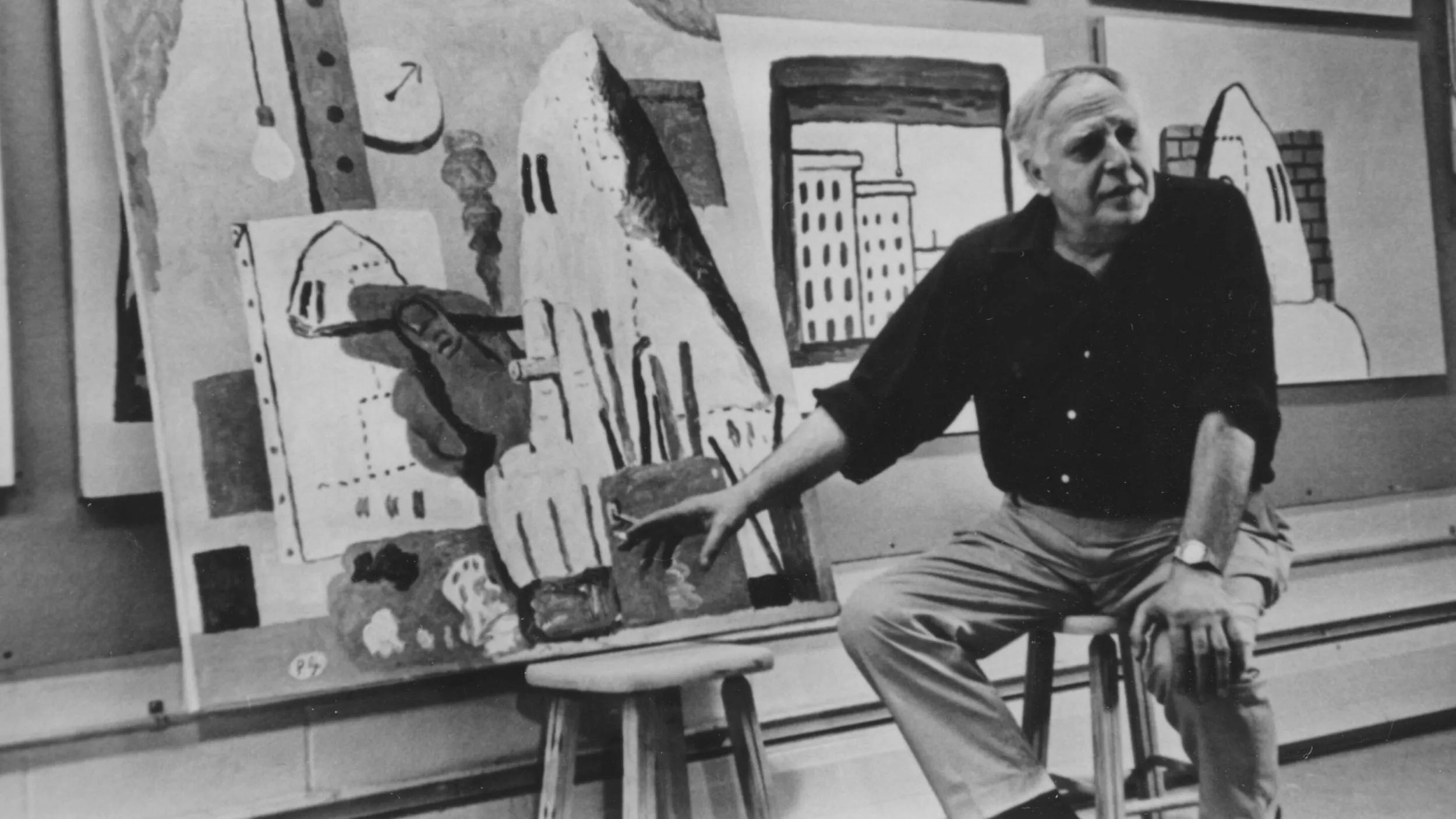
Philip Guston is one of the great luminaries of twentieth-century art. His commitment to producing work from genuine emotion and lived experience ensures its enduring impact. Guston’s legendary career spanned a half century, from 1930 to 1980. His paintings—particularly the liberated and instinctual forms of his late work—continue to exert a powerful influence on younger generations of contemporary painters.