
New Outdoor Sculpture Trail In Menorca Selected By Cristina Iglesias
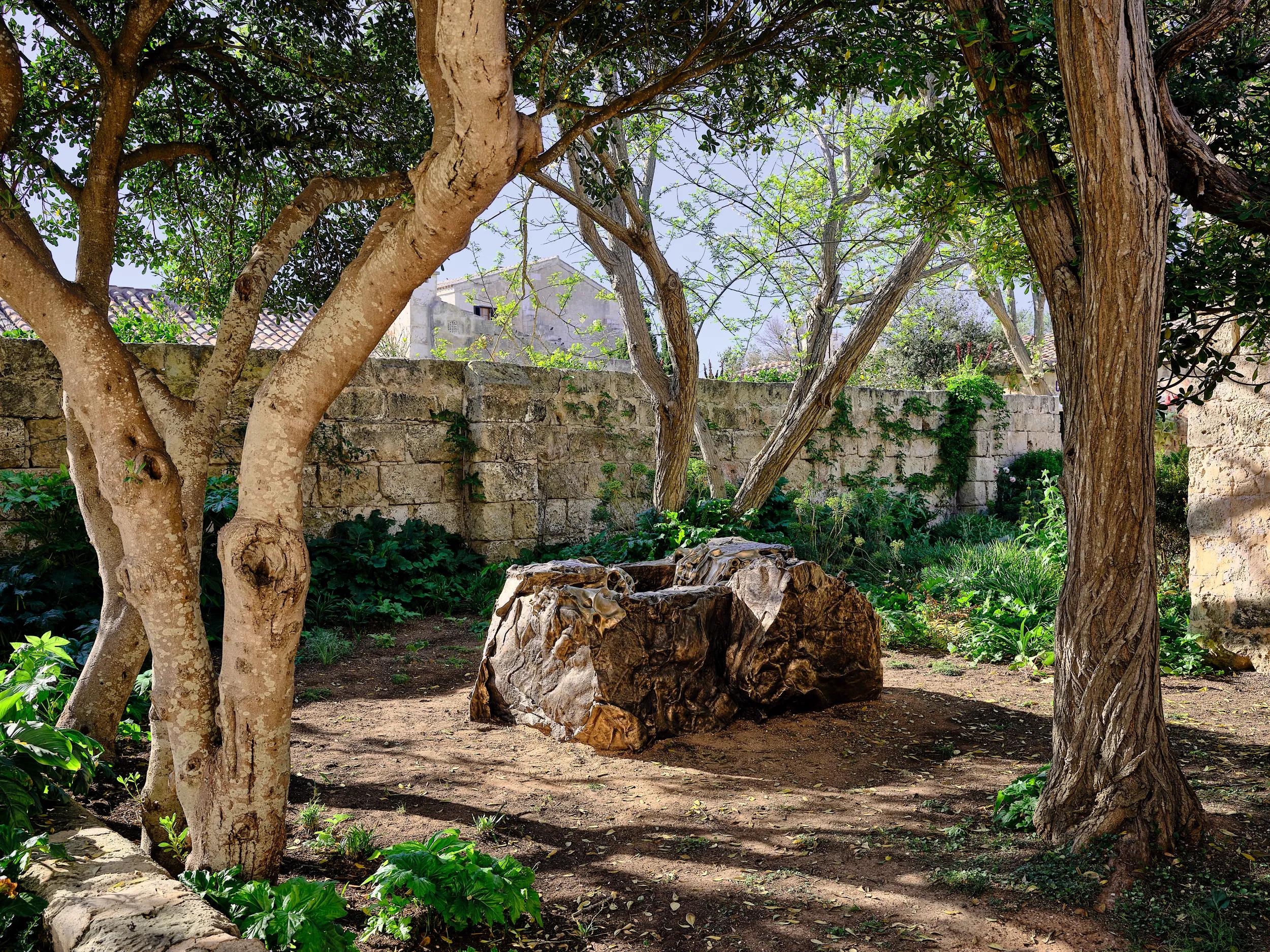
Cristina Iglesias, Littoral (Lunar Meteorite) IV, 2025, Hauser & Wirth Menorca, 2026 © Cristina Iglesias, VEGAP, Madrid. Photo: Daniel Schäfer
New Outdoor Sculpture Trail In Menorca Selected By Cristina Iglesias
This year’s outdoor sculpture trail is selected by artist Cristina Iglesias as part of the summer exhibition ‘Directionless,’ organized by Rashid Johnson. For the occasion, Iglesias has invited Ali Cherri, Mona Hatoum, and Rayyane Tabet to present their work outdoors, as well as Yto Barrada and Sigalit Landau who’s works will be featured in gallery this June.
Iglesias has selected Ali Cherri, Mona Hatoum, Latifa Echakhch, and Rayyane Tabet, as well as Yto Barrada and Sigalit Landau whose works will be included in gallery as part of ‘Directionless’ June opening. Reflecting on this constellation of artists, Iglesias explains: ‘Today the Mediterranean, with the heritage of ancient civilizations and migrations, is also a space of suspension and uncertainty. All of them experience different displacements from and with their origins — Lebanon, Israel and Morocco — and their voices become more relevant than ever. Menorca, with its geographical location on the western side of the Mediterranean, offers a privileged stage to rethink how the sea has united peoples and cultures, and should serve as a liquid forum, not a frontier.’
Across gardens, façades and pathways, the selected works engage directly with architecture, water and natural landscape, encouraging visitors to encounter sculpture as something experienced in motion — arrived at, passed by, returned to — rather than as a fixed or monumental presence.
At the landing dock, visitors are welcomed by Mona Hatoum’s ‘Inside Out (Concrete)’ (2019). Positioned at this threshold between sea and land, the work takes the form of a globe covered in an intricate, circuitous pattern reminiscent of bodily systems such as intestines or the lobes of the brain. Cast entirely in concrete, the sculpture holds a tension between implied softness and material density, registering the vulnerability and weight that accompany moments of arrival, transition and displacement.
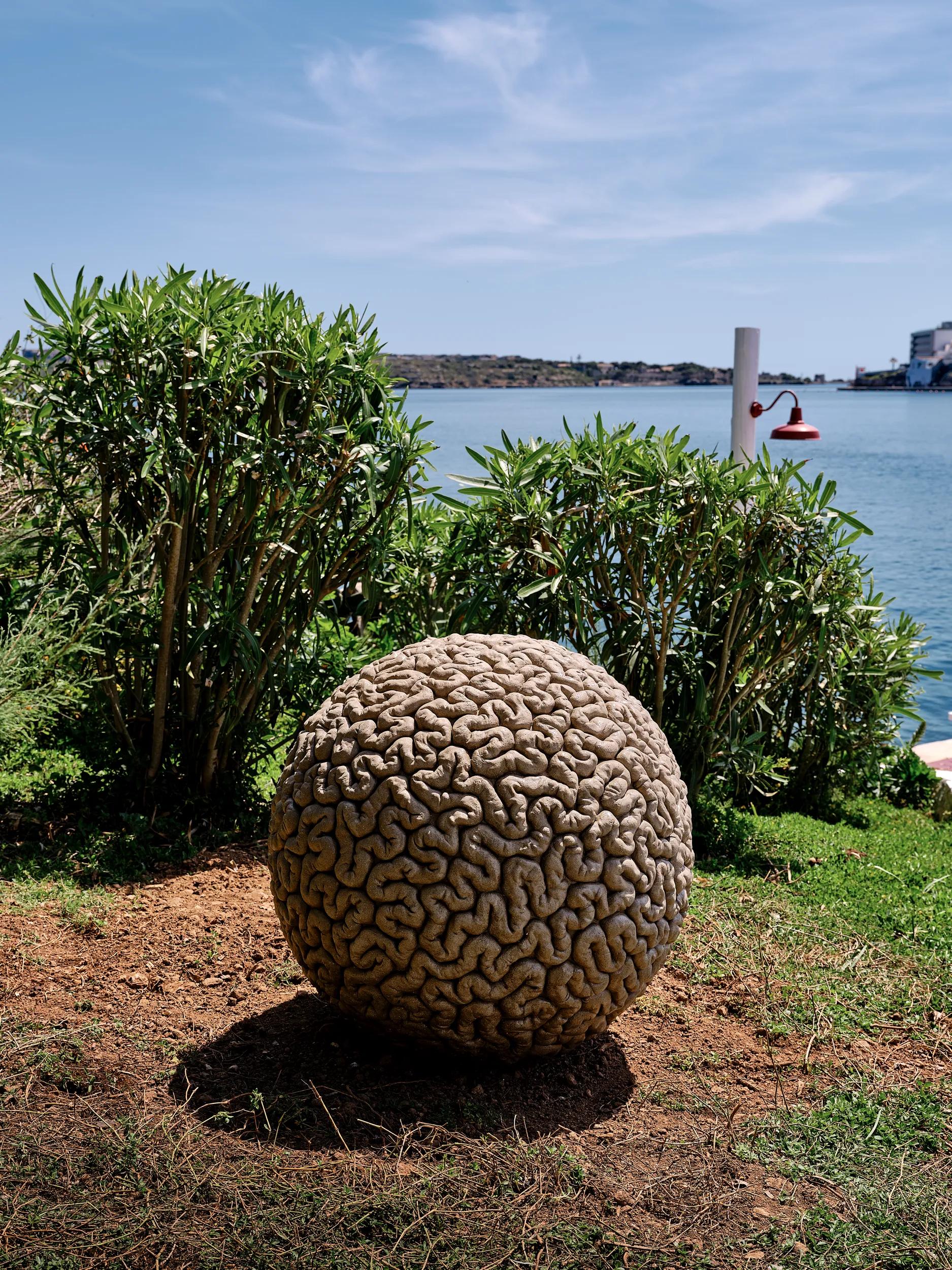
Mona Hatoum Inside Out (concrete), 2019, Hauser & Wirth Menorca, 2026 © Mona Hatoum. Courtesy the artist and White Cube. Photo: Daniel Schäfer
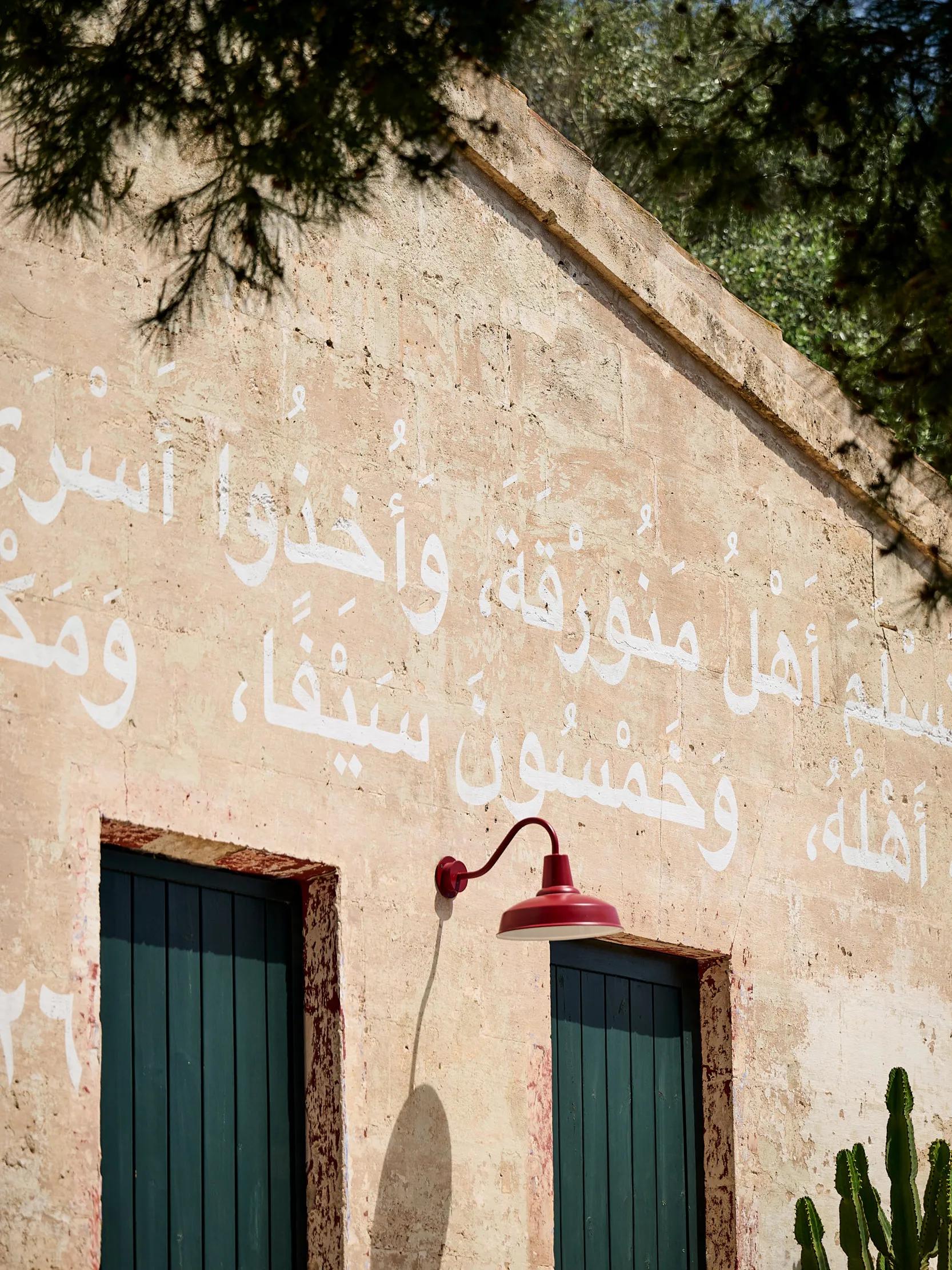
Rayyane Tabet, Elegy at Minūrqa, 2026, Hauser & Wirth Menorca, 2026 © Rayyane Tabet. Courtesy the artist and Sfeir-Semler Gallery. Photo: Daniel Schäfer
The island’s coastline and geological memory come into focus in Cristina Iglesias’ ‘Littoral (Lunar Meteorite)’ (2025). The term ‘littoral’ refers to the shifting zone where land meets water, a space Iglesias associates with deep time and remembrance. The bronze forms evoke porous lunar meteorites — fragments originating in outer space before colliding with Earth — their surfaces activated by circulating water. Fusing the man‑made and the organic, the work resonates with natural processes of erosion, flow and transformation, situating the viewer within overlapping temporal and spatial scales.
History is explicitly inscribed into the site through Rayyane Tabet’s ‘Elegy at Minorca’ (2026), a new site‑specific wall drawing installed on the façade of one of the first buildings you encounter. Developed from a poem written by the artist, the work reflects on the fall of the last Muslim ruler of Menorca on 17 January 1287, following the Catalan‑Aragonese invasion of the island. Now recognised as Menorca’s national day, the date also marks the expulsion and enslavement of the island’s Muslim population. Painted in a deliberately faded manner, the text appears almost archaeological, as if uncovered rather than newly applied, transforming the building’s surface into a fragile, poetic memorial.
In the gardens adjacent to Gallery 8, Ali Cherri’s ‘Tree of Life’ (2024) introduces a sculptural form rooted in ancient mythology. Modelled after a Mesopotamian relief of Sargon from the 24th–23rd century BCE, the bronze sculpture draws on a symbol that appears across the Bible, the Quran and the Epic of Gilgamesh. Cherri’s practice often engages with damaged or displaced artefacts, which he understands as metaphors for contemporary bodies marked by fracture. Installed outdoors, the work resonates with themes of survival, renewal and shared ancestral memory.
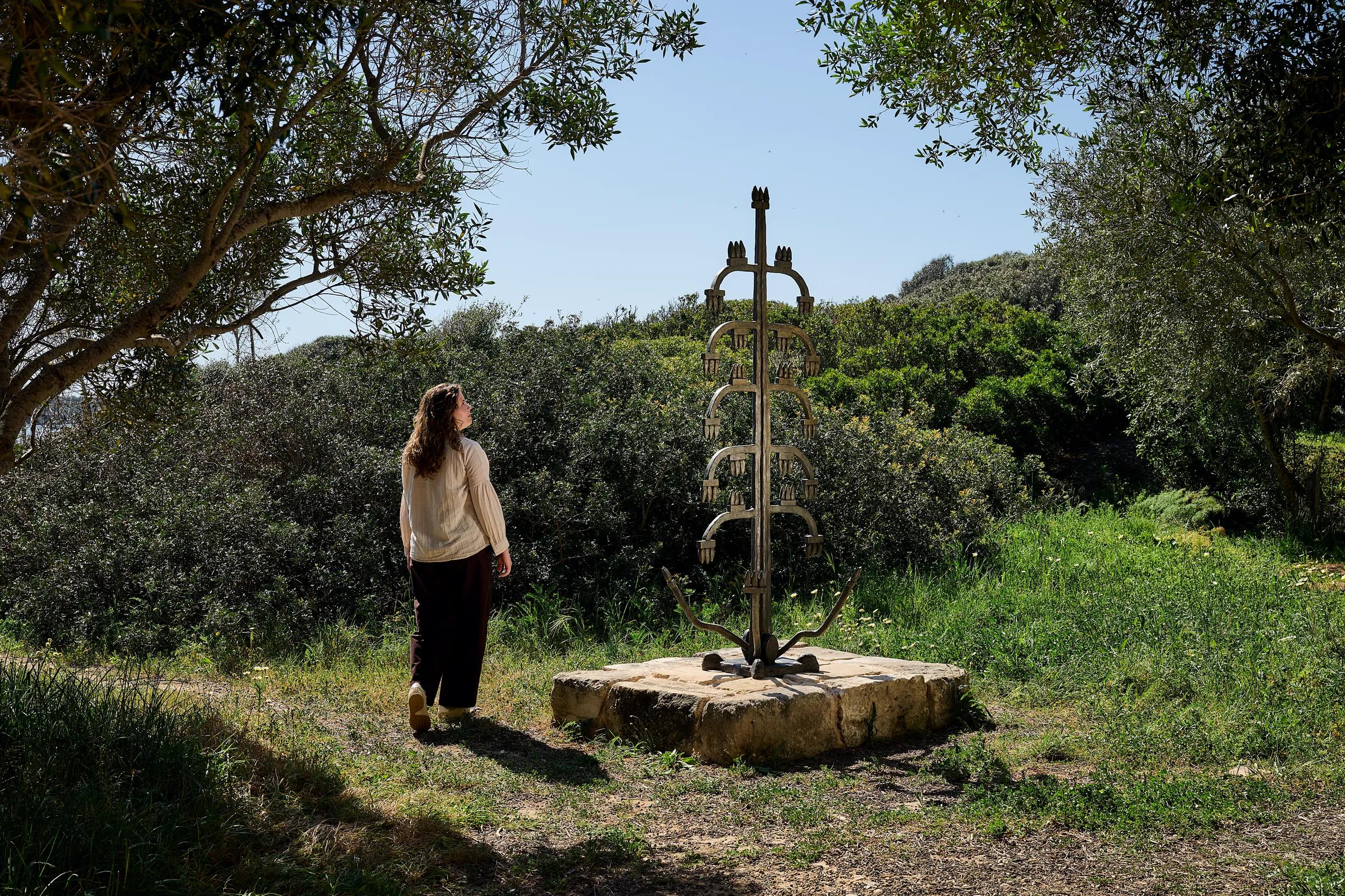
Ali Cherri, Tree of Life, 2023, Hauser & Wirth Menorca, 2026 © Ali Cherri. Courtesy the artist and Galerie Imane Farès. Photo: Daniel Schäfer
The site‑responsive work « Epidermis » (2026) by Latifa Echakhch’s draws on ideas first explored in her installation ‘Blush’. The work was constructed using local Menorcan limestone and functions both as a sculptural form and as a bench or platform for gathering and public programming. For Echakhch, acts of construction and erasure are inseparable, opening space for reflection, repetition and beginning again. The work invites visitors to inhabit sculpture physically, reinforcing its social and civic dimension.
Related News



1 / 5