Pablo Picasso’s ‘Le peintre et son modèle dans un paysage (The Painter and His Model in a Landscape)’ (1963) stands among the most accomplished examples of his late artist-and-model series. Conceived as an elaborate self-portrait, the painting depicts Picasso at his easel opposite Jacqueline Roque, his wife and enduring muse. The canvas reflects a rare degree of sustained attention from June to September 1963, revealed in its exceptionally complex surface and composition. Drawing upon the legacy of artists including Édouard Manet, Diego Velázquez, and Eugène Delacroix, Picasso transformed the timeless artist-and-model motif into a bold meditation on creativity and desire.

Pablo Picasso
Le peintre et son modèle dans un paysage
- 1963
- Oil on canvas
- 51.2 x 76.7 in
Senior Director Research and Partner, Sarah Allen, discusses Pablo Picasso’s ‘Le peintre et son modèle dans un paysage (The Painter and His Model in a Landscape)’ (1963)
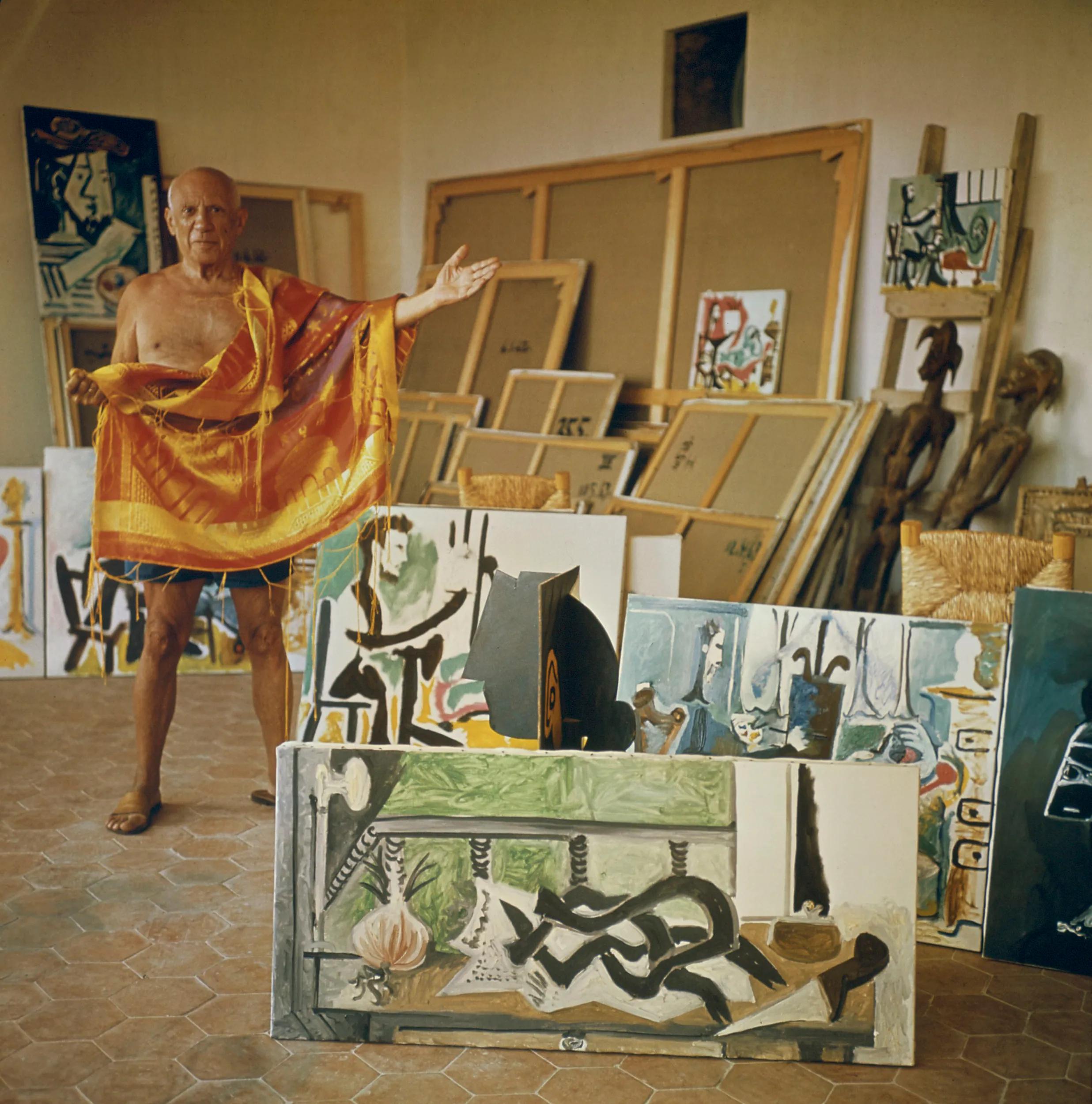
Pablo Picasso in his studio, 1958 © Succession Picasso / 2026, ProLitteris, Zurich. Photo: Robert Doisneau/Gamma-Rapho/Getty Images