
Conversations
Going to the Source
Allison Katz and Ariana Reines on Pompeii, volcanic eruptions and the power of ancient texts
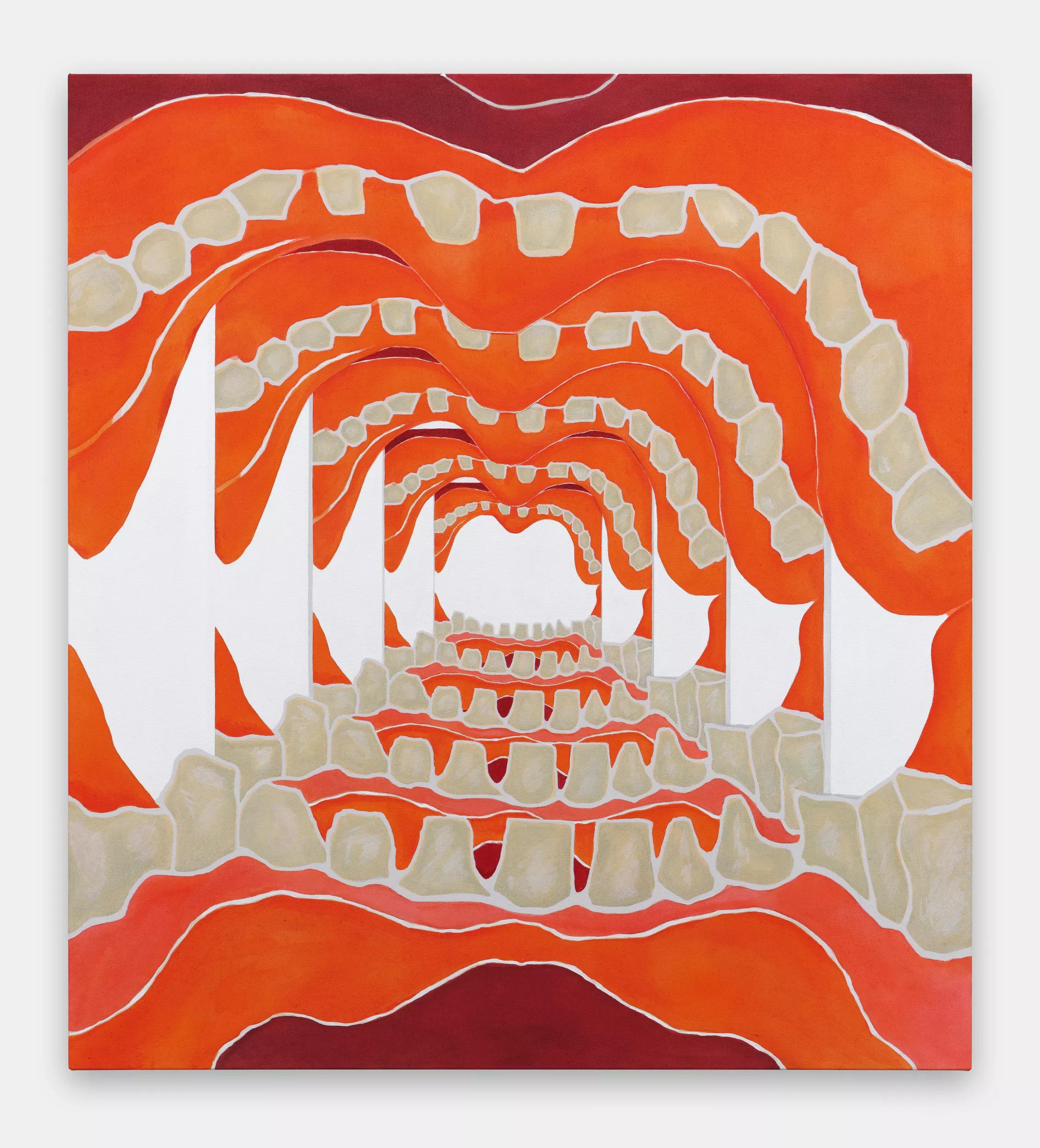
Allison Katz, Eruption, 2024. Photo: Eva Herzog. Artworks © Allison Katz
Allison Katz’s paintings are filled with images that seem to arrive from a deep wellspring. A rooster, an open mouth, a window or an architectural fragment might reappear across paintings made years apart, carrying traces of earlier images while generating new associations.
Such juxtapositions inspired In the House of the Trembling Eye, a publication that grew out of Katz’s 2024 exhibition at the Aspen Art Museum. Staged by Katz with curator Stella Bottai, the exhibition brought together her paintings with loaned works from across centuries—including fresco fragments from Pompeii—to explore unexpected relationships between artworks. The publication expanded that premise through original texts, poems and essays by contributors including psychoanalyst Nuar Alsadir, archaeologist Gabriel Zuchtriegel and poet Ariana Reines.
In April 2026, Katz sat down with Reines for a public conversation at the Warburg Institute in London to mark the book’s UK release. Their exchange touched on subjects that have long fascinated both: Pompeii and volcanic eruptions, Homeric verse, the transformative power of reading aloud and the surprising ways in which ancient stories continue to inform contemporary life.
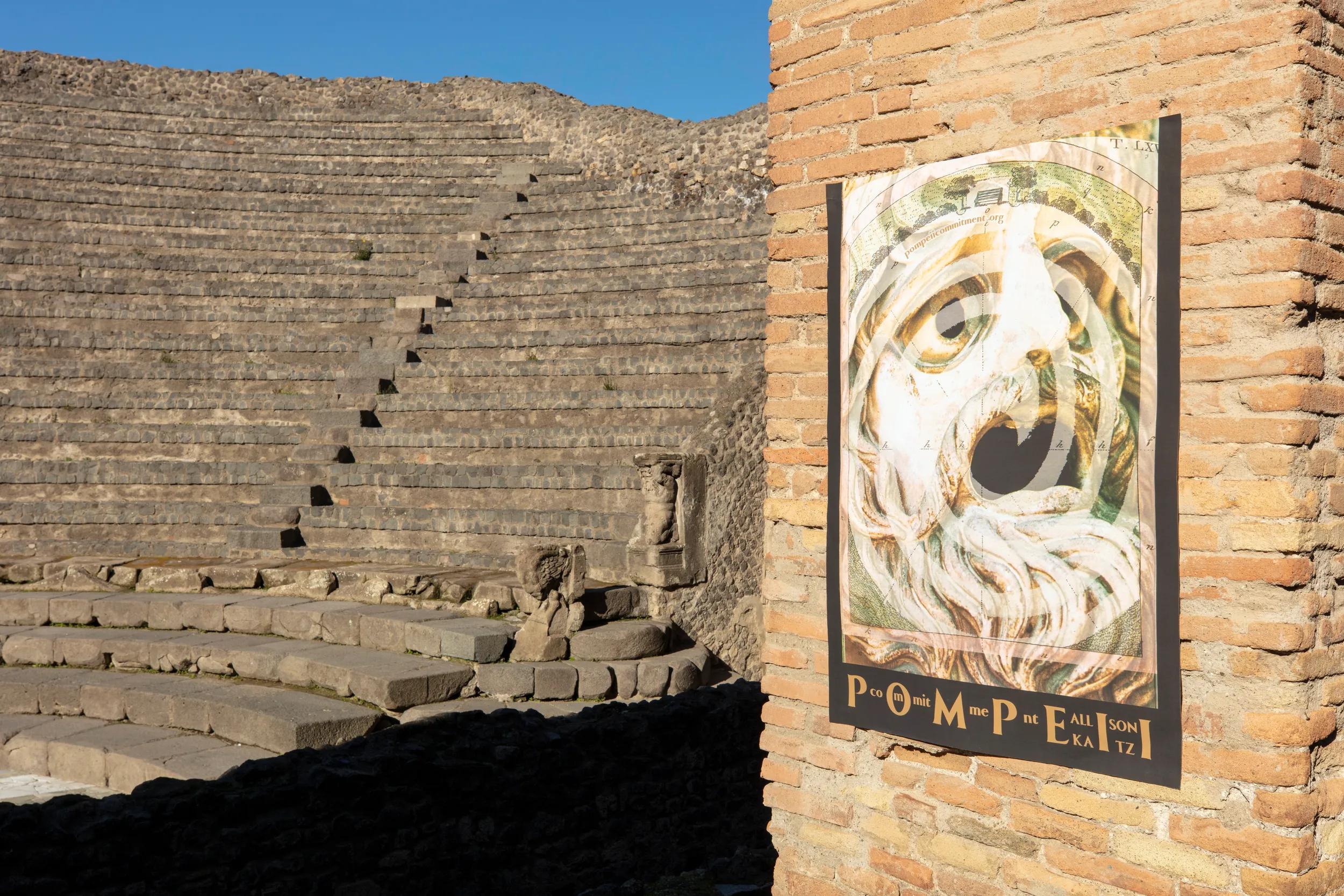
Allison Katz, Pompeii Circumstance (Mask, from the House of the Large Fountain), 2023. Photographed at the Archaeological Park of Pompeii in January 2023. Photo: Amadeo Benstante
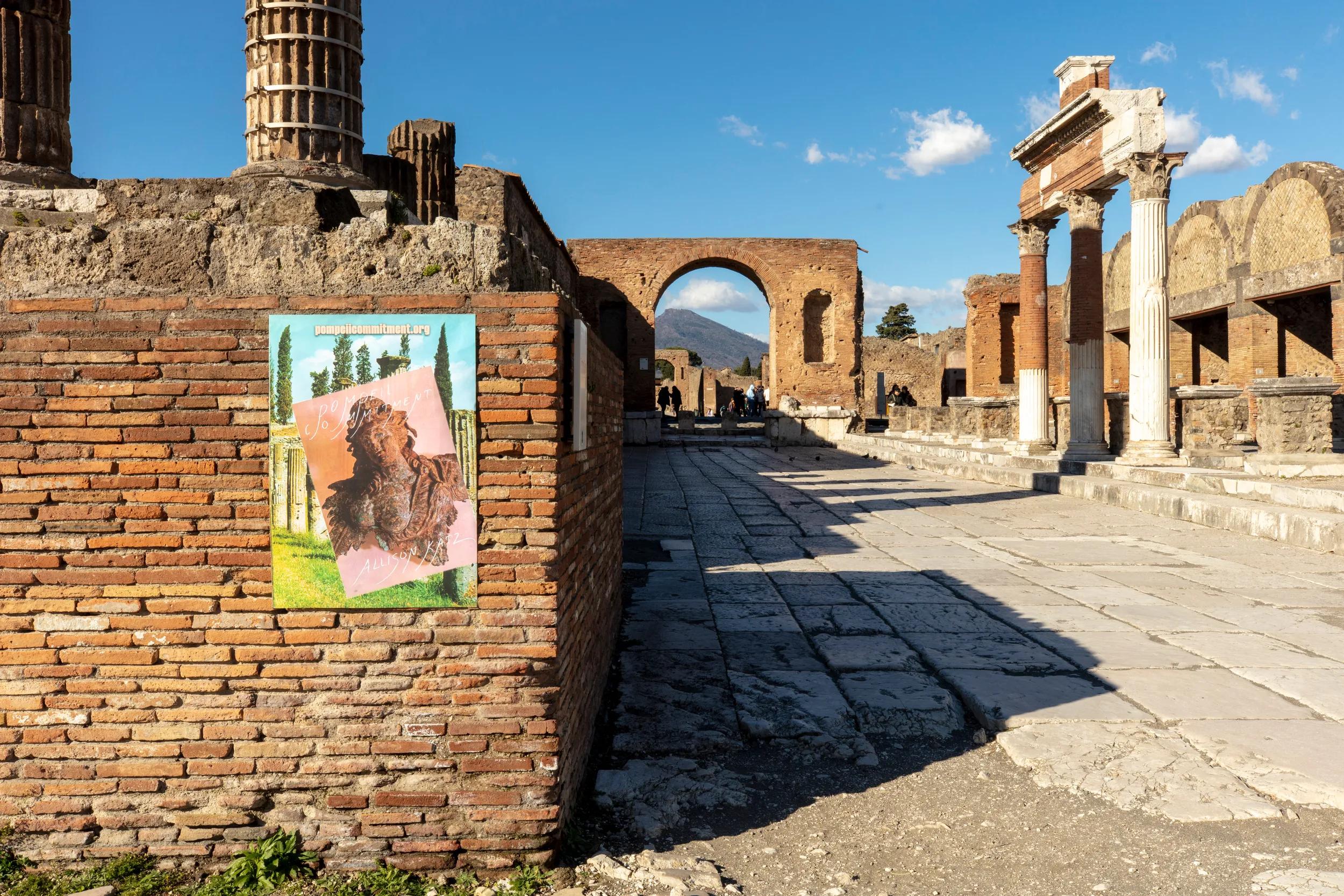
Allison Katz, Pompeii Circumstance (Maenad in the Barracks), 2023. Photographed at the Archaeological Park of Pompeii in January 2023. Photo: Amadeo Benstante
“Pompeii allowed me to let go of the idea that something is ever whole. I started seeing every finished painting I make as a fragment, only part of something that I am glimpsing at or grasping.”—Allison Katz
Allison Katz: Ariana, thank you for coming here from New York. I want to start with a central image and an anecdote. The title of your poem in this book is “Hellmouth,” and it is also one of my favorite motifs to paint: an open mouth as a frame. When thinking about how this image could have entered my consciousness, I remembered that when I was eighteen years old, I attended a course on The Odyssey. On the first day, the teacher said, “All we’re going to do is read The Odyssey out loud for the whole semester.” And everyone’s first thought was, “Yay, no homework!” There was nothing to do except show up and read the text.
It was life-changing. We let the text work on us without doing anything—it was a total surrender, and it became a bodily experience. There’s a refrain in the story that gets repeated over and over, that basically asks, “What word managed to escape the gates of your teeth?” These were devices for memory because the text was originally spoken. That was the first moment for me when language had an image and speech became a physical act.
There have been a few other experiences in my life where reading a text produced an image on that level, and one of those was reading with you at the Invisible College. You described certain texts as a source—not source material but something on another level of transformation. That gave me a lot of energy when I went to Pompeii and began thinking about what I could do with that experience while also surrendering to it.
Ariana Reines: I love that you had a bodily experience of The Odyssey because those older texts were preserved orally—which is to say, physically. There’s something very source-y about the frame of the mouth in your paintings—your instinct to go to the source. One reason I started reading ancient texts out loud was because I noticed that they improved my health. I’m not kidding. I was looking for some way of balancing everything that felt wrong with me and everything about me that was out of sync with the world.
And in a way, the volcano is a nice metaphor because it’s not a metaphor at all! It’s like, for whatever reason, a lot of us feel like we’re trying not to explode all the time, right?
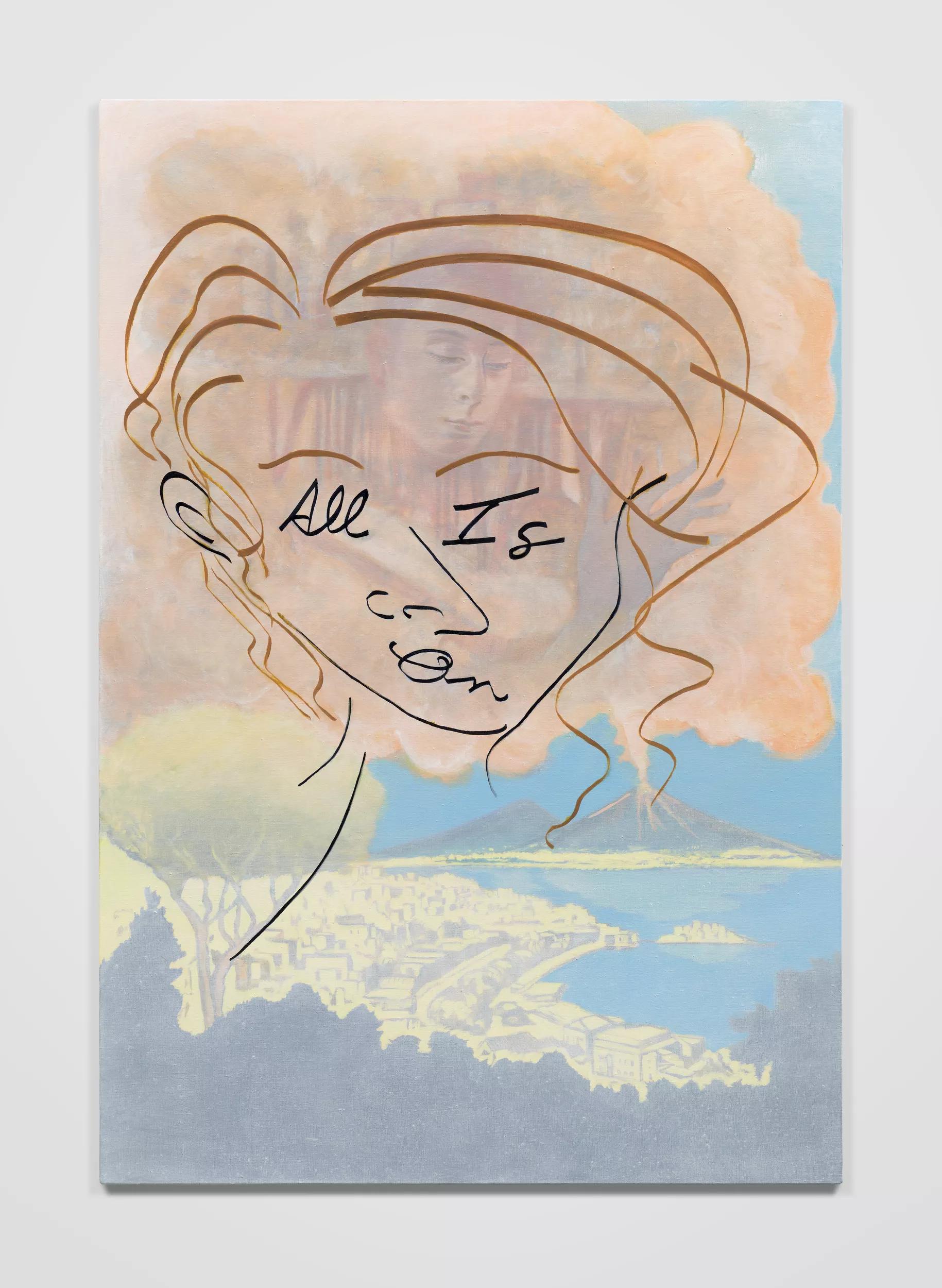
Allison Katz, AKgraph (Eruption), 2023. Photo: Keith Lubow
AK: Yeah. [Laughter.]
AR:What’s fascinating about an archaeological site like Pompeii—I finally went there two weeks ago—is that it made me think about something that’s been bothering me a lot about contemporary life: a lot of life feels like looking at living. You’re looking at the scenery, you’re looking at the city, you’re looking at yourself, you’re looking at what your life might look like from outside. And there’s a real paucity of being. What’s crazy about a site like Pompeii is that it’s so big and it’s a city—and I know how to be in a city, I know what it feels like to walk up and down city streets—I was like, “I’m not looking at this. I’m in it.” And that’s what you’re describing with The Odyssey. You’re not looking at it. It was in you. And you spent enough time with it that you were in it too, and it went into you the way it’s gone into the bodies of millions of people across time. Including before it was even written down. That’s living and that’s a direct encounter—a real experience of the poem. It’s crazy to me that my first experience in recent times of feeling fully in something was Pompeii.
AK: Which is part of the appeal of it because it is both living and dead at the same time. We don’t even know what the truth of Pompeii is. It seems to appear for every generation as something like a Rorschach test. It gives you what you need at the moment you go there. When I went, there was this real feeling of climate catastrophe and the fact that—I won’t even call it hope or a silver lining—but an understanding of how the destruction of Pompeii was also its preservation. The way that it got destroyed enabled it to be found.
Pompeii allowed me to let go of the idea that something is ever whole. I started seeing every finished painting I make as a fragment, only part of something that I am glimpsing at or grasping. Walking through that place became a way of thinking about making and receiving.
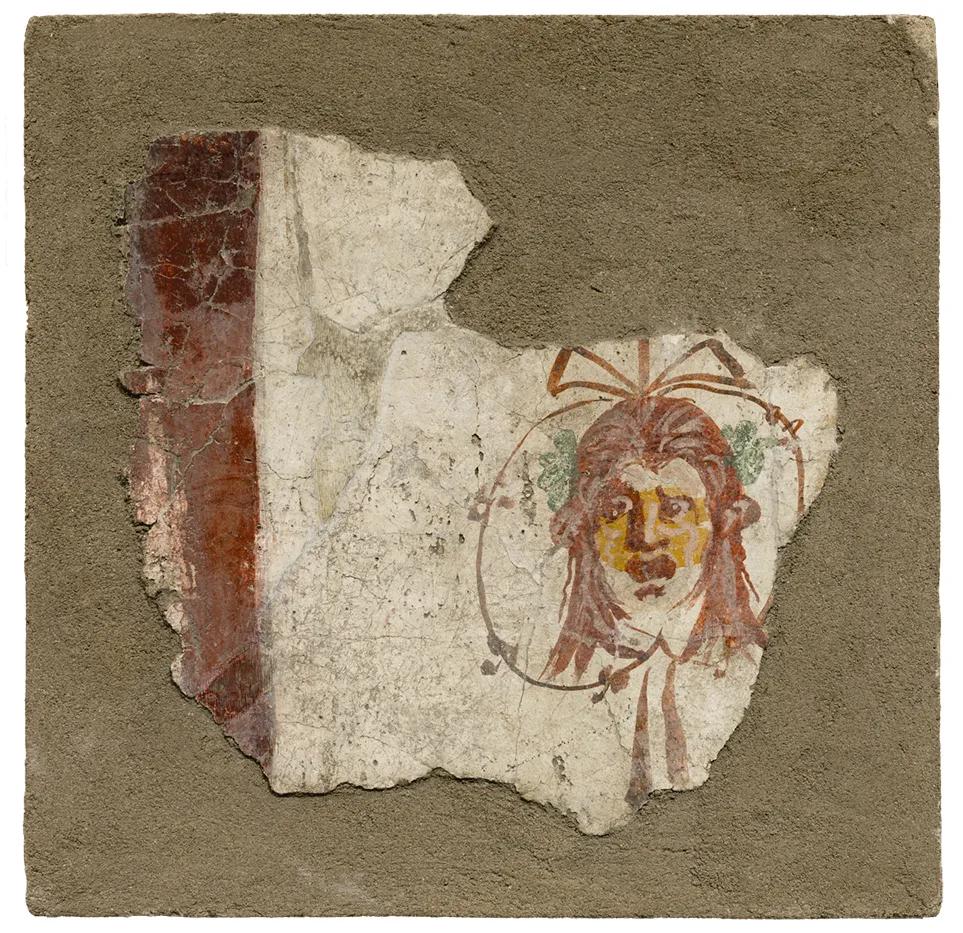
Fresco fragment with theatrical mask Pompeii, origin unspecified, 45-79 CE (Fourth Style). Painted plaster, 16 1/8 x 16 1/8 x 1 3/8 in. Inv. N 12. Courtesy Pompeii Archaeological Park
AR: What’s so exciting about Pompeii is that it holds both intentional creation and this natural thing that fucking happened. There's a fusion of nature—totally unbounded and uncontrolled in her most terrifying aspect—and all the normal, homey, everyday things that we do to organize and understand our lives.
You’re a person with an endless mind, Allison. And endlessness can be very satisfying and rewarding. It’s one of the reasons why volcanoes are weirdly comforting, perhaps especially to someone endless like you?
I was feeling depressed two months ago and, for whatever reason, I watched all the Werner Herzog volcano movies for comfort. Why would I find it comforting, do you think, to watch volcanoes erupt?
AK: That’s a good question because right near my studio in South London is a green space called Pasley Park. I would walk there to clear my head while working on the Pompeii exhibition, and I couldn’t believe it when I came across a plaque explaining the history of the place. In the 1830s and 40s, it was a zoo and pleasure garden, and one of its most popular attractions was a reenactment of the explosion of Mount Vesuvius.
They built a stage set of the volcano on an artificial lake and used fireworks to create the eruption, which was reflected in the water. Nuar [Alsadir] and I talk about it in the book because for her, as a psychoanalyst, this was like, “Well, of course Victorian society is so repressed it is going to want to watch things explode.” It’s all about the orgasm and the release. It was a cathartic form of entertainment, but maybe to speak to what you're saying, it’s exciting. I don't know if it’s comforting. Do you think?
AR: I mean, maybe my version of comfort is weird, but there’s something—it's energizing, I think, maybe not strictly within the framework of Victorian repression, but all the other ways we’re repressed these days—or maybe it’s just the satisfaction of nature’s vengeance? A chance to contemplate the majesty of death?
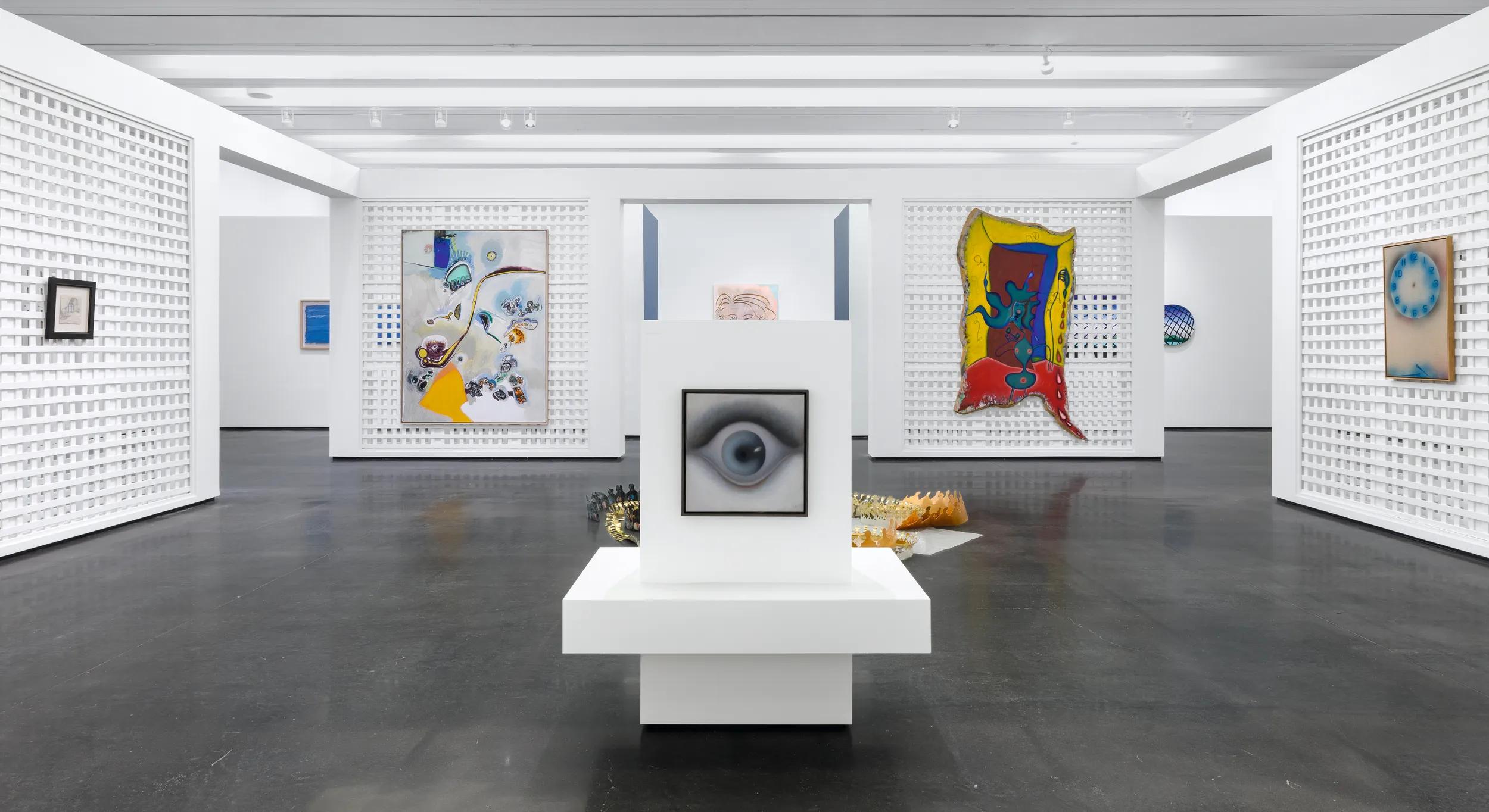
View of “In the House of the Trembling Eye,” an exhibition staged by Allison Katz at the Aspen Art Museum, 2024
“One reason I started reading ancient texts out loud was because I noticed that they improved my health.… I was looking for some way of balancing everything that felt wrong with me and everything about me that was out of sync with the world.”—Ariana Reines
AK: I wanted to ask you a little bit about the ancient texts you’ve introduced me to and this lack of time-stamping. One of the readings we explored was the Sumerian myth of Inanna, possibly the first story ever written down. For me, what was amazing was that the goddess Inanna decided to plant a tree. Trees were growing elsewhere, and suddenly it occurs to her, “But I want a tree here.” So she plants a tree, and that’s considered the first act of art. Then demons come into the tree and she is devastated, thinking “Oh shit, I didn’t want a demon to come.” But if you make space for art, you make space for the demon.
That’s in one of the earliest stories we have, and it just feels like that’s everything. It’s almost like what you taught me to see was that these stories are access points to the totality, to the immensity. You have to work inside it knowing that you can't find the edges of it, but it’s there and you almost can’t be afraid of it.
There was something about these texts that helped me stay with that overwhelmingness, or the anxiety of being inside something so much bigger than any gesture or attempt. For me, that became an opening into a process that had nothing to do with applying paint. It was this crazy other way of managing sensitivity.
AR: Managing sensitivity—that’s a great way to describe it. And the way art is often taught is that people learn the movements of the last few centuries and respond to theory and more recent cultural production. But for whatever reason, when I first started to read this really old stuff, it felt totally relevant and fresh to me in ways that I could deeply relate to. It is way more recognizable to me than a lot of the contemporary theory that’s supposed to help me understand myself and my life. I think there is something invigorating about going to the source, tapping into where things begin. I noticed that you have that impulse organically too.
Everything I study is because I need it, almost medically need it—in order to go on with my life, but also to break through creatively. I don’t think it’s necessarily high-minded. It’s probably a deeply psychospiritual, mysterious need. But don’t you think that’s how obsessions and fascinations work for you in the studio?
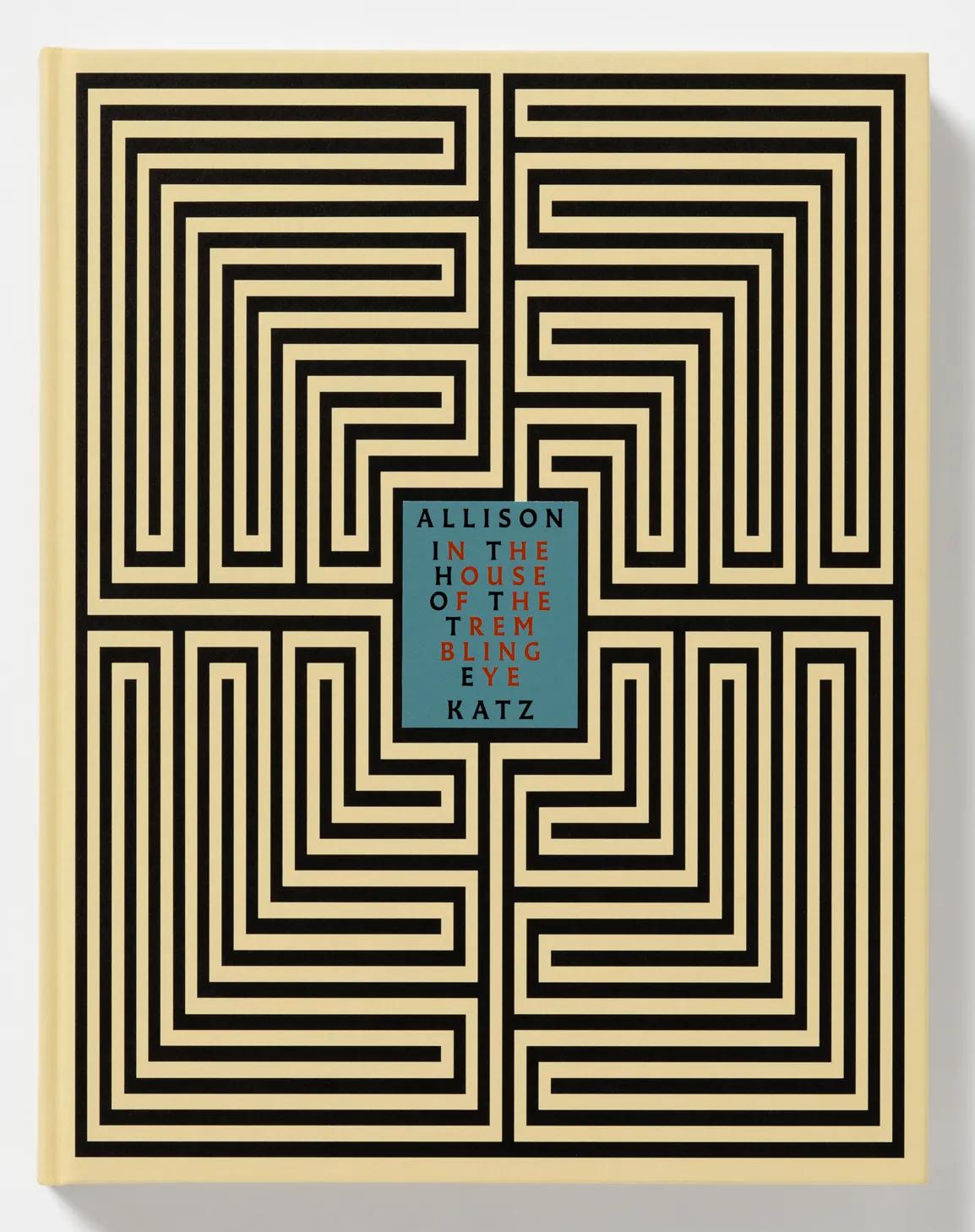
In the House of the Trembling Eye by Allison Katz (Verlag der Buchhandlung Walther König, 2025). Courtesy the publisher. Photo: Ed Park.
AK: Yes. And I also think there’s real synchronicity. We do things and we’re primed for them, and then something happens—an invitation, an accident, an experience. You started the Invisible College during COVID, when everyone was isolated, and it became a way of coming together through reading. But I didn’t understand then what was also being unearthed was a relationship to immensity.
The first time I went to Pompeii, I was fifteen years old. I had experienced a childhood illness and ongoing operations on my arm, so I was very fragile. At the same time, I was going through puberty. I had the twin poles of sex and death, and I show up at Pompeii and I’m like, “What is going on? I've been here before.”
I think it was my first experience of the uncanny. I was getting into painting in a serious way, but I looked at things that had been made 2,000 years ago and felt like, “Did I make them, or is this just what I want to make?”
In a way, I almost realized it doesn’t matter if I make them or if someone else made them. It’s bigger than any kind of ego of the artist. It was about making contact with and recognizing something eternal.
AR: Right. It’s like everything always starts to happen before it “literally” starts. There were earthquakes before Vesuvius erupted. It took Rome another 300 years to fall after the destruction of Pompeii, but somehow this event presaged the Fall—Rome was already decaying. Is it fair to say that you were probably already becoming a painter as a girl, but that Pompeii initiated you?
AK: Tonight, we can say that.
–
Read Ariana Reines' poem "Hellmouth," first published in The Rose (2025) and reprinted in Allison Katz's In the House of the Trembling Eye (2025). Shared with the author's permission for Ursula.
–
Allison Katz approaches painting as a living language, one that absorbs autobiography, art history and the visual tensions of the present moment. Her diverse imagery appears as recurring signs that form a constellation of ideas and references, transmuting them across the mediums of painting, posters, ceramics and installation.
Ariana Reines is an award-winning poet, Obie-winning playwright, performing artist and translator. Her newest books include The Rose (2025; UK edition, 2026); Wave of Blood (2024), now available in Danish and Norwegian; and A Sand Book (2019), winner of the 2020 Kingsley Tufts Prize and longlisted for the National Book Award. Since 2020, she has led Invisible College, an online hub for the study of poetry, sacred texts and the arts.
The Warburg Institute is one of the world’s leading centers for the study of art and culture. Its collections, courses and programs are dedicated to the study of global cultural history and the role of images in society. This conversation took place at the Warburg Institute in London on April 21, 2026, and has been edited for clarity and length. The event was presented in partnership with the Aspen Art Museum and Ursula magazine.