
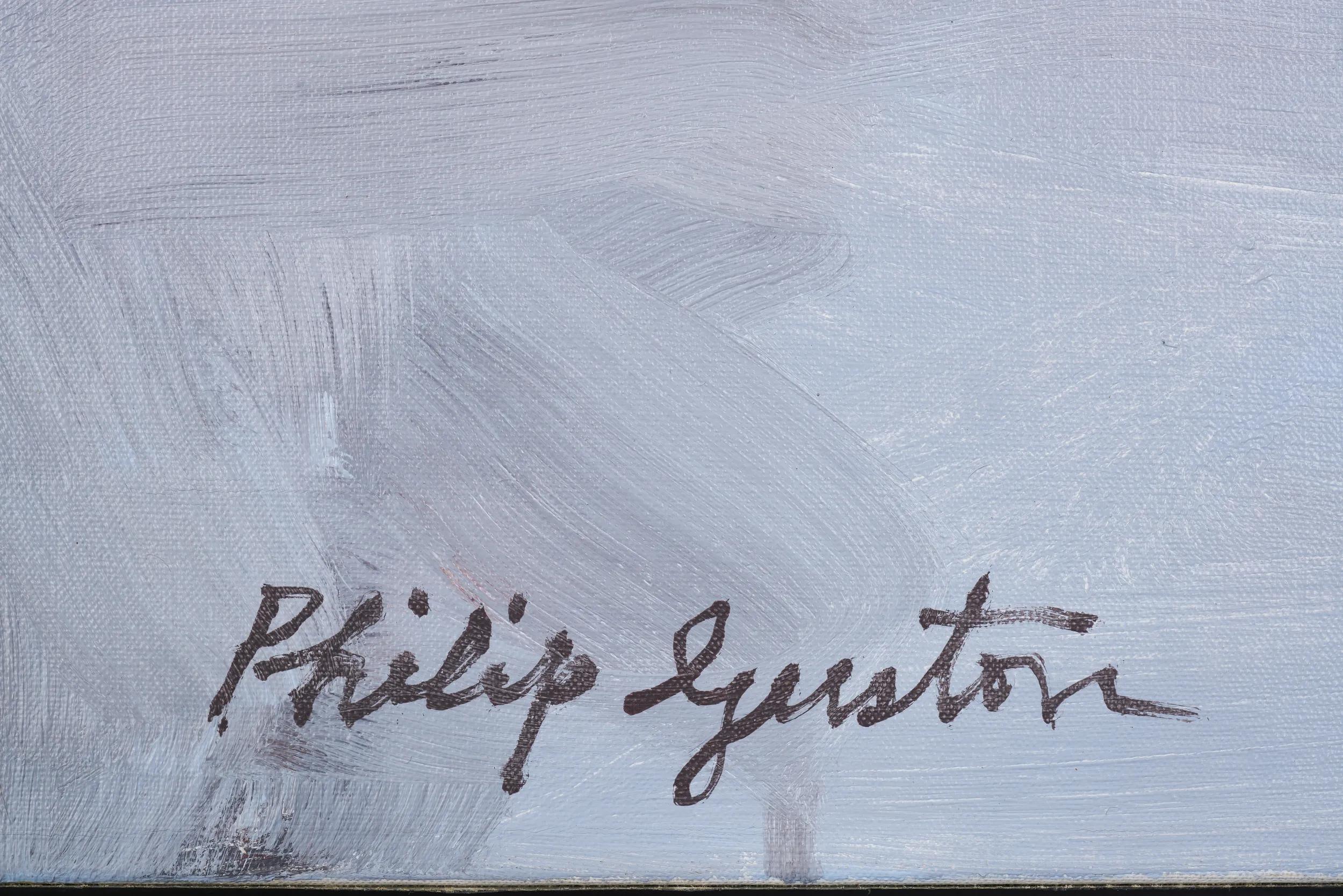
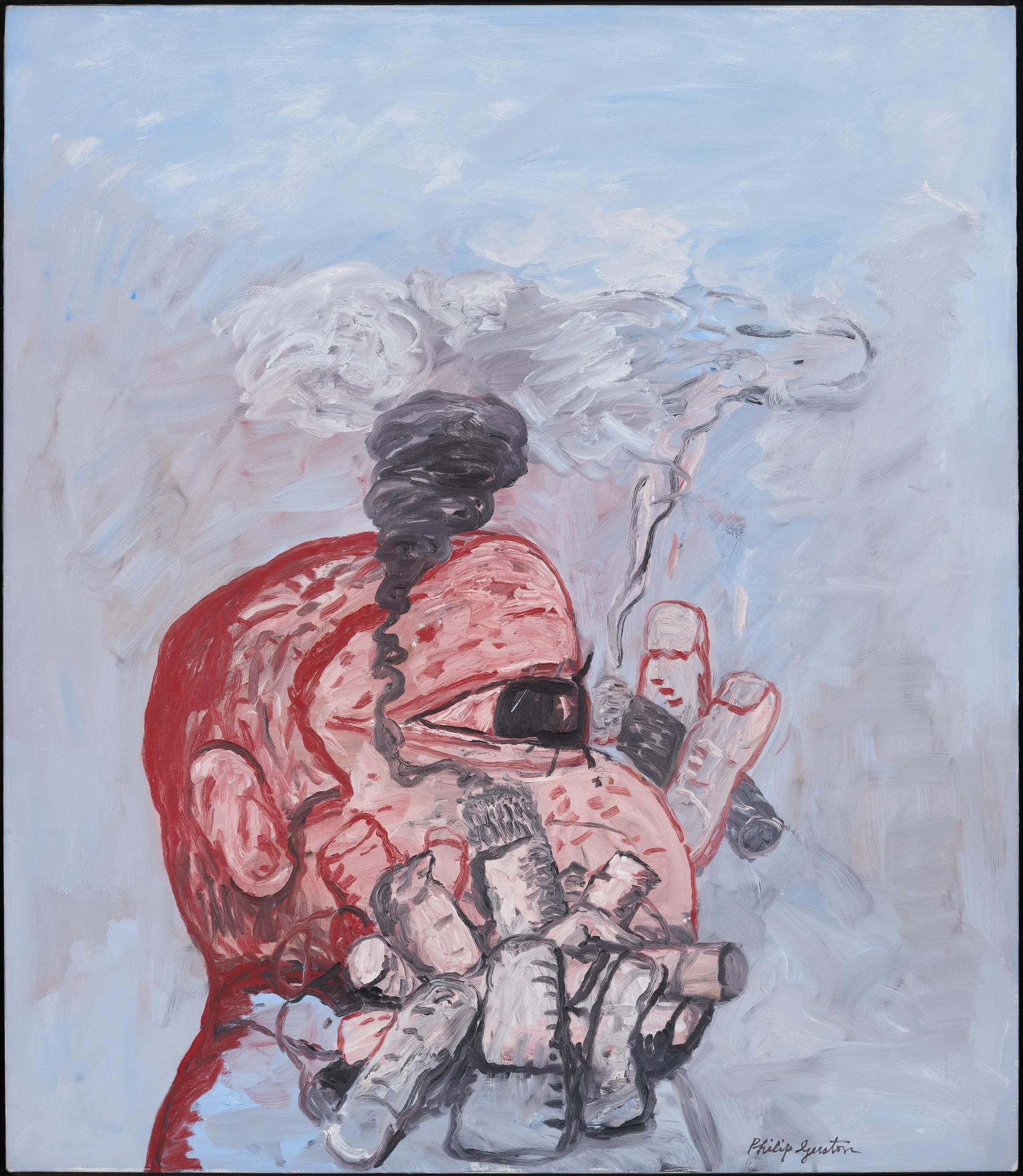
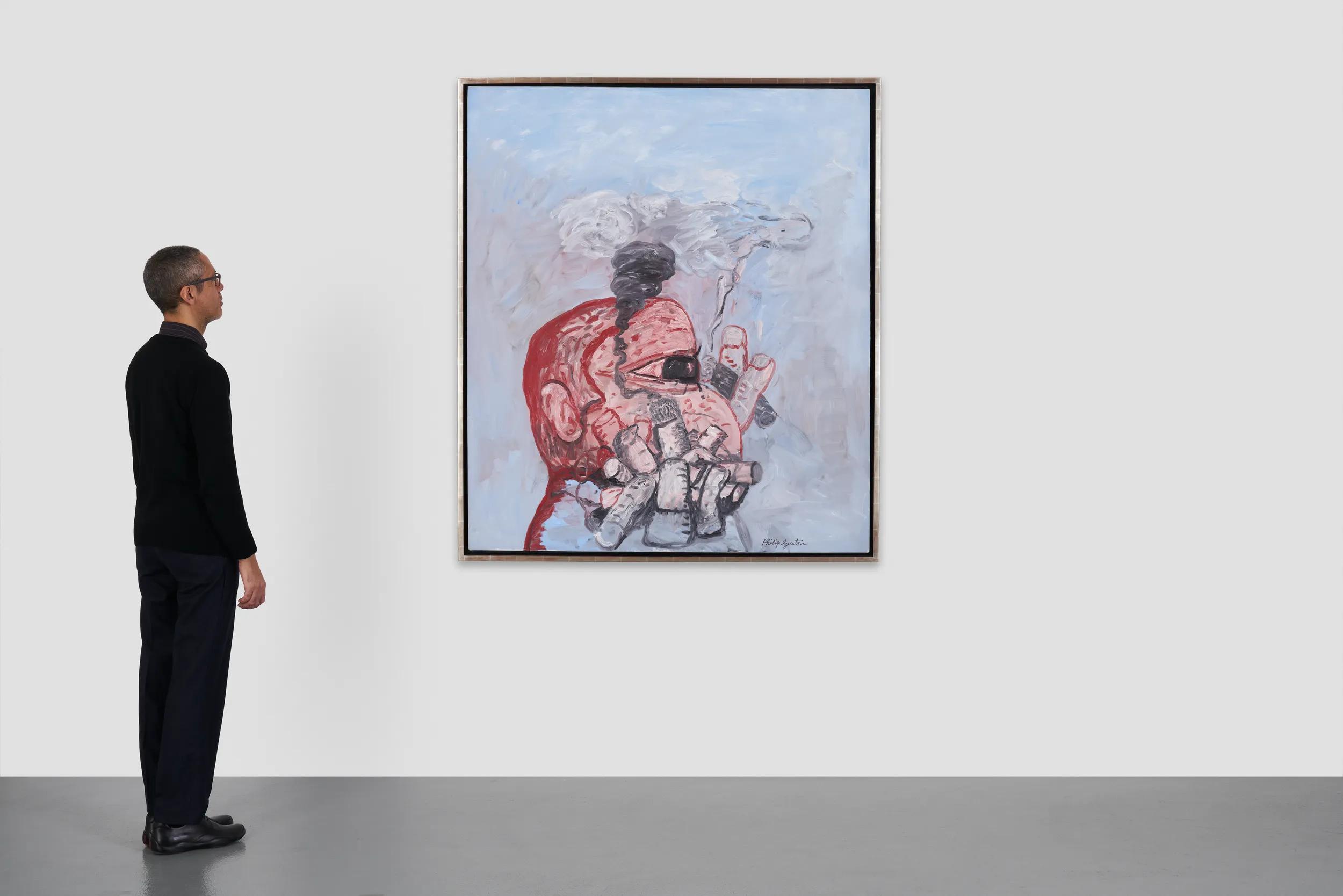
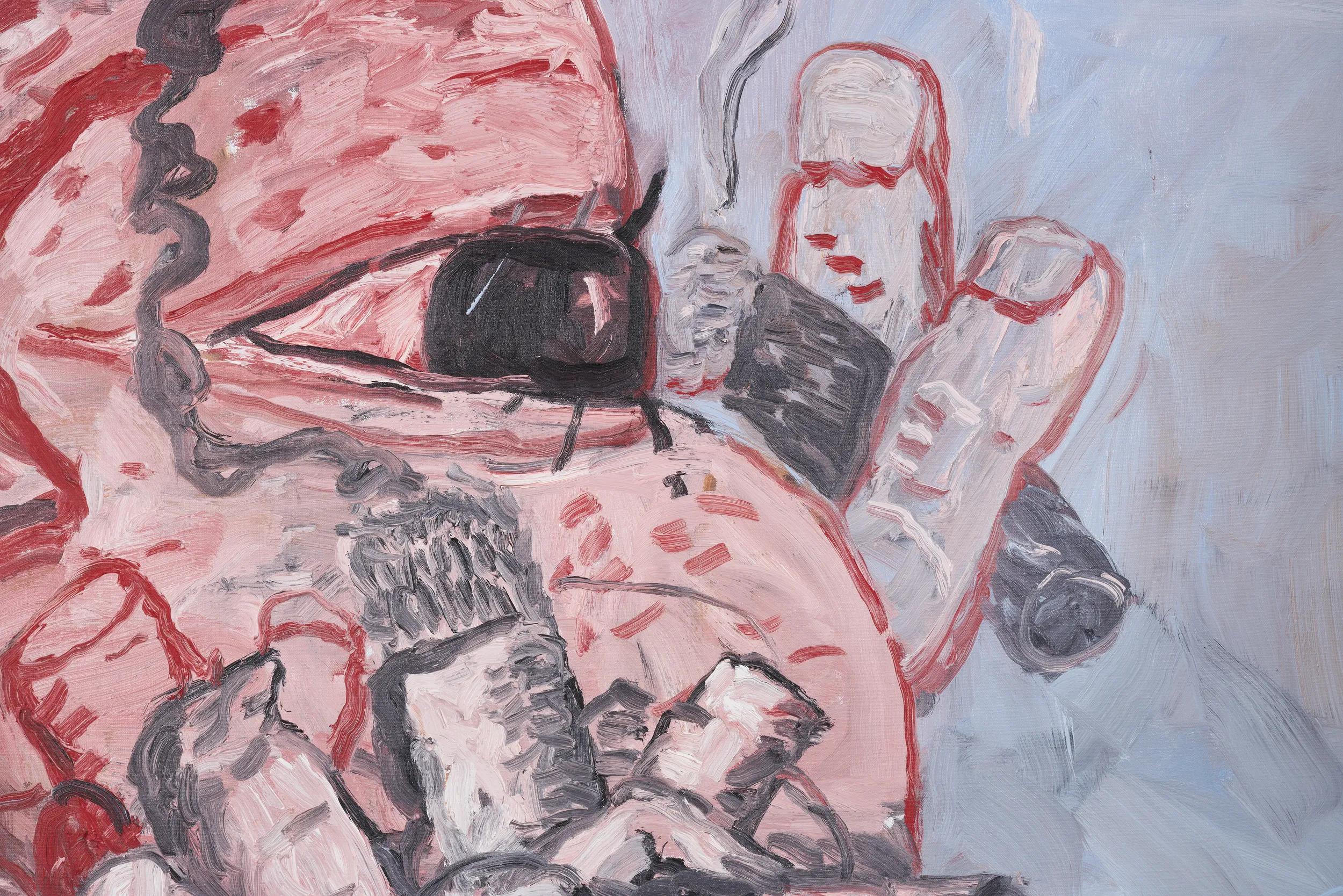
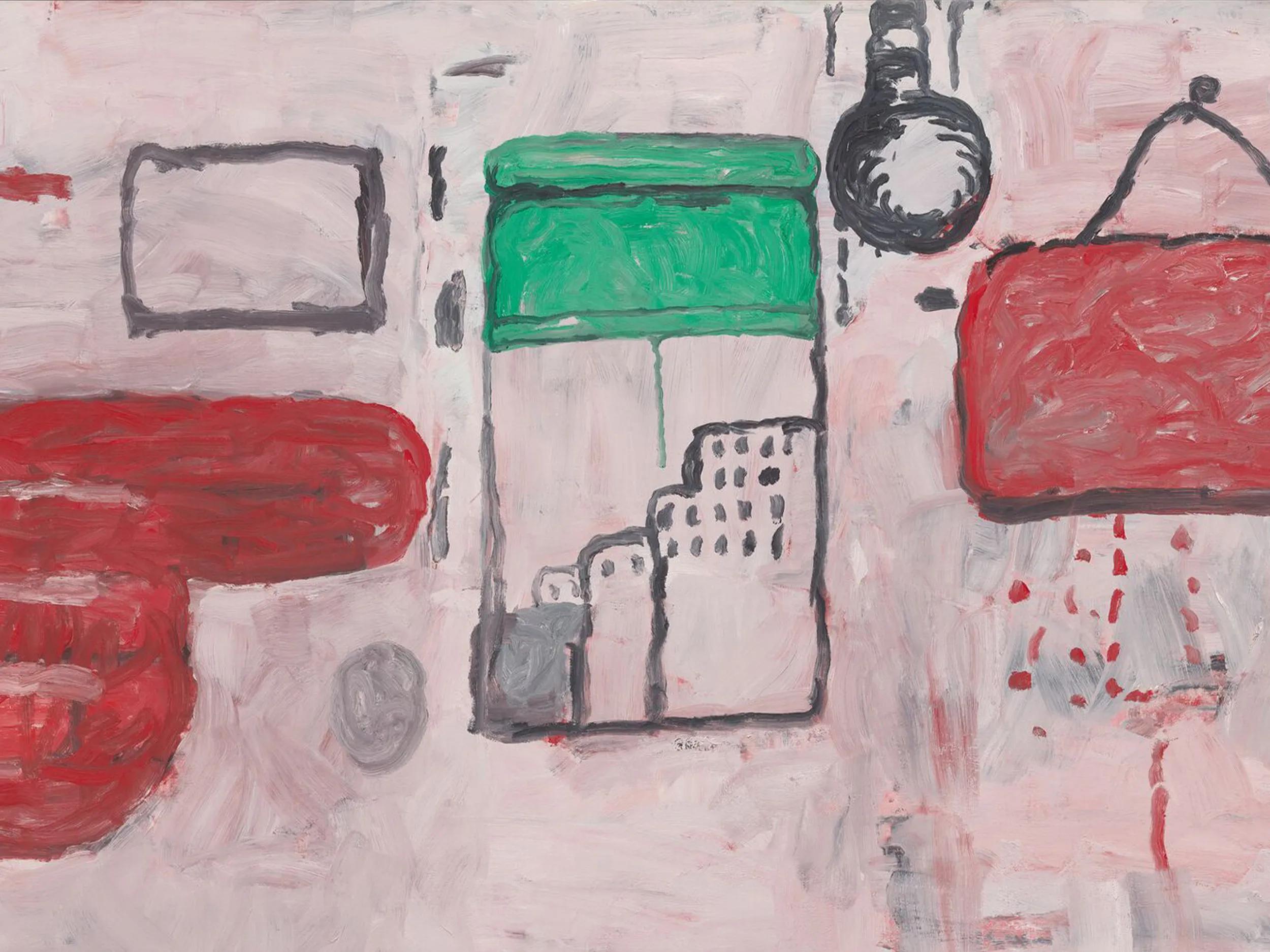
Emerging from Guston’s prolific final years, ‘Conversation’ (1978) abounds with autobiographical references. This tender self-portrait develops Guston’s key visual motifs: the head in profile with its observant eye, the omnipresent cigarettes and overflowing ashtray, the smoke dissolving into a luminous painterly ground.
1 / 6
Philip Guston
Conversation
- 1978
- Oil on canvas
- 152.4 x 132.1 cm / 60 x 52 in
Guston first turned towards this raw mode of figurative expression at the close of the 1960s, marking a dramatic break from his celebrated abstractions of the preceding two decades. Widely considered to be his greatest contribution to the artistic canon, many related examples of Guston’s late canvases are held in esteemed museum collections, including The Metropolitan Museum of Art, New York; The Museum of Modern Art, New York; and the Stedelijk Museum, Amsterdam.
Philip Guston’s iconic ‘Conversation’ will be presented by the gallery at Art Basel Qatar 2026.
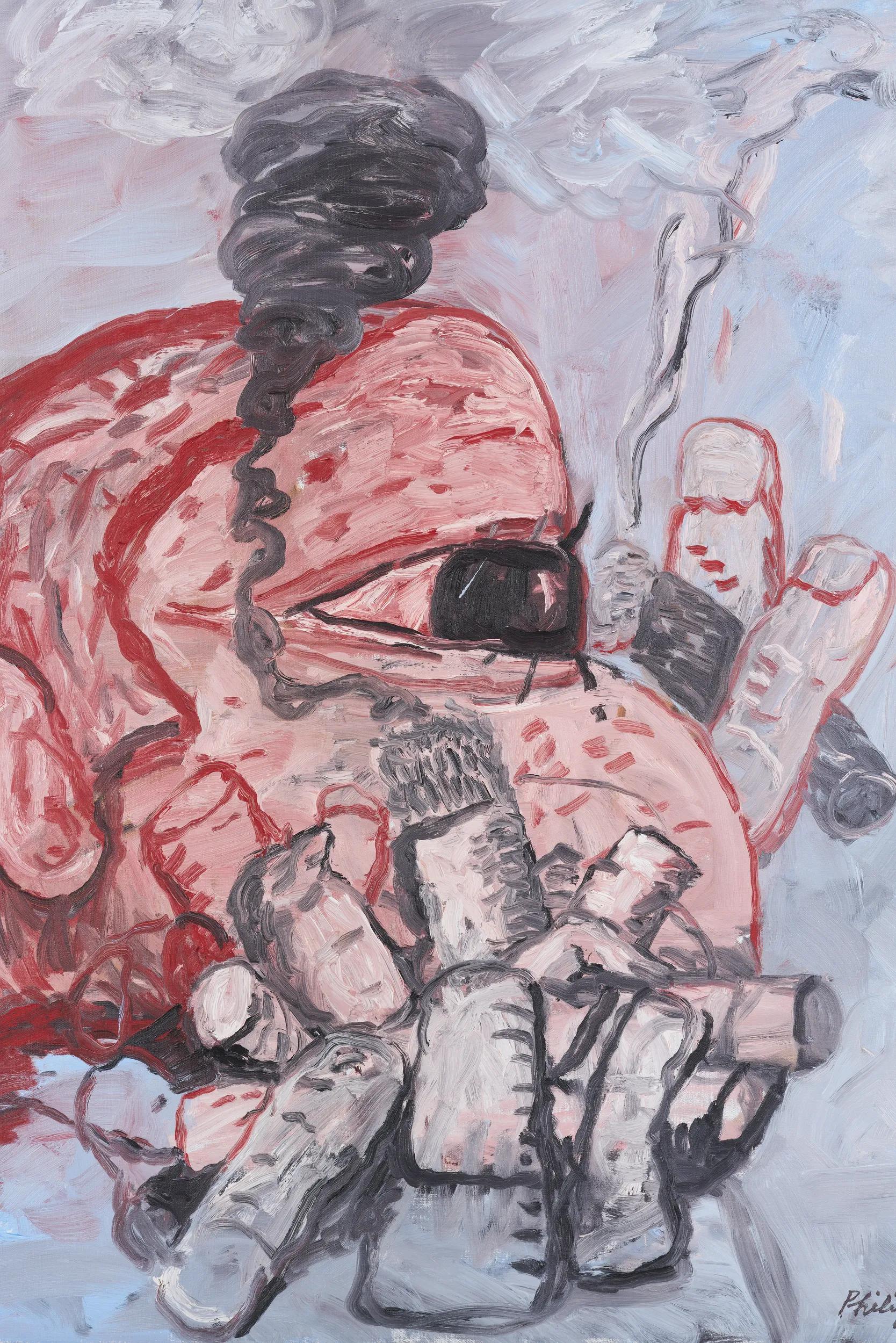
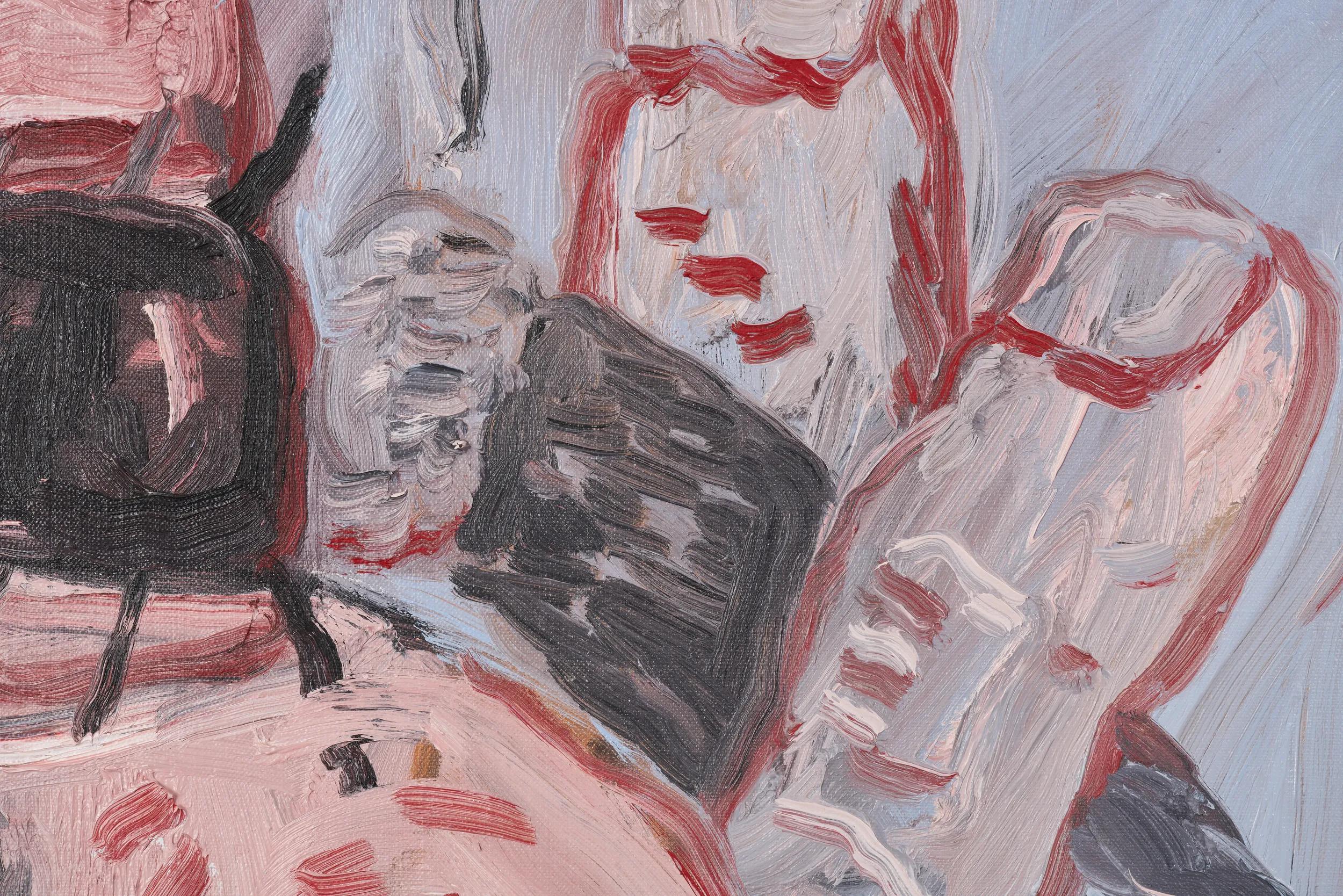
In ‘Conversation,’ a Cyclopean head takes shape beneath a plume of smoke, which emanates from a cigarette burning between a pair of thick fingers. In the foreground, another hazy cloud curls into the air above a heap of objects, whose crumpled forms at once suggest an overflowing ashtray or a bundle of paintbrushes—other significant motifs within the artist’s practice.
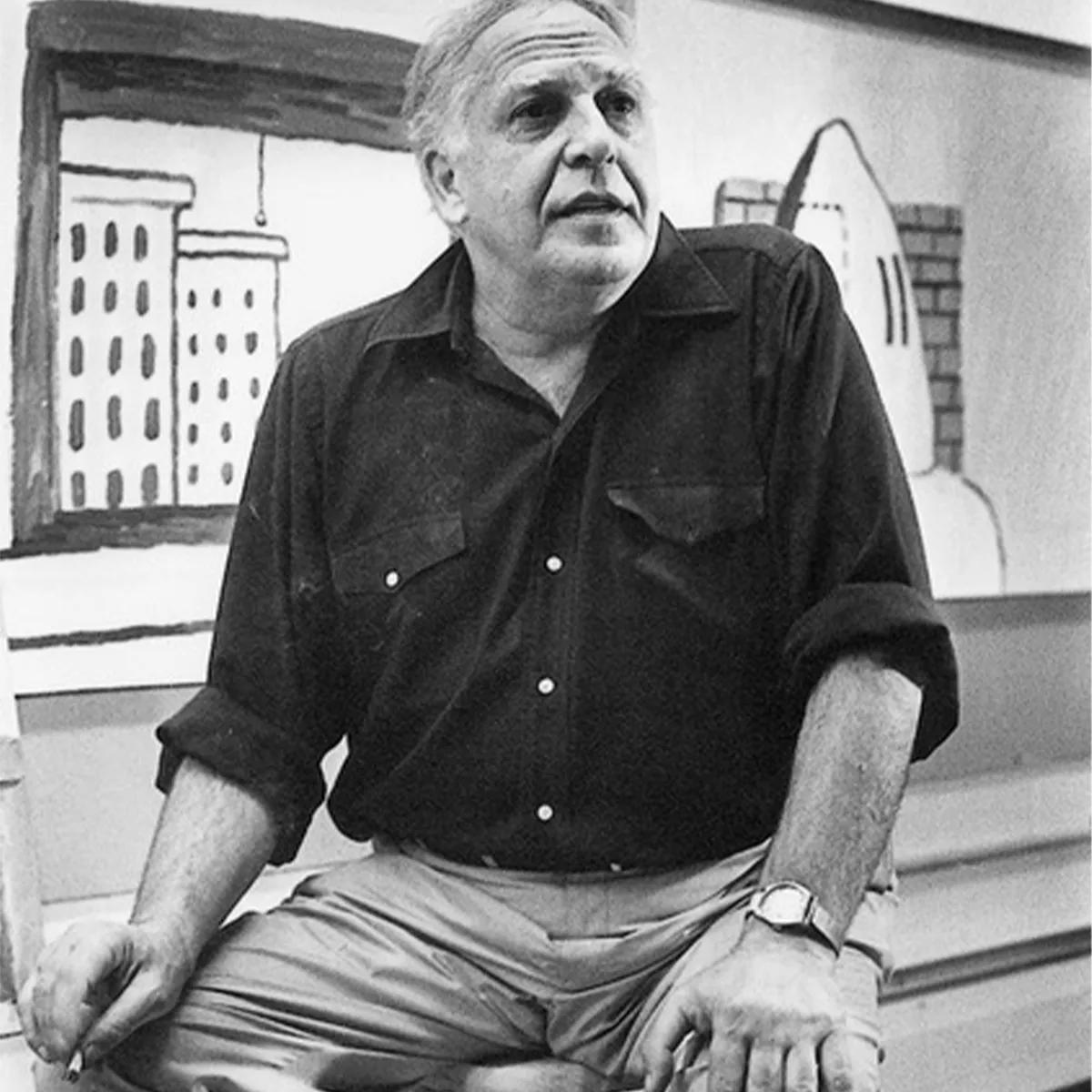
‘There is nothing to do now but paint my life.’
Philip Guston [1]
Enveloping the canvas in his signature palette of pinks, blues, and reds, Guston engaged in a continual process of creation and erasure, frequently overpainting the forms that he had just laid down. Here, traces of these revisions can be seen in the amorphous shapes and colours that surround the central figure, conjuring the smoke-filled room of the artist’s studio, where he would work alone for days on end or talk with friends until the early hours of the morning.
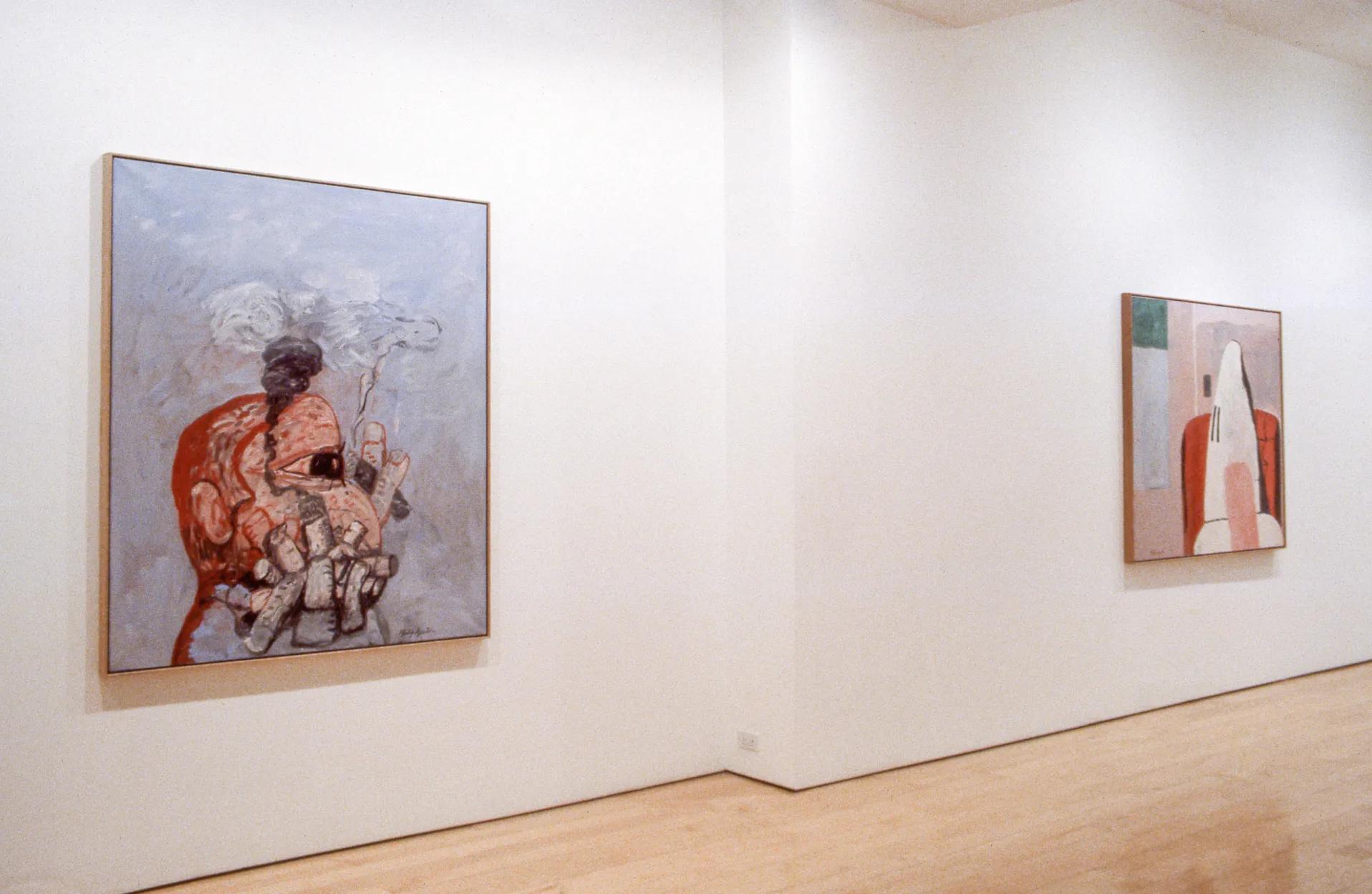
Installation view, ‘Philip Guston: Major Paintings from the Seventies,’ McKee Gallery, New York NY, 5 October – 9 November 1996. Artworks © The Estate of Philip Guston
Alluding to these intense conversations that sustained Guston’s life and work, the title of this composition implies a dialogue between its perpetually smoking subject and an unseen interlocutor. Tinged with humour, the two pillars of smoke that rise on either side of the bean-shaped head are also reminiscent of speech bubbles in a comic strip—an enduring source of inspiration for the artist—playfully implying an exchange between these vaporous bodies.
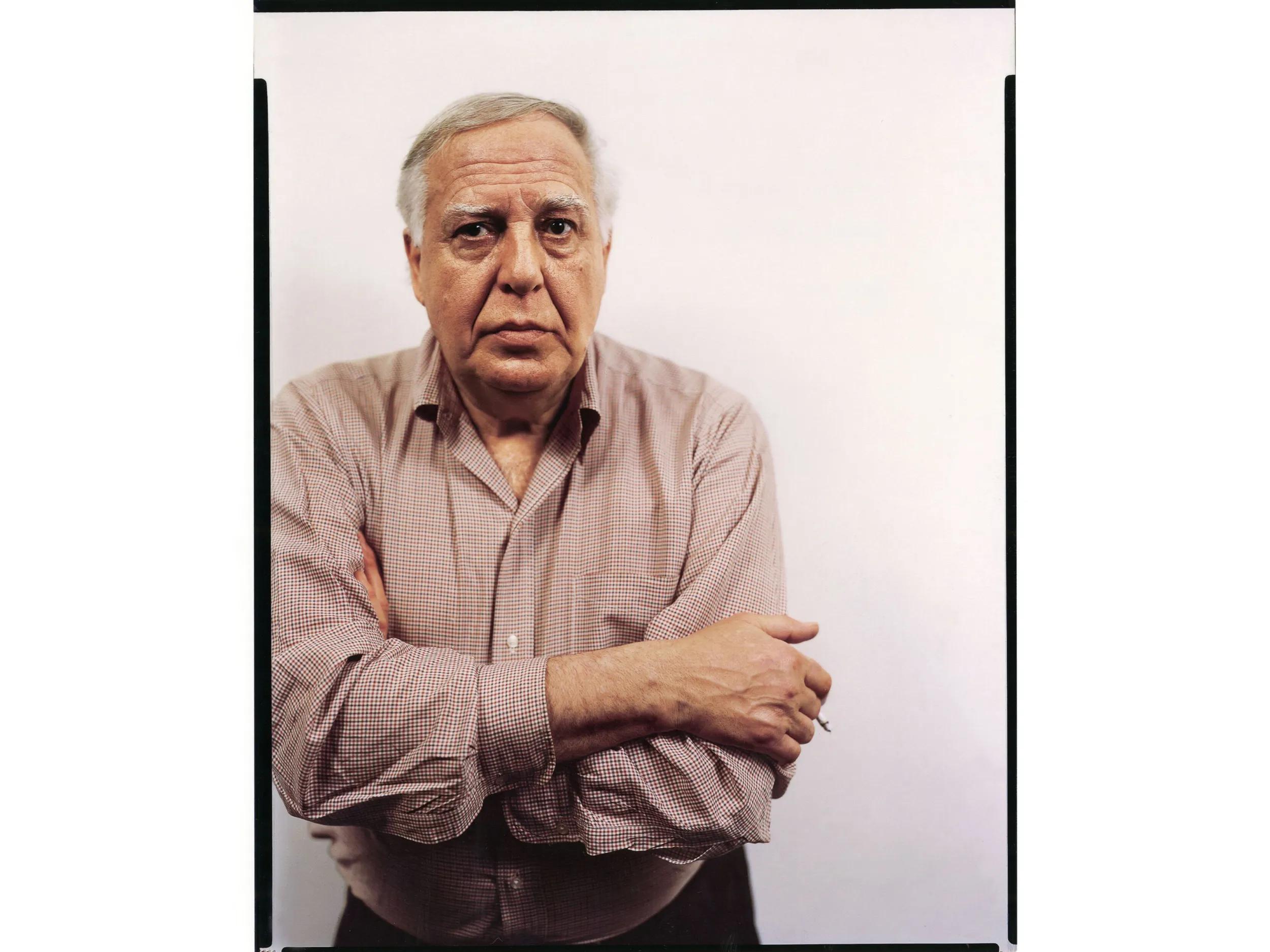
About the Artist
Philip Guston (1913 – 1980) is one of the great luminaries of twentieth-century art. His commitment to producing work from genuine emotion and lived experience ensures its enduring impact. Guston’s legendary career spanned a half century, from 1930 to 1980. His paintings—particularly the liberated and instinctual forms of his late work—continue to exert a powerful influence on younger generations of contemporary painters.
Art Basel Qatar
For the debut of Art Basel Qatar 2026, we present an intimate presentation of Philip Guston’s work, including his iconic ‘Conversation’ (1978).
[1] Philip Guston quoted in Michael Auping, Dore Ashton, Bill Berkson (et al.), ‘Philip Guston Retrospective,’ Texas TX: Modern Art Museum of Fort Worth; New York NY: Thames & Hudson, 2003, p. 63.
Artwork photography: Philip Guston, Conversation, 1978 © The Estate of Philip Guston. Photo: Jon Etter
Installation view, ‘Philip Guston: Major Paintings from the Seventies,’ McKee Gallery, New York NY, October 1996 - November 1996. Artworks © The Estate of Philip Guston
Portraits: Philip Guston, 1970. Photo: Frank Lloyd; Philip Guston, 1976 © The Estate of Philip Guston. Photo: © Steven Sloman