

Letters
Piero Manzoni Writes to Pino Pomè, 1959
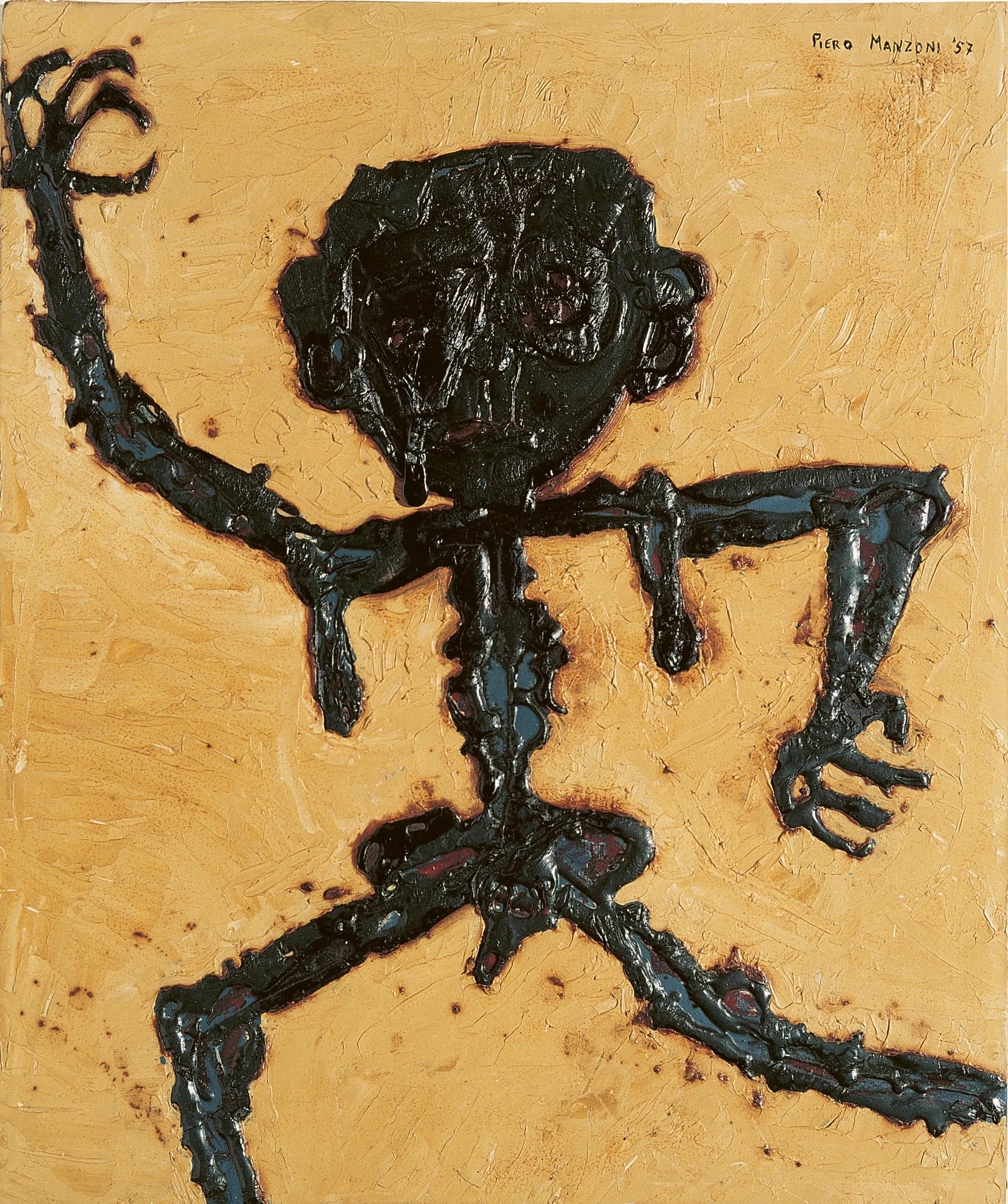
Piero Manzoni, L’invincibile Jean, 1957 © Fondazione Piero Manzoni
Once known in Italy as the “knight of the ring,” the boxer Pino Pomè hung up his gloves in the mid-1950s and took over the operations of the trattoria All’Oca d’Oro (At The Golden Goose) in Milan with his wife, Andreina, and his mother-in-law, Carolina. The restaurant had been in the family since the 1940s but was transformed with Pomè at the helm, becoming—along with the legendary Bar Jamaica—a home away from home for a generation of Milanese artists and writers.
Every inch of the trattoria’s walls was covered in work by Pomè’s friends or those he admired, sometimes exchanged by artists for meals and drinks. A reproduction of Picasso’s Guernica adorned the space above the bar, and young art students would flock to see the “Fontana with holes,” a gift from Lucio himself.
Piero Manzoni was one of the trattoria’s most stalwart regulars. Often there conspiring with his peers, Enrico Castellani and Agostino Bonalumi among them, he came to form a close bond with Pomè, evidenced by the many postcards sent by Manzoni to Pomè between 1957 and 1963. In their correspondence, Manzoni was a man of few words: Often the only message would be his signature. In 1957, when he gave Pomè the work L’invincibile Jean, a gift that made its way into the trattoria’s gallery, Manzoni inscribed the back simply: “to dear Pino Pomè.” The postcard here, sent in 1959 from an August holiday in Albisola, is signed by Manzoni, his then girlfriend Mariangela Romano and two unknown friends.
—Susannah Faber
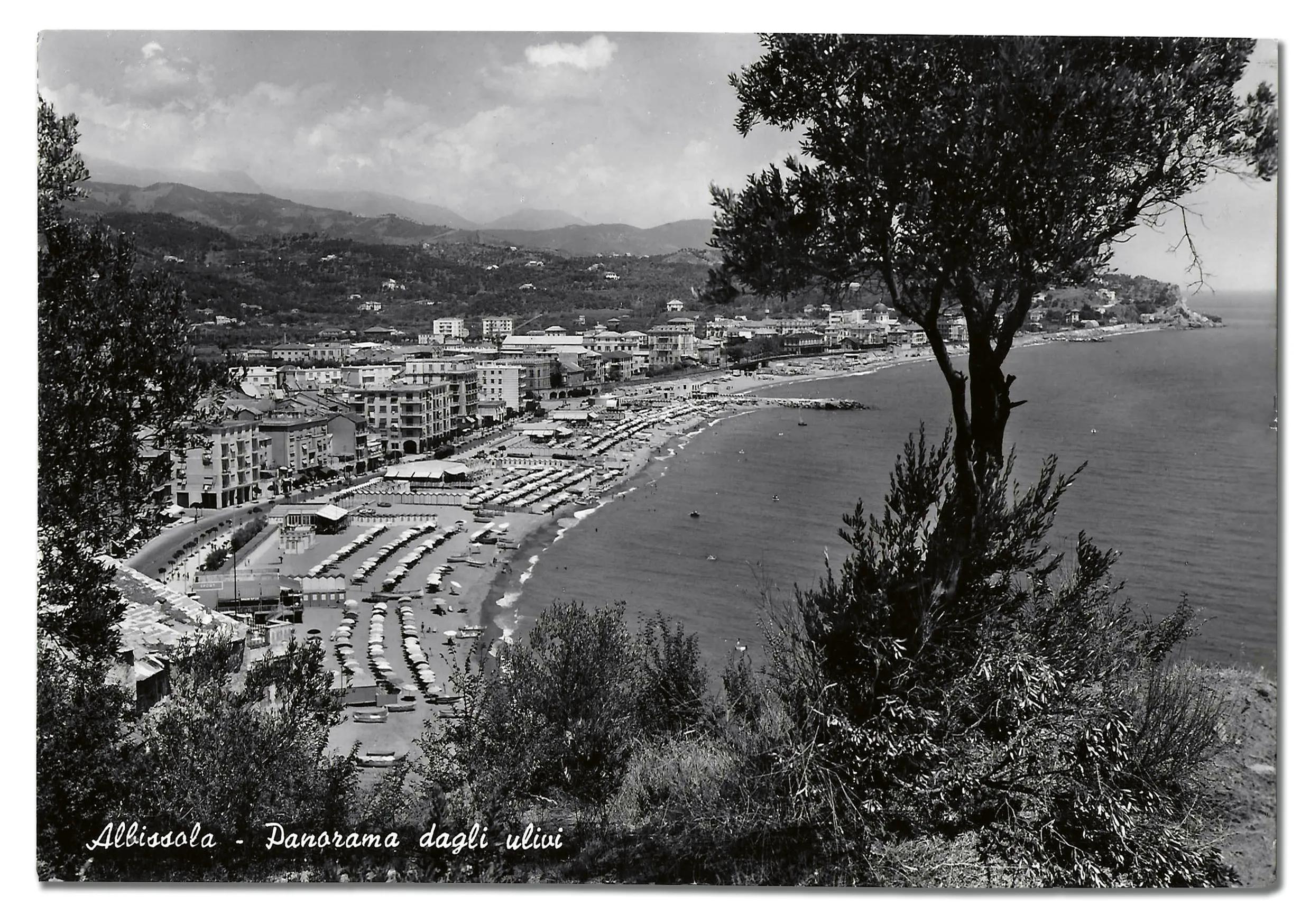
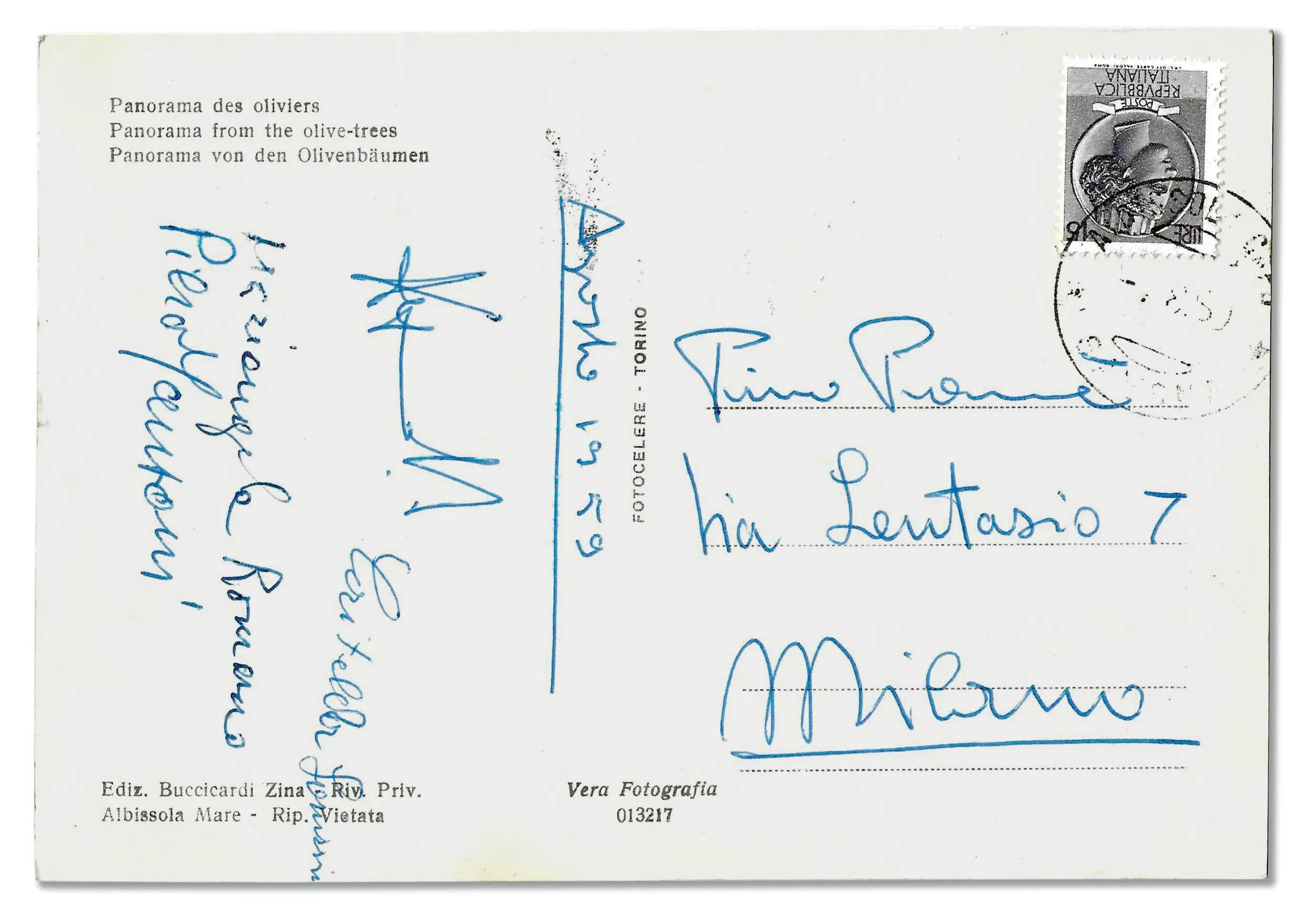
Postcard to Pomè, August 1959. Courtesy Fondazione Piero Manzoni / Yuri Pomè
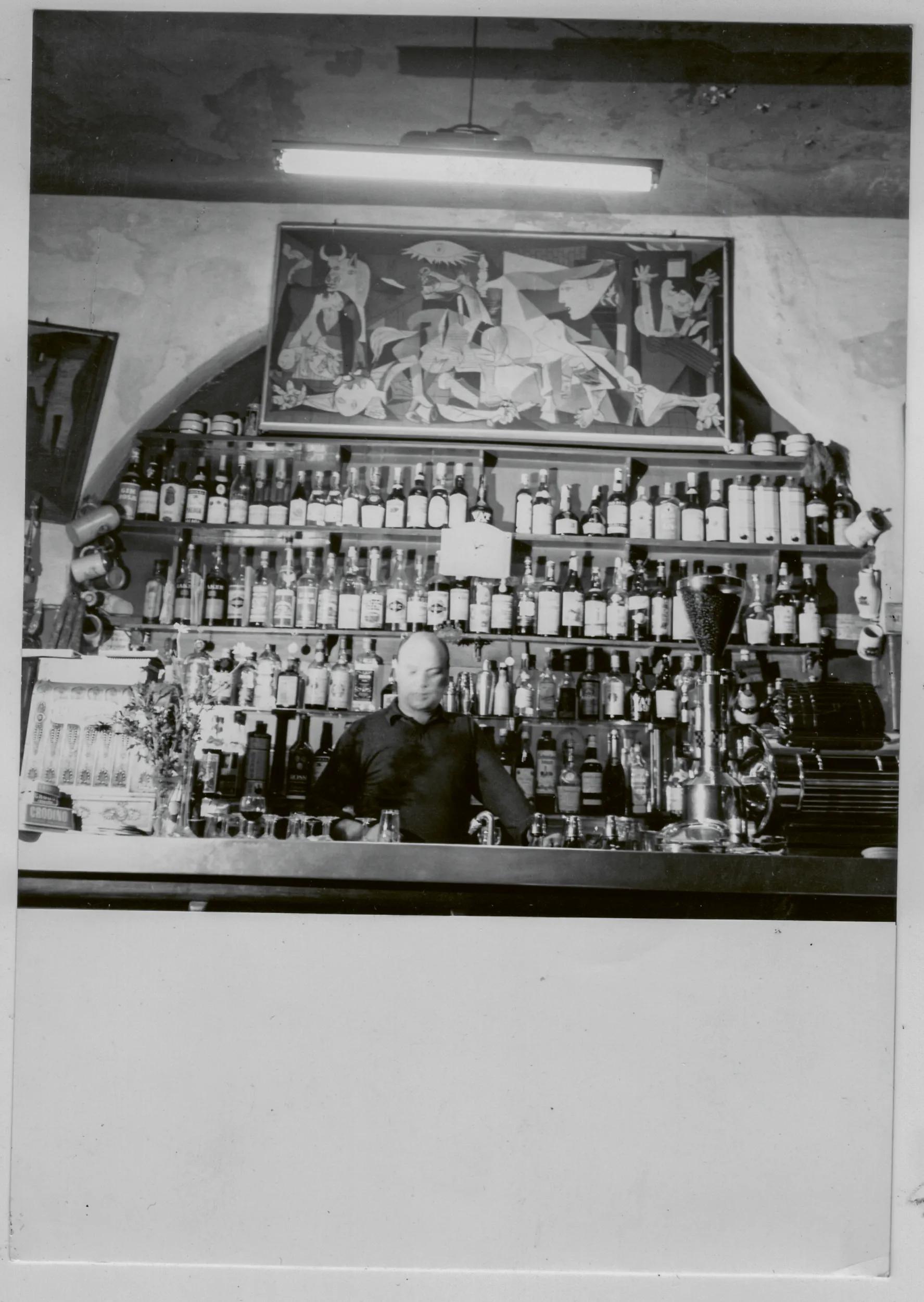
Pino Pomè behind the bar at All’Oca d’Oro with a reproduction of Guernica, Milan, ca. 1950s. Courtesy Fondazione Piero Manzoni / Yuri Pomè
–
“Piero Manzoni: L’invincibile Jean and Early Works 1956–1957” remains on view at Hauser & Wirth Basel through February 14, 2026.