

Portfolio
Memento Vivere
By Charlene Prempeh
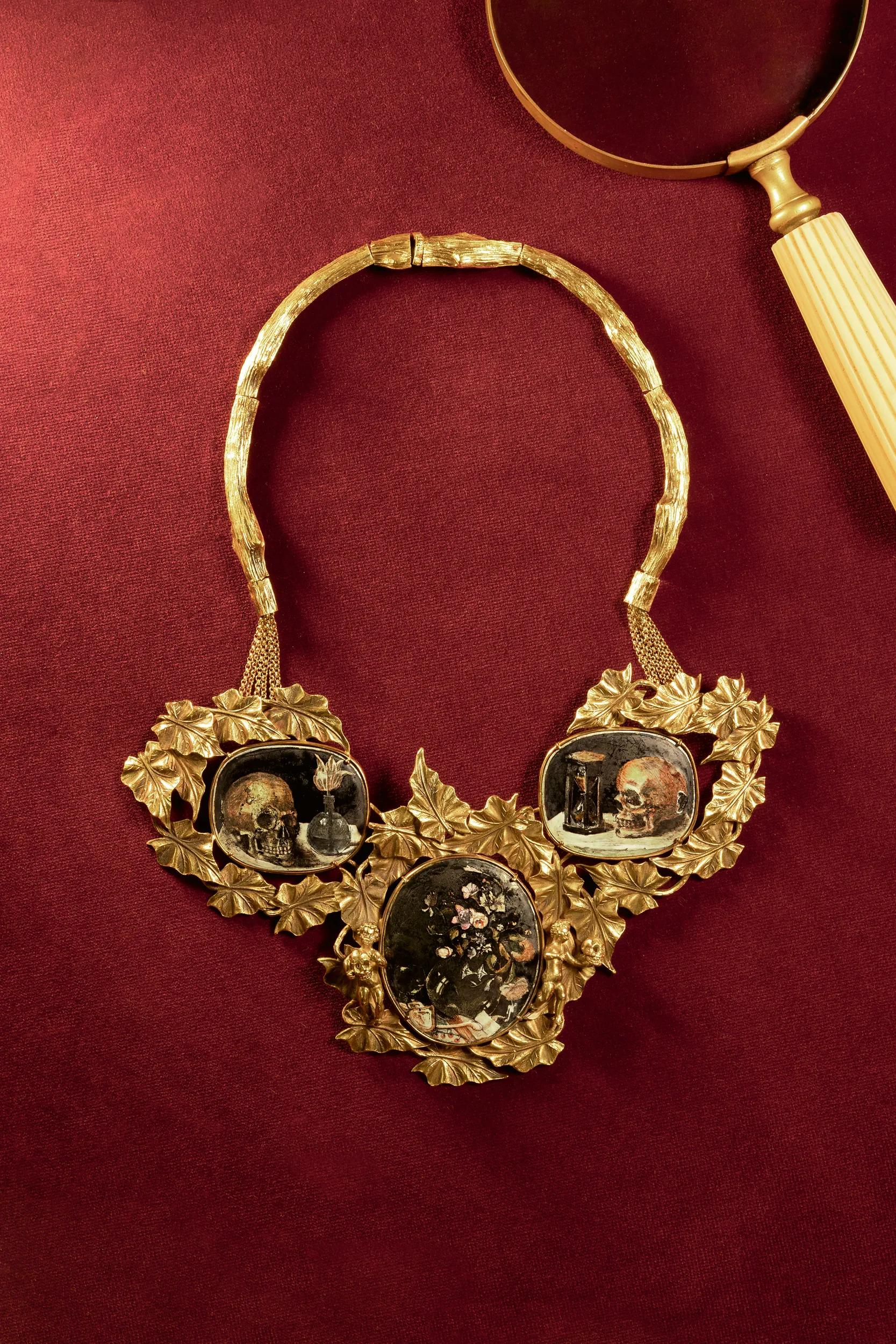
Necklace with 18-karat yellow gold set with three miniature vanitas paintings, ca. 1950s, designed by Attilio Codognato. Photos: Camilla Glorioso
For our feature ‘In the Details,’ consultant and columnist Charlene Prempeh takes a close look at the otherworldly jewelry of Codognato, Venetian masters.
The Piece
Three miniature paintings are encased in autumnal gold leaf and placed in a V-shaped arrangement. A cluster of delicate gold chains meets each side of the pendant, becoming wrapped in curved sections of gold bark and forming a short chain that connects unevenly with two flat, circular surfaces. The canvases, situated among forestry motifs, evoke loss, mystery and spiritual symbolism.
The History
Many of us view Codognato as a quintessential Italian family brand, so it is fitting that the firm was established by Simeone Codognato in Venice in 1866, the year that Austria ceded control of the city to what was then the Kingdom of Italy. Founded in a boutique on Saint Mark’s Square that traded in Old Master paintings and decorative art objects, it became a vital outpost for fine jewelry when Attilio Codognato took the reins in 1897. Borrowing references from Etruscan revival jewelry, he modeled his pieces on artifacts unearthed in archaeological excavations across Tuscany, Umbria and Lazio. Hand-forged and narratively inspired, Attilio’s work set the standard for generations of Codognato jewelers, who have continued to merge precious materials, a fascination with the macabre and eccentric storytelling to create singular and instantly recognizable pieces.
Art
Given the brand’s original artistic roots, there is poetic circularity in the fact that Attilio Codognato, who was named for his grandfather and who ran the shop from 1958 until his death in 2023, was so heavily entwined with the art world. When you look back at this period, what stands out is an image of Marcel Duchamp in the Codognato shop. Attilio maintained close relationships with Salvador Dalí and Andy Warhol and opened a gallery in the 1960s to show works by Gerhard Richter and Christo and Jeanne-Claude, among others. In his home, his collection included pieces by Robert Rauschenberg, Bruce Nauman and Roy Lichtenstein, and his Duchamp works were shown at the Peggy Guggenheim Collection in Venice, in 2023 and 2024.
Skulls
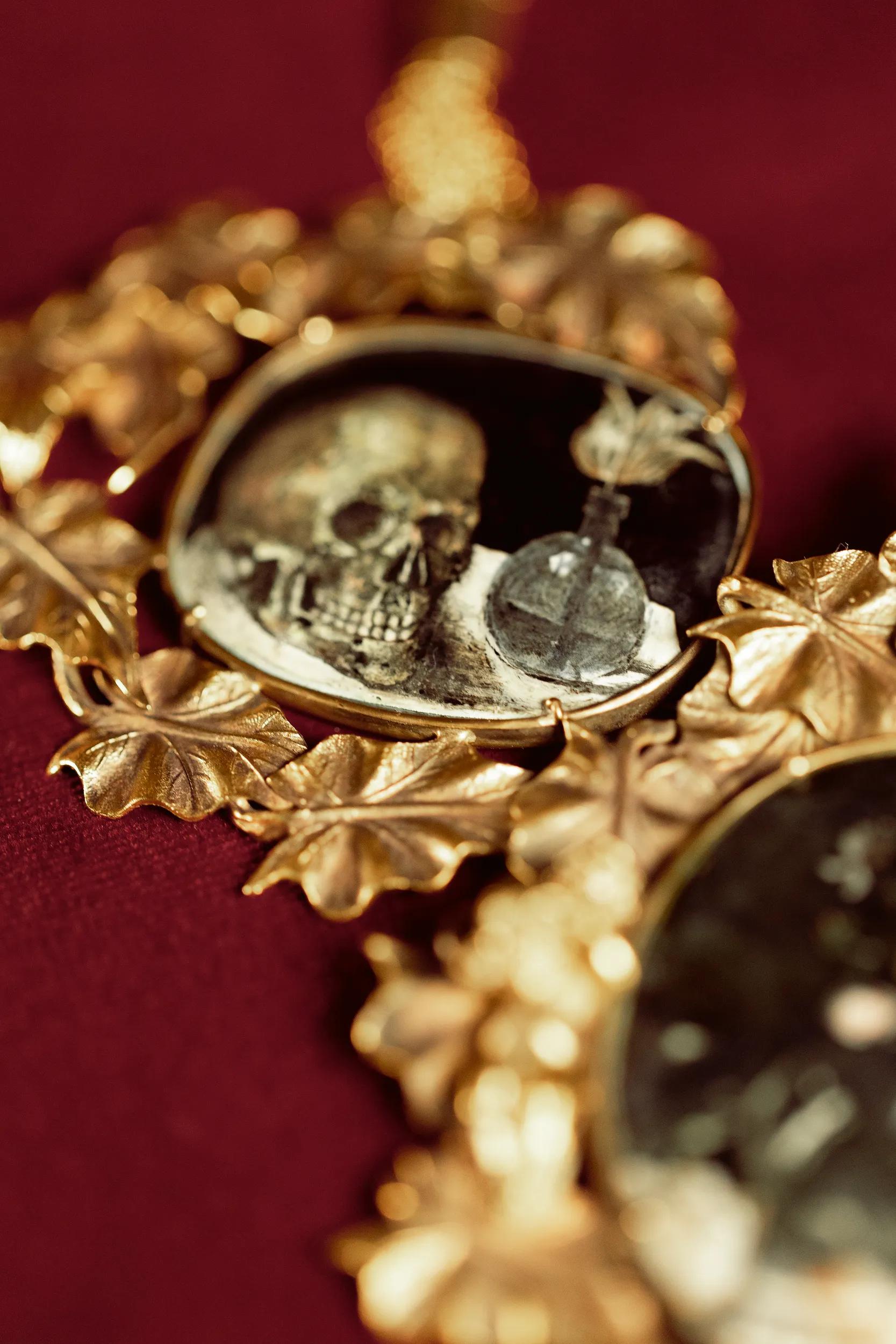
Fans of skull-themed jewelry may attribute godfather status to the late Alexander McQueen or to the cult Carnaby jewelers The Great Frog, but Codognato first introduced its iconic skull-shaped pieces in 1906. Conceived as a riff on memento mori, skulls have endured at the brand as a recurring symbol of the fleeting beauty of life. Attilio the younger was philosophical about the use of macabre references in his work: “Through these images of death, it reminds you of life. It is a paradox: Death can make us more alive. It is a spirit that I find very interesting.” Today, the firm continues to craft pieces from precious materials such as rock crystal and gold using new skull forms carved by artisans or existing skulls taken from its archive.
Charlene Prempeh discusses Codognato, Venetian masters
Gold Leaves
Used here as framing for the three miniature canvases, the forestry motifs evoke a sense of loss and mystery that echoes the work of Jacob van Ruisdael and contemporary artists such as Joseph Beuys and Ugo Rondinone.
Miniature Paintings
The tiny canvases here are vanitas paintings, typically composed of still-life objects considered transitory by nature. The style began in the 16th century as a rejection of worldly ambition and an embrace of higher ideals. Here, the juxtaposition of life and death is evoked through the use of skulls, flowers, dark backgrounds and light surfaces. All serve to remind us, amid beauty, of the brevity of our existence.
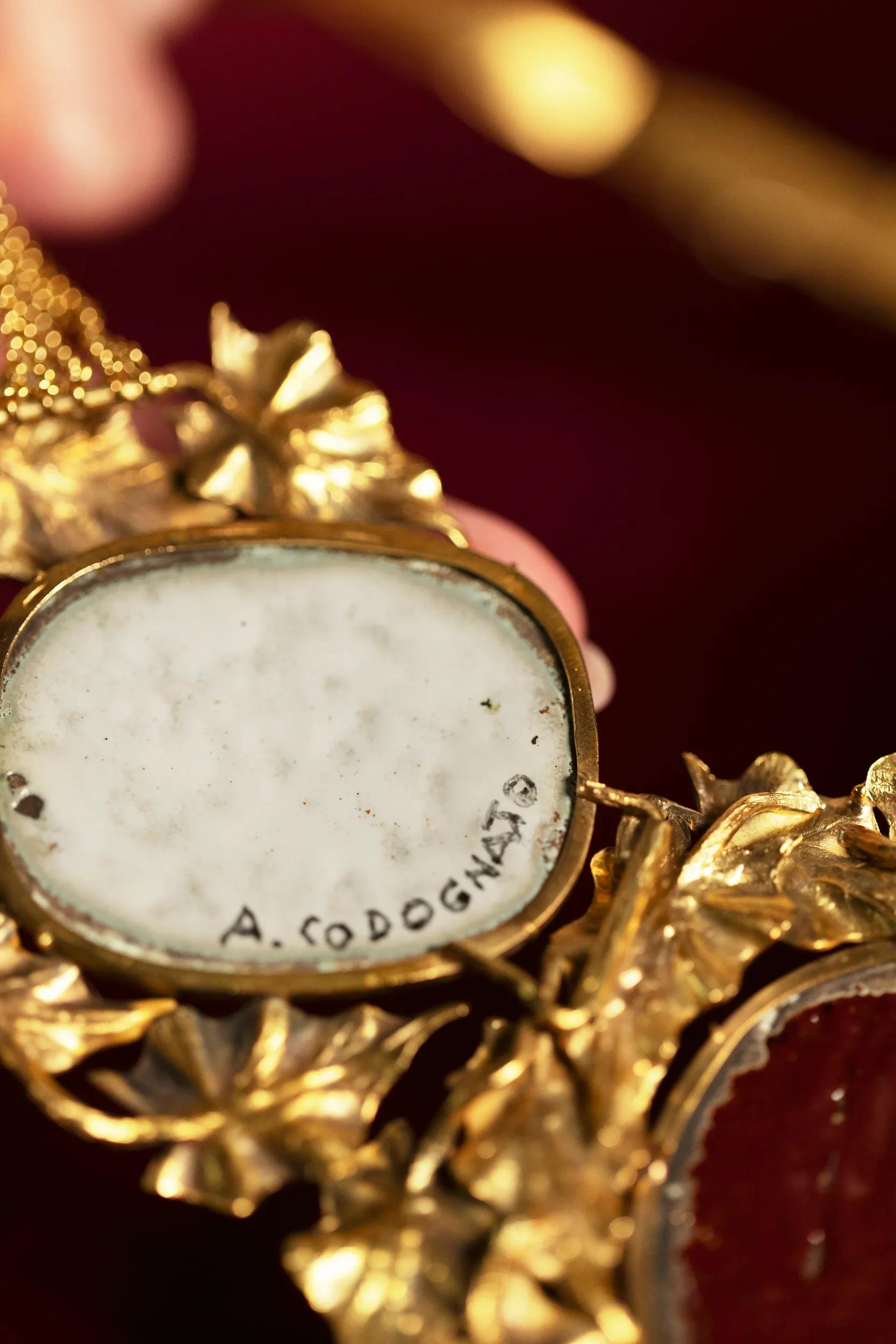
Attilio Codognato’s signature on the reverse
–
Charlene Prempeh is the founder of A Vibe Called Tech, a creative studio and art consultancy dedicated to cultural storytelling. She is also a columnist and contributing editor for The Financial Times who writes about design, travel and culture.