

Pairings
Local Cows and Guest Cows
Iwan Wirth, Manuela Wirth and architect Luis Laplace on preserving the spirit of the Engadin Valley at Chesa Marchetta hotel in Sils Maria, Switzerland
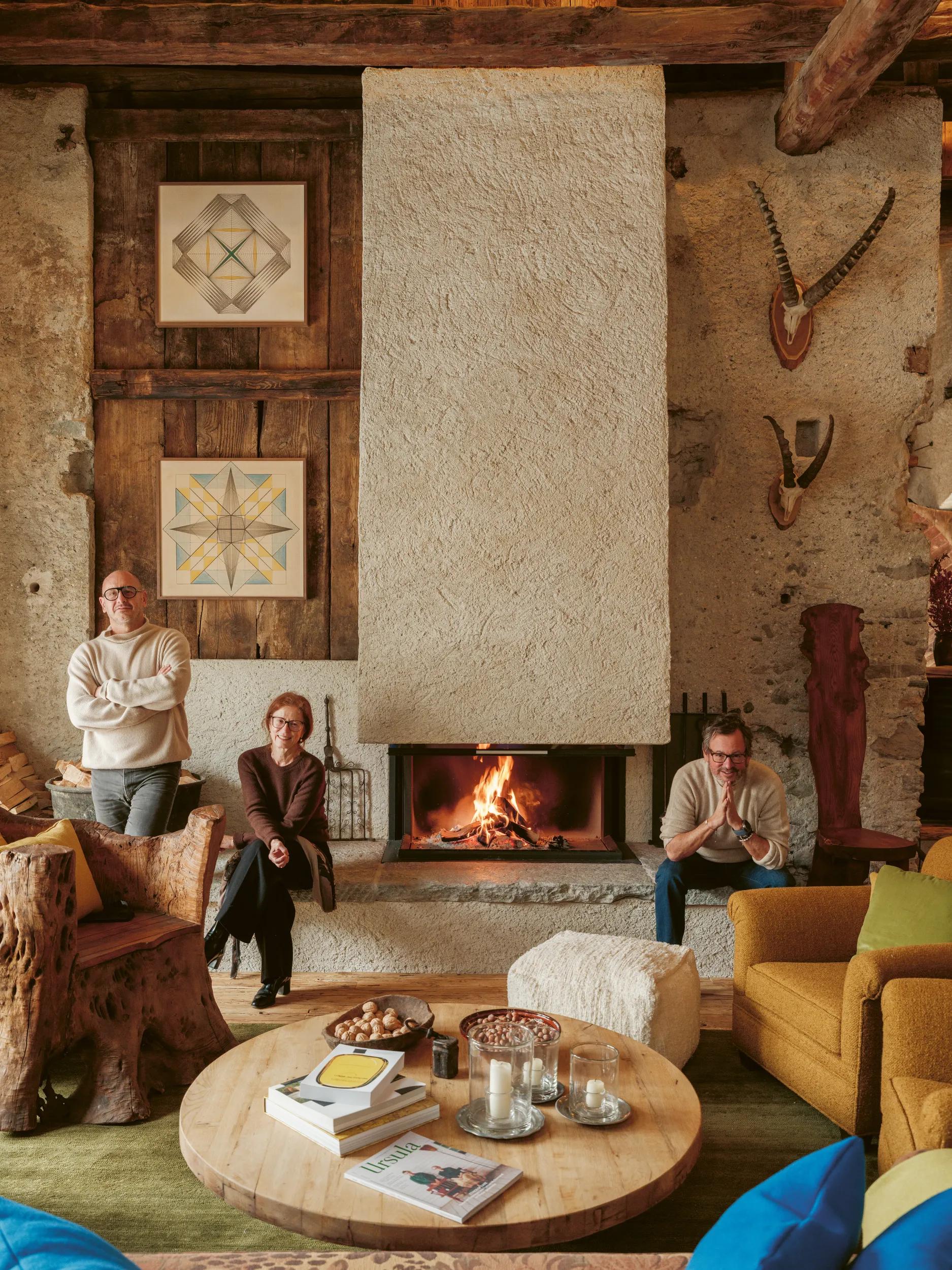
Photography by Dave Watts, shot on location at Chesa Marchetta in December 2025.
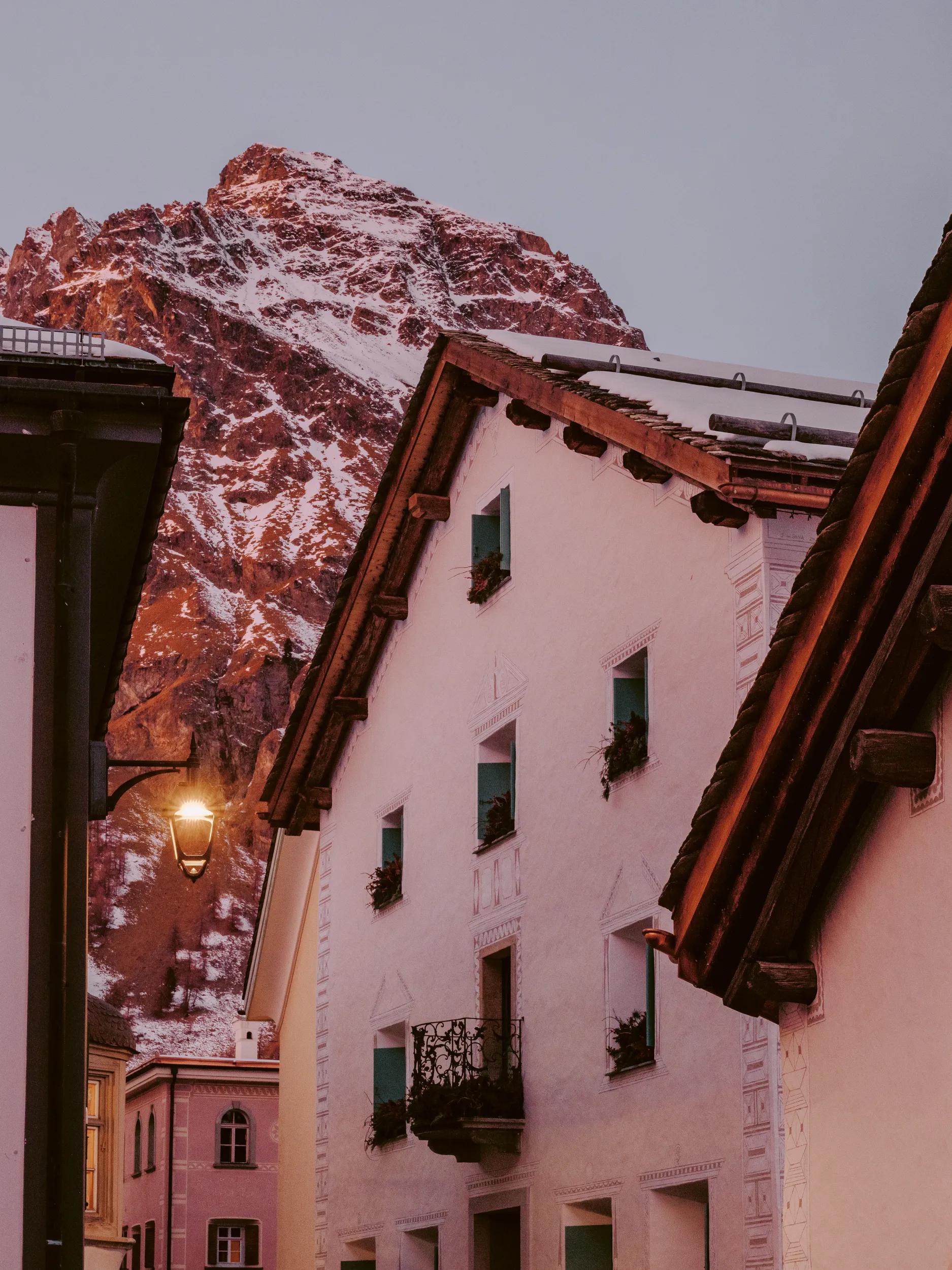
The Engadin Valley has long attracted writers, philosophers and artists—among them Friedrich Nietzsche, Giovanni Segantini and Alberto Giacometti—whose work and thinking were shaped by the surrounding alpine landscape. For Chesa Marchetta, a re-conceived 16th-century farmhouse turned new hotel, located in Sils Maria, acts of preservation were both architectural and cultural, honoring centuries-old stonework and carpentry while engaging with a valley shaped for centuries by livestock and seasonal rhythms.
The hotel is the latest project from Artfarm, the hospitality company founded by Iwan and Manuela Wirth in 2014. Its first venture was Durslade Farm in Somerset, England, a former agricultural property the Wirths acquired and transformed into a cultural destination in the countryside. Working with the architect Luis Laplace, they restored the 18th-century farm buildings rather than replacing them, taking care to preserve the original stone walls, oak beams, slate roofs and former cattle yards. Over time, the project evolved into Hauser & Wirth Somerset, which now includes gallery spaces, an education program, artist residencies and the restaurant Da Costa, while remaining closely tied to the site’s agricultural origins.
The collaboration with Laplace set the foundation for a series of projects shaped by the character of the places in which they are built. On Menorca’s Illa del Rei, a former 18th-century naval hospital was restored and reimagined as an arts center, with galleries, courtyards and the restaurant Cantina, the entire complex emphasizing conservation, local materials and the island’s Balearic and Catalan heritage. That same ethos underpins Chesa Marchetta, where regional craft traditions and ingredients from nearby farms root the project deeply in the character of the Engadin. Ahead of the hotel’s opening in January 2026, the Wirths met with Laplace over lunch at Chesa Marchetta to talk about the project and the traditions that informed it.
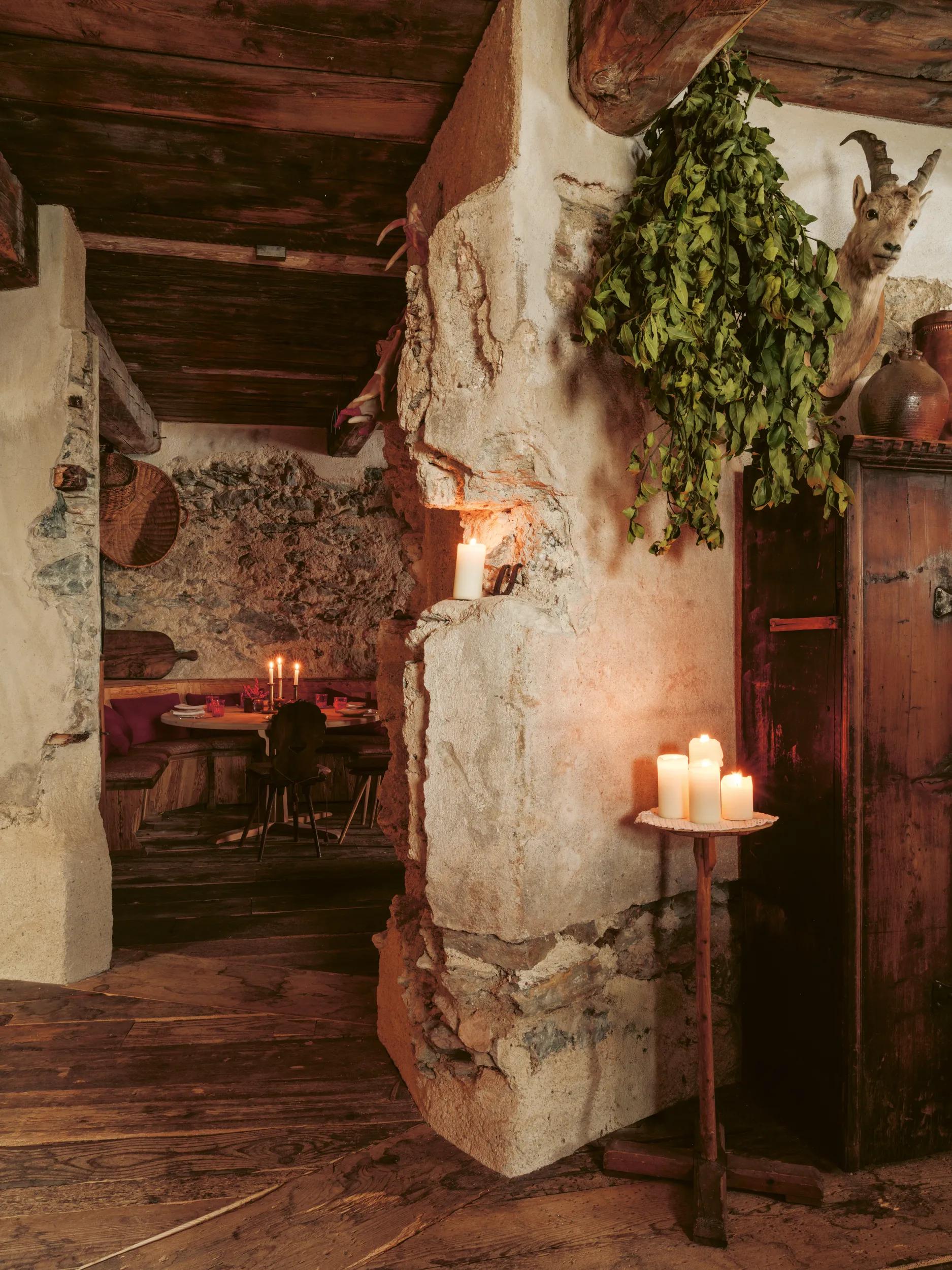
“We have worked together for so long that we immediately recognize when something feels wrong. When someone began to repair these 400- or 500-year-old stone walls with industrial cement instead of traditional mortar, we knew at once it did not belong.”—Luis Laplace
Iwan Wirth: Welcome back, Luis. Congratulations on completing this project with us.
Luis Laplace: Cheers. Thank you for the opportunity. [Glasses clink.]
IW: Especially because after the last one you said you’d never do it again. [Laughs.]
LL: Not with you—with Manuela, yes! [Laughs.]
IW: Everyone says, “Next time we’ll do it differently,” and then the moment comes and it feels like the first time.
Manuela Wirth: It always starts at zero.
LL: I think there’s enormous respect between all of us—for how we work, and for our emotions. I feel that you understand my emotions.
IW: No—but I accept them. [Laughs.]
LL: You’re almost more emotional than me! You’re just Swiss and you control it. I’m Argentine and I cannot control it.
IW: Our most recent collaboration was in Menorca, where we restored the 18th-century hospital buildings on Illa del Rei into an arts center. Do you see similarities between that project and this one?
LL: Both places feel humble to me because they’re not in cities. In cities, people often think they already know what they want. Here, and in Menorca, we have to think carefully about what is authentic, what is real, what truly belongs to the place.
MW: Menorca was new territory for all of us. Here, Iwan and I are back on home turf.
IW: Exactly. We’ve spent fifty years here. We breathe this place.
LL: In some ways Menorca felt more familiar to me because of the Mediterranean, the language and the light. But all of these projects are personal, and they evolve over many years.
IW: This one took five years, and Menorca was nearly the same.
LL: What feels especially new is that now I understand why you forced me to leave the jobsite and go on walks together. At the time, I was thinking, “Why do I need to walk when they can see I’m working with the electrician?” But I realized how valuable it was, because you made me see things, to observe nature. The force of the river, the lakes, everything.
MW: You would have never seen the wildflower meadows.
LL: Exactly. I’ve done other projects in the mountains, but this is truly the first time I fell in love with the mountains, with this landscape. But you are both walkers anyway.
IW: In an ideal world, Manuela and I would walk and talk every day. Now it’s mainly weekends. But even in New York, we take long walks and talk. And when you hike—not just walk, but hike—there are moments when you can’t talk.
MW: And here we’re at 1,800 meters above sea level. It always affects you a little bit.
IW: I think this altitude has an enormous impact on the creativity of the Engadin in particular. And what’s different from other mountain experiences in the Alps is that it’s the widest, highest valley. The mountains are not as close to you and there is a healthy distance. And the light, because the valley runs east–west, is extraordinary.
LL: What I love here is the humility of this valley. You feel small, but embraced by nature and by the seasons. There is a solitude, but it’s a feeling I like.
MW: Nietzsche came up here. He said, “It’s the most charming village on earth.” He created extraordinary literature in this valley. Music and poetry, too. And of course, artists like Giacometti, Segantini…
IW: We are literally a hundred meters from the Nietzsche house. The solitude is powerful—romantic, even. If this recipe is not exactly what great artists want and look for all their lives, then I don’t know is.
What we’re really doing here is about preserving traditions and taking responsibility for what has been handed down to us. When you think about this place and how the old barns are now part of the restaurant, it might seem like a strange idea at first. But then the food arrives, and all of it —the deer, the goat, the flowers, the milk and the cheese—all come from within an hour on foot. They’re part of the land and the history that was already here.
LL: Yes. We arrived with knowledge from outside, but here we learned how things work, even something as simple as these chairs.
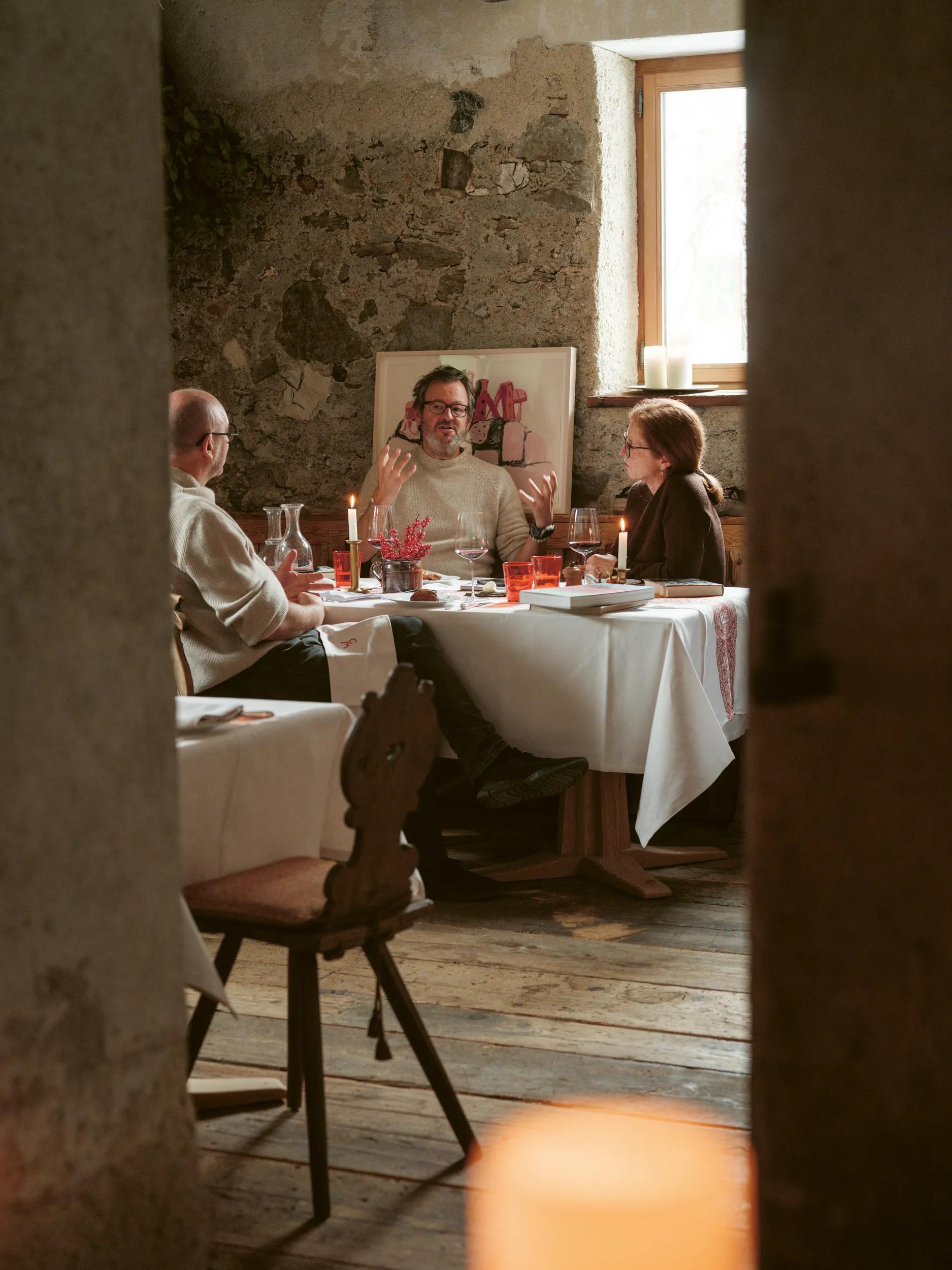
IW: It was extraordinary to learn you can say exactly where a chair is from, because in every village two or three people made them, repaired them, each adding their own character. So even within one village you find different styles influenced by places they had seen, such as the Black Forest.
MW: Each carpenter brought in his own experience and knowledge.
IW: And that connects to the project here. We tried—almost obsessively—to preserve what was here and keep the spirit alive.
LL: To preserve the soul of the room.
IW: Do you remember when we first came down here into the cow shed? It felt strange that it had two sections, and we were thinking about how we might open it up. Then the farmer explained why it was divided. On one side were the local cows—the cows that belonged to the farm. On the other side were the guest cows—animals from other farmers who paid to keep them here through the winter. Because the guest cows could bring illness, they kept the two groups separate. It was a kind of quarantine system, and once we understood that history, of course we didn’t want to change it.
LL: We have worked together for so long that we immediately recognize when something feels wrong. When someone began to repair these 400- or 500-year-old stone walls with industrial cement instead of traditional mortar, we knew at once that it did not belong. The stones came from this ground, and the walls were built with materials from here. You can feel when something is not natural to the space.
IW: Hospitality is another thing we share: Our idea of a perfect meal, perfect bedroom, a perfect experience in a place that is not your house.
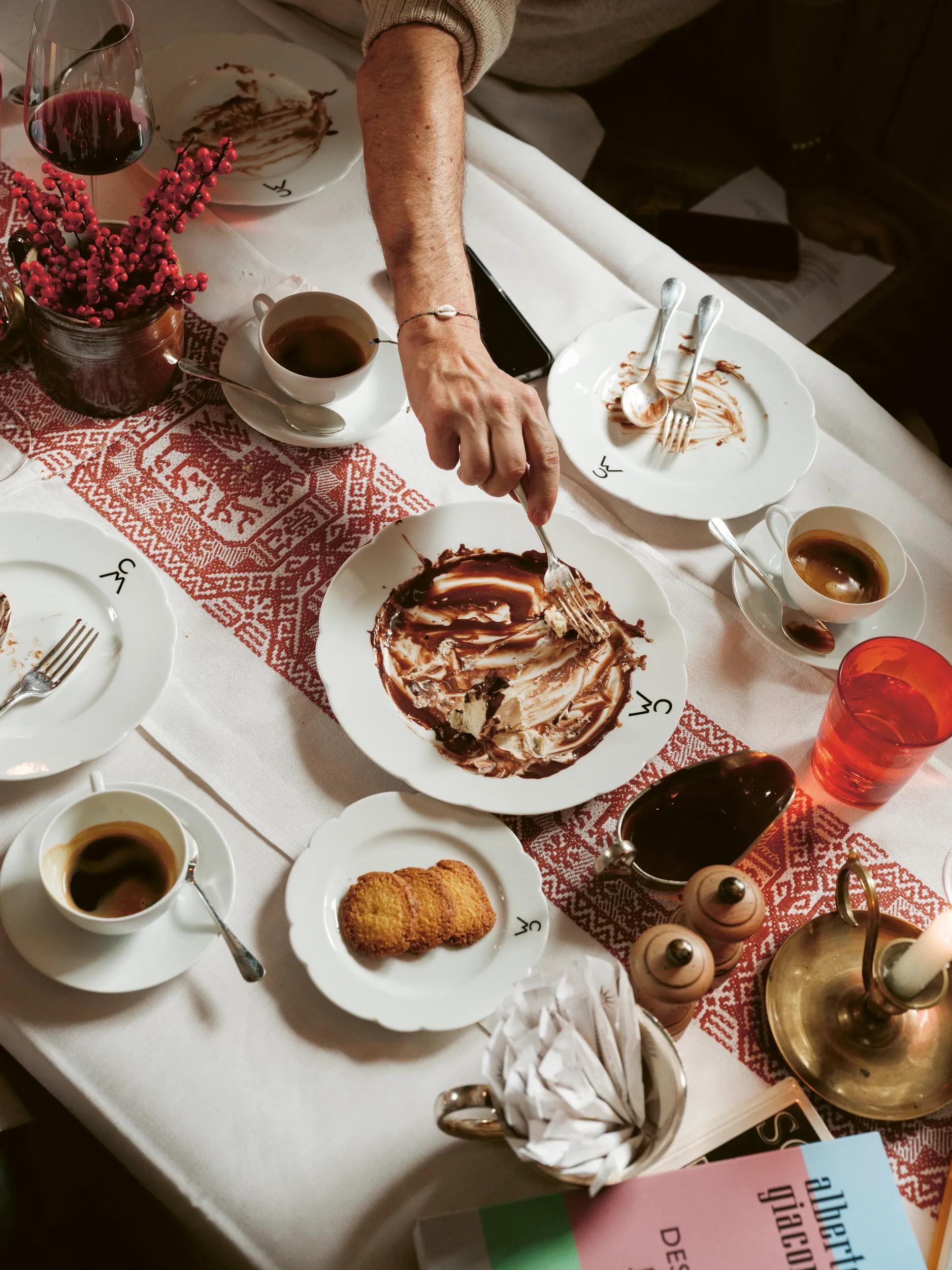
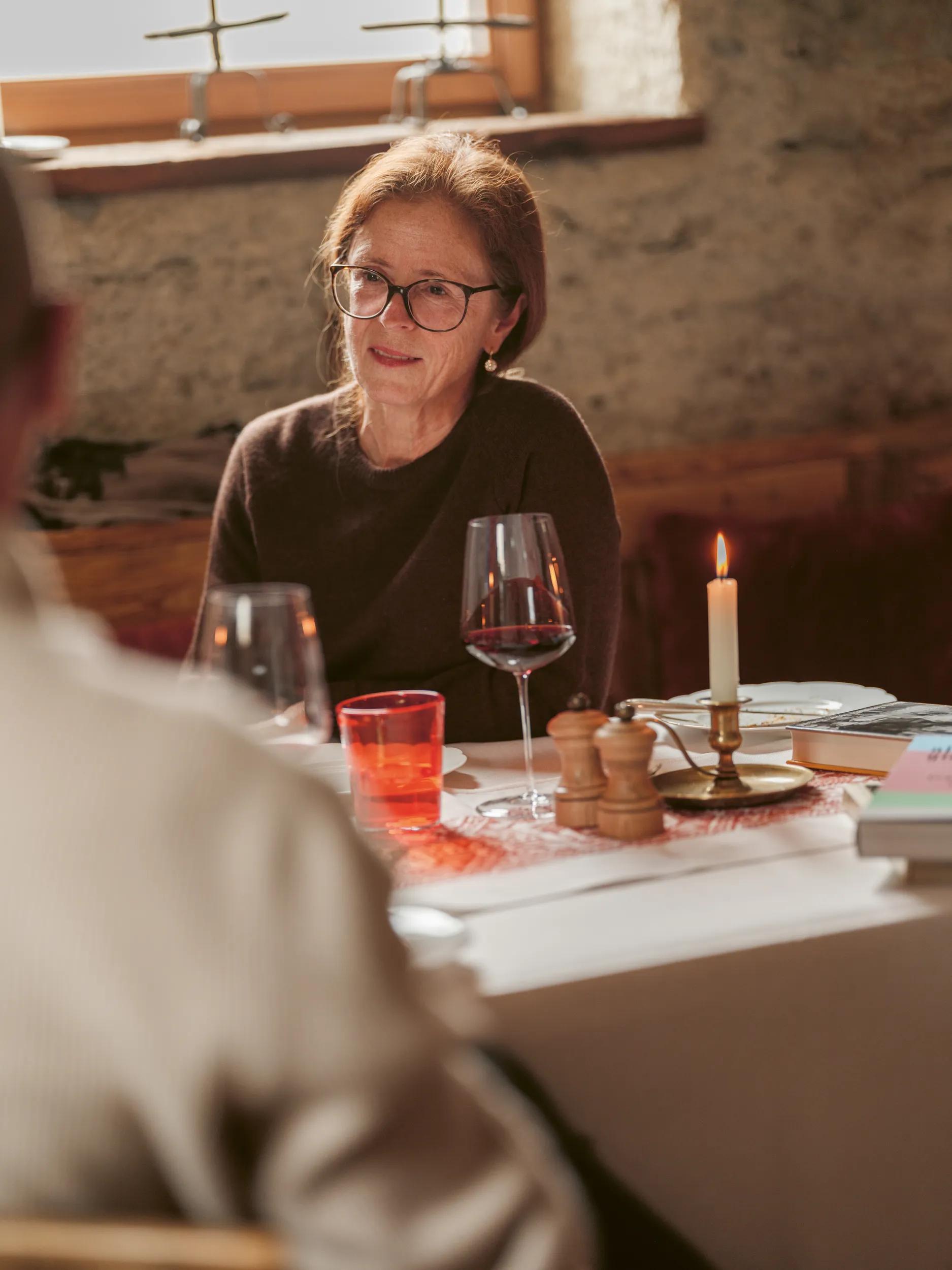
MW: Or the setup of a table. Looking at it now, I think about all the discussions we had about choosing the table, the dishware, the table linen. We started with white linen, then found this embroidered, crocheted tablecloth. Every single detail has its place for us.
LL: And you, especially you, Manuela, opened up so much knowledge about these textiles and local craft. I would not know the difference between one valley and another, and you tell me, “No, this is from another region,” and explain why.
IW: One of the beauties and attractions of doing the project here was that it felt so close to our hearts. We left Switzerland twenty years ago, taking all this for granted, and we’ve spent a lot of time away in places where traditions have been lost or modernized. The preservation of heritage in Switzerland sits deeply in people’s DNA. That is why this village has been preserved, why the valley hasn’t been built over, why even the lake was not drained for dams or power projects. A lot of damage has been done elsewhere, but here there is a strong awareness and a kind of care. And Switzerland, having stayed out of wars for so long, has an extraordinary sense of continuity in that respect.
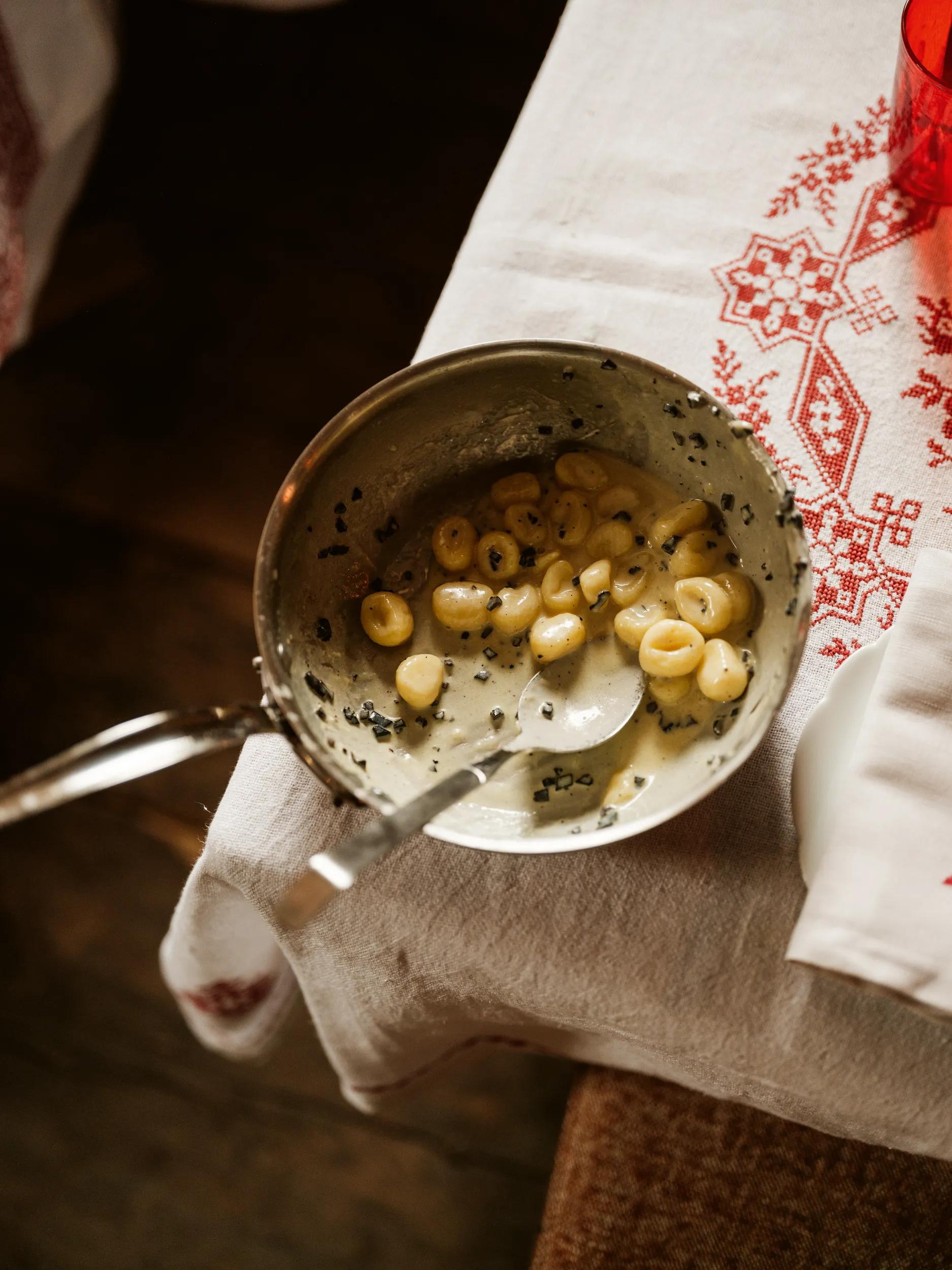
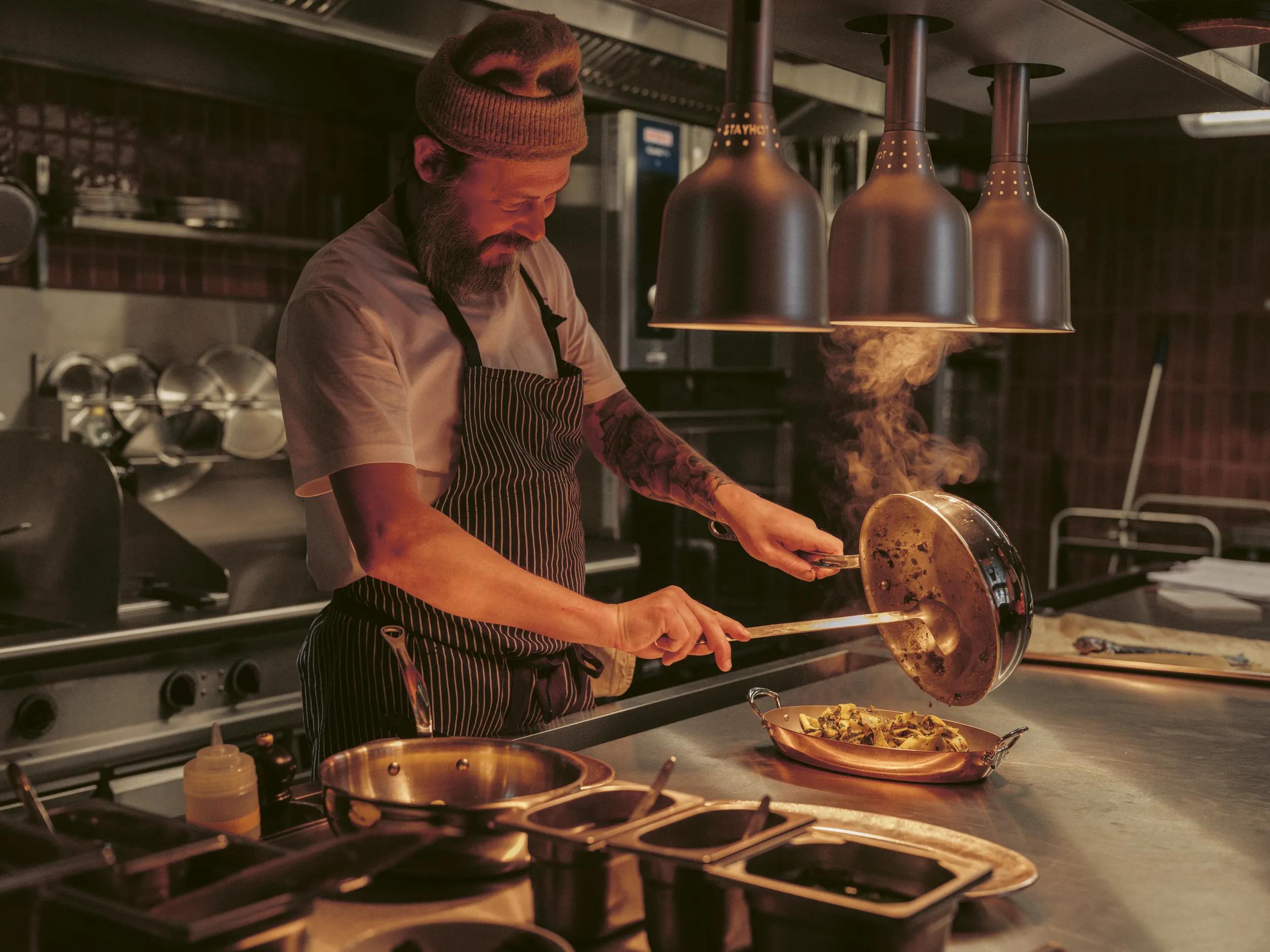
Chef Davide DeGiovanni: [Enters dining room.] Here we have gnocchi with cream. Iwan, for you we have pappardelle with ibex ragù and black cabbage, finished with an aged Val Fex Vacherousse cheese. The black cabbage is grown just behind the house, and the cheese is aged eighteen months. We’re the only ones in Switzerland who have this cheese.
IW: Is that a good thing or a bad thing? [Laughter.]
“When I was a child, I lived next to a farm and worked with them during harvest. My job was to clean the potatoes and put them into bags for customers. I picked the big ones because they were easier to clean and I could fill the bags faster. And the farmers said, ‘No, Iwan, the customers don’t want the big potatoes. They want the small ones.’ So I took every big potato back out and started all over again.”—Iwan Wirth
DD: A very good thing. It was an experiment the producer wanted to try. Nobody here usually makes cheese that ages this long, because people want to sell after six months. But they said many people were asking for it. When I heard that, I told them: Keep it aside for us.
MW: It’s delicious.
IW: Davide, you were working on this kitchen and the menu long before we opened.
DD: Yes—for a year. There is a lot still to discover. When I went to the butcher in Val Poschiavo, I told him I wasn’t interested in imported cuts. I wanted what truly belongs here. Some places try to sell you salmon from Scotland, prawns from Mozambique, sea bass from far away. I say, “Then you can keep it.”
IW: I agree! I want to eat the ibex here. I want to eat the marmot.
LL: My God, this is so good.
DD: Thank you so much. [Returns to kitchen.]
IW: I like that we talk about the food a lot, because the meal really stays with you.
LL: Already I see a book here—a cookbook of this. Everything is incredible.
MW: Mm-hmm.
IW: Luis, do you have any regrets about the project?
LL: No… only that there isn’t more of what surrounds us. I love the barn language, I love the light. I would love to have more spaces where we could explore this architecture.
MW: I understand that. I love the restaurant and I love what we’ve made here—I really do. But if I have a regret, it’s that the room upstairs didn’t remain a private living room. It would have been the most beautiful space just for us. But that’s always a sign of a good project, I think—when you create something for others that you also wish you could keep for yourself.
IW: My regret here is the kitchen. I would have made it more open. Imagine the fire roaring, the potatoes boiling on the stove, and being able to see Davide cooking as part of the experience. It’s truly a performance. There were many reasons we couldn’t do it, but still, I wish we could have. [Calls out.] Davide! This is the best gnocchi of my life.
DD: [Returns to dining room.] I always say gnocchi is my business card. It is my favorite food, and it was the first thing I cooked when I was a kid with my grandma. I still have the metal tools she used. I remember how she rolled them and cut them, the sound on the chopping board.
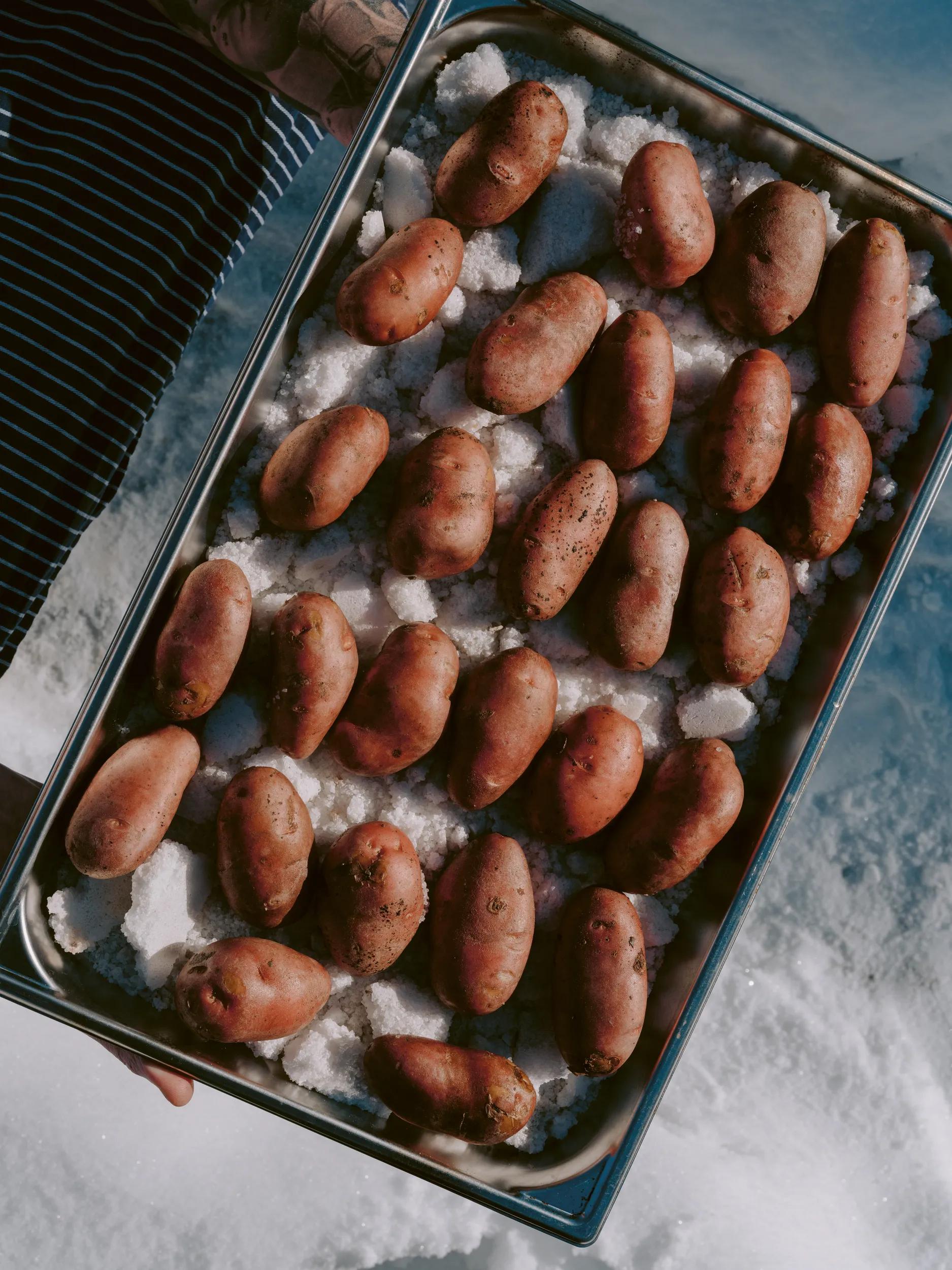
This gnocchi, for me, represents Chesa Marchetta. The milk and the cream are from Val Fex, and it’s made from red potatoes grown in Sils. You need the right potatoes at the right moment—the starch and sugar change through the year, so the recipe has to adapt. [Returns to kitchen.]
IW: That’s why we see chefs as curators or artists. Someone can follow a cookbook, but the real magic—the value—comes from knowing when to touch something, when to take it out of the water. No one can truly teach that.
LL: Absolutely. And Davide brings together the work of all these farmers who give him the best cheese, the best butter, the best potatoes. He isn’t alone in this. Each person contributes something essential.
IW: I’ll tell you a story. When I was a child, I lived next to a farm and worked with them during harvest. My job was to clean the potatoes and put them into bags for customers. I picked the big ones because they were easier to clean and I could fill the bags faster. And the farmers said, “No, Iwan, the customers don’t want the big potatoes. They want the small ones.” So I took every big potato back out and started all over again.
And that’s an important message in what we do here—dignity and respect for people, and for things. That’s what we try to celebrate. We have enormous admiration for the Godly family, the previous owners.
“If I have a regret, it’s that the room upstairs didn’t remain a private living room. It would have been the most beautiful space just for us. But that’s always a sign of a good project, I think—when you create something for others that you also wish you could keep for yourself.”—Manuela Wirth
MW: When we arrived, we had dinner with the two Godly sisters, who were in their late eighties and nineties. I began reading about the family. They were a middle-class family with four children—three daughters and a son. They took over Chesa Marchetta in 1947. Their mother ran the restaurant and also kept a small farm shop at the front of the house, kind of like a general store. It was open every single day from 7 a.m. until midnight.
The daughters worked hard and, when tourism finally arrived, went to London to learn English and later took jobs elsewhere in Switzerland. When their mother grew older, she continued working until age eighty-seven—cooking, serving, always present in the restaurant and pensione.
IW: They were entrepreneurs. When we first came here, there were still cows in this very space—the brother was a farmer who kept them.
MW: All the siblings lived together in Chesa Marchetta. The restaurant at the front was very small—twelve, maybe fifteen covers—with one main dish, saltimbocca with polenta or risotto. Later they introduced Fondue Chinoise as a way to earn more, because it allowed them to serve more expensive cuts of meat.
LL: I think one of your great strengths, Manuela, is how deeply you understand that sense of family, sharing and cooking together.
MW: Thank you. I’m a trained arts-and-crafts and home-economics teacher, a cooking teacher. When my father died, I was ten, and I took care of my siblings while my mother worked.
IW: And in Switzerland there is no day school—every child comes home at lunchtime. Manuela’s mother still gets tears in her eyes when she remembers seeing Manuela at the stove, too small to reach.
MW: Well, I had a little stool so I could reach it.
IW: And it’s interesting that when you were growing up, your family didn’t come to the Engadin—you went to Lenzerheide instead.
MW: Yes. It was practical. From St. Gallen it took only an hour and a half to Lenzerheide, but nearly four hours to reach the Engadin, especially before the motorways. So we always went there.
IW: For us it was different. My father served in an Alpine mountain regiment and worked as a mountain guide here, so we spent all our holidays in the Engadin. For years we rented a house in Grevasalvas during the summer—a small hamlet on the other side of the lake—and we would hike there. The lake was far too cold for children to swim in.
We also spent a lot of time in the Bregaglia Valley because my father climbed there. The granite rock makes it a fantastic climbing landscape. He always avoided crowds. We would hike several hours up to an Alpine hut—and while everyone else went inside for food, he would say, “Now we turn left,” and we would sit outside and cook for ourselves. I don’t remember having a single meal inside with him. In winter we melted snow for water. We camped near Furtschellas and cooked ravioli in old metal pots—terrible-smelling steel containers used for generations by Swiss soldiers—heating them directly on the fire and eating from the same pot.
Of course, as a child you don’t always love those experiences. So later, with our own children, we went into the restaurants—and now, for them, the greatest luxury is to sit with their grandfather outside, melting snow and making soup beside the restaurant.
LL: That’s beautiful. For all of us, great memories often begin with a meal.
IW: Absolutely. The meals and the walks. And here, everything connects to this valley.
MW: That spirit is also in the art we chose. We have works that belong to the valley—still lifes by Giacometti, and paintings by Heinrich Pellegrini from the 1920s.
IW: We tried not to decorate, but to choose works that felt right for the architecture—that could live here. Even the kitchen is full of art. It may be one of the few working kitchens in the world with paintings on the walls. And from the kitchen window you can see the Nietzsche house across the way, which somehow feels exactly right.
One work that feels especially meaningful is by Emma Kunz, a Swiss artist and healer whose drawings grew out of intuition and a deep sensitivity to the natural world. There’s something about Sils Maria that feels in tune with that spirit. And then there is a small tribute to our friend Jason Rhoades, who came here many times with the artist Rachel Khedoori, his wife. He had his first Fondue Chinoise here.
MW: Oh, how he hated the Fondue Chinoise! [Laughter.]
IW: He said, “You Swiss people, you’re strange.” [Laughter.] But he loved being here. And it feels right that we’re here together now—sharing food, stories and art—because that’s really what carries each project forward.
–
Chesa Marchetta
Via da Marias 88
7514 Sils / Segl Maria
chesamarchetta.ch