
Portfolio
Filling in the Blanks
Charles Gaines’s Night/Crimes
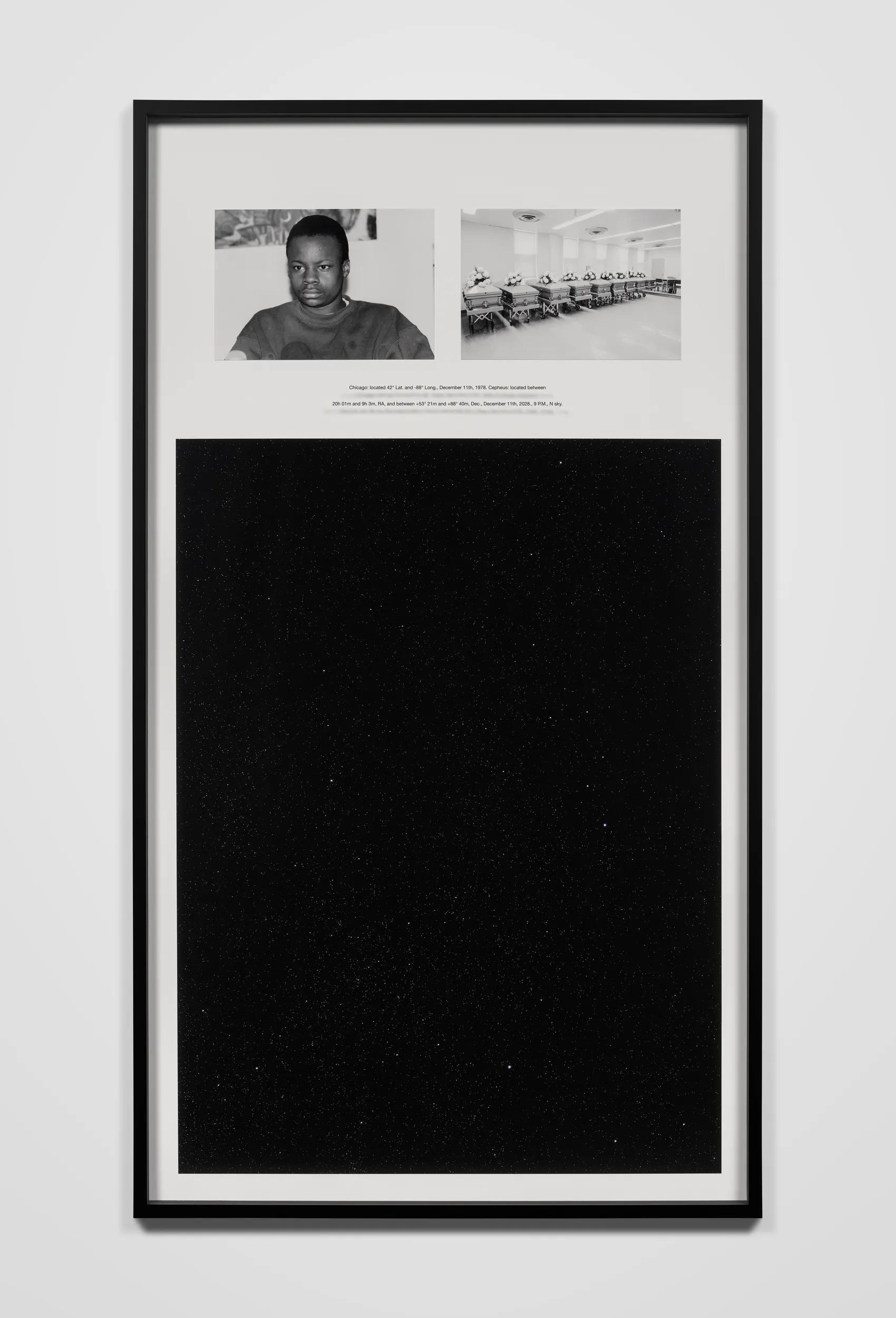
Charles Gaines, Night/Crimes 2: Cepheus, 2025 © Charles Gaines. Photo: Keith Lubow
For more than a century, photographs have been treated as a form of evidence: objects that seemingly explain themselves. In courts and newspapers, the photograph has often been asked to stand in for truth, its presumed authority residing in what it depicts rather than in how it is read. Yet the meanings found within images are rarely fixed.
The divergence between what an image shows and what it comes to signify has long preoccupied the work of artist, educator and theorist Charles Gaines. Images, as he has consistently argued, do not function on their own. They accrue significance through context and through the experiences and associations viewers bring to them. His Night/Crimes series pairs archival photographs related to violent crimes, including images of victims, crime scenes and indicted perpetrators with photographs of constellations visible in the night sky on the dates when the crimes occurred. The images are mounted side by side and covered with Plexiglas, onto which Gaines inscribes information such as the location and date of the crime, along with astronomical data and a date fifty years in the future. The pairings are systematic rather than narrative. No causal relationship exists between the crime images and the stars they appear beside.
Initially created between 1994 and 1997, Night/Crimes occupies a pivotal place in Gaines’s career, acting as a bridge between his early engagement with photography and his later, more explicitly language- and grid-based works. It marks a moment when Gaines began to use systems not to illustrate ideas but to examine how meaning itself is generated through images. Gaines has described Night/Crimes as the first project in which he began to engage language as a structuring element, even as the work remains rooted in photography.
His decision to place unrelated images together was deliberate. In this sense, Night/Crimes draws attention to how images of violence are commonly encountered and interpreted. Viewers bring their own assumptions to the photographs, often concluding that proximity implies connection or explanation. Gaines does not interrupt that process so much as expose it. The constellations, though mapped with scientific precision, offer no insight into the crimes they accompany. Meaning is not embedded in the photographs themselves but emerges through the cultural experience of the viewer, an experience structured by language.
Night/Crimes is currently on view at the Art Institute of Chicago, marking the first museum presentation of the series in nearly thirty years. For this staging, the artist has created two new Night/Crimes works focused on Chicago, bringing geographic specificity to the series. Seen today, the work remains direct and exacting. Instead of offering up interpretation, it asks viewers to recognize their own role in producing it.
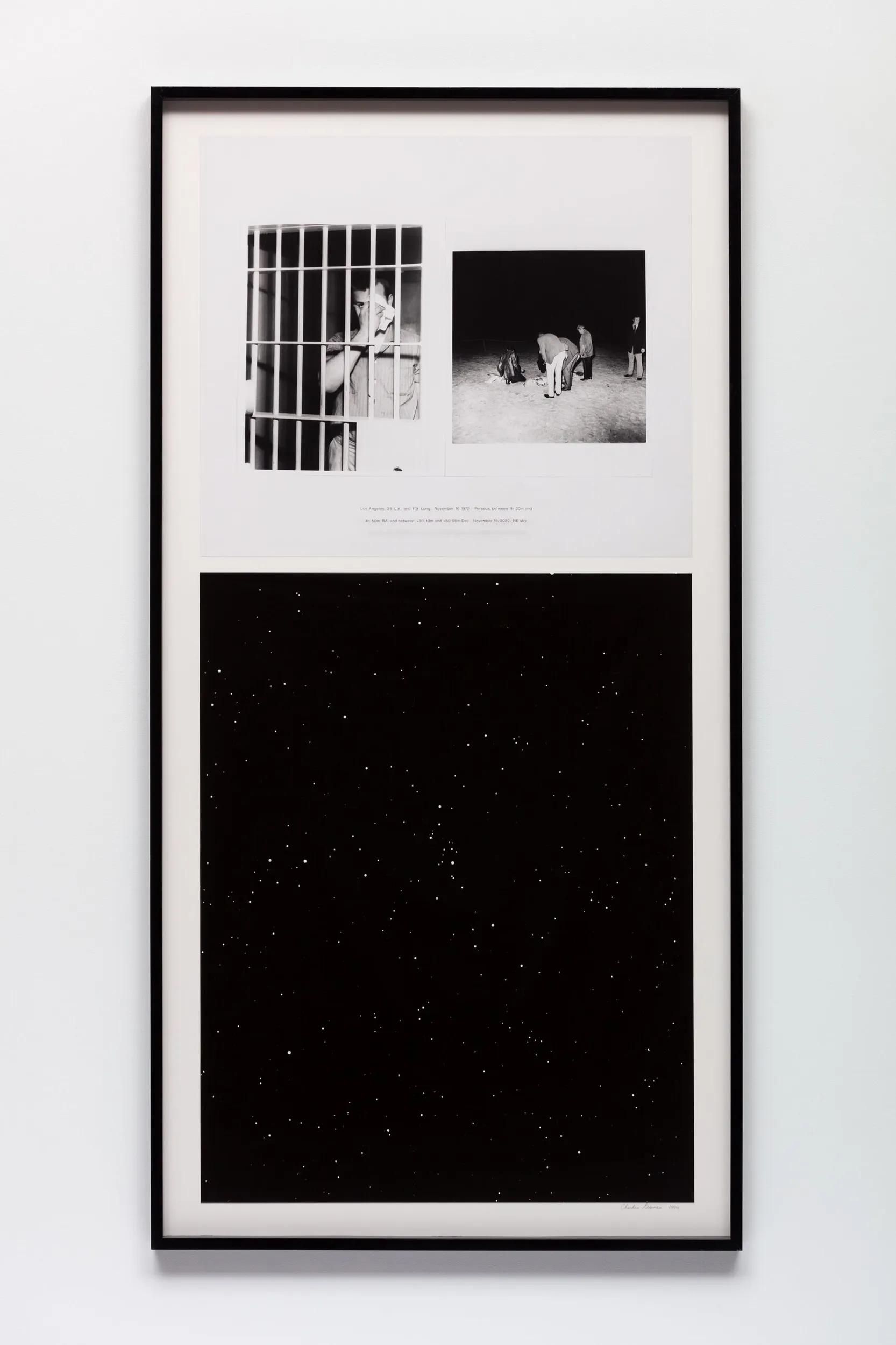
Charles Gaines, Night/Crimes: Perseus, 1994 © Charles Gaines. Photo: Fredrik Nilsen
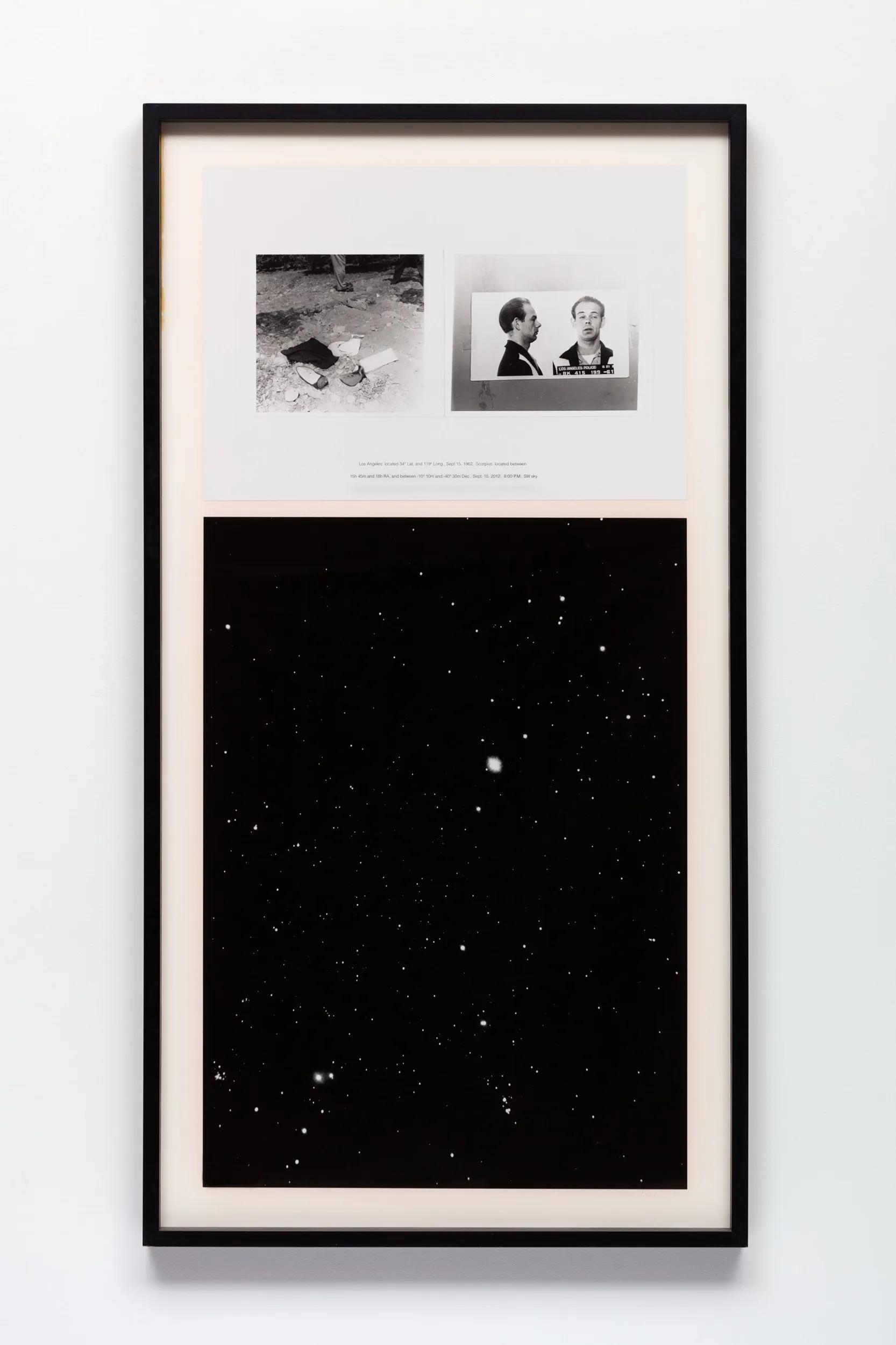
Charles Gaines, Night/Crimes: Scorpius, 1995 © Charles Gaines. Photo: Fredrik Nilsen

Charles Gaines, Night/Crimes: Taurus, 1995 © Charles Gaines. Photo: Fredrik Nilsen
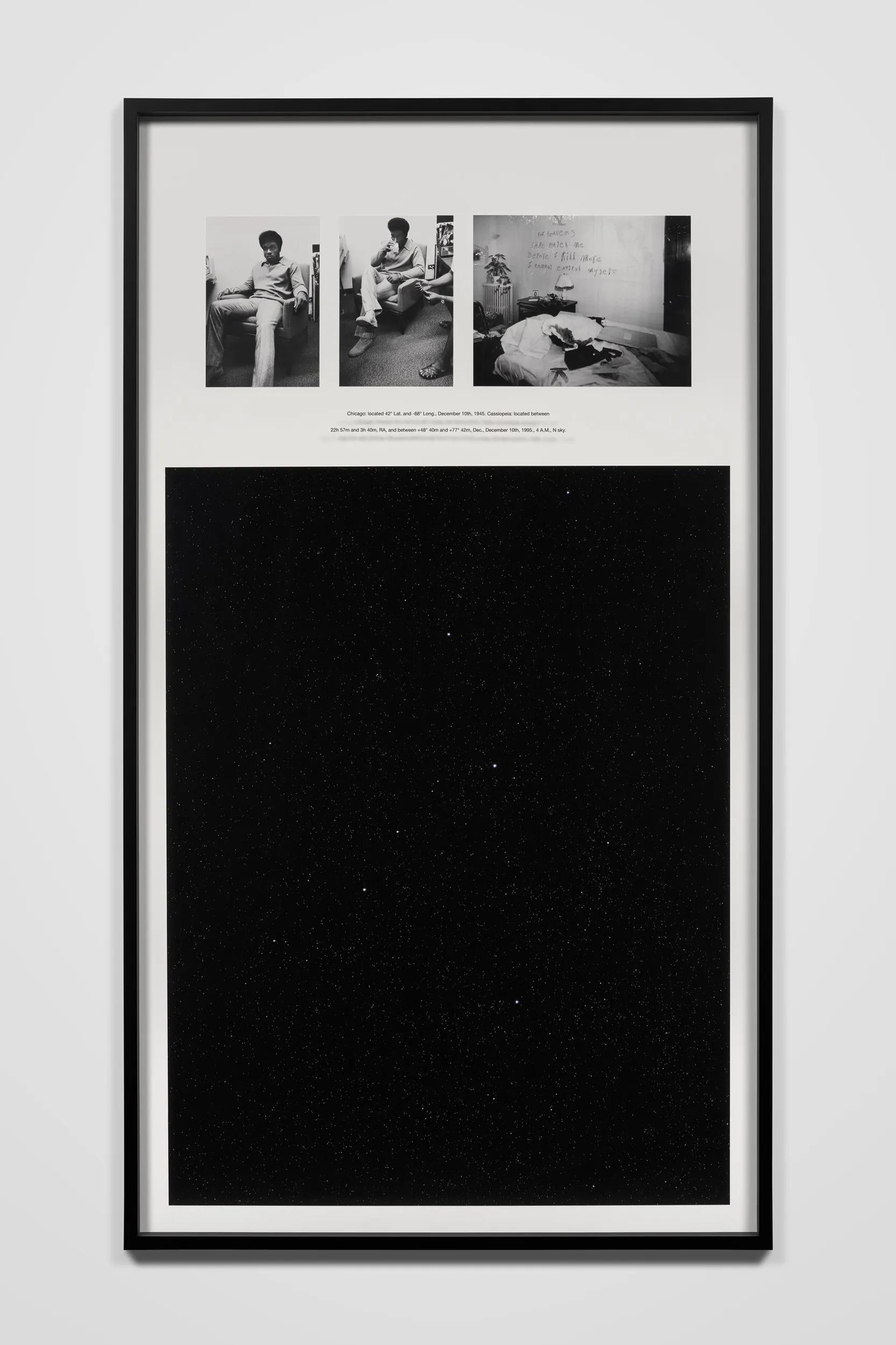
Charles Gaines, Night/Crimes 2: Cassiopeia, 2025 © Charles Gaines. Photo: Keith Lubow
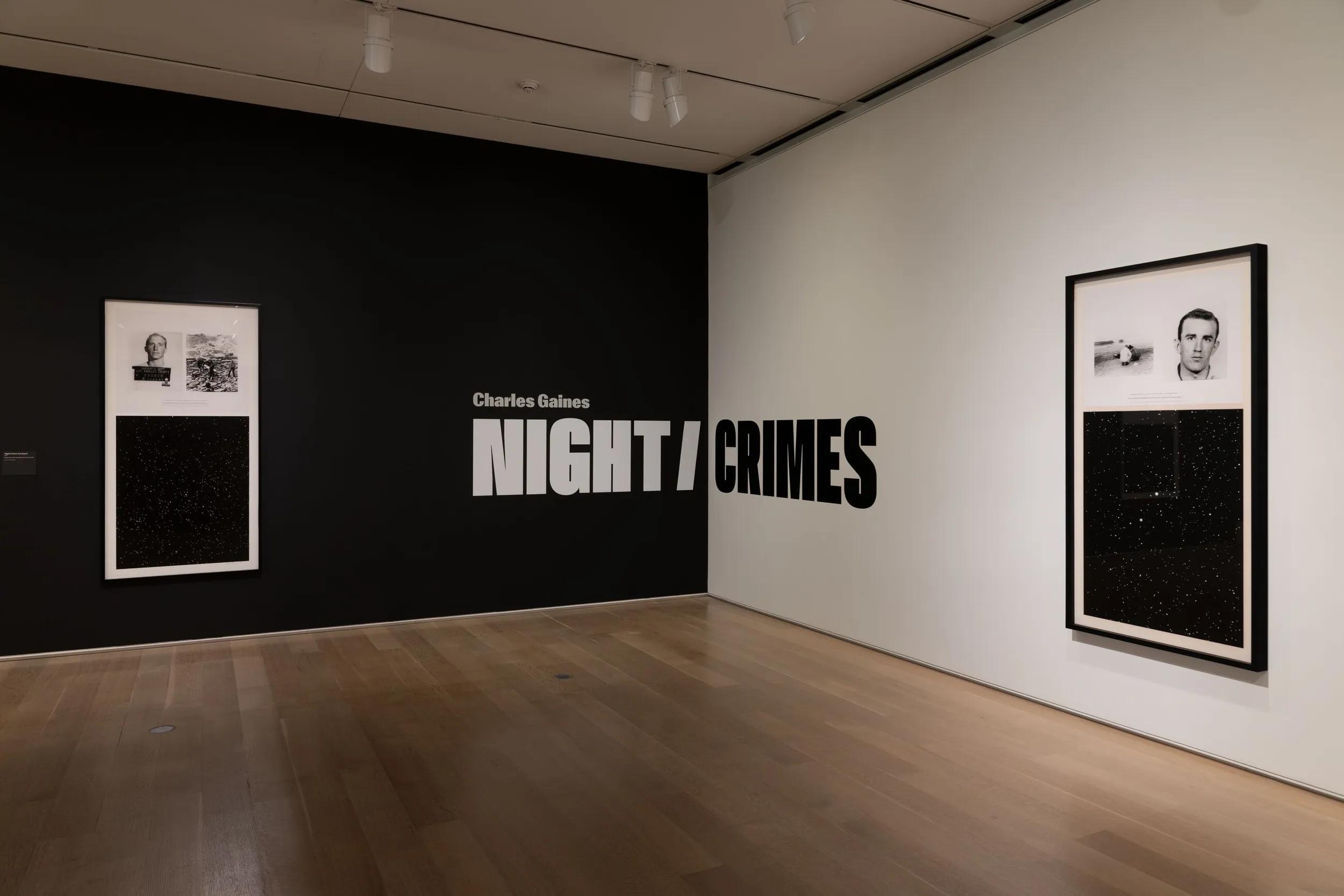
Installation views, Charles Gaines: Night/Crimes, The Art Institute of Chicago, 2025 © Charles Gaines. Photos: Nathan Keay
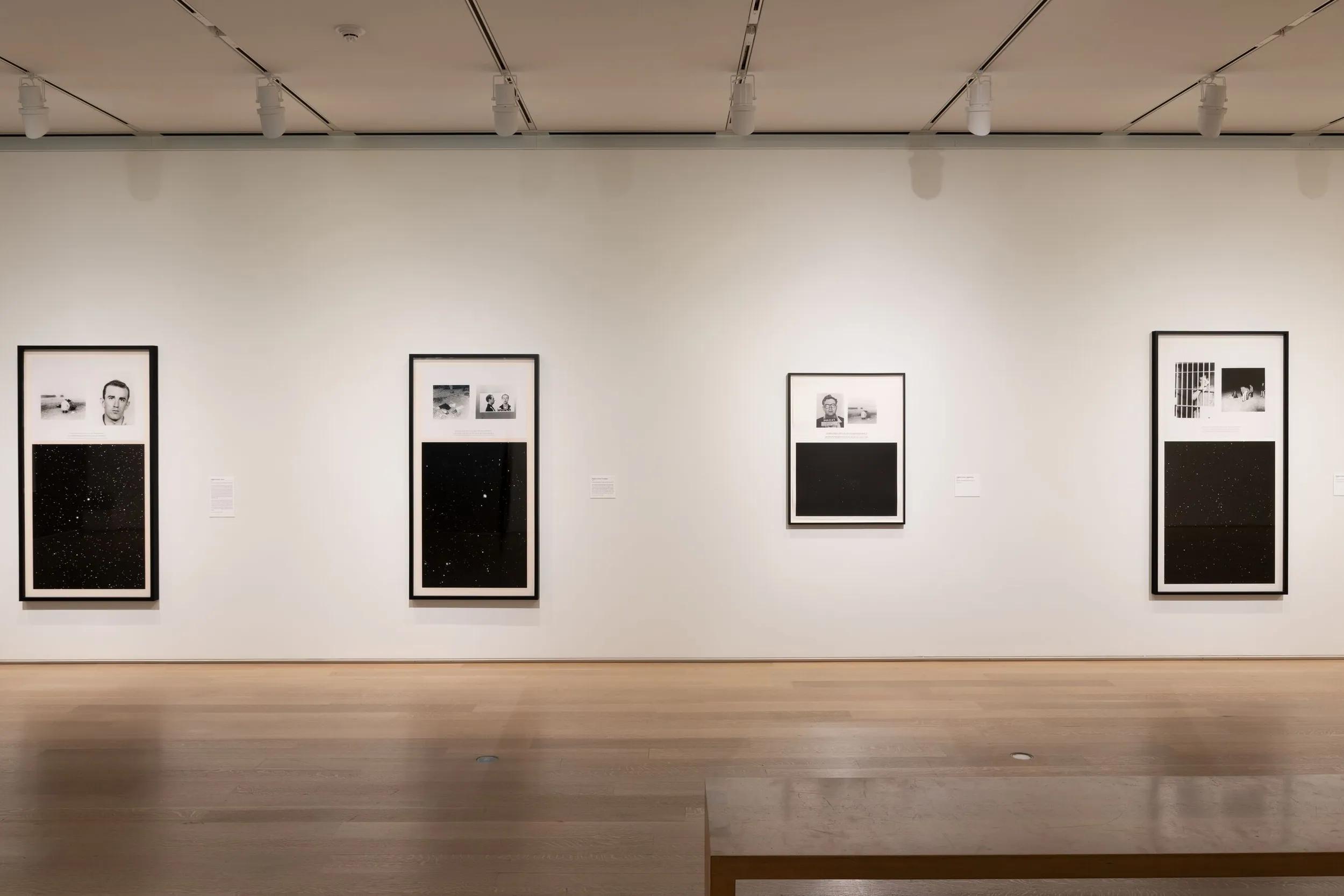
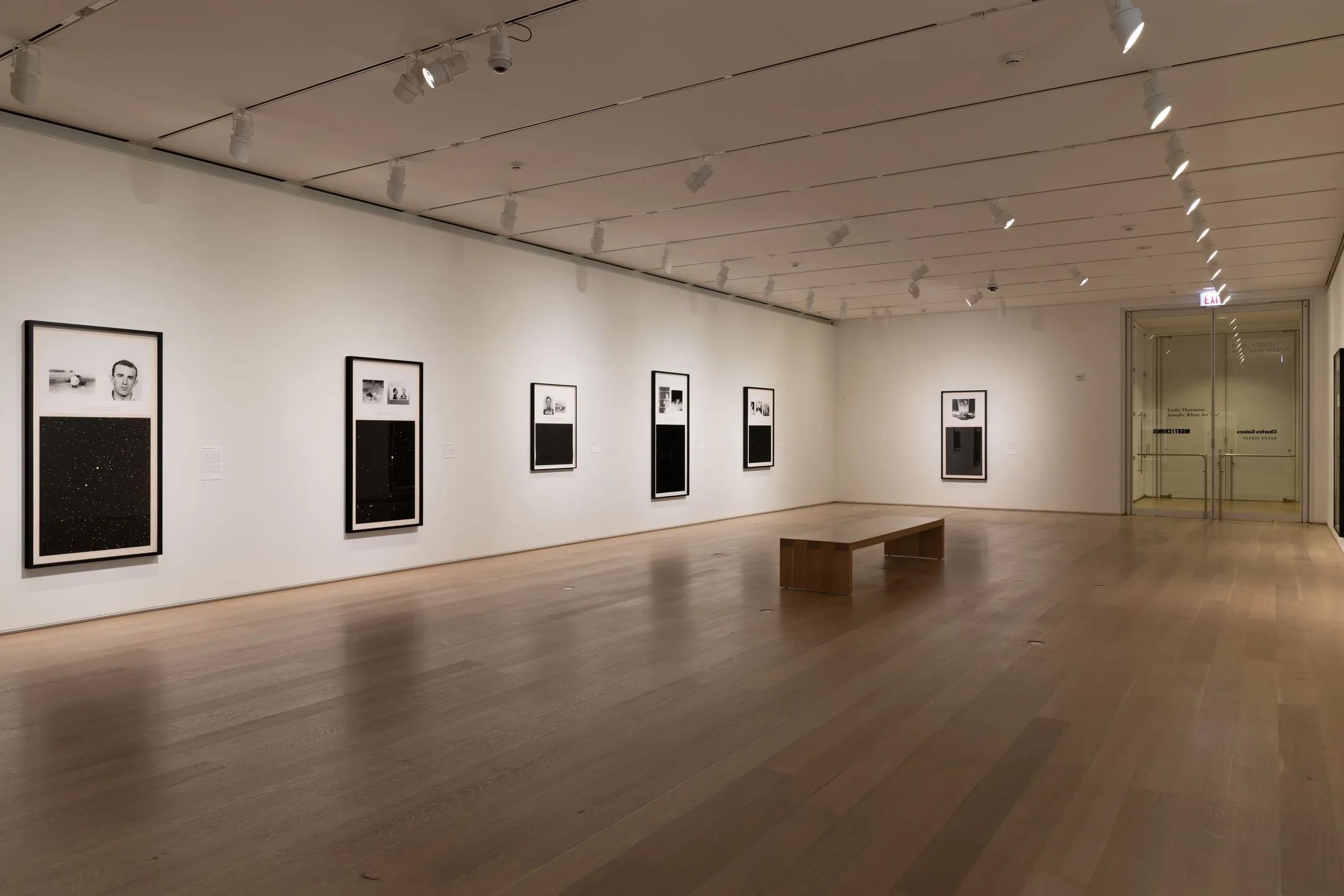
–
Charles Gaines: Night/Crimes is on view at the Art Institute of Chicago through February 1, 2026.
A pivotal figure in the field of conceptual art, Charles Gaines engages formulas and systems that interrogate relationships between objective and subjective realms. He lives and works in Los Angeles, where he was on the faculty at CalArts for over thirty years.