

Conversations
Collector of Stories
On the work of Steven Watson, self-appointed historian of the New York underground
By Quinlan Harris
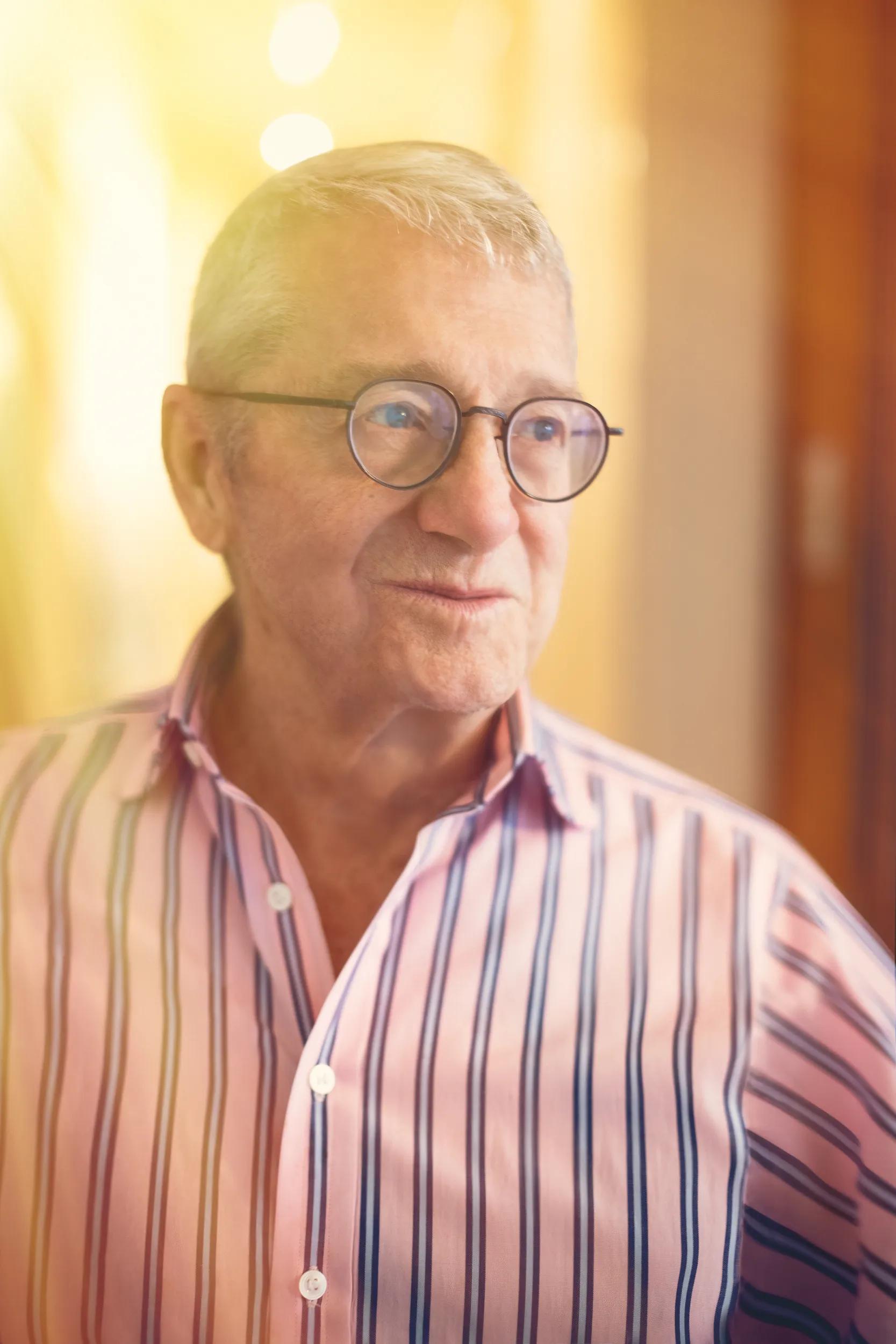
Steven Watson in his Upper West Side apartment, New York, December 2025. Photo: Hugh Lippe
In 1942, the great New Yorker writer and urban raconteur Joseph Mitchell came across an emaciated man on the street, “with long, disheveled hair, bushy beard, and hand-me-down clothes,” his arms filled with “a mass of manuscripts and notes and letters and clippings.” Mitchell soon learned that the man was the West Village bohemian Joe Gould and that this heap of papers and other writings, scrawled longhand in composition books, was a gargantuan collection that Gould said he had been compiling over decades, called An Oral History of Our Time, a magisterial chronicle of modern life culled verbatim from hundreds of thousands of conversations he had had while homeless, pieces of language he kept in his head for days at a time, often remembered word for word, a book he said people might one day “read to see what went wrong with us, the way we read Gibbon’s Decline and Fall to see what went wrong with the Romans.” In Gould’s typically hyperbolic telling, the oral history grew to epic proportions over the years, expanding until it seemed almost monumental, even explosive (“There are revelations in it I don’t want the world to know until after I’m dead”). For years, Mitchell pleaded without success to see even a single page of the supposedly nine-million-word manuscript, and then, finally, he had to admit what he already knew in his heart: Gould’s book did not, in fact, exist.
For the past forty years, working out of his modest apartment on the Upper West Side, a self-appointed cultural historian named Steven Watson has been at work on a project that might be seen as a spiritual descendant of Gould’s history, with the crucial distinction that it is very much real: a vast archive of interviews and conversations beginning in 1979 and continuing up to the present day—a project that, when viewed as a whole, is nothing less than a comprehensive oral history of the past half century of underground New York City art and culture.
“I’m hoping to capture the most interesting voices I’ve come across during my time on Earth—that’s the simple thesis,” Watson told me in a recent conversation. “That’s why I came to New York—because I believe it has the greatest concentration of those voices.” Watson was initially inspired to pursue his mission through stories of the still-visitable past told by his grandfather, who had crossed the continent during the Oklahoma land rush of 1889. Later, while interviewing members of the all-Black cast of a production of Virgil Thomson and Gertrude Stein’s modernist opera Four Saints in Three Acts, Watson realized that the power of individual presence was greatly diminished when confined to print, and if not at least in print, at risk of vanishing completely.
“I didn’t know anything about making a documentary,” he said, “and by the time I did, they would be dead.” By then the author of three cultural histories written outside the academic world, Watson was comfortable operating on his own, without institutions and structures, encouraged mostly by friends and fellow writers.
In the 1970s, with notebooks and a tape recorder, he began an itinerant, artistic-archival practice of conducting oral histories. And then, when interviewing the opera cast, he used a video camera for the first time, beginning what has today crystallized into a full-fledged non-profit organization, a YouTube channel and a digital platform, www.artifacts.movie, that features an expanding roster of video interviews edited and researched by filmmakers. What began as Watson’s personal archive has grown into a team effort and a production company; a new interview is released each month.
Although the passage of time has brought many of his subjects mainstream fame, Watson’s interview choices have often reflected his own outsider identity. He has built bodies of history around members of Warhol’s Silver Factory (Taylor Mead, Brigid Berlin, Mary Woronov); the underground press (Hettie Jones, Barney Rosset, Walter Robinson); figures he calls “gender benders,” the city’s pioneers of gay liberation—Marsha P. Johnson, Sylvia Rivera, Candy Darling. His most recent conversations, with the curator and former museum director Alanna Heiss, act as something of a thematic lodestone for the entire project. Heiss, one of the still under-recognized pioneers of the “alternative space movement” in 1970s New York and founder of what is today MoMA PS1, is someone who “put together the best artists of her generation and gave them a platform” outside the museum and gallery framework, as Watson says. As she transformed abandoned buildings into experimental art spaces that provided an atmosphere of permission for artists well before they gained wider recognition, Watson, by way of his project, has documented the voices of many of those same pioneers outside the narrow confines of official narratives. Together, Heiss and Watson share a belief that meaningful action often happens in the margins. I recently spent time with Watson in his apartment, turning the microphone around momentarily in his direction. The following are edited and condensed portions of our conversations.
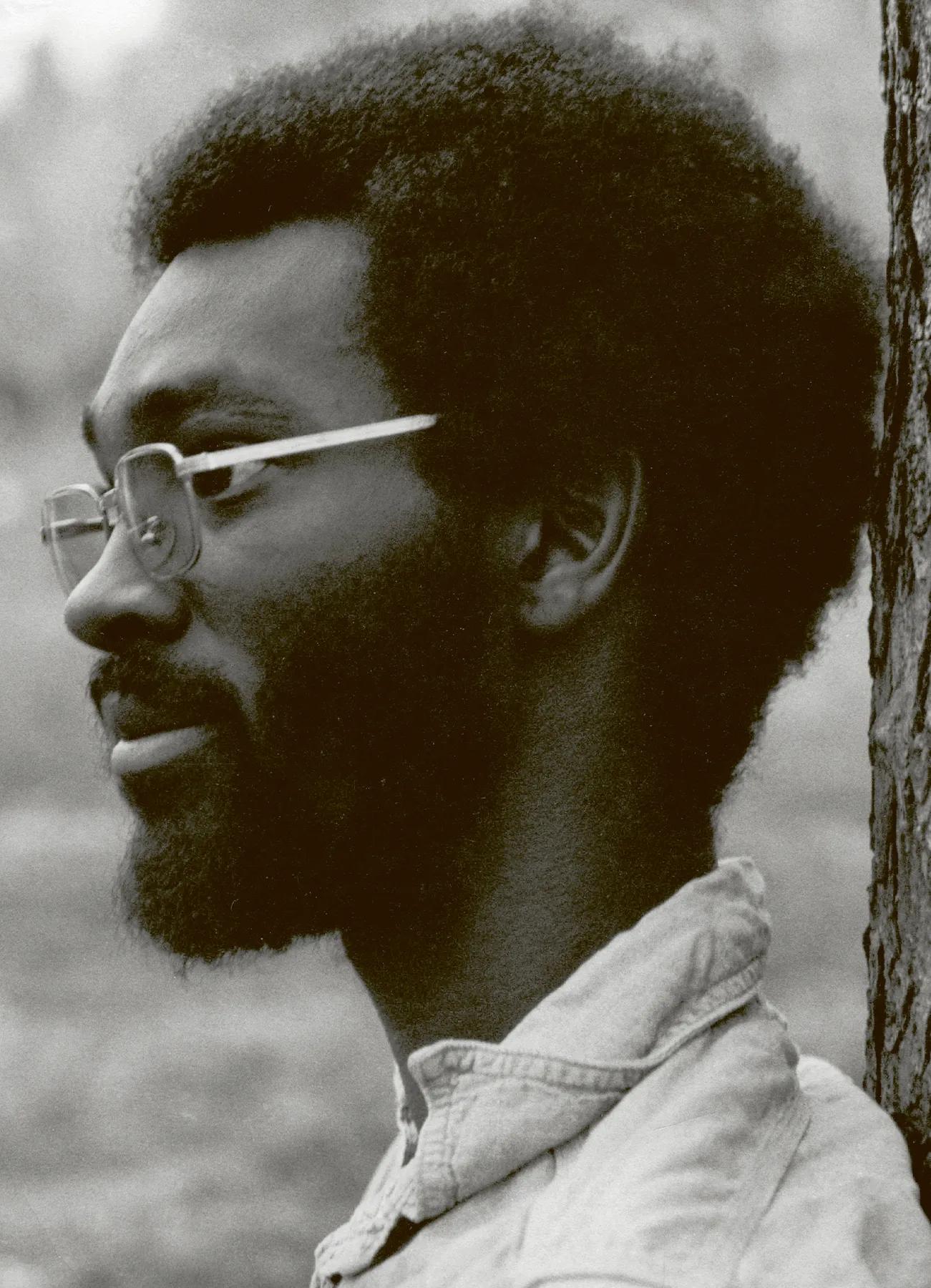
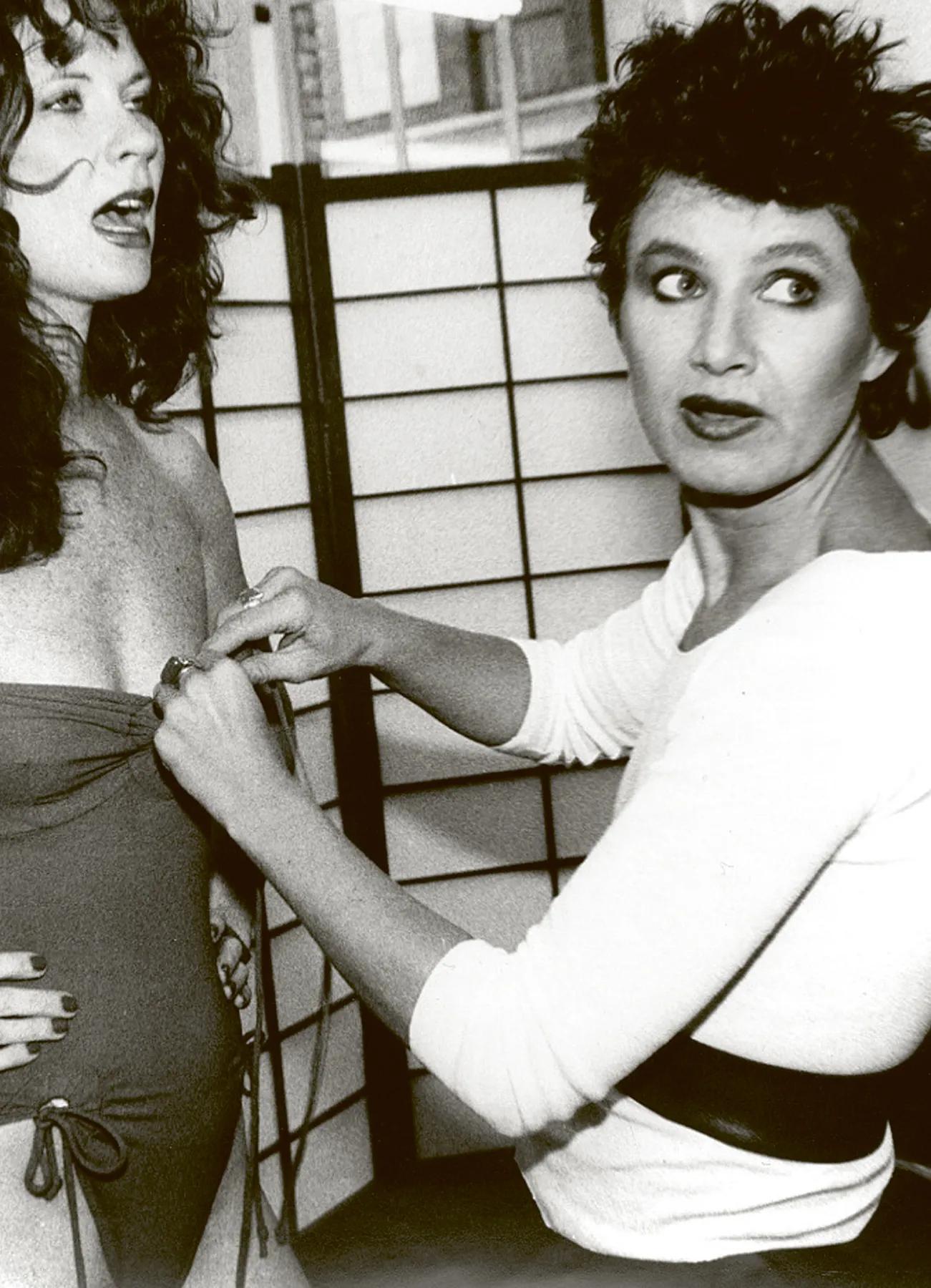
Watson’s interview subjects include Alan Bell and Betsey Johnson. Left: Courtesy Alan Bell. Photographer unknown; right: Bacon and Betsey Johnson at Johnson’s Atelier, 1985. Photo: Rose Hartman/Getty Images
Quinlan Harris: It’s really good to sit down with you, Steve. I ran into a friend of mine, the artist Tourmaline, the other day, and found out you two know each other!
Steven Watson: Yes, I shared a lot of my interview with Marsha P. Johnson with her for her biography of Marsha [Marsha: The Joy and Defiance of Marsha P. Johnson, Tiny Reparations Books, 2025], which has been a big hit.
QH: It was amazing to see such an immediate application of your work—how it contributed to her book, how something you recorded over forty years ago is growing even larger and continuing to spread.
SW: Absolutely, and it’s all very serendipitous. We put a clip of the interview on social media and we got more than 75,000 views in no time. That, to me, really represents what Artifacts could be. Because the whole concept is about conserving voices and conserving culture and not keeping it siloed.
QH: There’s so much to get into. You’ve done so many different things in your career, from a therapy practice to nonprofit work and cultural history books. It strikes me that they all seem to me to be facets of a single practice. I’m curious to know whether you would consider yourself a historian. Or let me put it another way: Is there a framework for how you see what you’re doing?
SW: Well, you know, at first there was just the impulse to gather. I had no idea what would happen with those early interviews.
QH: I saw you had cited somewhere a really wonderful quote from Henry James, related to your impulse to start this process.
SW: Henry James said something that I’ve always loved. It was about how he was trying to connect with “a palpable, imaginable, visitable past.” And that idea of it being visitable is key to me—the fact that I can connect with people who themselves directly connected with periods long, long ago. And the fact that my connecting with them, in turn, will reach people many years from now. There’s the example of being able, after recording conversations with Beatrice Wood, to feel as if I was in the room with her and with Duchamp at Webster Hall after the Blind Man’s Ball in 1917, of getting the direct sense of Virgil Thomson meeting Gertrude Stein. These are, in one sense, remote deities in our social construction, and yet there’s a way of really connecting to them, of having the sense that you were there.
QH: Why the impulse now to start publicly formatting and releasing all of your histories online?
SW: Well, I think it’s important now, in this really dark period we’re in, to be aware of the voices that embody hope, curiosity, creativity, experimentation—all of the quote-unquote good sides of life. I think we need those models right now, especially. The other thing is, I’m at a stage of my life where I’ve got all these things I’ve done and I want to put some shape to them.
QH: Right.
SW: Over the past five to seven years I began to think about how these interviews could get out into the world. In an archive they reach primarily scholars. The Artifacts team has stepped in and created a social media campaign that reaches out to a very broad international audience. By the time we celebrated our first anniversary last November, we had reached 350,000 views on our YouTube channel and over a million hits on social media.
QH: Whoever’s looking for them.
SW: Exactly. And the level of online interest in Marsha alone demonstrates that this is a great way of reaching that audience.
“Henry James said something that I’ve always loved. It was about how he was trying to connect with ‘a palpable, imaginable, visitable past.’ And that idea of it being visitable is key to me.”—Steven Watson
QH: Can you give me an idea of the scope of the entire archive—how many interviews have you done in total? There’s a significant amount of material that you haven’t yet released, right?
SW: There’s probably 250 interviews, roughly, thousands of hours. And, of course, it’s still ever-growing. That’s one of the most exciting parts to me—that people are very much interested in being part of it.
QH: Why have you called the project Artifacts?
SW: Artifacts are what lasts from a culture. I love the word. I love the concept that there are things that last, that represent or signify aspects of a culture.
QH: It’s a word with a lot of historical and archaeological connotations. It reminds me of something Marsha said in the interview you did with her for The Village Voice in 1979. She’s talking about coming down to the Village around 1969, and she said to herself, “It’s about time, honey.” That seems to me to be emblematic of your whole project: It’s about time. And there’s another Henry James quote that comes to mind here, about “reaching across the table.”
SW: Yes. The thing about reaching across the table is also literal, in a sense, because with these interviews, you feel like you’re sitting across from someone, because you are.
QH: It seems that 1979 was an interesting year for your work. You interviewed Marsha for The Village Voice, you made a book with the trans and drag pioneer Minette, then you were involved with the book Stonewall Romances and started work on the box-set multiple piece called Artifacts at the End of the Decade. Is that the origin of Artifacts.movie?
SW: The instinct came long before that. My interest in this began very early on. I remember I wanted to record my grandfather. The impulse is always about being a therapist, in a way.
QH: You were a practicing psychologist for two decades in New York. There’s a lot of talking in that, giving someone the space to talk.
SW: Absolutely. It’s all connected in a way. A lot of therapy is helping people to tell their stories and figure out what they are, because people know the stories that make the most sense to them.
QH: Tell me a little bit about your Minette book.
SW: When I came to New York in 1976, one of the earliest groups I came in contact with was a group called the Hot Peaches, which was a gay, genderfuck guerrilla theater or cabaret, a variety of things. I wrote a piece interviewing the founders that was published in Gaysweek, and that was my first piece in publication. There was a group surrounding the Hot Peaches and Marsha was very much part of that, and so that’s how I first came into contact with Marsha. And then there was a figure in the margins, very strange, almost like the campy maiden aunt, or the godmother of the whole scene, Minette, who was revered. Her life went way back to performing in burlesque and coming up in a queer world that was so different from the one that we have any concept of now. That started me going to Minette’s apartment and going through Minette’s albums and hearing stories. And I did this over and over again with a man named Ray Dobbins, who was a friend and an important person.
QH: And then taking these conversations and editing them into a coherent thing, a narrative?
SW: Yes, a narrative very much in Minette’s voice. And we included photographs, for a snapshot kind of quality, and then we self-published it. It was printed at a Xerox shop.
QH: What was it like talking to Minette and being brought into this other alternative history and culture that was so different from yours?
SW: Minette was very easy to interview. But you just put your finger on something that’s interesting. I am not of the communities I interview—I’m someone who is very interested in them and who tries to give them a voice.
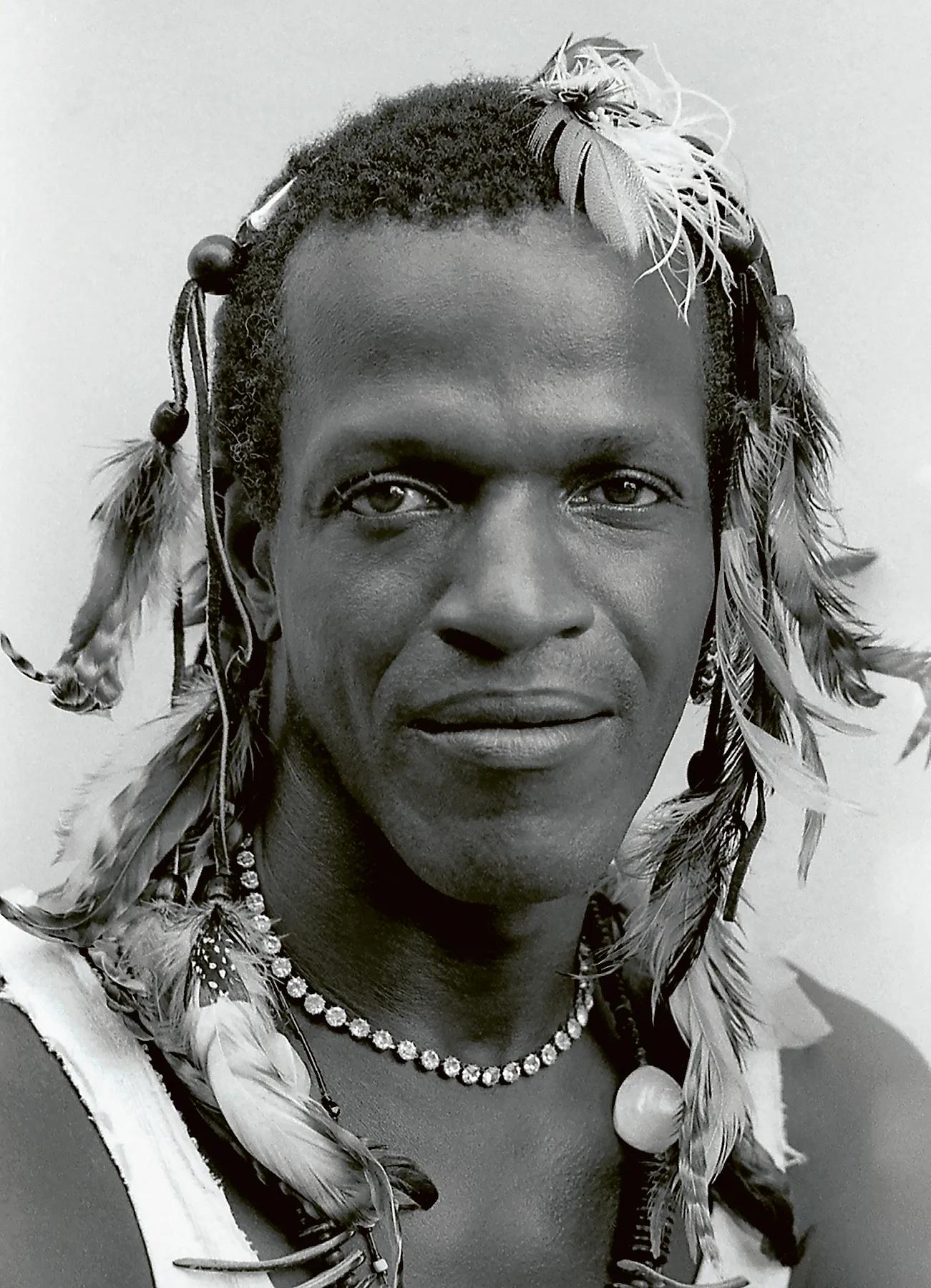
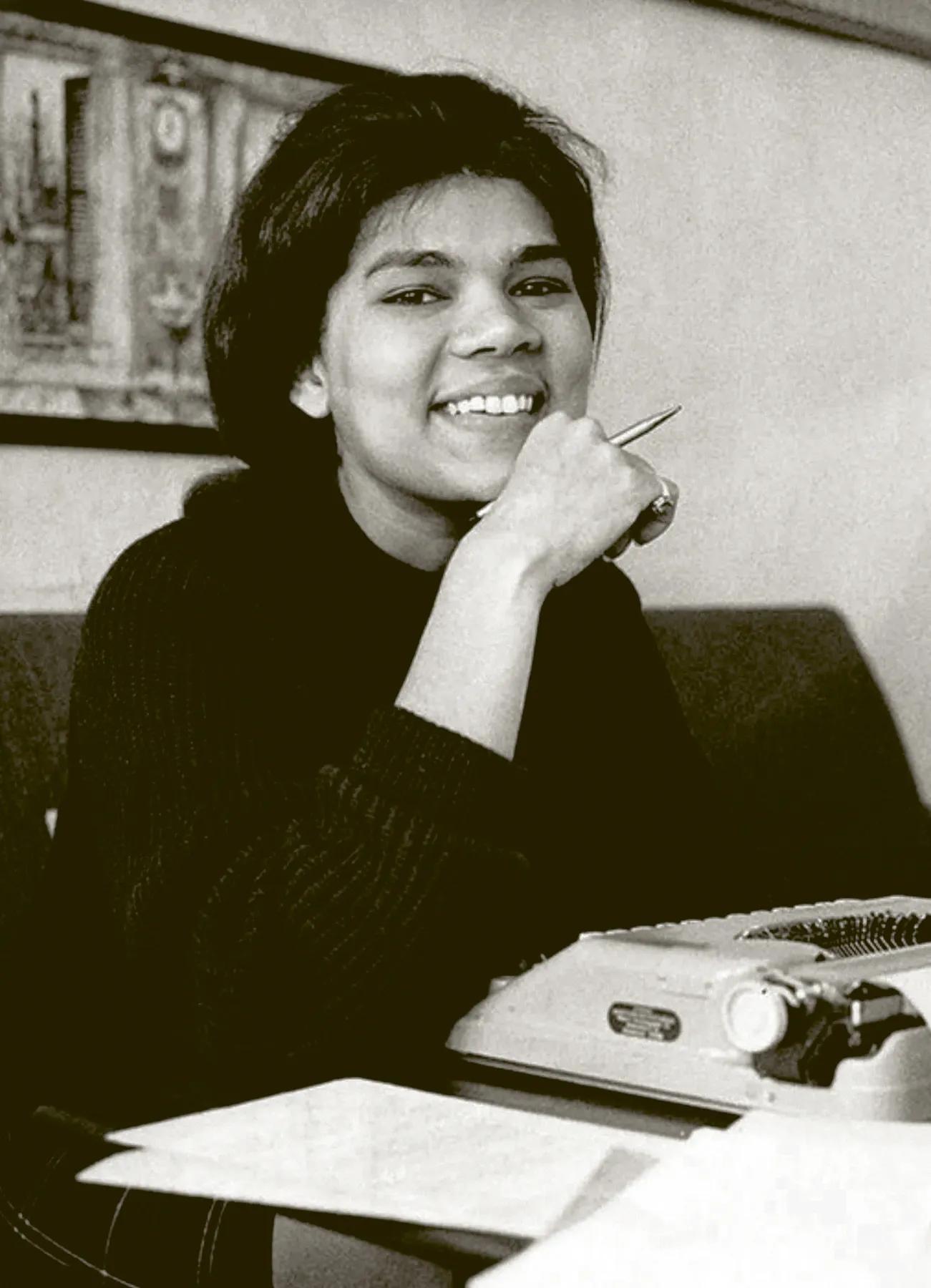
Watson’s interview subjects Marsha P. Johnson and Lorraine O’Grady. Left: Photo by Stanley Stellar; right: Courtesy Lorraine O’Grady Trust. Photographer unknown
QH: Was the intention the same for your next book, Stonewall Romances?
SW: The Minette book was such a success that Ray and I thought we should do something for the tenth anniversary of Stonewall. My concept was to have interviews, so that’s when I first interviewed Sylvia Rivera and Craig Rodwell, who started the Oscar Wilde Memorial Bookshop, and a number of other people. It’s become a really historic publication.
QH: Was your sense that it had been a decade since the Stonewall riots, so it was time to do something to memorialize it?
SW: [Laughing.] I mean, I don’t want to suggest it was really thought out, because it was more like: The Minette book worked so well; let’s do another quickly. But it’s important to capture dissonant voices. It’s really crucial to realize that there has been and, I think, always will be a community that is, how can I put it—profoundly alternative to the main culture.
QH: And not represented, at risk of disappearing?
SW: Right. I hope this kind of project will give people hope. Because we’re going through a very disturbing time. It’s certainly worse than anything I’ve experienced in my lifetime.
QH: You think so?
SW: I do. And so now more than ever, it’s important to realize that there are different people that you can look back to.
QH: Seeing some of your videos is, to me, very affirming. If you’re someone who has grown up where you didn’t have these kinds of communities, suddenly you see that such a thing exists and has existed for a long time.
SW: That’s the goal and the hope.
QH: This brings to mind a theme that strikes me about your work. So many of the people you’ve interviewed have a deep social connectedness that pushes against the idea of the lone artistic genius.
SW: Art making, writing—all of that is inherently a solitary experience. And finding a community is crucial. I’m talking not in terms of foundations or academic communities or that kind of support. I’m talking about support in a pre-official sense.
QH: Another impulse behind your work and your books, especially, seems to be skepticism toward the “official historical record,” for lack of a better way to put it, or toward grand historical narratives.
SW: I would say that’s the type of story that’s often told. The usual thing is you write a birth-to-death file and the person in question is somehow an independent genius. That’s one kind of story. It’s not the story I’m interested in. I’m really interested in certain periods where there’s phenomenal growth, just an explosion of creativity, and the ways in which that happens. And it always happens because of people sparking off one another.
QH: In the introduction to your book Factory Made: Warhol and the Sixties, you mention growing up in Mound, Minnesota, and fantasizing about this “other,” an alternative world out there somewhere.
SW: I want to reach the kind of kid that I was in Minnesota. For that kid to realize: “Oh, there are these groups that are not at all like what I’m seeing around me.”
QH: It seems to go back in part to the idea of spaces—other spaces and places where one can exist. And that brings up a lot of intriguing connections to Alanna Heiss, whom you recently interviewed. Can you tell me a bit about that history?
SW: Alanna is a perfect example of a figure who is important but still not fully recognized at the level she should be. Many people in the art world now probably don’t know her name. But she was one of the three or four real pioneers of the alternative-space movement. And it was a movement, meaning that it wasn’t in museums. It wasn’t in galleries. It was not about commerce. It was more like pop-ups that were formed, very often inside existing buildings. “Let’s put this space together and see what happens and make something.”
QH: Organically.
SW: Right. And Alanna is very interesting because she has a huge amount of energy and intelligence and it goes in so many directions. She was initially trained as a musician and then realized, “What I will succeed at is putting together the best artists of my generation and giving them a platform.” Now, of course, PS1 is a major institution, part of the Museum of Modern Art. But when she had the idea, it depended mostly on Alanna and her connection to politicians and people in the city who might have access to buildings, and of course her access to the art community.
QH: On the concept of a “structure” or community beneath great artists, you’ve made incredible diagrams for each interview, showing their connections to others in your histories. Can you tell me a little bit about those?
SW: I call them sociograms. They map out the ecology of the cultural world as it evolves—the relationships between creators, what happens behind the scenes to disseminate work. In Artifacts, we have animated sociograms for each interview, showing how they fit in their own subcultures.
QH: The city today is such a drastically different place than it was in Alanna’s time. The idea of “scenes” or communities seems to me more fragmented, atomized, maybe more individualistic and separated. What do you think we could take from her example?
SW: I think we take the basic concept that the city will always be a growing place. It’s constantly being repurposed. The buildings that made sense for one period of time don’t make sense for their original use. SoHo was a manufacturing area and then it became an art center and then it became a lifestyle commerce zone. So there are always these transitions, and Alanna had her finger on that very, very early. Her concept was that there was a whole kind of art that was not being shown. The institutions did not exist to show it. So she had to create the institution that would reflect the work.
QH: You’ve done something similar with your project.
SW: Maybe. What I can do is to present people and subjects in a way that invites you to know more. The other thing I would say about this project: There’s an element of joy within it all, and joy is important. I think it’s especially important right now. We need those models now. And I think the challenge is going to be to get it to your generation. I came of age in a very different time, and I know that my gods are not going to be the people succeeding generations will necessarily be interested in. But they’re a model, and the next generations can use them to find their own gods.
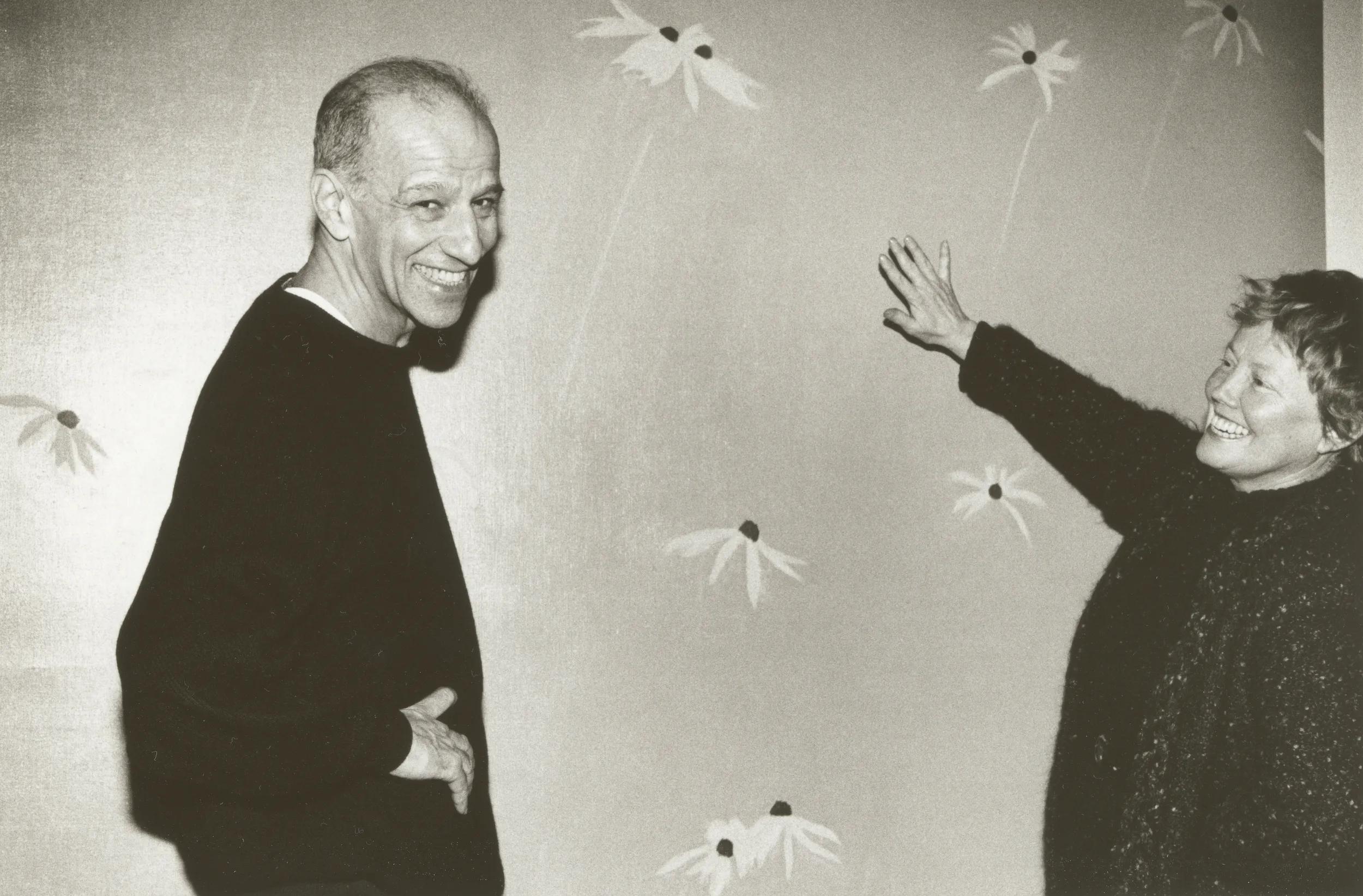
Alex Katz with Alanna Heiss, 1996. Digital Image © The Museum of Modern Art/Licensed by SCALA / Art Resource. MoMA PS1 Archives, II.A.970. The Museum of Modern Art Archives, New York. Photo: Vivien Bittencourt
Selections from Steven Watson’s oral-history conversations with Alanna Heiss, 2024
On the general philosophy of PS1
“The reason PS1 being under one roof was important—almost part of my catechism—was that I could choose very different points of view, in many cases antagonistic points of view, and have very good shows of those points of view in the same space at the same time.
“The curatorial presence was neutral. As a viewer, you didn’t have catalogues, because we could never print catalogues. We never had that money. Nor did I care to do so. Often the labels had been written by the artists, so there was no strong view being presented. You weren’t being told what you were seeing, and you had to see it yourself. You had to distinguish it from the building itself, which could have been an artwork. You had to watch out so you wouldn’t fall in case there was something wrong with the building. And you had to look up so that nothing fell on you, because things continued to fall off the ceilings at unfortunate times.”
On New York in the 1970s
“All through the ’70s and into the mid-’80s, people were afraid of New York because the television news reflected constant crime, and there was this aura of danger that kept a lot of people out of New York and out of the stores. All of New York at that time was very dark and gloomy and quite wonderful and exciting, because the whole activity tended to take place in the evening or at night. The buildings themselves were empty, and I became more and more attracted to the extraordinary abandoned feeling of the city, and the museums became less interesting.”
On the Clocktower Gallery (1972)
“I intentionally went after a space owned by private people that had been left vacant, and then a building owned by the federal government. That was the Clocktower [in 1972 Heiss founded the legendary Clocktower Gallery in Tribeca]. And the next in line was the city government. I realized the city government seemed like this huge octopus. You couldn’t do anything. It was Dickensian or Proustian. It was beyond comprehension. You had to learn the codes for each department of the city, and of course the departments that interested me were the Department of Real Estate, which held power or ownership over a lot of the city buildings, and the Department of Planning and Development.
“The secret to my huge, huge, huge space-building success was that I had so much space that I could engage in all the messy, though not expensive, things, and half of them could be wrong, and half of them would be really right.”
On starting PS1 (1976)
“Within two years of the Clocktower Gallery, the New York State Council started its own space called Artists Space. I wanted something very, very different, and I thought: ‘I’ll keep doing Clocktower shows.’ But I really wanted to challenge another situation. I thought: ‘I’m the new gunfighter in town. Who’s the sheriff?’ And the sheriffs, plural, were all running the museums. It was very clear to me that it was time to move out of just running all these places in a deliberately haphazard and temporary way. I was interested in doing shows with artists that I felt were going to be of international importance and impact. They were showing many places in the rest of the world and there was no reason why they shouldn’t be shown in New York City, where they lived.”
–
Quinlan Harris is an author in Brooklyn working as a rare book specialist for the Fulton Ryder collection. His work can be found at quinlanharris.com.
Dr. Steven Watson is the founder of Artifacts, an online platform dedicated to preserving the legacy of pioneering queer, artistic and underground movements. This ongoing project is the culmination of his decades of work as a cultural historian. Across books, exhibitions and documentary film, he has examined the dynamics of the 20th-century American avant-garde. Learn more at artifacts.movie.