
Hauser & Wirth Invite(s): Marie Angeletti
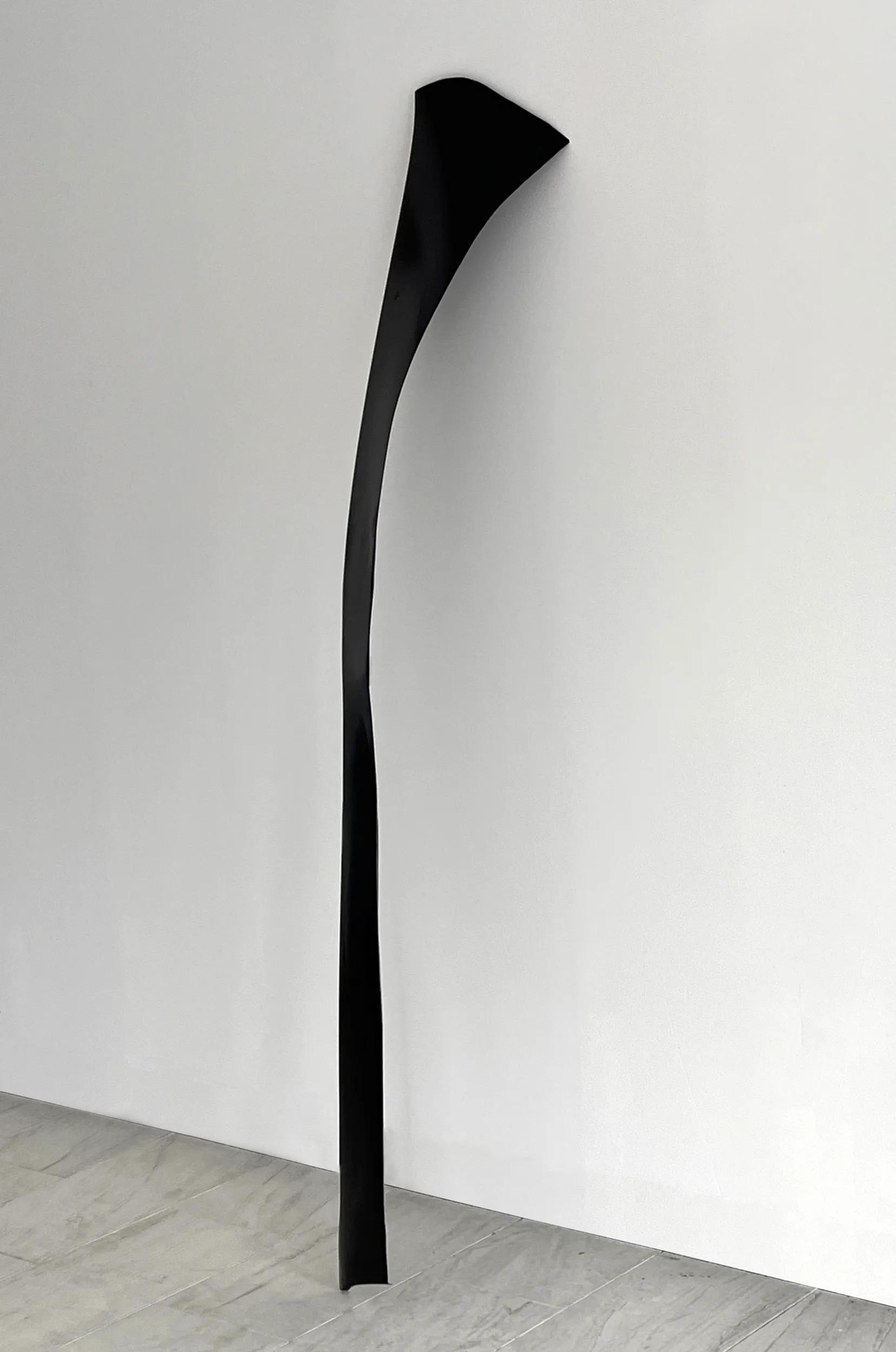
Marie Angeletti, Untitled, 2026. Courtesy Édouard Montassut and Hauser & Wirth
Hauser & Wirth Invite(s): Marie Angeletti
Organized with Olivier Renaud-Clément, Hauser & Wirth Invite(s) is an initiative to host fellow artists, galleries and writers at our gallery spaces, offering wider visibility of their work and ideas and to engage with Paris’ vibrant creative community.
This initiative reflects Hauser & Wirth’s longstanding commitment to building a sense of connection in the places where it works, collaborating with artists (or estates) who may benefit from an additional platform, galleries of different scale and writers addressing new audiences, all in support of a sustainable art ecosystem. By hosting fellow artists, galleries and writers, we offer wider visibility of their work and ideas to engage with each city’s vibrant creative community.
The exhibition is on view through Saturday 19 December 2026.
Join us for the opening reception on Thursday 12 November, 6.30 – 8.30 pm.
Bucking Fastard, the new movie by Werner Herzog, is a story about two sisters who speak and do everything in unison. We begin in the middle of a trial, where an allowance is requested for two witnesses to take the stand together. But the innocent-looking girls are actually the defendants, accused of vandalizing their neighbor’s property and harassing him, the plaintiff, who was briefly their lover but does not return their love. The title is a slip of the tongue that they utter in sync, enraged by the injustice of non-correspondence—the bucking fastard instead of the fucking bastard. The trial is a modest sensation in their small Irish town, and a kind man offers the girls to move into his chambre de bonne in Dublin. There, too, men either help or objectify them. One begs them to stand on his moving forklift, while another lurks around them, only to end up in the hospital. If the first part of the movie relies on a gimmick—the actresses acting in sync—something happens midway through: the emotional tenor of the movie shifts and we enter poetic territory. The camera frames the girls on a train ride through the countryside, seated face to face by the window. The greenery rolling behind them offers a screen for their enlarged reflection, the double of their double flickers as they lock eyes in stillness. Suddenly we are overcome by the girls’ sadness as doubleness turns from literal to metaphorical, a copying mechanism or a figure of speech. Not even their parents want to see them. They move to the countryside with an aunt, into a fantastic landscape where they meet an old shepherd and his stories. Then, in Herzog fashion, they find a cave while digging a tunnel to a better future. The rest would be too much to share here, but I can say that the girls’ determination and physicality parallel the poetic idea of doubleness. Like sculptors they delight in action: they modify a fence, incinerate a car, pour a soapy admixture onto a roof, carve into a mountain for days at a time.
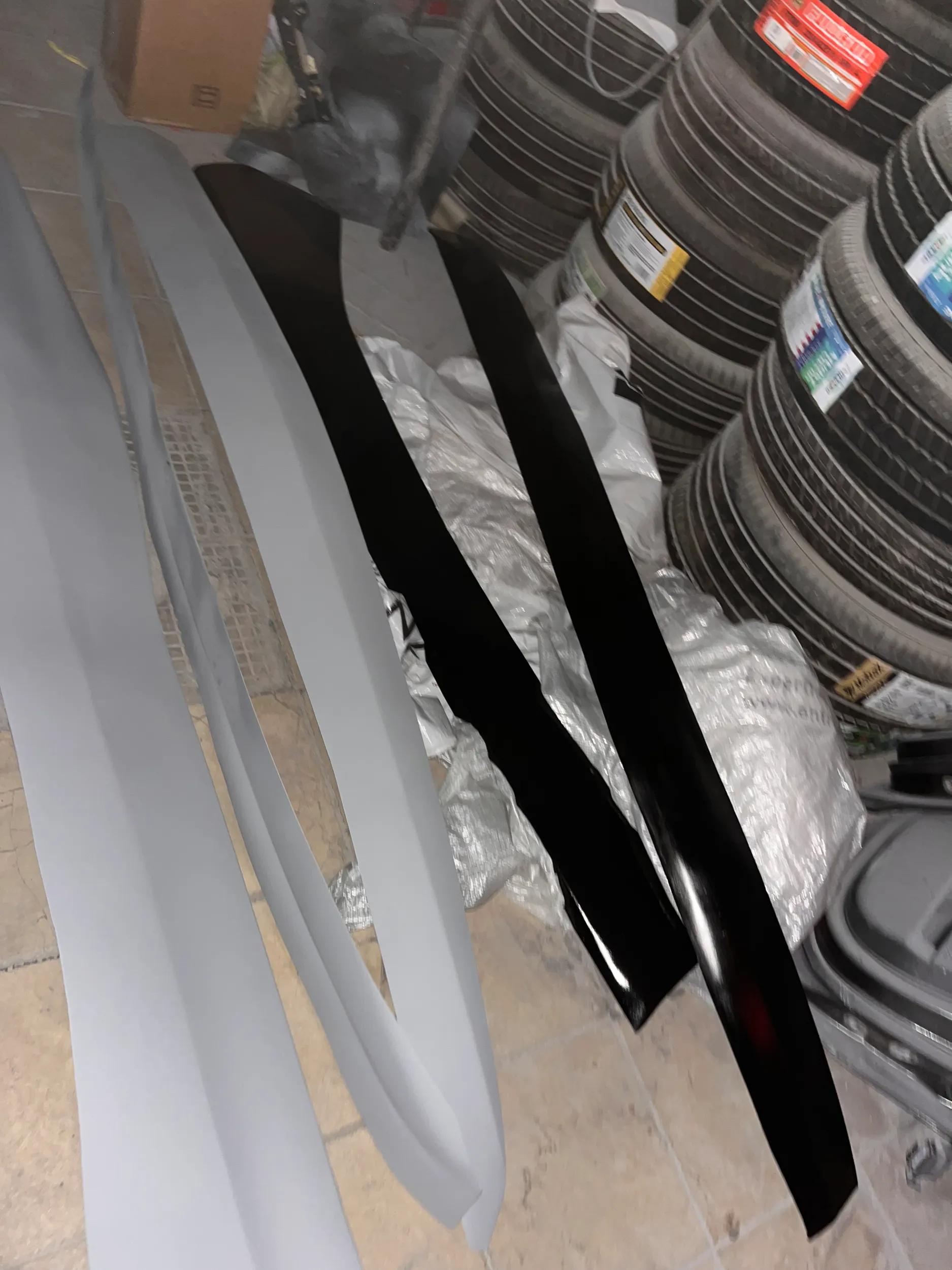
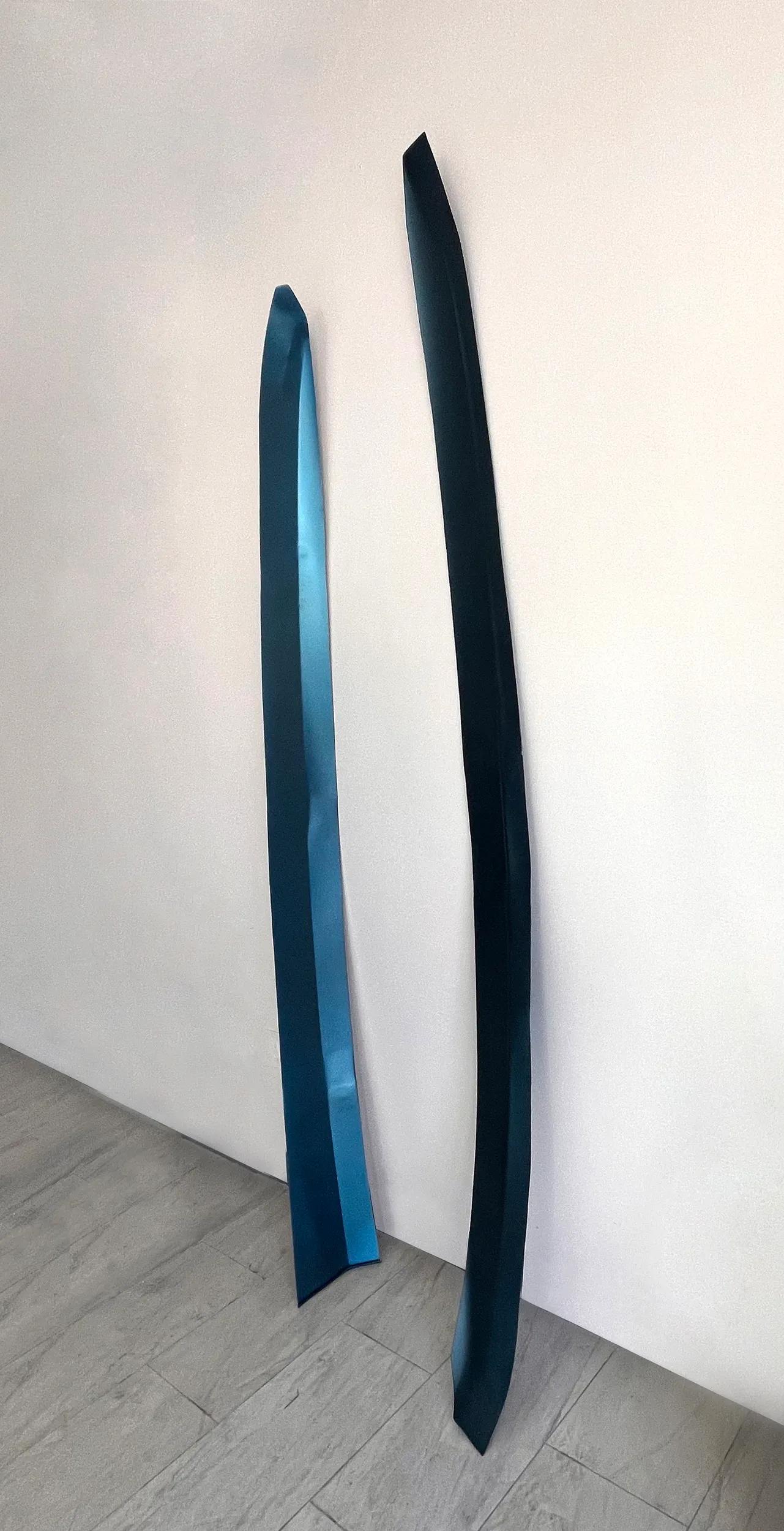
At the core of Marie Angeletti’s work is a poetics of doubles. Reproductions, casts, live feed, shadows, or simply a reflective coat of silver are often deployed. Rather than serving as a tactical gimmick (say, a tired commentary on the contemporary regime of virtuality), this doubling unexpectedly opens up to affective registers and derives from a physical sociality that subverts gender dynamics. The help of men is key to everything she does, and an apt throughline in her practice is Men at Work (2009—), an ongoing series of photographs she takes of, well, men at work in the streets of the various cities in which she has lived, primarily Marseille, Berlin, and New York. The expectation is that the men will catcall the female passerby, but Angeletti takes their portraits instead. When the men become the object of her gaze, most of them smile, hot and dirty, their pride exaggerated, perhaps disenfranchised. Her sculptures, too, often come from the street. She stays on the lookout until something finds her. She collects her daily life, experiences and materials, eventually reaching a point in which she asks for physical or technical assistance to turn them into works. The gendered encounter is collaborative. To make the sculptures in this exhibition, for instance, Angeletti worked with men in scrap yards and auto body shops near her temporary studio in Brooklyn, New York. Her interest lies in the shape or quality of the materials that she encounters—the curves and lines of car parts, for example, rather than the vehicle per se. She extends these ready-made lines by welding and coating them, producing sculptures that are seamless and sufficiently distanced from their source that only an afterimage remains. Drawings and photographs sometimes precede the final form, while at other times follow it or even stand in for the work itself. Recently, Angeletti has presented live feed of sculpture as sculpture, as in Hail Mary (2025–26), a composite floor work assembled from gold plates and rivets she found in the streets. First presented as a sculpture, the work was subsequently shown only through its live feed. Taking on the pathos of an annunciation, the doubled entity does not linger in nostalgia for the physical object but rather endows its sculptural stillness with transformation, attuning the viewer to exterior signs and interior states. For a series of works made in 2024, instead, Angeletti cast rescue boards, head immobilizers, and canoe tips she found at the public pool. Here too, the doubling takes us away from function and toward questions of form, relative weight, color or its absence, and, by extension, ideas of the body, a witness or a prototype, and the illicit implications of her making art. Not a copy and never a style, but a mode of intimacy and latent meanings in the sculptural dimension.
—Matilde Guidelli-Guidi
About Marie Angeletti
Marie Angeletti was born in 1984 in Marseille, France, and she lives and works in New York. Recent solo exhibitions of her work have been held at le vite, Milan (2026); MMXX, Milan, (2025); Gaylord Fine Arts, Los Angeles, (2024); Lars Friedrich, Berlin, (2024); Koelnischer Kunstverein, Cologne, (2023); Centre d’édition contemporaine, Geneva, (2021). An upcoming solo exhibition will be held at Edouard Montassut, Paris, 2026.
Her works has been included in group exhibitions at MoMA PS1, New York (2026); Okayama Art Summit 2025, Okayama city, 2025; Musée d’Art moderne de Paris, Paris (2022); Musée d’art Moderne de la Ville de Paris, France (2017); and Kunsthalle Zürich, Switzerland (2016). Her work features in the collections of The Hammer Museum, Los Angeles; Musée d’Art Moderne de Paris, Paris; FRAC Nouvelle-Aquitaine MECA, Bordeaux; FRAC Bourgogne, Dijon; Centre national des arts plastiques, Paris.
About Edouard Montassut
Édouard Montassut founded his gallery in Paris in late 2015. Originally based in the 2nd arrondissement, the gallery subsequently moved to the 9th arrondissement, where it was one of the first galleries to set up in the neighbourhood, with the ambition to contribute to the development of a new gallery hub in Paris. The gallery has developed a programme devoted to emerging and established artists on the international scene. It represents and supports artists such as Marie Angeletti, Hélène Fauquet, Maggie Lee, Sidsel Meineche Hansen, Matt Browning, Nora Kapfer and Marc Kokopeli, amongst others.
About Matilde Guidelli-Guidi
Matilde Guidelli-Guidi is the curator at Dia Art Foundation, New York, where she researches and presents Minimal and Conceptual practices of the 1960s and 1970s and their contemporary legacies through exhibitions, publications, and live programs. She oversees Dia’s site-specific works by Walter De Maria, Joseph Beuys, and Max Neuhaus, and organizes the Artists on Artists Lecture Series. Recent and upcoming projects include, among other, solo exhibitions of works by André Cadere, Éliane Radigue, Cameron Rowland, Kishio Suga, Meg Webster, and Jack Whitten; primary source books with Senga Nengudi and Richard Tuttle; and discursive commissions by Nandi Loaf, WangShui, and Jordan Wolfson. She lives in New York.
Related News



1 / 5