
Hauser & Wirth Invite(s): Arthur Gillet
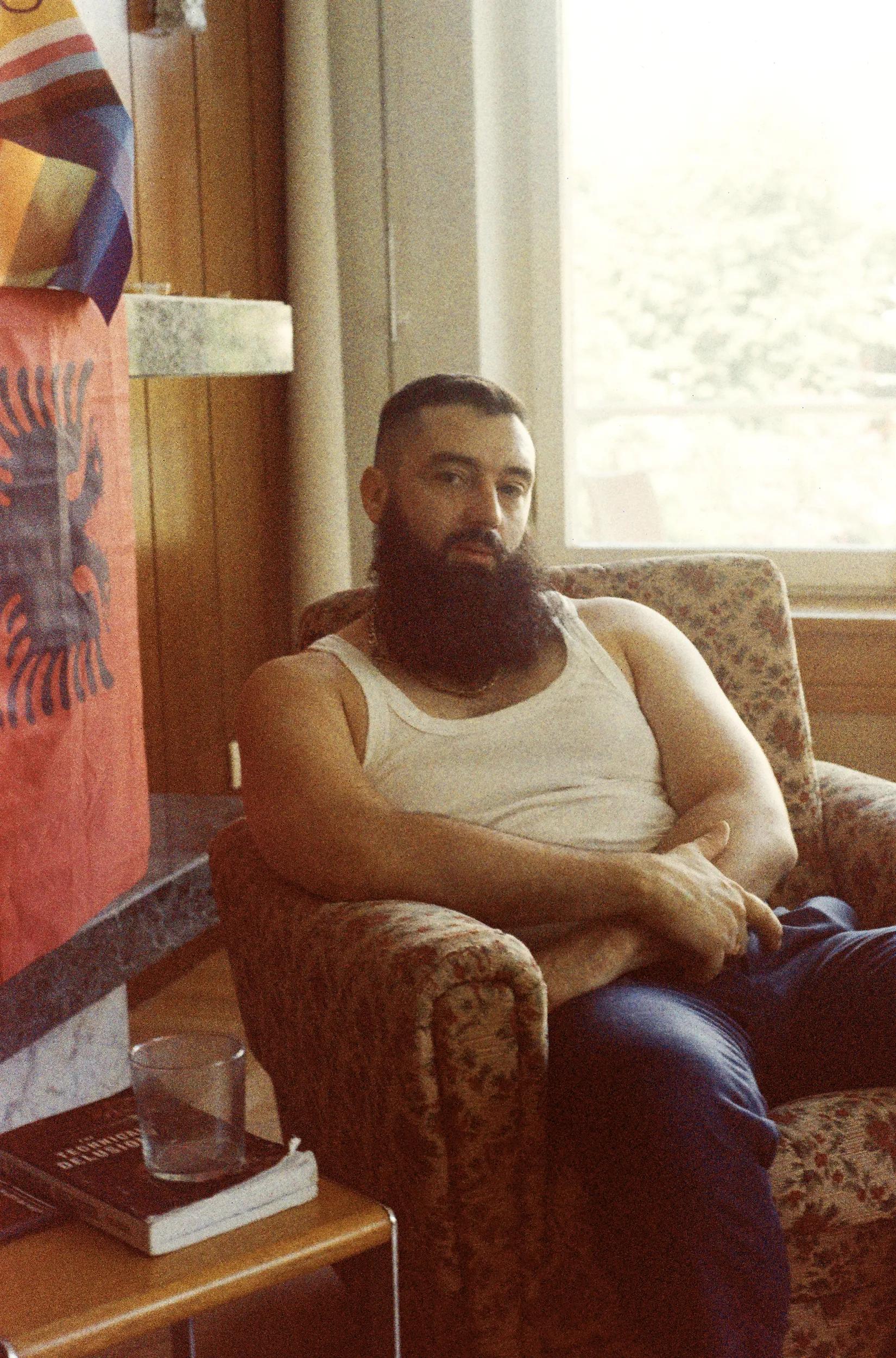
Arthur Gillet. Photo: Nantene Traoré
Hauser & Wirth Invite(s): Arthur Gillet
Organized with Olivier Renaud-Clément, Hauser & Wirth Invite(s) is an initiative to host fellow artists, galleries and writers at our gallery spaces, offering wider visibility of their work and ideas and to engage with Paris’ vibrant creative community.
This initiative reflects Hauser & Wirth’s longstanding commitment to building a sense of connection in the places where it works, collaborating with artists (or estates) who may benefit from an additional platform, galleries of different scale and writers addressing new audiences, all in support of a sustainable art ecosystem. By hosting fellow artists, galleries and writers, we offer wider visibility of their work and ideas to engage with each city’s vibrant creative community.
The exhibition is on view through Saturday 26 September 2026.
Join us for the opening reception on Thursday 3 September, 6.30 – 8.30 pm.
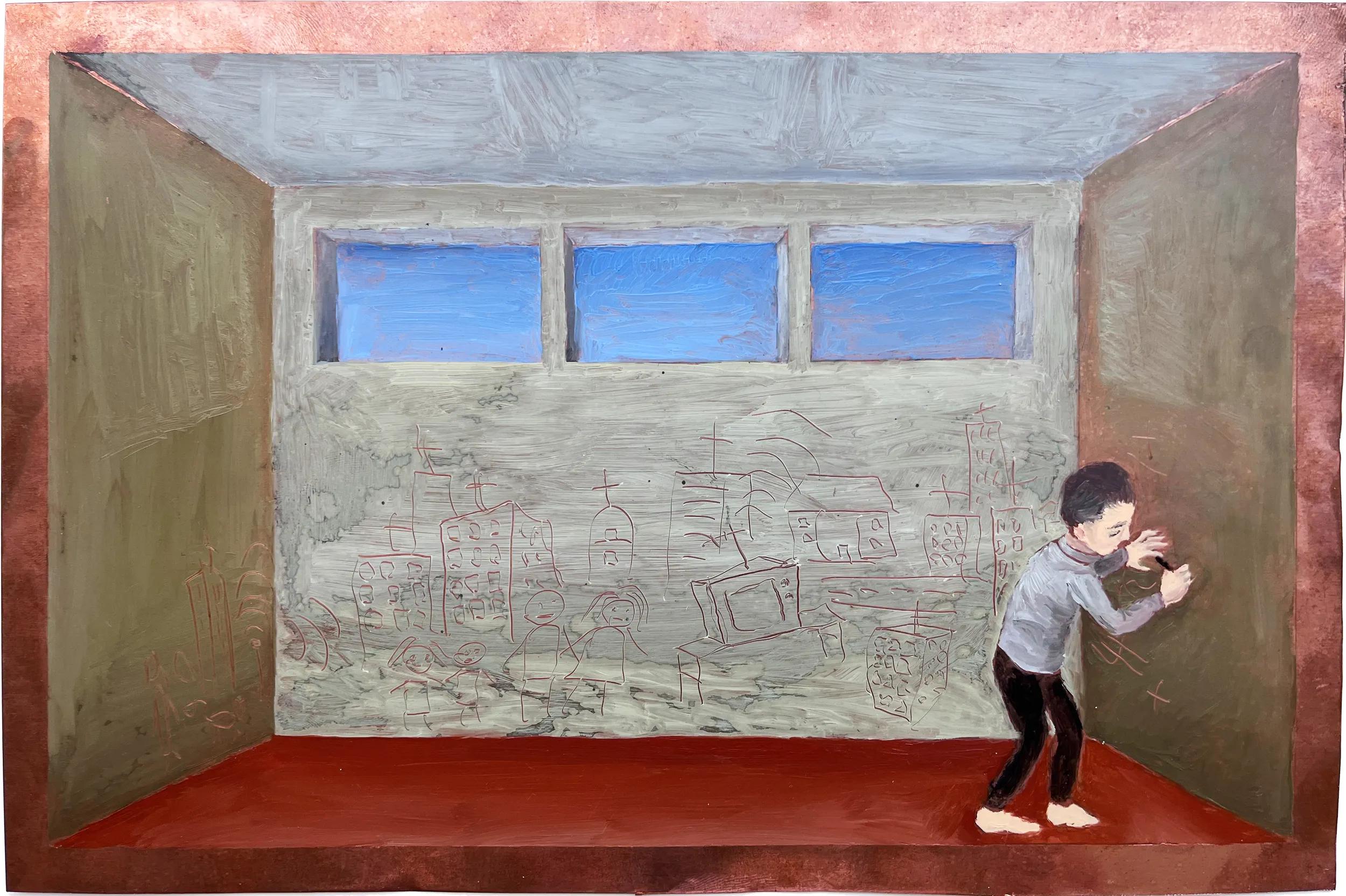
Arthur Gillet, La naissance de l’écriture, 2026 ©️ Arthur Gillet
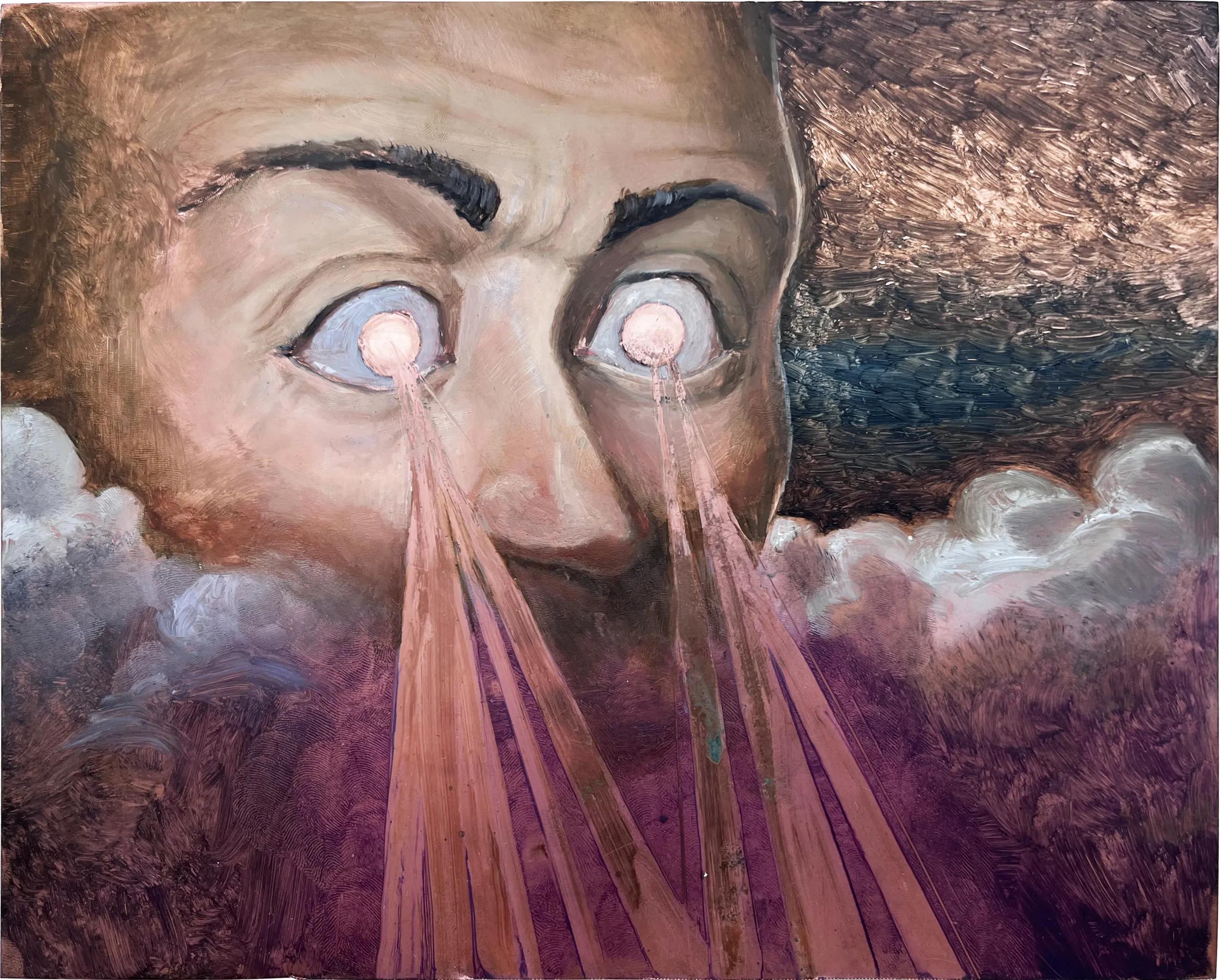
Arthur Gillet, Le Regard, 2026 ©️ Arthur Gillet
The Crisis of the copper age
‘As I paint on sheets of copper inside Enver Hoxha’s former villa, I keep asking myself what I, a Frenchman, is doing here. I grew up in a deaf family. Because sign language was banned in France for more than a century, communication in my family was shaped as much by invention as by absence. Images often travelled where words could not. Technologies that promised connection also became places onto which hope, fear and fantasy were projected. That experience has become the lens through which I encountered Albania.
Copper carries these stories. Extracted from the earth, it is one of humanity’s oldest materials. Soft enough to be engraved and conductive enough to carry electricity, voices and images across great distances, it has connected people for centuries while also serving the infrastructures of power. Today it becomes the surface on which I paint.
A TEXT BY PATRICIA FALGUIÈRES
A text by Patricia Falguières was commissioned in the context of Hauser & Wirth Invite(s): Arthur Gillet, the sixth installment of the initiative in Paris.
About Arthur Gillet
Arthur Gillet (born 1986) is a painter who creates objects. His work explores the ambivalent nature of language and identity, its fragility, the constraints of social norms and the resulting strategies of over-adaptation. These themes have been a constant presence in his life since childhood, spent with his deaf parents, who struggled with schizophrenia, in a social housing estate on the outskirts of Rennes. He grew up at a time when the information revolution was transforming modes of communication, amidst the advent of the internet and smartphones, and his father’s work in a factory manufacturing televisions and cameras.
For the artist, painting constitutes a space for communication, translation and self-determination. Drawing on practices of counterfeiting, disguise and ‘passing’ (whether in terms of gender, class or ableism), his approach engages with art history whilst simultaneously repositioning it through situated experiences. His work also draws on psychoanalysis, CODA (Children of Deaf Adults) studies and a political perspective rooted in his feminist, queer and social activism, echoing that of his mother within the Réveil Sourd.
In 2024, he presented a monumental fresco painted on silk, measuring twenty-five metres, at the Institut français Berlin, accompanied by a guided tour with commentary in sign language alongside his mother. His solo exhibition ‘CODA’ at Galerie S in Paris continued this exploration through his paintings on wood and was featured in Le Quotidien de l’Art. He is currently exhibiting at the Grand Palais as part of the exhibition dedicated to Hilma af Klint.
About La collective Greater Paris
La collective Greater Paris is a project with uncertain contours, it is a gathering composed of humans and non-humans, who don’t remember when they met, but it was long ago. Since 2024, they have extended their conversation through exhibitions. The collective has no legal identity and it may change its name. It's an affinity group—as understood by activist movements, particularly those engaged in the fight against HIV/AIDS. In solidarity, the collective brings together varied practices, forms of resistance and ways of surviving within the art worlds.
About Patricia Falguières
Patricia Falguières was a professor at the École des hautes études en sciences sociales in Paris until 2024. Her work focused on Renaissance philosophy and art, and on Mannerism. She has published numerous essays, including ‘Les Chambres de merveilles’ (2002) and the French editions of ‘Le style rustique. L’emploi du moulage d’après nature chez Wenzel Jamnitzer et Bernard Palissy’ by Ernst Kris (2005) and ‘Les cabinets d’art et de merveilles de la renaissance tardive’ by Julius von Schlosser (2013). Her current research focuses on the regime of Technè in the Renaissance, the inclusion of artistic practices in the Aristotelian order of knowledge At the same time, she contributes regularly to the field of contemporary art through her articles, essays and critical editions; from 2006 to 2024, she co-led the seminar ‘Something You Should Know: Artists and Producers Today’ at the EHESS, alongside Elisabeth Lebovici and Natasa Petresin-Bachelez. She is a member of La Collective Greater Paris.
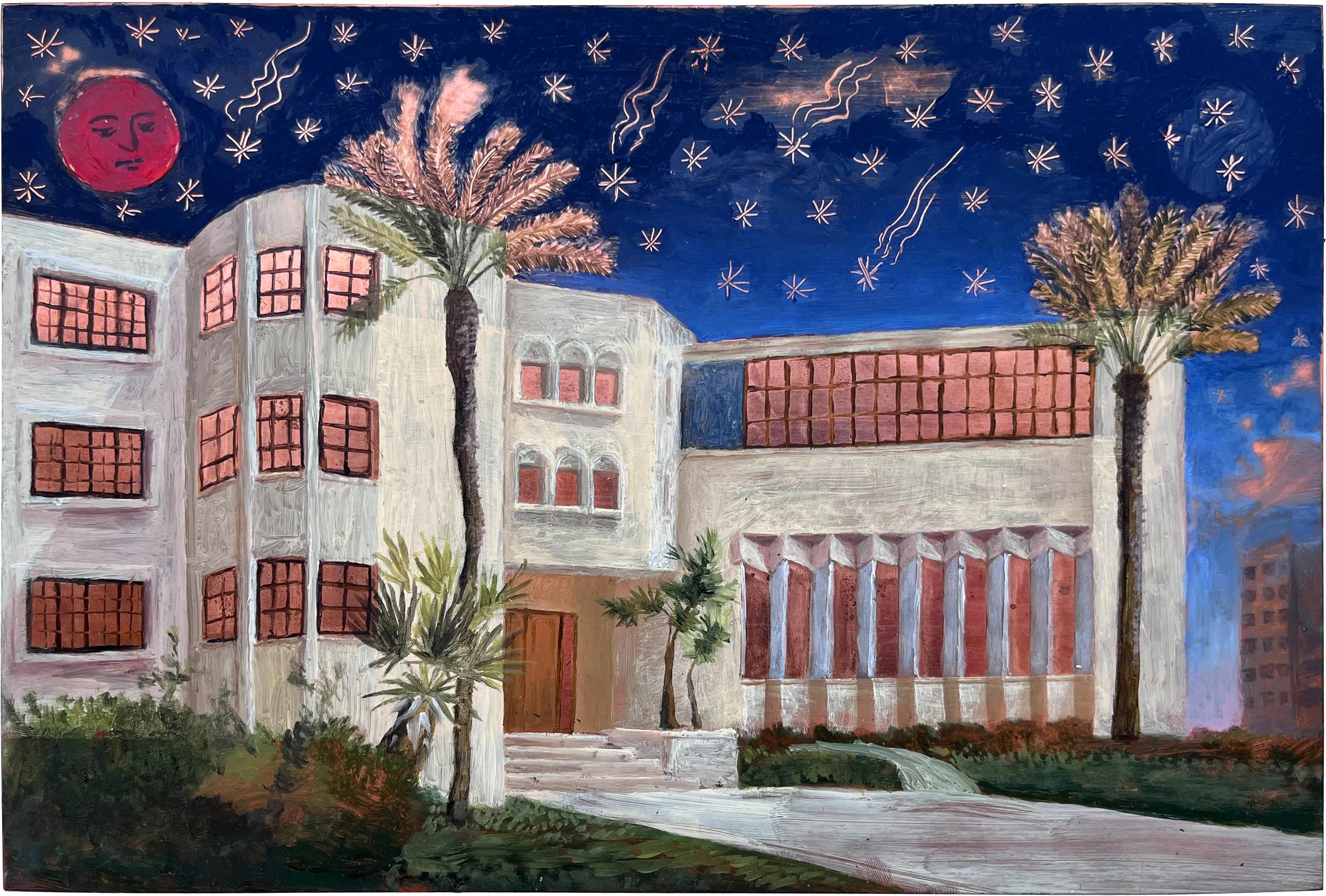
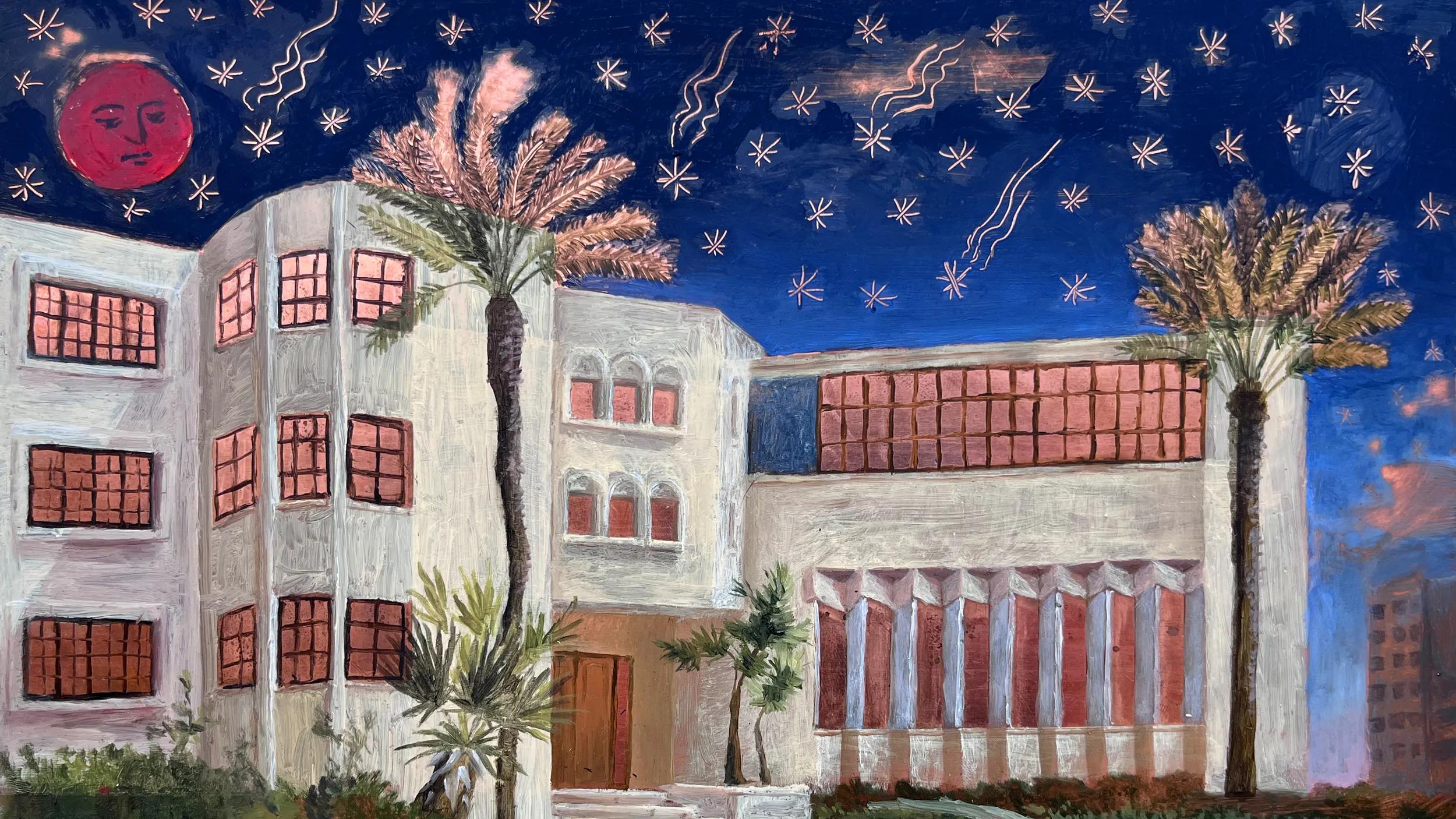
Arthur Gillet, Atfaluna (Gaza), 2026 ©️ Arthur Gillet
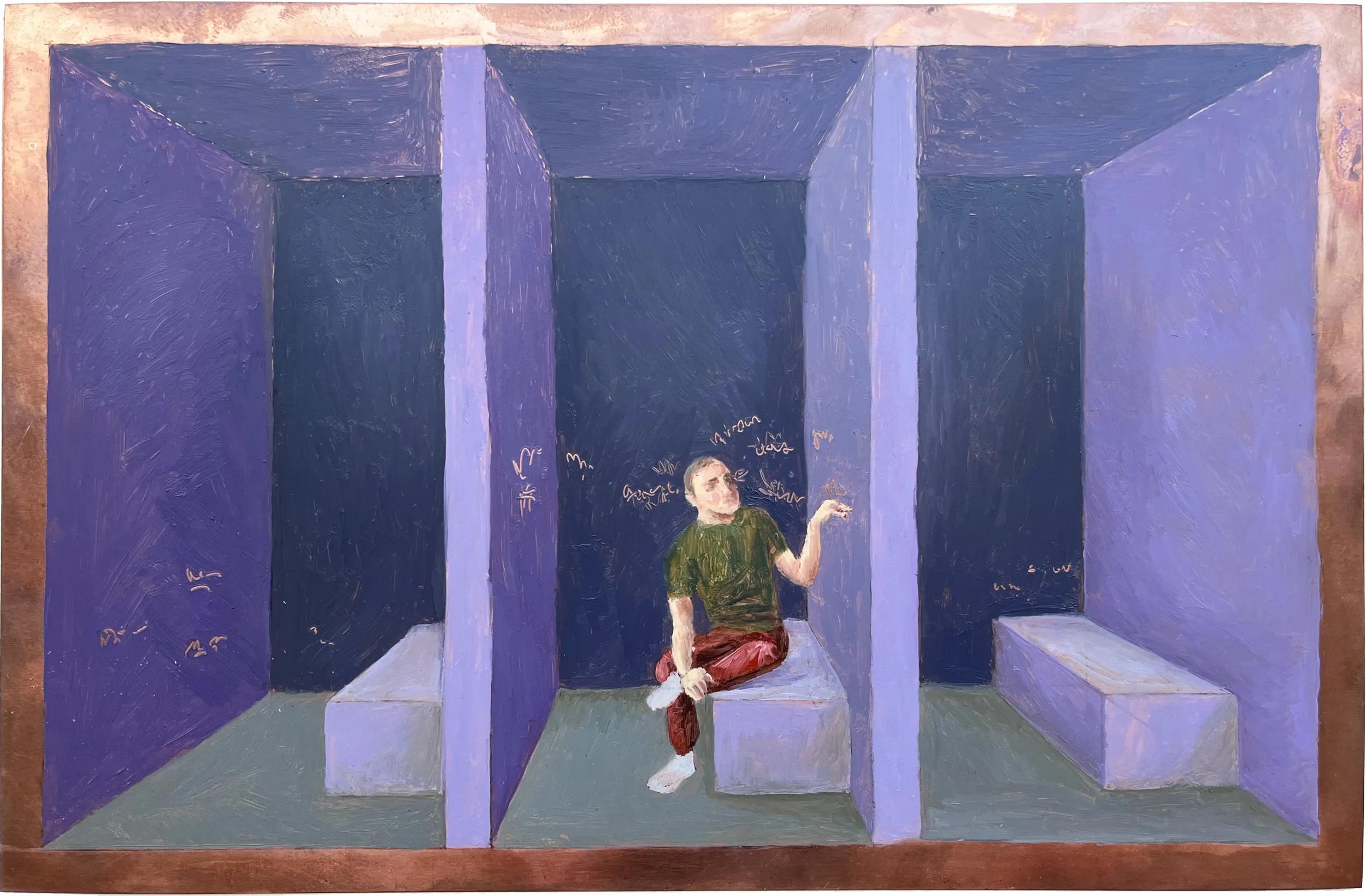
Arthur Gillet, La prison, 2026 ©️ Arthur Gillet
Some of the works were produced during the residency at the Vila 31 Art Explora.
Related News


1 / 5