

Essays
In the Valley of Light
Daniel Baumann on the Engadin and its cultural evolution
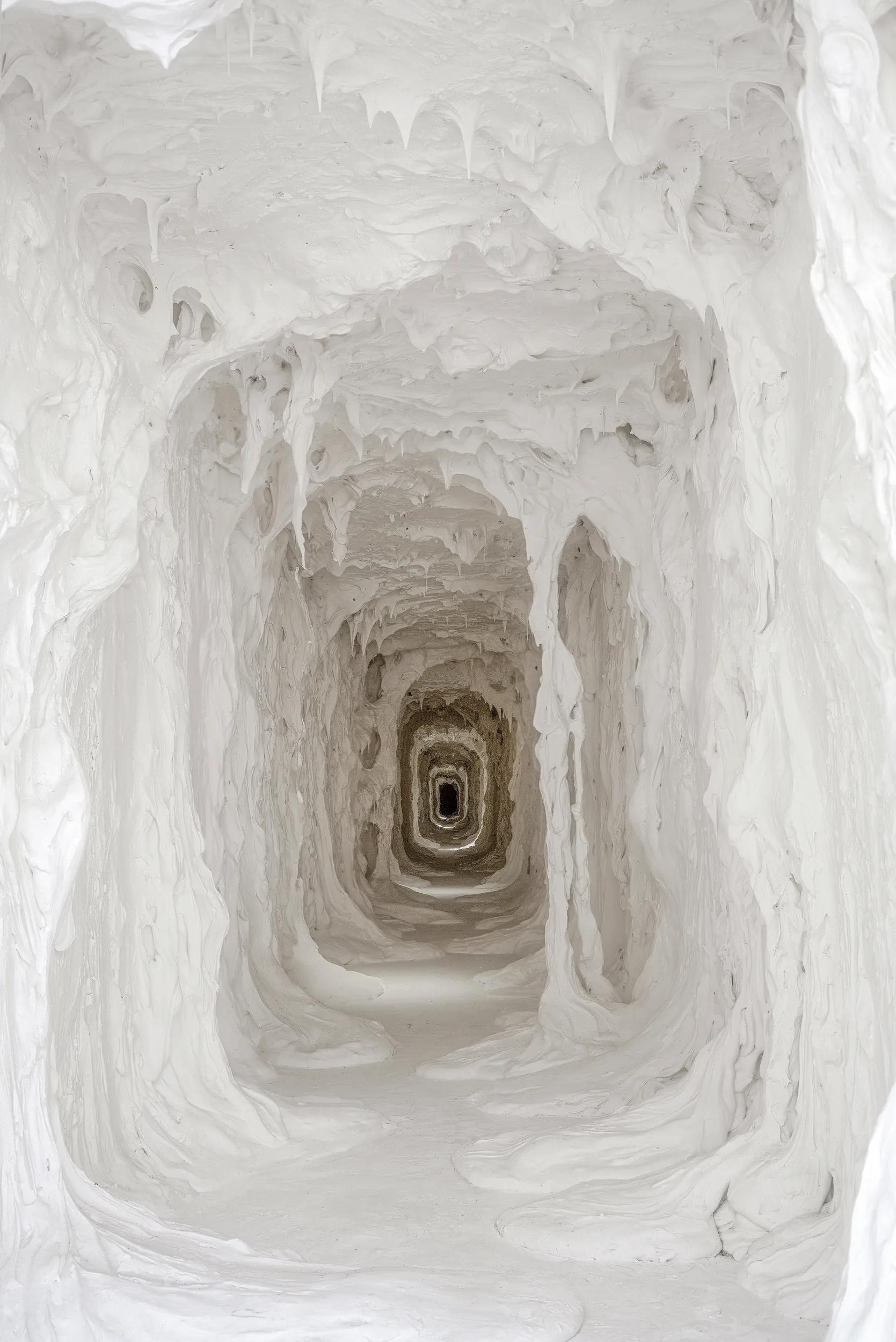
A permanent installation of Sara Masüger’s Inn Reverse (2018) at Muzeum Susch, Switzerland © Jürg Masüger & Art Stations Foundation CH / Muzeum Susch
We all know them and see them, usually at the end of the year: the “best of” lists, collections of the ten best shows, artists, books, cities, commandments, you name it. Though I consider such lists a childish way of thinking about the world, I’ve never been able to keep from asking myself: What are the ten best landscapes in my life? A landscape is the result of centuries of interaction between nature and culture, climate, flora, fauna, agriculture and urbanization. It is also an image, sometimes picturesque, now Instagram-worthy; it has character and lends itself to identification. Death Valley is a landscape, one where human influence remains precarious. At the other end of the spectrum, New York, with its urban canyons, is also a landscape. Biographies are written about landscapes as if they were people.
All of these considerations apply to the Engadin Valley, the world-famous landscape in the Swiss Alps. A visit hits like love at first sight—the light is uniquely bright and sharp, the air crystal clear, the u-shaped valley framed by breathtaking peaks and vistas. It is no surprise that the valley has been the subject of countless books, among them Karsten Plöger’s recently published and very readable biography The Engadine. Biography of a Landscape.
The valley, one of the highest inhabited areas in Europe and a site of settlement since 3,500 BC, was formed by glacial masses. Located in southern Switzerland in the canton of Graubünden, it is divided into two areas—the lower valley, which borders Austria, and the upper, which borders the Italian-speaking Bergell. Putér is spoken in the Upper Engadin and Vallader in the Lower Engadin; these are idioms of Romansh, Switzerland’s fourth national language, which is still spoken by around 40,000 people. For centuries the Engadin has been shaped by the lives and customs of its inhabitants and, as a transit area, by exchange with the world through trade, migration, traffic and tourism.
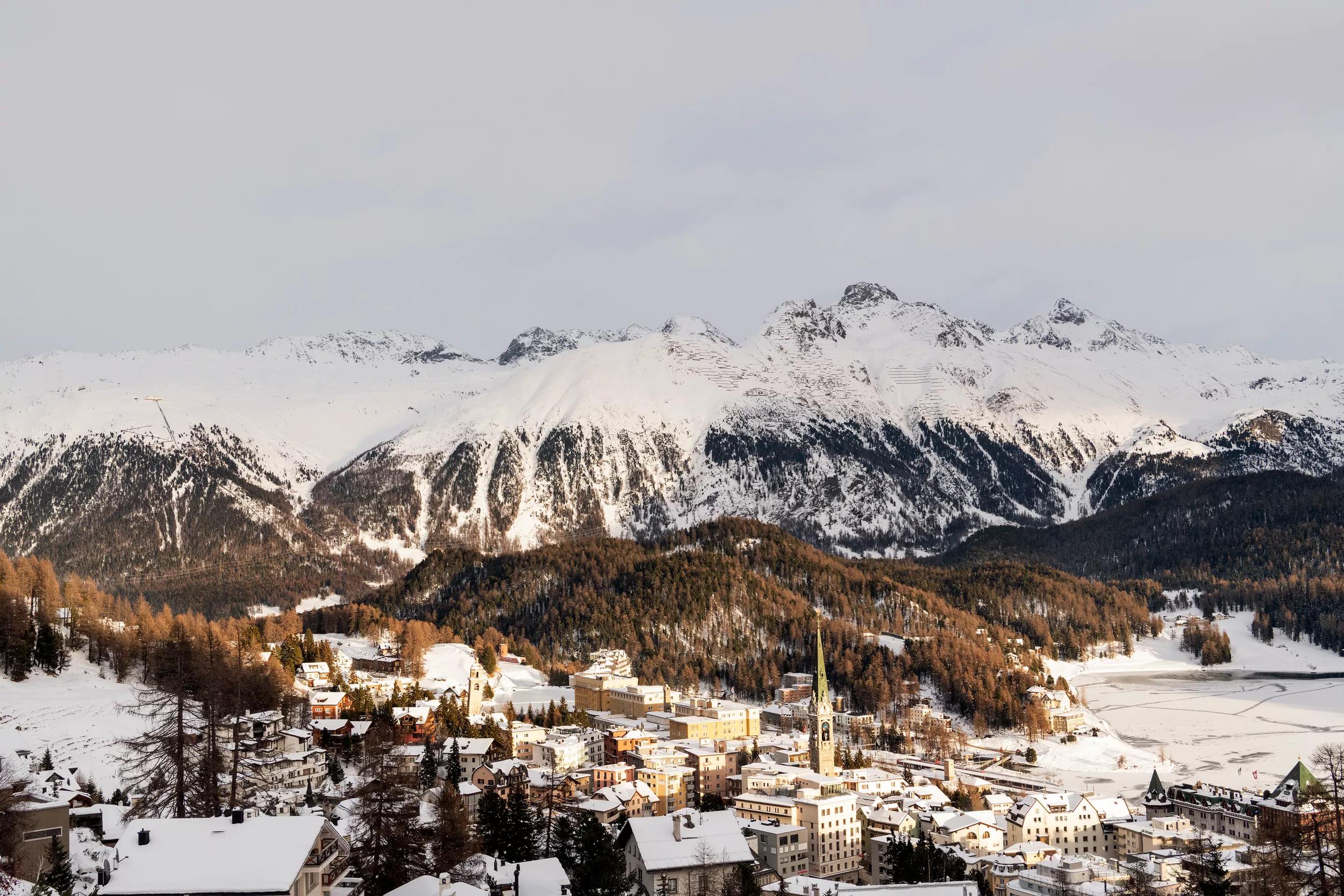
A view of the Alpine town of St Moritz. Photo: Katharina Lütscher
Towards the end of the 18th century, the valley was finally discovered as a travel destination, a development in which the historian and travel writer William Coxe played a central role. English-language travel accounts such as Coxe’s Travels in Switzerland, and in the country of Grisons had such widespread influence in the late 18th and early 19th centuries that a wry saying arose in Switzerland: The English “invented” the Alps. This period of greater international visibility coincided with the Romantic era and its motifs of sublime beauty, wild mountains and untamed nature—an arcadia just then in the throes of subjugation by industrialization and technological progress. Amid this upheaval, the Alps stood as a symbol of authenticity, passion and freedom, and they became more easily accessible thanks to transport routes and travel reports.
The first grand hotels were built in St. Moritz in the 1860s: the Neue Kurhaus St. Moritz (now the Kempinski Grand Hotel des Bains) and the Kurhaus in Tarasp, with 200 rooms, a drinking hall for the good water and even its own church. Initially frequented as summer health resorts, the grand hotels increasingly transformed into sophisticated entertainment venues. Soon, winter sports, which were formally developed in St. Moritz, made their appearance. On the basis of a bet, hotel pioneer Johannes Badrutt launched the world’s first winter season at his Hotel-Pension Engadiner Kulm in 1869, accompanied by curious sports such as curling, bobsledding and skijoring.
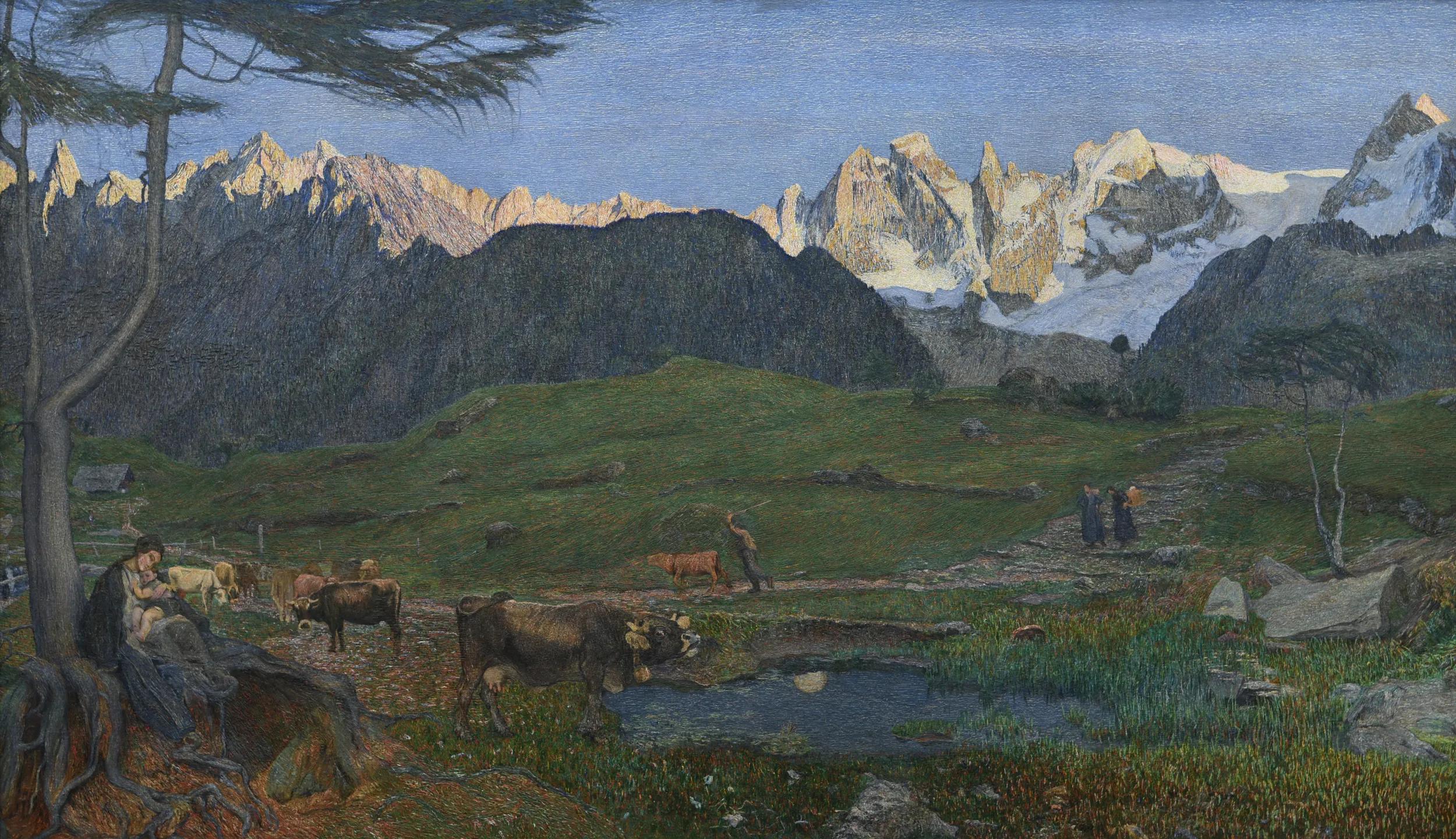
Giovanni Segantini, La vita (Life), 1896–1899, from the Alpine triptych. Courtesy Segantini Museum, on permanent loan from the Gottfried Keller Foundation, 1911. Photo: Stephan Schenk
As the valley became a destination for leisure, it also became one for art and literature. Nietzsche visited the Engadin for the first time in 1879, taking lodging with the well-known family of physician and painter Peter R. Berry and, in 1881, staying in Sils Maria, which he called “his most beloved corner of the earth.” The Engadin inspired him to write his groundbreaking work Thus Spoke Zarathustra and, as he said, to develop the “idea of eternal recurrence, the highest form of affirmation that can be achieved.” (Almost a century later, Sils and Nietzsche inspired Gerhard Richter to create a series of works that Hans Ulrich Obrist exhibited in 1992 in the so-called Nietzsche House in Sils Maria.)
In 1898, St. Moritz had 1,600 inhabitants and 3,700 hotel beds, along with a tramway, a casino, a theater, new churches and enormously high land prices. In 1902, the Albula Tunnel was completed, making it possible to reach the valley by train. Around the same time, the painter Giovanni Segantini, a pioneer of modernism, planned to paint and exhibit a panorama of the Engadin for the Paris World Exhibition in 1900, but the project could not be realized. After his death in 1899, his work found a permanent home in 1908 in St. Moritz with the opening of the Segantini Museum. Segantini’s major triptych, Nature, Life and Death, a pantheistic vision and a homage to the Alpine mountains and the Engadin, remains on view at the museum today.
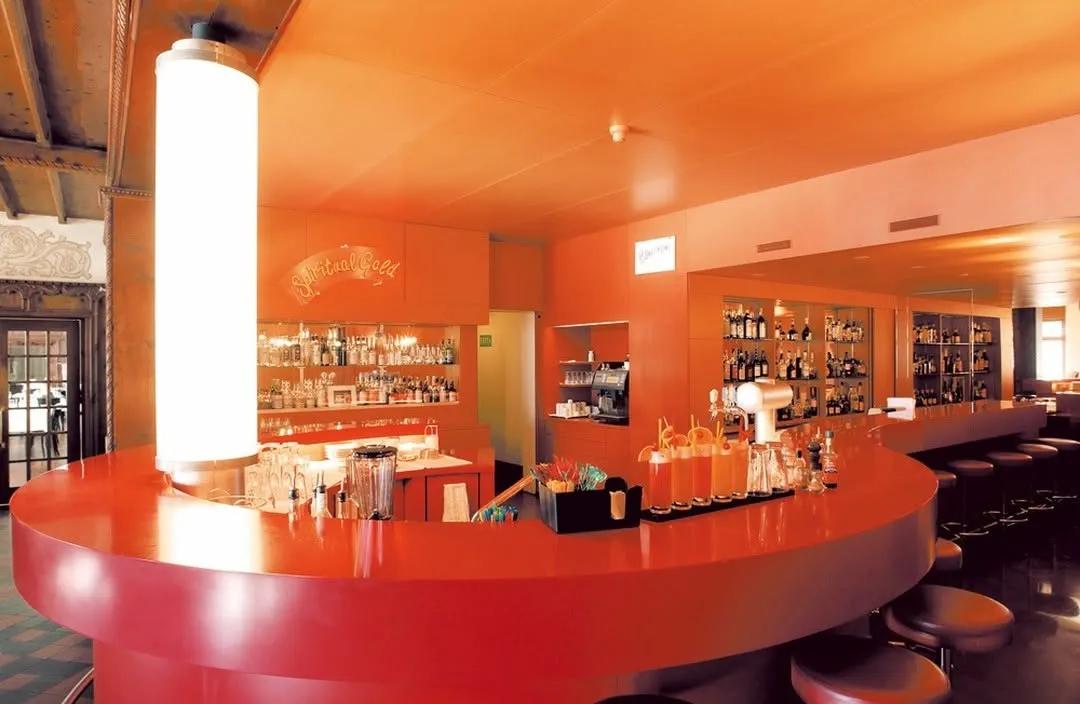
Pipilotti Rist and Gabrielle Hächler’s Rote Bar at Hotel Castell Zuoz © Pipilotti Rist / 2026, ProLitteris, Zurich. Photo: Hotel Castell Zuoz
By 1900, the four basic ingredients that would make the Engadin a successful destination with brand status in the 20th century were already in place: luxury, sports, culture and nature. Nothing illustrates this better than the 1928 film The White Stadium, rediscovered in 2012, about the very first Winter Olympics in St. Moritz, in which 468 men and twenty-seven women from twenty-five nations competed. The film was directed by Arnold Fanck, who two years earlier had made the silent classic The Holy Mountain with the no-less legendary Luis Trenker and a twenty-four-year-old Leni Riefenstahl. The eminent critic and theorist Sigfried Kracauer wrote at the time in the Frankfurter Zeitung: “This film, created by Dr. Arnold Fanck in a year and a half, is a gigantic composition of physical culture fantasies, sun worship and cosmic swagger.”
Beginning in 1929, St. Moritz used a logo to advertise itself, and the idea of a corporate identity for a landscape was born. The valley thrived until World War II brought existential crisis and, once again, it was the Winter Olympics that brought the area back, along with the rest of Europe. The games took place in 1948, just three years after the war’s end, and conveyed a world united in friendly competition, as the voiceover in The Full St. Moritz 1948 Official Olympic Film emphasizes.
During the economic boom after World War II, St. Moritz rose to become one of the destinations of the international jet set, alongside Cannes, St. Tropez, Capri and Acapulco. The Spanish businessman Prince Alfonso von Hohenlohe recalled that his friend the industrialist Gianna Agnelli would ring him “every morning during the high season: ‘Ski with me at six tomorrow,’ he would say. I was the only one more or less awake at this time. So he arrived in his plane at Samedan and took me straight up the mountain in his helicopter. We skied till midday, the most beautiful runs of my life. To be a sportsman — to shoot, to play polo, to ski, to waterski, to do the Cresta — was an important part of being a member of the jet set.”
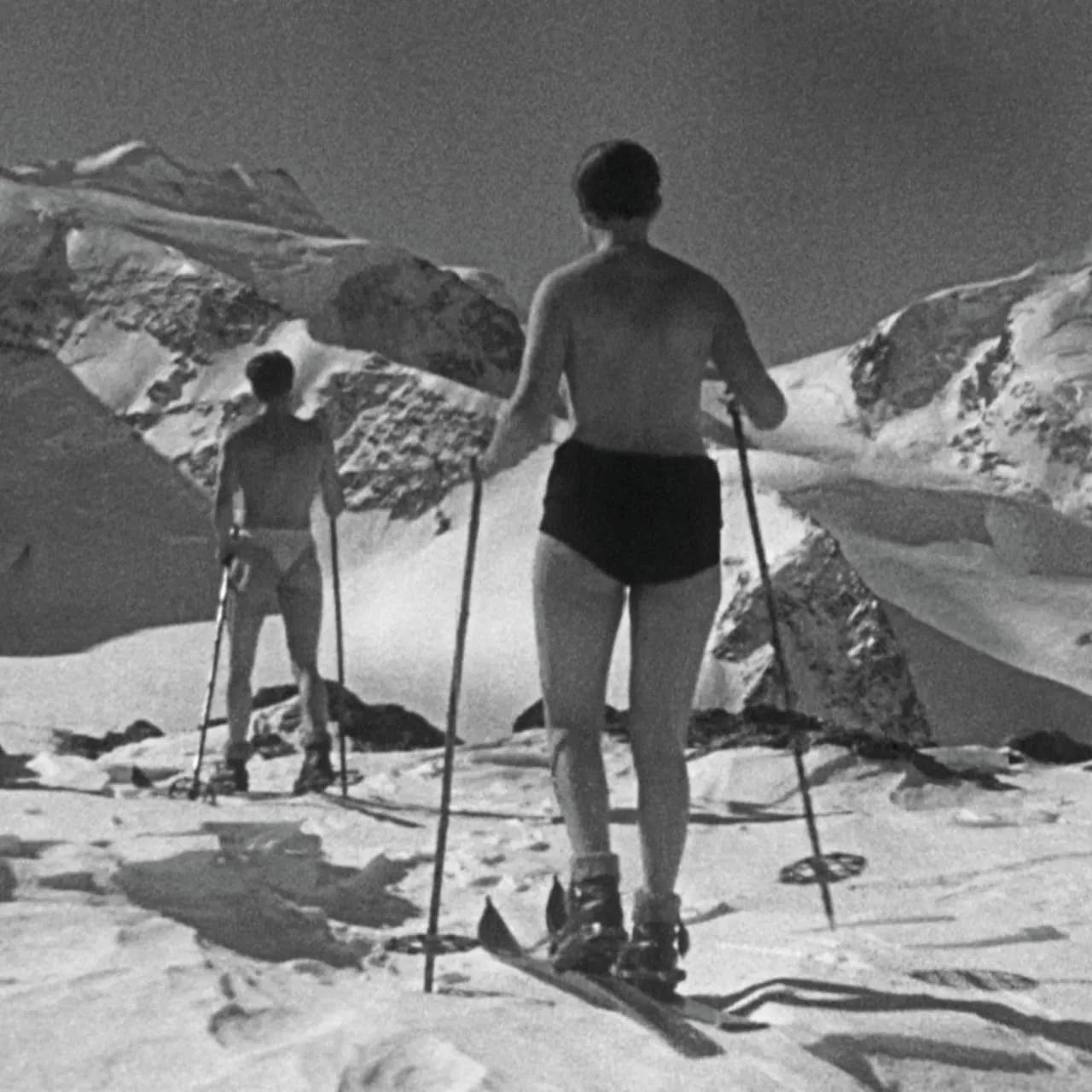
Film still from The White Stadium (1928), directed by Arnold Fanck
In 1987, St. Moritz announced that it would register “St. Moritz—TOP OF THE WORLD” as a trademark, the culmination of a development that many considered a sellout. While St. Moritz was indeed glamorous, many also considered it vulgar and nouveau riche. I remember well in my youth how we looked down on the place; for us, it was a symbol of superficiality and tastelessness and, with it, the entire Engadin.
It was not until the 2000s that a form of decentralization began to occur. Other places in the valley, such as Zuoz, S-chanf and, more recently, Susch in the Lower Engadin emerged from the shadow of St. Moritz and gained prominence. This shift was shaped in part by renewed interest in historic buildings and contemporary art. Suddenly, galleries began appearing at 1,800 meters above sea level, far away from any major cities. The emergence of the NOMAD art fair in the late 2010s made this change visible well beyond the region.
The true catalyst for this development was the acquisition of the Hotel Castell in Zuoz in 1996 by Zurich artist and collector Ruedi Bechtler, who turned the Castell into a place of art and installed his extensive collection in the corridors and rooms, an unusual decision at the time, one that is now widely imitated. Lawrence Weiner, Carsten Höller, Roman Signer and Pipilotti Rist, among others, staged happenings in the hotel, and it became a meeting point for curators, critics and others. Rist realized the hotel’s bar, the Red Bar. Japanese artist Tadashi Kawamata built the unique sun terrace, sauna and reflecting pool and, from 2005 onwards, visitors could experience James Turrell’s Skyspace Piz Uter, an impressive and meditative walk-in sculpture.
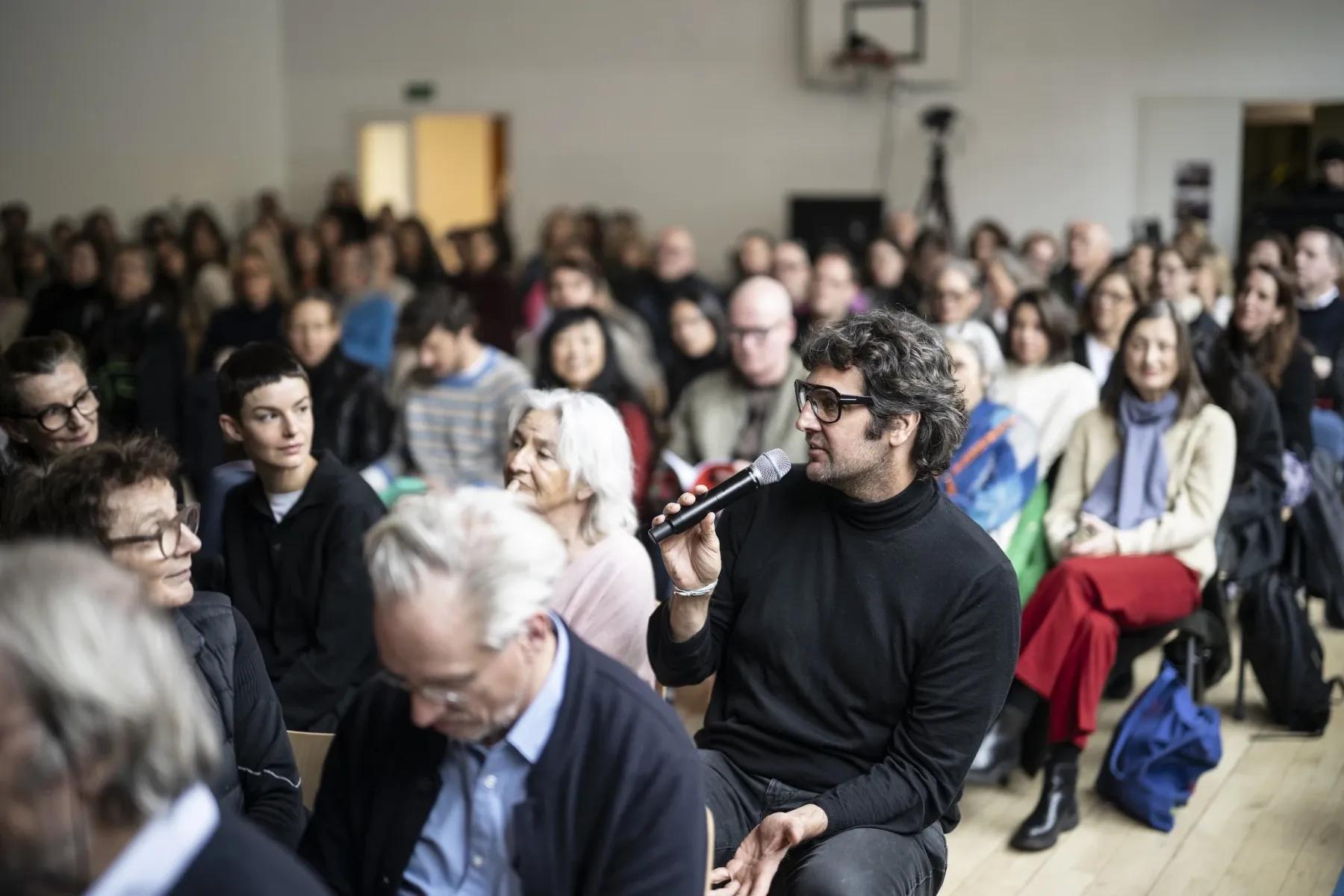
This year marked the 15th annual edition of Engadin Art Talks in Zuoz © E.A.T. Engadin Art Talks. Photo: Mark Wendt
In the early 2000s, Bechtler and the Walter A. Bechtler Foundation were the driving forces behind the Art Public Plaiv initiative for contemporary art and public space in the Zuoz and S-chanf area. As part of this project works by Martin Kippenberger, Fischli/Weiss and Ken Lum were installed in public spaces. In 2007, Bechtler and I initiated the so-called “Collectors Days,” with the idea of making collecting more accessible to a wider audience. In 2010, the first Engadin Art Talks, founded by Cristina Bechtler and Hans Ulrich Obrist, took place. (Full disclosure: I have been one of the curators of the talks series since 2016). In 2019, the opening in the Lower Engadin of the Muzeum Susch—created by Polish entrepreneur and collector Grażyna Kulczyk in a former brewery—marked the latest advance in the colonization of the valley by contemporary art.
Is the Engadin one of my favorite landscapes? It is certainly the prototype of a successful landscape. In times of overtourism and the gentrification of entire regions, there is much to learn from this valley, which has dealt with such issues for more than a century. In this sense, it is an international cultural laboratory—in the hotels and clubs, in the galleries and museums and on the slopes, as one curses the overcrowded hiking trails. Whatever the future brings for the valley, its incredible light will never disappear and it will continue to move us day after day.
–
Daniel Baumann is an art historian and curator based in Basel. He is a regular contributor for Ursula writing about generational shifts in exhibition-making and in the art world at large.