
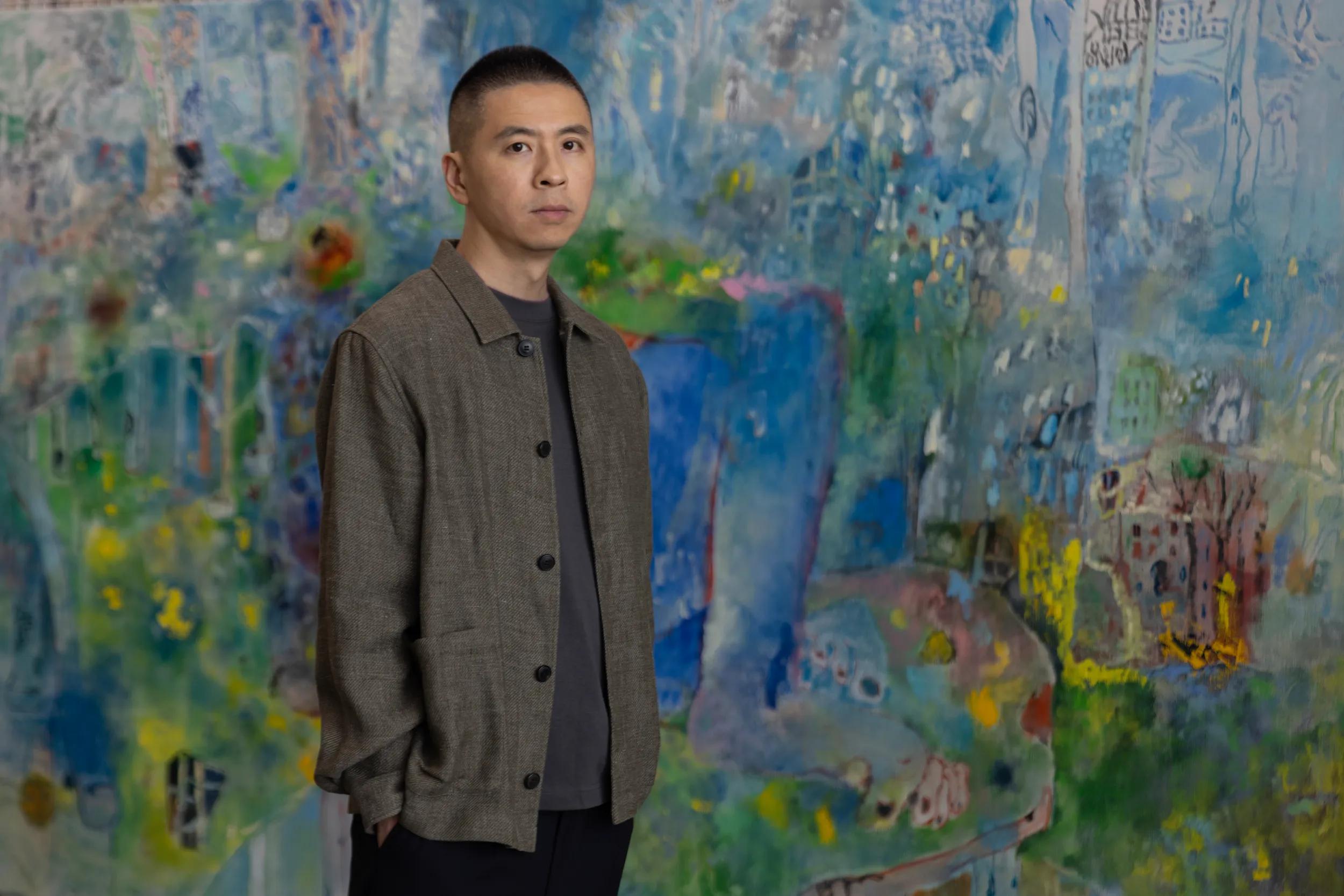
Photo of Qiu Xiaofei
Artist & Curator Walkthrough: Qiu Xiaofei & Alexis Lowry on ‘Qiu Xiaofei. The Theater of Wither and Thrive’
On the opening night of ‘Qiu Xiaofei. The Theater of Wither and Thrive,’ the artist’s first solo exhibition with Hauser & Wirth, please join us for a walkthrough with artist Qiu Xiaofei and Senior Curatorial Director Alexis Lowry.
‘Qiu Xiaofei. The Theater of Wither and Thrive’ presents a new body of oil paintings and works on paper, inspired by the discovery of previously unknown family photographs following his father’s passing. From this intimate finding, the exhibition expands into a broader meditation that moves from the vast, unpredictable transformations of the world to the subtle and elusive origins of personal memory.
Dedicated to giving form to the invisible, Qiu’s practice is informed by Chinese cultural and philosophical traditions as well as by the work of Western poets such as Robert Lowell and Emily Dickinson. Through vivid, dreamlike imagery, experiences of loss and remembrance are distilled into a universal theatre of life, in which presence and absence, flourishing and decline, history and individual emotion unfold in a silent yet monumental drama.
This event is free, however, reservations are recommended.
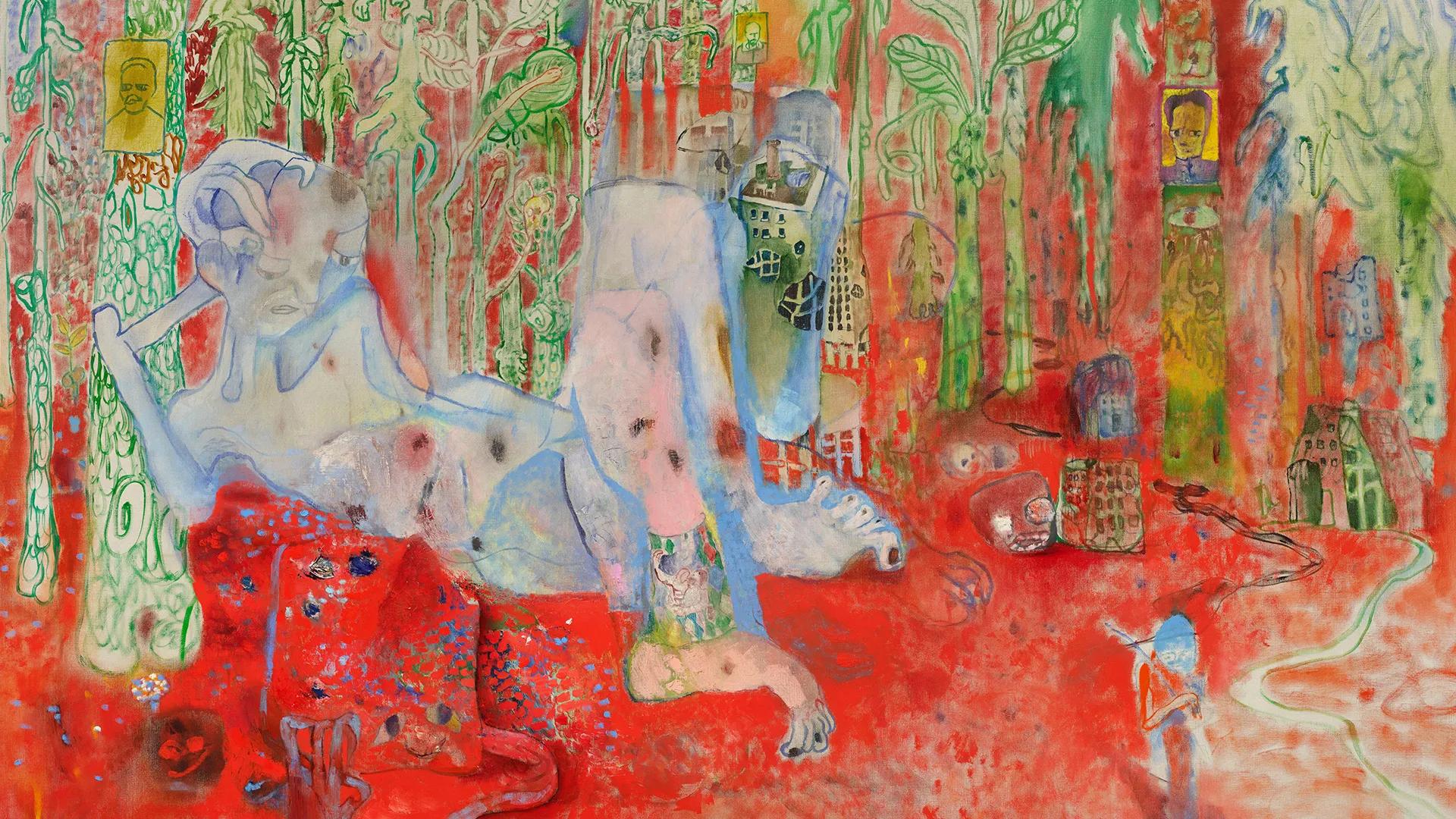
Qiu Xiaofei, The Theater of Wither and Thrive, 2025 © Qiu Xiaofei
About Qiu Xiaofei
Qiu Xiaofei (b. 1977, Harbin, China) lives and works in Beijing. He graduated from Central Academy of Fine Arts, Beijing, in 2002 and came to prominence in the early 2000s as part of a new generation of artists shaping China’s contemporary art scene.
Qiu’s artistic practice is deeply rooted in personal family memories and his complex attachment to his hometown of Harbin. These regional experiences are represented on his canvases as composite spaces of abandoned architecture and natural landscapes, appearing like theatrical backdrops that serve as the core vehicle of his aesthetics. After years of refining his formal language, his focus shifted toward probing the irrational forces within the human psyche: madness, hallucination and other non-rational impulses. Through the medium of painting, he renders his perceptions of contemporary states of mind, while continually negotiating binary oppositions such as growth and death, brilliance and cruelty. His works thus operate as a ceaseless mechanism of transformation between reality and imagination, seeking to unearth the undercurrents that lie beneath everyday appearances.
Forthcoming Events: New York


1 / 5