Image for Zeng Fanzhi

Zeng Fanzhi

In the Studio

2 October - 10 November 2018

London

Conceived as a single exhibition spanning three locations in Zurich, London and Hong Kong, Hauser & Wirth is delighted to present ‘Zeng Fanzhi. In the Studio’. The unifying theme of these presentations is Zeng’s investigations into the possibilities of painting in the contemporary era. The exhibition is reflective of a multi-layered approach since the artist works concurrently on several series. As a result a perpetual dialogue, between abstraction and representation across histories and cultures, is at the core of his practice.

The exhibition allows viewers the opportunity to gain an unprecedented and in-depth understanding of the bold development of the artist’s creative process as each locale features new works which have not been previously exhibited. In Zurich the exhibition features abstract landscapes from the last two years; in London the focus is portraiture from the late 1980s to the present day; and in Hong Kong new paintings and drawings deftly draw on conjunctions of Oriental and Western artistic traditions reflecting Zeng’s ongoing research and experimentation.

Over the course of three decades, Zeng has continually challenged convention to transcend a simple representation of the physical world. His approach is a highly personal search for a fundamental understanding of painting and its potential as a means of expression through the medium itself. In this respect elements of the artist’s process – such as the painted gesture, the creation of pictorial space and use of colour – are at once a means of conveying human experience and a meditation on the inherently subjective nature of perception. As Zeng Fanzhi explains, ‘Painting provides me with a gateway to stay in contact with the world. What I feel, see, hear, and think are all articulated through my paintings.’

The paintings which feature in the Zurich section of the exhibition are an evolution of a series of abstract landscapes which the artist began in 2002. Zeng has developed new techniques, using diverse brushstrokes in vibrant hues against a darker ground disrupt and traverse the surface plane in intricate expressive skeins. Previously elements such as fire, water and sky appeared in this series, yet the recent works, such as ‘Untitled’ (2017), are resolutely abstract giving an impression of an indeterminate territory reflecting the artist’s expressive plane, the scale of which envelops the viewer.

In this respect, Zeng is pursuing a prevailing line of investigation in Chinese aesthetics in which the forms of the natural landscape are used as a metaphor for the character and emotions of the artist. Zeng has an acute awareness of the dynamics which occur as the viewer continually adjusts the focal distance to arrive at their own ideal vantage point, and the configuration of the works in the gallery space forms a rhythm.

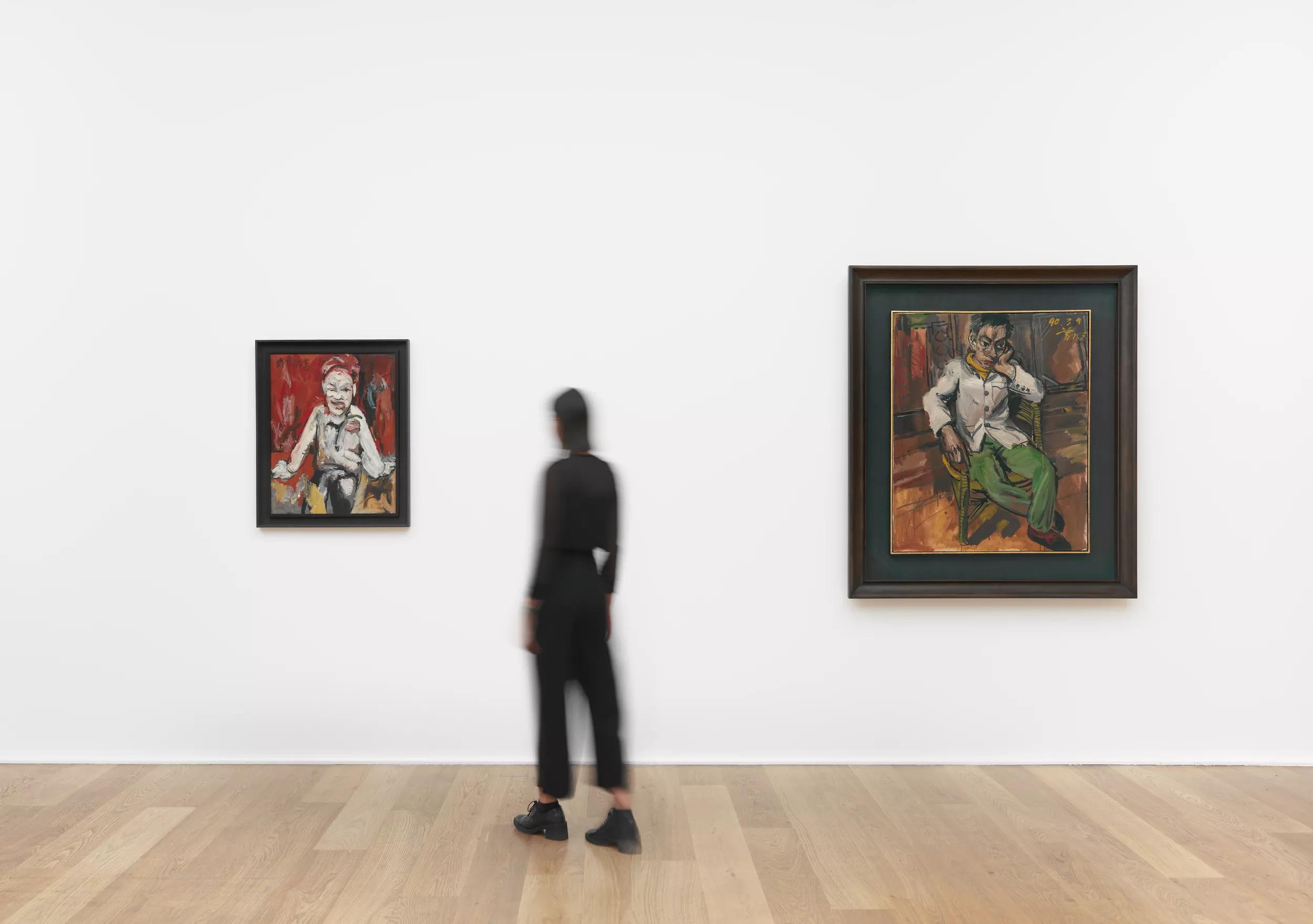
The human figure remains an essential theme throughout the artist’s career and Zeng describes the genre as a means of observing ‘the fundamental emotional state of humankind’. The figurative works on view in London reveal the aesthetic range of the artist as his approach has evolved, from early paintings ‘Smiling Beck-ning’ (1989) and examples from the renowned Mask Series which followed in the 1990s, to several new series of works and portraits featuring the cultural icons Lucian Freud, Francis Bacon and Victor Hugo created in recent years. This presentation aptly demonstrates Zeng’s dedication to experimenting with a multiplicity of approaches over the course of three decades. In this respect it gives unprecedented insights into the artist’s work by revealing how the process of painting itself takes precedence as a means of conveying meaning and experience over the subject matter depicted.

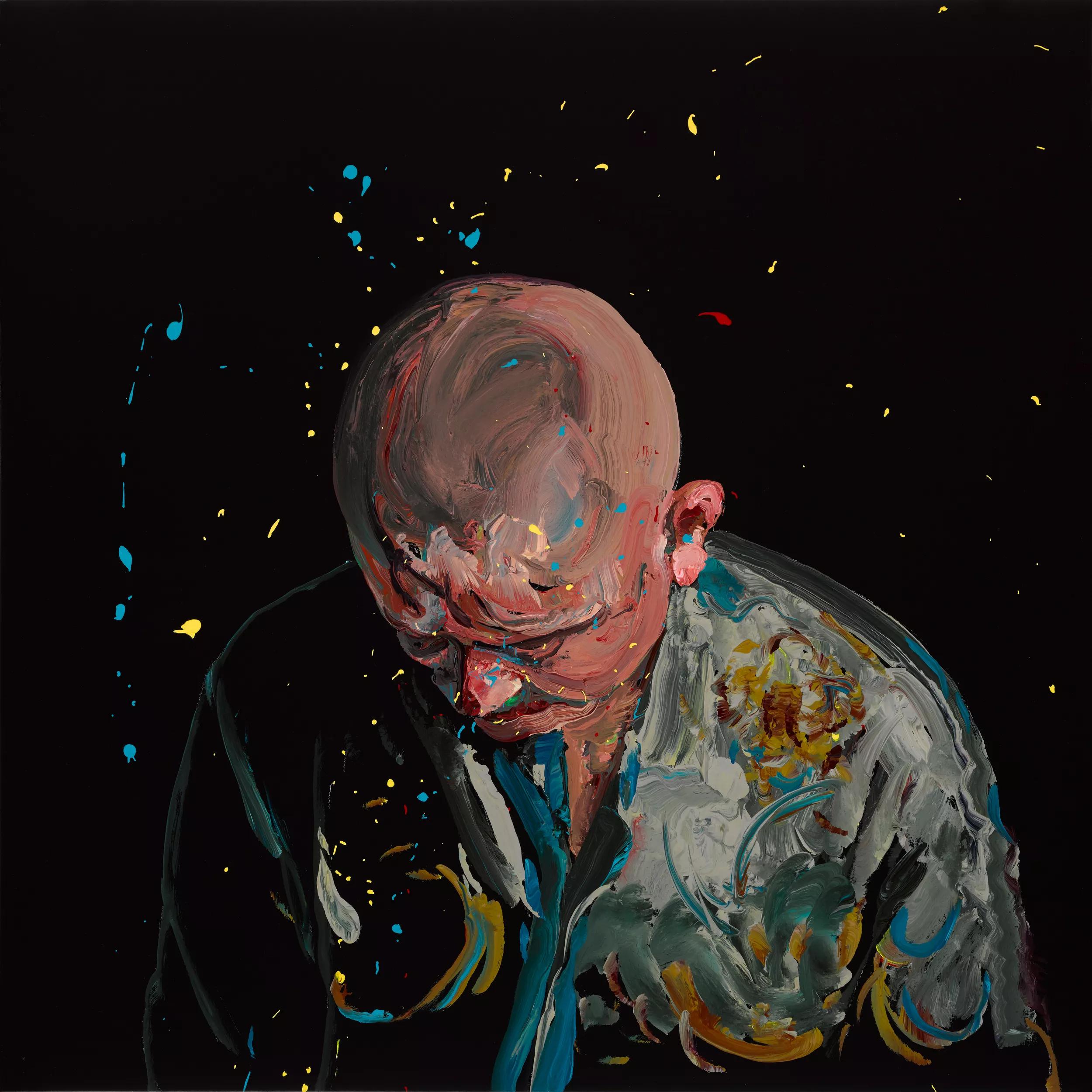
A thematic strand which emerges here is the artist’s reflection on the creative act itself through forms of portraiture. In a new series Zeng returns to self-portraiture for the first time in a decade, portraying himself with a bowed head to suggest the meditative and repetitive nature of the processes which are intrinsic to his creative labour. Regardless of the thematic, pictorial, and stylistic variations, the artist considers portraiture an introspective and autobiographical subject and a means of reflecting on his state of mind, his contemplation of human emotions, imagined ideals, and perhaps even pessimism and compassion about human existence itself.

The presentation in Hong Kong emerges from Zeng’s careful examination of, and reflection upon, the work of Cézanne and Zhao Gan, the 10th century Chinese artist. For Zeng the series of paintings and process of creating them are a means of undertaking acute observations on the methodology and perception of these artists. This experimental approach led the artist to explore the relationship between Zhao Gan’s ‘Early Snow on the River’ (late 10th c.) and Paul Cézanne’s Mont Sainte-Victoire series in several paintings. Further works, pencil drawings on the book covers of ancient drawing manuals, again reference traditional Chinese painting practices and the expressive potential of landscape motifs as a reflection on a state of mind.

Further new paintings in this final section of the exhibition reveal the extent of the artist’s experiments with composition and colour, with the scope of his research expanding to cover comparisons of Oriental and Western practices. The result of this progressive process is that the works featured in this section of the exhibition reflect the artist’s changing colour palette and use of contrasting colours as exemplified by ‘Untitled’ (2018), a resolutely abstract work in which gradations in the hues appear to modulate the surface of the canvas. The study of Cézanne and Zhao Gan is here expanded to incorporate the work of Giorgio Morandi, giving a further insight into the dialogue between abstraction and representation which informs the bodies of work in all three locations.

The catalogue from Hauser & Wirth Publishers, with texts by David Anfam and Fabrice Hergott, will be available in November. The authors will be in conversation at 11am on Saturday 22nd September at Hauser & Wirth Zürich.

Selected images

Installation views

Related Content

About the Artist
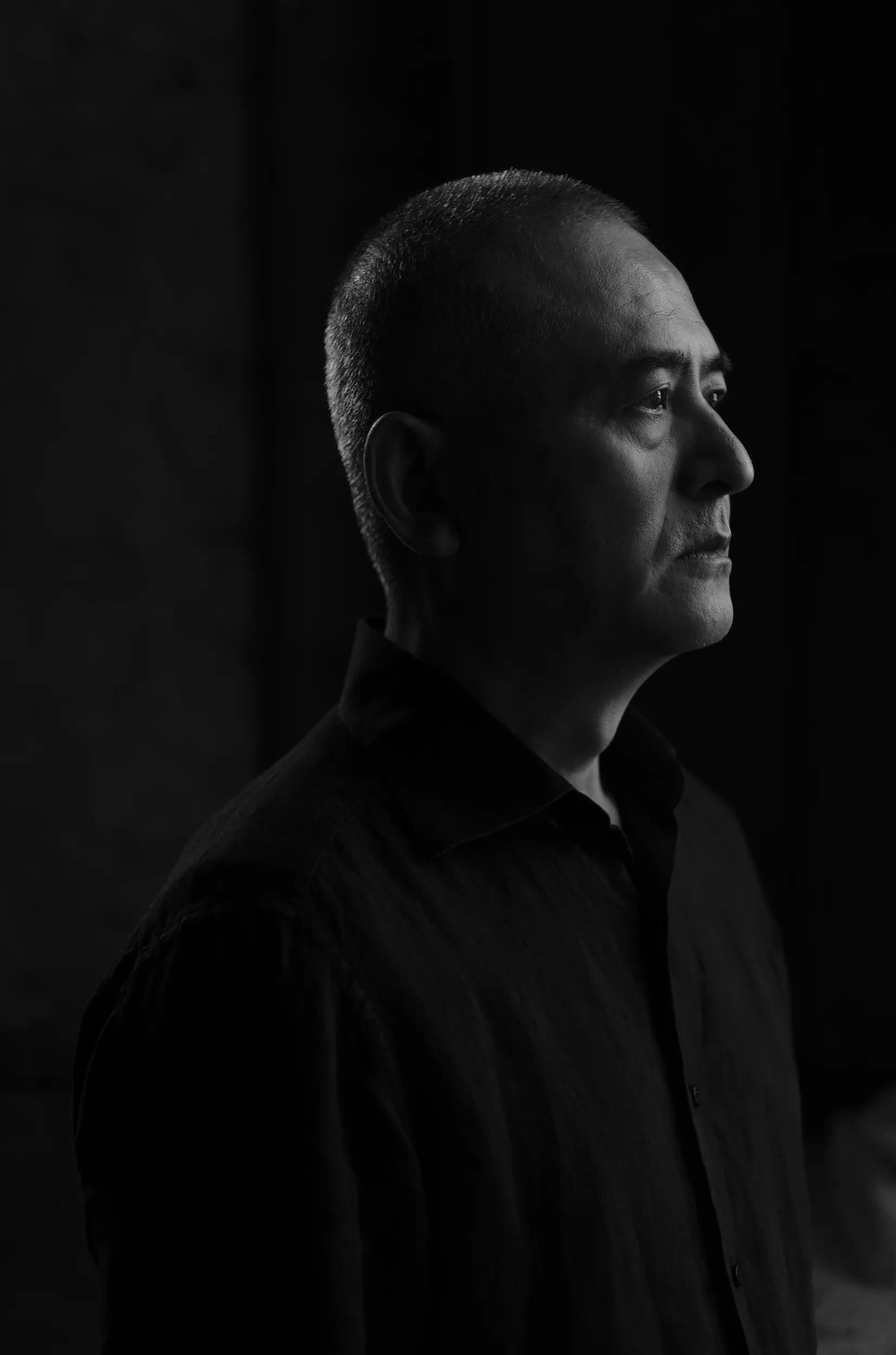
Image of Zeng Fanzhi

Zeng Fanzhi

Zeng Fanzhi was born in Wuhan, China in 1964 and graduated from the Hubei Institute of Fine Arts in 1991. Even as a student, he demonstrated exceptional talent and technical mastery, developing an artistic approach that departed from the prevailing tradition of socialist realism. Experimenting with abstraction and adopting an expressionist approach to portraiture, he conveyed the psychological complexity, unease and anxiety of his subjects with remarkable insight. Throughout his career, he has remained attentive to individual existence, the inner life and the subtle stirrings of human emotion.

Alongside the evolution of his own artistic practice, Zeng has maintained a longstanding interest in studying the work of earlier Western masters. During his student years, he was particularly drawn to Paul Cézanne, Francis Bacon, Willem de Kooning, Max Beckmann and the German expressionists. Cézanne, in particular, has remained an important influence throughout his career, with Zeng returning to his work repeatedly for inspiration. Drawing on these influences, Zeng nevertheless forged a distinctive artistic language of his own. At just twenty-eight, he created several major bodies of works, including the Hospital Triptychs (1991 – 92) and the Meat Series (1992 – 93). Highly expressive and remarkably assured in style, these paintings established his reputation and have since been widely recognized in Chinese and international art publications.

Working amid China’s rapid modernization and urbanization, Zeng turned his attention to the contemporary epoch, exploring the shared social and psychological experiences of the time. In his celebrated Mask Series (1994 – 2004), figures wear masks that cling closely to their faces, paradoxically exposing rather than concealing their inner emotions. This rich body of portraiture, characterized by distinctive imagery and meticulous attention to technical detail, moves between realism and fantasy, offering an insightful autobiographical reflection on the society in which he lived.

Over the past two decades, Zeng has deepened his engagement with classical Chinese painting philosophy, particularly art from the Northern Wei, Song and Yuan dynasties, from the fourth to fourteenth centuries. At the same time, his attention has also turned to the natural world, closely observing mountains, rivers, weathered trees and unusual rock formations. These sustained inquiries have expanded his artistic vocabulary, bringing together the formal principles of classical Chinese painting and a personal interpretation of the natural world, shaped by both direct observation and his imagination. These new interests prompted Zeng to reconsider the relationship between abstraction and figuration, exploring how each could inform and enrich the other. Since 2002, his Abstract Landscape series has evolved through several phases, characterized by gestural landscapes animated by the same dynamic energy found in Zeng’s portraiture. Meticulous, calligraphic lines both reveal and obscure forms, creating a tension between nature and humanity.

In 2019, Zeng shifted his approach to abstract painting. Moving away from compositions built around clusters of lines, he began experimenting with wet-on-wet and impasto techniques. Layers of brushwork create images that appear figurative from a distance but dissolve into painterly materiality up close, evoking the effect of a pixelated digital image. Through this developing pictorial language, he is able to explore a wide range of subjects, from Christian, Buddhist and Chinese literati iconography to imagined dimensions of time and space, prehistoric worlds and other imagined realms of existence.

Zeng has also developed an important body of work on handmade paper, a practice he began in 2009. Working with ink, graphite, chalk, gold dust and mineral pigments, he explores the interplay between material and surface. Through close observation and restrained intervention, he brings out the latent imagery embedded within the paper itself to evoke impermanence, transcendence and transformation, while balancing spontaneity with control.

Zeng Fanzhi has been the subject of major solo exhibitions at renowned institutions, including ‘Zeng Fanzhi: Near and Far / Now and Then’ at the Scuola Grande della Misericordia, Venice, Italy (2024, organized by LACMA); ‘Zeng Fanzhi: Old and New (Paintings 1988 – 2023)’ at Museum of Art Pudong, Shanghai, China (2023); ‘Zeng Fanzhi | Van Gogh’ at the Van Gogh Museum, Amsterdam, Netherlands (2017); Musée d’Art Moderne de la Ville de Paris, Paris, France (2013); Punta della Dogana, Venice, Italy (2013); and Rockbund Art Museum and Union Church, Shanghai, China (2010); The National Gallery for Foreign Art, Sofia, Bulgaria (2010) . His work is held in prominent public collections throughout the world, including Los Angeles County Museum of Art, Los Angeles CA; The Metropolitan Museum of Art, New York NY; San Francisco Museum of Modern Art, San Francisco CA; Musée d’Art Moderne de la Ville de Paris, France; Pinault Collection, Paris, France; and M+ (Sigg Collection), Hong Kong, China.

Current Exhibitions