
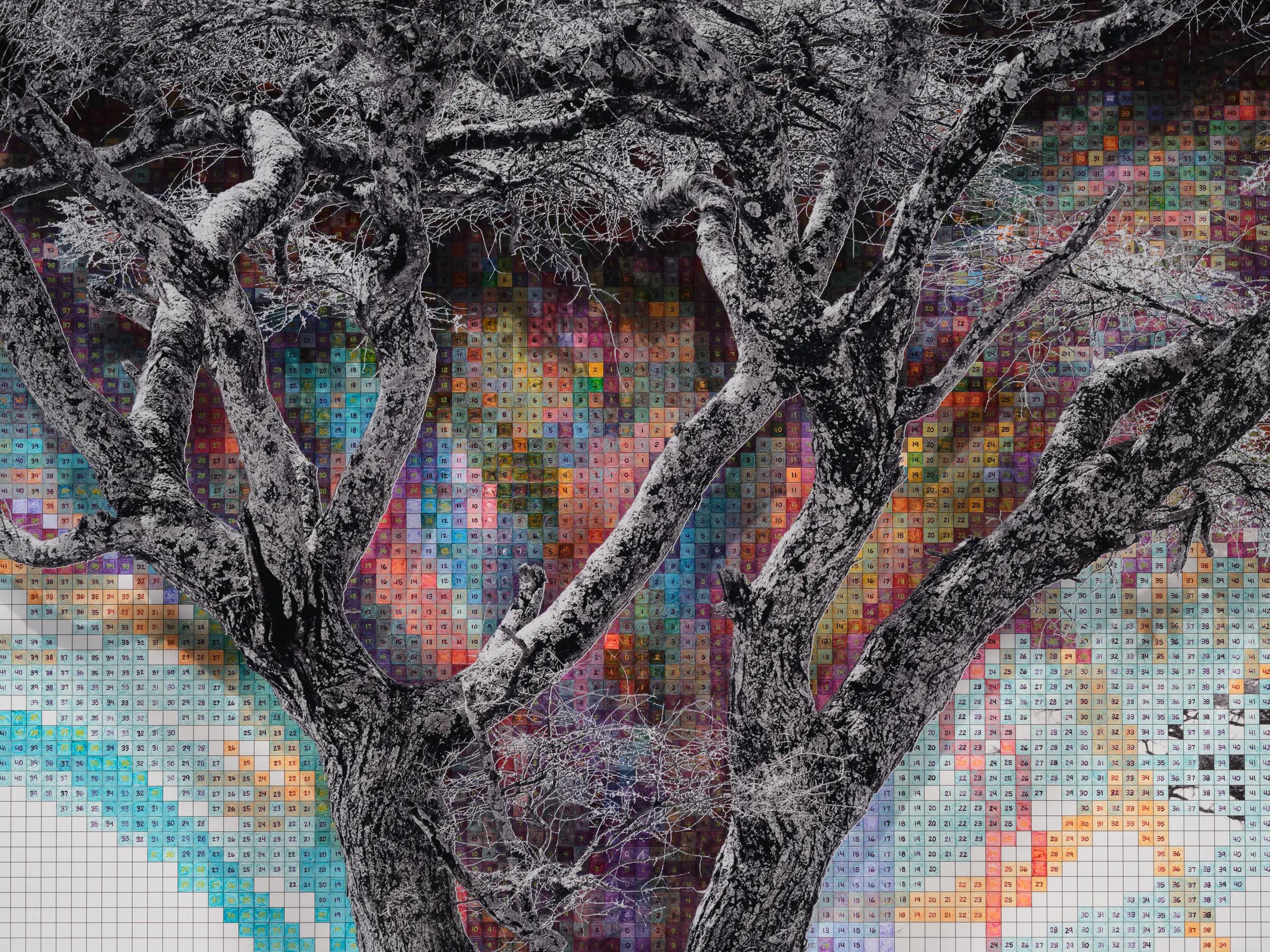
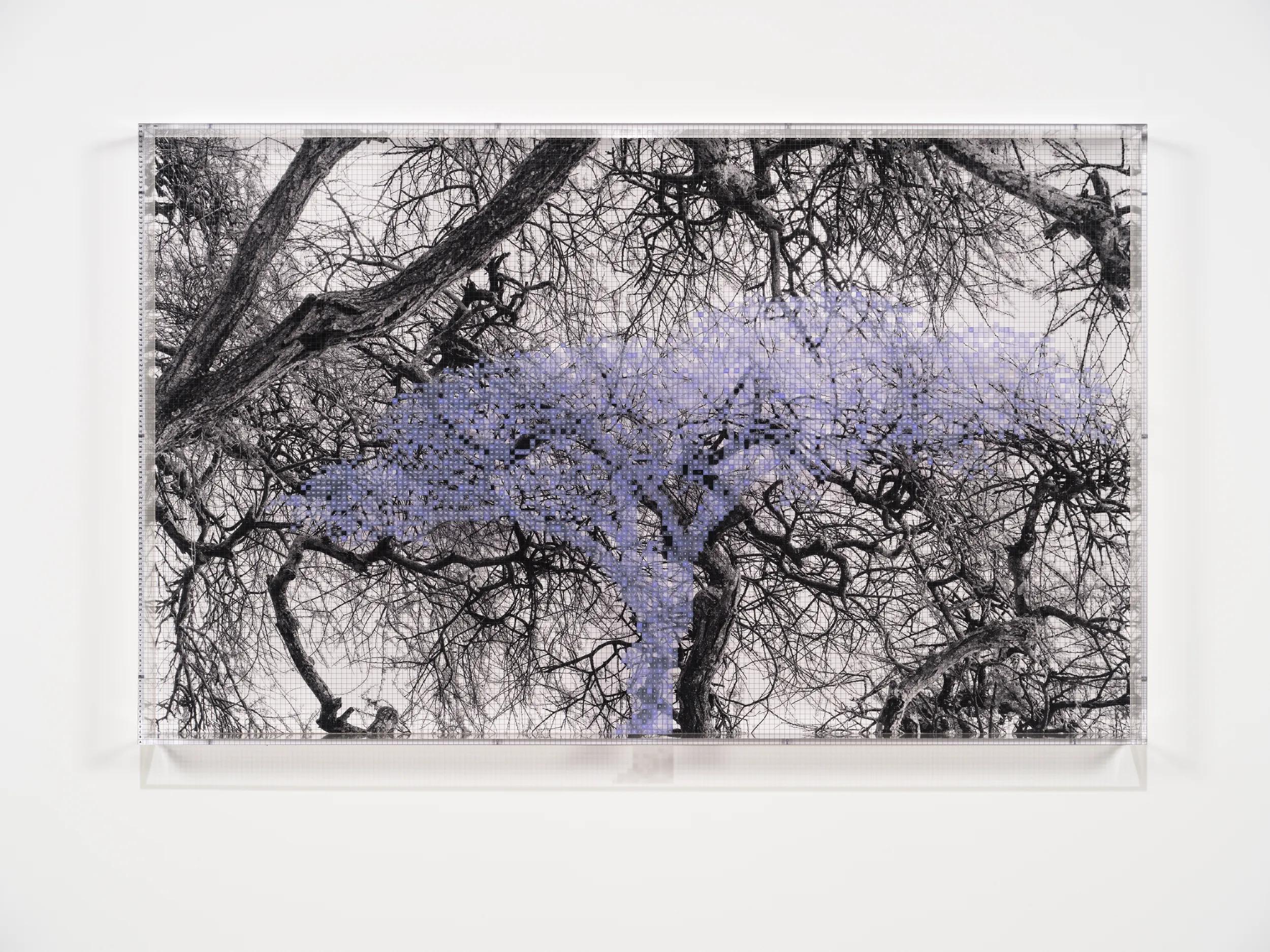
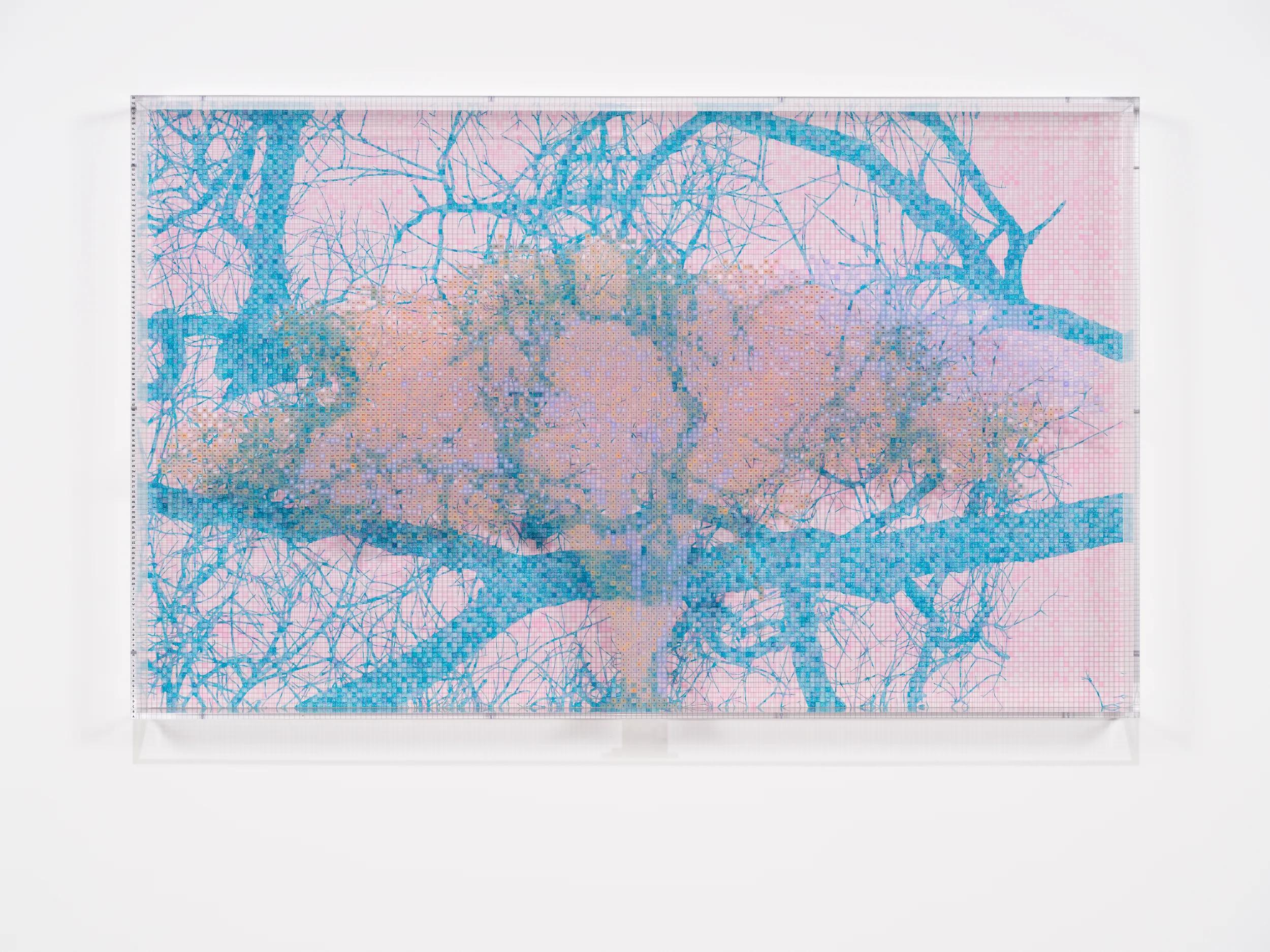
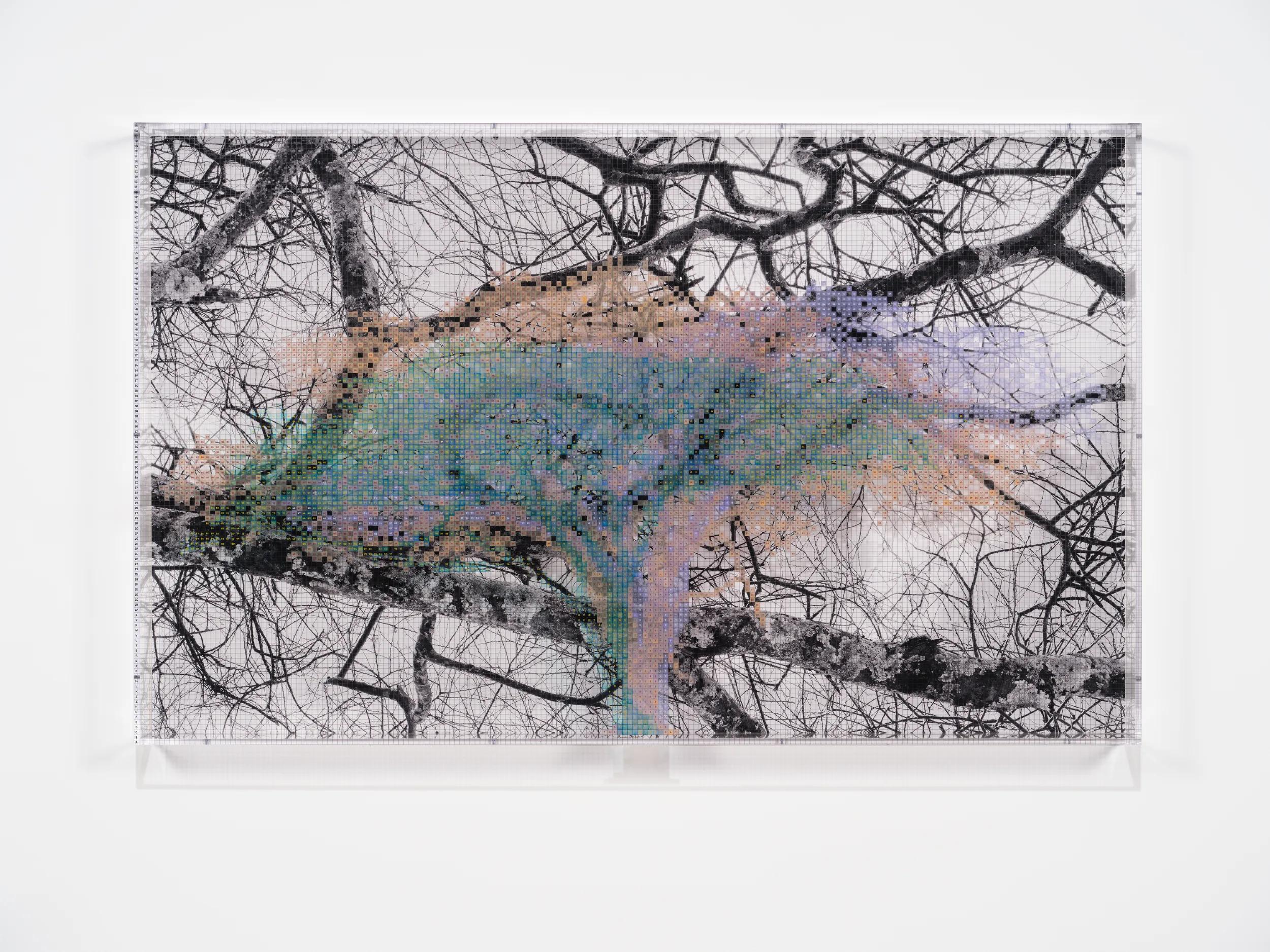
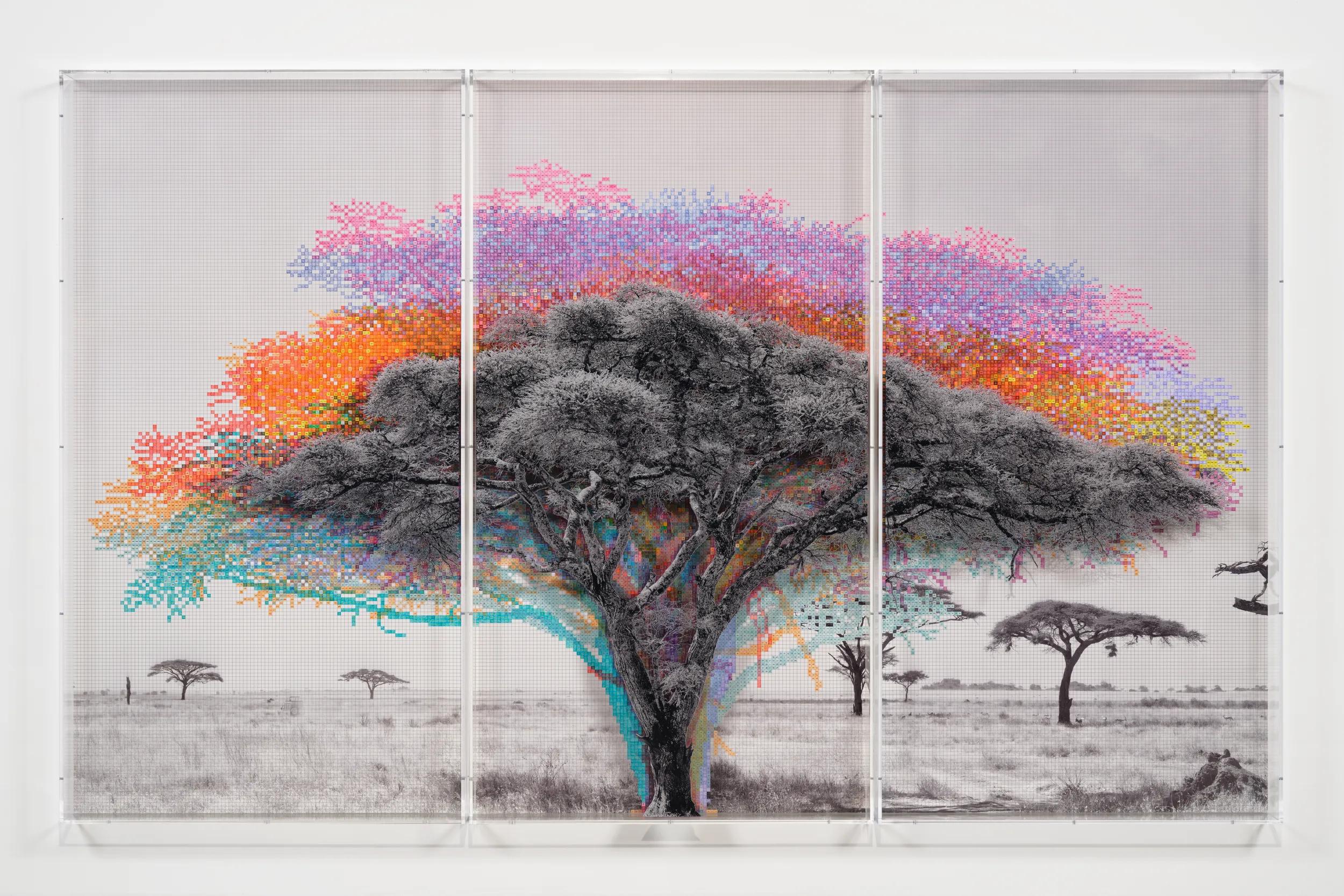
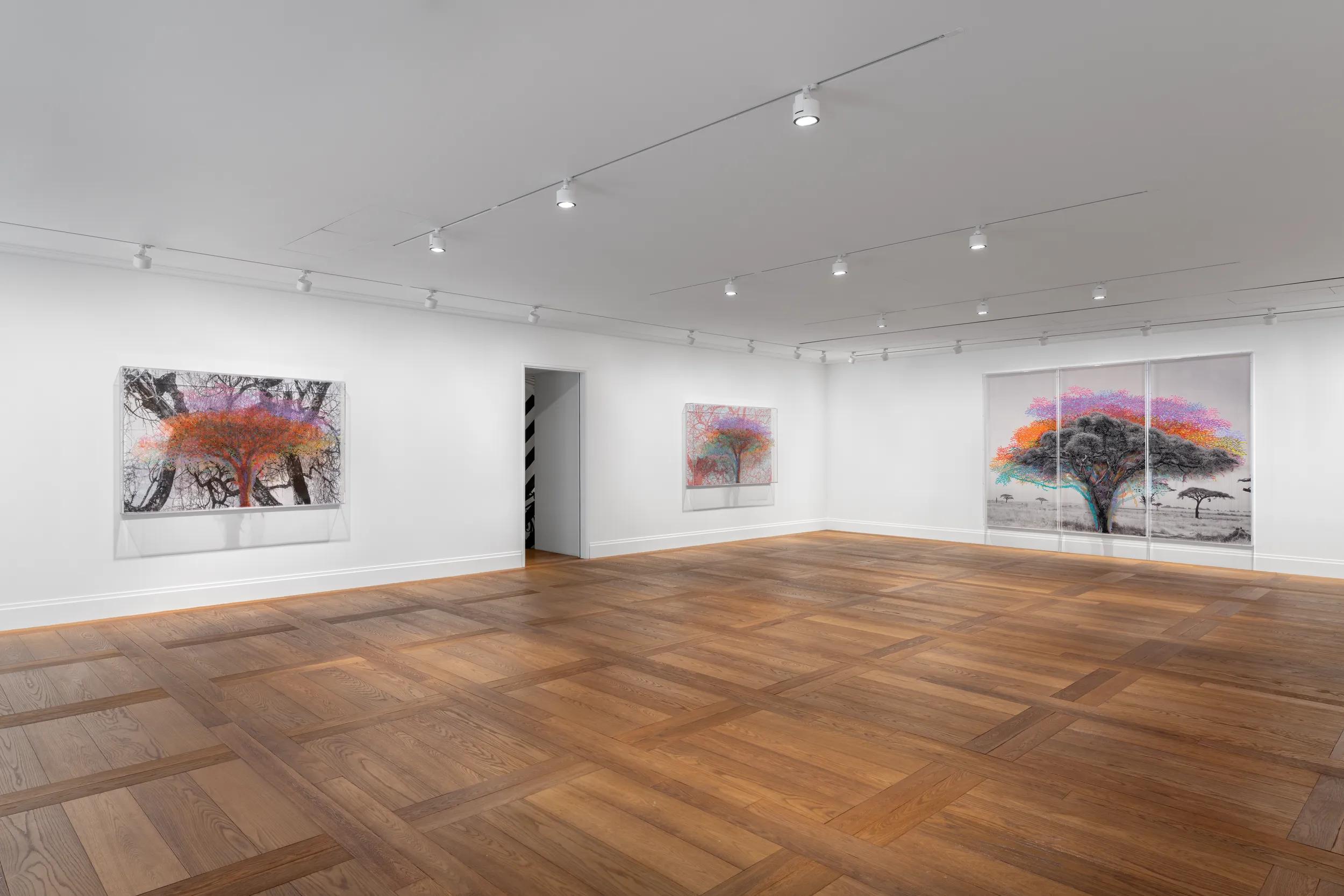
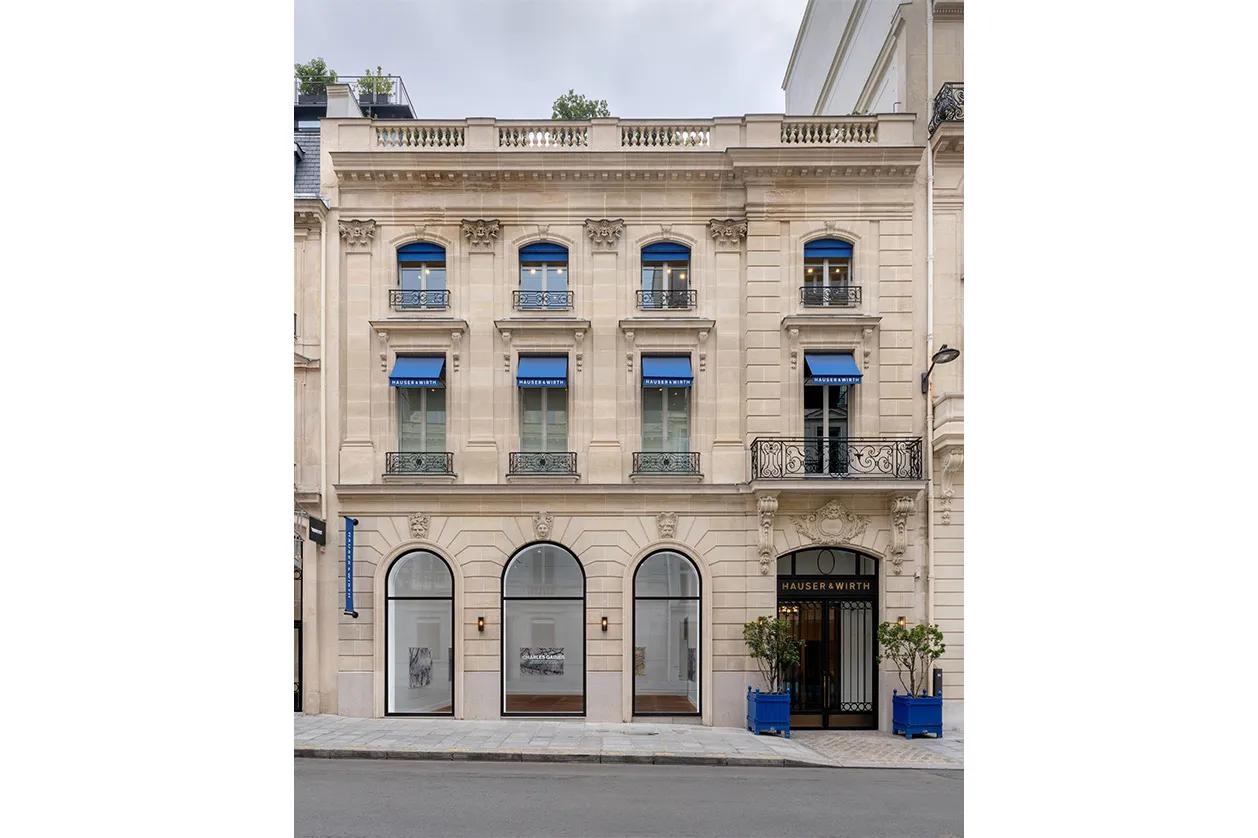
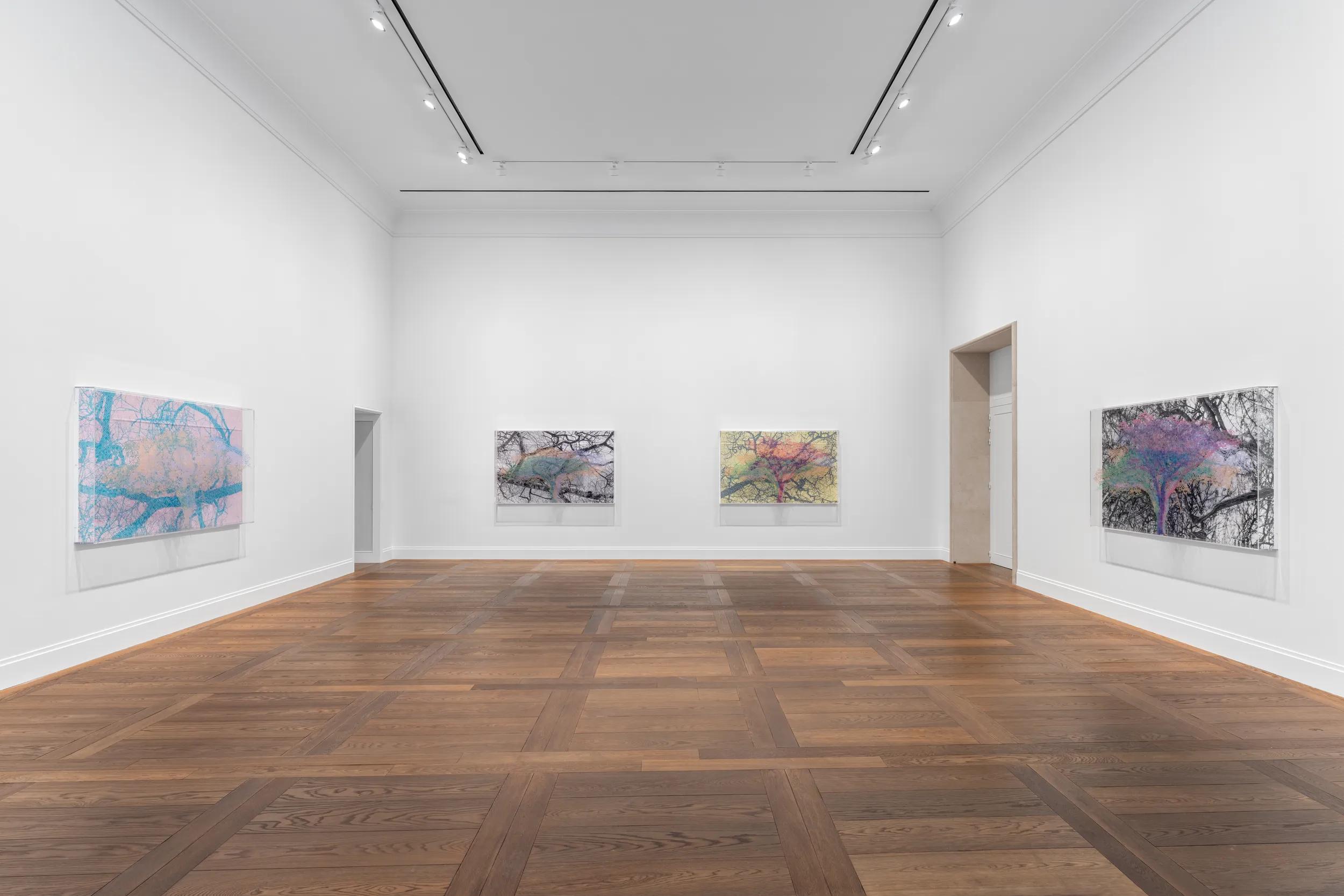
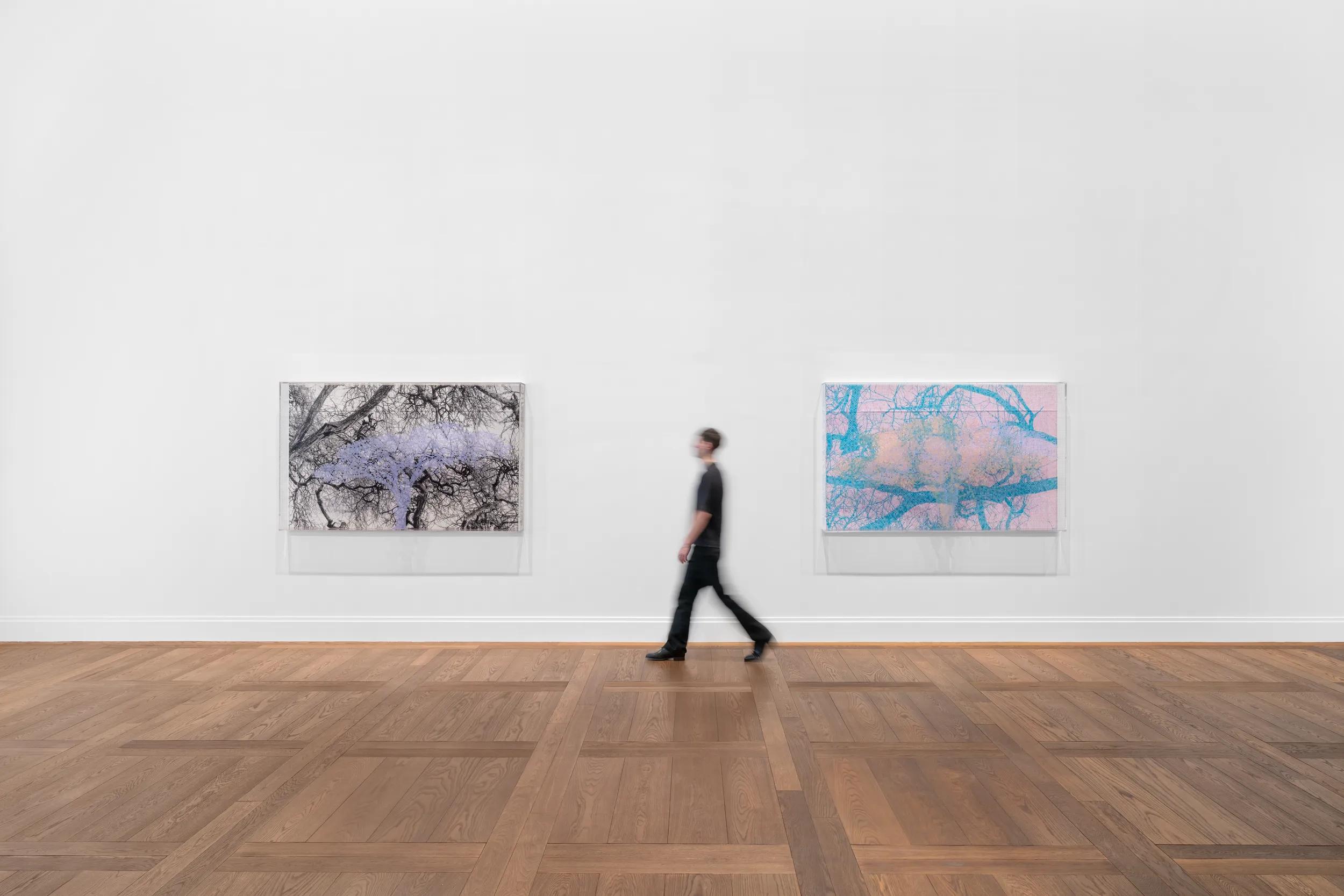
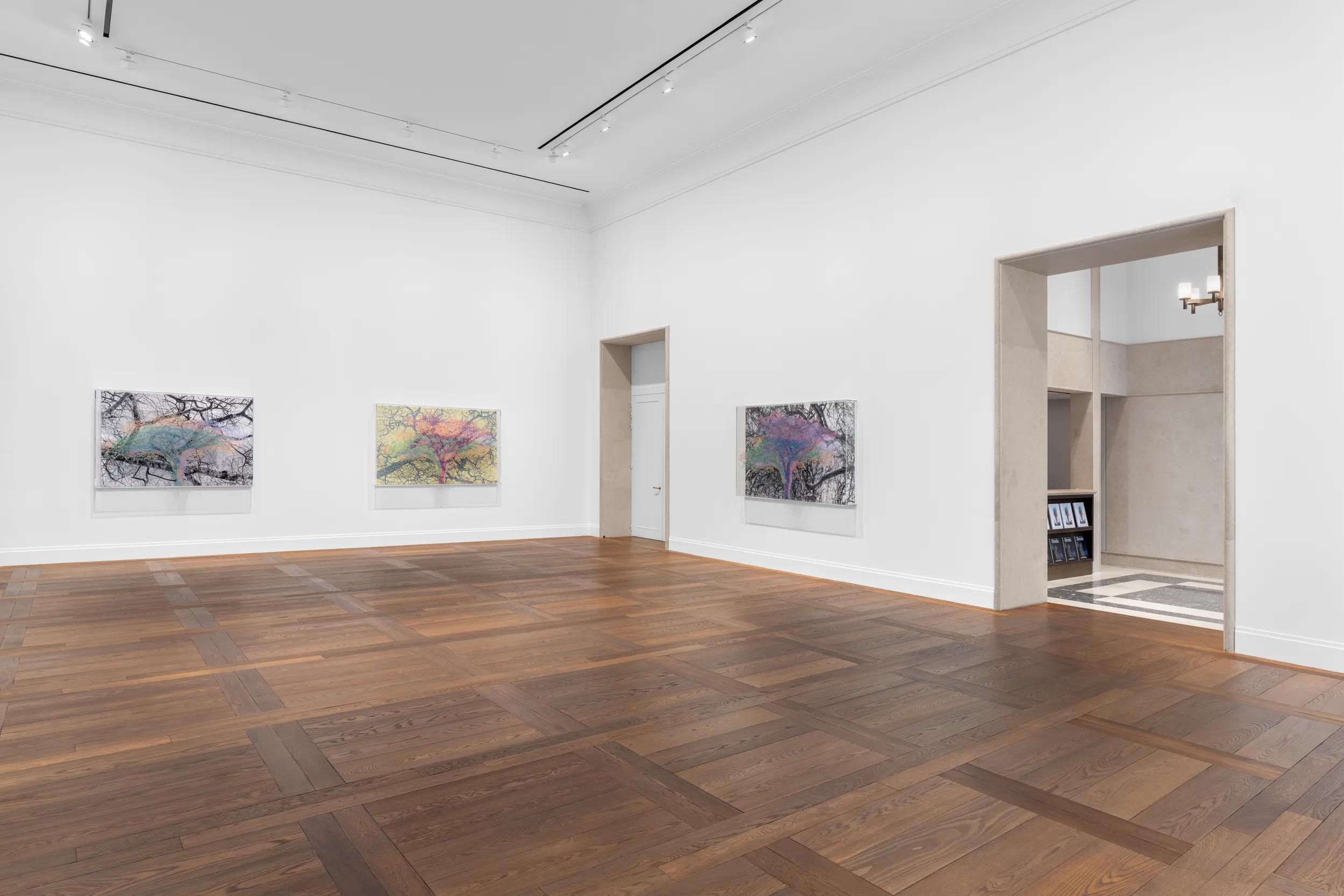
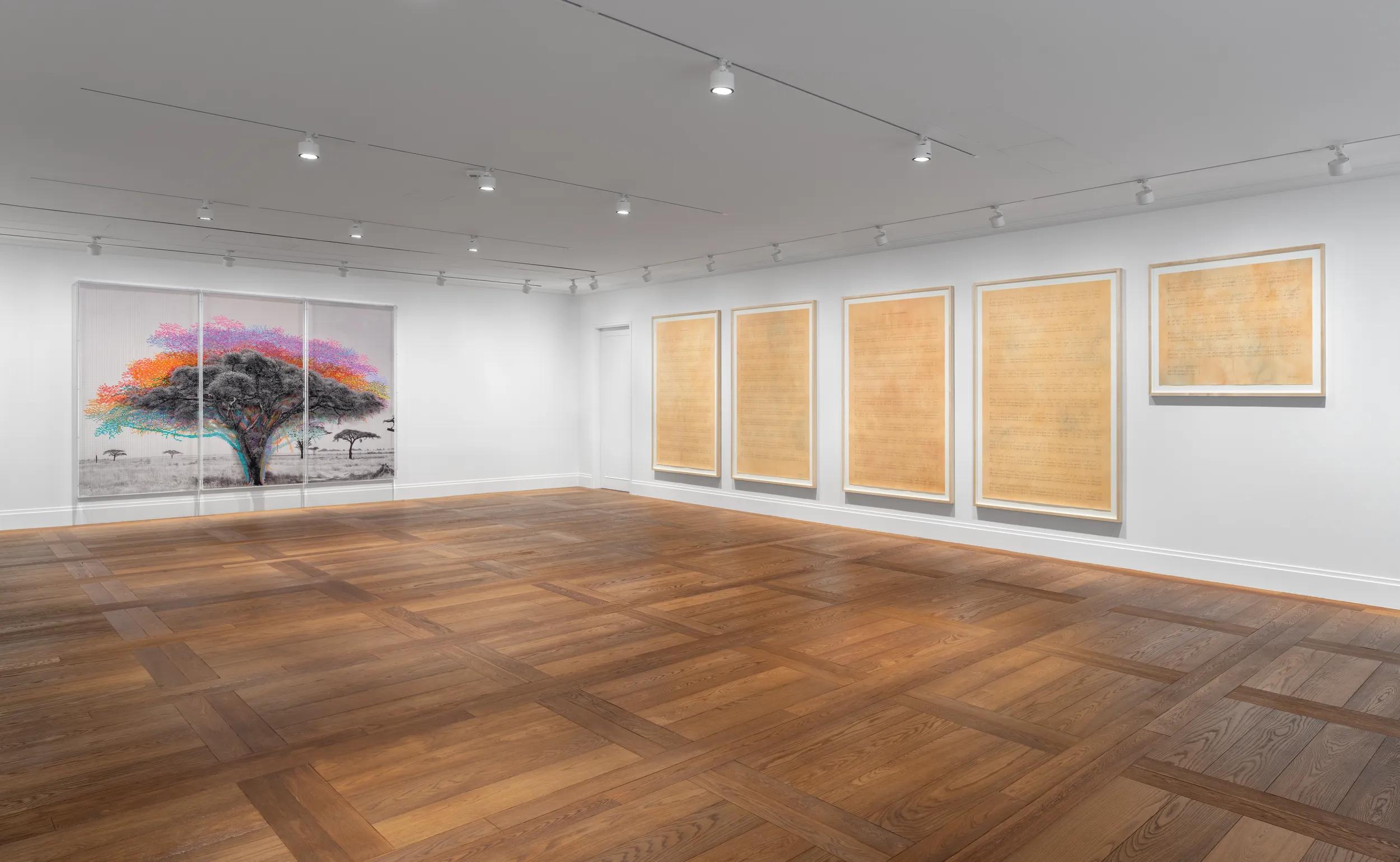
For over five decades, pioneering conceptual artist Charles Gaines has used systems to create series of works that mine the complex relationship between perception and meaning. For his first exhibition at Hauser & Wirth’s Paris gallery, Gaines will debut new Plexiglas works from his Numbers and Trees series, first conceived by the artist in 1986. Focusing on acacia trees, the nine compositions are based on photographs the artist shot during a trip to Tanzania in 2023. Gaines will also debut the latest installment from his Manifestos series, developed whilst in residence at the gallery’s Somerset location in 2025.
At the core of Gaines’ practice is a conviction as radical as it is precise: that a work of art need not originate in the artist’s intention to carry profound meaning. From his Manifestos compositions to his signature Plexiglas grids, every work that emerges from his studio is the product of a system—rule-based, self-determined and generative—that produces outcomes neither he nor the viewer can fully anticipate.
Trees have been a central motif in Gaines’ practice since the 1970s, when he first began plotting their forms on numbered grids in the Walnut Tree Orchard series (1975 – 2014). His methodical examination continues with Numbers and Trees, conceived in 1986. Following a trip to Tanzania in 2023, Gaines began a new chapter within this long-running series, initially engaging the country’s ancient baobabs. The works on view in Paris turn to the acacia, with its characteristic flat-topped crown, demonstrating how the artist continues to forge new paths within one of his most acclaimed series.
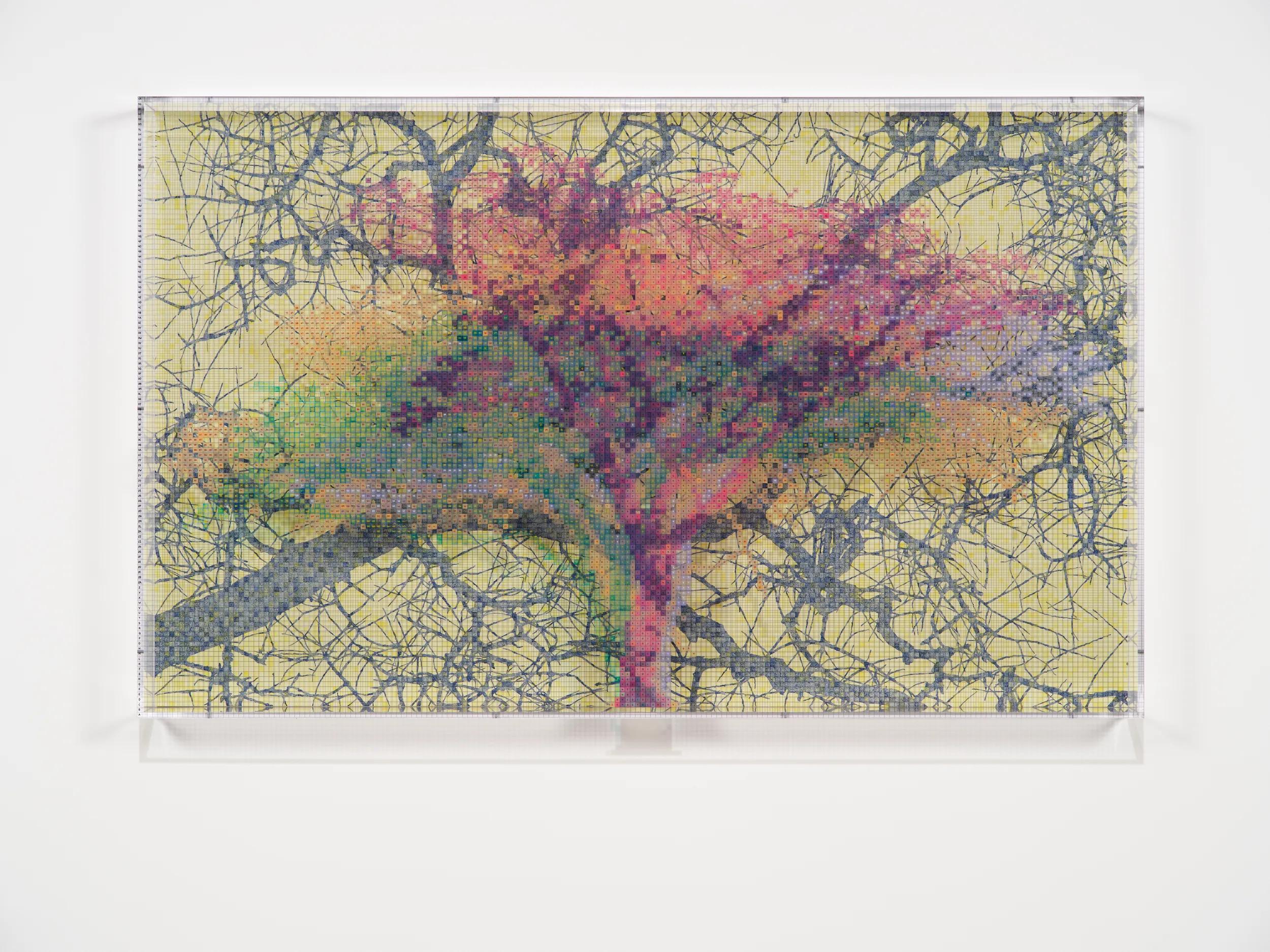
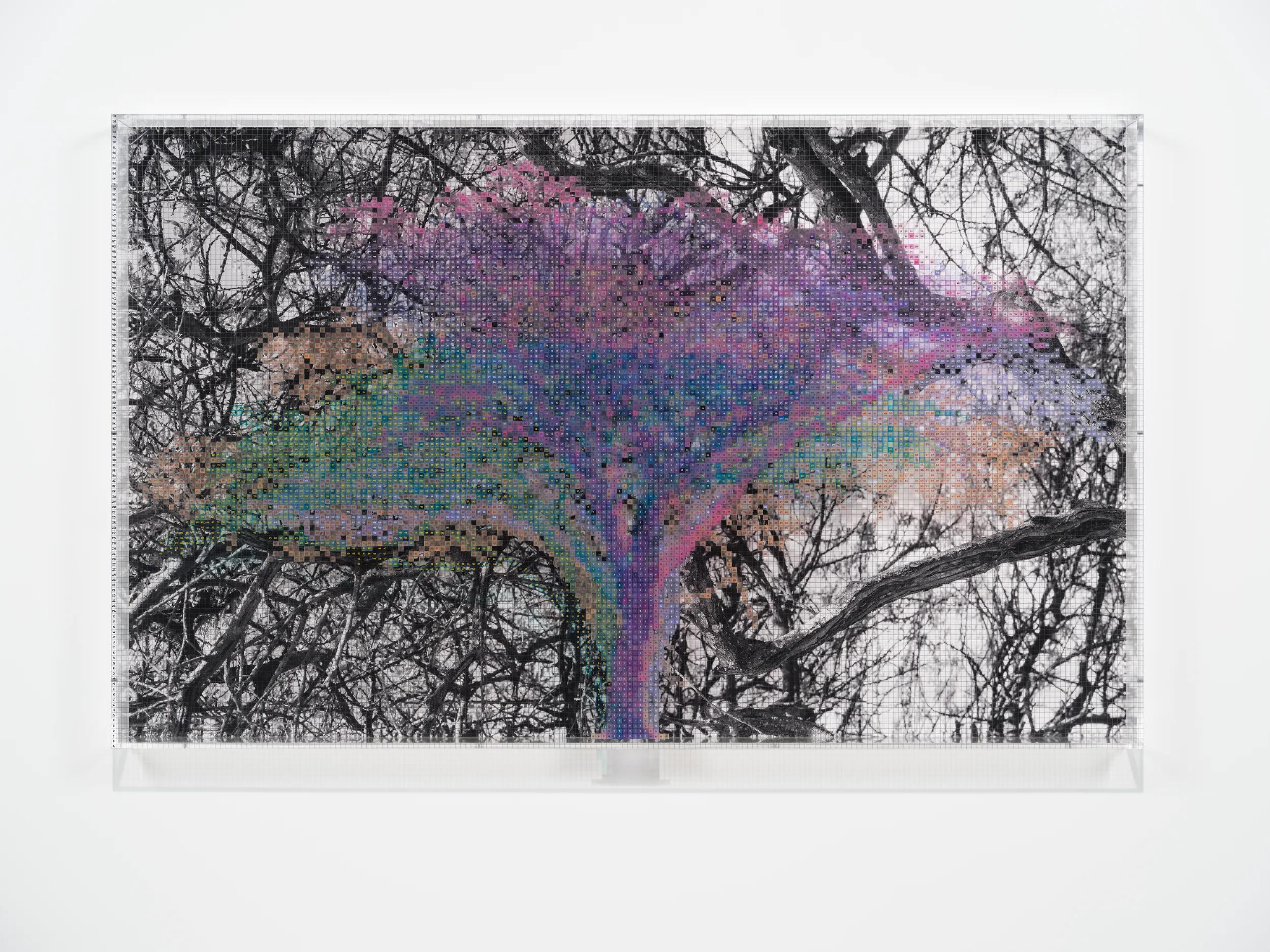
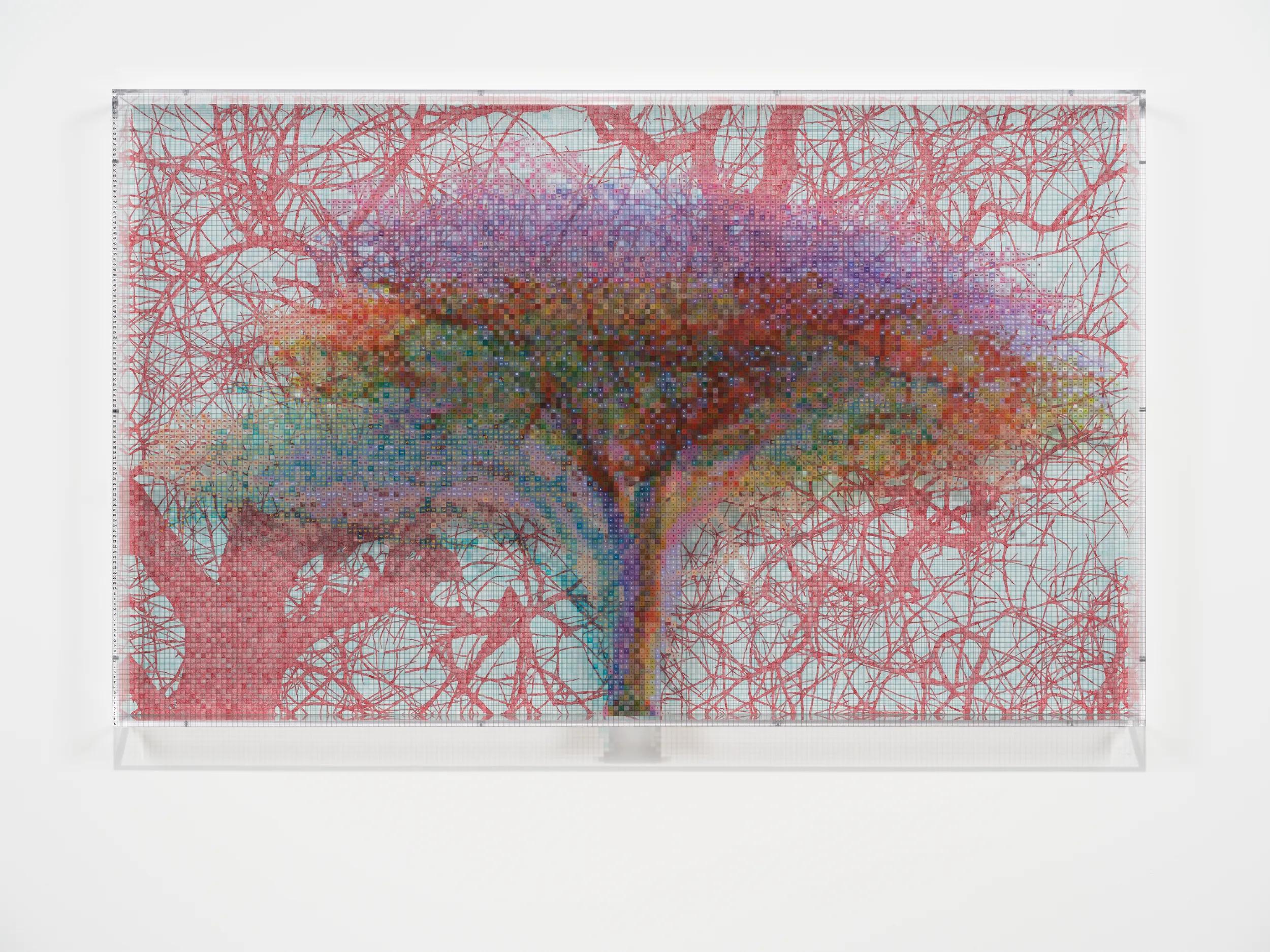
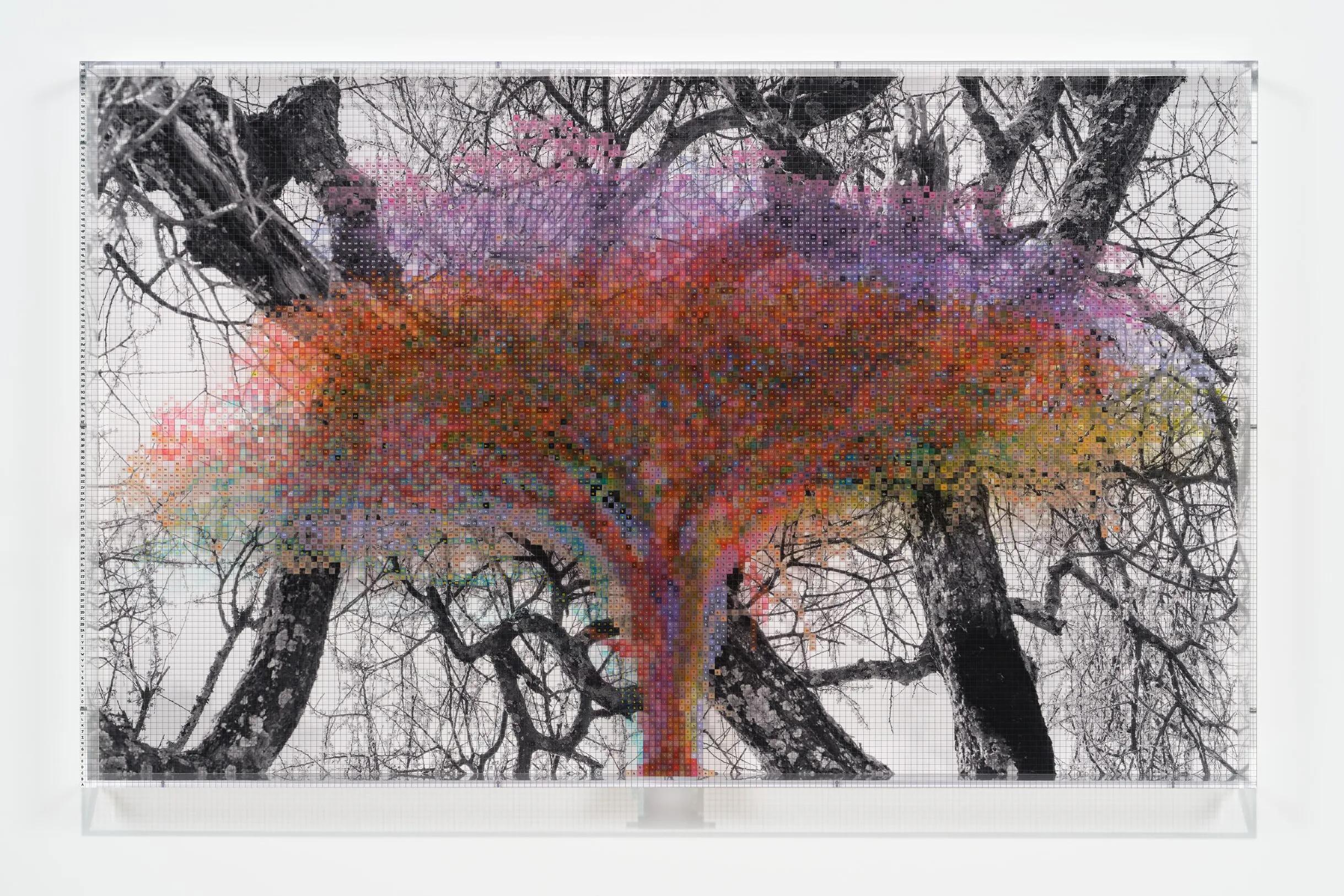
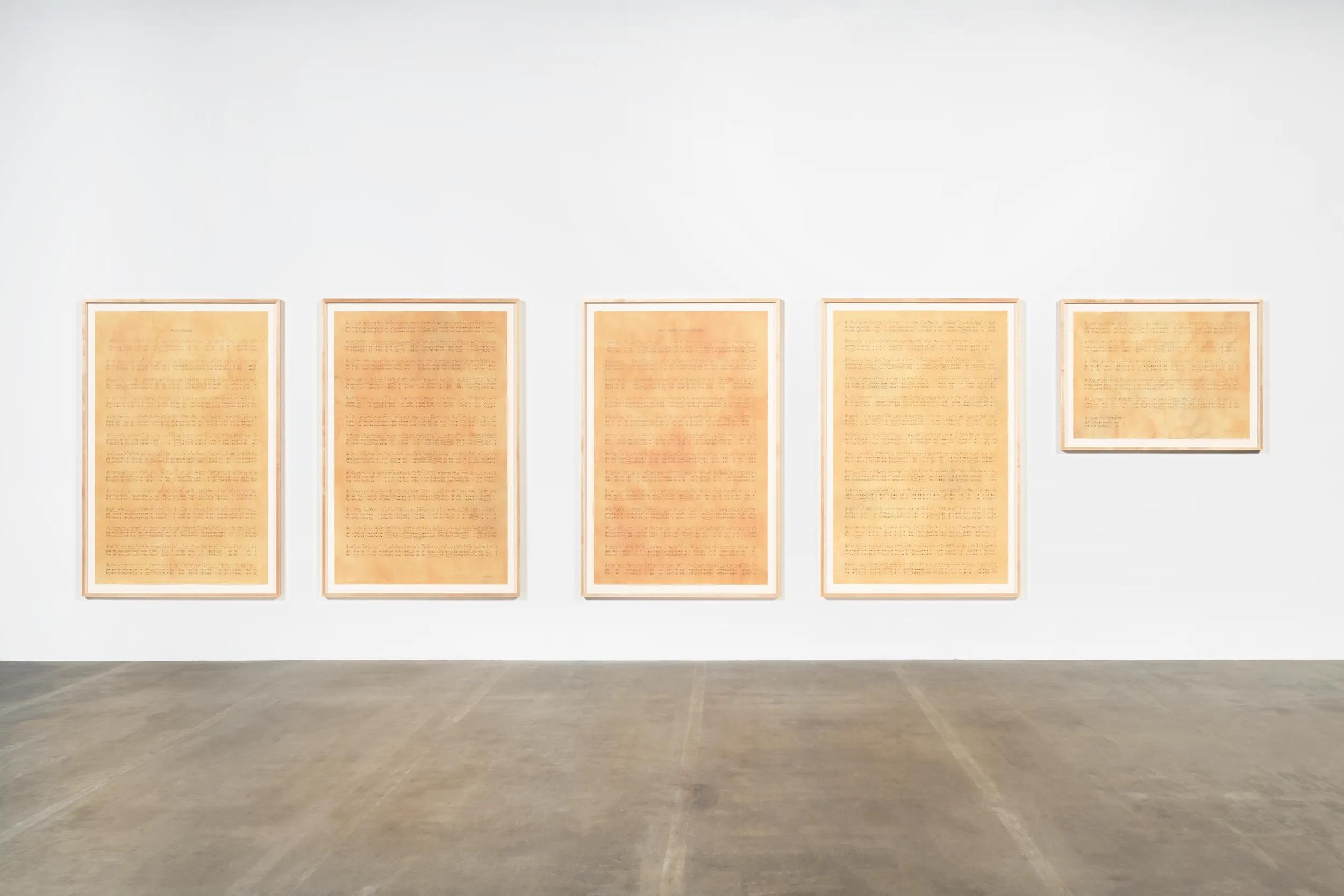
Manifestos 7
2026
INSTALLATION VIEWS
1 / 5
Sobre el artista

Charles Gaines
Figura clave en el ámbito del arte conceptual, el conjunto de obra de Charles Gaines trabaja con fórmulas y sistemas que interrogan las relaciones entre los ámbitos objetivo y subjetivo. Mediante un enfoque generativo para crear series de obras en diversos medios, Gaines ha construido un puente entre los primeros artistas conceptuales de las décadas de 1960 y 1970 y las generaciones posteriores que hoy llevan los límites del conceptualismo más allá.
Nacido en 1944 en Charleston, Carolina del Sur, Gaines comenzó su carrera como pintor, obteniendo el M.F.A. en la School of Art and Design del Rochester Institute of Technology en 1967. Durante la década de 1970, su obra experimentó un giro drástico en respuesta a lo que él mismo más tarde llamaría ‘el despertar’. Esta revelación se materializó en la serie ‘Regression’ (1973 – 1974), en la que exploró el uso de sistemas matemáticos y numéricos para crear marcas suaves numeradas con tinta sobre una cuadrícula, con cada dibujo construido a partir de los cálculos del anterior. Este enfoque metódico marcaría el recorrido del artista durante las décadas siguientes.
Current Exhibitions


1 / 11