

Diary
The Gift of Space
Charlotte Jansen on Casa Gràcia, the new Menorcan residency created by Rashid Johnson and Sheree Hovsepian
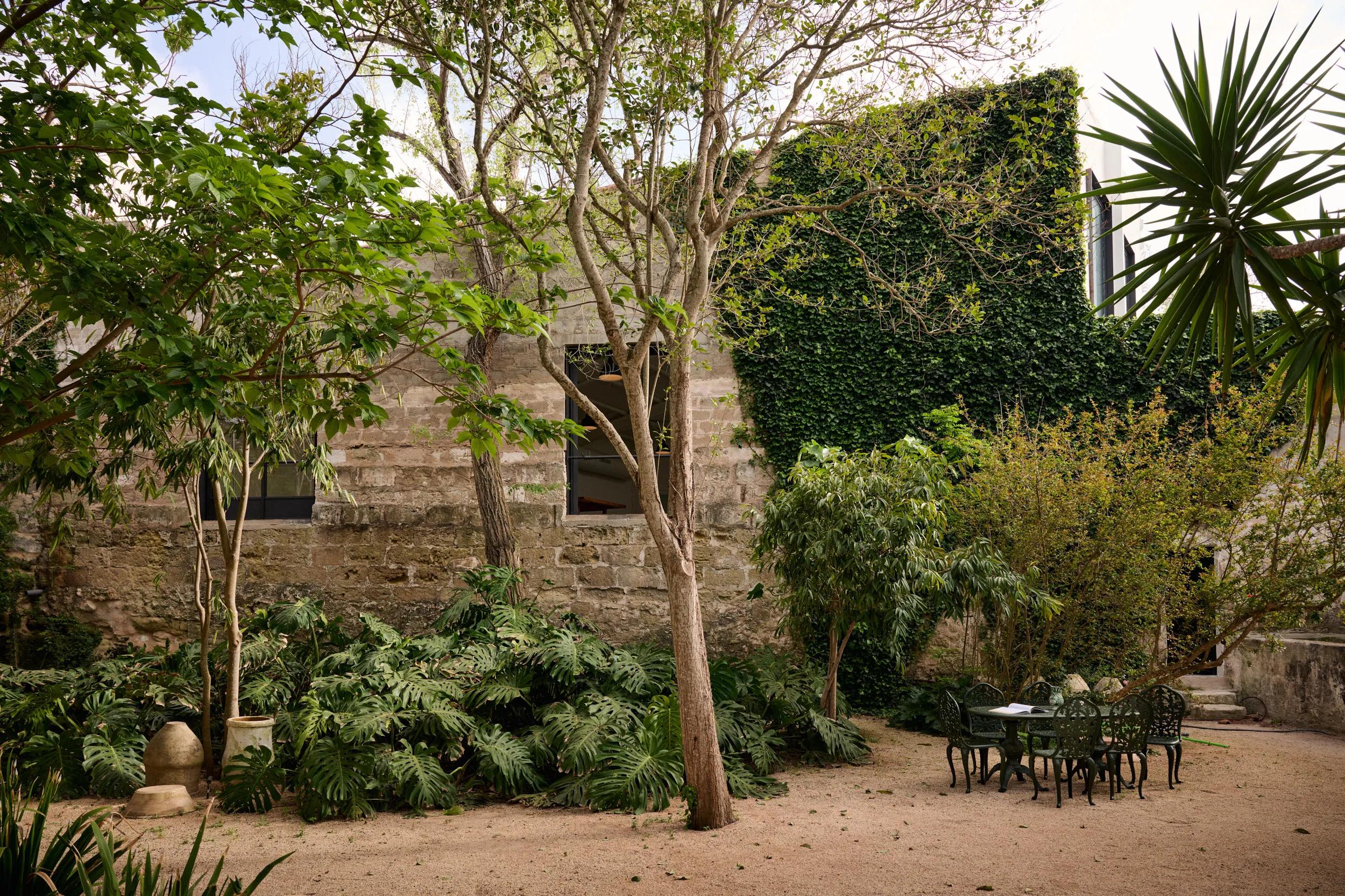
The Residency at Casa Gràcia. Courtesy Rashid Johnson and Sheree Hovsepian. Photos: Daniel Schäfer
Arriving at Casa Gràcia on a balmy summer evening in Mahón, Menorca’s capital city, is a mesmerizing experience. The revelation is all the more dramatic after a short descent down a ramp at the rear of the building, past an unremarkable municipal car park with the Mediterranean somewhere beyond. A door swings open onto a cathedral-like, 3,200-square-foot studio, its soaring ceilings and giant windows providing glimpses of Mahón’s largest private garden.
Casa Gràcia began as the second home and studio of artists Rashid Johnson and Sheree Hovsepian, who first came to the island following the opening of Hauser & Wirth’s art center on Illa del Rei in 2021. Both describe encountering an environment unlike any they had ever seen. Hovsepian recalls a place infused with a quiet, almost mystical energy, which she attributes to the island’s prehistoric Talayotic monuments. “These ancient stone structures quietly hold the memory of another time and civilization,” she says. “There is something deeply humbling about existing alongside that kind of history and mystery.”
The two artists quickly knew that they would return to make work here. They soon bought a trio of 19th-century mares-sandstone townhouses with the ambition of transforming the structures into a place for living and making. To realize their vision, they commissioned the award-winning Paris-based architecture and design studio Laplace, which worked alongside Menorcan architects Maimó & Brosa to undertake a sensitive restoration of the buildings while preserving their attributes and character.
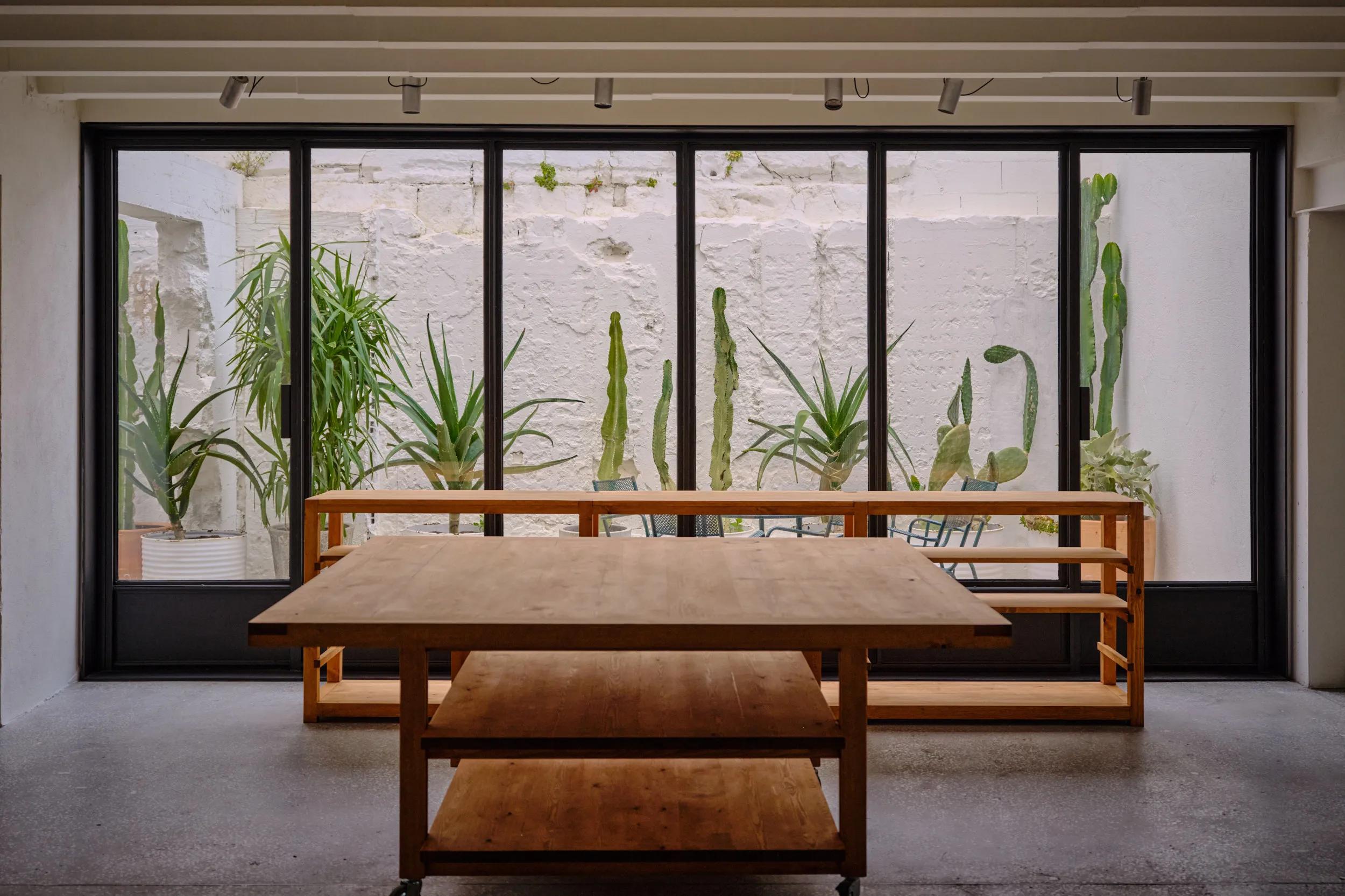
Luis Laplace said in envisioning the work he drew on his experience designing artists’ residences around the world. “The most important thing is that it remains neutral,” he explains on the phone, “a flexible canvas that gives artists room to play and discover their own way of inhabiting the building. The fantasies we have about how artists want to work are often very different from reality.”
The property itself offered several distinct possibilities. Unlike Mahón’s typical arrangement of terraced townhouses, the site allowed the atelier to connect directly with the main house without the need for stepping outside—“a very big bonus for the project,” Laplace notes. Rather than imposing a singular way of working, he sought to listen to “what the building has to say,” creating spaces for to work take place throughout the house, from the bedrooms to the studio itself.
“Artists have different personalities,” he says. “Some thrive in large open spaces, while others find that scale intimidating and are drawn to places that feel more intimate. A painter might need abundant light; a writer may prefer somewhere quieter and more enclosed. The priority was flexibility.”
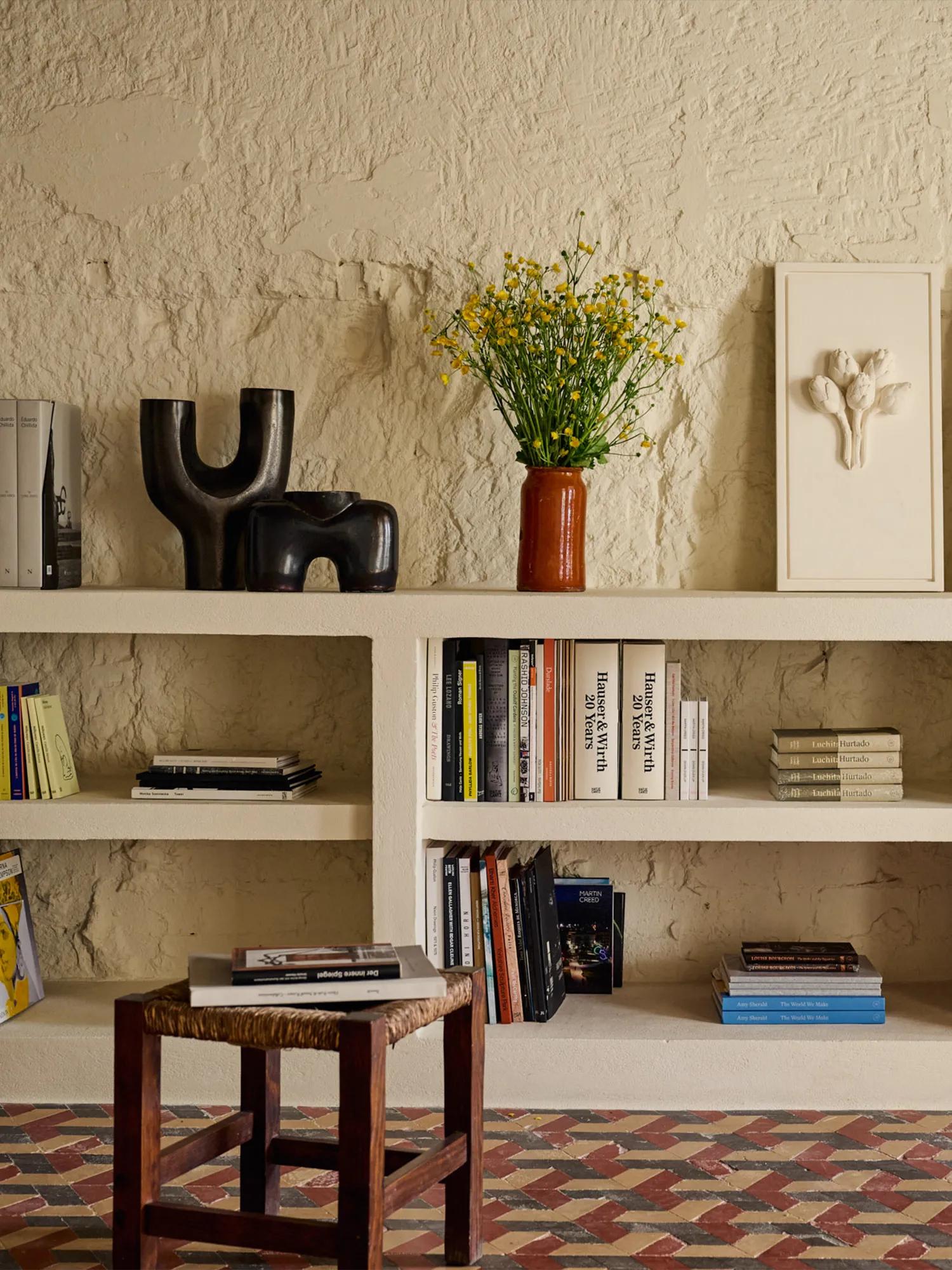
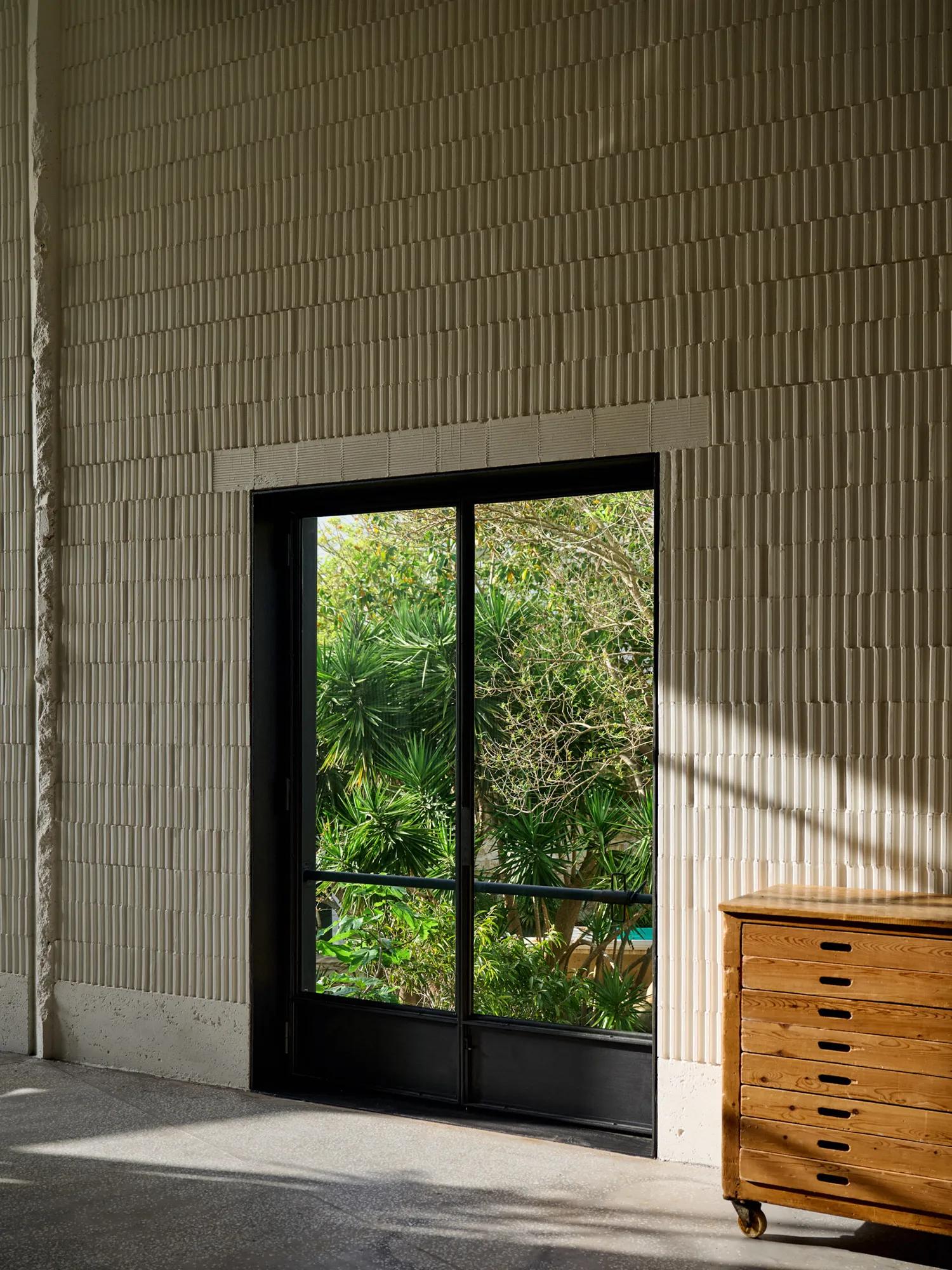
When Laplace first visited Casa Gràcia, the future studio bore little resemblance to its current incarnation. In a previous life, it had been a nightclub, painted entirely black, punctuated with orange accents and devoid of natural light. “We had to begin by creating openings,” he says, “allowing the light to slowly enter.”
The walled garden offered another rare opportunity. It is unusually lush and verdant for Menorca, where the sun remains intense for most of the year. On the evening I visited, Johnson and Hovsepian were hosting a party to launch the residency. Several areas had been naturally shaped by the surrounding plants and trees, alongside a pond, creating spaces whose potential for both gathering, relaxing and solace was apparent. Laplace refers to the Spanish conception of the garden as “the lung of the house”—a space that allows the building to breathe. Towering Ficus trees and mature plantings create an extraordinary canopy across the property. “The shadows create a sense of mystery,” Laplace says.
Mystery is a word that surfaces repeatedly in conversations about Menorca. Despite sitting within the heart of Mahón, the residence feels remarkably secluded—less an urban dwelling than a sanctuary suspended between city and landscape. It is easy to imagine days passing without ever leaving, experiencing a palpable sense of being gently distanced from distraction while remaining only moments from the city. “For me,” Hovsepian explains, “Menorca has always been a place that expands inner space, where ideas surface more freely.”
Once the renovations were complete, however, a realization soon followed. Based primarily in New York, where they share the care of their son, Johnson and Hovsepian knew they would be able to spend only spend limited periods on the island. Johnson says: “We realized we’d be leaving this incredible studio sitting empty. Our natural instinct was: Who could use it when we’re not here? Why let it remain dormant when life could be breathed into it?”
With the support of Hauser & Wirth, they decided to create a retreat where other artists could work. Casa Gràcia—which translates to House of Grace—was conceived as an incubator for ideas and cross-disciplinary exchange. Each year, three visual artists and two writers will receive studio space and accommodation across the complex’s restored living quarters. The residency program officially launches in spring 2027.
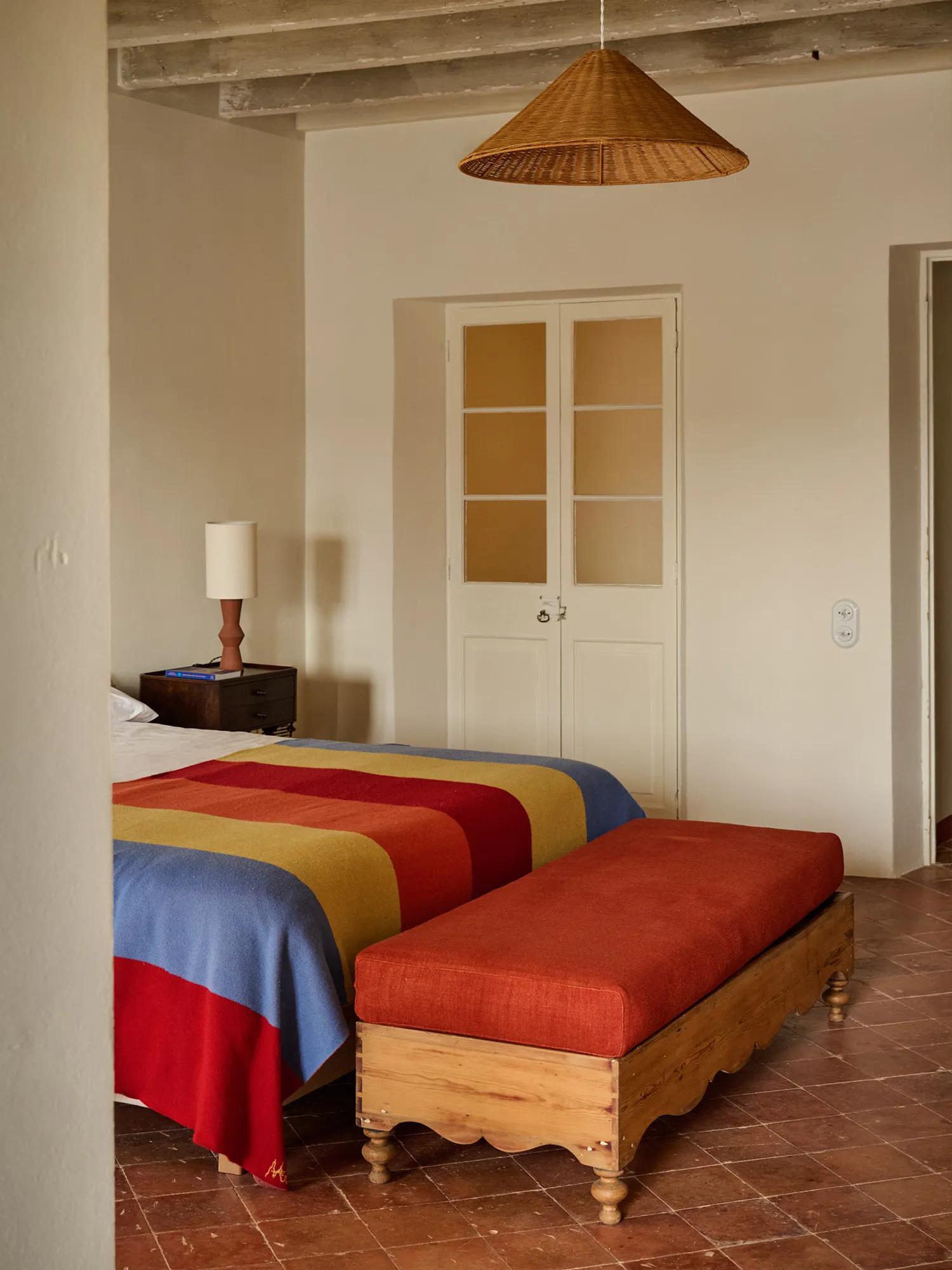
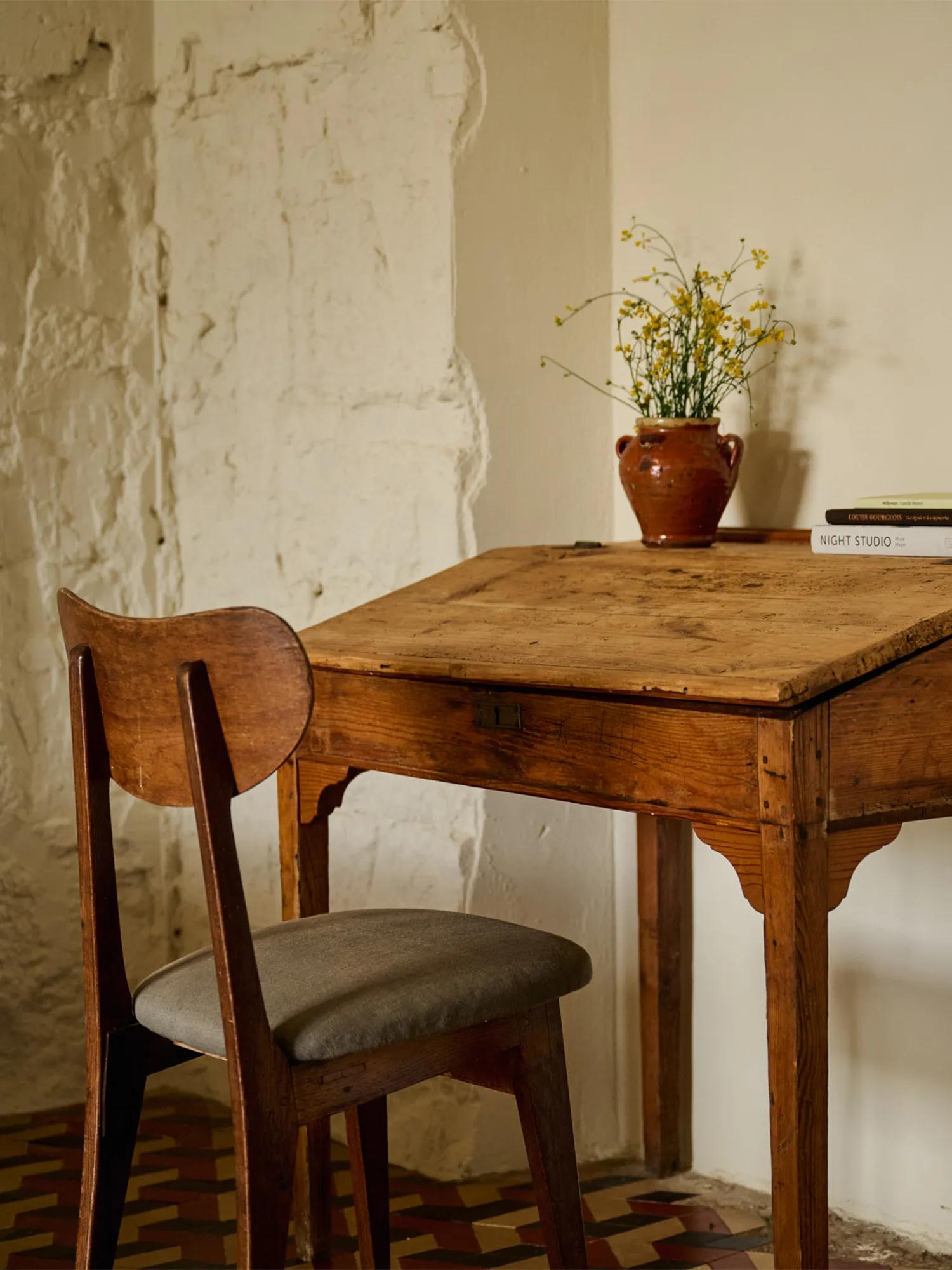
Although observing how other artists make and think has always been central to his own practice, Johnson says, somewhat ironically, that he had never participated in an artist residency until spending two months at Hauser & Wirth Somerset in 2017, ahead of his solo exhibition there, “Stranger.” The philosophy underpinning Casa Gràcia emerged less from institutional precedent, Johnson says, than from instinct and intuition—a belief that to produce meaningful work, artists need conditions that are increasingly scarce: space, time and freedom from the pressures that often accompany funded programs and the economic structures of the art market in general.
“We didn’t want to be dictatorial or didactic,” he explains. The residency’s structure is intentionally open-ended, allowing participants to shape their time according to their own needs. Some might end up producing an entirely new body of work; others might continue existing projects, undertake research or simply spend time reading, thinking and talking. What distinguishes Casa Gràcia is an embrace of meandering and exploration rather than productivity—of allowing the island’s atmosphere, history and pace to seep into the creative process. “It needed to be a place where people could fail as well as succeed,” Johnson says. “There are little to no expectations of an outcome.”
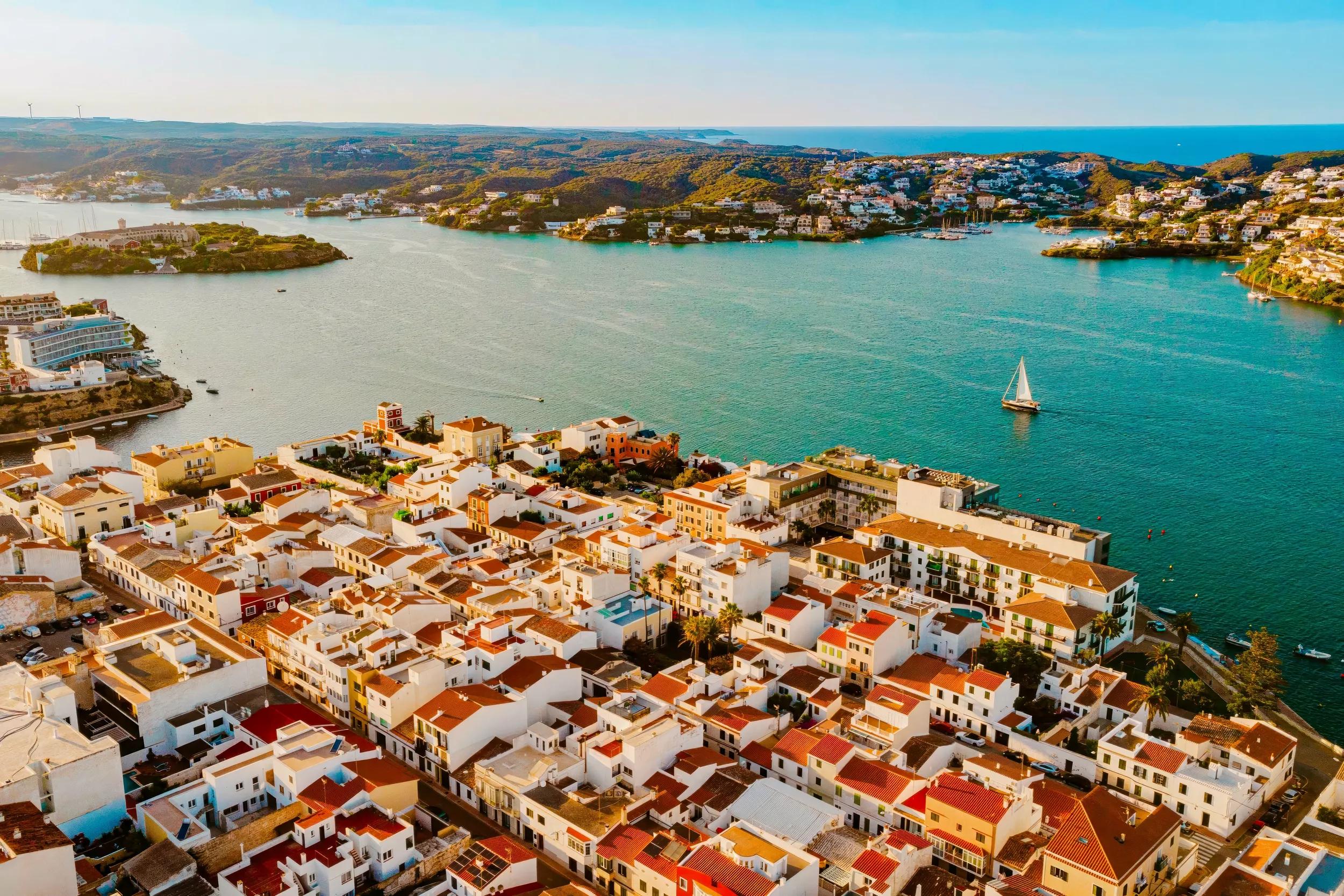
Aerial view of Mahon Harbor Photo: Davide Bonaldo
That philosophy dovetails in “Directionless,” the current exhibition conceived by Johnson at Hauser & Wirth Menorca, a generative group exhibition in which invited artists each invited other artists to exhibit—28 are included in the final show. Rather than prescribing a singular reading, the exhibition asks visitors to participate actively and find their own pathways through the work. “Art is born from an exchange between the ambitions and concerns of the practitioner and the experience of the viewer,” Johnson says. “Somewhere in the middle, meaning emerges. Art doesn’t exist until it’s activated.”
For both Johnson and Hovsepian, Menorca remains the catalyst behind it all. Casa Gràcia is a gift and act of generosity to the artistic community—an invitation for others to experience the environment that has kept the residency’s founders rapt. When we speak again later by phone, Johnson has been working on the island for almost a month. “Let me tell you,” he says, pausing to order lunch. “It’s magical here. I’ve made a number of things, and discovered aspects of my process that I’m genuinely excited about. It’s been incredible.”
–
Founded and developed by Rashid Johnson and Sheree Hovsepian, the Residency at Casa Gràcia is an opportunity for artists and writers to dedicate focused time to their own practice in an inspired setting in the historic city of Mahon.
–
Charlotte Jansen is a British Sri Lankan author, journalist and critic. She writes about art and photography for The Guardian, The New York Times and British Vogue. She is the author of Girl on Girl: Art and Photography in the Age of the Female Gaze (2017) and Photography Now (2021).