
Leonardo Drew Joins Hauser & Wirth
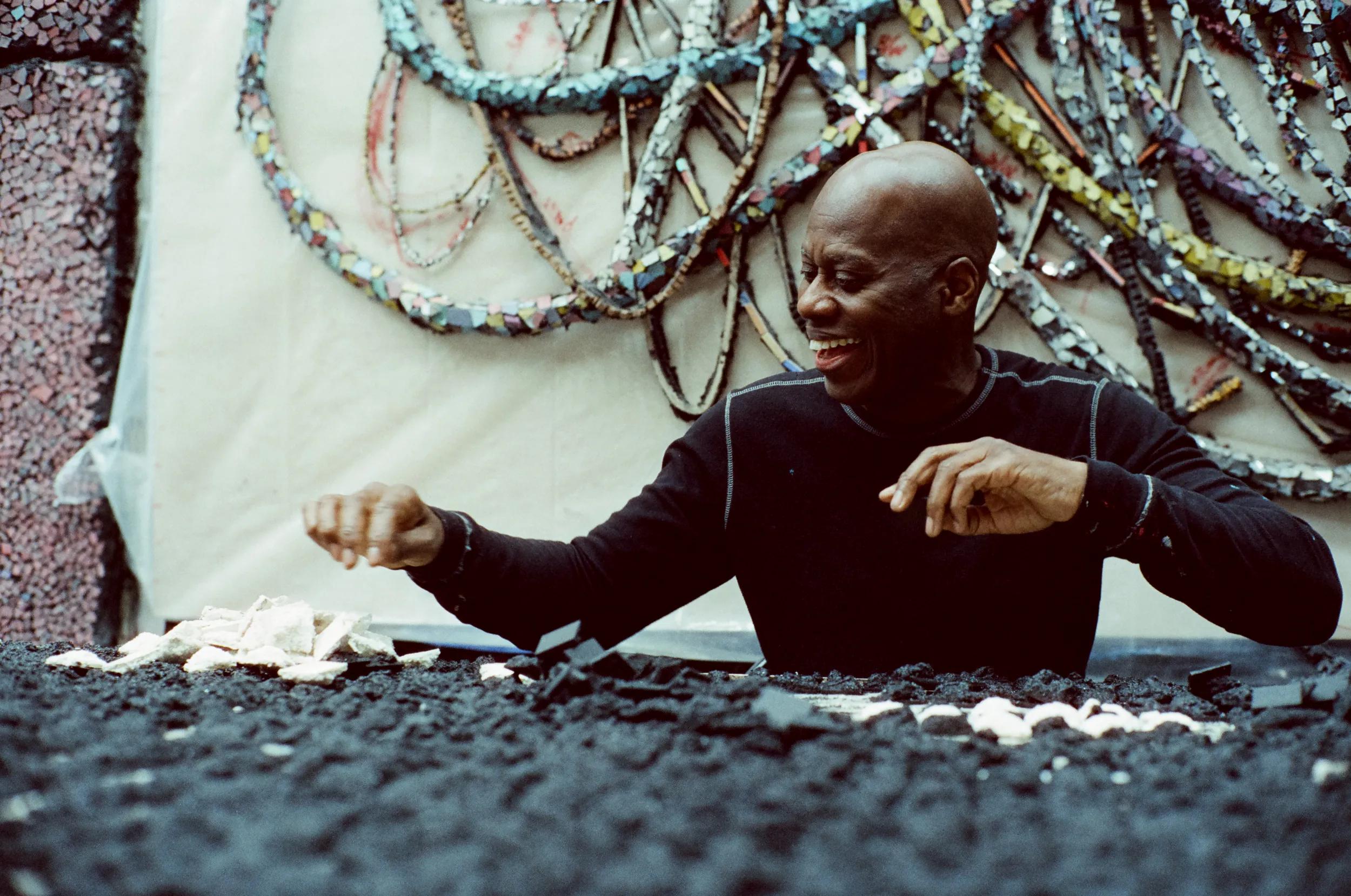
Photo: Spencer Pazer
Leonardo Drew Joins Hauser & Wirth
We are pleased to announce representation of Tallahassee-born, Brooklyn and San Antonio-based artist Leonardo Drew. Over the past four decades, artist Leonardo Drew (b. 1961, Tallahassee, FL), has transformed raw materials into expansive sculptural meditations on the elasticity and felt effects of time, marshalling the forces of entropy and renewal into a language of continuous creation.
Working between studios located in New York City and San Antonio TX, his large-scale wall reliefs, freestanding sculptures, immersive installations and textural works on paper subject natural materials—wood, metal, cotton, paper— to processes of oxidation, weathering and erosion, yielding works that seem as much excavated as they are meticulously composed. Drew’s gridded structures often evoke systems of order, but they are persistently disrupted by gestures of collapse, fragmentation and organic growth, reflecting a central, motivating preoccupation with the inexhaustible cycle of life, death and regeneration.
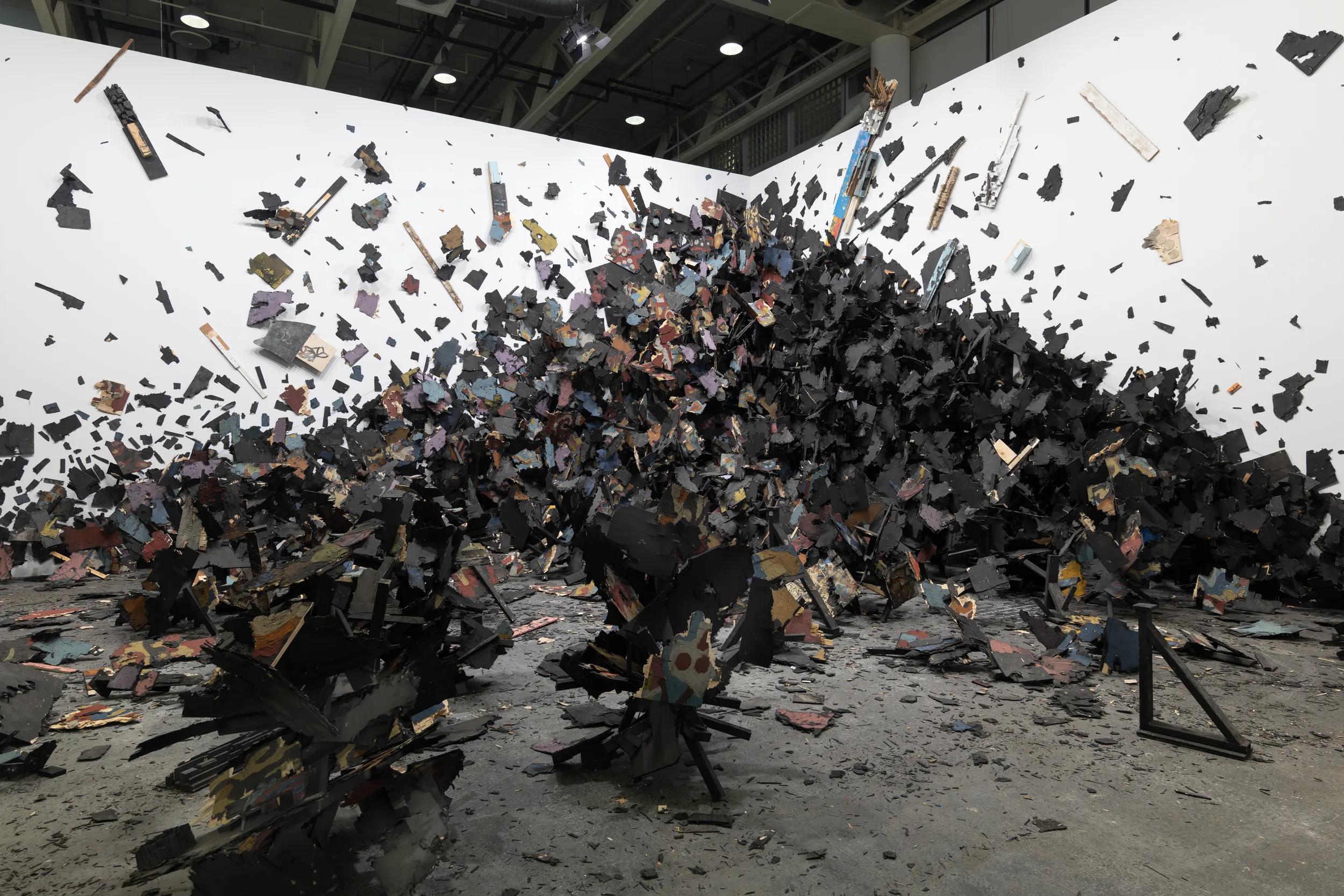
Leonardo Drew, Number 341, 2022, Installation view, Art Basel Unlimited, Basel, Switzerland © Leonardo Drew. Courtesy of Goodman Gallery, Galerie Lelong & Co., Anthony Meier Fine Arts Photo: Jon Cancro
Drew’s art is primarily non-representational, yet far from abstract in its effect—generating powerful emotional and psychological reverberations that may spark vivid and specific associations in the viewer. Neither wholly painting nor sculpture, natural nor manmade, his works suggest another ineffable, endlessly fluid world, bridging the artist's own experience and the wider currents of cultural narrative. As Curator Linda Johnson Dougherty observed in the catalogue accompanying the artist’s 2021 exhibition at the North Carolina Museum of Art (NCMA), Drew’s works create ‘a space of their own making,’ in which materials become charged with histories of transformation, endurance and change.
Marc Payot, President, said: ‘Leonardo Drew’s work advances the path forged by late titan Jack Whitten and, alongside such contemporary masters as Mark Bradford, is shaping abstraction into a new tool for questioning a world we thought we knew. His art bursts through complacency and familiarity, equally magnetic and enigmatic. He’s an essential member of a cohort expanding both the narratives of art history and our understanding of the American experience—the human experience. It is a great honor to welcome Leonardo to Hauser & Wirth. We look forward to sharing his art with wider audiences and new generations internationally and enjoying continued collaboration with our friends at the galleries—Anthony Meier and Goodman Gallery—that have nurtured his career with such dedication and passion.’
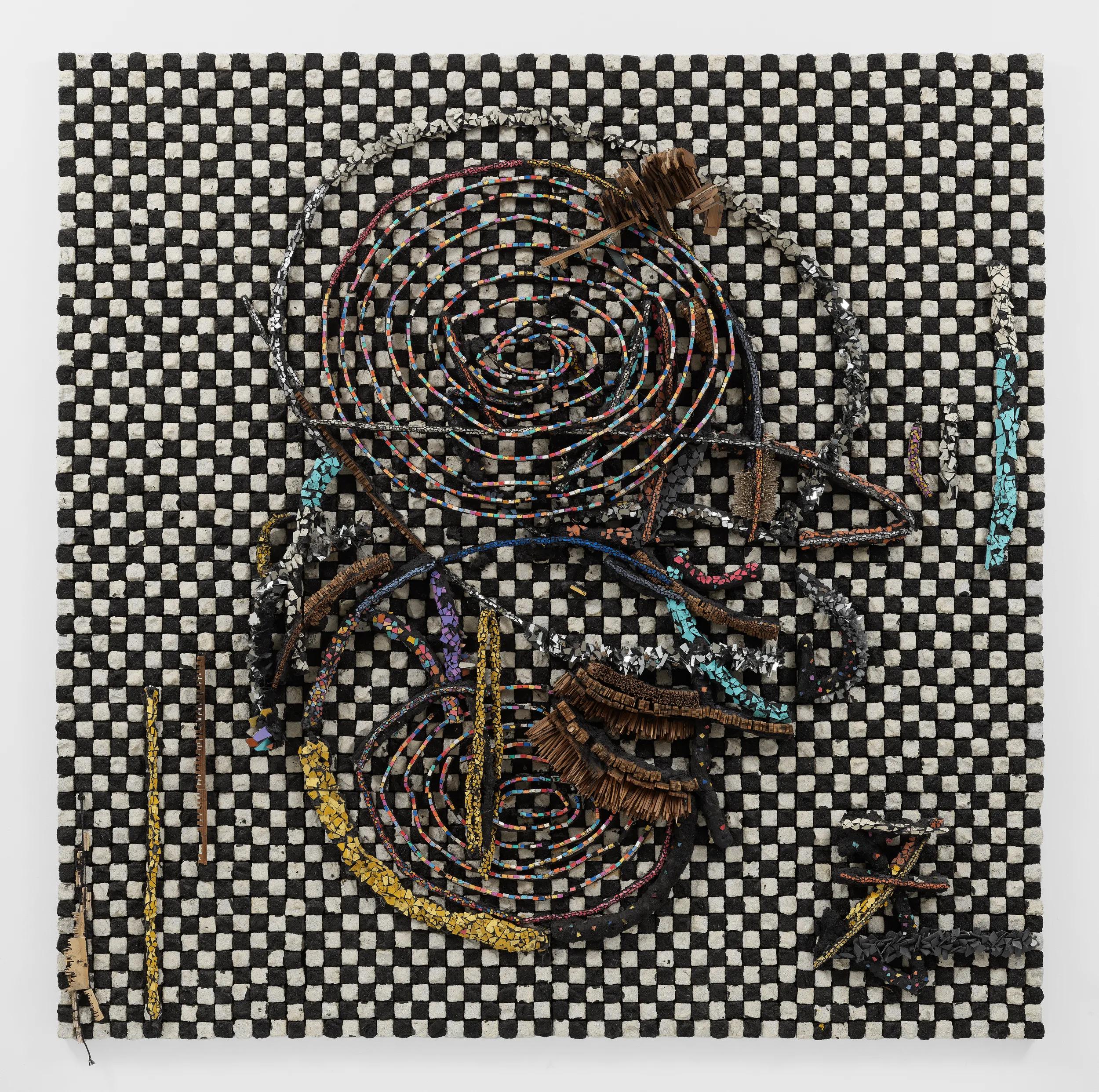
Leonardo Drew, Number 451, 2026 © Leonardo Drew. Courtesy the artist and Hauser & Wirth. Photo: Sarah Muehlbauer
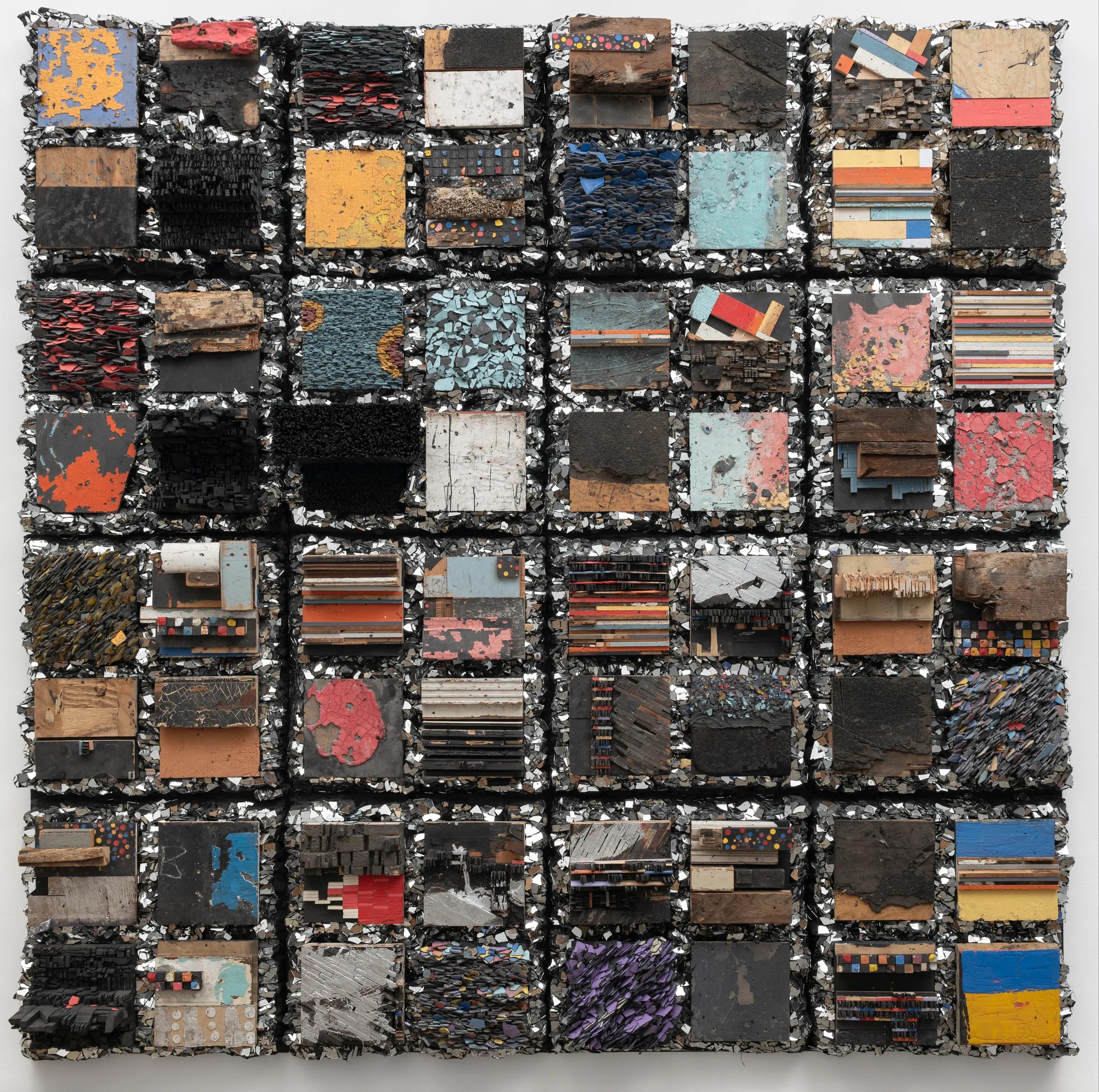
Leonardo Drew, Number 414, 2024 © Leonardo Drew. Photo: Jon Cancro
About the artist
Born in 1961 in Tallahassee, Florida, Leonardo Drew was raised in Bridgeport, Connecticut, where he has frequently cited his childhood proximity to a landfill near the P.T. Barnum Apartments—a complex he described as ‘God’s mouth,’ for its seemingly endless capacity to consume the kinds of discarded material that would become foundational to his understanding of transformation, impermanence and renewal. Watching such materials broken down and reconstituted there would influence his later artistic practice.
Drew first exhibited his work at the age of thirteen in a solo presentation of action-figure drawings at State National Bank in Bridgeport, Connecticut. He later studied at Parsons School of Design, ultimately turning away from illustration to pursue gestural abstraction and process-driven assemblage before receiving his BFA from Cooper Union in 1985. During this period, he was taught and mentored by Jack Whitten, who encouraged his artistic exploration and introduced him to a broader lineage of Black artists working outside dominant narratives and processes. Among these were Mel Edwards, Sam Gilliam, Joe Overstreet, Romare Bearden and Jacob Lawrence, whose sustained engagement with abstraction helped affirm Drew’s own evolving visual language.
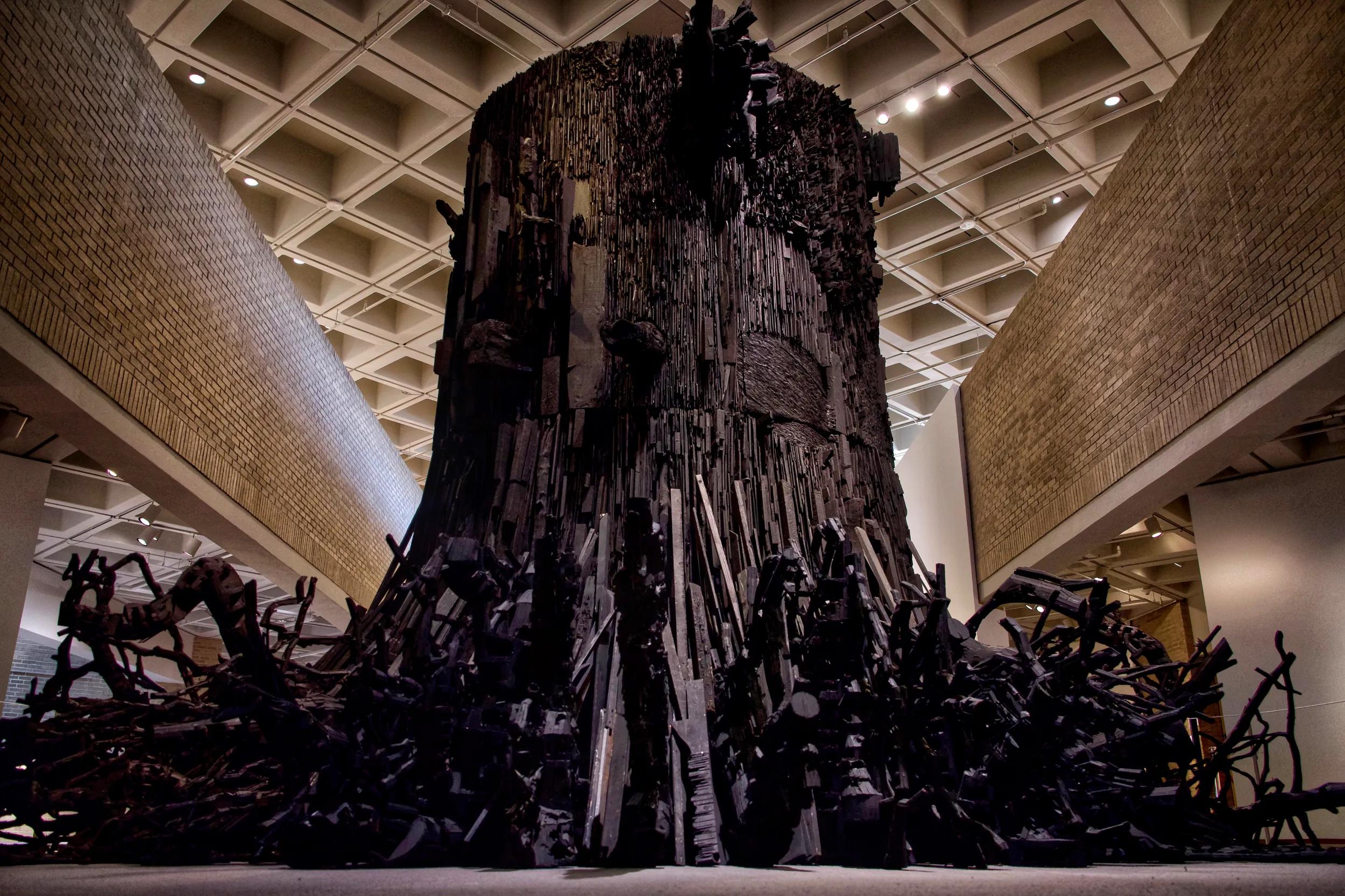
Leonardo Drew, Number 235, 2019 © Leonardo Drew, Courtesy North Carolina Museum of Art, Raleigh
Since the late 1980s, Drew has attracted international attention and critical recognition for works that confront both personal and collective histories through abstraction. His breakthrough work, ‘Number 8’ (1988), incorporated animal hides, feathers and wood in a visceral exploration of the interconnected forces of violence and transformation, while later works expanded in scale and ambition to encompass monumental installations that engulf architectural spaces. His mid-career survey, Existed, premiered at the Blaffer Art Museum in Houston in 2009 and subsequently traveled to the Weatherspoon Art Museum in Greensboro, North Carolina, and the deCordova Sculpture Park and Museum in Lincoln, Massachusetts.
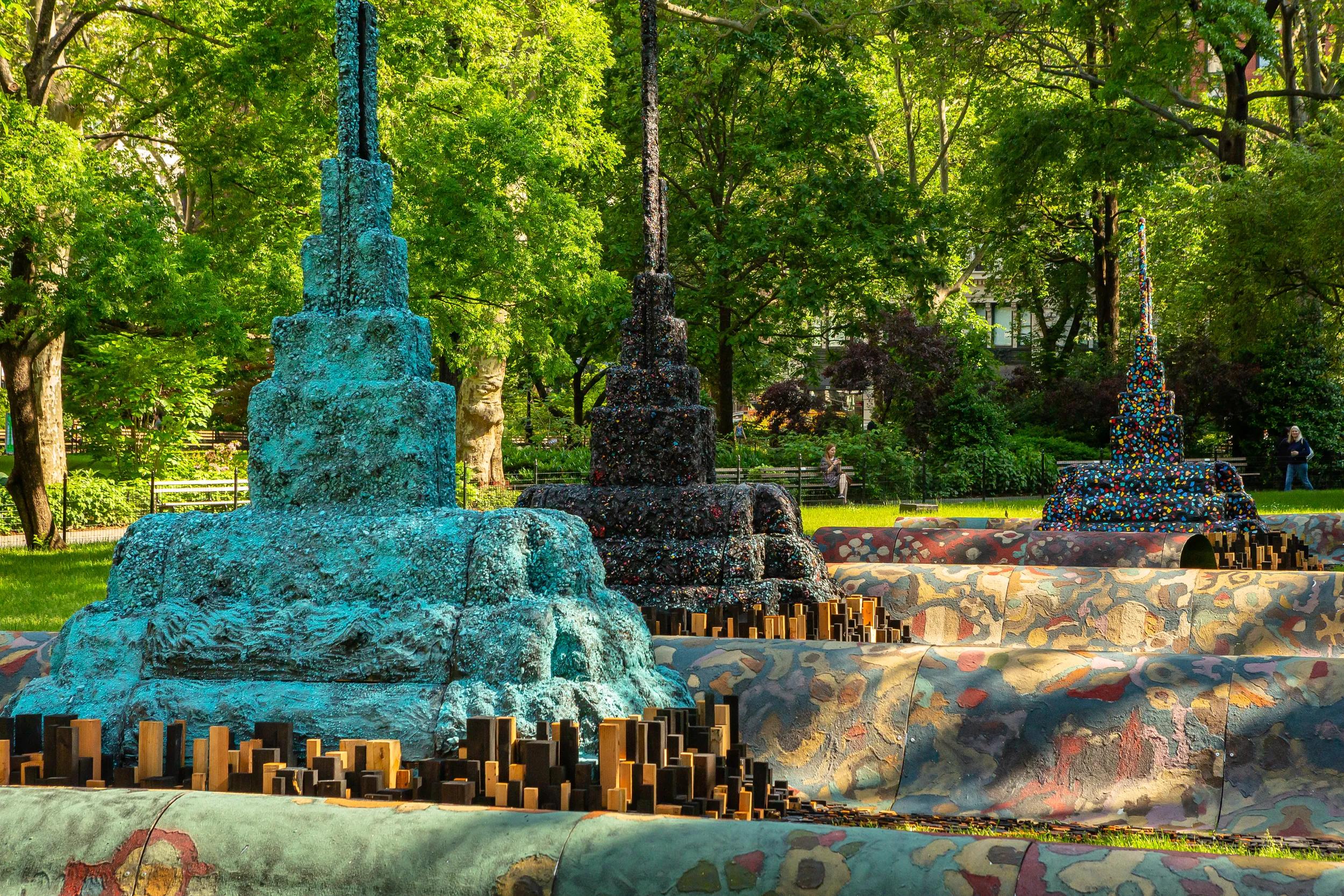
Leonardo Drew, City in the Grass, 2019, Installation view in Madison Square Park, New York © Leonardo Drew. Courtesy Madison Square Park Conservancy. Photo: Rashmi Gill
In 2019, Drew unveiled ‘City in the Grass,’ his first major public commission, for Madison Square Park in New York City—an expansive installation that marked a significant shift in his practice through the introduction of color and an invitation for viewers to physically engage with the work by walking around, sitting and gathering within it. In 2020, the North Carolina Museum of Art (NCMA) presented ‘Leonardo Drew: Making Chaos Legible,’ a major solo exhibition that highlighted the artist’s evolving engagement with pigment, material experimentation and immersive installation.
Drew’s work has been the subject of solo exhibitions at institutions including the Bruce Museum, Greenwich, Connecticut; North Carolina Museum of Art, Raleigh; Wadsworth Atheneum Museum of Art, Hartford; and Mississippi Museum of Art, Jackson. His work is held in major public collections including The Metropolitan Museum of Art, New York; The Museum of Modern Art, New York; Hirshhorn Museum and Sculpture Garden, Washington, DC; Museum of Contemporary Art Los Angeles; and Tate, London, among others. He has also collaborated with Merce Cunningham on the production ‘Ground Level Overlay.’ Drew lives and works in Brooklyn, New York and San Antonio, Texas.
Related News



1 / 5