

Books
Book Stack
Some new and forthcoming titles we love
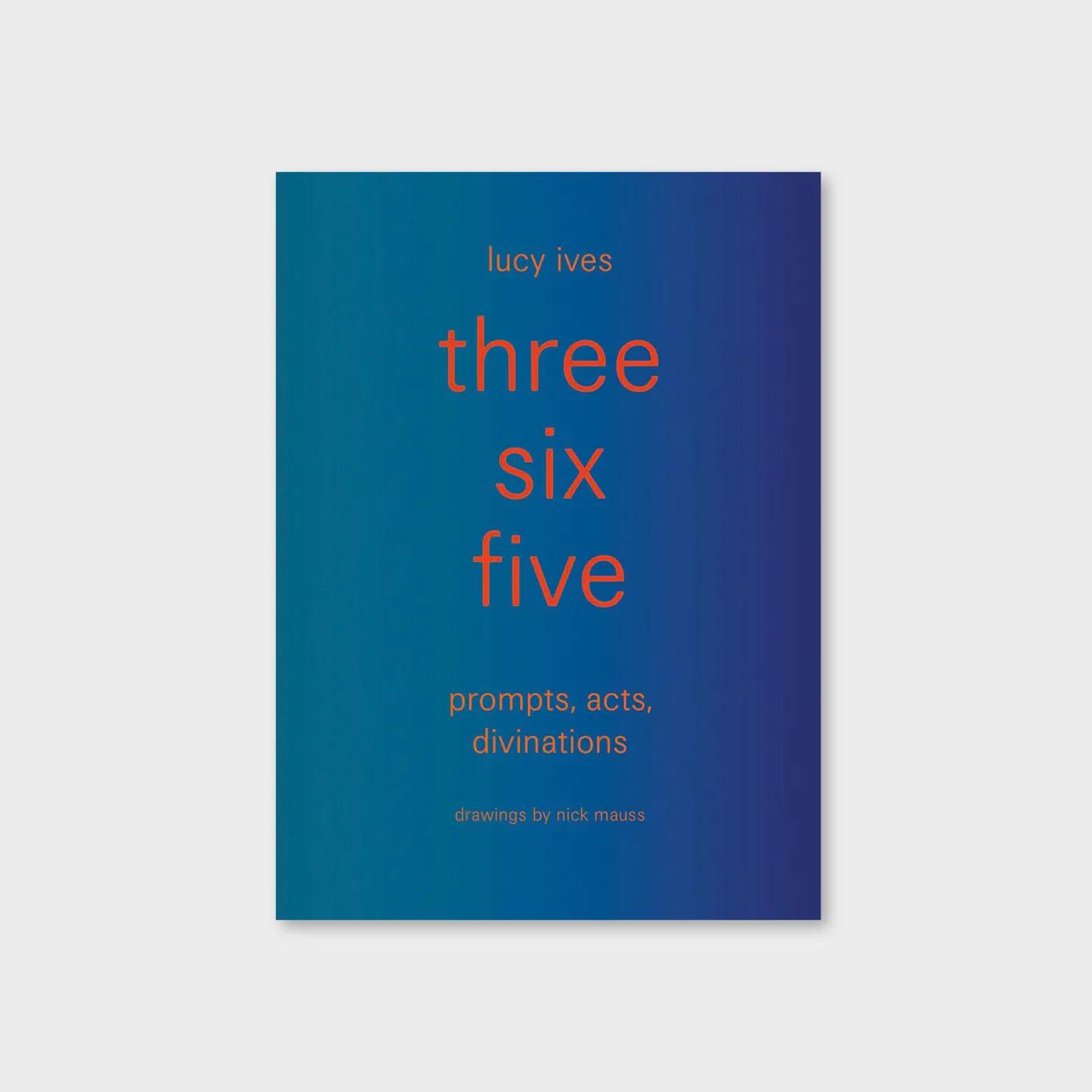
three six five: prompts, acts, divinations by Lucy Ives (Siglio)
As a novelist, I sometimes think about Graham Greene’s particularly Catholic form of writerly discipline—no matter what, no matter the lack of sleep or the severity of the hangover, he wrote 500 words a day when he was at work on a book. I once tried it and didn’t close out a week. My creative mind simply doesn’t move within the catechisms of routine. It functions instead something like the poet and novelist Lucy Ives’s new book, a spiritual descendant of Yoko Ono’s Grapefruit and Raymond Queneau’s Exercises in Style, manuals of thought variations or “event scores” that can be read as one might read religious verse or koans or the sentences of Lawrence Weiner. To call Ives’s pages writing exercises is technically correct, but they are closer in feel to Conceptual poetry, accented by Nick Mauss’s spare, witty drawings and three red ribbons to mark your spots. Right now, my ribbons are on exercise no. 11—“Write a sentence that is or becomes a drawing”; no. 277—“Write the tale of an ambiguous miracle”; and no. 337—“Write an essay about a staircase you use all the time.”
—Randy Kennedy
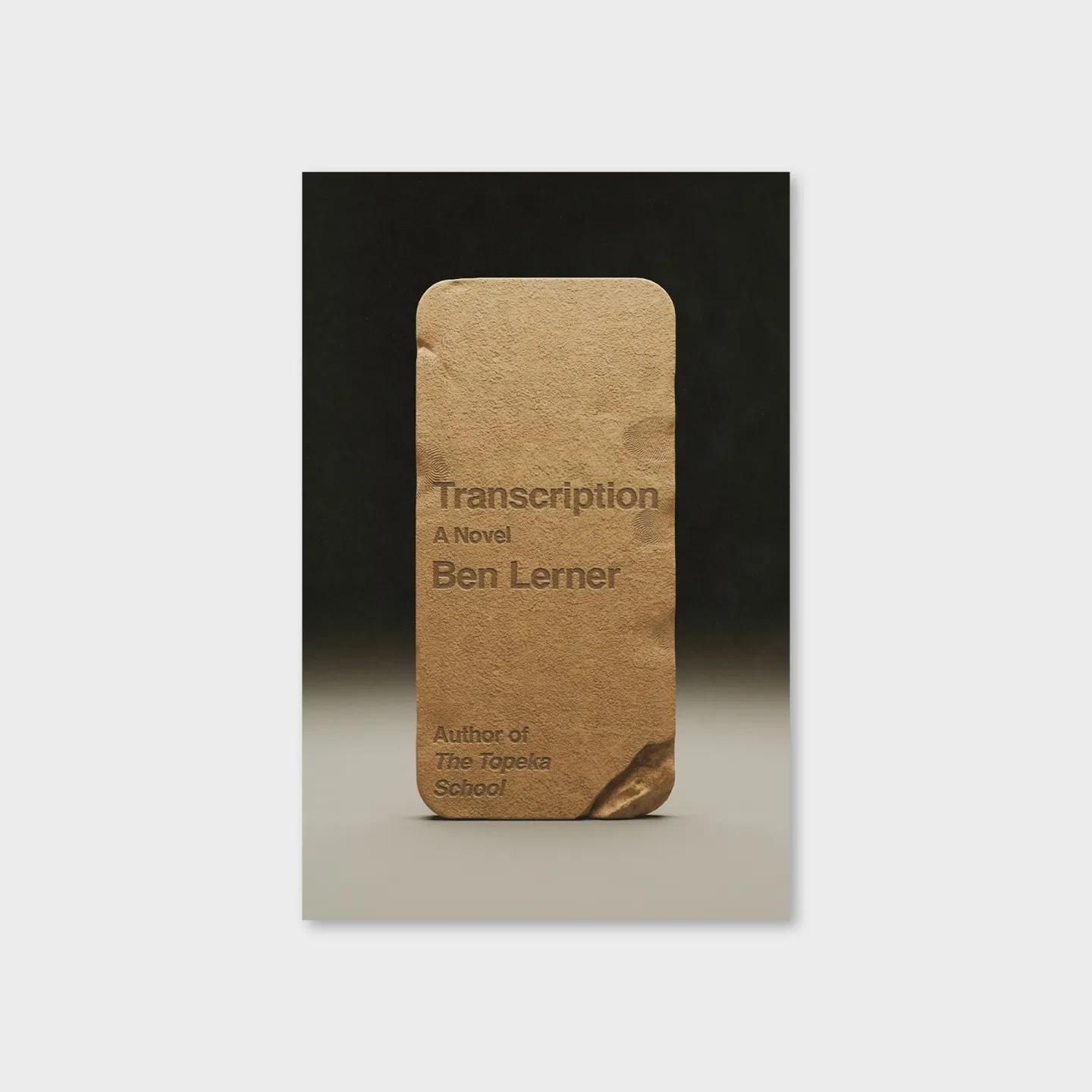
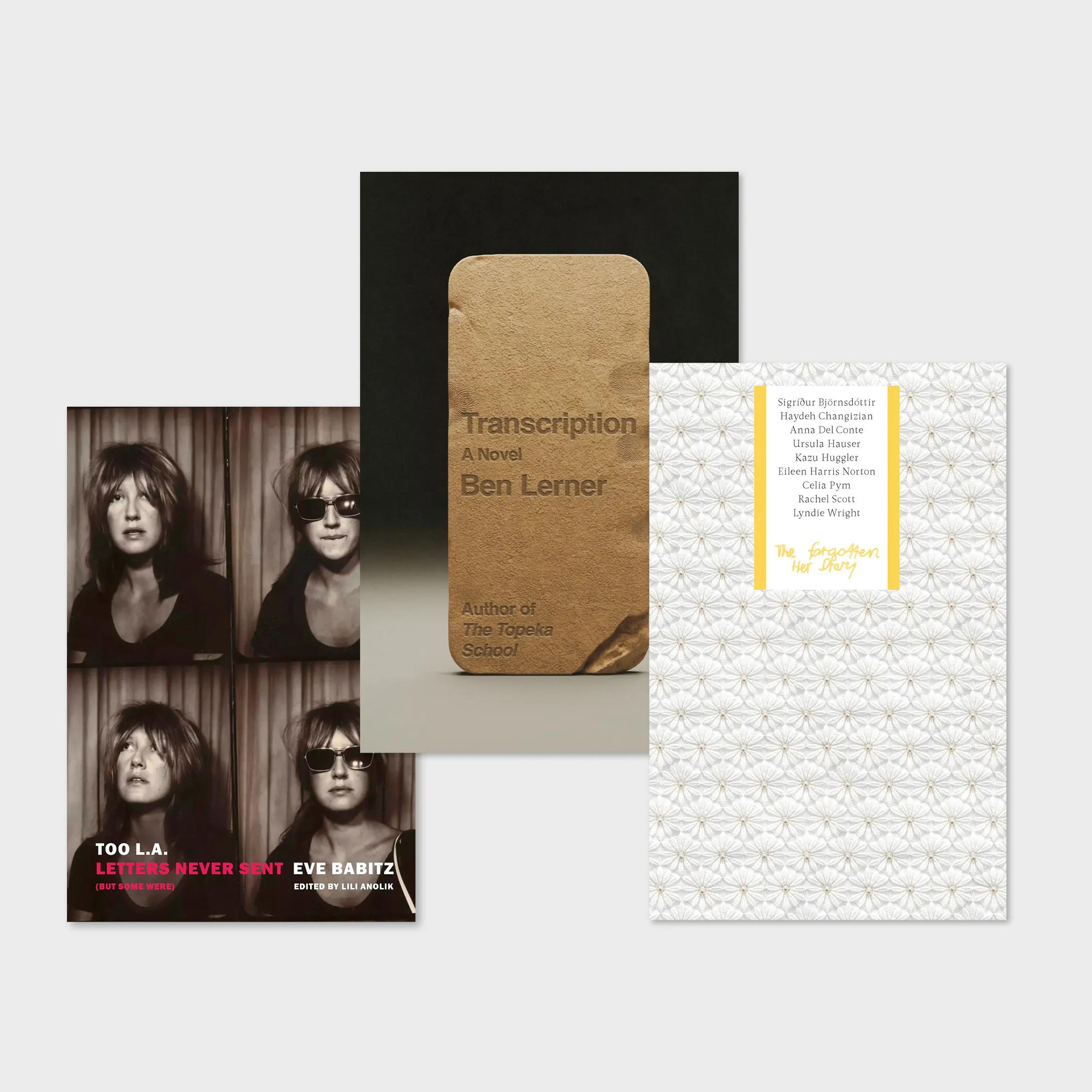
Transcription by Ben Lerner (Farrar, Straus and Giroux)
What remains when experience can no longer reliably be recorded? Transcription, the latest novel by Ben Lerner, is a compact, conceptual fable that orbits around Thomas, a ninety-year-old European American intellectual, deeply immersed in the worlds of art and literature, and a middle-aged American narrator, a former student of Thomas’s, who is negotiating authorship, parenthood and the lingering authority of an older generation.
In what may be Thomas’s final interview, the narrator’s failed recording device foregrounds the tension between memory and technology. Lerner uses this lost transcription to examine contemporary consciousness, a place where experience is ever more mediated and ethereal, tethered to devices that promise precision but deliver something else. The story moves from Providence, Rhode Island, to Madrid to Thomas’s son’s home in Los Angeles through a series of reconstructions in which fact and fiction, dream and memory, remain entangled.
What emerges is both tender and exacting—a meditation on intergenerational exchange in an age when everything is recorded and nothing, quite, is kept.
—Francis Till
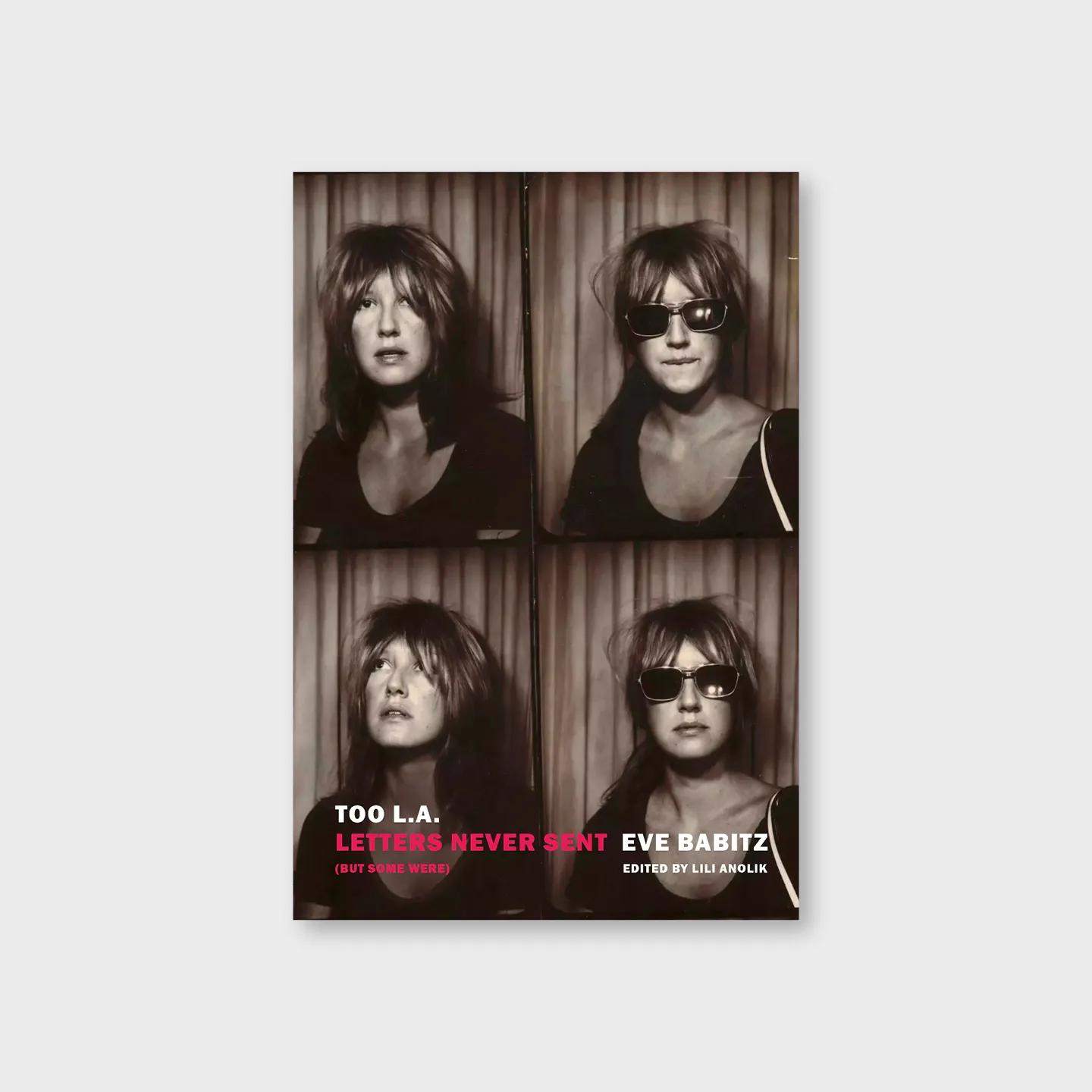
Too L.A.: Letters Never Sent (But Some Were) by Eve Babitz. Edited by Lili Anolik (New York Review of Books)
In the introduction to Too L.A., Lili Anolik quotes Janet Malcolm on the peculiar force of the unmailed letter. Writing and not sending is not, she notes, worthy of attention; what matters is the act of preservation. By keeping the letter, “we are not relinquishing our idea.… On the contrary, we are giving it an extra vote of confidence.” That insight frames this newcollection of Eve Babitz’s correspondence—much, though not all, of it unsent—as a record not of hesitation but of insistence.
A gossipy chronicle of Los Angeles in the second half of the 20th century—a who’s who of friends and lovers—the letters capture Babitz at her most recognizable: chatty, observant, glamorous, delightfully nonchalant. But here, as she writes without an audience, another side emerges: that of an artist intensely aware of her place yet longing to be taken seriously, capable of flashes of anger and contempt. In a letter to fellow writer Joseph Heller, she asks: “How are people like me—women they’re called—supposed to understand things if we can’t get into the V.I.P. room?” adding, with a sardonic shrug, “Anyway, I can’t stand meetings.” These missives reveal the ambition that always ran beneath Babitz’s pleasures.
—Susannah Faber
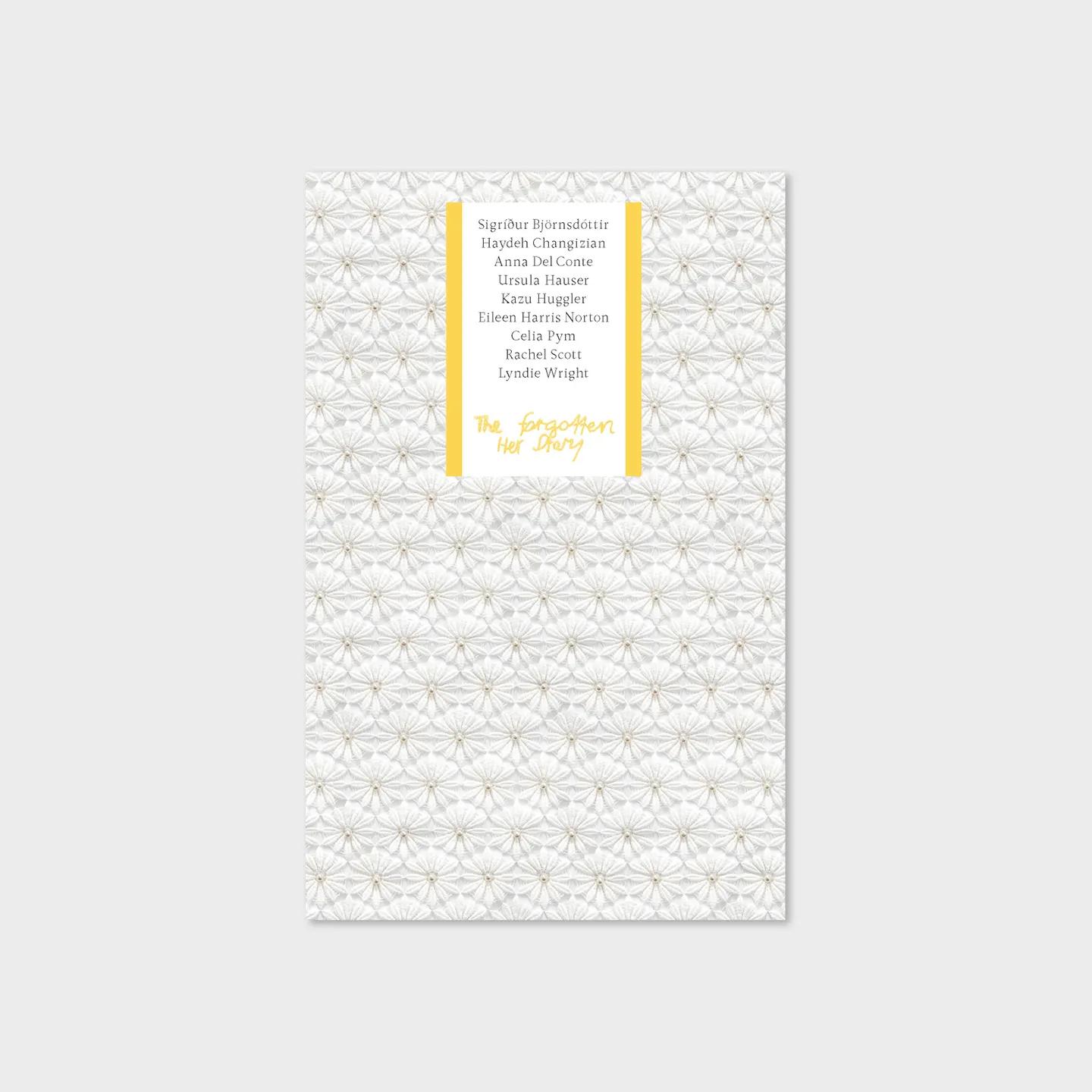
The Forgotten Her Story Preface by Manuela Wirth (Hauser & Wirth Publishers)
Each of the women featured in The Forgotten Her Story is nothing short of extraordinary. There is Anna Del Conte, the Italian-born food writer whose cookbooks have been credited with transforming the way the British cook and eat. There’s fashion designer Kazu Huggler, whose couture collection includes garments made with silk repurposed from vintage kimonos. And there’s Eileen Harris Norton, a Los Angeles–based art collector whose philanthropy supports artists of color and women artists. Their stories and those of six other creative women form the backbone of this handsome clothbound volume, part of a larger storytelling initiative launched in 2024 when Manuela Wirth was at work on a film celebrating the eighty-fifth birthday of her mother, Ursula Hauser. “A kitchen-table conversation while we knitted,” Wirth writes in the preface, “sowed the seeds of a project” that came to include this book and a vibrant online platform with text, photos and video. These profiles in ingenuity—and courage—are sure to inspire anyone who has ever picked up a pair of knitting needles, pieced together a patchwork quilt, pulled on a leotard to study ballet or dreamed of a life in the creative world.
—Ann Levin
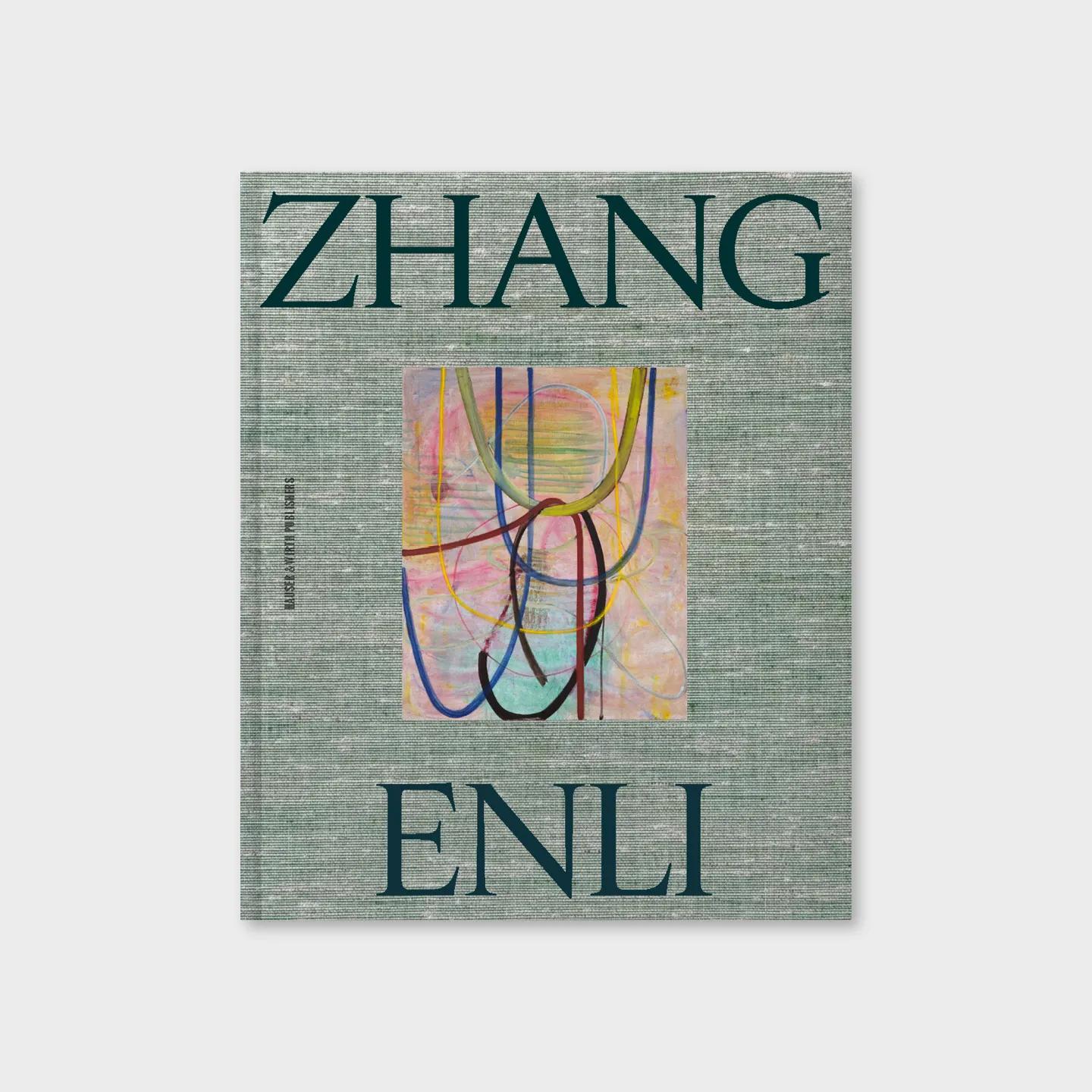
Zhang Enli. Text by Sook-Kyung Lee (Hauser & Wirth Publishers)
Zhang Enli is perhaps best known for challenging perception. The artist’s predilection for upending how we see is the unifying factor in a painting career that often eludes definition. Interpretations of his work are frequently characterized by dichotomies, including the abstract and the figurative, traditional Chinese and modernist Western influences. This new book features an essay by curator and professor Sook-Kyung Lee that challenges such a binary perspective, instead framing Zhang’s work in a Buddhist context, in which concepts of form and emptiness—despite their contrasting qualities—are understood as one and the same.
This illuminating point of view is accompanied by a substantial section of plates that closely traces Zhang’s evolution over four decades, including his transition of subject matter from humans to everyday objects to space itself. The book also includes documentation of seminal projects such as Space Painting—for which he painted the interiors of rooms inside London’s Institute of Contemporary Arts in 2013. Lee’s essay concludes with the acute observation that Zhang’s paintings “refuse the choice between object and abstraction, staging instead the mutual arising of figure and field.”
—Aaina Bhargava
Roni Horn: Seizure of Hope (Hauser & Wirth Publishers)
Drawing has long been central to Roni Horn’s work. She has said that, regardless of idiom or material, drawing remains her primary activity—whether it is expanded into sculptural form or remains as line on paper. Writing, here, becomes another mode of drawing: language rendered through the repeated movement of the hand.
Repetition is a defining strategy in this body of work. Page after page, the phrase “I am paralyzed with hope” accumulates, as if mantra had slipped into compulsion. Borrowed from comedian Maria Bamford—whose work is marked by candor around mental illness—the line resonates sharply within the present political moment. It suggests a desire for action that folds back into stasis. Yet this repetition produces difference. Subtle deviations in pressure, spacing and rhythm distinguish each inscription. What initially appears mechanical reveals itself to be singular and contingent. In this way, paralysis gives rise to another form of movement: an action sustained through return.
—Alexis Lowry