
Charles Gaines
Southern Trees
26 January – 1 April 2023
New York, 22nd Street
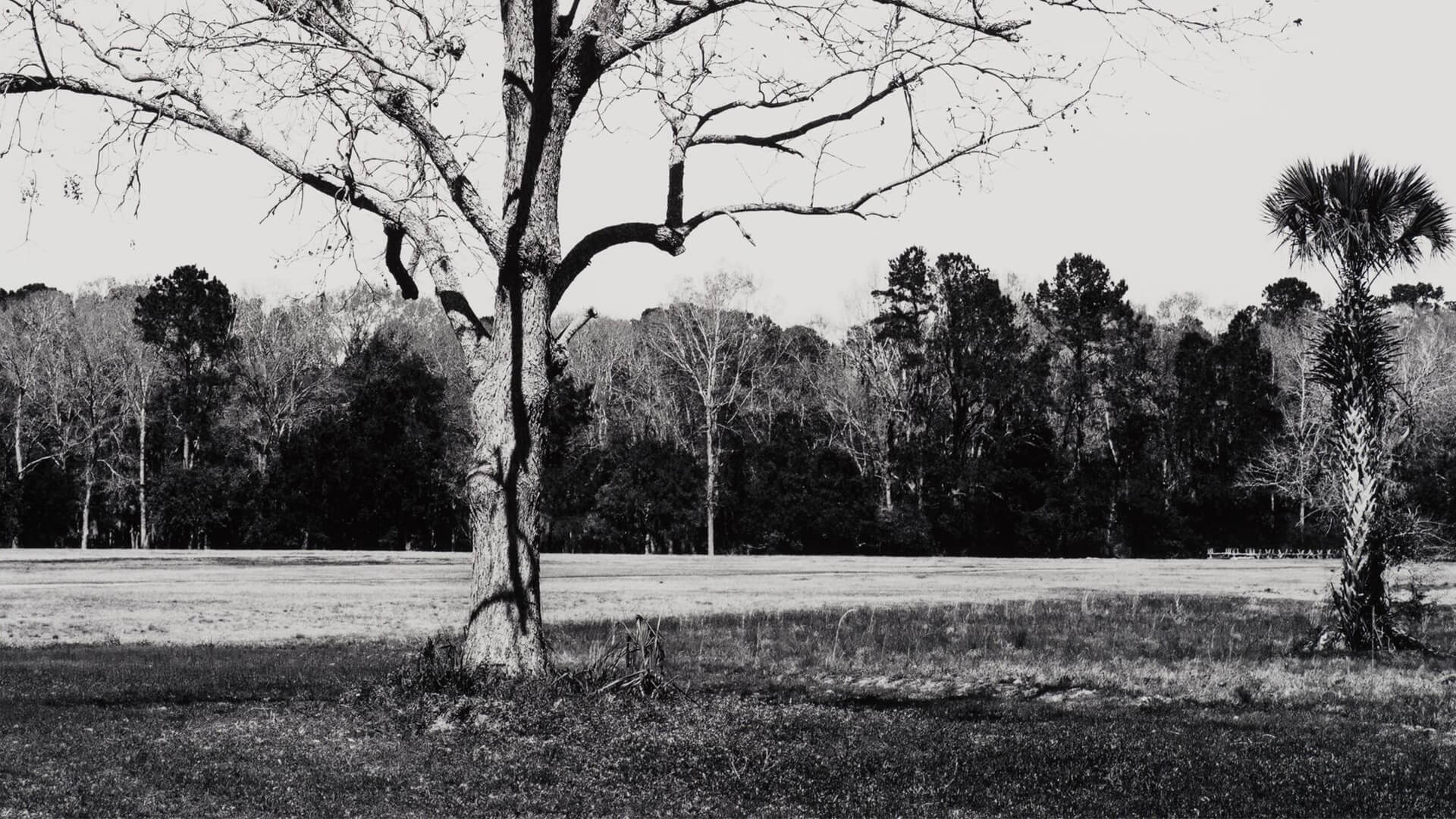
‘Southern Trees’ is the gallery’s first New York exhibition with distinguished American artist Charles Gaines and his first in the city since 2018. The exhibition’s title, ‘Southern Trees,’ alludes directly to the 150-year-old pecan trees pictured in the new works, and symbolically to the opening lyrics of ‘Strange Fruit,’ Billie Holiday’s haunting protest anthem from the 1930s.
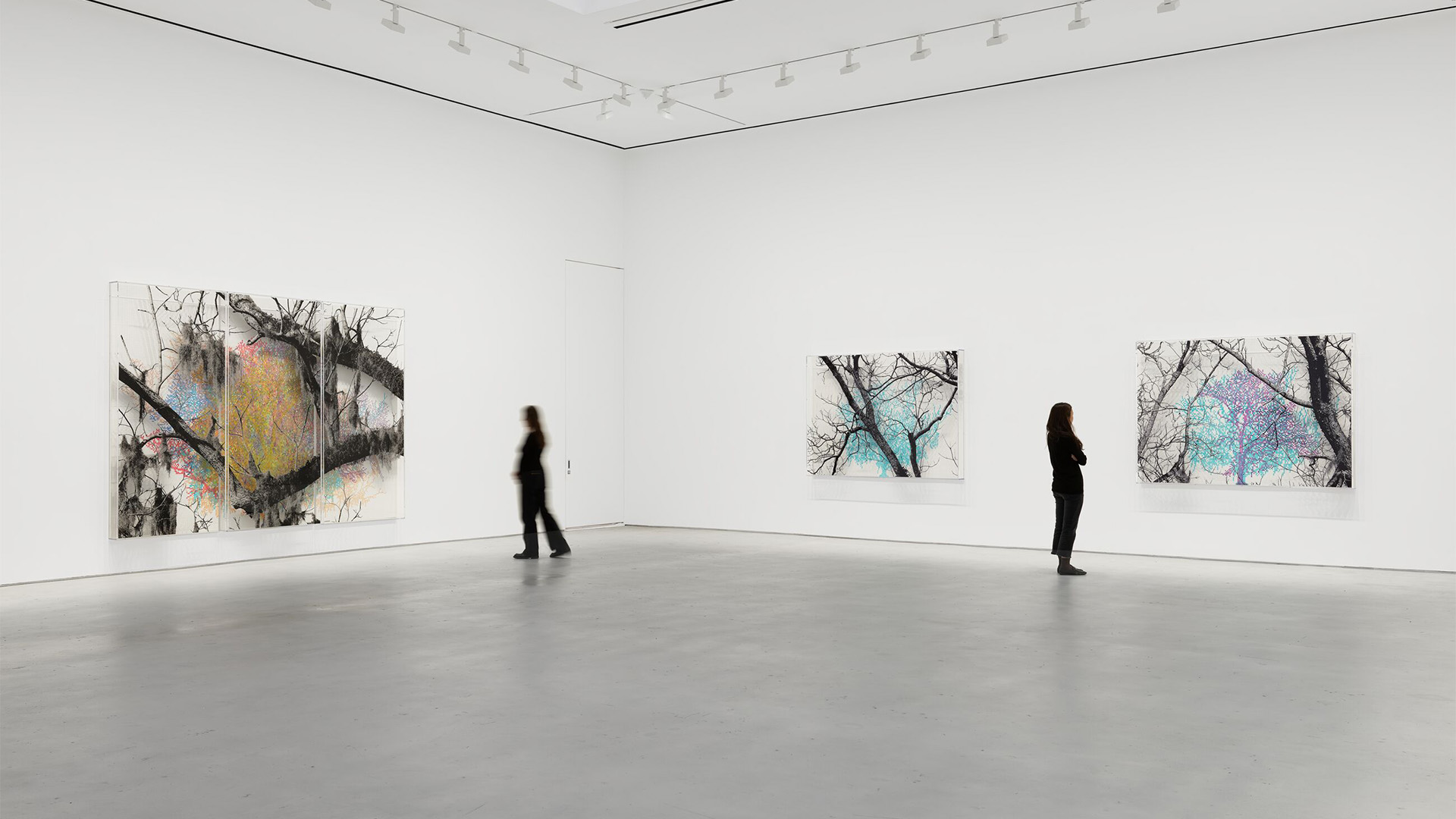
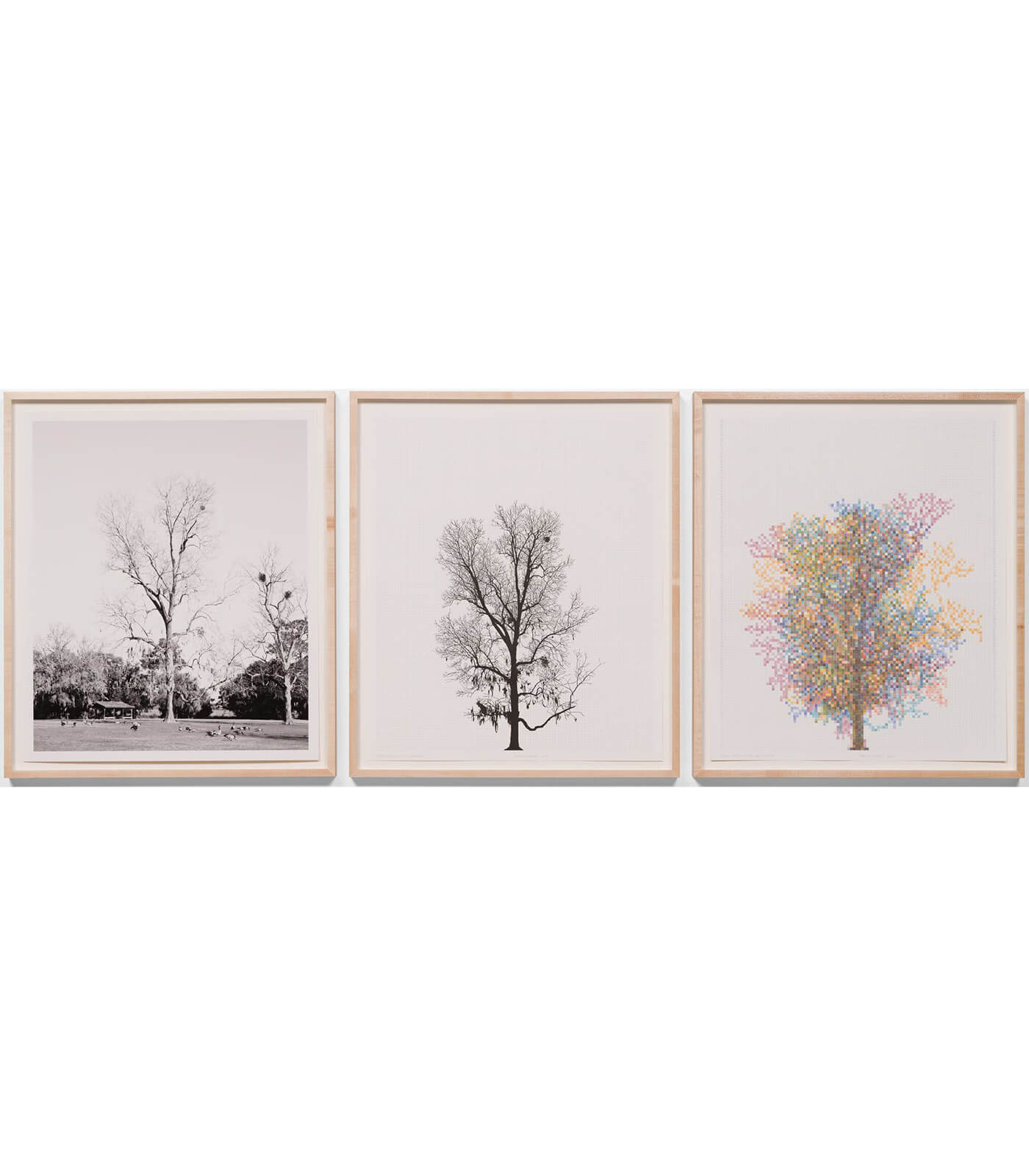
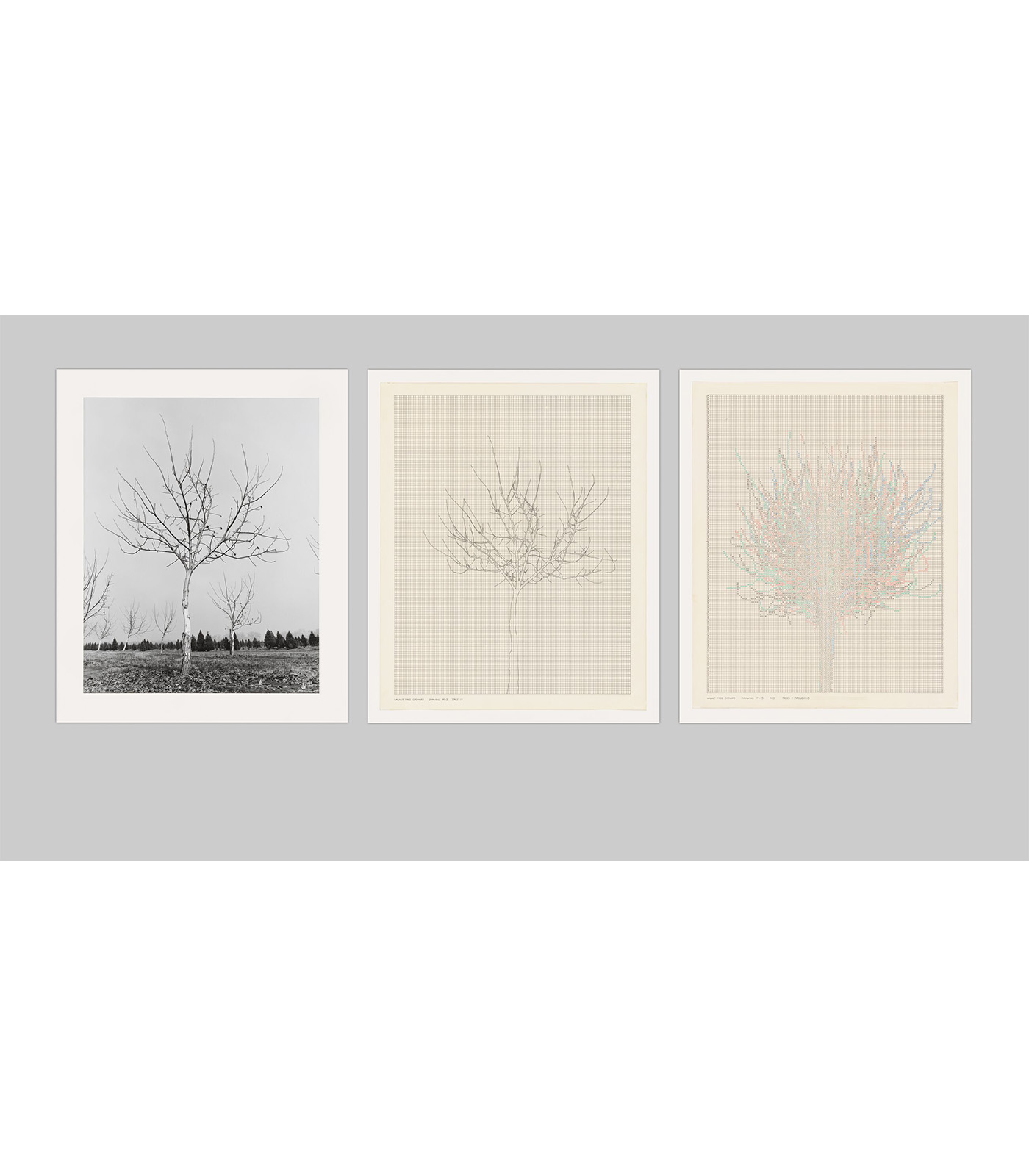
The image of the tree has been central to Gaines’s practice since he first began the Walnut Tree Orchard series in the 1970s. In ‘Southern Trees,’ Gaines advances the series using pecan trees photographed on a visit to Boone Hall Plantation in Charleston County, South Carolina––not far from where the artist was born and lived until he was five years old. Presented alongside a key early example from the walnut tree series, eight new triptych works on paper revisit and expand upon this significant original body of work.
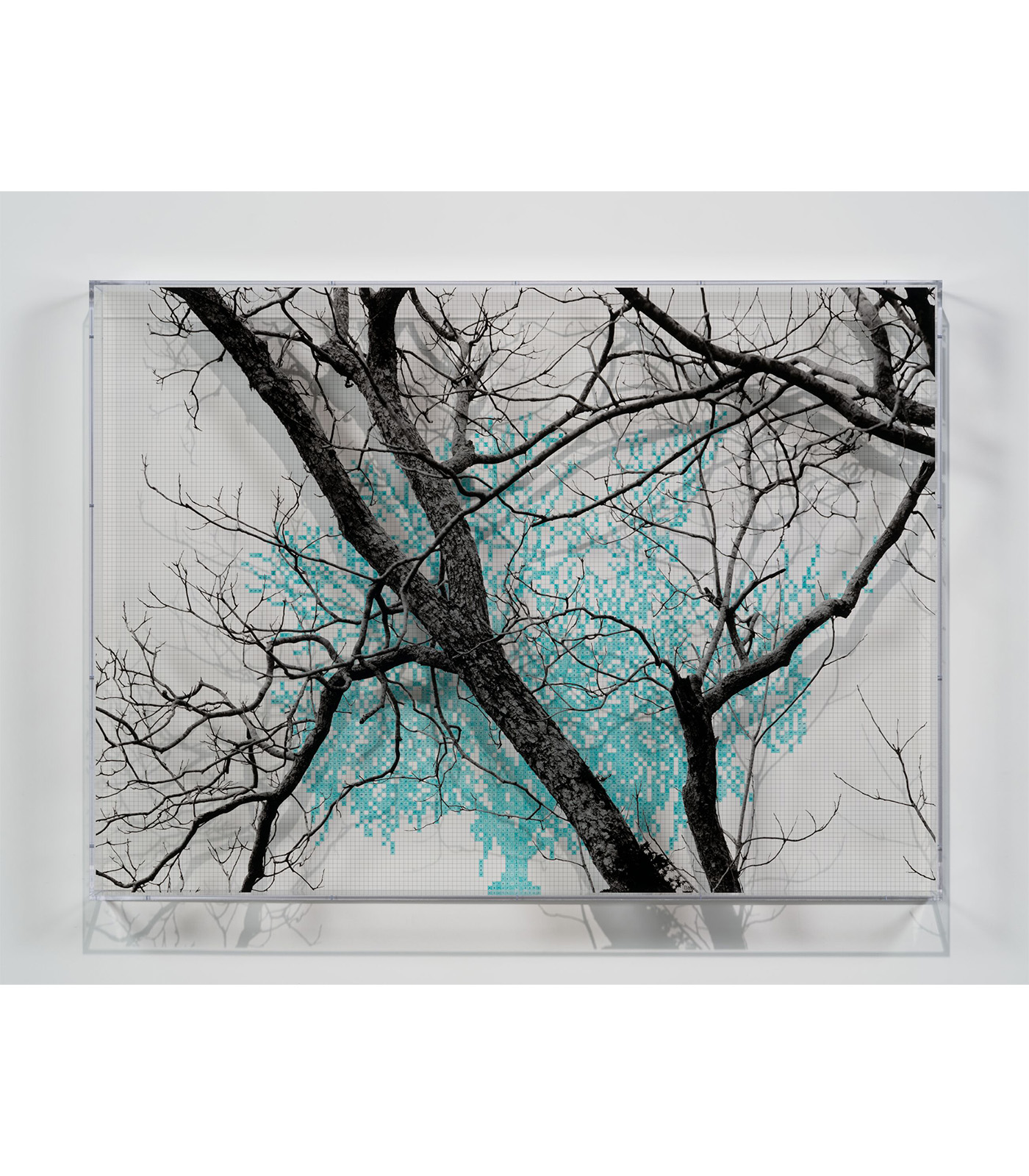
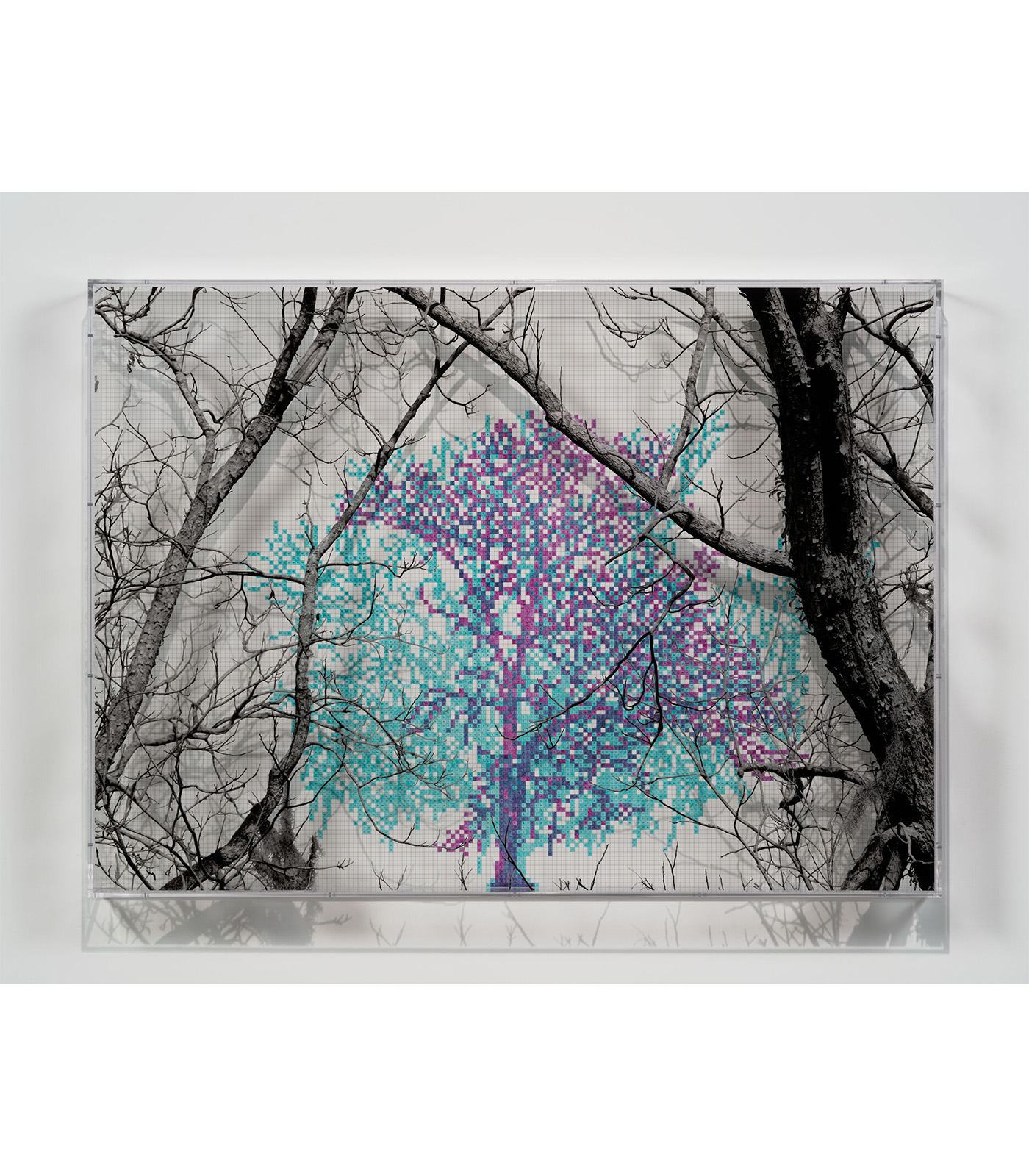
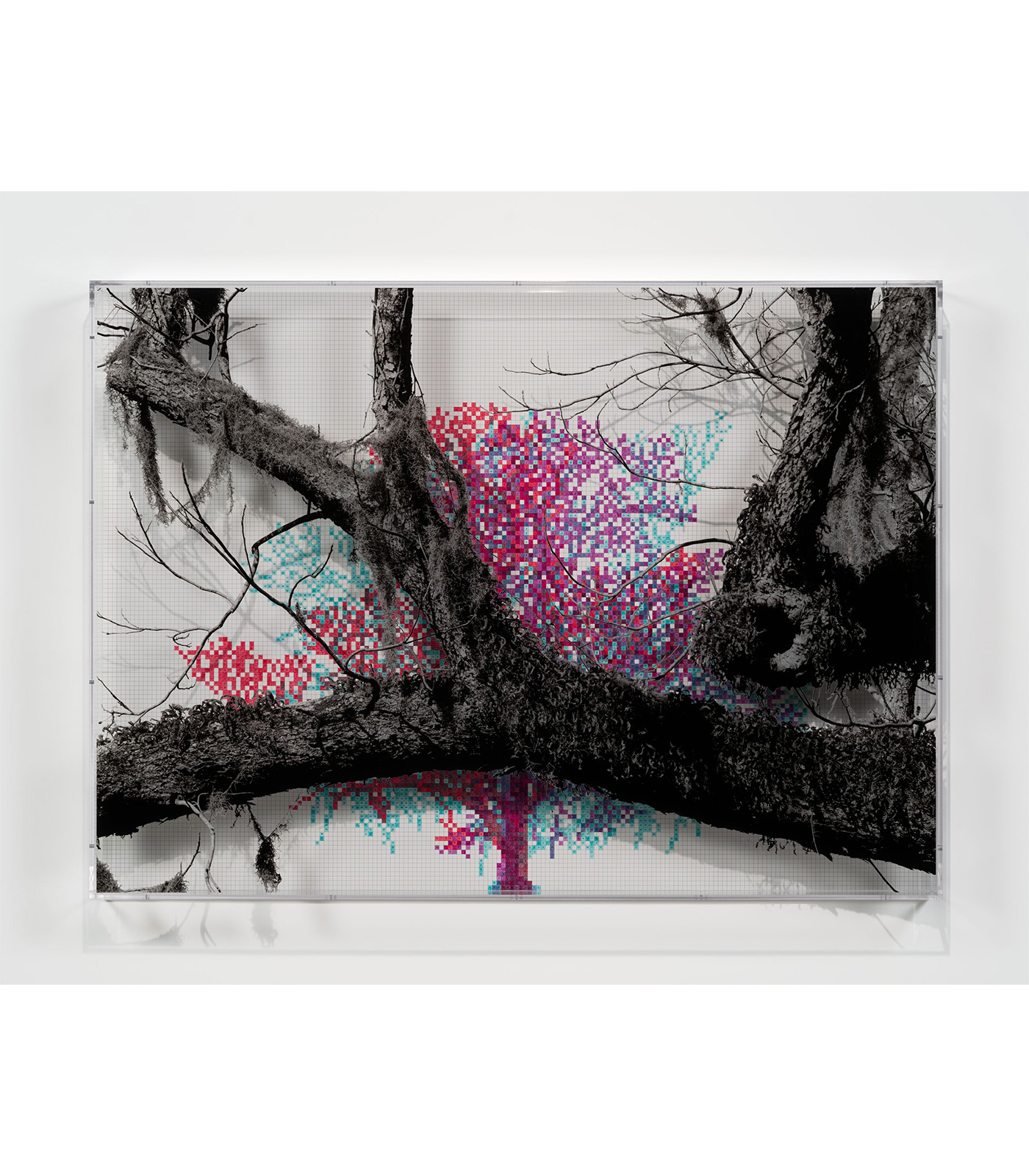
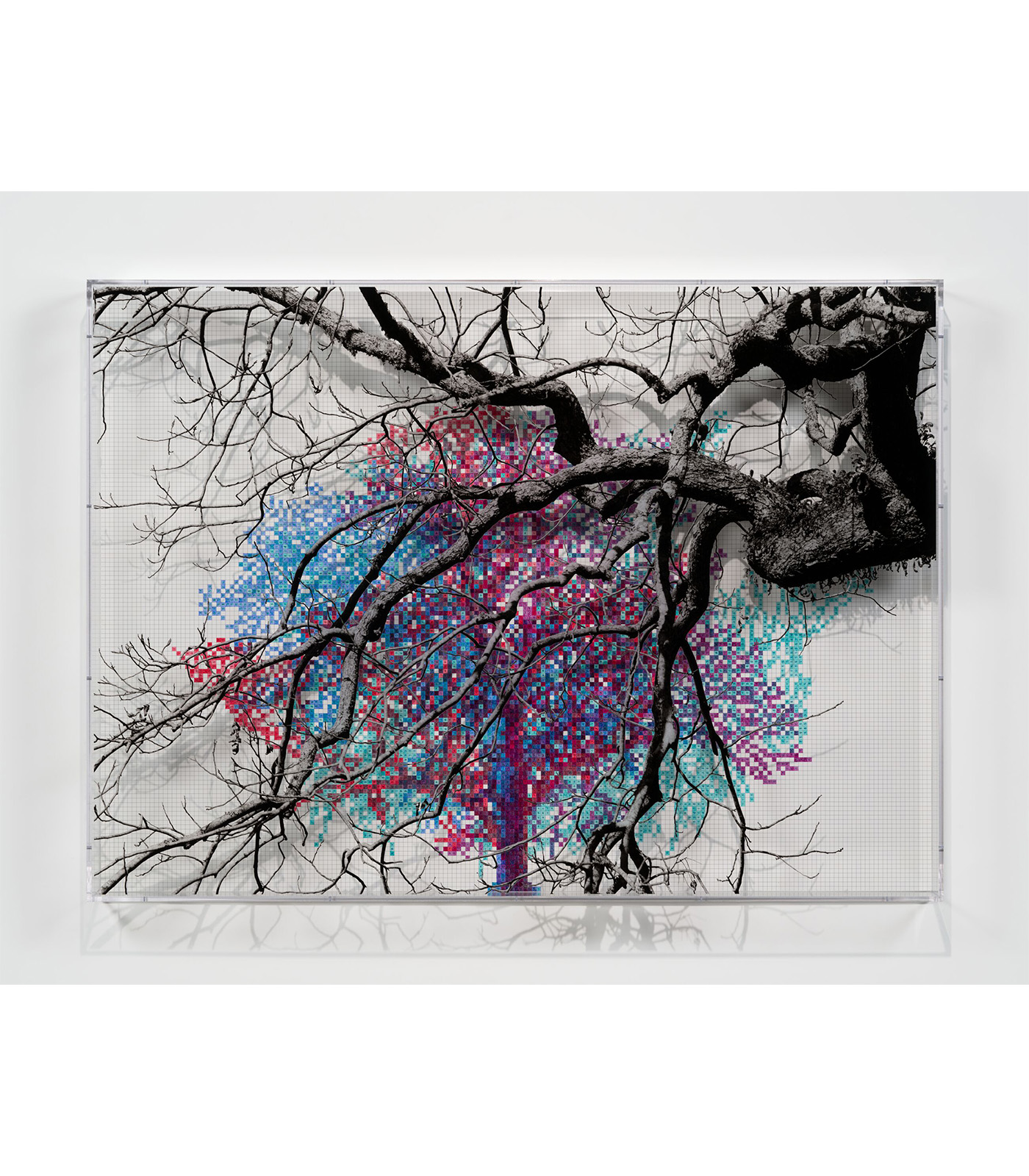
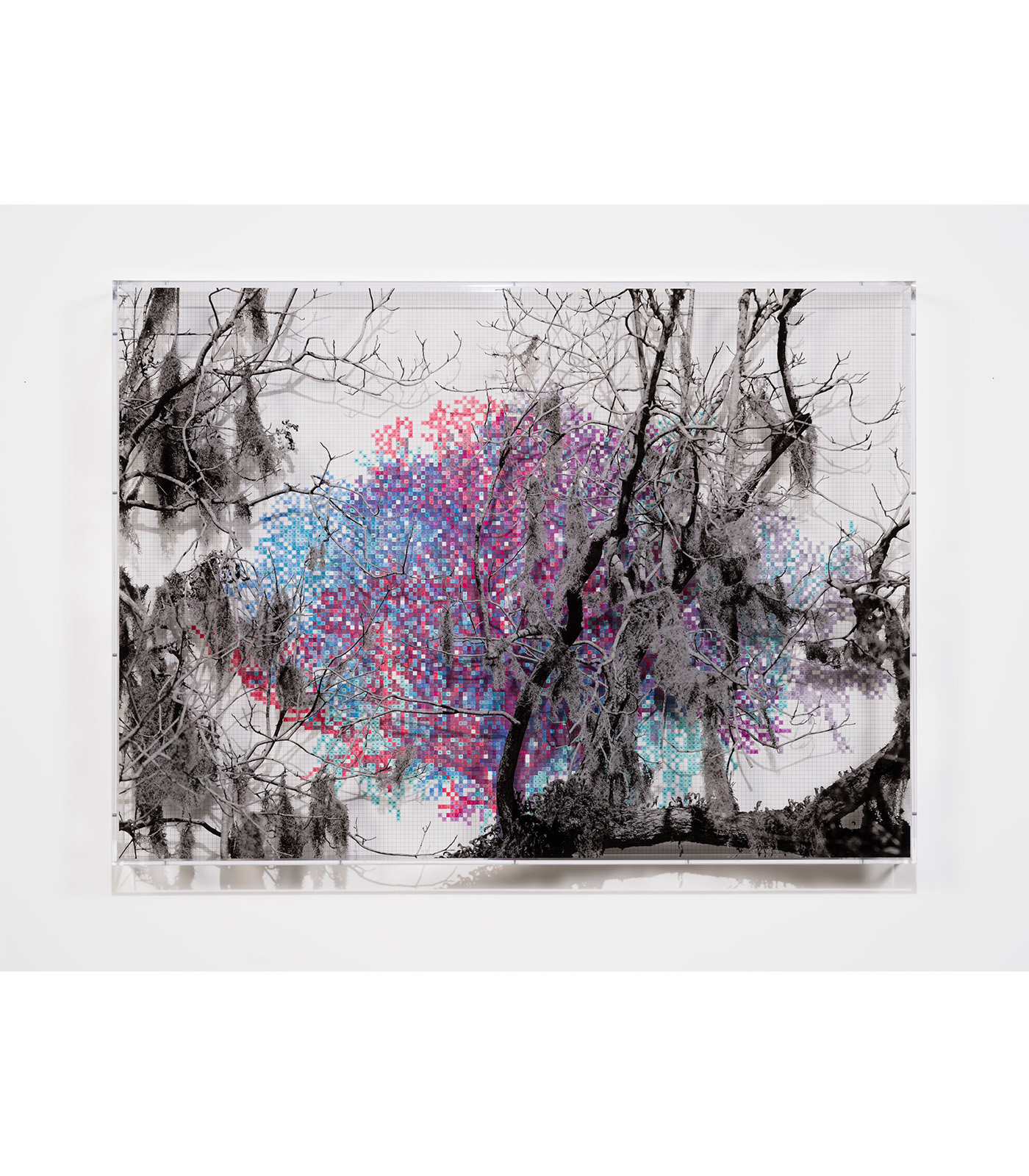
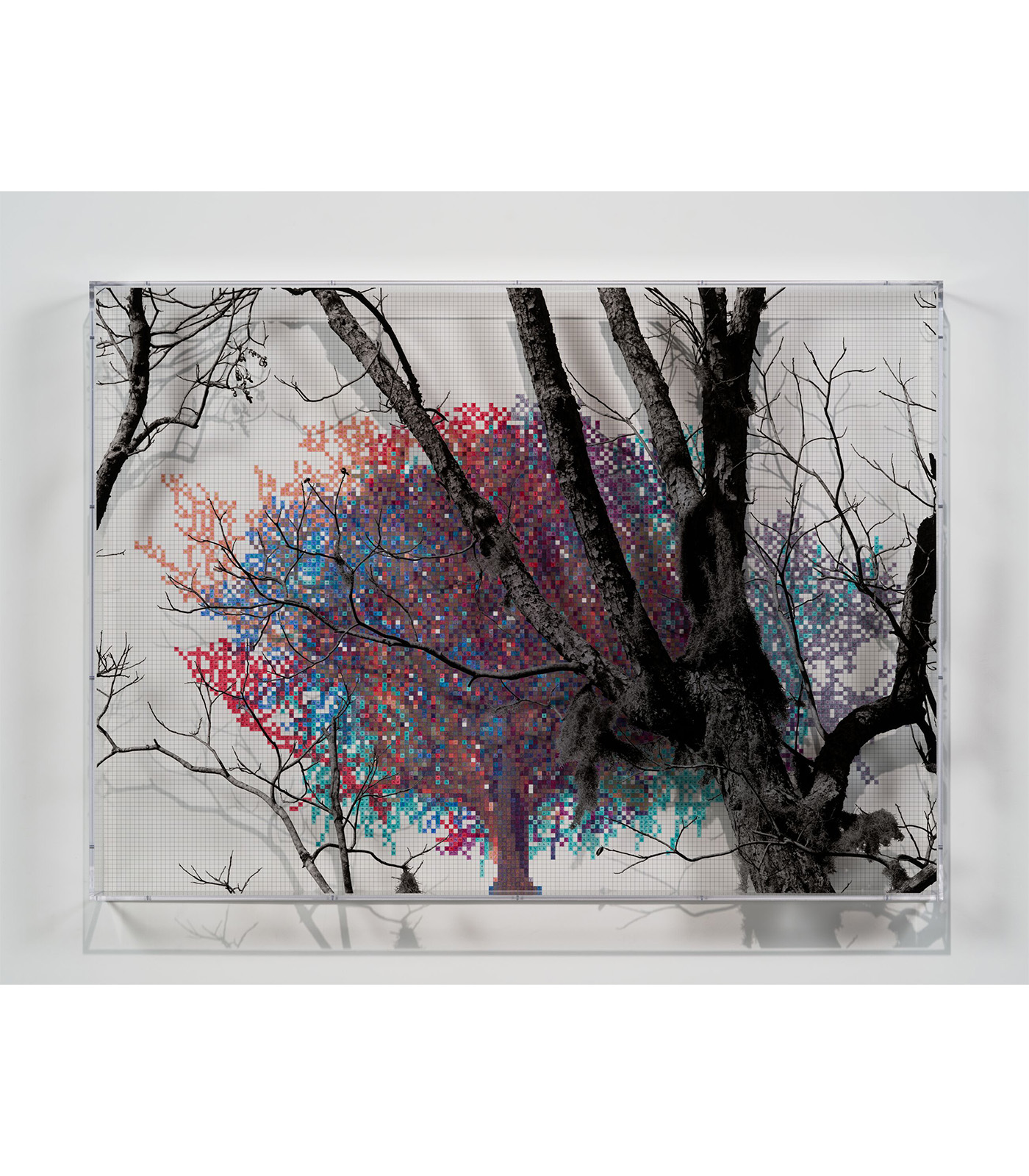
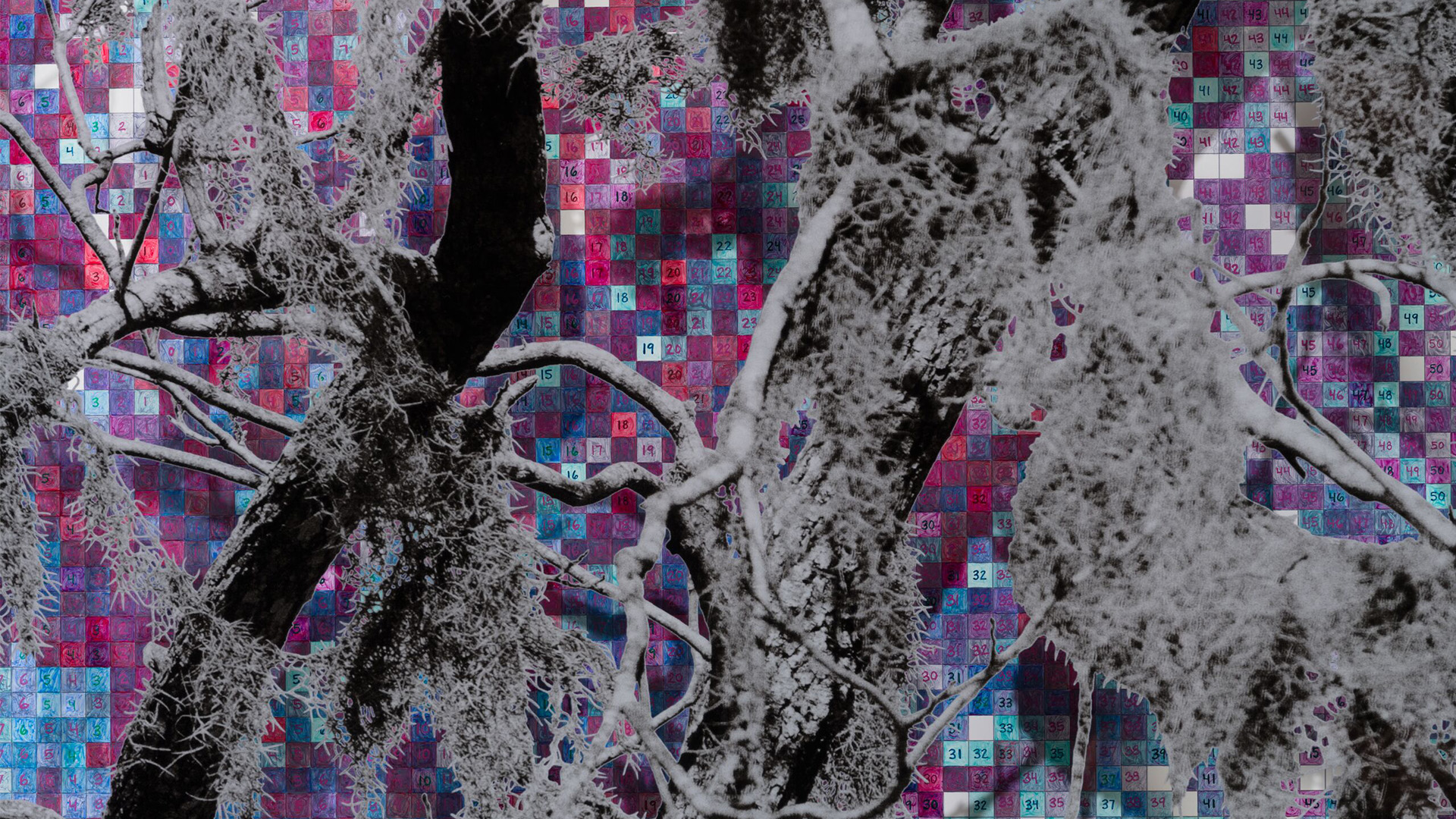
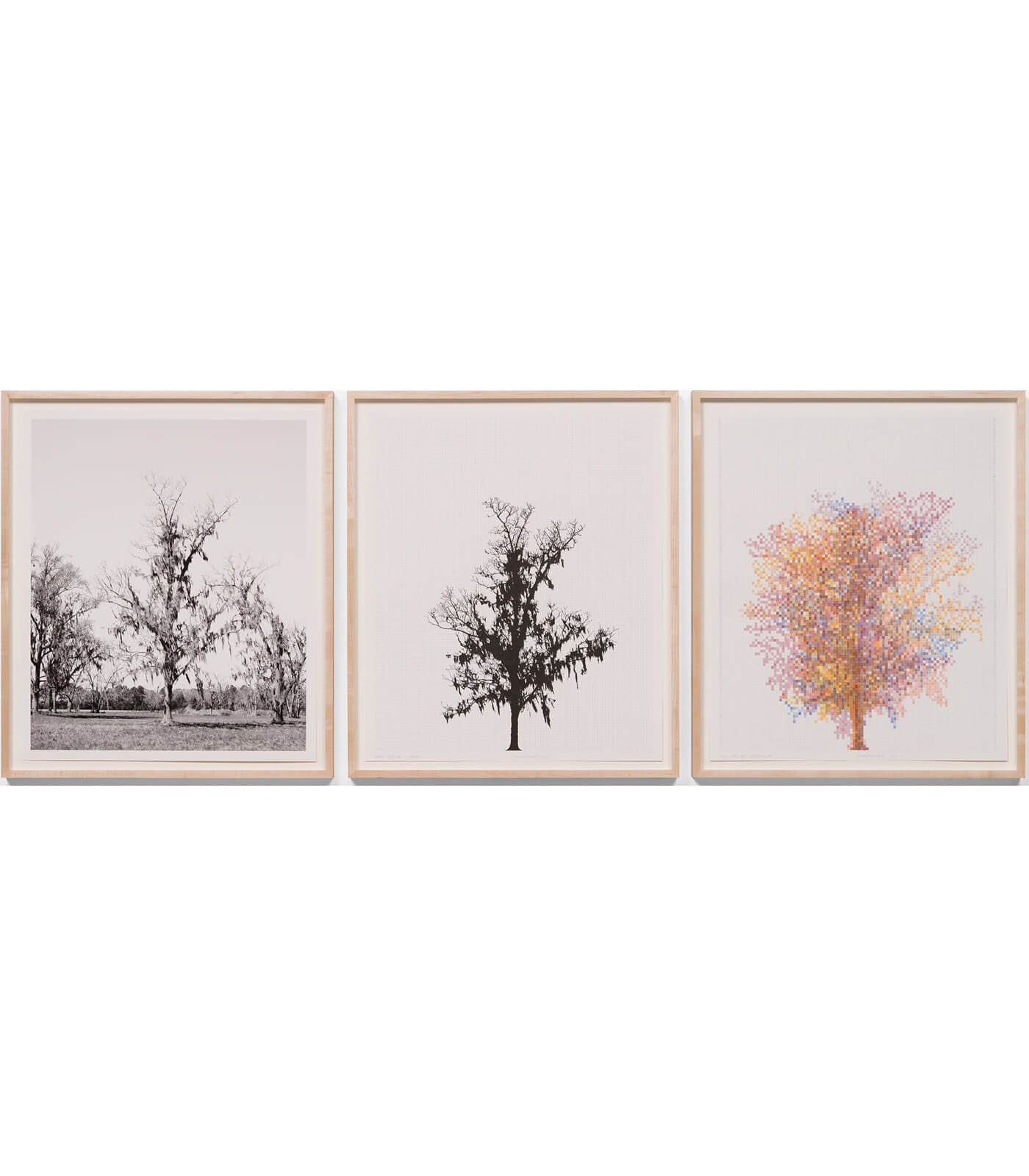
Gaines reverses his signature process in this new series by overlaying the forms of the trees one at a time and in progression on the back panel of the work rather than on the front. He then brings the photograph to the surface by printing an enlarged detail of the most recently added tree on the work’s Plexiglas surface. This approach brings the tree’s shadowy branches to the foreground, highlighting its textural details and contrasting tones while obscuring the colorful numbered grids painted underneath it. This reversal produces a dramatically different effect, igniting a more somber, yet stirring, reaction to the work as the austere branches, dripping with moss, dominate the picture.
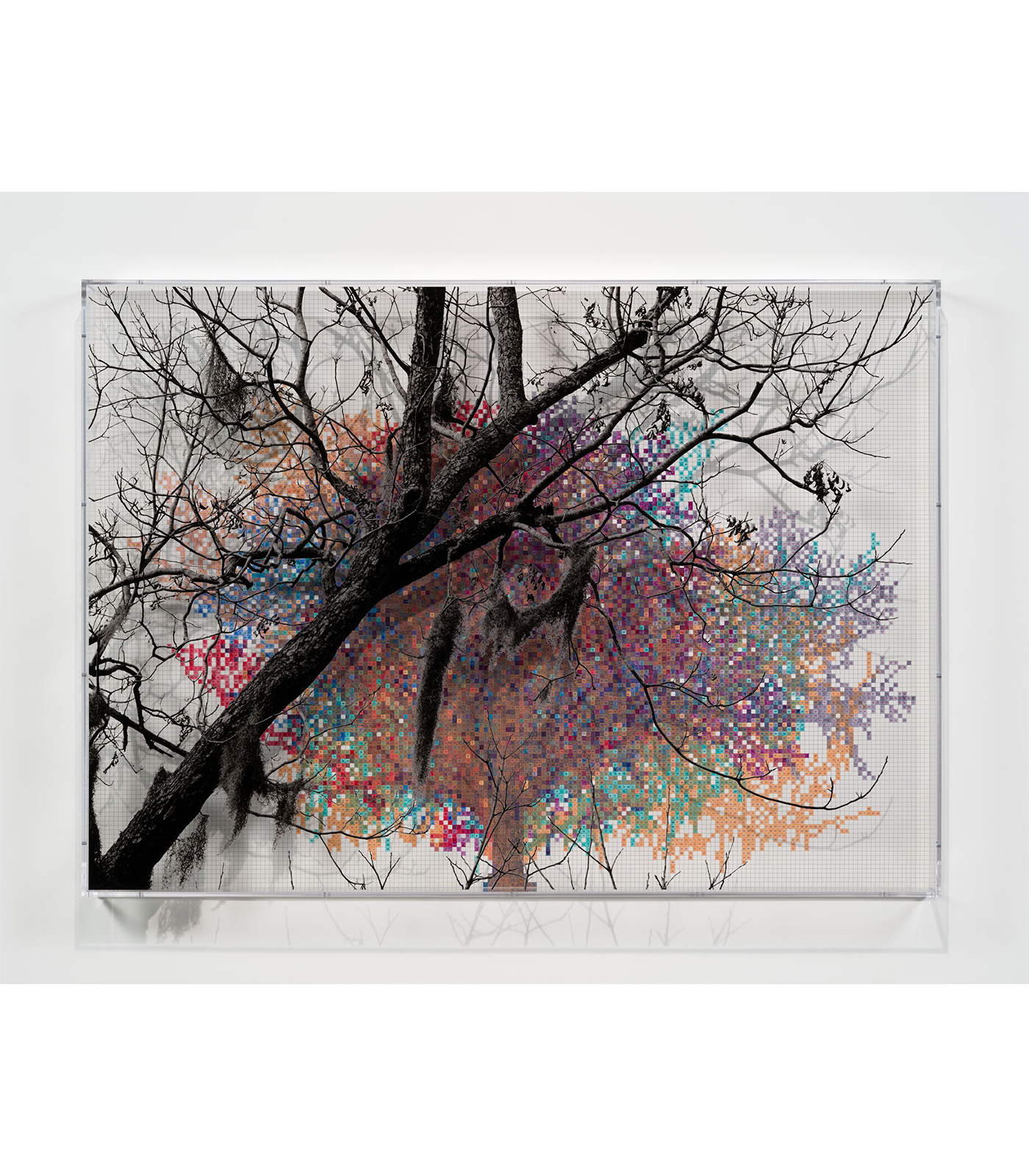
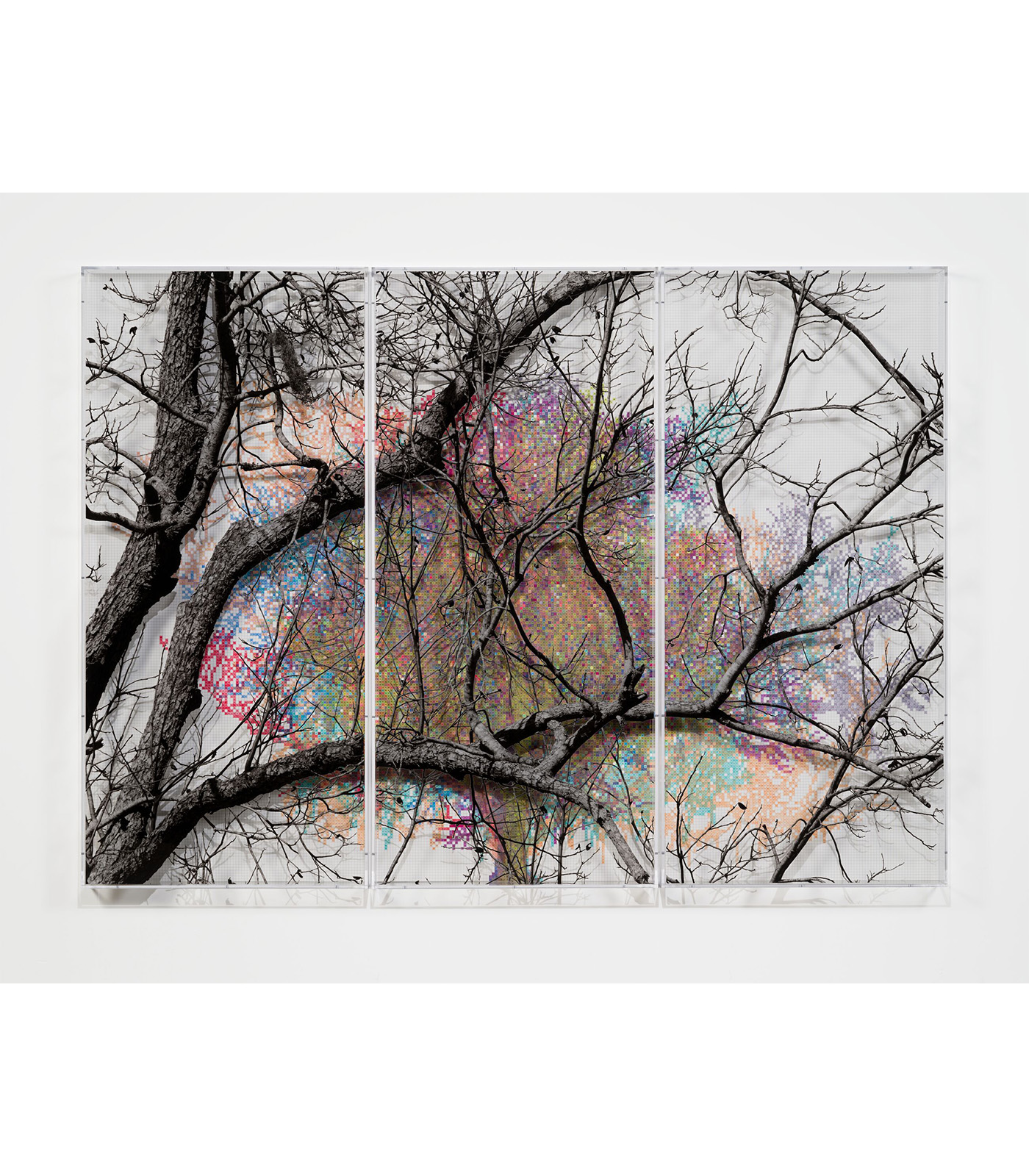
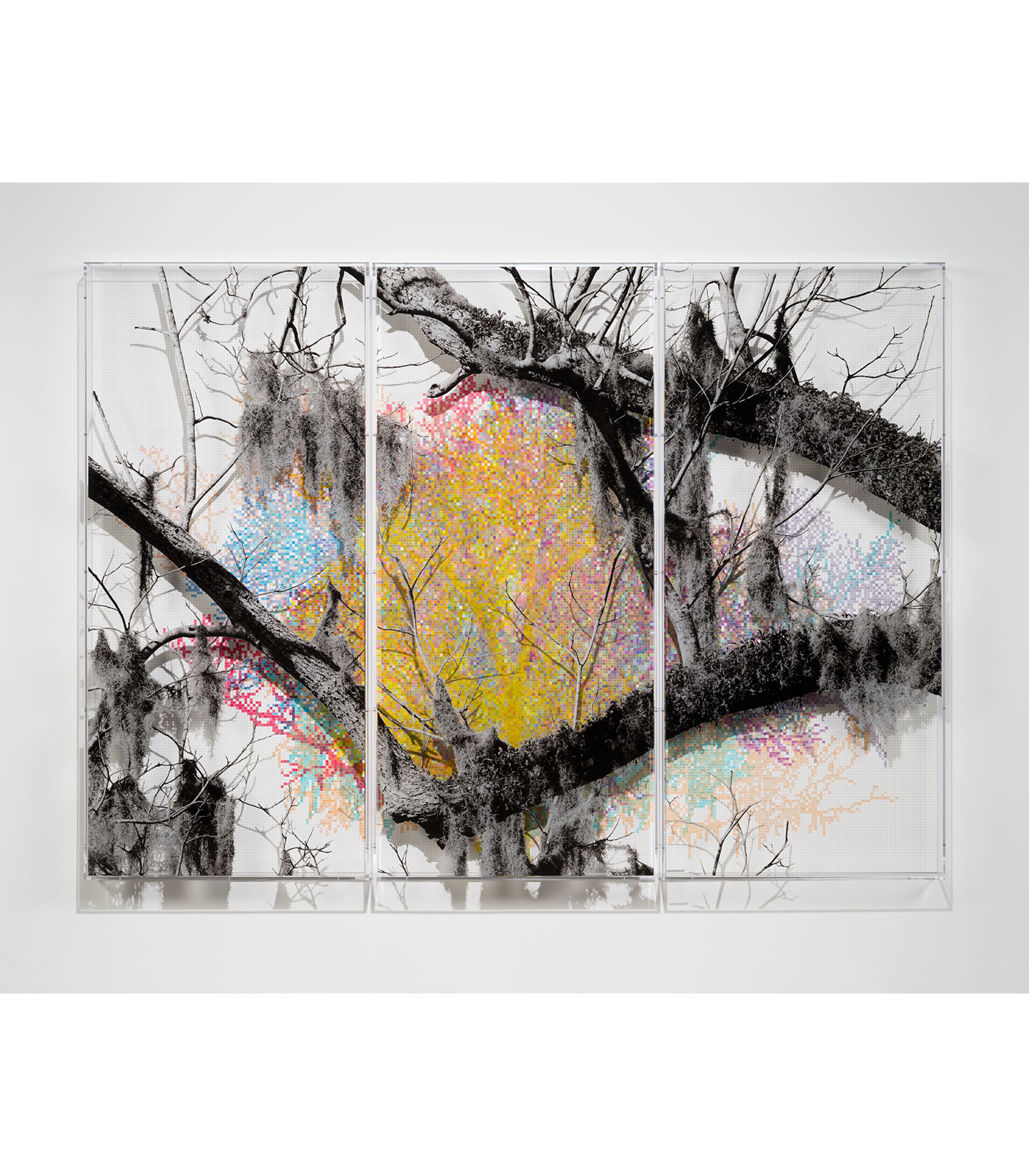

Created through carefully considered systems rather than through the artist’s own imagination or intuition, these new works remove the artist’s subjectivity by following a set of self-determined rules and procedures. The works call into question both the objective nature of the trees and the subjective natural and material human actions that surround them. The fastidious layering process allows Gaines to reveal the differences between the trees’ shapes where the forms do not align. These differences, highlighted by the artist’s systems, suggest the arbitrary nature of other manufactured systems in our society––such as politics, gender, race and class.
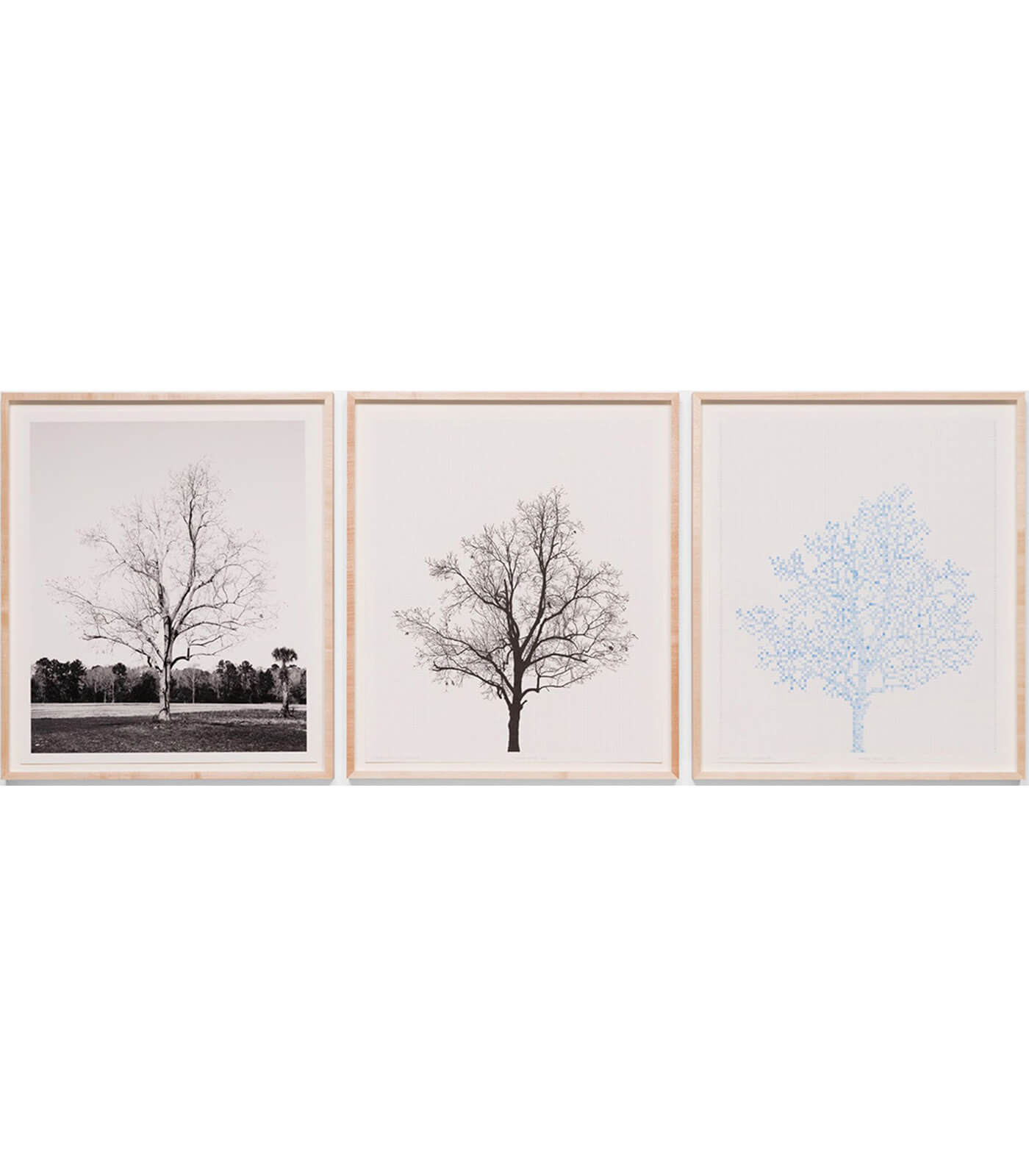
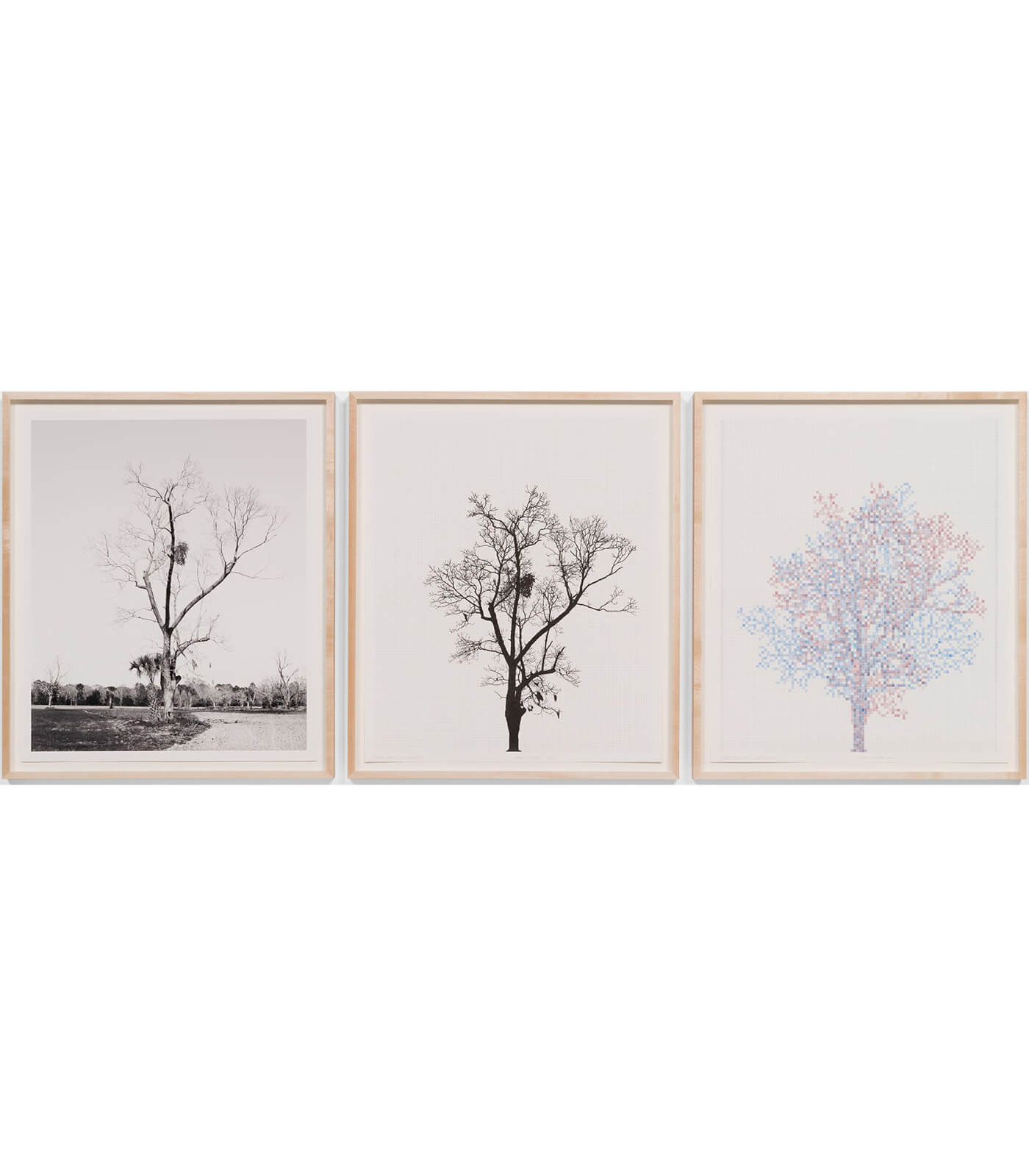
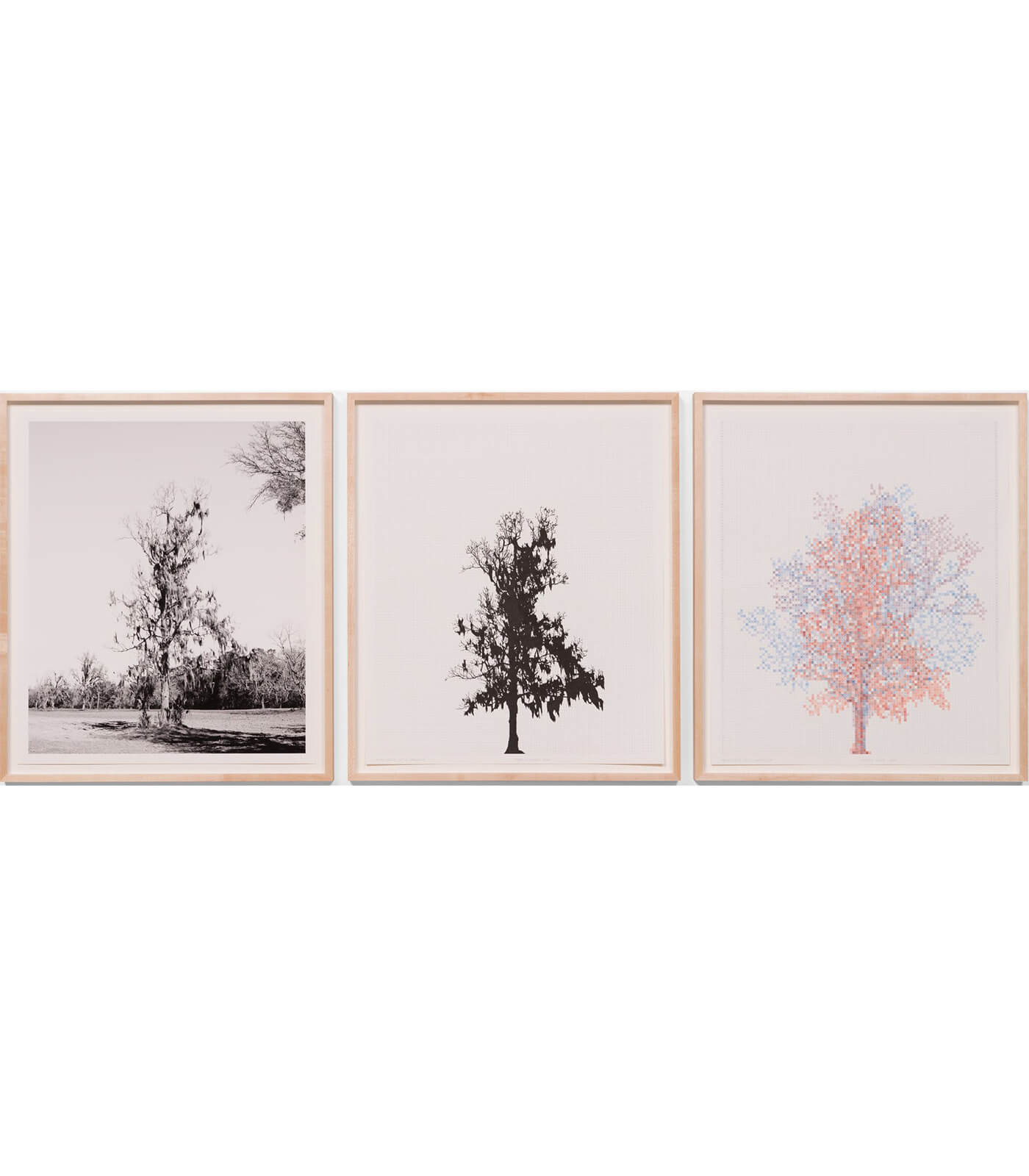
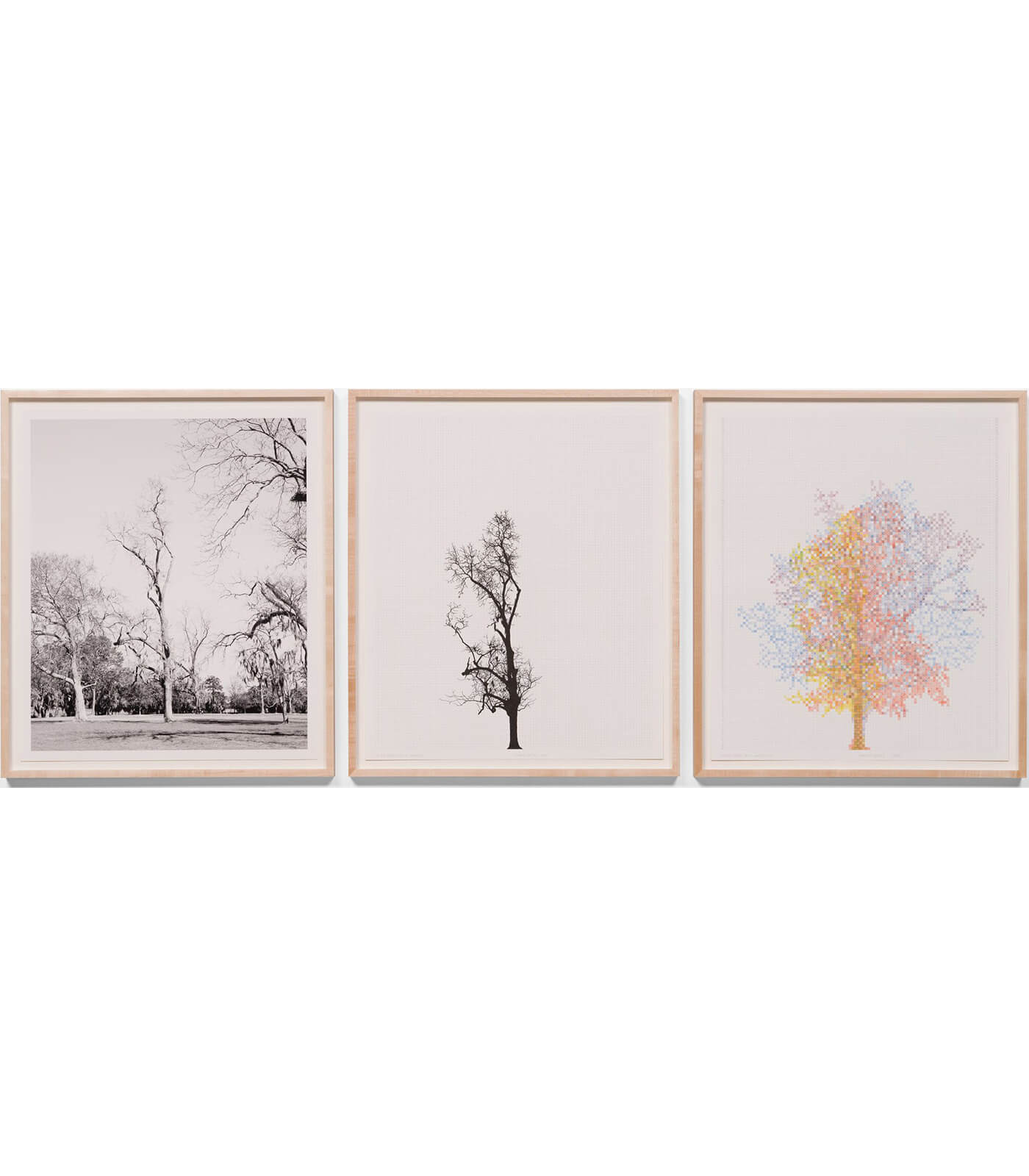
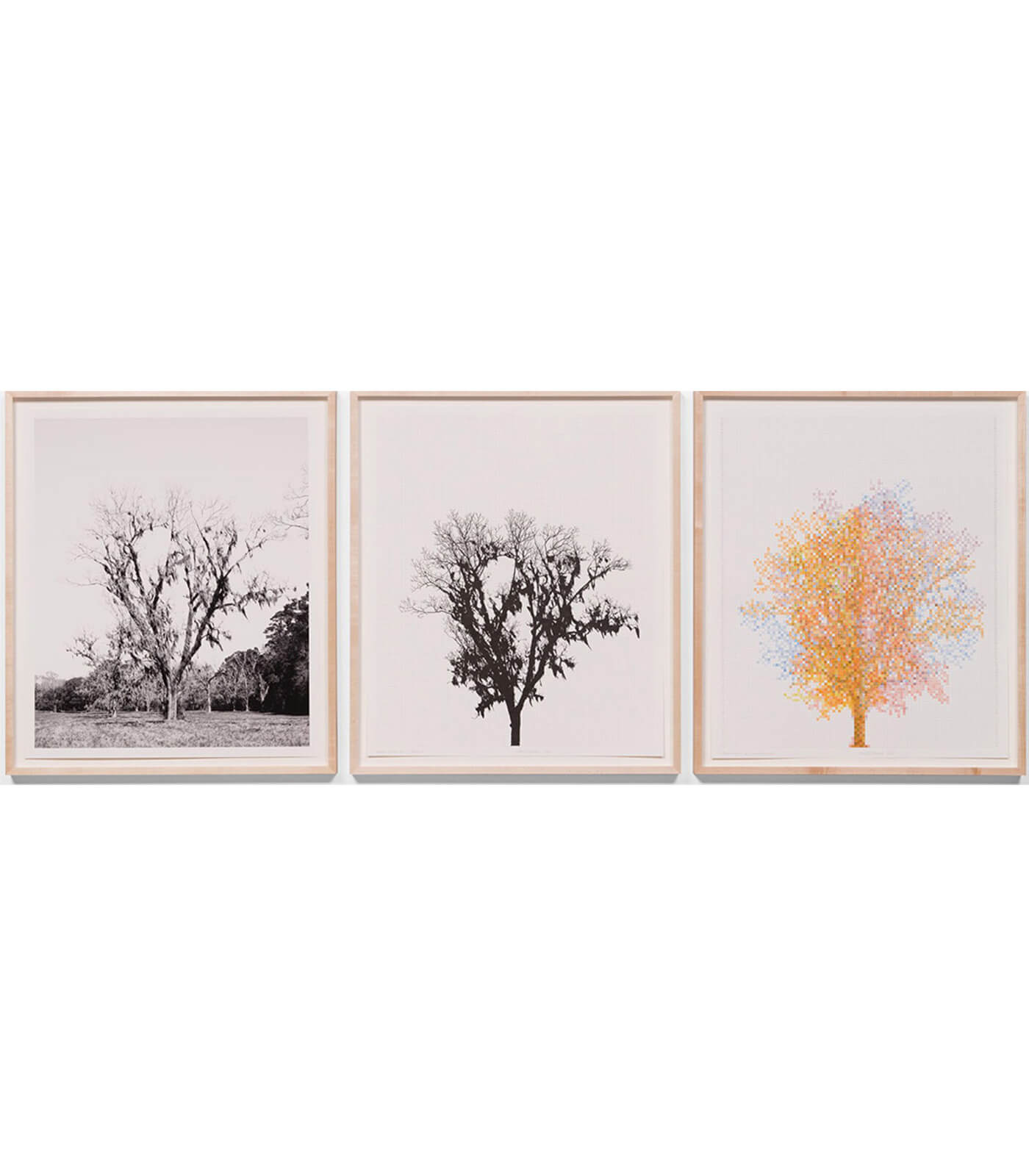
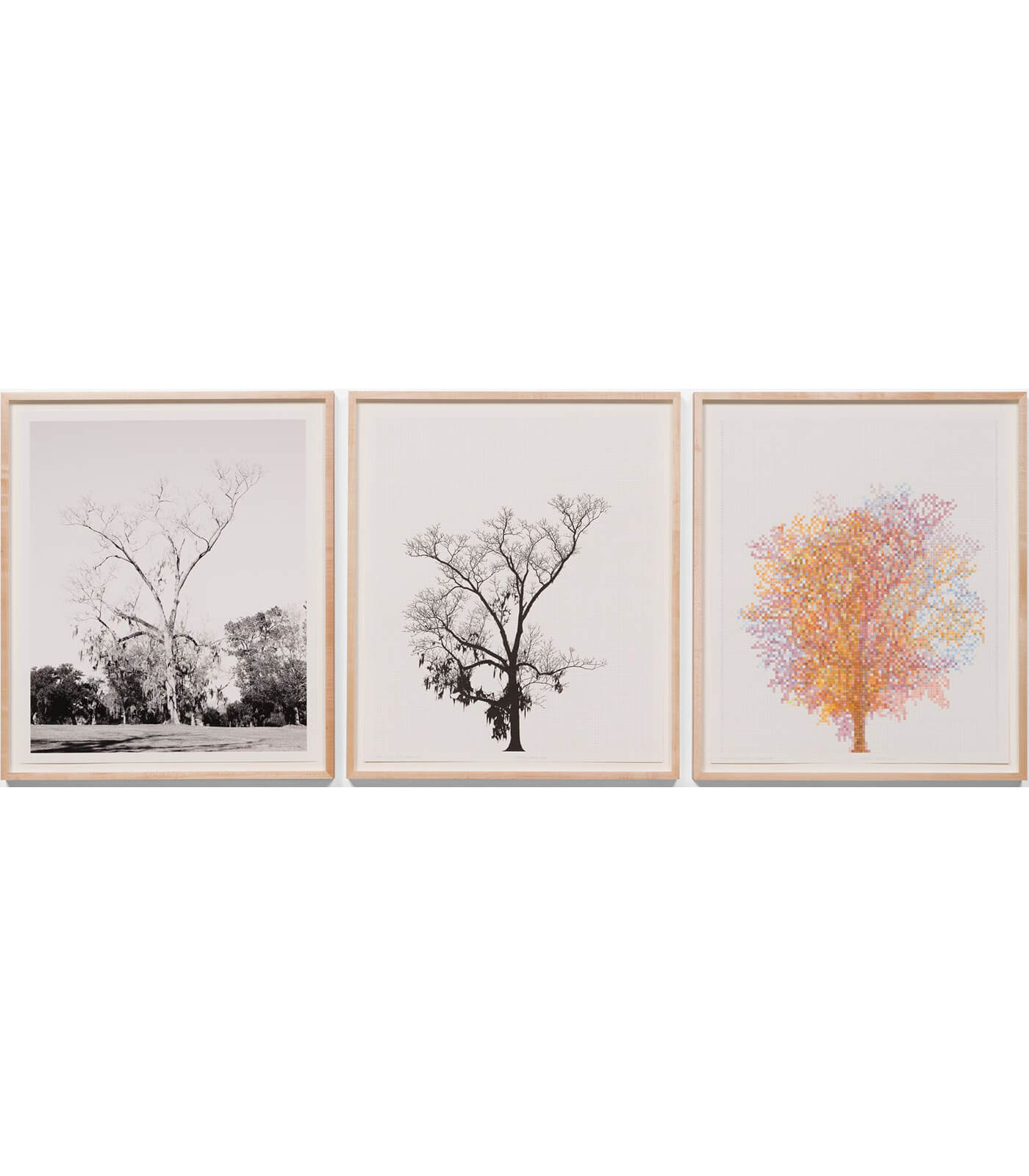
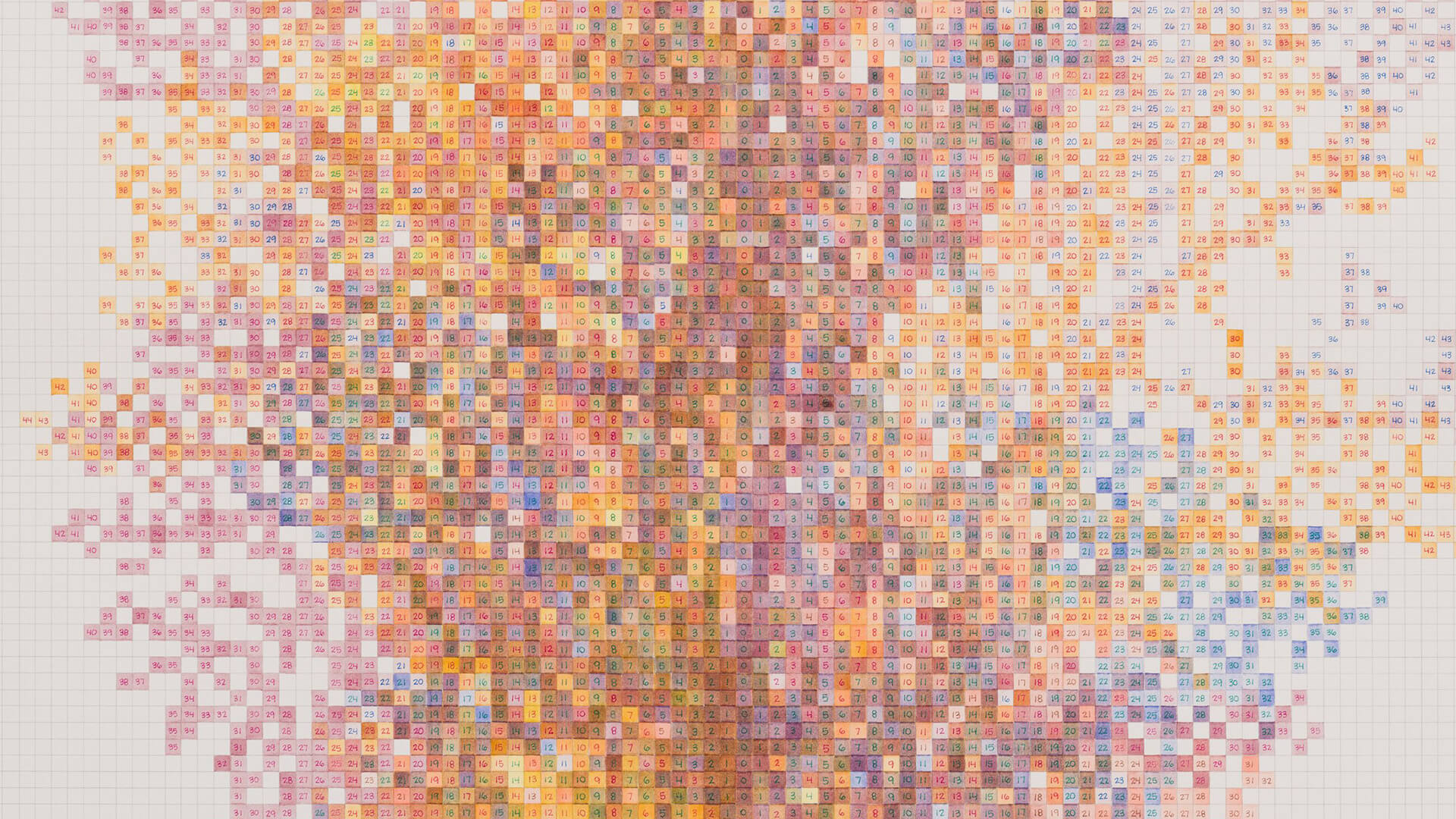
‘Walnut Tree Orchard: Set M’ (1977), on loan from the Whitney Museum of American Art, New York, pairs a black and white photograph of a walnut tree with two drawings derived from it––an ink outline of the same tree and a grayscale grid that plots all of the trees included in the series up until that point. The newest series, titled Pecan Trees (2022), begins similarly, with a stark black and white photograph of a tree; yet in the drawings that accompany it, Gaines has filled in the outline of the tree with solid ink and used vibrant watercolors to plot all the previous trees in the final drawing. These successive modifications to scale, color and background demonstrate Gaines’s theory that while ‘the system has never changed, the outcome is always different.’
Charles Gaines: Systems & Structures From the Art21 digital series “Extended Play”
Investigating the production of knowledge and culture, Charles Gaines uses rule-based systems to create paintings, drawings, musical compositions, and sculptures. This film by Art21 traces the connections Gaines makes between our lived experiences and the systems that shape them.
On view in New York
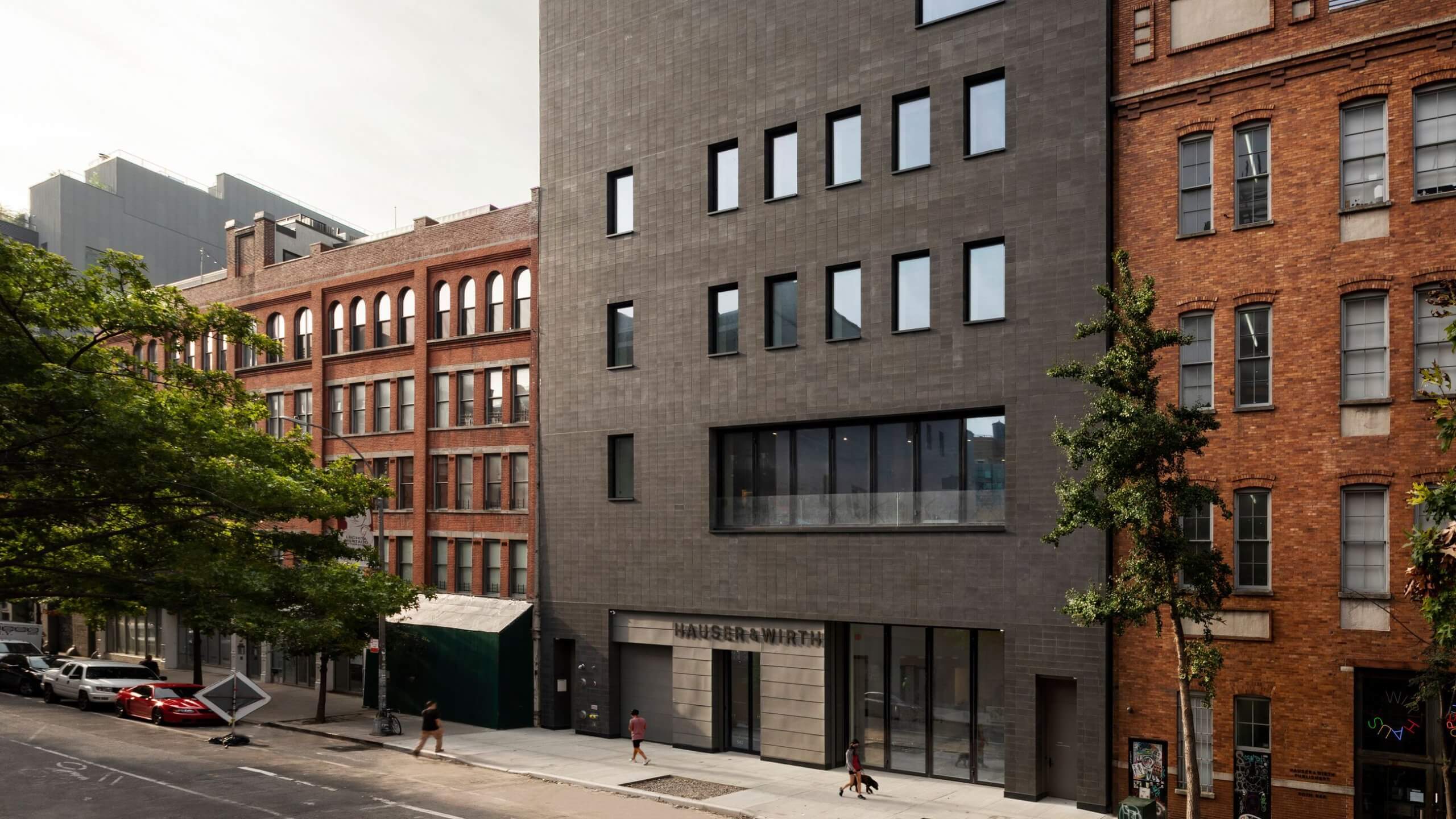
‘Charles Gaines. Southern Trees’ is now on view now through 1 April 2023 at Hauser & Wirth New York, 22nd Street.
About the Artist

Charles Gaines
Figura clave en el ámbito del arte conceptual, el conjunto de obra de Charles Gaines trabaja con fórmulas y sistemas que interrogan las relaciones entre los ámbitos objetivo y subjetivo. Mediante un enfoque generativo para crear series de obras en diversos medios, Gaines ha construido un puente entre los primeros artistas conceptuales de las décadas de 1960 y 1970 y las generaciones posteriores que hoy llevan los límites del conceptualismo más allá.
Nacido en 1944 en Charleston, Carolina del Sur, Gaines comenzó su carrera como pintor, obteniendo el M.F.A. en la School of Art and Design del Rochester Institute of Technology en 1967. Durante la década de 1970, su obra experimentó un giro drástico en respuesta a lo que él mismo más tarde llamaría ‘el despertar’. Esta revelación se materializó en la serie ‘Regression’ (1973 – 1974), en la que exploró el uso de sistemas matemáticos y numéricos para crear marcas suaves numeradas con tinta sobre una cuadrícula, con cada dibujo construido a partir de los cálculos del anterior. Este enfoque metódico marcaría el recorrido del artista durante las décadas siguientes.
Inquire about available works by Charles Gaines
On view now through 1 April 2023 at Hauser & Wirth New York, 22nd Street.
Current Exhibitions
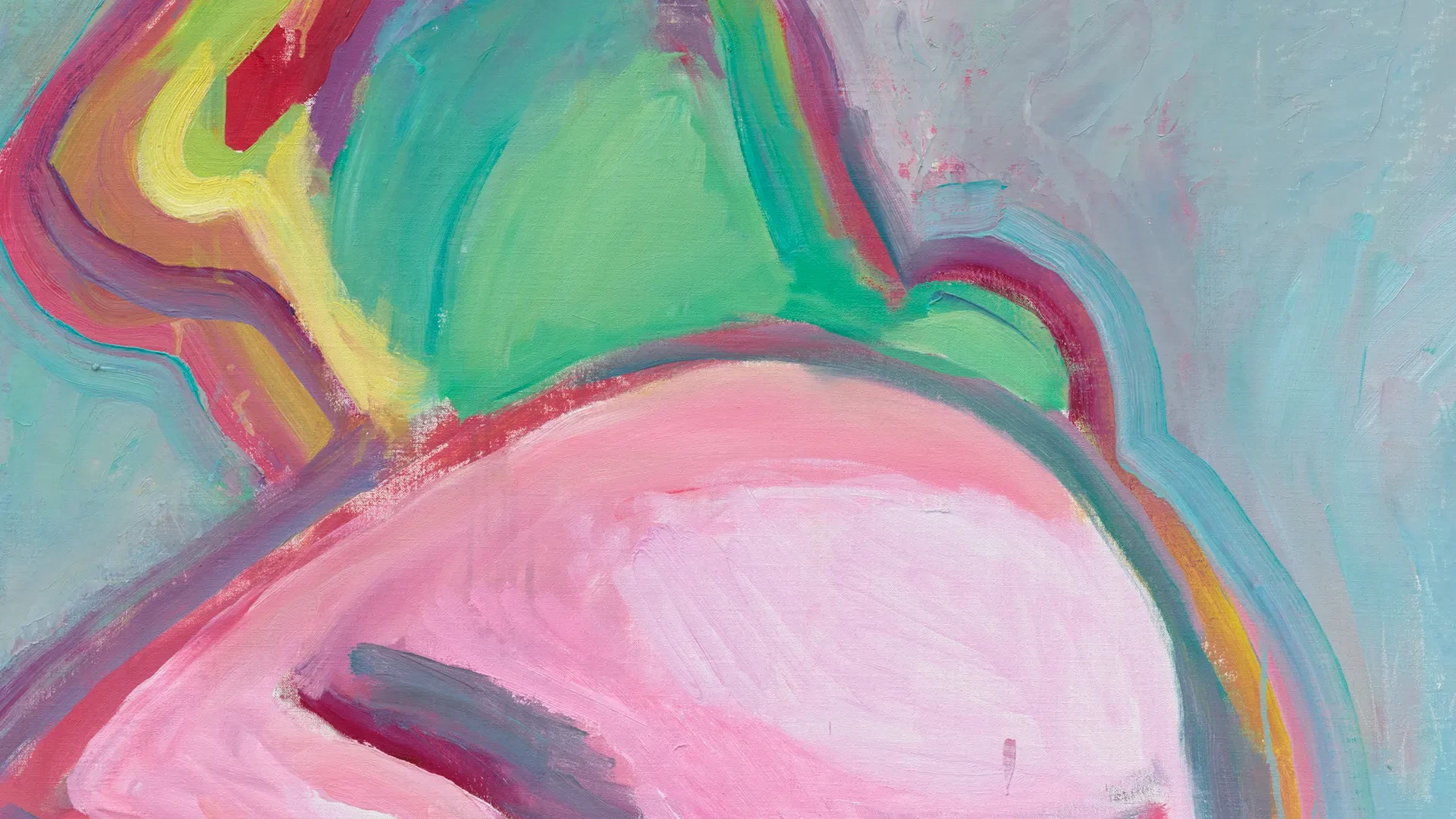

Destiny Is a Rose: The Eileen Harris Norton Collection
24 February – 16 August 2026
Downtown Los Angeles


1 / 12