
Learning Notes: Don McCullin
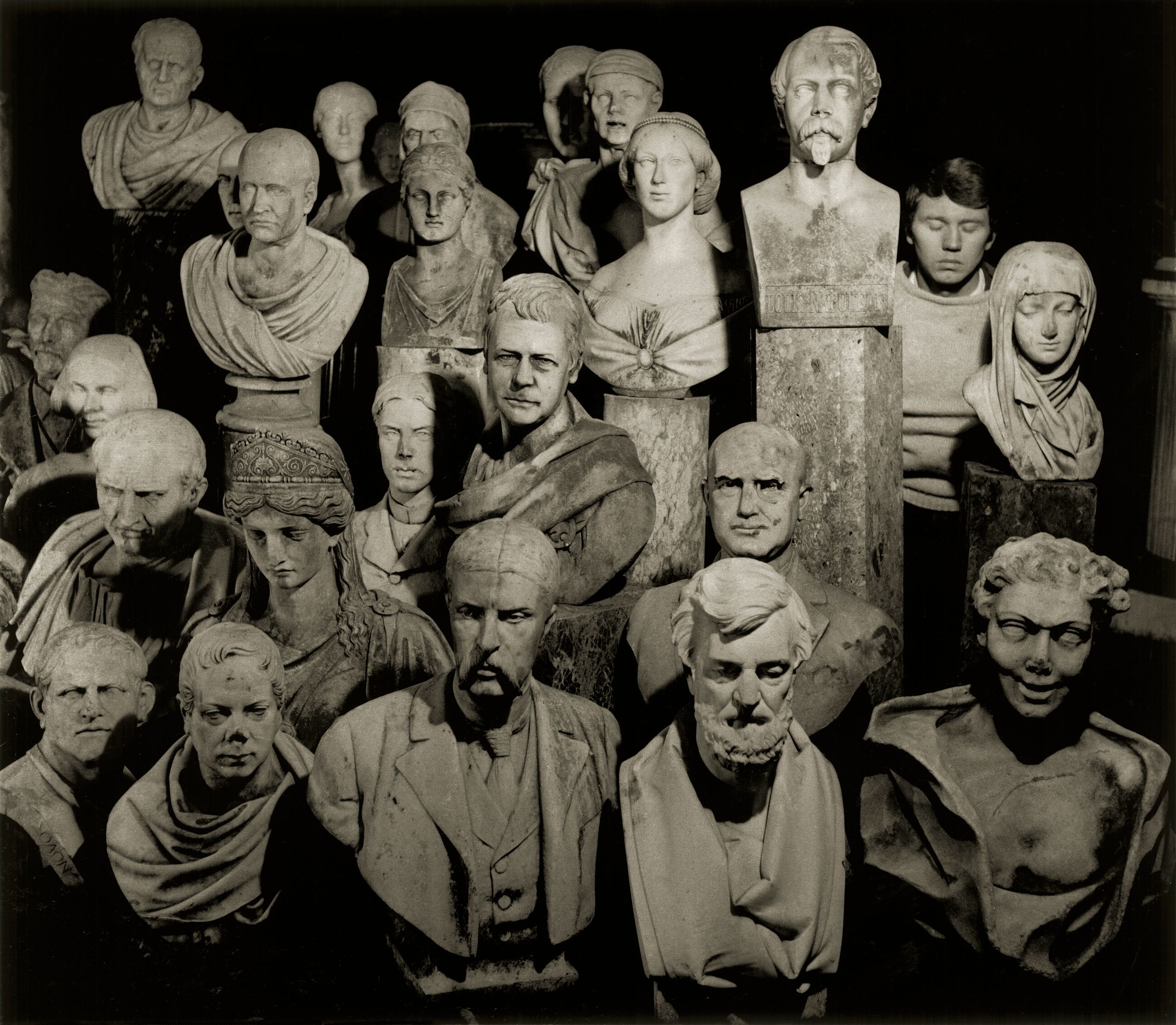
Don McCullin, Self-portrait in Crowthers Reclamation Yard, Isleworth, 1963 © Don McCullin
Learning Notes: Don McCullin
About Don McCullin
Sir Don McCullin CBE is widely regarded as one of the most important photographers of the late 20th Century, renowned for an extensive body of work spanning a seven-decade career. Throughout, McCullin has provided an unflinching view of humanitarian crises and conflicts worldwide, while later endeavours showcase his creative expertise through carefully composed still lifes, landscapes and archaeological studies that carry with them the same honesty and grit of his earlier photographs.
Born in Finsbury Park, London, UK, in 1935, McCullin left school at 15 without any qualifications. He signed up to National Service in the RAF and became a photographic assistant working on aerial reconnaissance photography. In 1959, following his return from National Service and postings in Egypt, Kenya and Cyprus, he earned his first commission with The Observer, for his much-acclaimed photograph of a local gang named ‘The Gov’ners.’ From this point, his early professional career began—shining a spotlight on the sobering reality of post-war life in Britain, including the stark landscapes of the industrial North, the increasing unemployment and homelessness levels in the capital and growing unrest across the country.
Between 1966 – 1984, McCullin worked for The Sunday Times Magazine under Editor-in-Chief Harold Evans and Art Editor David King. It was during this time he released some of his most celebrated images. He has since expanded his oeuvre with independent trips to India, Indonesia, Africa and the Middle East, continuing to raise awareness of global humanitarian issues and war-torn areas.
In 1993, McCullin was the first photojournalist to be made a Commander of the British Empire (CBE) and in 2017 he was knighted in the New Year Honours for his lifetime services to photography. In 2025, McCullin celebrated his 90th birthday and received the University of Oxford’s Bodley Medal for his outstanding contribution to photography and journalism.
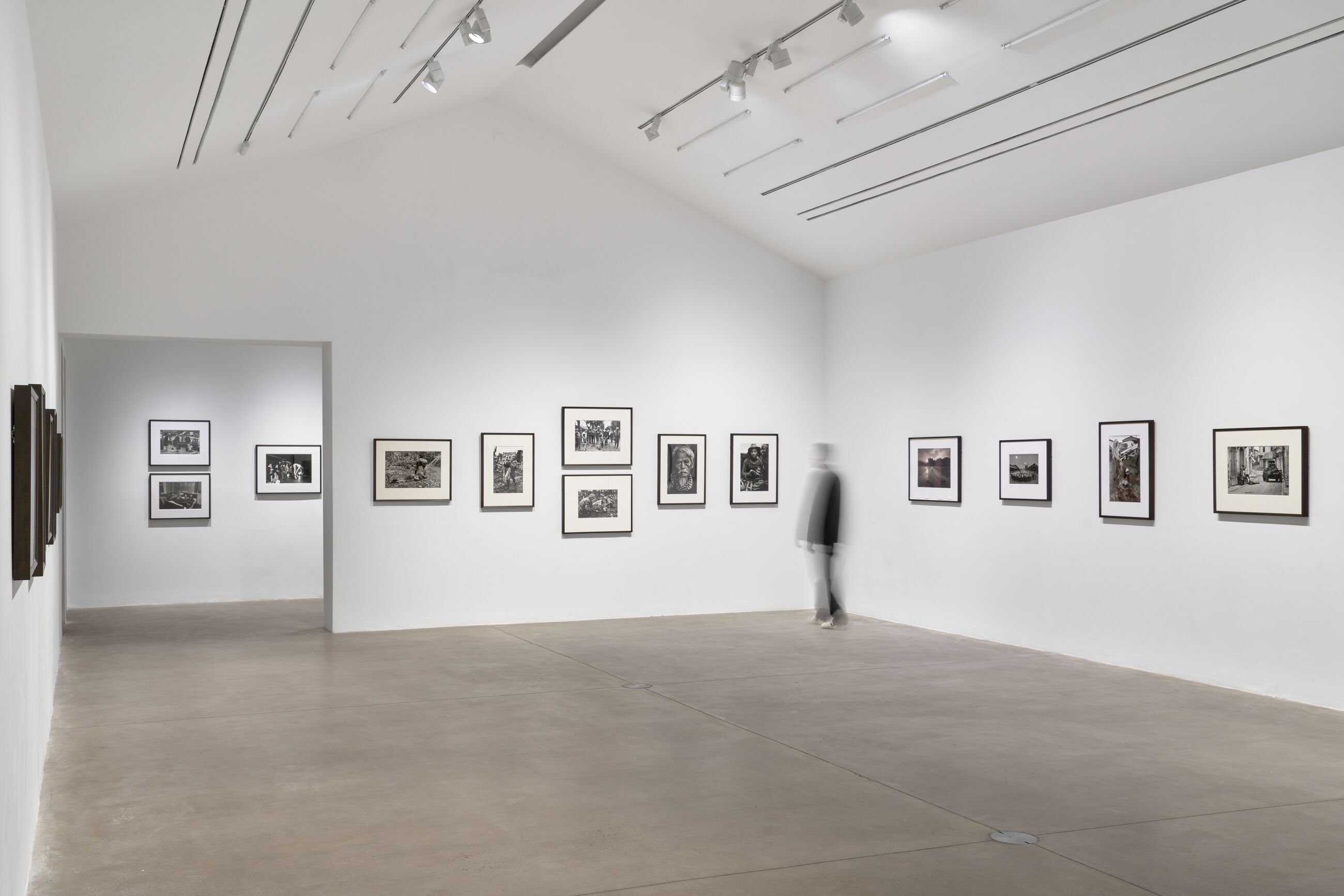
Installation view, ‘Don McCullin. 90,’ Hauser & Wirth Somerset, 2026 © Don McCullin. Photo: Theo Niderost
What does his work look like?
A combination of raw, emotional imagery and refined artistic sensibility underlines McCullin’s reputation as a master of his medium, capable of capturing both the harsh realities of the world and its profound beauty. He is recognized as one of the greatest war photographers in history, as well as being the author of more than a dozen books.
For the last three decades, McCullin has sought to relieve the horrors of what he has witnessed throughout his career by turning to the land around him. In 1972, he returned to live in the Somerset area of the UK, where he had been evacuated to as a child during the Blitz in the Second World War. He often refers to the sweeping rural landscape as his greatest salvation, which his photographs capture in dramatic, painterly representations. At home, McCullin has developed a series of meticulously constructed still lifes that provide a deeper form of escapism, drawing inspiration from the great Flemish and Dutch Renaissance masters.
How does he make his work?
McCullin’s photographs are nearly always taken in black and white on a manual camera using film, which allows him to control the aperture, shutter speed and other camera settings. This creates control over the brightness, focus, depth of field and exposure of the image, while enhancing the mood.
Camera film was traditionally developed by hand in a dark room where the photographer could then make decisions to crop or frame images and adjust the contrast between the brightest and darkest parts in an image. McCullin works in this way for the majority of his images, creating gelatin silver prints in his dark room at home. In more recent years he has also worked with a master printmaker to create platinum prints, as well as high-quality inkjet prints.
The titles of McCullin’s photographs simply state the subject or location depicted, for example, ‘A small river that runs through my village in Somerset’ (1988) or ‘The Road to the Somme, France’ (2000).
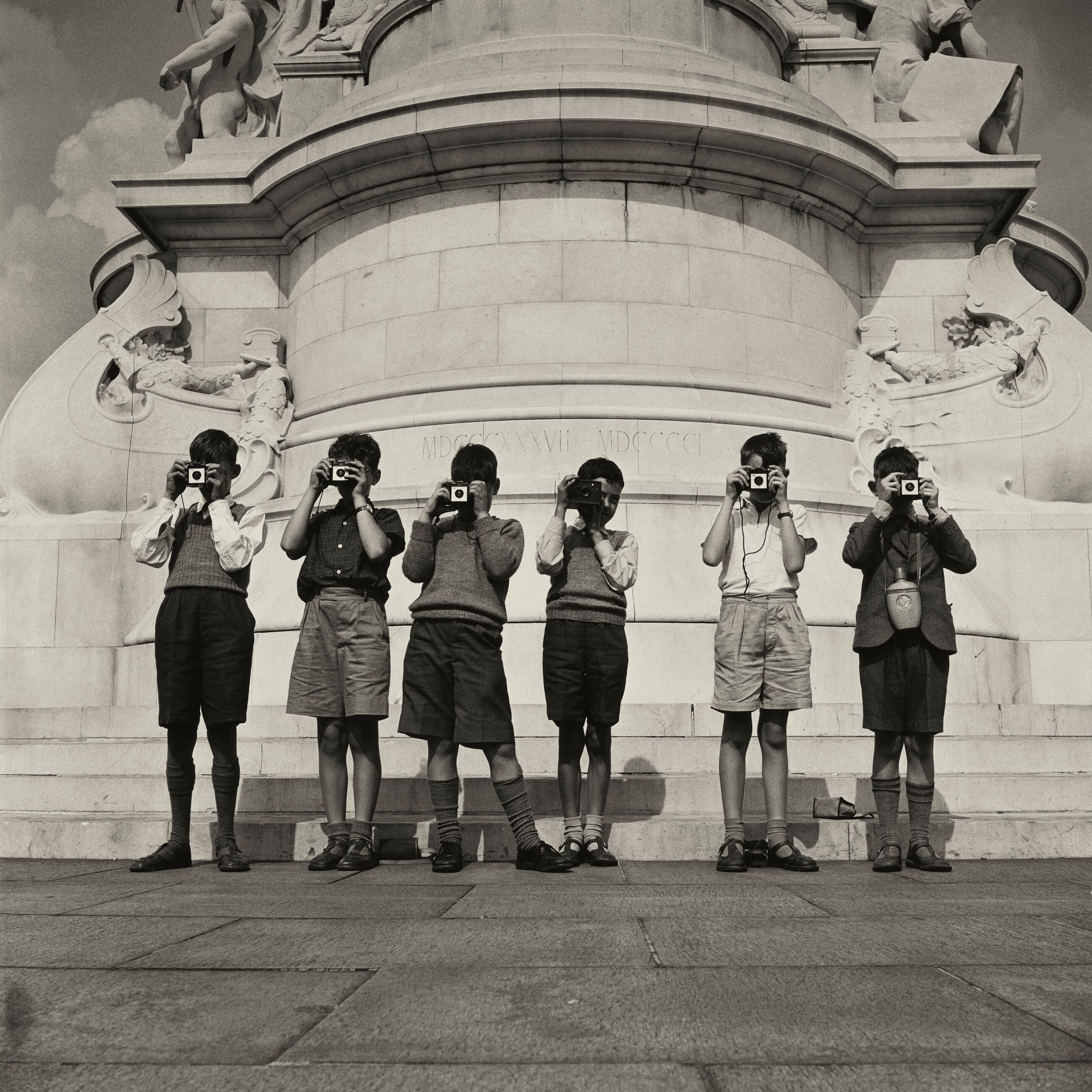
Don McCullin, Outside Buckingham Palace, London, 1960 © Don McCullin
Does he work in any other ways?
McCullin is best known as a photojournalist. As a photojournalist for national newspapers, he was assigned to travel to and photographically document conflicts such as the Vietnam War, The Troubles in Northern Ireland, the construction of the Berlin War, and most recently the war in Aleppo, Syria.
McCullin is the author of several books, including: ‘The Palestinians’ (with Jonathan Dimbleby, 1980), ‘Beirut: A City in Crisis’ (1983); ‘Don McCullin in Africa’ (2005); and ‘Southern Frontiers: A Journey Across the Roman Empire (2010).
The publication ‘Shaped by War’ (2010) was produced to accompany a major retrospective exhibition at the Imperial War Museum North in Salford, UK, which then travelled to the Victoria Art Gallery in Bath, UK and the Imperial War Museum in London, UK.
In 2012, a documentary film of his life was released titled ‘McCullin,’ directed by David Morris and Jacqui Morris. The film was nominated for two BAFTAs.
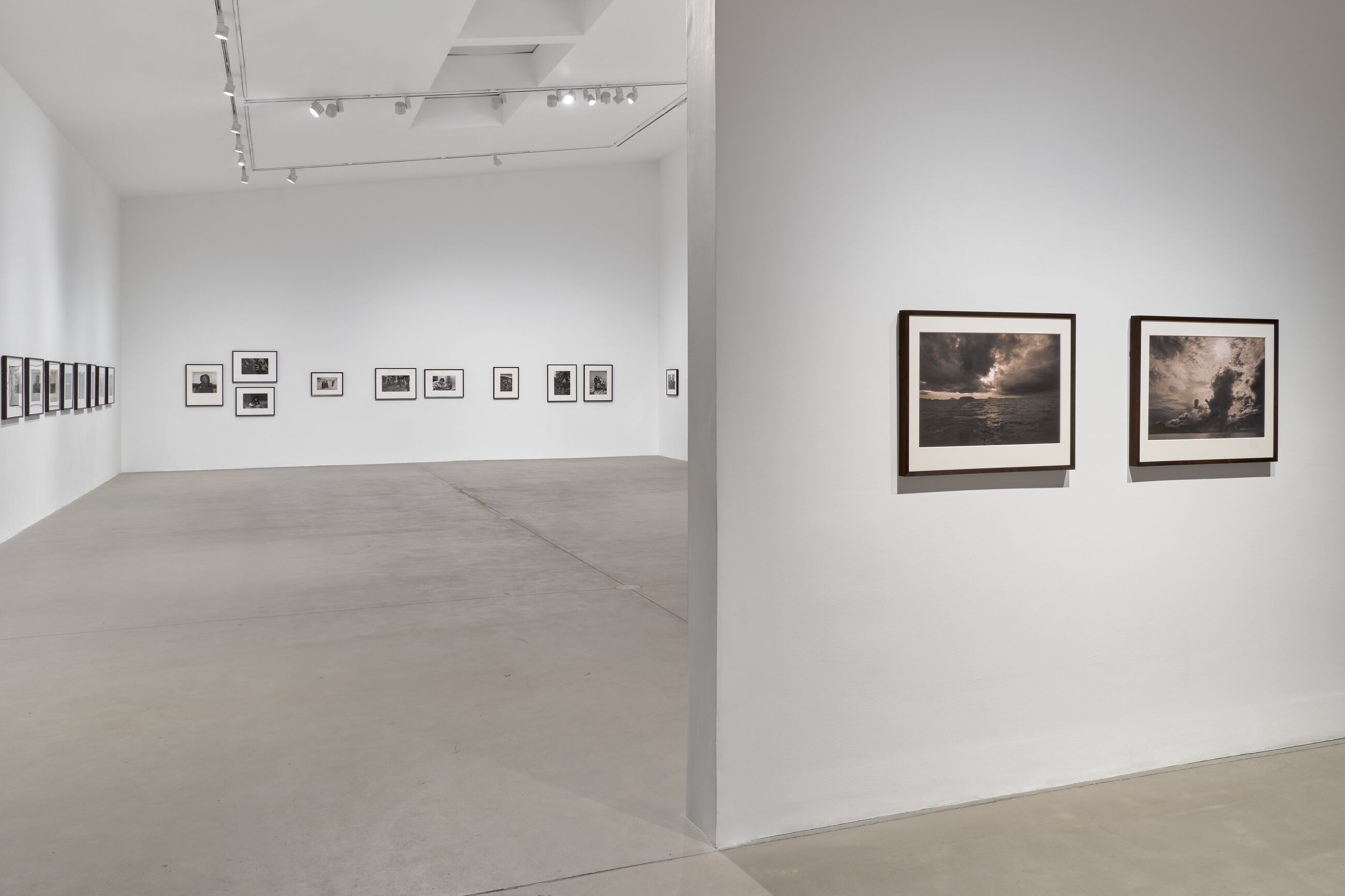
Installation view, ‘Don McCullin. 90,’ Hauser & Wirth Somerset, 2026 © Don McCullin. Photo: Theo Niderost
What are the main themes in his work?
War, conflict and unrest
Often commissioned for reportage in war torn environments, McCullin has not just carried a camera, but also a conscience and a compassionate gaze. His photography becomes a platform to share the thought-provoking visual stories of those that may otherwise not be seen and heard.
‘I want people to look at my photographs. I don’t want them to be rejected because people can’t look at them. Often, they are atrocity pictures. Of course they are. But I want to create a voice for the people in those pictures. I want the voice to seduce people into actually hanging on a bit longer when they look at them, so they go away not with an intimidating memory but with a conscious obligation. I think complacency is always going to be there. That’s what you have to fight. You’re not going to win, but at the same time you can help to beat complacency.’— Sir Don McCullin CBE
Global documentary
McCullin has described his work as a cultural service. His photography has documented people and places, recording them as they are changed organically or by manmade force.
‘The joy of travel is in the discovery of the unexpected and those serendipitous, surprising encounters with different cultures unlike our own.’—Sir Don McCullin CBE
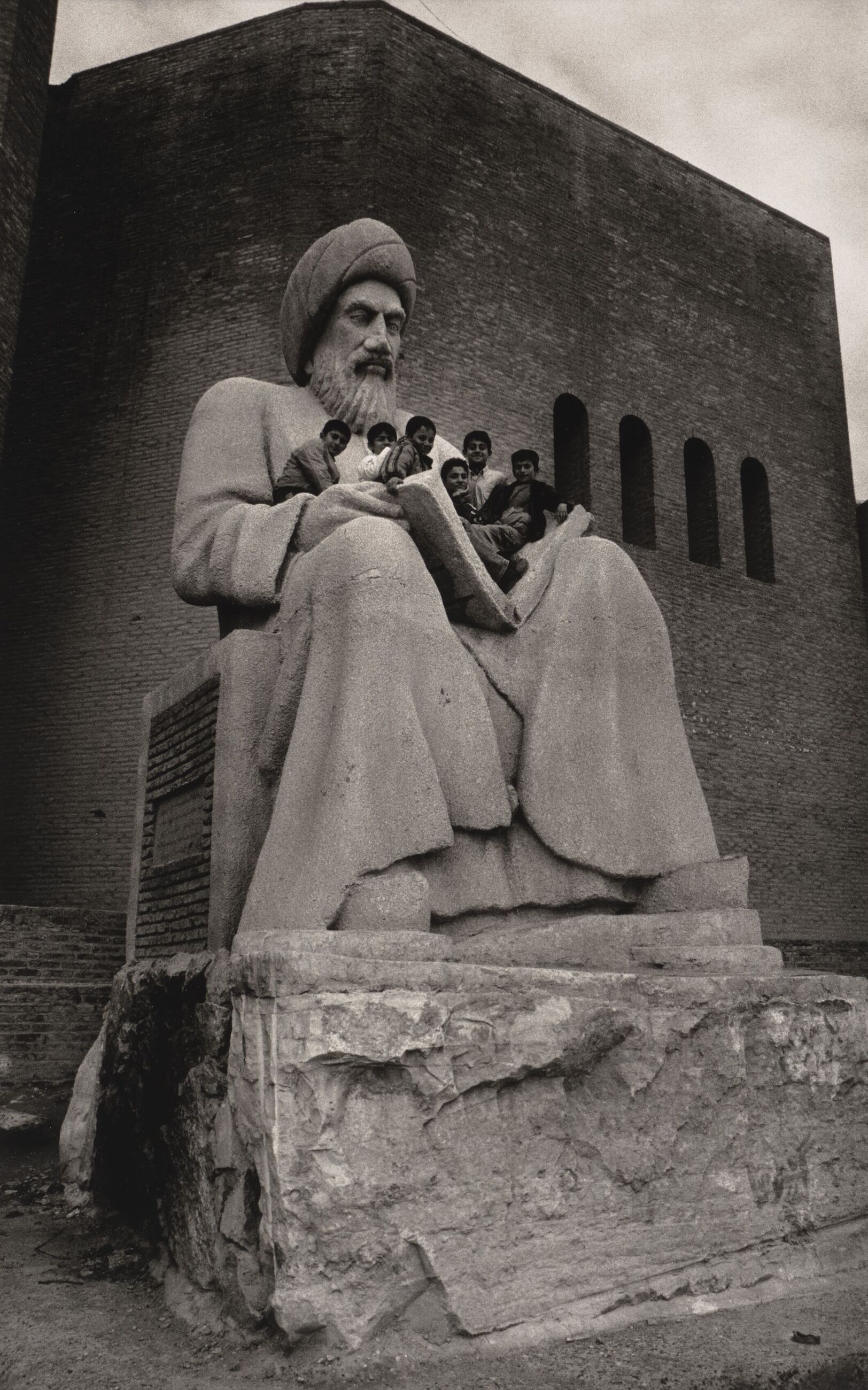
Don McCullin, Boys in the Book of the Prophet, Arbil, Kurdistan, 1991 © Don McCullin
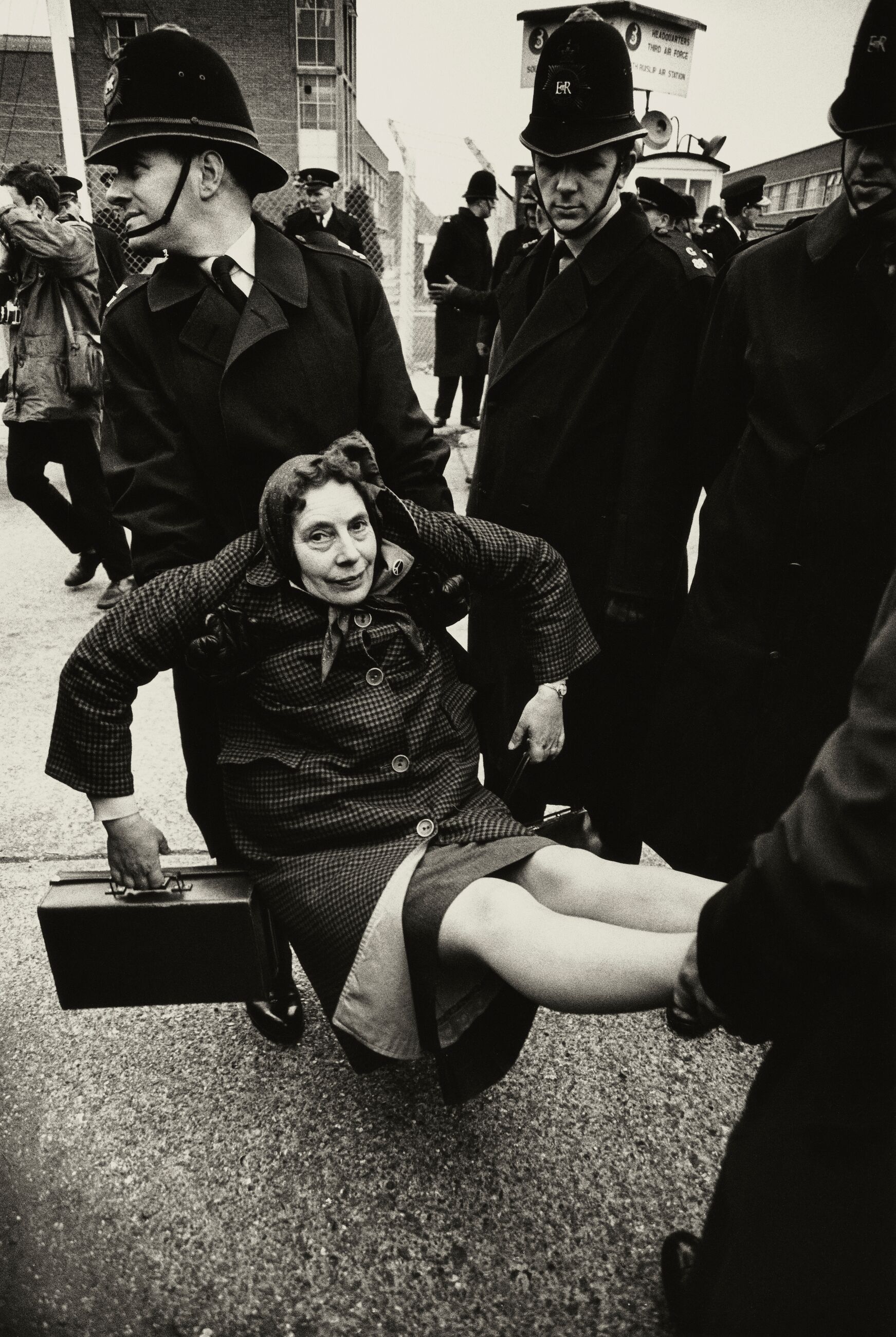
Don McCullin, Ban The Bomb March, Aldermaston, 1960 © Don McCullin
Solace in the landscape and still life
A lifelong connection to the South West of England provides a contemplative space and a spiritual home for McCullin, acting as an antidote to witnessing war. The same meditative elegance extends to his still life compositions, carefully composed in his garden shed in between decades of global travel.
‘My solace lies in recording what remains of the beautiful landscape of Somerset and its metallic dark skies, which give this county an aged and sometimes remote feeling as if the past is struggling against the future. [...] My still lifes provide a deeper form of escapism. I do them as a release from the terrible things I’ve seen in my life which I am entitled to run away from.’— Sir Don McCullin CBE
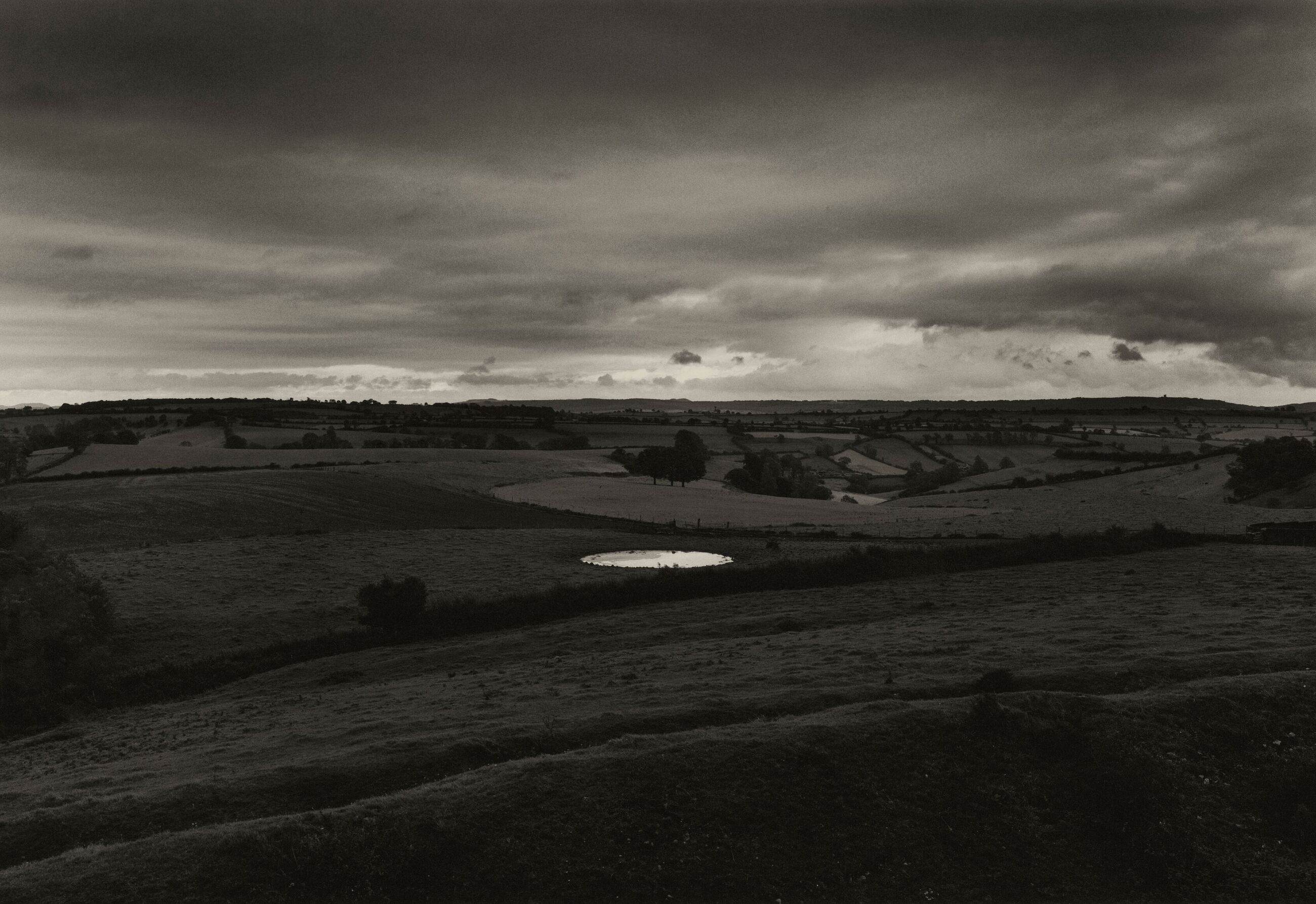
Don McCullin, Dew Pond By Iron Age Hill Fort, Somerset, 1988 © Don McCullin
Emotive expression
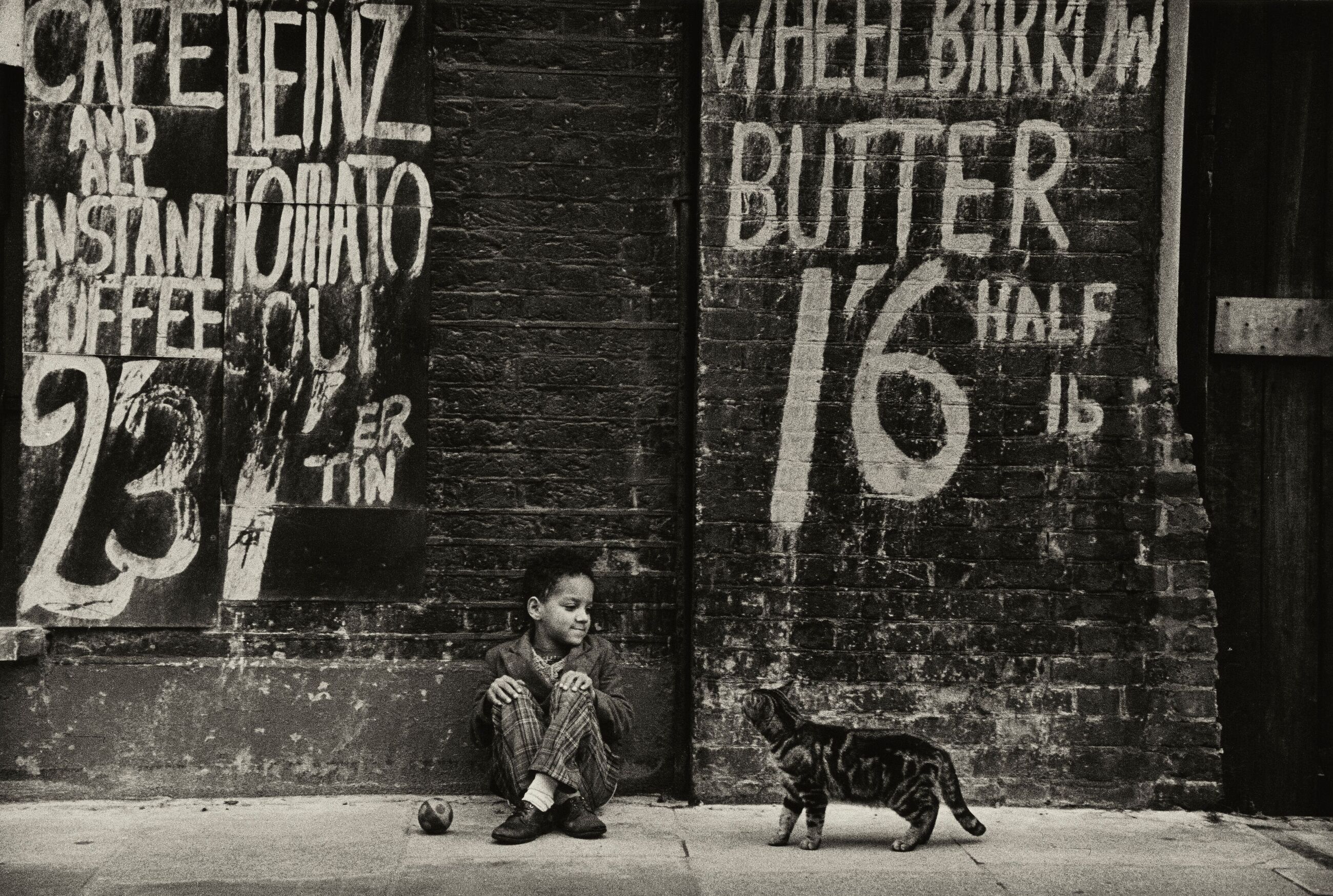
McCullin’s photographs capture historic moments, memories, trauma, humour, joy, dignity, collective care and compassion, local and global relationships, organic and manmade landscapes. These images balance awe and unease, intimacy and theatricality, depicting universal experiences of what it is to be alive in the world.
‘Photography is not looking, it’s feeling. If you can’t feel what you’re looking at, then you’re never going got get others to feel anything when they look at your pictures.’—Sir Don McCullin CBE
Ancient Roman statues
Over the past 25 years McCullin has focused on Roman sculpture and the ancient world, drawn to their beauty while remaining aware of the violence and labor that produced them. Across this evolution, from war zones to marble statues, his work continues to balance beauty, brutality and moral tension.
‘I staggered upon the Roman Empire accidentally. It was the timing, really—my age and where I live. I spent six decades covering war and revolutions and famines and earthquakes. It was time for me to change direction [...] with each sculpture, I want the background to vanish into darkness so that the work becomes a holy-like image.’— Sir Don McCullin CBE
Glossary
Aerial reconnaissance photography
Photographs taken from aircraft, often for military purposes, to gather information about land, buildings, or troop movements.
Aperture
The opening in a camera lens that controls how much light enters the camera. A wider aperture lets in more light and can blur the background; a smaller aperture keeps more in focus.
Commission
When a photographer is hired to produce images for a publication, organisation, or client.
Composition
How elements are arranged within a photograph—where subjects are placed, how the image is framed, and how space is used.
Conflict photography / war photography
Photography that documents war zones, armed conflicts, and their human impact.
Darkroom
A light-controlled space where photographic film is developed and prints are made by hand using chemicals.
Depth of field
The amount of an image that appears sharp and in focus. A shallow depth of field blurs the background; a deep depth of field keeps more of the image clear.
Gelatin silver print
A traditional black-and-white photographic print made using light-sensitive silver salts on paper. Known for rich tonal range and depth.
Inkjet print
A modern method of printing photographs using high-quality printers and pigment-based inks.
Oeuvre
The complete body of work produced by an artist over their lifetime.
Platinum print
A high-end photographic printing process using platinum instead of silver. Known for subtle tones and durability.
Reportage
Journalistic reporting through images or writing, often documenting current events.
Still life
Photographs of arranged objects (such as fruit, flowers, or everyday items), often carefully composed to explore light, texture and symbolism.
Questions for discussion
Imagine you are a photographer for a day. What would you take a photo of and why?
If you could take a photo to tell a story about something important to you, what would you photograph and why?
If you could show your photo to other people, what would you want them to notice first?
Supplementary research
Don McCullin (Hauser & Wirth artist page)
‘Don McCullin: The Stillness of Life’ (Ursula, 2020)
‘Don McCullin: A Man Among Gods’ (Ursula, Issue 14, September 2025)
‘Shaped by War’ (Jonathon Cape, 2010)
‘Unreasonable Behavior: An Autobiography’ (Jonathon Caper, 2015)


