

Charles Gaines
Numbers and Trees, The Tanzania Baobabs
19 February – 30 May 2025
West Hollywood
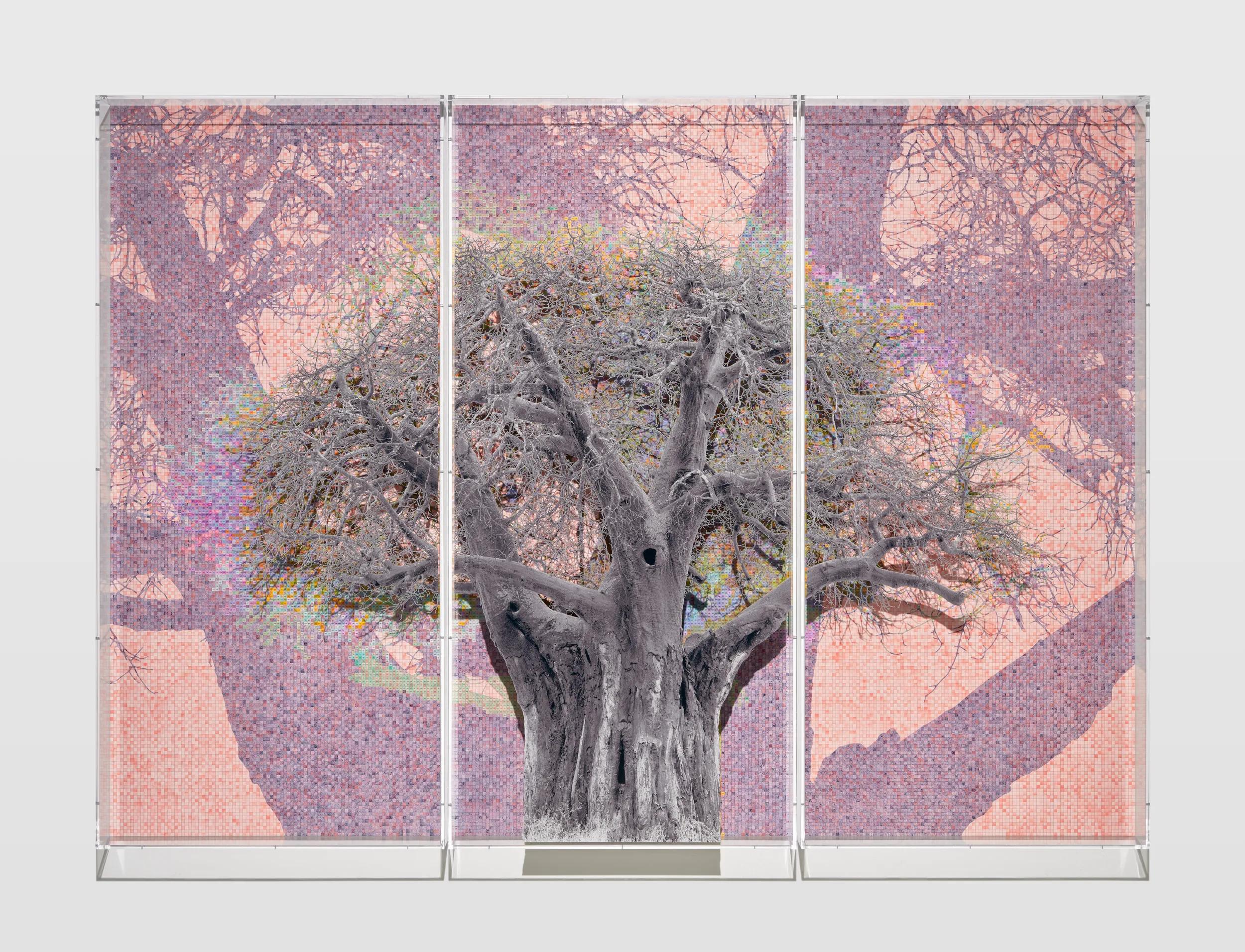
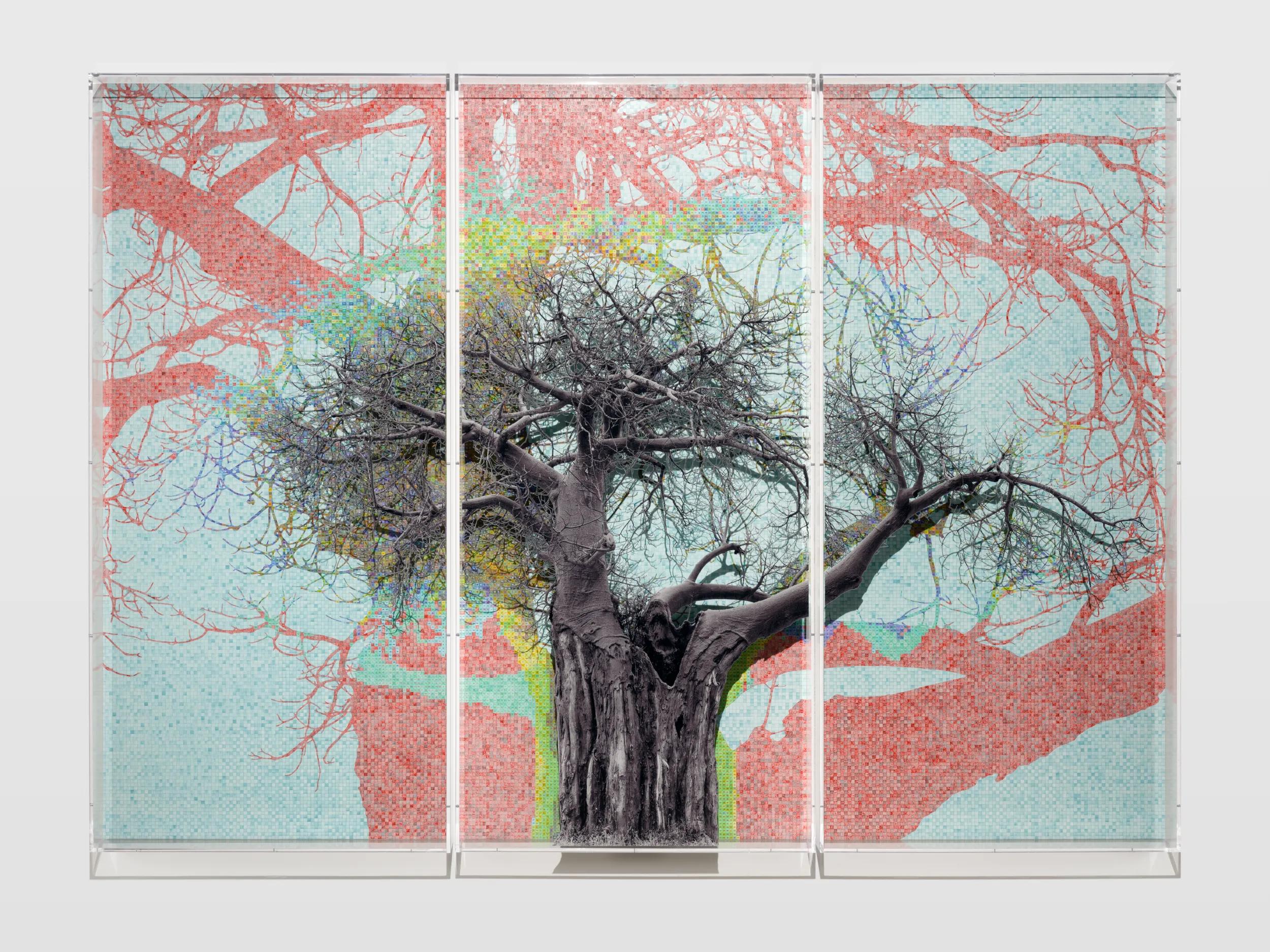
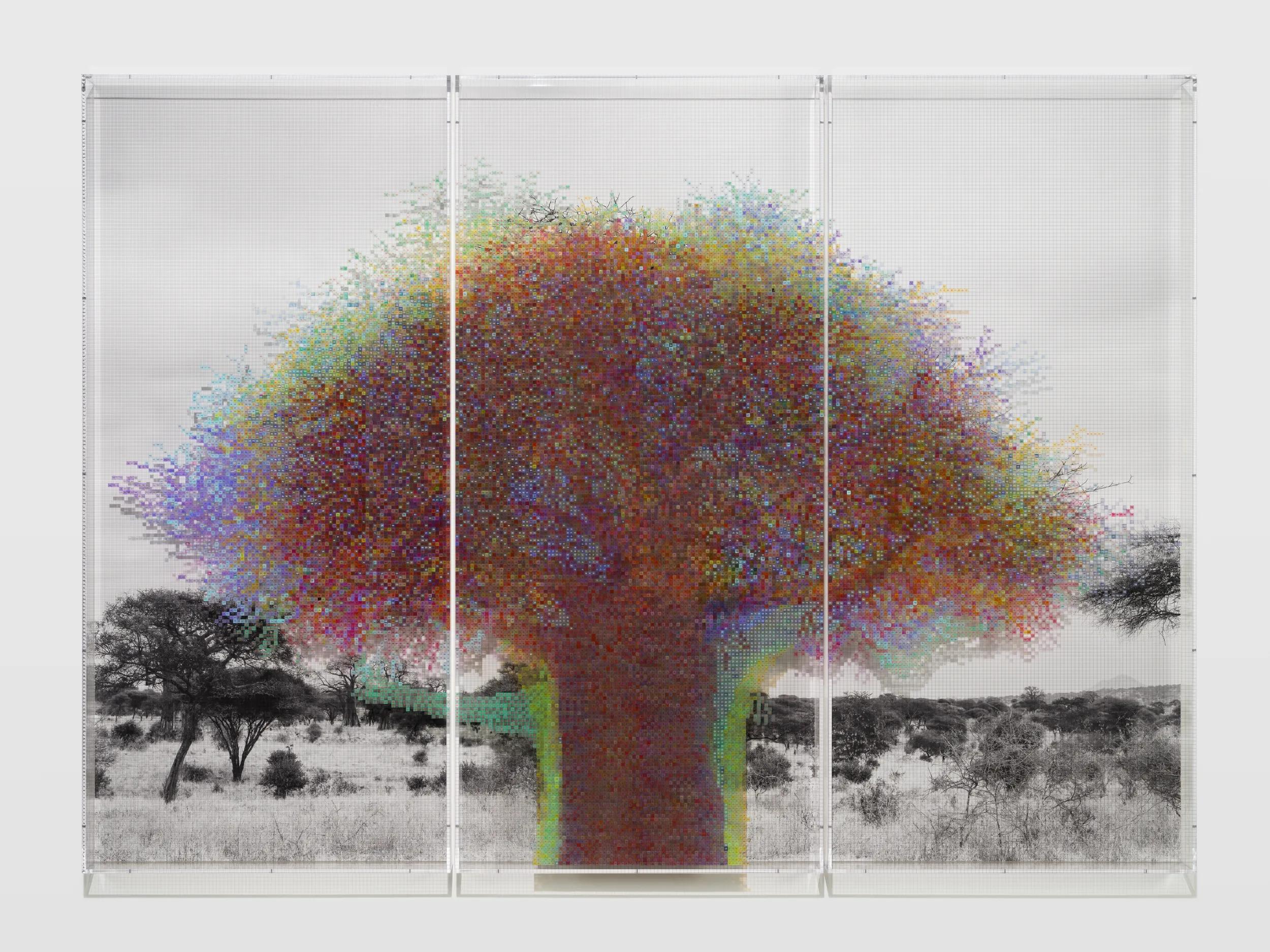
For over five decades, pioneering conceptual artist Charles Gaines has used systems to create series of works that mine the complex relationship between perception and meaning. This February, following a major 2023 – 24 museum survey and an acclaimed public commission, Gaines returns to his hometown of Los Angeles to present a new sequence of his signature Plexiglas works at Hauser & Wirth West Hollywood—the most elaborate treatment yet of his ongoing Numbers and Trees series, first conceived by the artist in 1987. Consisting of nine large-scale triptychs and a suite of new watercolor diptychs, all works are based on photographs of baobab trees the artist shot during a trip to Tanzania in 2023.
Explore the exhibition
Trees have been a central motif in Gaines’ practice since the 1970s, when he first began plotting their forms through systems of numbered grids in the Walnut Tree Orchard series (1975 – 2014). By converting the tree form into a gridded geometry, Gaines devised a distinctive process for charting and comparing differences. This approach invited viewers into the gap between what things appear to be and what they mean, while also challenging the dominance of subjectivity in artistic expression.
Gaines’ argument—that aesthetic experience is not transcendent but rather firmly rooted in and shaped by culture—has broadened the conversation about art history and influenced generations of artists.
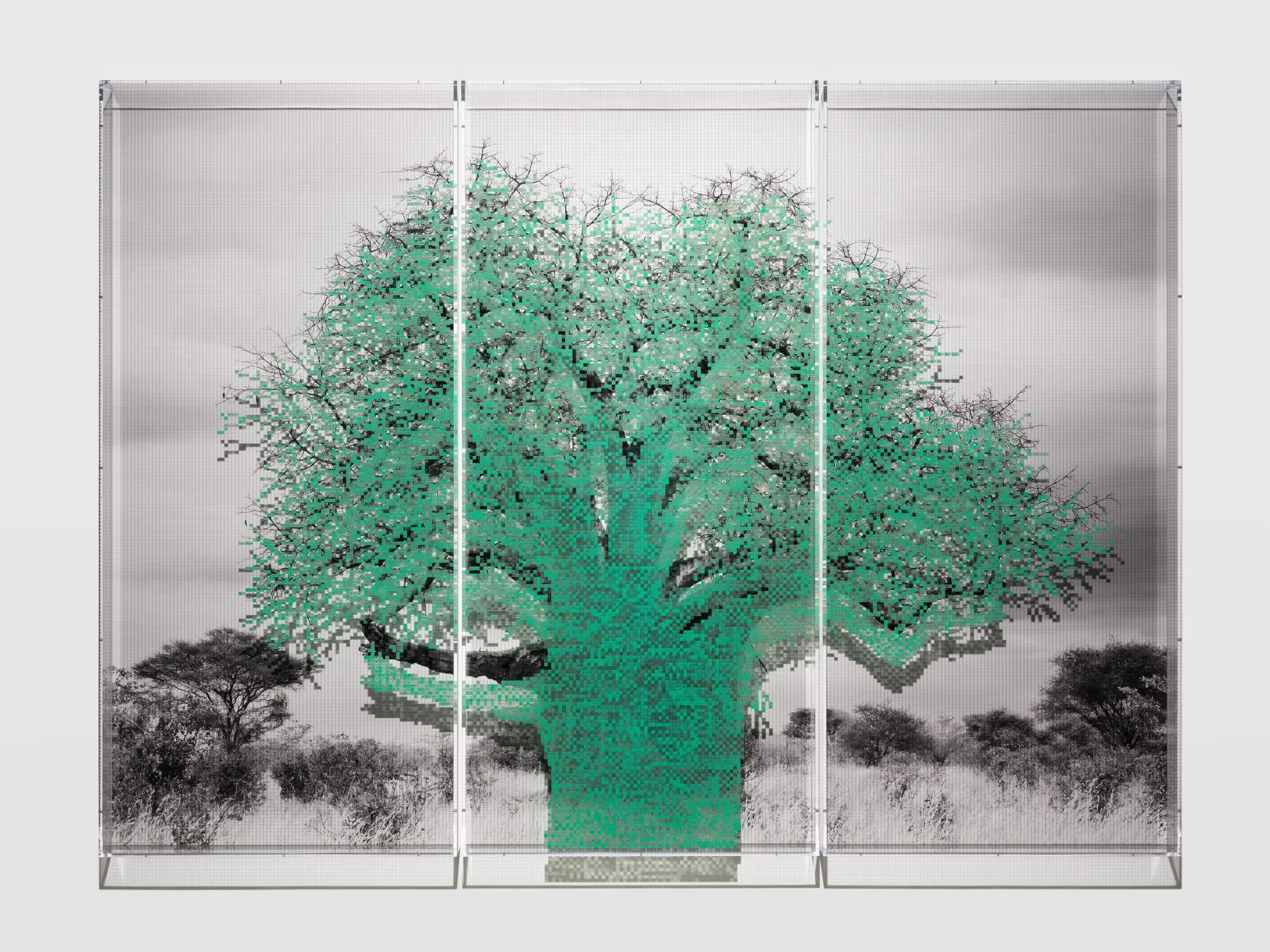
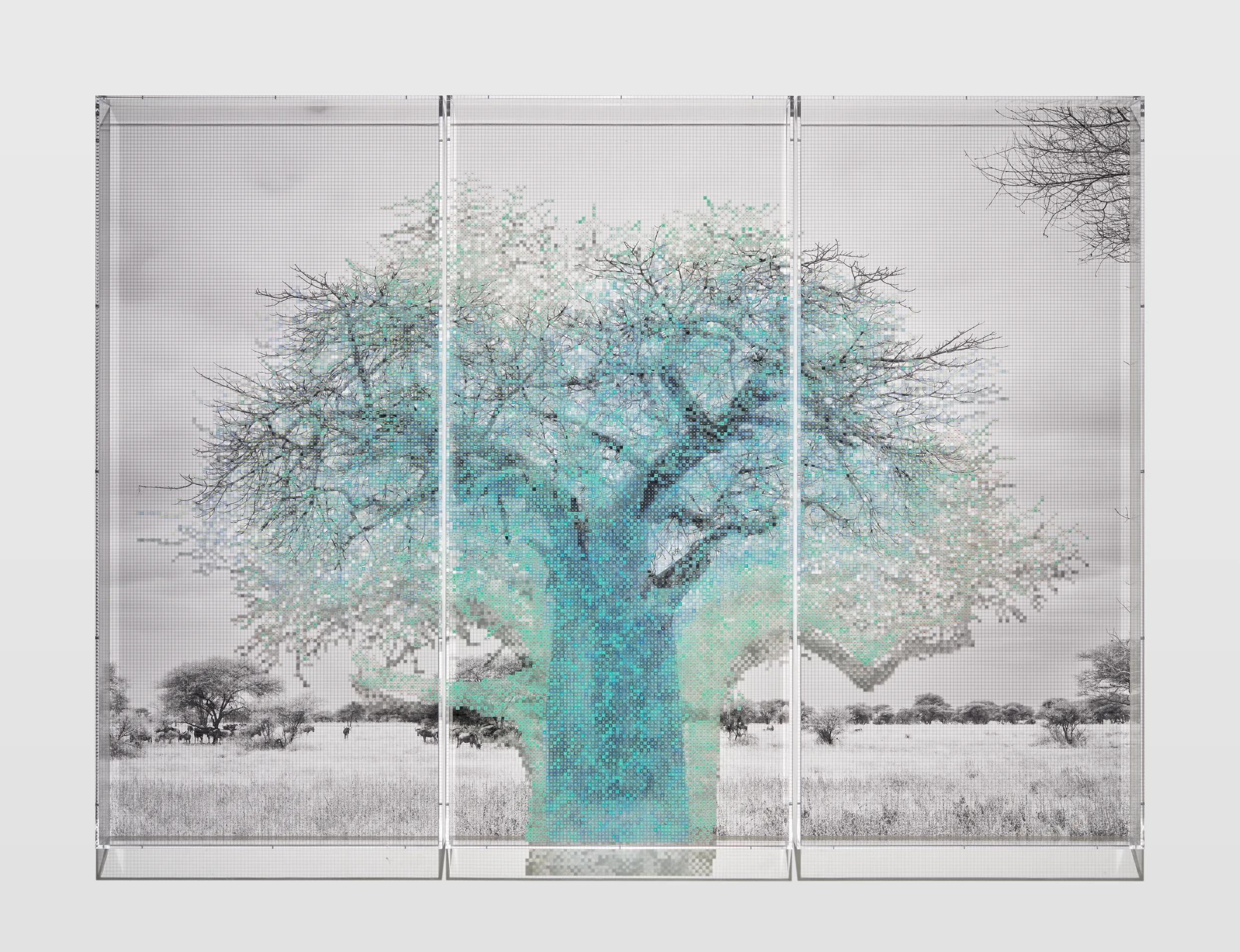

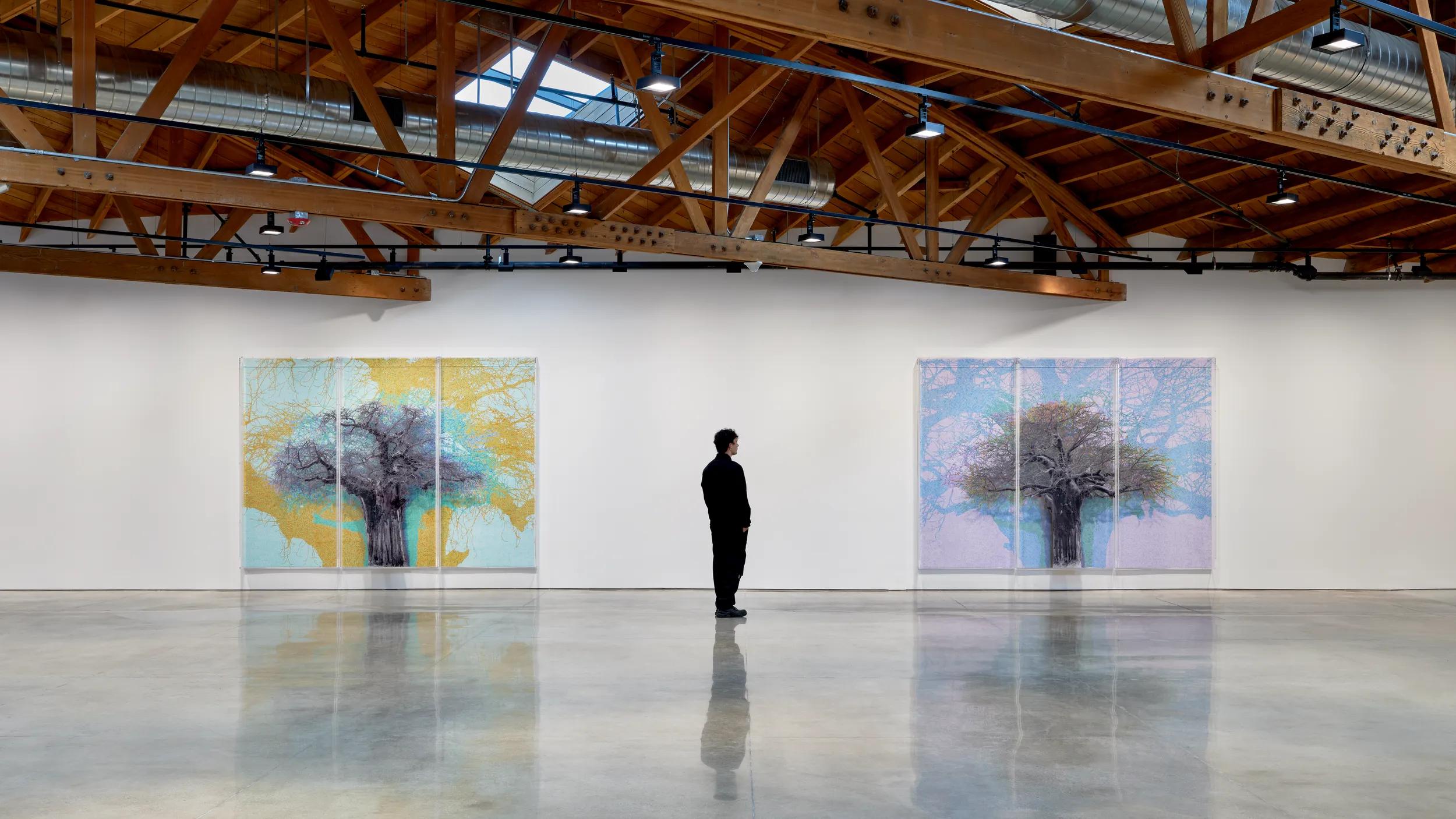
In this iteration of Numbers and Trees, Gaines implements a combination of systems never before brought together. The silhouetted baobab tree is meticulously transformed through a rigorous set of self-determined rules and procedures. Each tree is assigned a distinctive color and number sequence, creating layers of astonishingly detailed visual information within and on the planes of the Plexiglas box. For the first time, in half of the works, the back panel depicts the sequential progression of trees amid an enlarged detail of the tree crown, an application the artist refers to as an ‘explosion.’ This process breaks down his original photographic composition into individual cells which collectively challenge our perception and thwart conventional interpretation. The grandeur of the baobab—revered as the ‘tree of life’—mirrors the magnificence of Gaines’ process, where proliferating cells of color radiate in intricate branch-like patterns, each seeming to emerge from the unique form of every tree.
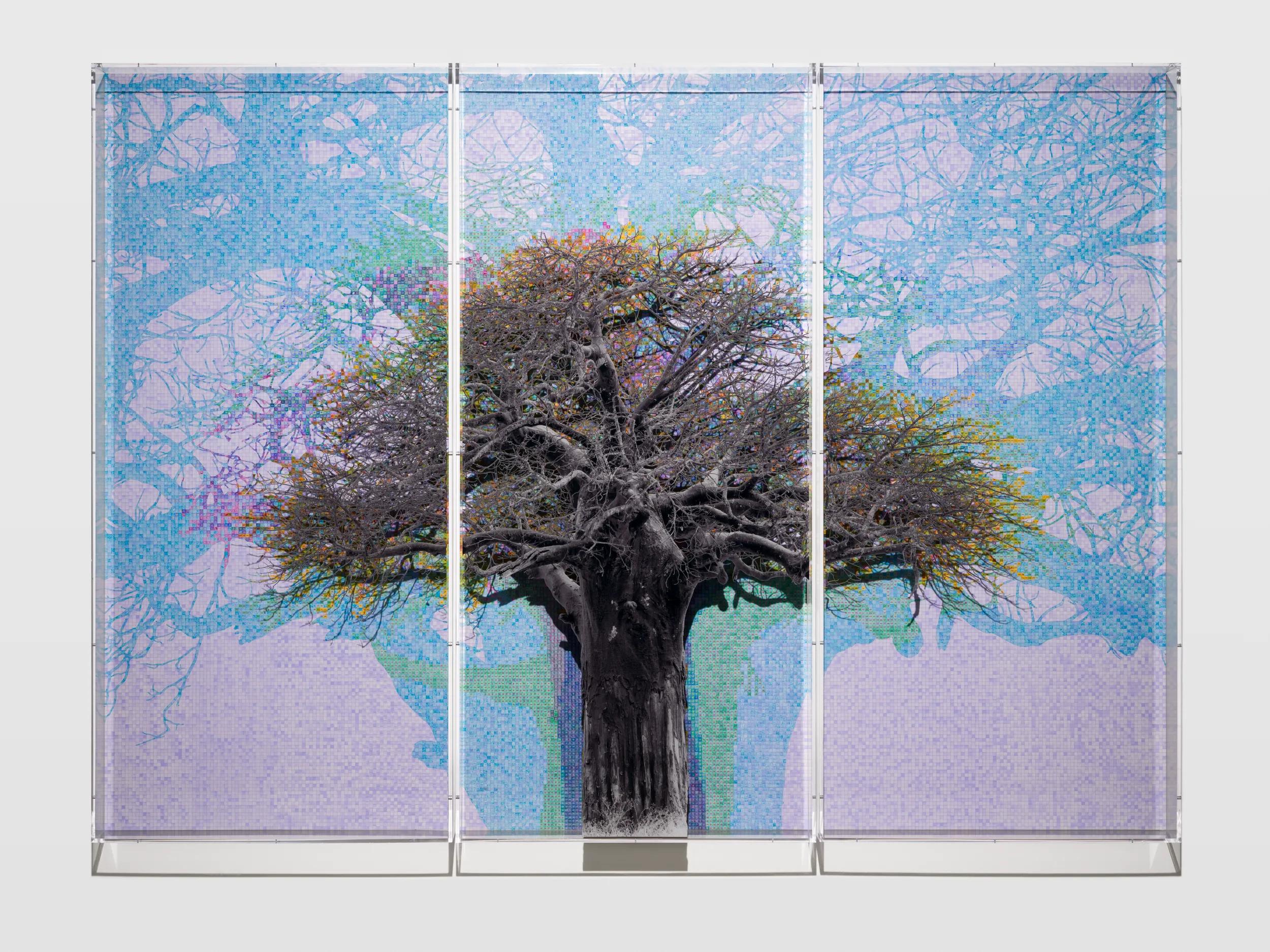
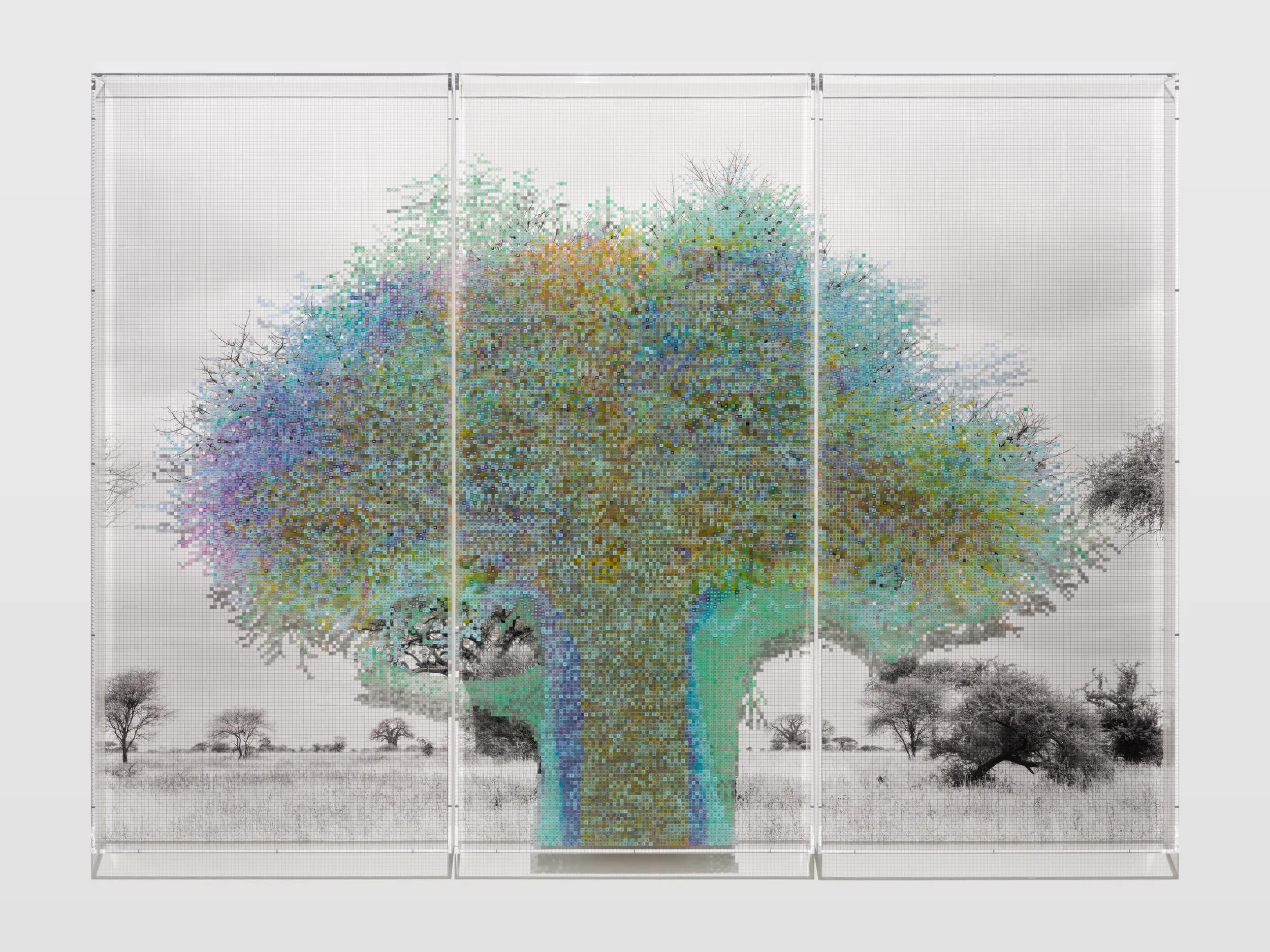
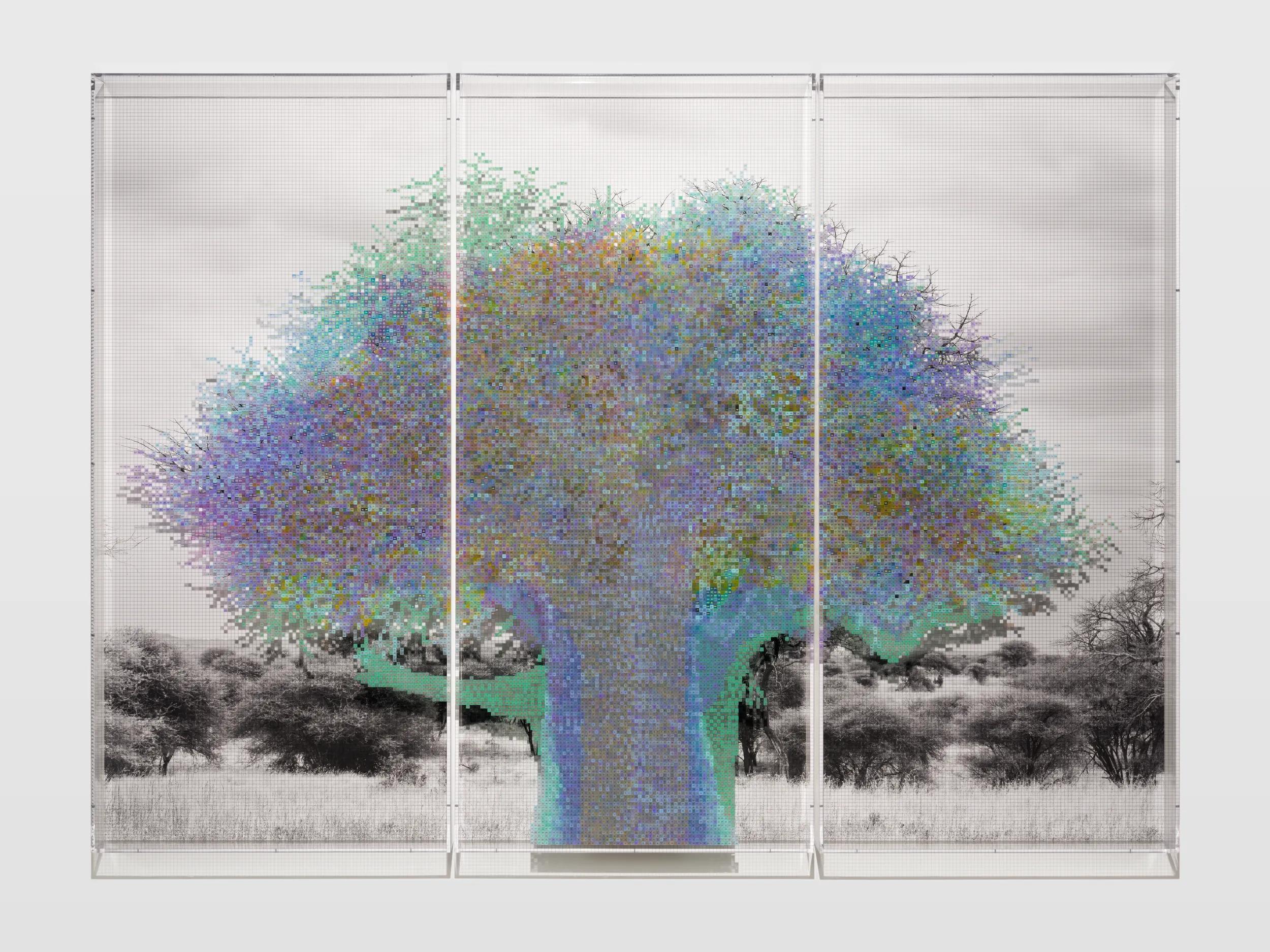

With ‘Numbers and Trees, The Tanzania Baobabs,’ Gaines reflects on his trip to Tanzania and the country’s historical context, particularly in relation to the colonial enterprise, slave trade and personal identity. However, a profound ambiguity exists in the relationship between the ancient trees he photographed on that sojourn—these natural witnesses to social and evolutionary epochs—and the deliberate, systematic breakdown of their image. This gap, like the space between the Plexiglas panels of each work, invites the viewer to interpret different layers of possible meaning.
‘What you bring to the image, adds to the image.’—Charles Gaines
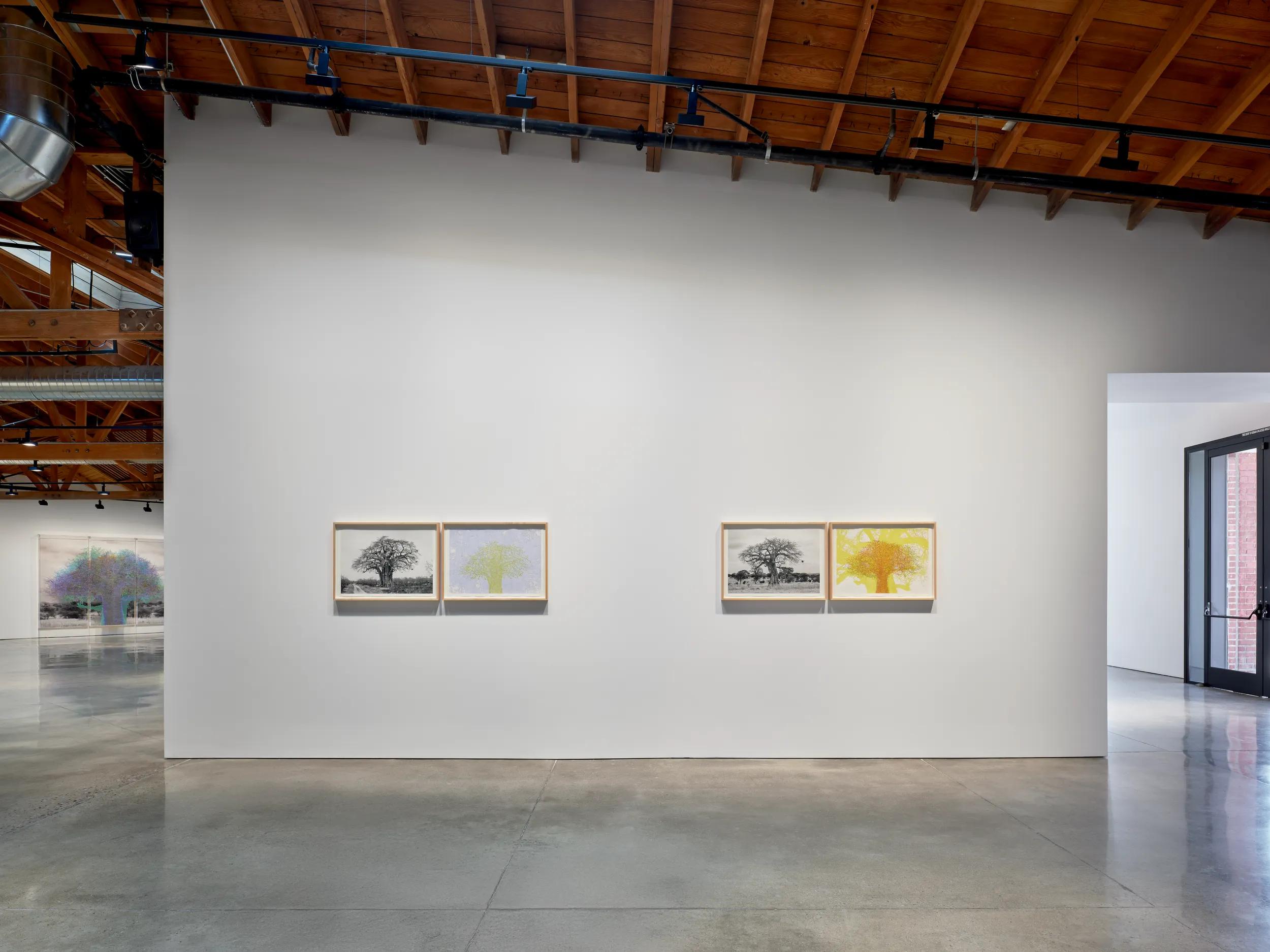
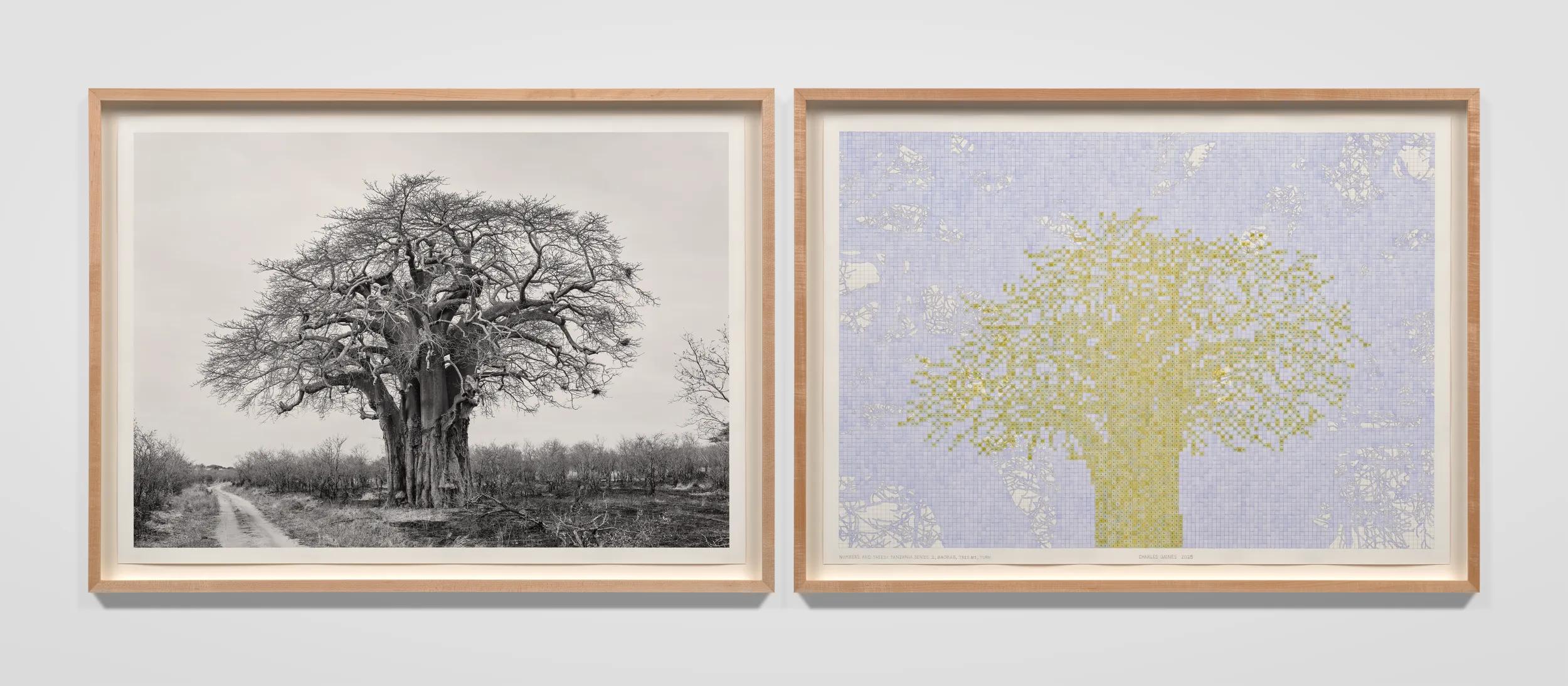
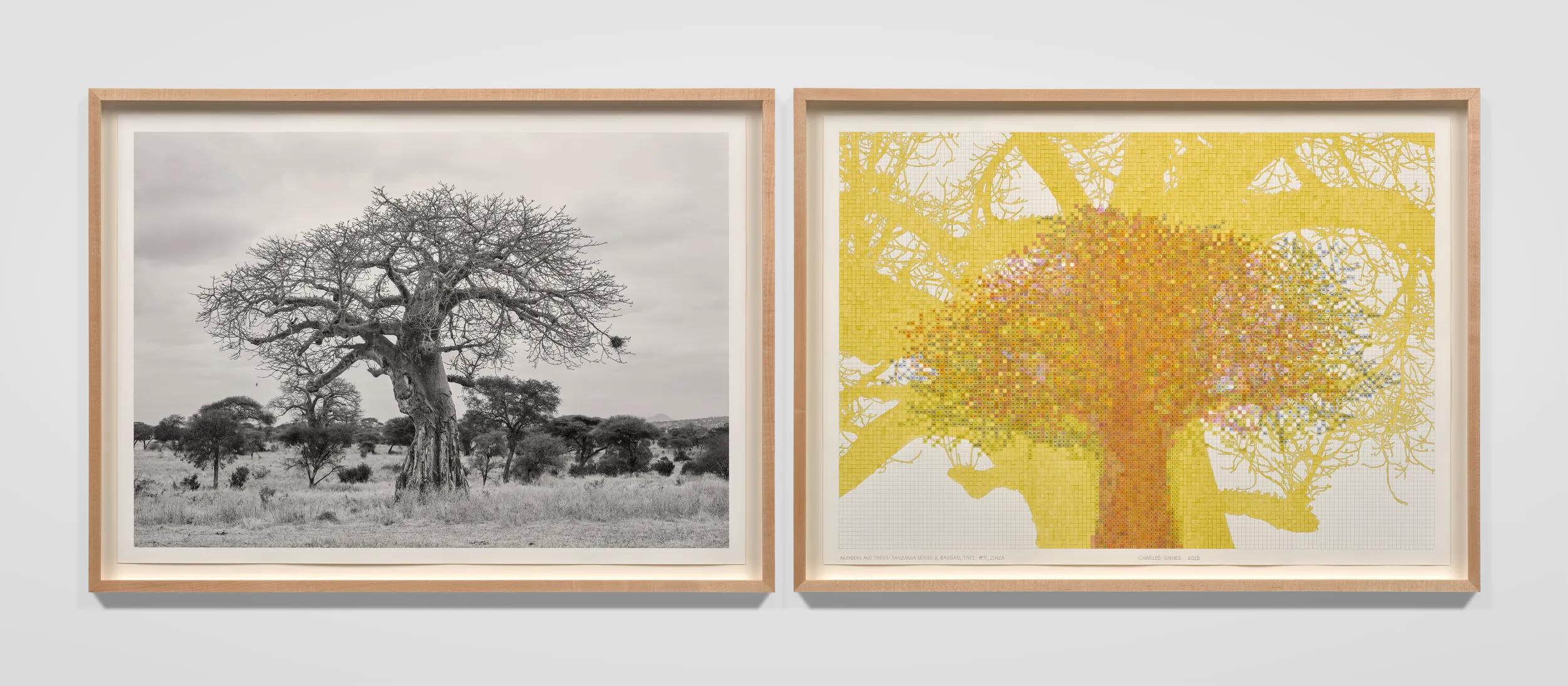
Accompanying the Plexiglas works on view is an intimate series of watercolors, each composed of tiny painted cells that take the shape of a tree’s specific form. As this series progresses, its overlapping tree forms create a cacophony of cells and varied hues that both blur and retain each baobab tree’s distinct character. Gaines succeeds in cataloging minute yet essential differences between things, while also mapping the very process through which he does so in a deep but intentionally inconclusive excavation of meaning.
In Conversation: Charles Gaines, Naima J Keith & Olga Viso
On opening night, guests joined us for a conversation with artist Charles Gaines, Naima J Keith, and Olga Viso in celebration of Gaines’ exhibition ‘Numbers and Trees, The Tanzania Baobabs’ at Hauser & Wirth West Hollywood.
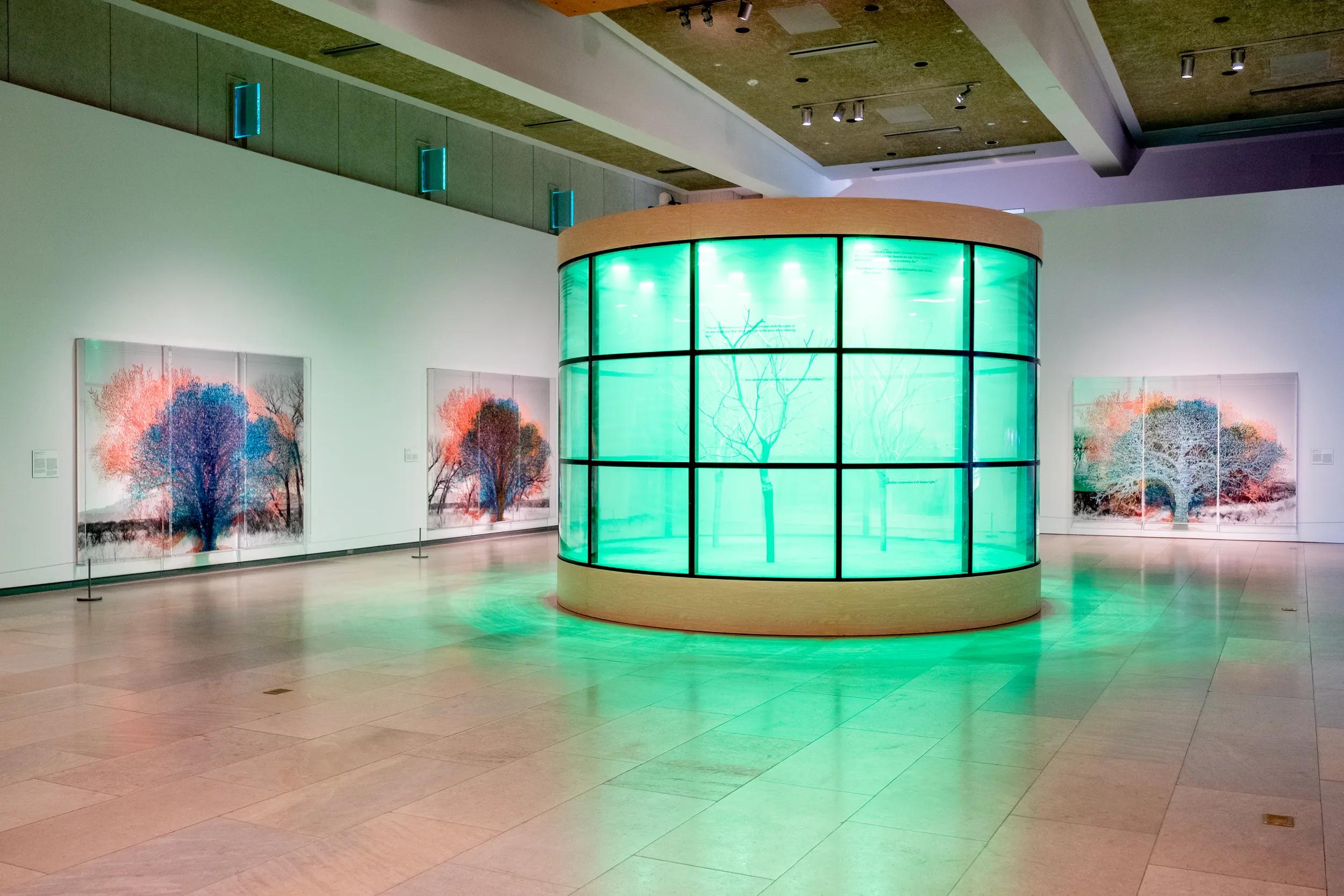
Installation view, 'Charles Gaines: Numbers and Trees (Arizona Series)', Phoenix Art Museum, 2024 – 2025. © Charles Gaines, Photo: Charles Darr
Museum Exhibitions
‘Numbers and Trees, The Tanzania Baobabs,’ coincides with the exhibition ‘Charles Gaines: Numbers and Trees (Arizona Series)’ on view at the Phoenix Art Museum from 30 October 2024 through 20 July 2025.
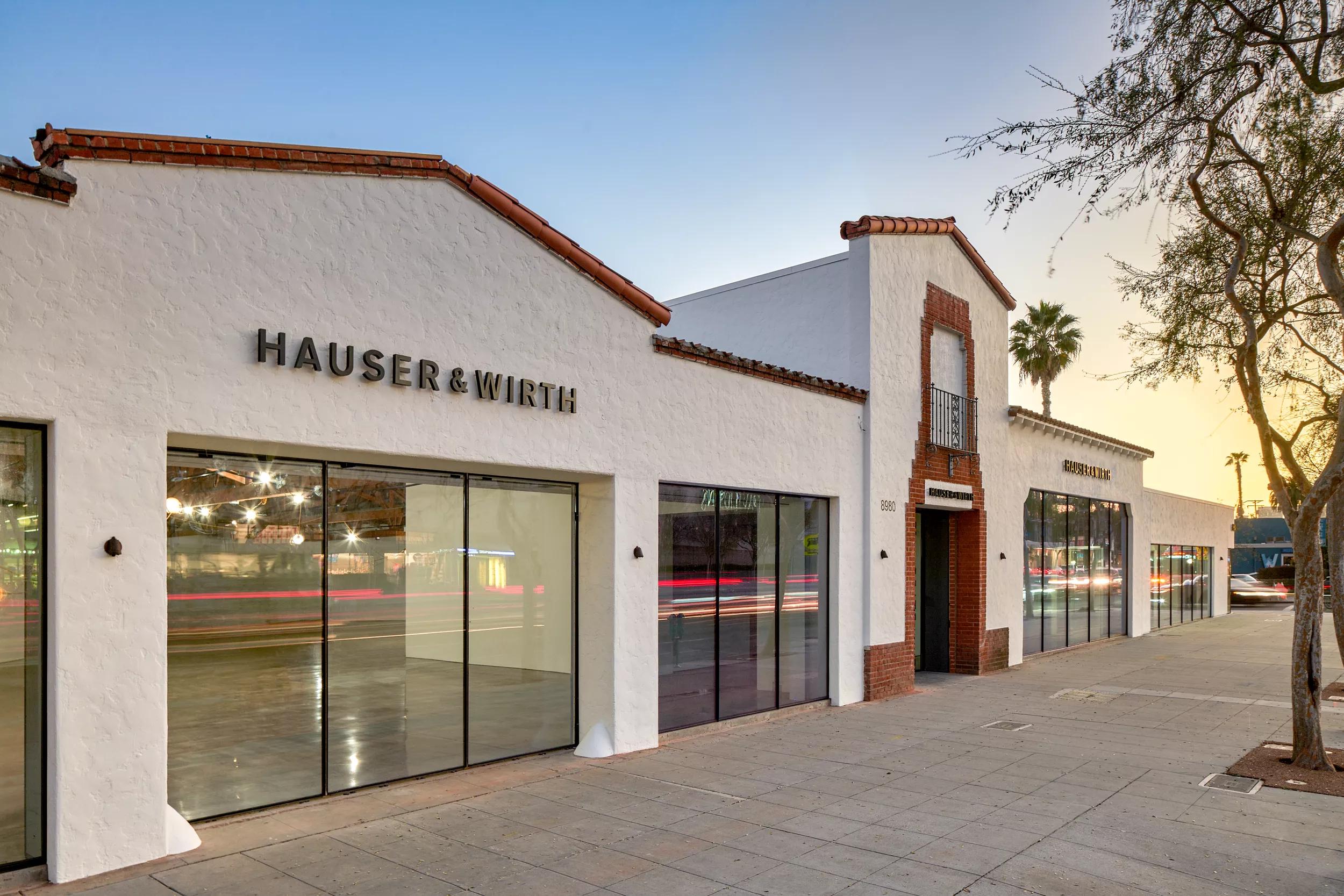
On View in West Hollywood
‘Charles Gaines. Numbers and Trees: The Tanzania Baobabs’ is now on view through 31 May 2025 at Hauser & Wirth West Hollywood.
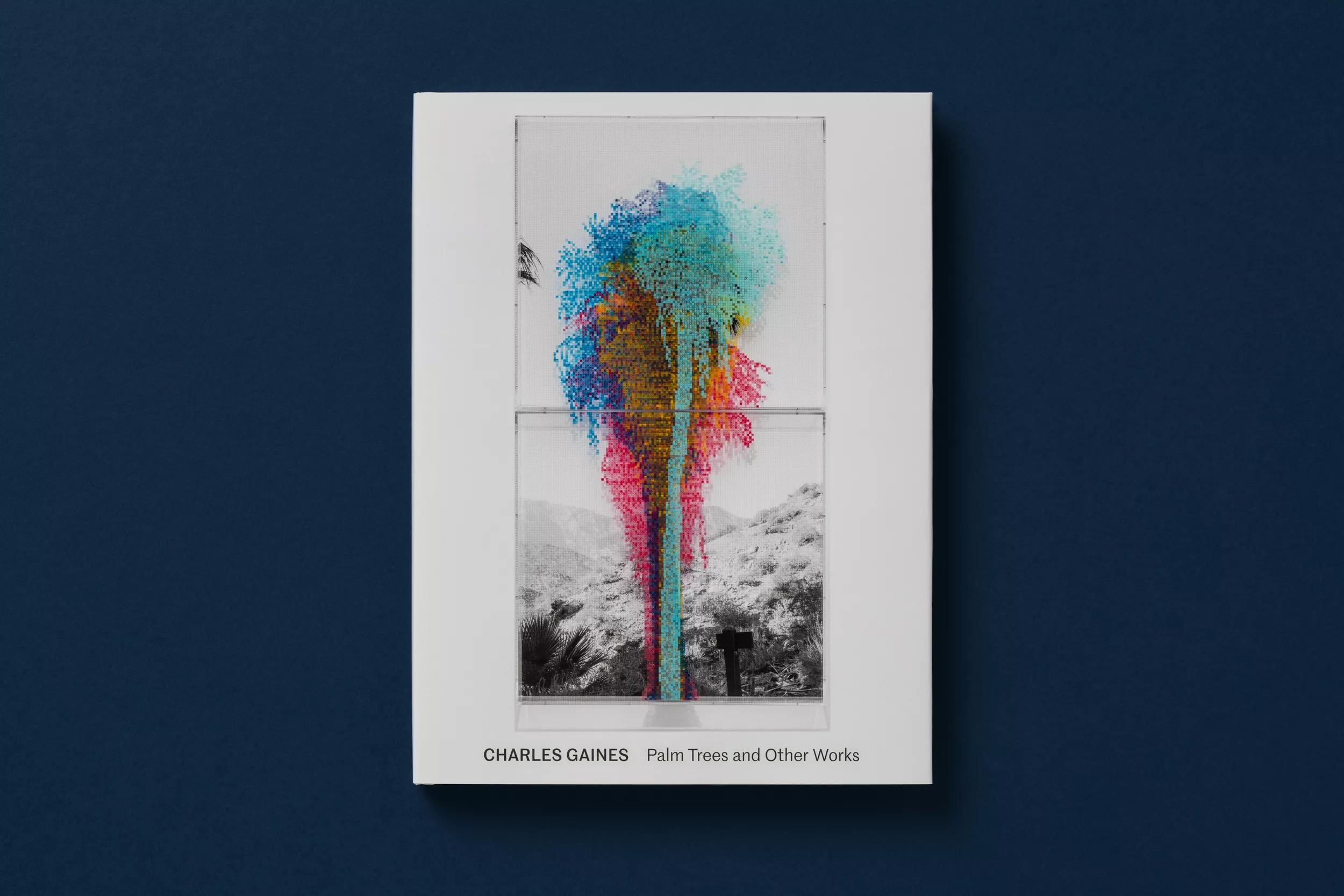
Charles Gaines: Palm Trees and Other Works
Published alongside Charles Gaines’s 2019–20 exhibition at Hauser & Wirth Los Angeles, this monograph charts the evolution of the palm tree in Gaines’s work from the 1980s to the present. In a new text, David Platzker explores the cultural and art historical contexts of the series, particularly the recent ‘Numbers and Trees’ works, shown for the first time in Los Angeles, that take palm trees as their subject.
Related Content
About the Artist

Charles Gaines
Figura clave en el ámbito del arte conceptual, el conjunto de obra de Charles Gaines trabaja con fórmulas y sistemas que interrogan las relaciones entre los ámbitos objetivo y subjetivo. Mediante un enfoque generativo para crear series de obras en diversos medios, Gaines ha construido un puente entre los primeros artistas conceptuales de las décadas de 1960 y 1970 y las generaciones posteriores que hoy llevan los límites del conceptualismo más allá.
Nacido en 1944 en Charleston, Carolina del Sur, Gaines comenzó su carrera como pintor, obteniendo el M.F.A. en la School of Art and Design del Rochester Institute of Technology en 1967. Durante la década de 1970, su obra experimentó un giro drástico en respuesta a lo que él mismo más tarde llamaría ‘el despertar’. Esta revelación se materializó en la serie ‘Regression’ (1973 – 1974), en la que exploró el uso de sistemas matemáticos y numéricos para crear marcas suaves numeradas con tinta sobre una cuadrícula, con cada dibujo construido a partir de los cálculos del anterior. Este enfoque metódico marcaría el recorrido del artista durante las décadas siguientes.
Current Exhibitions


1 / 12