
Learning Notes: Louise Bourgeois
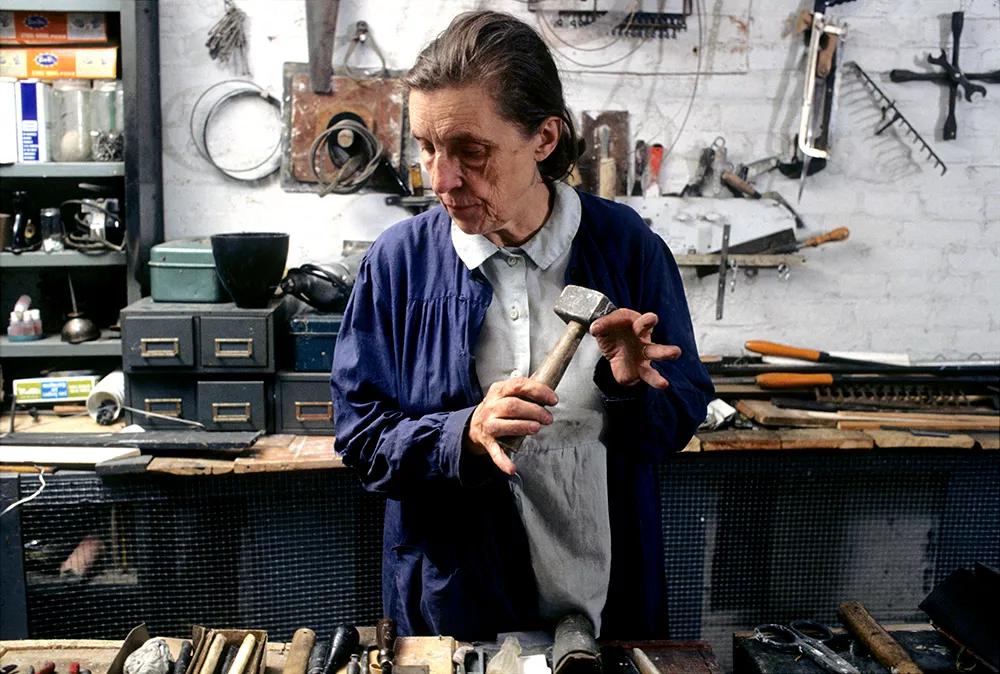
Photo: Mark Setteducati © The Easton Foundation/VAGA at (ARS), NY
Learning Notes: Louise Bourgeois
Click here to download a PDF version of this resource.
About Louise Bourgeois
Louise Bourgeois is recognized as one of the most important and influential artists of the last century. She was born in Paris on Christmas Day in 1911. As a child, she regularly helped with the family tapestry restoration business by drawing in missing fragments of damaged fabrics.
In the early 1930s, Bourgeois studied mathematics at the Sorbonne in Paris, before deciding to focus solely on art. In 1938, she opened her own gallery in a space partitioned off from her father’s sales gallery where she sold the work of artists such as Eugène Delacroix (1798 – 1863), Henri de Toulouse-Lautrec (1864 – 1901), and Suzanne Valadon (1865 – 1938).
After immigrating to New York in the fall of 1938, Bourgeois enrolled in the Art Students League and studied painting, life drawing and printmaking. From the 1940s onwards, Bourgeois raised her family and worked as an artist. In the 1970s, Bourgeois was involved in demonstrations and exhibitions associated with the feminist art movement. Themes pertaining female identity and sexuality, motherhood, love, fear, abandonment and reconciliation are at the core of her practice. Bourgeois passed away in 2010 at the age of 98, and her creative voice continues to inspire many artists today.
What does her work look like and how did she make her work?
Louise Bourgeois used a wide variety of working methods and materials in her practice, working across the disciplines of drawing, printmaking, performance, painting and sculpture. She was also an early champion of installation art.
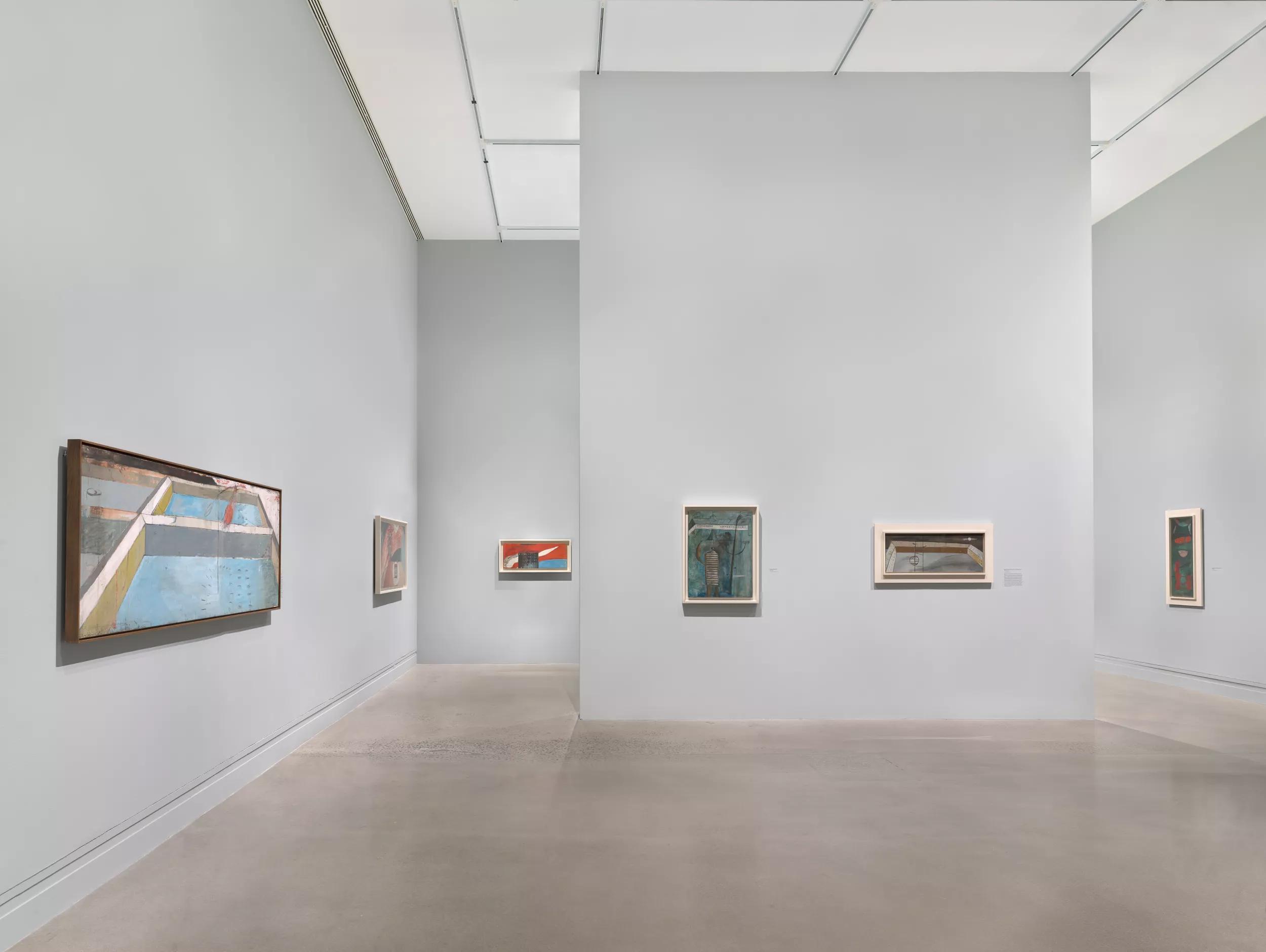
Paintings
Bourgeois only painted oil on canvas in the 1930s and ‘40s. These paintings were relatively modest in scale compared to those made by her contemporaries in the Surrealism and abstract expressionism movements. The motifs explored in those early paintings would recur throughout the artist’s long career.
Sculptures
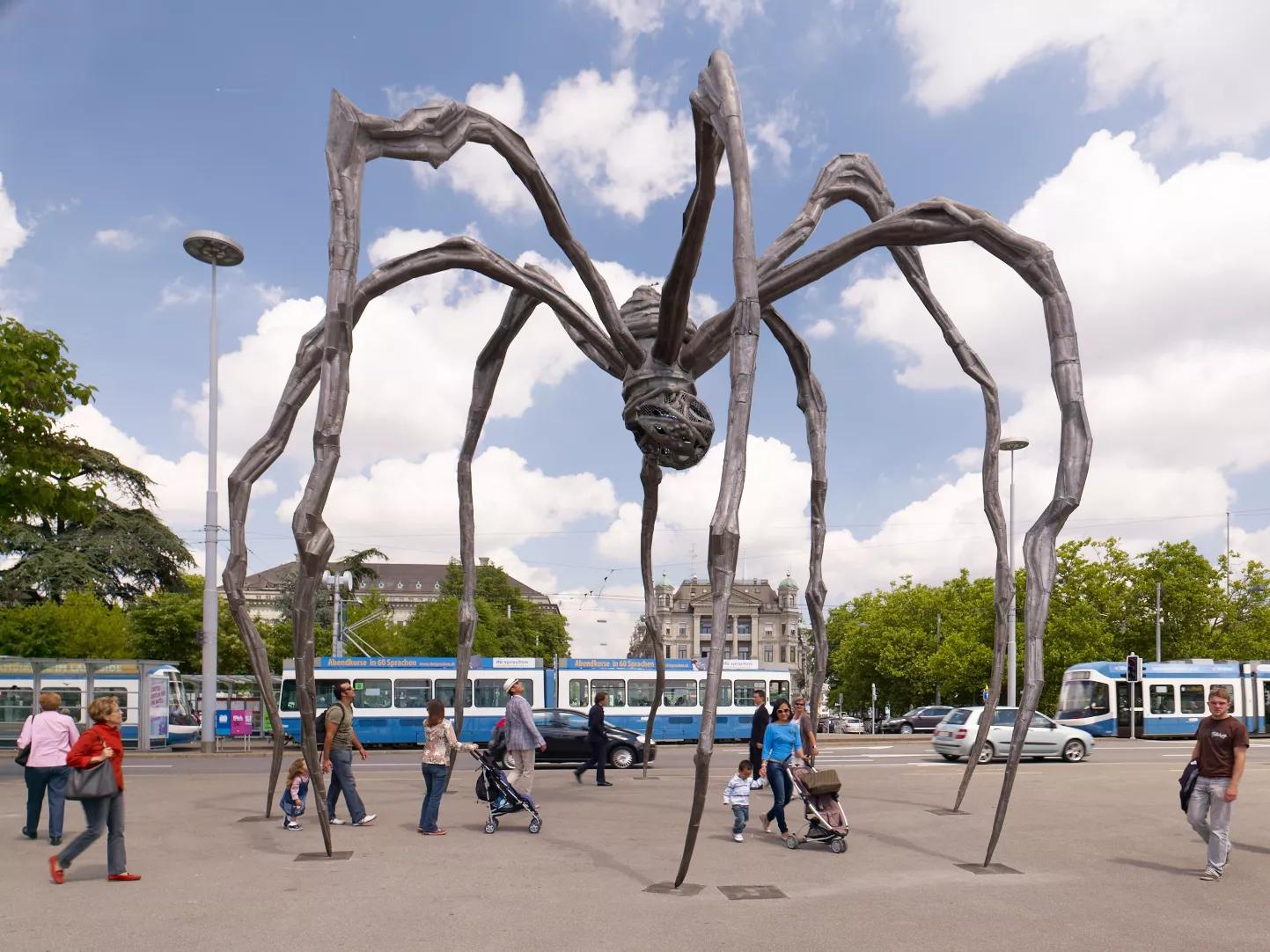
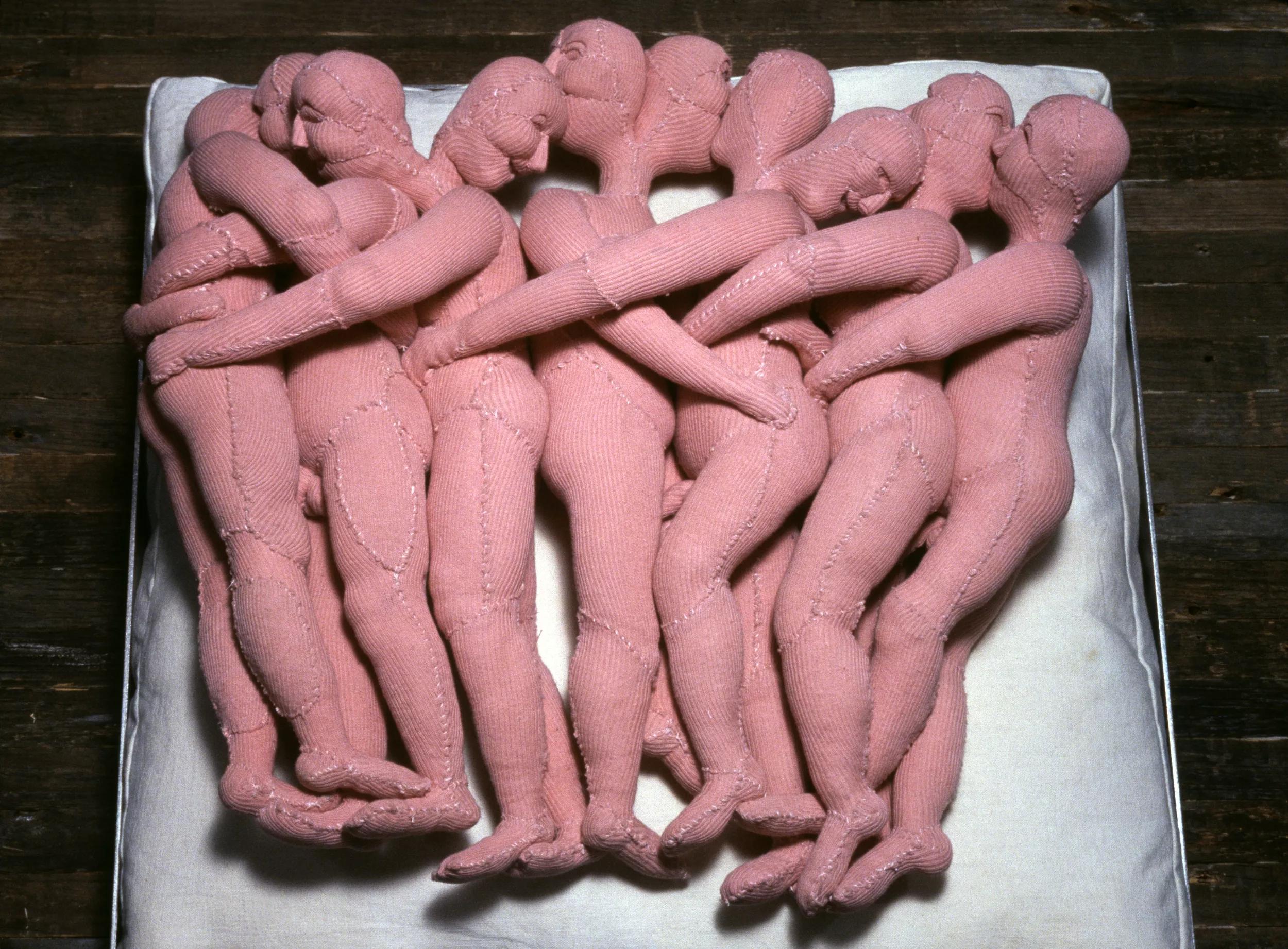
In the late 1940s, Bourgeois started to work in three dimensions. Whilst the tradition of painting is based on illusionary space, sculpture allowed her to make work that created a different type of engagement with its viewer. She loved the physical aspects, including carving, cutting and sewing involved in making sculptures.
Installation
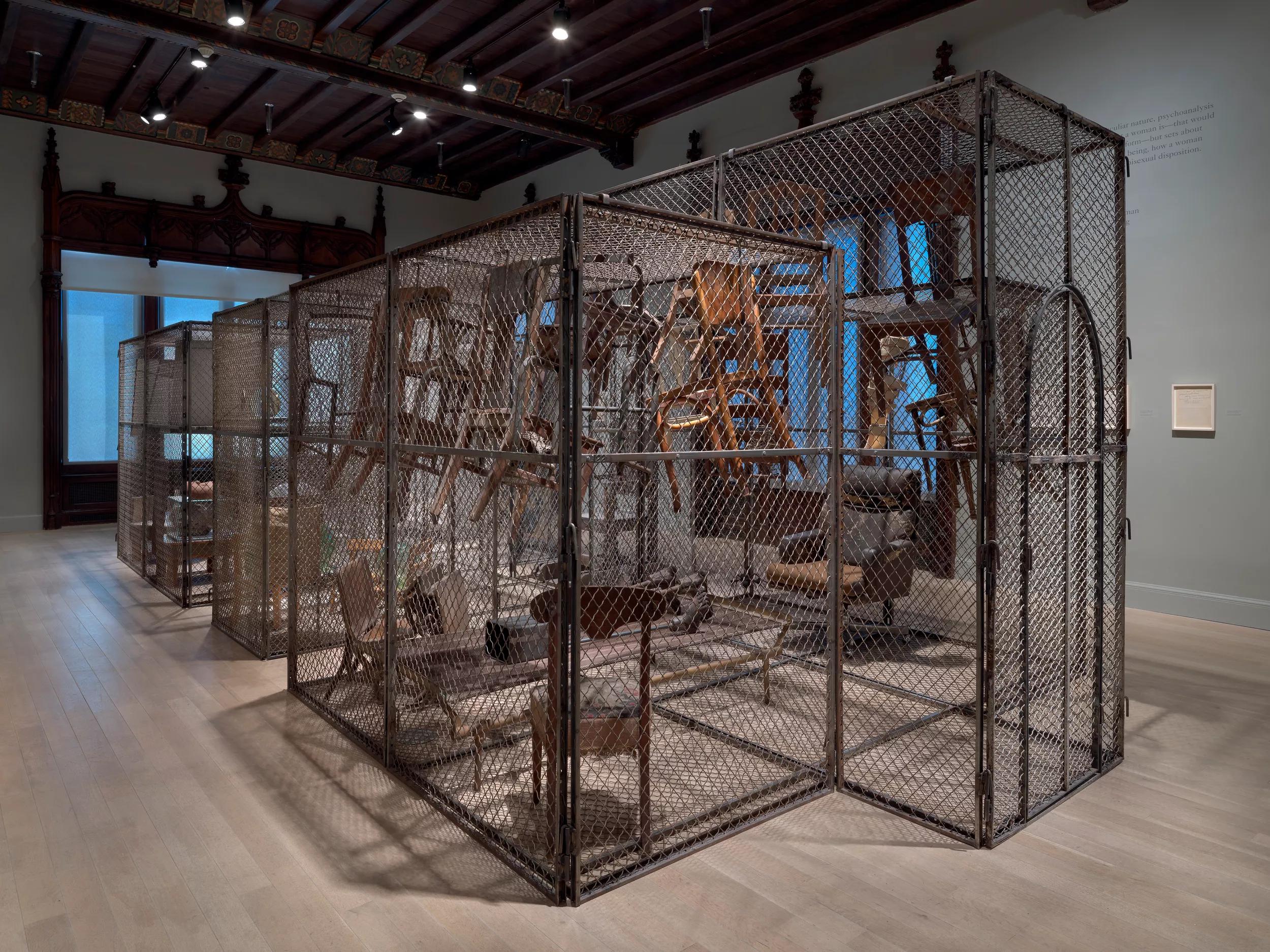
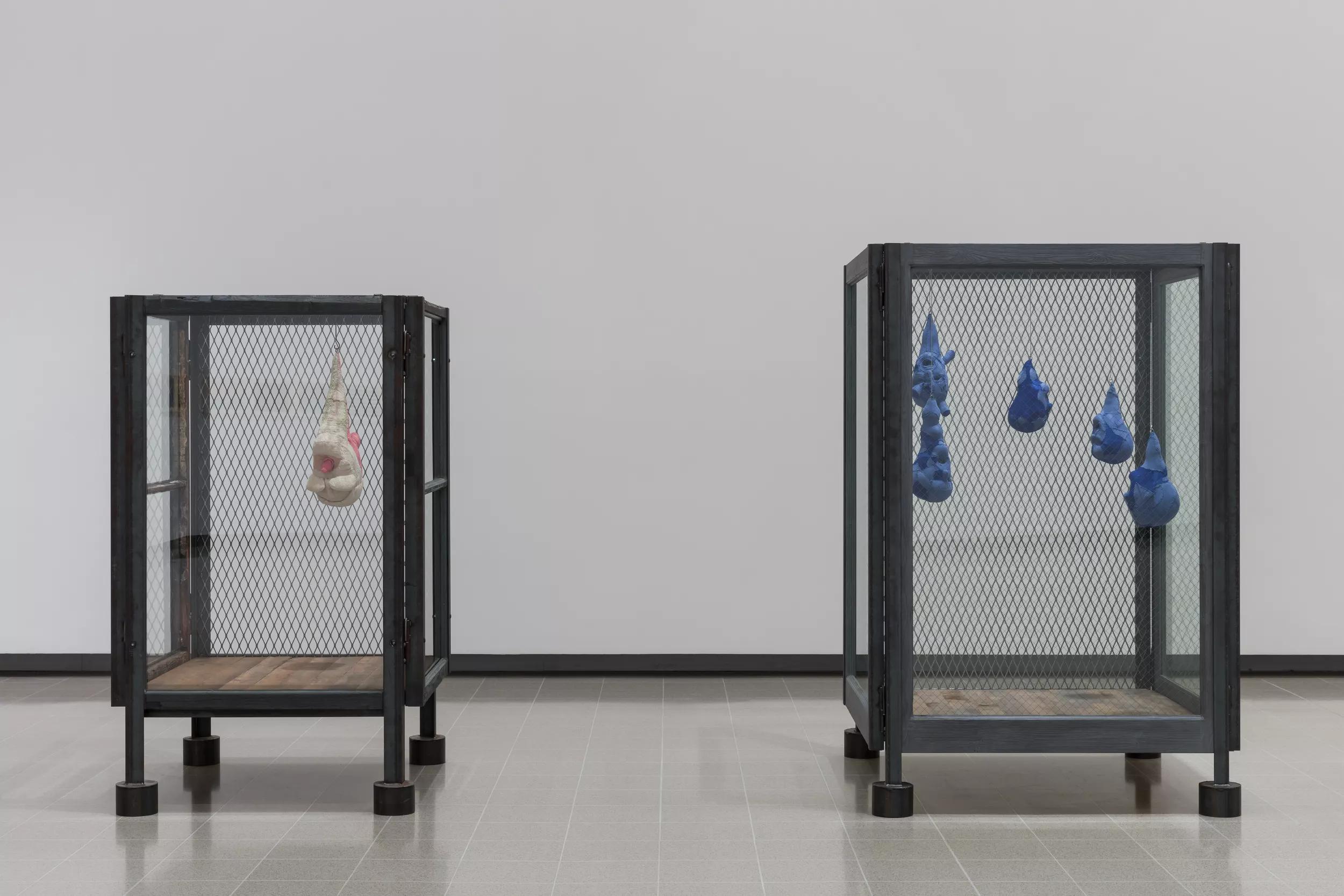
By the early 1950s, Bourgeois began to think about her sculptures as environmental installations, assembling works in the gallery so that the viewer had to physically navigate the space. In this way, the space itself became part of the sculpture. In the 1960s, she began working in marble and bronze and from the mid 1990s onwards, she created work with found objects, many of which include textiles, often incorporating old clothing.
Etchings and Drawings
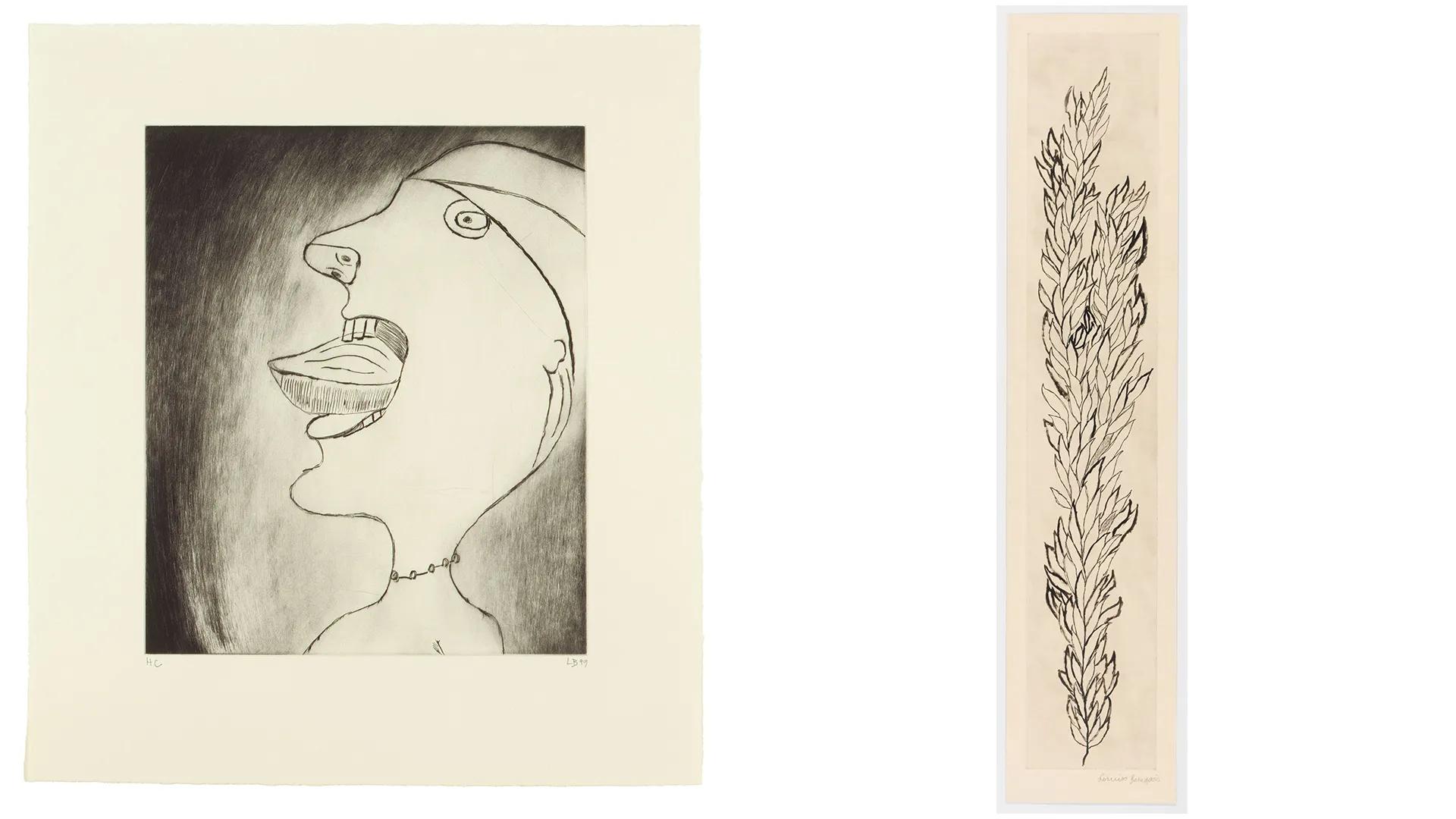
In the early days of her career, Bourgeois enjoyed working in printshops because it allowed her to meet other artists. She eventually bought a small etching press so she could edition at home by herself. In the last four years of her life (2006 – 2010), Bourgeois created mixed-media etchings, some of which were enhanced by hand in watercolor and gouache. Drawing was a constant and expedient practice that Bourgeois could do anywhere. She worked with a wide range of materials from ink and pencil, to ballpoint pen and colored pencil.
What are the main themes in Louise Bourgeois’s work?
Memory
Throughout her career, Bourgeois used her personal life experiences as fuel for her art. She recorded deeply personal thoughts across a range of formats: in a traditional written diary, on various loose sheets of paper and on the backs of drawings, and via an audio diary.
Childhood Trauma
Louise Bourgeois navigated a troubled childhood and much of her work is based on these early experiences. Later in life, Bourgeois suffered from depression and anxiety and engaged with psychoanalysis to help process her childhood experiences and emotions.
Emotions
The artist often explored depth of emotion and psychology across two- and three-dimensional planes of expression in her work. ‘Art,’ as she once remarked in an interview, ‘is the experience, the re-experience of a trauma.’ Bourgeois’s multiplicity of forms and materials at once embed and conjure emotions. Bourgeois’s works, which feature dramatic colors, dense skeins of thread, and large-scale sculpture, explore the complexities of the human experience and the process of looking inwards.
Motherhood and Maternity
Motherhood and maternity features prominently throughout Bourgeois’s work. Her own mother, whom she greatly admired, passed away when Bourgeois was 20 years old, and her loss is felt keenly throughout the artist’s body of work. Bourgeois also explores motherhood using imagery such as spiders, to represent the maternal predator and protector – associated with strength, vulnerability and fear.
Questions for discussion
Does memory play a role in your everyday life? If so, what experiences come up for you? Do you weave past experiences into present moments? Is this simple or challenging? Why?
Bourgeois is interested in the complexity of the human experience and individual introspection - is self-reflection a part of your everyday life? If so, how? Does self-reflection influence your everyday experiences?
How are emotions a part of your everyday experience? What inspires you to be in tune with your emotions? How do you think artists are able to reflect feelings in a physical creative practice?
Additional Information
Artist Page
Teachers’ Notes: Louise Bourgeois
The Easton Foundation Artist Page
Ursula Essay: How to Peel an Orange


