
Dates
21 June – 25 October 2026
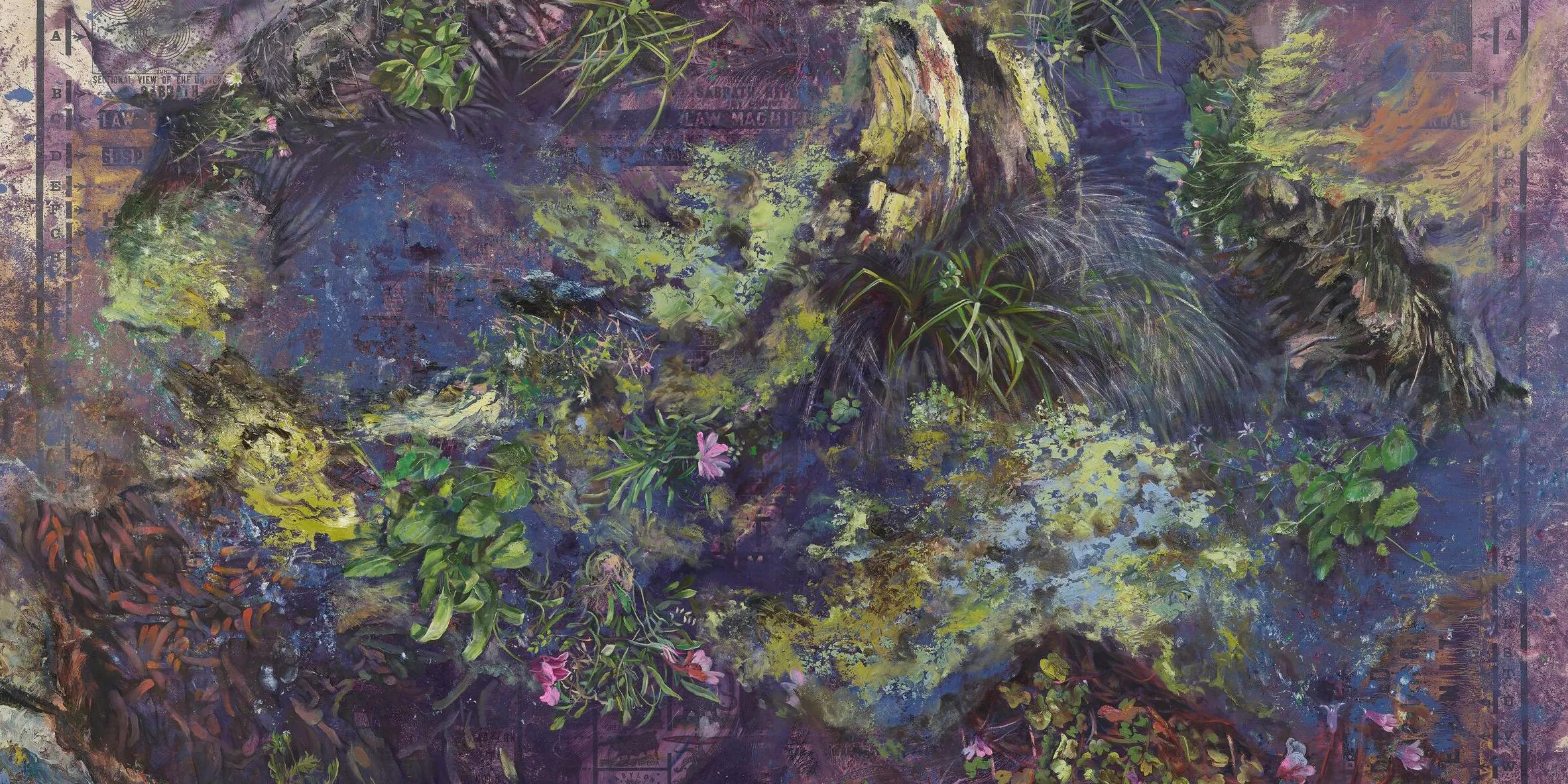
Opening this summer, ‘Directionless’ is a sweeping group exhibition organised by artist Rashid Johnson. The project begins with the premise that we are living in a moment of profound disorientation. This is a time when inherited narratives, stable identities, and the systems that once structured social and aesthetic life feel increasingly insufficient. Rather than offering resolution, the exhibition asks how artists productively inhabit this uncertainty—how they develop new vocabularies and provisional orientations when established coordinates fail.
To build a sense of indeterminacy and openness into the exhibition’s very structure, Johnson invited Charles Gaines, Firelei Báez, and Cristina Iglesias to each nominate artists from outside the gallery’s roster alongside his own selections. This artist-driven, polyphonic approach refuses singular narratives, instead proposing that creative practice itself might be a form of orientation-making in an illegible present.
The developing artist list includes: Firelei Báez, Yto Barrada, Georg Baselitz, Claire Chambless, Ali Cherri, Latifa Echakhch, Teresita Fernández, Charles Gaines, Todd Gray, Alteronce Gumby, Mona Hatoum, Hugh Hayden, Hanna Hur, Cristina Iglesias, Rashid Johnson, Michael Joo, Sigalit Landau, Hannah Levy, Joiri Minaya, Julie Mehretu and Rayanne Tabet.
Spanning all galleries alongside an open-air presentation, the exhibition considers directionlessness as a conceptual zone—a space of suspension, drift, and openness where new forms of relation, meaning, and subjectivity might be imagined. Through this diverse group of international artists, unexpected affinities alongside divergent sensibilities begin to emerge. What connects them is a commitment to moving through unfamiliarity with rigor, complexity, and a refusal to settle.
‘Directionless’ continues Hauser & Wirth’s commitment to providing a platform for artists beyond its roster that are exploring a breadth of experiences and ideas of our time. The exhibition follows large-scale group exhibitions ‘Present Tense’ (2024) and ‘An Uncommon Thread’ (2025) at Hauser & Wirth Somerset, UK.
This year’s Education Lab at Hauser & Wirth Menorca is developed in collaboration with the University of the Balearic Islands and the University of Barcelona. Working with the university and their students, the program responds to the themes of the group exhibition ‘Directionless.’ Drawing on current thinking in creative pedagogy and experimental learning, it offers an interactive space for new ideas and working methods, and invites a wide range of voices and communities to participate throughout the season.
About the Artists

Rashid Johnson
Born in Chicago in 1977, Rashid Johnson is among an influential cadre of contemporary American artists whose work employs a wide range of media to explore themes of art history, individual and shared cultural identities, personal narratives, literature, philosophy, materiality, and critical history. Johnson received a BA in Photography from Columbia College in Chicago and studied for his masters at the School of the Art Institute of Chicago. Johnson's practice quickly expanded to embrace a wide range of media—including sculpture, painting, drawing, film making, and installation—yielding a complex multidisciplinary practice that incorporates diverse materials rich with symbolism and personal history. Johnsons work is known for its narrative embedding of a pointed range of everyday materials and objects, often associated with his childhood and frequently referencing aspects of history and cultural identity. Many of Johnson’s more recent works delve into existential themes such as personal and collective anxiety, interiority, and liminal space.
Recent solo exhibitions include: ‘Rashid Johnson: A Poem for Deep Thinkers’, Guggenheim Museum, New York NY, 2025; ‘Seven Rooms and a Garden. Rashid Johnson + Moderna Museet’, Moderna Museet, Stockholm, Sweden, 2023; ‘Rashid Johnson. Nudiustertian’, Hauser & Wirth, Hong Kong, 2023; ‘The Chorus’, The Metropolitan Opera, New York NY, 2021; ‘Summer Projects. Rashid Johnson’, Creative Time, New York, NY, 2021; ‘Rashid Johnson. Capsule’, National Gallery of Canada, Ottawa, Canada, 2021; ‘The Crisis’, Storm King Art Center, New Windsor NY; ‘Rashid Johnson. Waves’, Hauser & Wirth, London, UK, 2020; the touring exhibition ‘Rashid Johnson. The Hikers’ at the Aspen Art Museum, Aspen CO, the Museo Tamayo, Mexico City, Mexico and at Hauser & Wirth, New York, 2019; ‘Provocations. Rashid Johnson’, Institute for Contemporary Art, Richmond VA, 2018; ‘Rashid Johnson. No More Water’ at Lismore Castle Arts, Lismore, Ireland, 2018 and ‘Rashid Johnson. Hail We Now Sing Joy’ at The Kemper Museum of Contemporary Art, Kansas City MO which traveled to the Milwaukee Art Museum, Milwaukee WI, 2017.

Firelei Báez
Firelei Báez draws upon African diasporic histories, reimagining them to explore new possibilities for the future. Báez received an MFA from Hunter College, a BFA from The Cooper Union School of Art, and attended the Skowhegan School of Painting and Sculpture. Since 2024, Báez has been the subject of her first major U.S. survey, organized by the Institute of Contemporary Art, Boston, and presented at the Vancouver Art Gallery and the Des Moines Art Center, before traveling to the Museum of Contemporary Art Chicago, where it remains on view through May 2026. Her work has been featured in major international exhibitions, including ‘The Milk of Dreams’ at the 59th Venice Biennale (2022), curated by Cecilia Alemani, and the inaugural installation of the ICA Watershed in Boston (2021). Recent solo exhibitions have been held at the Louisiana Museum of Modern Art, Humlebæk; Kunstinstituut Melly (formerly Witte de With Center for Contemporary Art), Rotterdam; The Museum of Modern Art, New York; The Studio Museum in Harlem; The Andy Warhol Museum, Pittsburgh; and Pérez Art Museum Miami.
Báez has participated in numerous group exhibitions at institutions including the National Gallery of Art, Washington, DC; the Art Gallery of Ontario, Toronto; the Cleveland Museum of Art; the Baltimore Museum of Art; and the Rockbund Art Museum, Shanghai. She is the recipient of several major awards, including the Herb Alpert Award in the Arts (2020), the Artes Mundi Prize (2021), the Philip Guston Rome Prize (2021), and the Cooper Union President’s Citation (2022). Her work is held in prominent public and private collections worldwide, including the Baltimore Museum of Art; Crystal Bridges Museum of American Art; Dallas Museum of Art; Fine Arts Museums of San Francisco; The Solomon R. Guggenheim Museum; Institute of Contemporary Art, Boston; Nasjonalmuseet, Oslo; Pérez Art Museum Miami; San Francisco Museum of Modern Art; Tate, London; the Whitney Museum of American Art, New York; and The Metropolitan Museum of Art.
Charles Gaines
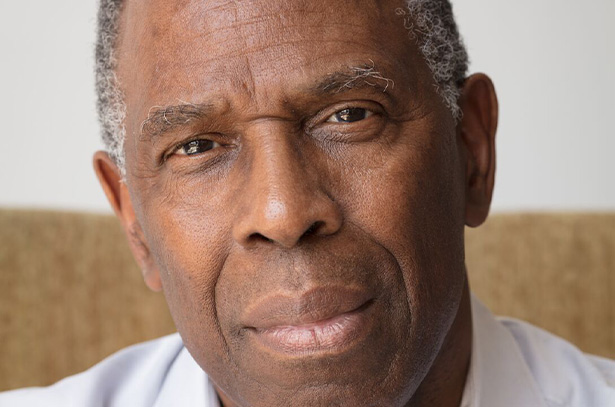
A pivotal figure in the field of conceptual art, Charles Gaines’ body of work engages formulas and systems that interrogate relationships between the objective and the subjective realms. Using a generative approach to create a series of works in a variety of mediums, he has built a bridge between the early conceptual artists of the 1960s and 1970s and subsequent generations of artists pushing the limits of conceptualism today.
Born in 1944 in Charleston, South Carolina, Gaines began his career as a painter, earning his M.F.A. from the School of Art and Design at the Rochester Institute of Technology in 1967. In the 1970s, Gaines’ art shifted dramatically in response to what he would later call ‘the awakening.’ Gaines’ epiphany materialized in a series called Regression (1973 – 1974), in which he explored the use of mathematical and numeric systems to create soft, numbered marks in ink on a grid, with each drawing built upon the calculations of the last. This methodical approach would carry the artist into the subsequent decades of his artistic journey.
Working both within the system and against it, Gaines points to the tensions between the empirical objective and the viewers’ subjective response. The concept of identity politics has played a central role within Gaines’ oeuvre, and the radical approach he employs addresses issues of race in ways that transcend the limits of representation.
Gaines lives and works in Los Angeles. He has been the subject of numerous exhibitions in the United States and around the world, most notably a major survey at The Institute of Contemporary Art, Miami, which traveled to the Phoenix Art Museum; a mid-career survey at the Pomona College Museum of Art and the Pitzer College Art Gallery in Claremont CA; a museum survey of early works at The Studio Museum, Harlem NY and the Hammer Museum, Los Angeles CA; and presentations at the 1975 Whitney Biennial and the Venice Biennale in 2007 and 2015. An exhibition of his work is also currently on long-term view at Dia:Beacon in New York. In 2022, Gaines launched his most ambitious public art project yet, ‘The American Manifest,’ presented by Creative Time, Governors Island and Times Square Arts. The third and final chapter of ‘The American Manifest,’ organized by Creative Time, will travel to the banks of the Ohio River in 2025. Additional forthcoming public commissions include the mural ‘Numbers and Trees: Cincinnati Cottonwoods,’ organized by Cincinnati nonprofit ArtWorks (June 2025); ‘Hanging Tree’ at Equal Justice Initiative’s Freedom Monument Sculpture Park in Montgomery AL (June 2025); and a new work for the Intuit Dome in Inglewood CA (spring 2026). Gaines will be an artist-in-residence at Hauser & Wirth Somerset in spring 2025 and a book of his collected writings will be released by Hauser & Wirth Publishers in spring 2026.
In addition to his artistic practice, Gaines was on the faculty at CalArts School of Art for over 30 years, establishing a fellowship to provide critical scholarship support for Black students in the M.F.A. Art program. He has published several essays on contemporary art, including ‘Theater of Refusal: Black Art and Mainstream Criticism’ (University of California, Irvine, 1993) and ‘The New Cosmopolitanism’ (California State University, Fullerton, 2008). In 2019, Gaines received the 60th Edward MacDowell Medal. He was inducted into the National Academy of Design’s 2020 class of National Academicians and the American Academy of Arts and Letters in May 2022. In 2023, he received an honorary doctorate from his alma mater, the Rochester Institute of Technology in New York.
Gaines’ work is included in prominent public collections such as the Museum of Modern Art, New York NY; Whitney Museum of American Art, New York NY; The Studio Museum, Harlem NY; Hirshhorn Museum and Sculpture Garden, Washington DC; Museum of Contemporary Art, Chicago IL; Hammer Museum, Los Angeles CA; Los Angeles County Museum of Art, Los Angeles CA; Museum of Contemporary Art, Los Angeles CA; San Francisco Museum of Modern Art, San Francisco CA; and Tate, London, UK.
Cristina Iglesias
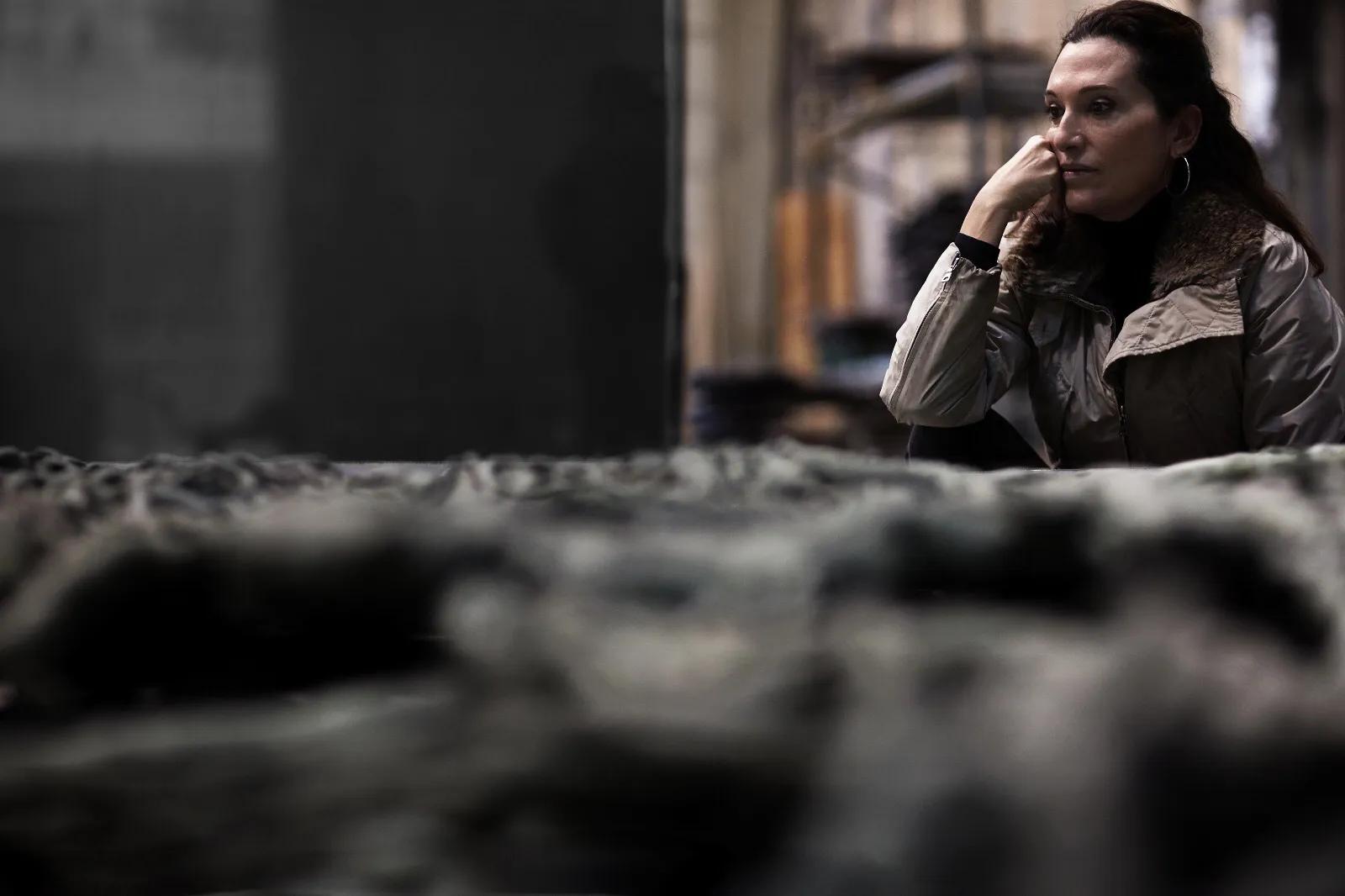
Over more than four decades, Cristina Iglesias (b. 1956, Donostia-San Sebastián, Spain) has defined a unique sculptural vocabulary, creating immersive and experiential environments that reference and unite architecture, literature, psychology, mechanics, natural elements and site-specific content. Guided by a profound cultural and historical sensitivity, as well as a deep concern for the natural world, Iglesias’ works poetically redefine the viewer’s relationship to time and place.
Iglesias pursued a degree in chemical sciences at the University of the Basque Country, before studying ceramics and drawing in Barcelona. She then continued her studies at Chelsea School of Art, moving to London in 1980. This interdisciplinary approach and her interest in experimentation laid the foundations for her art, ‘Drawing and working with clay was always, and still is, a way of thinking, but I was also very interested in science, particularly the laboratory part of it, the exploration,’ Iglesias says.
Iglesias returned to Spain from the UK in the early 1980s, where she developed a distinctive sculptural language of quasi-architectural forms—walls, pavilions, archways, canopies, ceilings—that carved out precarious enclosures and shelters in dialogue with the exhibition space. Using conventional materials such as iron, aluminum and cement in combination with alabaster, glass and textiles, Iglesias’ sculptures from this period are at once objects and places, experimenting with lightness, perforation and translucency to open up spaces in a way that shifts perception of the environments they inhabit.
Over the course of the 1990s, Iglesias’ practice continued to evolve, fusing natural textures cast from vegetation—including eucalyptus and bamboo—with architectural forms to create the opaque chambers and screens of her ‘Vegetation Rooms’. In 1993, she represented Spain at the Venice Biennale for a second time showing alongside Antoni Tàpies. She was appointed Professor of Sculpture at the Akademie der Bildenden Künste in Munich, Germany in 1995. She also created her first outdoor piece, an installation on the remote island of Moskenes in northern Norway, and realized her first architectural collaboration, a commission from Belgian architects Paul Robbrecht and Hilde Daem. This initiated an ongoing partnership that would later result in her highly acclaimed public work ‘Deep Fountain’ (1997 – 2006).
Following this, Iglesias’ focus shifted from the creation of architecture within rooms to the construction of rooms themselves. Works for public sites intervene in urban and non-urban environments to create gathering places that disrupt the fabric of the everyday.
In 2010 the artist created ‘Estancias Sumergidas’ (2010), three diaphanous pavilions, constructed from latticed concrete walls made up of letterforms, installed on the sea floor of a nature reserve in Baja California. Water is also fundamental to large-scale installations such as ‘Tres Aguas’ (2014) in Toledo, Spain; ‘Forgotten Streams’ (2017) for the Bloomberg headquarters in London and ‘Hondalea’ (2020 – 2021), a monumental work located within an excavated lighthouse on the island of Santa Clara, Spain.
Iglesias’ installations redefine perceptions of architectural and natural spaces while engaging deeply with the history of place. Today, she continues to pursue concerns with the subterranean and the slow time of the organic and geological world. Recent installations such as ‘Landscape and Memory’ (2022) in New York’s Madison Square Park unearth the natural and cultural histories of built urban environments, uncovering a fragile world of forgotten waterways, hidden roots and vegetation, with these ideas of phreatic spaces and natural growth echoed in the artist’s sculptural production.
Iglesias’ work has been presented in more than 60 solo and group exhibitions around the world. She has created major public art commissions for Antwerp, Belgium; Baja California, Mexico; Bloomberg Headquarters, London; Instituto Inhotim, Brazil; Madison Square Park, New York NY; Museo del Prado, Madrid; Museum of Fine Arts, Houston TX; Toledo, Spain; Santa Clara Island, San Sebastián, Spain; Royal Academy of the Arts, London and more. She has represented Spain at the Venice Biennale (1986, 1993), and participated in the Biennale of Sydney (1990, 2012), the Taipei Biennial (2003), the Carnegie International (2003), the SITE Sante Fe Biennial (2006) and the Folkestone Triennial (2011).
The prominent public collections which have holdings of Iglesias’ work throughout the world include the Centre Georges Pompidou, France; Fundação Serralves, Portugal; Institut Valencià d’Art Modern (VAM), Spain; Kunsthalle Bern, Switzerland; Museo de Arte Contemporáneo de Barcelona (MACBA), Spain; Museo Guggenheim Bilbao, Spain; Hirshhorn Museum, Washington DC; Solomon R. Guggenheim Museum, New York NY; Museum of Modern Art, New York NY; and Tate Modern, UK. She is the recipient of the Sorolla Medal from the Hispanic Society in New York (2024); Royal Academy Architecture Prize (2020); National Graphic Arts Award Spain (2019); Grosse Kunstpreis Berlin (2012); and Spain’s National Visual Arts Prize (1999), among others.
Current Exhibitions


1 / 12