
Exhibition Learning Notes: ‘Takesada Matsutani. Shifting Boundaries’
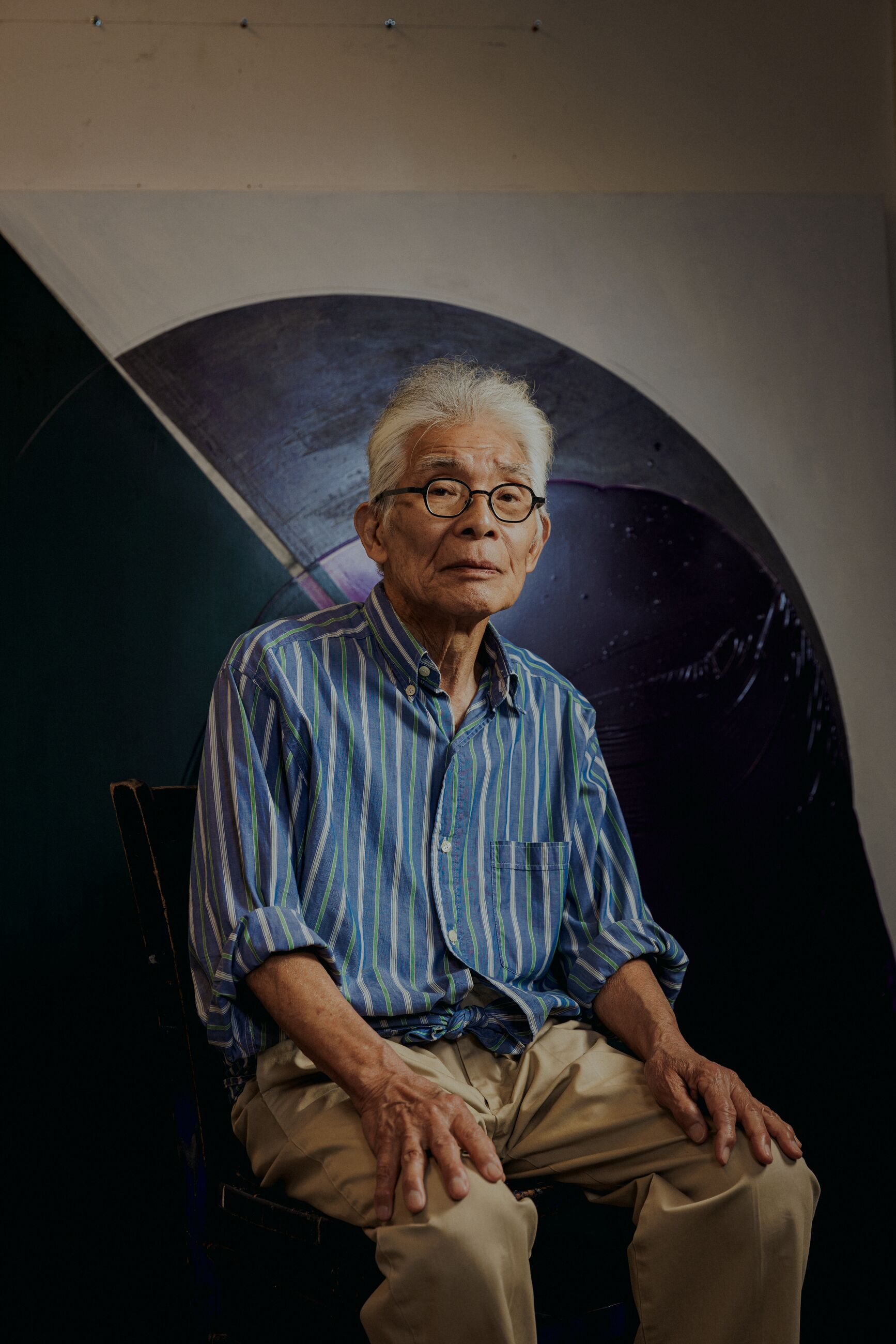
Takesada Matsutani in his studio in Paris, 2023 © Takesada Matsutani. Photo: Laura Stevens
Exhibition Learning Notes: ‘Takesada Matsutani. Shifting Boundaries’
This resource has been produced to accompany the exhibition ‘Takesada Matsutani. Shifting Boundaries’ at Hauser & Wirth London from 5 February – 18 April 2026.
About Takesada Matsutani
Takesada Matsutani is an Ōsaka-born artist who has lived and worked in Paris since 1966. He is a key figure in postwar Japanese art and a prominent member of the Gutai Art Association, an influential avant-garde group, active from 1954 – 1972.
After winning first prize in the 1st Mainichi Art Competition, Matsutani received a grant from the French government and moved to Paris, France, where he worked at Stanley William Hayter’s printmaking studio, Atelier 17. This experience encouraged experimentation and helped him develop a distinctive practice focused on materials and process.
Over more than six decades, Matsutani has built a practice focused on the physical transformation of materials, particularly vinyl glue and graphite. Now one of the last surviving members of the Gutai group and in his late 80s, he continues a daily studio practice. This exhibition marks his first London presentation in over 10 years and coincides with 60 years of living and working in Paris.
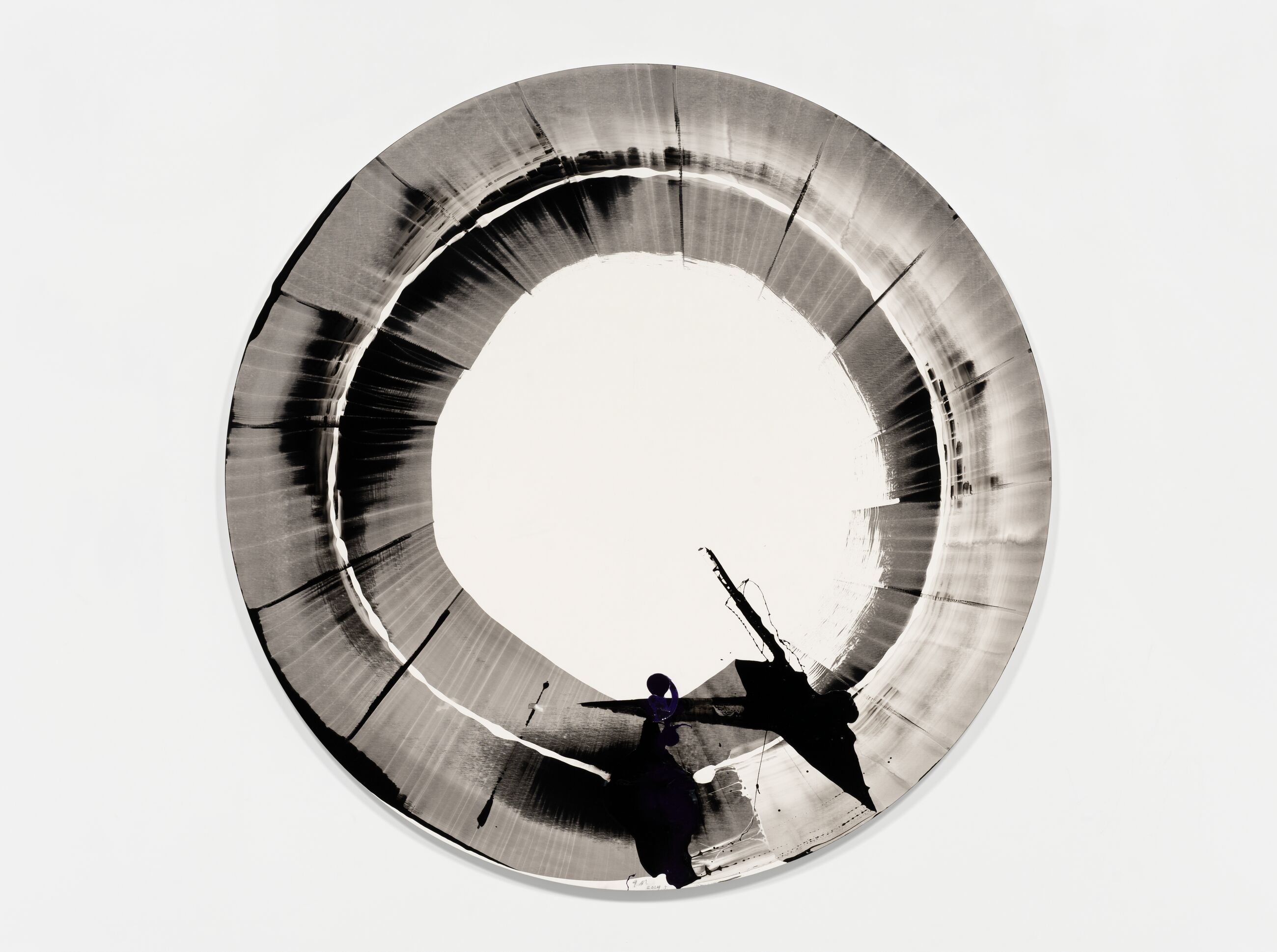
Takesada Matsutani, Abstrait 抽象 La Boverie, Liege, Belgique, 2024 © Takesada Matsutani. Photo: Nicolas Brasseur
What does the exhibition look like?
The exhibition brings together historic and recent works, including wall-based pieces, works on paper, and large sculptural installations. Some works extend outwards from the wall with swollen, organic forms, while others stretch across entire walls in dense fields of graphite.
Key works include The Magic Box (1988), a major sculptural work that connects floor, wall and ceiling, alongside new works that epitomize his experimentation with vinyl glue. Together, the works create a strong physical presence, encouraging visitors to move through the gallery and experience changes in scale, surface and space.
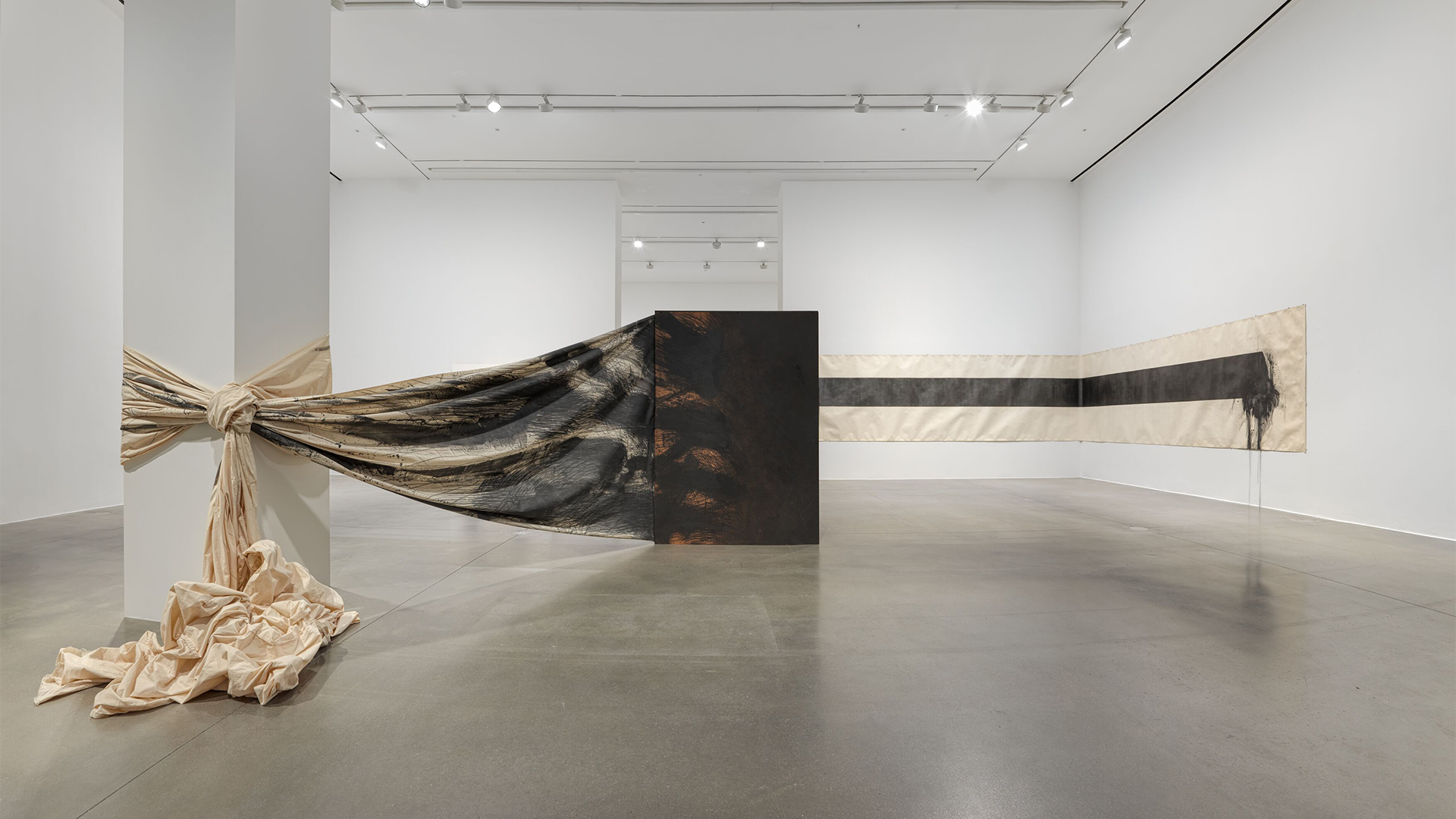
Installation view, ‘Takesada Matsutani. Shifting Boundaries,’ Hauser & Wirth London, 2026 © Takesada Matsutani. Photo: Alex Delfanne
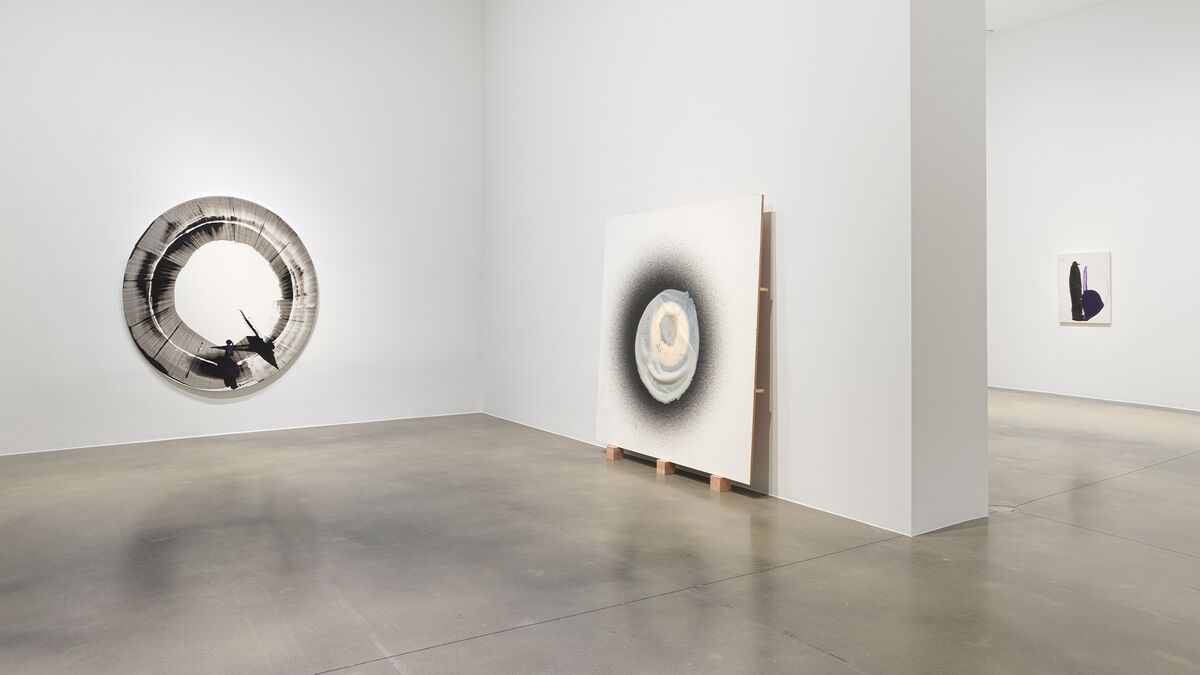
Installation view, ‘Takesada Matsutani. Shifting Boundaries,’ Hauser & Wirth London, 2026 © Takesada Matsutani. Photo: Alex Delfanne
How does he make his work?
Matsutani is best known for his use of vinyl glue. He applies it to canvas, allows it to partially dry and then inflates it using his own breath, or tools such as fans and hairdryers, causing the surface to swell into three-dimensional forms. In more recent works, he adds acrylic paint, turning the glue a deep purple.
He also works extensively with graphite, applying it repeatedly to large sheets of paper using individual strokes. This slow, deliberate and methodical process records time, effort and physical gesture, turning the act of making into a form of endurance and quiet performance. Matsutani often combines soft materials such as glue and cotton with harder materials like wood, creating tension between flexibility and rigidity. His methods reflect the Gutai belief in allowing materials to express their own character.
‘Material speaks to me.’—Takesada Matsutani
What are his sources of subject matter?
Matsutani’s work does not depict scenes or narratives. Instead, his subject matter comes from materials themselves, the physical action of making and time. The inflated glue forms can suggest bodily presence, but they remain abstract.
Time, repetition, breath, and physical gesture play an important role. His graphite works, particularly the Streams series, act as records of sustained mark-making. Experiences of working with limited resources in Paris, France during the 1970s shaped his focus on essential tools and materials.
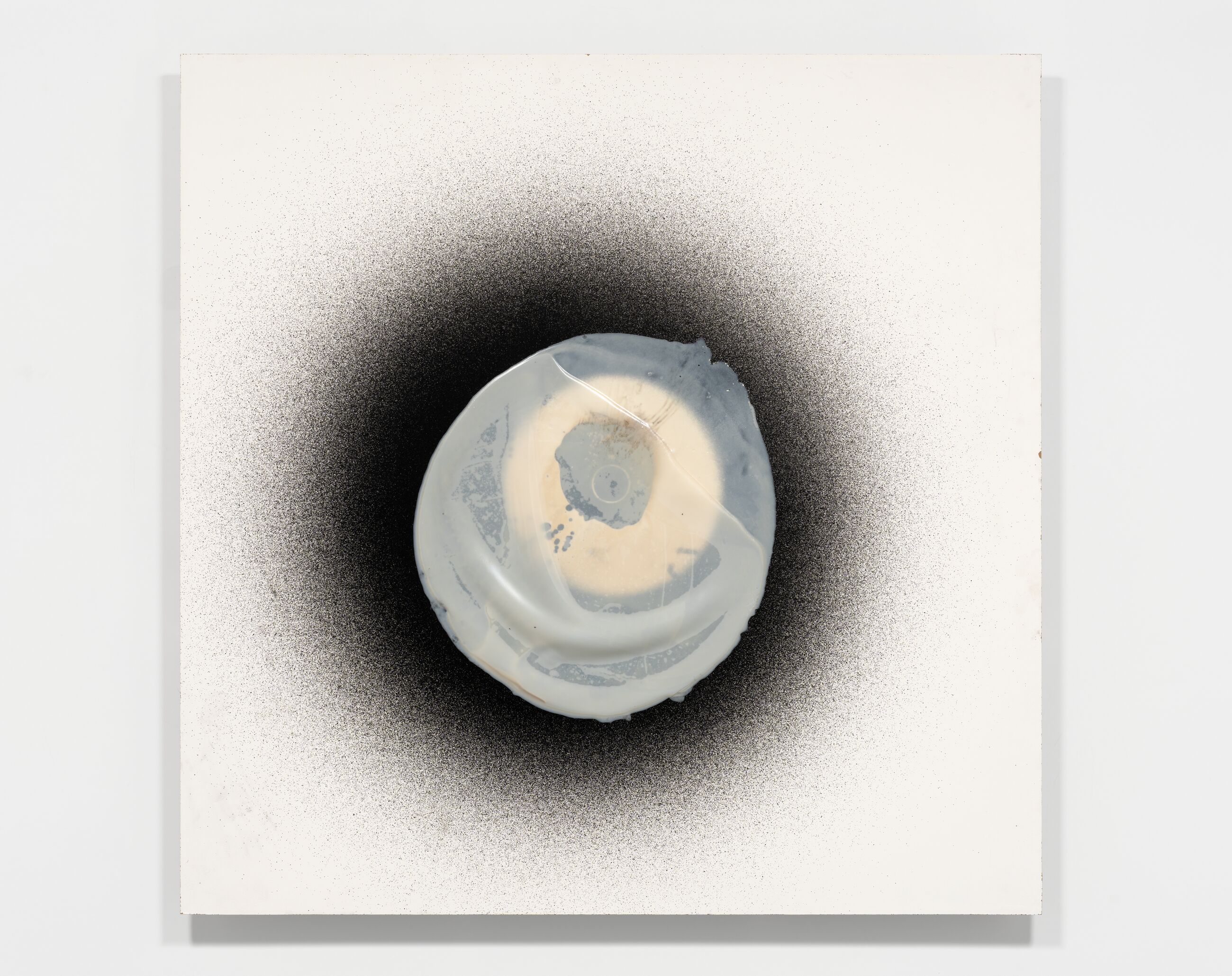
Takesada Matsutani, Work – P, 2009 – 2013 © Takesada Matsutani. Photo: Nicolas Brasseur
What are the major themes within the exhibition?
The exhibition explores transformation, materiality and the boundary between painting and sculpture, or flatness and volume. Matsutani challenges the idea of painting as a flat surface by allowing works to protrude, sag, or expand into space.
Time is another key theme. Many works capture a suspended moment or document long periods of repetitive action. Throughout the exhibition, Matsutani reflects the Gutai principle of rejecting established ways of making art, instead experimenting directly with matter, allowing materials to express their own qualities.
‘I still use chance, as I cannot control the glue one hundred percent, it is impossible. There are no mistakes for me.’—Takesada Matsutani
Insights from Olivier Renaud-Clément
Olivier Renaud-Clément has organized exhibitions and acted as an advisor to artists and estates in the US, Europe and Japan for many years. He has worked frequently with Hauser & Wirth, collaborating with the gallery on 31 exhibitions. He has collaborated with Takesada Matsutani and the estates of Fabio Mauri, Lygia Pape, August Sander and Mira Schendel, among others. Renaud-Clément is the founder of the International Friends of the Munich Opera. He is based between Paris and New York City.
‘Matsutani’s practice and work have had a constant and subtle offering of surprises and beauty. I have continuously been struck and surprised by his ability and versatility in incorporating new elements in his ongoing search for beauty throughout his career.
‘His dedication to a practice that has been evolving for the last 65 years demonstrate an indomitable tenacity and an unfathomable energy. The quest of beauty and questioning material have remained central to Matsutani practice and approach—a thoughtful, paced and slow motion evolution which defines his work and life. Olivier Renaud-Clément
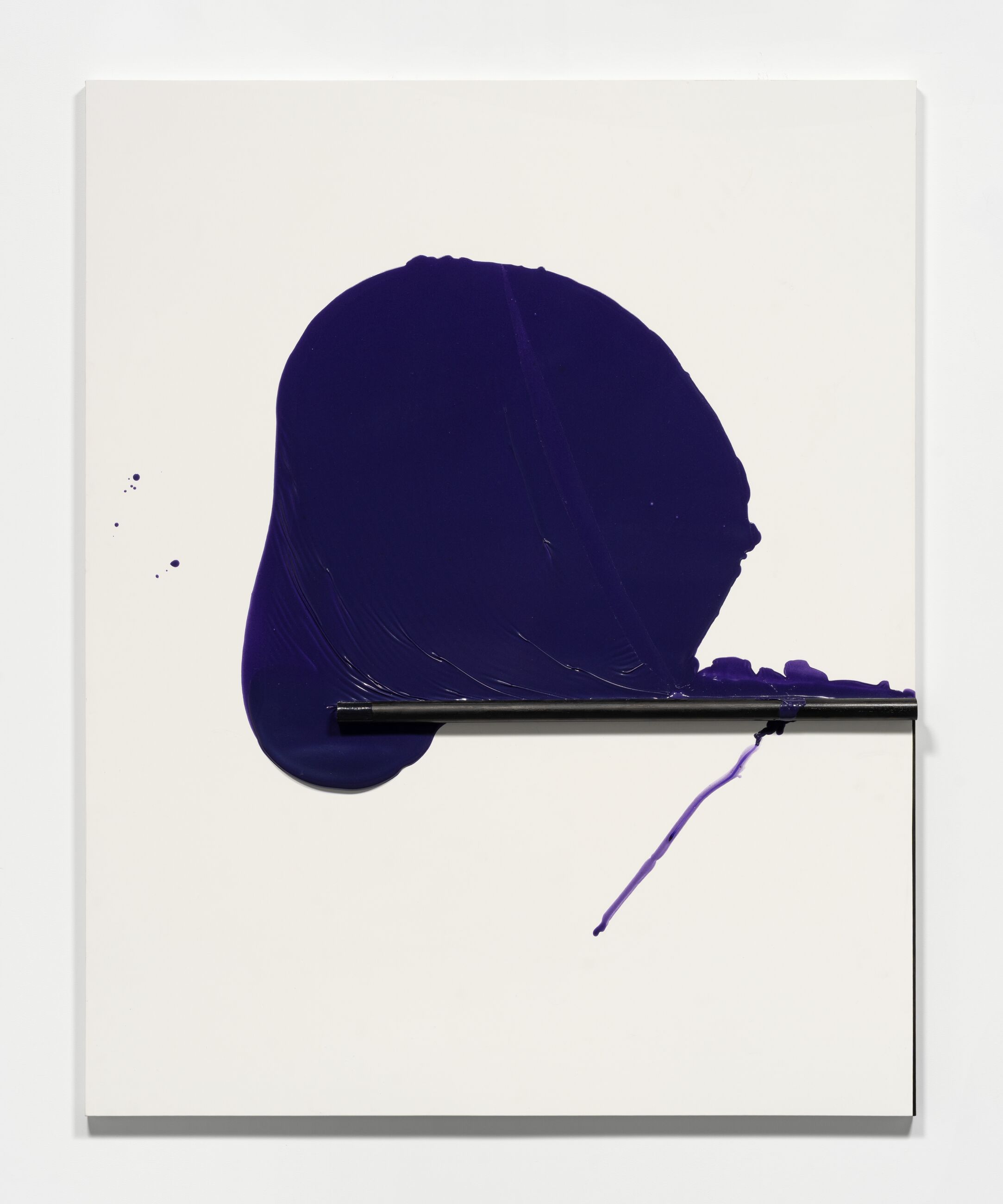
Takesada Matsutani, Propagation 25-B, 2025 © Takesada Matsutani. Photo: Nicolas Brasseur
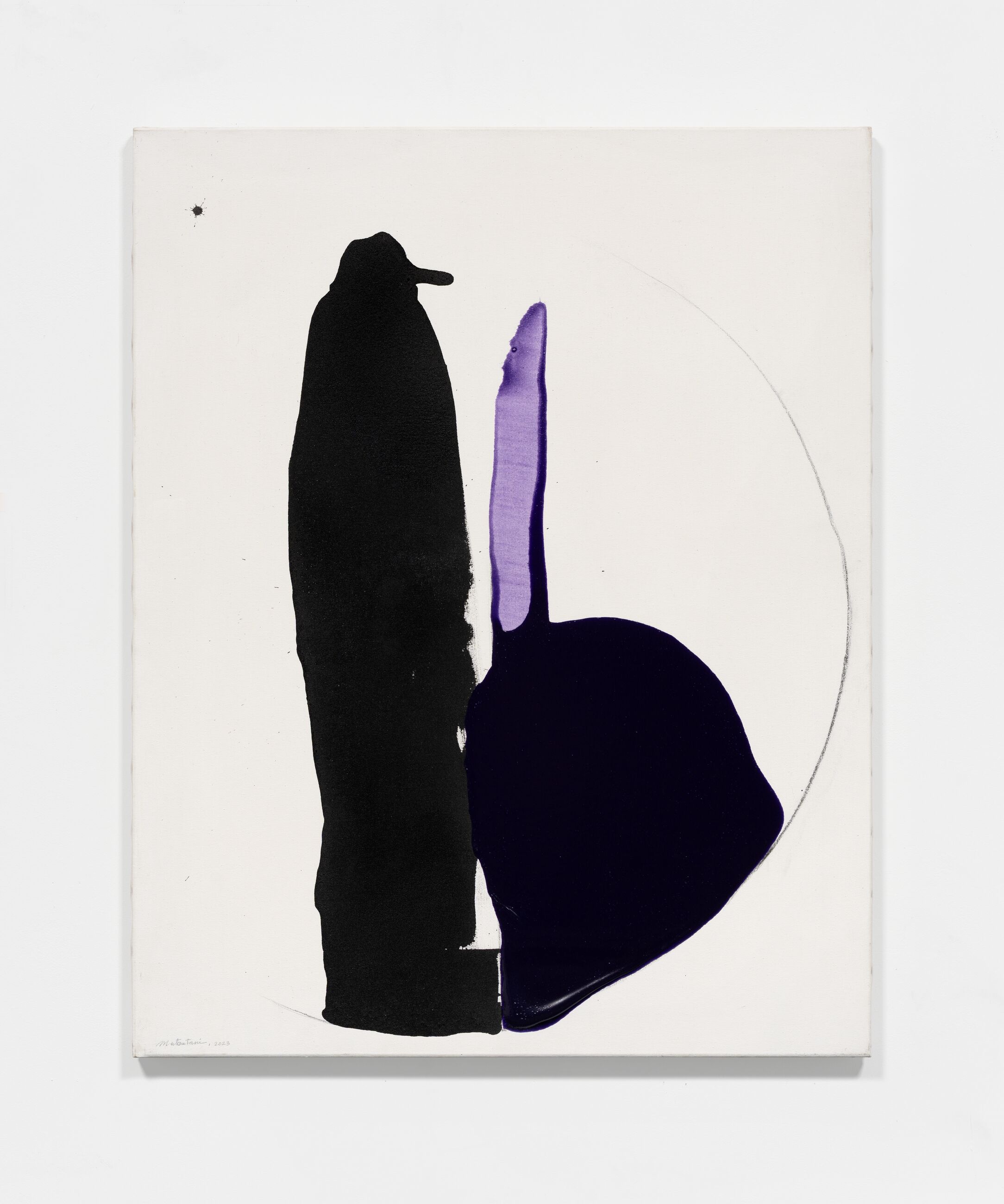
Takesada Matsutani, The Point 点,2023 © Takesada Matsutani. Photo: Nicolas Brasseur
Glossary
Gutai Art Association
A Japanese avant-garde art group active from 1954 – 1972, known for experimental approaches to materials and performance.
Vinyl glue
An industrial adhesive that Matsutani uses as a sculptural material, inflating it to create three-dimensional forms.
Graphite
A drawing material commonly used in pencils, here applied repeatedly to create dense, reflective surfaces.
Assemblage
An artwork made by combining different materials and objects into a single piece.
Time-based record
A work that visibly documents the time, duration, and physical process involved in its making.
Questions for discussion
Matsutani often allows materials such as vinyl glue and graphite to behave in their own way. How does this approach challenge traditional ideas of artistic control and authorship?
Many of Matsutani’s works make the process of making visible, from inflated glue surfaces to layered graphite. How does noticing the artist’s physical actions and decisions shape the way you experience the work in the gallery?
As one of the last surviving members of the Gutai group, Matsutani continues to work daily in his late eighties. What does this exhibition suggest about artistic practice across a lifetime?
Supplementary research
‘In the Studio: Takesada Matsutani’ (Hauser & Wirth Publishers, 2026)—featuring a text by Curator Mika Yoshitake
‘Inside The Issue’ (Ursula, Issue 9, Fall/Winter 2023)
‘A Visual Essay on Gutai at 32 East 69th Street’ (Hauser & Wirth New York, 2012)
‘Takesda Matsutani Reflects on the Gutai Movement’ (Whitewall)


